

Official Class 10 Mathematics Worksheets: Chapter 09 Some Applications of Trigonometry
Explore structured practice materials through the CBSE Class 10 Mathematics Some Applications of Trigonometry Worksheet Set 02. Tailored for Class 10 learners, utilizing these Mathematics worksheets ensures thorough preparation and strengthens problem-solving accuracy before final school evaluations.
Solved Practice Worksheets for Mathematics
Navigate directly to the solved Mathematics worksheets using the digital viewer below. Each practice set includes detailed step-by-step solutions, allowing students to instantly cross-check their work and identify areas requiring further revision.
Applications Of Trigonometry
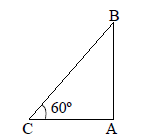
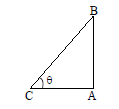
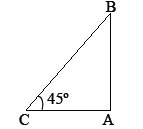
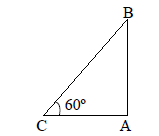
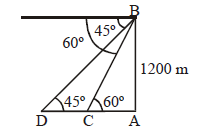
Then, AC = 3m and ∠ACB = 45º

More question-
1. If 7x5x3x2 + 3 is composite number? Justify your answer
2. Show that any positive odd integer is of the form 4q + 1 or 4q +3 where q is a positive integer
3. Prove that √2 + √5 is irrational
4. Use Euclid’s Division Algorithms to find the H.C.F of a) 135 and 225 (45)
b) 4052 and 12576 (4)
c) 270, 405 and 315
5. Prove that 5 - 2√3 is an irrational number
6. Find the HCF and LCM of 26 and 91 and verify that LCM X HCF = Product of two numbers (13,182)
7. Explain why 29 is a terminating decimal expansion
23 x 53
8. given that LCM (77, 99) = 693, find the HCF (77, 99) (11)
9. Find the greatest number which exactly divides 280 and 1245 leaving remainder 4 and 3 (138)
10. Prove that √2 is irrational
11. The LCM of two numbers is 64699, their HCF is 97 and one of the numbers is 2231. Find the other (2813)
12. If HCF (6, a) = 2 and LCM (6, a) = 60 then find a (20)
13. Two numbers are in the ratio 15: 11. If their HCF is 13 and LCM is 2145 then find the numbers (195,143)
14. Express 0.363636………… in the form a/b (4/11)
15. Find the HCF 52 and 117 and express it in form 52x + 117y
16. Write the HCF of smallest composite number and smallest prime number
17. Write whether 2√45 + 3√20 on simplification give a rational or an irrational number
Please click the below link to access CBSE Class 10 Mathematics Applications Of Trigonometry Worksheet Set B
Some Applications of Trigonometry
One Mark Questions
Question 1. The angle of elevation of the top of building from the foot of tower is 45° and the angle of elevation of the top of the tower from the foot of the building is 60°. If the tower is 50 m high find the height of building ?
(A) 40 m
(B) 50m
(C) 60m
(D) \( \frac{50\sqrt{3}}{3} \text{ m} \)
Answer: (D) \( \frac{50\sqrt{3}}{3} \text{ m} \)
Let the height of the building be \( h \) and the distance between the bases of the building and the tower be \( x \).
For the building:
\[ \tan(45^\circ) = \frac{h}{x} \implies 1 = \frac{h}{x} \implies x = h \]
For the tower:
\[ \tan(60^\circ) = \frac{50}{x} \implies \sqrt{3} = \frac{50}{x} \implies x = \frac{50}{\sqrt{3}} \]
Since \( h = x \):
\[ h = \frac{50}{\sqrt{3}} = \frac{50\sqrt{3}}{3} \text{ m} \]
In simple words: Write tangent equations for both the building and the tower. Since the distance between them is the same, equating the two formulas gives the building's height.
Exam Tip: When \(45^\circ\) is one of the angles of elevation, the horizontal distance and vertical height of that object are equal. Use this relation to simplify the other equation quickly.
Question 2. A tower stands vertically on the ground from a point on the ground which is 15 m away from the foot of tower if the height of tower is \( 15\sqrt{3} \) meters find the angle of elevation.
(A) 60°
(B) 30°
(C) 90°
(D) 120°
Answer: (A) 60°
Let the angle of elevation of the top of the tower be \( \theta \).
Using the tangent ratio:
\[ \tan(\theta) = \frac{\text{Height of the tower}}{\text{Distance from the foot}} = \frac{15\sqrt{3}}{15} \]
\[ \tan(\theta) = \sqrt{3} \]
We know that \( \tan(60^\circ) = \sqrt{3} \). Thus, \( \theta = 60^\circ \).
In simple words: Dividing the tower's height by the horizontal distance on the ground gives the tangent of the angle. Since that ratio is the square root of 3, the angle is 60 degrees.
Exam Tip: Make sure to memorize standard values of trigonometric functions (specifically \(30^\circ, 45^\circ, 60^\circ\) for tangent) to identify angles instantly.
Question 3. A kite is flying in sky if the string attached is of length \( 40\sqrt{3}\text{ m} \) and is tied to ground making 60°. Then what is the height?
(A) 50 metre
(B) 40 metre
(C) 60 metre
(D) 120 metre
Answer: (C) 60 metre
Let \( h \) be the vertical height of the kite.
The length of the string is the hypotenuse, \( L = 40\sqrt{3}\text{ m} \).
Using the sine ratio:
\[ \sin(60^\circ) = \frac{h}{L} \]
\[ \frac{\sqrt{3}}{2} = \frac{h}{40\sqrt{3}} \]
\[ h = \frac{\sqrt{3}}{2} \times 40\sqrt{3} = 20 \times 3 = 60\text{ m} \]
In simple words: The string acts as the hypotenuse of a right triangle. Since we need to find the opposite side (height), use the sine of 60 degrees to find the answer.
Exam Tip: Think of the string as the hypotenuse and the vertical height as the opposite side. This tells you to use the sine function instead of tangent.
Question 4. A kite is flying at a height of 60m above the ground. The string attached to kite is tied to a point. The inclination of string with the ground is 30°. Find length of the string. Assuming there is no slack in the string.
(A) 30 metre
(B) 60 metre
(C) 90 metre
(D) 120 metre
Answer: (D) 120 metre
Let \( L \) be the length of the string.
The vertical height is \( h = 60\text{ m} \).
Using the sine ratio:
\[ \sin(30^\circ) = \frac{h}{L} \]
\[ \frac{1}{2} = \frac{60}{L} \implies L = 120\text{ m} \]
In simple words: Sine of 30 degrees is equal to the height divided by the string length. Solving this shows the string is 120 meters long.
Exam Tip: "No slack in the string" means we can treat the string as a straight line, representing a perfect hypotenuse in our right triangle.
Question 5. A person is climbing a 20 m long ladder which is inclined at 30° from ground and touches top of minar. Find the height of minar.
(A) \( 10\sqrt{3}\text{ m} \)
(B) \( 20\sqrt{3}\text{ m} \)
(C) 10 m
(D) 15 m
Answer: (C) 10 m
Let the height of the minar be \( h \).
The length of the ladder (hypotenuse) is \( L = 20\text{ m} \).
Using the sine ratio:
\[ \sin(30^\circ) = \frac{h}{L} \]
\[ \frac{1}{2} = \frac{h}{20} \implies h = 10\text{ m} \]
In simple words: The ladder is the hypotenuse, and the minar is the opposite side. Using the sine of 30 degrees, we find that the minar is 10 meters tall.
Exam Tip: Be sure to write the correct units (such as meters) alongside your numerical answer in your descriptive responses.
Question 6. The angle of elevation of the top of a tower form a point on the ground which is 60 m away from the foot of tower is 30°. Find the height of tower.
(A) \( \frac{60}{\sqrt{3}}\text{ m} \)
(B) 30 m
(C) \( 30\sqrt{3}\text{ m} \)
(D) \( 20\sqrt{3}\text{ m} \)
Answer: (D) \( 20\sqrt{3}\text{ m} \)
Let the height of the tower be \( h \).
Using the tangent ratio:
\[ \tan(30^\circ) = \frac{h}{60} \]
\[ \frac{1}{\sqrt{3}} = \frac{h}{60} \implies h = \frac{60}{\sqrt{3}} = 20\sqrt{3}\text{ m} \]
In simple words: Tangent of 30 degrees is height divided by distance. Multiplying and simplifying gives a height of 20 times the square root of 3 meters.
Exam Tip: Rationalize the denominator by multiplying the top and bottom of the fraction by \(\sqrt{3}\) to express surd answers in standard format.
Question 7. A live drawn from the eye of an observer to the point in the object viewed by the observer is called:
(A) Line of inclination
(B) Horizontal line
(C) Line of sight
(D) Vertical line
Answer: (C) Line of sight
By definition, the straight line joining the eye of an observer to the point on the object being viewed is called the line of sight.
In simple words: The straight path along which you look at any object is known as the line of sight.
Exam Tip: Knowing fundamental definitions like the line of sight, horizontal level, and angle of elevation is helpful for both basic questions and word problems.
Question 8. The angles of elevation of the top of the tower from two points at a distance 4m and 9 m from the base of the tower and in the same straight line with it are complementary then the height of the tower is:
(A) 8 m
(B) 10 m
(C) 6 m
(D) 12 m
Answer: (C) 6 m
Let the height of the tower be \( h \).
Let the angles of elevation at the two points be \( \theta \) and \( 90^\circ - \theta \).
For the first point:
\[ \tan(\theta) = \frac{h}{4} \]
For the second point:
\[ \tan(90^\circ - \theta) = \cot(\theta) = \frac{h}{9} \]
Multiplying the two equations:
\[ \tan(\theta) \times \cot(\theta) = \frac{h}{4} \times \frac{h}{9} \]
\[ 1 = \frac{h^2}{36} \implies h^2 = 36 \implies h = 6\text{ m} \]
In simple words: The tangent of one angle is the cotangent of its complement. Multiplying these two equations cancels the angle term, giving the tower's height as the square root of the product of the two distances.
Exam Tip: For any complementary angle problem, the height of the tower is always the geometric mean of the distances, \( h = \sqrt{ab} \).
Question 9. A 1.5 m tall boy is standing at some distance from a 31.5 m tall building. The angle of elevation from his eyes to the top of building increase from 45° to 60° as he walked towards the building. Find distance as he walked towards the building.
Answer:
The height of the building above the boy's eye level is:
\[ H = 31.5 - 1.5 = 30\text{ m} \]
Let \( x_1 \) be his initial distance from the building, and \( x_2 \) be his final distance after walking.
For the initial position with angle \(45^\circ\):
\[ \tan(45^\circ) = \frac{H}{x_1} \implies 1 = \frac{30}{x_1} \implies x_1 = 30\text{ m} \]
For the final position with angle \(60^\circ\):
\[ \tan(60^\circ) = \frac{H}{x_2} \implies \sqrt{3} = \frac{30}{x_2} \implies x_2 = \frac{30}{\sqrt{3}} = 10\sqrt{3}\text{ m} \]
The distance he walked towards the building is:
\[ d = x_1 - x_2 = 30 - 10\sqrt{3} = 10(3 - \sqrt{3})\text{ m} \approx 12.68\text{ m} \]
In simple words: First subtract the boy's height from the building's height. Using the two angles, find his starting and ending distances, then subtract them to find how far he walked.
Exam Tip: Always subtract the height of the observer from the total height of the object when the point of observation is above the ground level.
Question 10. In figure 1 the angle \(\theta\) is called
(A) Angle of inclination
(B) Angle of depression
(C) Acute angle
(D) None of these
Answer: (B) Angle of depression
In standard reference diagrams, when an observer views an object below their horizontal eye level, the angle formed between the horizontal and the line of sight is called the angle of depression.
In simple words: The angle formed when you look down at an object from a higher level is called the angle of depression.
Exam Tip: Be careful not to confuse the angle of elevation (looking up) with the angle of depression (looking down).
Question 11. From a point on the ground the angles of elevation of the bottom and the top of a transmission tower fixed at the top of a 30m high building are 45° and 60°. Then the height of tower is___, (take \(\sqrt{3} = 1.73\))
(A) 30 m
(B) 28.9 m
(C) 21.9 m
(D) None of these
Answer: (C) 21.9 m
Let the height of the transmission tower be \( h \), and let the distance of the observation point on the ground from the base of the building be \( x \).
For the bottom of the tower (top of the 30 m building):
\[ \tan(45^\circ) = \frac{30}{x} \implies 1 = \frac{30}{x} \implies x = 30\text{ m} \delta \]
For the top of the tower:
\[ \tan(60^\circ) = \frac{30 + h}{x} \]
\[ \sqrt{3} = \frac{30 + h}{30} \]
\[ 30\sqrt{3} = 30 + h \]
\[ h = 30\sqrt{3} - 30 = 30(\sqrt{3} - 1) \]
Using \(\sqrt{3} = 1.73\):
\[ h = 30(1.73 - 1) = 30(0.73) = 21.9\text{ m} \]
In simple words: The base of the building is 30 meters away since the elevation is 45 degrees. Use this distance with the 60-degree angle to find the total height, then subtract the building's height to get the tower's height.
Exam Tip: Always pay attention to whether the problem asks for the height of the tower alone or the combined height of the tower and the building.
Question 12. The angle formed by the line of sight with the horizontal when the point being viewed above the horizontal level is called.
(A) Angle inclination
(B) Angle of declination
(C) Angle of depression
(D) None of these
Answer: (D) None of these
The angle formed by the line of sight with the horizontal when an object is viewed above the horizontal level is called the **angle of elevation**. Since "Angle of elevation" is not listed in options A, B, or C, the correct choice is None of these.
In simple words: The angle made when you look up at an object is called the angle of elevation.
Exam Tip: When standard mathematical terms like "angle of elevation" are not present among the choices, do not settle for similar-sounding terms like "angle of inclination" if "None of these" is an option.
Question 13. In the given figure h is equal to____
(A) 20 m
(B) 30 m
(C) 40 m
(D) \( 15\sqrt{3}\text{ m} \)
Answer: (D) \( 15\sqrt{3}\text{ m} \)
In the right-angled triangle \(ABC\), we have:
\[ \tan(60^\circ) = \frac{h}{x} \implies \sqrt{3} = \frac{h}{x} \implies x = \frac{h}{\sqrt{3}} \]
In triangle \(ABD\):
\[ \tan(30^\circ) = \frac{h}{x + 30} \]
\[ \frac{1}{\sqrt{3}} = \frac{h}{\frac{h}{\sqrt{3}} + 30} \]
\[ \frac{h}{\sqrt{3}} + 30 = h\sqrt{3} \]
Multiplying by \(\sqrt{3}\):
\[ h + 30\sqrt{3} = 3h \]
\[ 2h = 30\sqrt{3} \implies h = 15\sqrt{3}\text{ m} \]
In simple words: Write tangent equations for both triangles. Use substitution to find the height from the horizontal distance.
Exam Tip: Substitute the base variable \( x \) early in the equations to solve directly for the height \( h \).
Question 14. From the top of a 10 m height building the angle of elevation of the top of a cable tower is 60° and angle of depression of its foot is 45°, determine the height of the towers.
(A) 10 m
(B) 15 m
(C) 27.3 m
(D) 20 m
Answer: (C) 27.3 m
Let the height of the cable tower be \( H \).
The horizontal distance \( x \) between the building and the tower can be found from the angle of depression to the foot:
\[ \tan(45^\circ) = \frac{10}{x} \implies 1 = \frac{10}{x} \implies x = 10\text{ m} \]
Now, for the top of the tower from the top of the building:
\[ \tan(60^\circ) = \frac{H - 10}{x} \]
\[ \sqrt{3} = \frac{H - 10}{10} \]
\[ 10\sqrt{3} = H - 10 \]
\[ H = 10\sqrt{3} + 10 = 10(1.732) + 10 = 27.32\text{ m} \]
In simple words: The 45-degree angle of depression tells us the tower is 10 meters away. Use that distance with the 60-degree angle of elevation to find the top section of the tower, and add 10 meters to find the total height.
Exam Tip: Ground-level distance is always equal to the horizontal line of sight from the top of your observer building. Use it to bridge the two triangles.
Question 15. The shadow of a tower standing on a level ground is found to be \( 40\sqrt{3}\text{ m} \). If the height of tower is 40 m. What is altitude of the sun?
(A) 30°
(B) 60°
(C) 45°
(D) 90°
Answer: (A) 30°
Let the angle of elevation of the sun be \( \theta \).
Using the tangent ratio:
\[ \tan(\theta) = \frac{\text{Height of the tower}}{\text{Length of the shadow}} = \frac{40}{40\sqrt{3}} = \frac{1}{\sqrt{3}} \]
We know that \( \tan(30^\circ) = \frac{1}{\sqrt{3}} \). Thus, \( \theta = 30^\circ \).
In simple words: Height divided by shadow length equals the tangent of the sun's angle. Since that fraction is 1 divided by the square root of 3, the sun's altitude is 30 degrees.
Exam Tip: When the shadow is longer than the height, the angle of elevation of the sun is always less than \(45^\circ\).
Question 16. The angles of depression of top and Bottom of an 16 m tall building from the top of a multistoried building are 30° and 60° therefore the height of multistory building is:
(A) 12 m
(B) 24 m
(C) 36 m
(D) 48 m
Answer: (B) 24 m
Let the height of the multistoried building be \( H \) and the distance between the two buildings be \( x \).
The height of the building is \(16\text{ m}\).
Angle of depression of the top of the 16 m building is \(30^\circ\).
The height difference is \(H - 16\).
\[ \tan(30^\circ) = \frac{H - 16}{x} \implies x = (H - 16)\sqrt{3} \]
Angle of depression of the bottom of the 16 m building is \(60^\circ\).
\[ \tan(60^\circ) = \frac{H}{x} \implies x = \frac{H}{\sqrt{3}} \]
Equating both values of \( x \):
\[ (H - 16)\sqrt{3} = \frac{H}{\sqrt{3}} \]
\[ 3(H - 16) = H \]
\[ 3H - 48 = H \implies 2H = 48 \implies H = 24\text{ m} \]
In simple words: Set up two tangent equations for the top and bottom of the shorter building. Equating the horizontal distances lets you find that the multistoried building is 24 meters high.
Exam Tip: Be careful with brackets when multiplying terms by \(\sqrt{3}\) to avoid algebraic errors during multi-step equations.
Question 17. The shadow of the tower standing on a level ground is found to the 40 m longer when the sun's altitude is 30° than when it is 60°. Than the height of tower is:
(A) 20 m
(B) \( 20\sqrt{3}\text{ m} \)
(C) 40 m
(D) 60 m
Answer: (B) \( 20\sqrt{3}\text{ m} \)
Let the height of the tower be \( h \) and the shorter shadow length be \( x \).
For the \(60^\circ\) angle:
\[ \tan(60^\circ) = \frac{h}{x} \implies x = \frac{h}{\sqrt{3}} \]
For the \(30^\circ\) angle:
\[ \tan(30^\circ) = \frac{h}{x + 40} \]
\[ \frac{1}{\sqrt{3}} = \frac{h}{\frac{h}{\sqrt{3}} + 40} \]
\[ \frac{h}{\sqrt{3}} + 40 = h\sqrt{3} \]
Multiplying the entire equation by \(\sqrt{3}\):
\[ h + 40\sqrt{3} = 3h \]
\[ 2h = 40\sqrt{3} \implies h = 20\sqrt{3}\text{ m} \]
In simple words: The change in shadow length is 40 meters. Solving the tangent equations for both angles shows that the height of the tower is 20 times the square root of 3 meters.
Exam Tip: Use the direct shortcut formula \( h = \frac{d}{\cot(\theta_1) - \cot(\theta_2)} \) for double-angle shadow problems to quickly verify your final result.
Question 18. Two poles of equal height are standing opposite each other on either side of the road which is 60m wide. From a point between them on the road, the angles of elevation of the top of poles are 60° and 30° respectively. Find the height of the poles.
(A) 40 m
(B) 60m
(C) 80 m
(D) \( 15\sqrt{3}\text{ m} \)
Answer: (D) \( 15\sqrt{3}\text{ m} \)
Let the height of the poles be \( h \).
Let the observation point be at a distance \( x \) from the base of the pole with the \(60^\circ\) angle of elevation.
The distance to the other pole is \( 60 - x \).
For the first pole:
\[ \tan(60^\circ) = \frac{h}{x} \implies x = \frac{h}{\sqrt{3}} \]
For the second pole:
\[ \tan(30^\circ) = \frac{h}{60 - x} \implies \frac{1}{\sqrt{3}} = \frac{h}{60 - x} \]
\[ 60 - x = h\sqrt{3} \]
Substitute \( x \):
\[ 60 - \frac{h}{\sqrt{3}} = h\sqrt{3} \]
\[ 60 = h\sqrt{3} + \frac{h}{\sqrt{3}} = \frac{4h}{\sqrt{3}} \]
\[ 4h = 60\sqrt{3} \implies h = 15\sqrt{3}\text{ m} \]
In simple words: Express the distance from the point to both poles in terms of their height. Combining these distances over the total road width of 60 meters gives the pole height.
Exam Tip: Remember that the point is closer to the pole with the larger angle of elevation. Keeping this in mind helps you draw an accurate diagram.
Question 19. The altitude of the sun at any instant is 60°. The height of the vertical pole that will cast a shadow of 30 m is .
(A) \( 30\sqrt{3} \)
(B) 15
(C) 25m
(D) \( 25\sqrt{3}\text{ m} \)
Answer: (A) \( 30\sqrt{3} \)
Let the height of the pole be \( h \).
Using the tangent ratio:
\[ \tan(60^\circ) = \frac{h}{30} \]
\[ \sqrt{3} = \frac{h}{30} \implies h = 30\sqrt{3}\text{ m} \]
In simple words: The tangent of the sun's angle (60 degrees) is equal to height divided by shadow length. Multiplying 30 by the square root of 3 gives the height of the pole.
Exam Tip: Shadow problems are simply right triangle problems where height is the opposite side and shadow length is the adjacent side.
Question 20. In the given figure find the value of h.
(A) \( 10\sqrt{3} \)
(B) \( 20\sqrt{3} \)
(C) \( 30\sqrt{3} \)
(D) None of these
Answer: (A) \( 10\sqrt{3} \)
In the given right triangle with base \( 30\text{ m} \) and angle \( 30^\circ \):
\[ \tan(30^\circ) = \frac{h}{30} \]
\[ \frac{1}{\sqrt{3}} = \frac{h}{30} \implies h = \frac{30}{\sqrt{3}} = 10\sqrt{3}\text{ m} \]
In simple words: Using the tangent of the given 30-degree angle, height divided by 30 equals 1 over the square root of 3. Simplifying this gives 10 times the square root of 3.
Exam Tip: Be sure to divide by the root and simplify the fraction correctly when rationalizing denominators.
Question 21. The shadow of a tower standing on a level ground is found be 30 m longer when the sun's altitude is 30° than when it is 60°. Find the height of tower.
(A) 20°
(B) \( 20\sqrt{3} \)
(C) \( 15\sqrt{3} \)
(D) \( 30\sqrt{3} \)
Answer: (C) \( 15\sqrt{3} \)
Let the height of the tower be \( h \).
As derived in previous double-angle shadow problems:
\[ h = \frac{d\sqrt{3}}{2} \]
Substituting the difference in shadow length \( d = 30\text{ m} \):
\[ h = \frac{30\sqrt{3}}{2} = 15\sqrt{3}\text{ m} \]
In simple words: When the sun's angle drops from 60 to 30 degrees, the shadow becomes 30 meters longer. Solving the equations shows that the height of the tower is 15 times the square root of 3 meters.
Exam Tip: Practicing the algebraic steps for standard double-angle shadow problems is highly useful, as they are very common in Class 10 board exams.
Question 22. The angle of elevation of the top of tower from a point on the ground which is 40 m away from the foot of tower is 45°, then what is the height of tower ?
(A) 40 m
(B) 60m
(C) 80 m
(D) 20 m
Answer: (A) 40 m
Let the height of the tower be \( h \).
Using the tangent ratio:
\[ \tan(45^\circ) = \frac{h}{40} \implies 1 = \frac{h}{40} \implies h = 40\text{ m} \]
In simple words: Since the angle of elevation is 45 degrees, the height of the tower is exactly equal to the distance from its foot, which is 40 meters.
Exam Tip: A \(45^\circ\) right triangle is isosceles. The two legs (height and horizontal distance) are always equal.
Question 23. An electric pole stands vertically on the ground from a point on the ground which is 10 m away from foot of pole, the Angle of elevation is 60° from top of the tower find the height ?
(A) 5m
(B) \( 5\sqrt{3}\text{ m} \)
(C) \( \frac{10}{\sqrt{3}}\text{ m} \)
(D) \( 10\sqrt{3}\text{ m} \)
Answer: (D) \( 10\sqrt{3}\text{ m} \)
Let the height of the pole be \( h \).
Using the tangent ratio:
\[ \tan(60^\circ) = \frac{h}{10} \]
\[ \sqrt{3} = \frac{h}{10} \implies h = 10\sqrt{3}\text{ m} \]
In simple words: The tangent of 60 degrees is height divided by 10. Multiplying 10 by the square root of 3 gives the height of the pole.
Exam Tip: Always make sure to read which object's height is being asked, even if there are slight typos like "top of the tower" instead of "top of the pole" in the question text.
Question 24. The angle of elevation of a tower from a distance 100m from its foot is 30°. Height of the tower is
(A) \( 100\sqrt{3} \)
(B) \( \frac{100}{\sqrt{3}} \)
(C) 50
(D) \( \frac{200}{\sqrt{3}} \)
Answer: (B) \( \frac{100}{\sqrt{3}} \)
Let the height of the tower be \( h \).
Using the tangent ratio:
\[ \tan(30^\circ) = \frac{h}{100} \]
\[ \frac{1}{\sqrt{3}} = \frac{h}{100} \implies h = \frac{100}{\sqrt{3}}\text{ m} \]
In simple words: Tangent of 30 degrees is height divided by 100. This directly gives the height as 100 divided by the square root of 3.
Exam Tip: Keep your final answer in the exact fractional form if that matches the multiple choice options provided.
Question 25. If the elevation of the sun changed from 30° to 60°, then the difference between the length of shadows of a pole 15m high, made at these two position is ?
(A) 7.5m
(B) 15m
(C) \( 10\sqrt{3} \)
(D) \( \frac{15}{\sqrt{3}}\text{ m} \)
Answer: (C) \( 10\sqrt{3} \)
Height of the pole is \( H = 15\text{ m} \).
Let \( s_1 \) be the shadow length at \(30^\circ\) and \( s_2 \) be the shadow length at \(60^\circ\).
\[ s_1 = \frac{15}{\tan(30^\circ)} = 15\sqrt{3}\text{ m} \]
\[ s_2 = \frac{15}{\tan(60^\circ)} = \frac{15}{\sqrt{3}} = 5\sqrt{3}\text{ m} \]
The difference between the shadow lengths is:
\[ d = s_1 - s_2 = 15\sqrt{3} - 5\sqrt{3} = 10\sqrt{3}\text{ m} \]
In simple words: Find the shadow lengths at both angles. Subtract the shorter shadow (at 60 degrees) from the longer shadow (at 30 degrees) to find the difference of 10 times the square root of 3.
Exam Tip: Remember that a higher angle of elevation for the sun results in a shorter shadow.
Question 26. If the angle of elevation of a tower from two points distant a and b (a>b) from its foot and in the same straight line from it are 30° and 60° then the height of the tower is .
(A) \( \sqrt{a+b} \)
(B) \( \sqrt{ab} \)
(C) \( \sqrt{a-b} \)
(D) \( \sqrt{a/b} \)
Answer: (B) \( \sqrt{ab} \)
Let the height of the tower be \( h \).
Using the tangent ratio for the two points:
\[ \tan(30^\circ) = \frac{h}{a} \implies \frac{1}{\sqrt{3}} = \frac{h}{a} \implies h = \frac{a}{\sqrt{3}} \]
\[ \tan(60^\circ) = \frac{h}{b} \implies \sqrt{3} = \frac{h}{b} \implies h = b\sqrt{3} \]
Multiplying these two equations:
\[ h^2 = \left(\frac{a}{\sqrt{3}}\right) \times (b\sqrt{3}) = ab \]
\[ h = \sqrt{ab} \]
In simple words: Write tangent equations for both points. Multiplying the two height equations cancels the root 3 terms, showing that the height of the tower is the square root of the product of the two distances.
Exam Tip: This is a standard algebraic proof. Memorize the result \( h = \sqrt{ab} \) as it is a very common question in examinations.
Question 27. The ratio of the length of a rod and its shadow is 1: \( \sqrt{3} \). The angle of elevation of the sun is :
(A) 30°
(B) 45°
(C) 60°
(D) 90°
Answer: (A) 30°
Let the angle of elevation of the sun be \( \theta \).
Using the tangent ratio:
\[ \tan(\theta) = \frac{\text{Length of the rod}}{\text{Length of the shadow}} = \frac{1}{\sqrt{3}} \]
Since \( \tan(30^\circ) = \frac{1}{\sqrt{3}} \), we have \( \theta = 30^\circ \).
In simple words: Since the ratio of the height to the shadow length is 1 to the square root of 3, the tangent of the angle is 1 over the square root of 3, which means the angle is 30 degrees.
Exam Tip: Always relate the given ratio directly to the tangent function (opposite/adjacent) to solve angle of elevation questions easily.
Question 28. In the given triangle find the value of sin A:
(A) \( \frac{12}{13} \)
(B) \( \frac{5}{13} \)
(C) \( \frac{12}{5} \)
(D) \( \frac{2}{12} \)
Answer: (A) \( \frac{12}{13} \)
For a standard right-angled triangle with sides 5, 12, and 13 where the side opposite to angle A is 12:
\[ \sin(A) = \frac{\text{Opposite}}{\text{Hypotenuse}} = \frac{12}{13} \]
In simple words: Sine of angle A is the opposite side divided by the hypotenuse, which gives 12 over 13.
Exam Tip: Remember the Pythagorean triple (5, 12, 13) to quickly verify the lengths of the sides of a right triangle.
Three Mark Questions
Question 29. A circus artist is climbing a 20 m long rope, which is tightly stretched and tied from the top of a vertical pole to the ground. Find the height of the pole if the angle made by the rope with the ground level is 30°.
Answer:
Let the height of the vertical pole be \( h \) and the length of the rope be \( L = 20\text{ m} \).
The angle made by the rope with the ground is \( 30^\circ \).
Using the sine ratio:
\[ \sin(30^\circ) = \frac{h}{L} \]
\[ \frac{1}{2} = \frac{h}{20} \implies h = 10\text{ m} \]
The height of the vertical pole is 10 m.
In simple words: The rope acts as the hypotenuse. Using the sine of 30 degrees, the height of the pole is found to be half the rope's length, which is 10 meters.
Exam Tip: When a question asks for height and gives the hypotenuse, use the sine function. If it gives the horizontal ground distance, use the tangent function.
Question 30. An observer 1.5 m tall is 28.5 m away from a chimney. The angle of elevation of the top of the chimney from her eyes is 45°. What is the height of the chimney?
Answer:
Let the height of the chimney above the observer's eye level be \( h \).
The horizontal distance from the observer to the chimney is \( x = 28.5\text{ m} \).
Using the tangent ratio:
\[ \tan(45^\circ) = \frac{h}{x} \implies 1 = \frac{h}{28.5} \implies h = 28.5\text{ m} \delta \]
The total height of the chimney is the sum of the height above eye level and the observer's height:
\[ H = h + 1.5 = 28.5 + 1.5 = 30\text{ m} \]
The total height of the chimney is 30 m.
In simple words: Since the angle of elevation is 45 degrees, the height above her eye level is equal to the distance of 28.5 meters. Adding her height of 1.5 meters gives a total chimney height of 30 meters.
Exam Tip: Don't forget to add the height of the observer to your final answer to get the full height of the building or chimney.
Question 31. A tower stands vertically above from the ground. From a point on the ground which is 15 m away from the foot of the tower, the angle of elevation of the top of the tower is found to be 60°. Find the height of the tower.
Answer:
Let the height of the tower be \( h \).
The distance of the point from the base of the tower is \( x = 15\text{ m} \).
Using the tangent ratio:
\[ \tan(60^\circ) = \frac{h}{x} \]
\[ \sqrt{3} = \frac{h}{15} \implies h = 15\sqrt{3}\text{ m} \]
The height of the tower is \( 15\sqrt{3}\text{ m} \).
In simple words: The tangent of 60 degrees is height divided by 15. Multiplying 15 by the square root of 3 gives the height of the tower.
Exam Tip: Unless specified to use decimal approximations, leave your final answer in radical form (\(15\sqrt{3}\) m) for exactness.
Question 32. A bridge across a river makes an angle of 45° with the river bank. If the length of the bridge across the river is 50m, what is the width of the river?
Answer:
Let the width of the river be \( w \).
The length of the bridge (hypotenuse) is \( L = 50\text{ m} \).
The angle made with the bank is \( 45^\circ \).
Using the sine ratio:
\[ \sin(45^\circ) = \frac{w}{L} \]
\[ \frac{1}{\sqrt{2}} = \frac{w}{50} \implies w = \frac{50}{\sqrt{2}} = 25\sqrt{2}\text{ m} \]
The width of the river is \( 25\sqrt{2}\text{ m} \).
In simple words: The width of the river represents the opposite side of the right triangle. Using the sine of 45 degrees, the width is found to be 25 times the square root of 2 meters.
Exam Tip: Rationalizing denominators (e.g., converting \( \frac{50}{\sqrt{2}} \) to \( 25\sqrt{2} \)) is important to present your final answer in standard simplified form.
Six Mark Questions
Question 33. Two pillars of equal height are on either side of a road, which is 100 m wide. The angles of elevation of the top of the pillars are 60° and 30° at a point on the road between the pillars. Find the position of the point between the pillars and the height of each pillar.
Answer:
Let the height of each pillar be \( h \).
The total width of the road is \( 100\text{ m} \).
Let the observation point be at a distance \( x \) from the base of the pillar with the \(60^\circ\) angle of elevation, and at a distance \( 100 - x \) from the pillar with the \(30^\circ\) angle of elevation.
For the first pillar:
\[ \tan(60^\circ) = \frac{h}{x} \implies x = \frac{h}{\sqrt{3}} \]
For the second pillar:
\[ \tan(30^\circ) = \frac{h}{100 - x} \implies \frac{1}{\sqrt{3}} = \frac{h}{100 - x} \]
\[ 100 - x = h\sqrt{3} \]
Substitute \( x \):
\[ 100 - \frac{h}{\sqrt{3}} = h\sqrt{3} \]
\[ 100 = h\sqrt{3} + \frac{h}{\sqrt{3}} = \frac{4h}{\sqrt{3}} \]
\[ 4h = 100\sqrt{3} \implies h = 25\sqrt{3}\text{ m} \]
Now, find \( x \):
\[ x = \frac{25\sqrt{3}}{\sqrt{3}} = 25\text{ m} \]
The point is \( 25\text{ m} \) away from the first pillar and \( 75\text{ m} \) away from the second pillar.
The height of each pillar is \( 25\sqrt{3}\text{ m} \).
In simple words: Express the distance from the point to both pillars in terms of their height. Since the sum of these distances is 100 meters, we can find that the height of each pillar is 25 times the square root of 3 meters.
Exam Tip: Be sure to find both the height of the pillars and the position of the point, as these multi-part questions carry separate marks for each part.
Question 34. A round balloon of radius r subtends an angle \(\alpha\) at the eye of the observer while the angle of elevation of its centre is \(\beta\). Prove that the height of the centre of the balloon is r sin\(\beta\) cosec\(\alpha/2\).
Answer:
Let \( O \) be the centre of the balloon of radius \( r \), and let \( P \) be the eye of the observer.
The balloon subtends an angle \( \alpha \) at the observer's eye \( P \). The line of sight to the centre of the balloon, \( OP \), bisects this angle.
Thus, the angle between \( OP \) and either tangent line to the balloon is \( \frac{\alpha}{2} \).
Let \( T \) be the point of contact of a tangent line from \( P \) to the balloon.
In the right-angled triangle \( OTP \) (right-angled at \( T \) since radius is perpendicular to tangent):
\[ \sin\left(\frac{\alpha}{2}\right) = \frac{OT}{OP} = \frac{r}{OP} \]
\[ OP = \frac{r}{\sin\left(\frac{\alpha}{2}\right)} = r \csc\left(\frac{\alpha}{2}\right) \]
Now, let the angle of elevation of the centre of the balloon with the horizontal ground be \( \beta \).
Let \( h \) be the vertical height of the centre of the balloon from the horizontal level.
In the right-angled triangle formed by the vertical height \( h \) and the hypotenuse \( OP \):
\[ \sin(\beta) = \frac{h}{OP} \]
\[ h = OP \sin(\beta) \]
Substitute the value of \( OP \) into this equation:
\[ h = r \sin(\beta) \csc\left(\frac{\alpha}{2}\right) \]
Hence proved.
In simple words: The line from the observer's eye to the balloon's center bisects the angle the balloon makes. Use sine ratios in the two right triangles (one for the radius and tangent, and one for the center's height) to prove the height formula.
Exam Tip: Draw a clear, detailed diagram showing the tangents, radius, and center of the balloon to make the geometric relations easy to follow.
Question 35. Two ships are sailing in the sea on either side of a lighthouse. The angles of depression of the two ships are observed as 60° and 45° respectively. If the distance between the two ships is 100 m, find the height of the lighthouse.
Answer:
Let the height of the lighthouse be \( h \).
Let the horizontal distance of the first ship (with angle of elevation/depression \(60^\circ\)) from the base of the lighthouse be \( x_1 \), and that of the second ship (with angle \(45^\circ\)) be \( x_2 \).
Since the ships are on opposite sides of the lighthouse, the total distance is:
\[ x_1 + x_2 = 100\text{ m} \]
For the first ship:
\[ \tan(60^\circ) = \frac{h}{x_1} \implies \sqrt{3} = \frac{h}{x_1} \implies x_1 = \frac{h}{\sqrt{3}} \]
For the second ship:
\[ \tan(45^\circ) = \frac{h}{x_2} \implies 1 = \frac{h}{x_2} \implies x_2 = h \]
Substituting these values into the distance equation:
\[ \frac{h}{\sqrt{3}} + h = 100 \]
\[ h\left(\frac{1 + \sqrt{3}}{\sqrt{3}}\right) = 100 \]
\[ h = \frac{100\sqrt{3}}{\sqrt{3} + 1} \]
Rationalizing the denominator:
\[ h = \frac{100\sqrt{3}(\sqrt{3} - 1)}{2} = 50(3 - \sqrt{3})\text{ m} \approx 63.4\text{ m} \]
The height of the lighthouse is \( 50(3 - \sqrt{3})\text{ m} \).
In simple words: The two ships are on either side of the lighthouse. Using the tangent ratios, express their distances in terms of the height, and set their sum equal to 100 meters to solve for the height.
Exam Tip: Ensure that you identify whether the objects are on the same side or opposite sides of the tower/lighthouse before writing down your horizontal distance equation.
Question 36. The shadow of a tower standing on a level ground is found to be 40 m longer when the sun altitude is 30° than when it is 60°. Find the height of the tower.
Answer:
Let the height of the tower be \( h \) and the shorter shadow length be \( x \).
For the \(60^\circ\) angle:
\[ \tan(60^\circ) = \frac{h}{x} \implies x = \frac{h}{\sqrt{3}} \]
For the \(30^\circ\) angle:
\[ \tan(30^\circ) = \frac{h}{x + 40} \]
\[ \frac{1}{\sqrt{3}} = \frac{h}{\frac{h}{\sqrt{3}} + 40} \]
\[ \frac{h}{\sqrt{3}} + 40 = h\sqrt{3} \]
Multiplying the entire equation by \(\sqrt{3}\):
\[ h + 40\sqrt{3} = 3h \]
\[ 2h = 40\sqrt{3} \implies h = 20\sqrt{3}\text{ m} \]
The height of the tower is \( 20\sqrt{3}\text{ m} \) (approx 34.64 m).
In simple words: The change in shadow length is 40 meters. Solving the tangent equations for both angles shows that the height of the tower is 20 times the square root of 3 meters.
Exam Tip: Be comfortable converting between exact radical form (\(20\sqrt{3}\) m) and decimal form (34.64 m) in case the question specifies a particular format.
Question 37. From a point on a bridge across a river , the angles of depression of the banks on opposite sides of the river are 30° and 45°, respectively. If the bridge is at a height of 3 m from the banks, find the width of the river.
Answer:
Let the width of the river be \( w = x_1 + x_2 \), where \( x_1 \) and \( x_2 \) are the distances from the point directly beneath the bridge to the two opposite banks.
The height of the bridge is \( h = 3\text{ m} \).
For the first bank with angle \(30^\circ\):
\[ \tan(30^\circ) = \frac{3}{x_1} \implies \frac{1}{\sqrt{3}} = \frac{3}{x_1} \implies x_1 = 3\sqrt{3}\text{ m} \]
For the second bank with angle \(45^\circ\):
\[ \tan(45^\circ) = \frac{3}{x_2} \implies 1 = \frac{3}{x_2} \implies x_2 = 3\text{ m} \]
The total width of the river is:
\[ w = x_1 + x_2 = 3\sqrt{3} + 3 = 3(\sqrt{3} + 1)\text{ m} \approx 8.2\text{ m} \]
The width of the river is \( 3(\sqrt{3} + 1)\text{ m} \).
In simple words: The heights of both triangles are 3 meters. Find the horizontal ground distances on both sides of the bridge, and add them together to find the total width of the river.
Exam Tip: Since "depression" and "elevation" angles are alternate interior angles, they are equal. You can write your tangent ratios directly using the ground-level angles.
Question 38. From a point on the ground 40m away from the foot of a tower, the angle of elevation of the top of the tower is 30°. The angle of elevation of the top of a water tank (on the top of the tower) is 45°. Find the height of the tower and depth of the tank.
Answer:
Let the height of the tower be \( h_1 \).
Using the tangent ratio for the tower:
\[ \tan(30^\circ) = \frac{h_1}{40} \]
\[ \frac{1}{\sqrt{3}} = \frac{h_1}{40} \implies h_1 = \frac{40}{\sqrt{3}} = \frac{40\sqrt{3}}{3}\text{ m} \approx 23.09\text{ m} \]
Let the combined height of the tower and water tank be \( h_2 \).
Using the tangent ratio for the top of the water tank:
\[ \tan(45^\circ) = \frac{h_2}{40} \implies 1 = \frac{h_2}{40} \implies h_2 = 40\text{ m} \]
The depth of the water tank is the difference between the two heights:
\[ d = h_2 - h_1 = 40 - \frac{40\sqrt{3}}{3} = \frac{40(3 - \sqrt{3})}{3}\text{ m} \approx 16.91\text{ m} \]
The height of the tower is \(\frac{40\sqrt{3}}{3}\text{ m}\) and the depth of the tank is \(\frac{40(3 - \sqrt{3})}{3}\text{ m}\).
In simple words: Find the height of the tower using the 30-degree angle first. Then find the total height using the 45-degree angle. Subtract the tower's height from the total height to find the depth of the tank.
Exam Tip: Be sure to label both heights clearly in your diagrams to avoid mixing up the tower's height and the total combined height.
Question 39. The angles of elevation of the top of a tower from two points at distances a and b metres from the base and in the same straight line with it are complementary, prove that the height of the tower is \(\sqrt{ab}\) metres.
Answer:
Let the height of the tower be \( h \).
Let the angles of elevation at the two points be \( \theta \) and \( 90^\circ - \theta \) (since they are complementary).
For the first point at distance \( a \):
\[ \tan(\theta) = \frac{h}{a} \]
For the second point at distance \( b \):
\[ \tan(90^\circ - \theta) = \cot(\theta) = \frac{h}{b} \]
Multiplying the two equations:
\[ \tan(\theta) \times \cot(\theta) = \frac{h}{a} \times \frac{h}{b} \]
Since \( \tan(\theta) \times \cot(\theta) = 1 \):
\[ 1 = \frac{h^2}{ab} \]
\[ h^2 = ab \implies h = \sqrt{ab}\text{ metres} \]
Hence proved.
In simple words: Write tangent equations for both distances. Since the angles are complementary, multiplying the equations cancels the angle terms, leaving the height as the square root of the product of the two distances.
Exam Tip: This is a standard algebraic identity proof. Focus on showing the steps of the product \(\tan(\theta) \cot(\theta) = 1\) clearly.
Question 40. From the top of the hill, the angles of depression of two consecutive kilometer stones due east are found to be 30° and 45°. Find the height of the hill.
Answer:
Let the height of the hill be \( h \) (in km).
Let the distance of the closer kilometer stone from the foot of the hill be \( x \) (in km).
The distance of the farther kilometer stone is \( x + 1 \) (in km, since they are consecutive kilometer stones).
For the closer stone with angle of depression \(45^\circ\):
\[ \tan(45^\circ) = \frac{h}{x} \implies 1 = \frac{h}{x} \implies x = h \]
For the farther stone with angle of depression \(30^\circ\):
\[ \tan(30^\circ) = \frac{h}{x + 1} \]
\[ \frac{1}{\sqrt{3}} = \frac{h}{h + 1} \]
\[ h + 1 = h\sqrt{3} \]
\[ h(\sqrt{3} - 1) = 1 \]
\[ h = \frac{1}{\sqrt{3} - 1} = \frac{\sqrt{3} + 1}{2}\text{ km} \approx 1.366\text{ km} = 1366\text{ m} \]
The height of the hill is \(\frac{\sqrt{3} + 1}{2}\text{ km}\) (or 1366 m).
In simple words: "Consecutive kilometer stones" means they are 1 kilometer apart. Setting up two tangent equations allows us to calculate that the hill's height is approximately 1.37 kilometers.
Exam Tip: Pay attention to the term "consecutive kilometer stones", which is a hidden way of giving you the distance of 1 km (1000 meters) between the two observed points.
Free study material for Mathematics
Chapter 09 Some Applications of Trigonometry Printable Worksheets and Exercises for Class 10 Mathematics
Daily Practice Questions for Class 10 Mathematics
Explore reliable practice questions for Chapter 09 Some Applications of Trigonometry tailored for Class 10 Mathematics learners. Use these structured worksheets to evaluate exam preparedness and strengthen problem-solving skills throughout the 2026 academic session.
Detailed Answers for Class 10 Mathematics Chapter 09 Some Applications of Trigonometry
Designed around the official curriculum for Class 10 Mathematics, these practice sheets guarantee standard compliance. Reviewing step-by-step solutions after completion sharpens your accuracy and clarifies complex sub-topics within Chapter 09 Some Applications of Trigonometry.
Complete Your Chapter Revision
Follow up your worksheet practice by attempting the interactive online MCQ tests for Chapter 09 Some Applications of Trigonometry to evaluate your execution speed. All printable assignments and revision sheets on our platform are updated for the 2026 session and available free of charge.
FAQs
You can download the latest chapter-wise printable worksheets for Class 10 Mathematics Chapter 09 Some Applications of Trigonometry for free from StudiesToday.com. These have been made as per the latest CBSE curriculum for this academic year.
Yes, Class 10 Mathematics worksheets for Chapter 09 Some Applications of Trigonometry focus on activity-based learning and also competency-style questions. This helps students to apply theoretical knowledge to practical scenarios.
Yes, we have provided solved worksheets for Class 10 Mathematics Chapter 09 Some Applications of Trigonometry to help students verify their answers instantly.
Yes, our Class 10 Mathematics test sheets are mobile-friendly PDFs and can be printed by teachers for classroom.
For Chapter 09 Some Applications of Trigonometry, regular practice with our worksheets will improve question-handling speed and help students understand all technical terms and diagrams.