

Download Class 10 Mathematics Practice Worksheets
Review targeted academic worksheets with the CBSE Class 10 Mathematics Some Applications of Trigonometry Worksheet Set 03. Built according to official educational standards for the 2026-27 term, these downloadable Class 10 Mathematics resources support effective daily practice and detailed self-evaluation for Chapter 09 Some Applications of Trigonometry.
Access Chapter 09 Some Applications of Trigonometry Practice Papers and Solutions
Navigate directly to the solved Mathematics worksheets using the digital viewer below. Each practice set includes detailed step-by-step solutions, allowing students to instantly cross-check their work and identify areas requiring further revision.
Applications Of Trigonometry

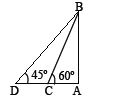
Important Concepts (Take a Look)
1. Trigonometry: A branch of mathematics in which we study the relationships between the sides and angles of a triangle, is called trigonometry.
2. Trigonometric Ratios: Trigonometric ratios of an acute angle in a right triangle express the relationship between the angle and length of its sides.
Trigonometric ratios of an acute angle in a right angled triangle:
For a right-angled triangle \(ABC\) (right-angled at \(B\)), with angle \(\angle A = \theta\):
- \(\sin \theta = \frac{\text{Side opposite to } \angle\theta}{\text{Hypotenuse}} = \frac{BC}{AC}\)
- \(\cos \theta = \frac{\text{Side adjacent to } \angle\theta}{\text{Hypotenuse}} = \frac{AB}{AC}\)
- \(\tan \theta = \frac{\text{Side opposite to } \angle\theta}{\text{Side adjacent to } \angle\theta} = \frac{BC}{AB}\)
- \(\cot \theta = \frac{1}{\tan \theta} = \frac{\text{Side adjacent to } \angle\theta}{\text{Side opposite to } \angle\theta} = \frac{AB}{BC}\)
- \(\sec \theta = \frac{1}{\cos \theta} = \frac{\text{Hypotenuse}}{\text{Side adjacent to } \angle\theta} = \frac{AC}{AB}\)
- \(\csc \theta = \frac{1}{\sin \theta} = \frac{\text{Hypotenuse}}{\text{Side opposite to } \angle\theta} = \frac{AC}{BC}\)
Similarly, for \(\angle C = \beta\):
- \(\sin \beta = \frac{AB}{AC}\), \(\cos \beta = \frac{BC}{AC}\), \(\tan \beta = \frac{AB}{BC}\)
- \(\csc \beta = \frac{AC}{AB}\), \(\sec \beta = \frac{AC}{BC}\), \(\cot \beta = \frac{BC}{AB}\)
3. Relationship between different trigonometric ratios:
- \(\tan \theta = \frac{\sin \theta}{\cos \theta}\)
- \(\cot \theta = \frac{\cos \theta}{\sin \theta}\)
- \(\tan \theta = \frac{1}{\cot \theta}\)
- \(\cos \theta = \frac{1}{\sec \theta}\)
- \(\sin \theta = \frac{1}{\csc \theta}\)
4. Trigonometric Identity: An equation involving trigonometric ratios of an angle is called a trigonometric identity if it is true for all values of the angle.
Important trigonometric identities:
- (i) \(\sin^2\theta + \cos^2\theta = 1\)
- (ii) \(1 + \tan^2\theta = \sec^2\theta\)
- (iii) \(1 + \cot^2\theta = \csc^2\theta\)
5. Trigonometric Ratios of some specific angles:
| \(\theta\) | \(0^\circ\) | \(30^\circ\) | \(45^\circ\) | \(60^\circ\) | \(90^\circ\) |
|---|---|---|---|---|---|
| \(\sin\theta\) | \(0\) | \(\frac{1}{2}\) | \(\frac{1}{\sqrt{2}}\) | \(\frac{\sqrt{3}}{2}\) | \(1\) |
| \(\cos\theta\) | \(1\) | \(\frac{\sqrt{3}}{2}\) | \(\frac{1}{\sqrt{2}}\) | \(\frac{1}{2}\) | \(0\) |
| \(\tan\theta\) | \(0\) | \(\frac{1}{\sqrt{3}}\) | \(1\) | \(\sqrt{3}\) | Not defined |
| \(\cot\theta\) | Not defined | \(\sqrt{3}\) | \(1\) | \(\frac{1}{\sqrt{3}}\) | \(0\) |
| \(\sec\theta\) | \(1\) | \(\frac{2}{\sqrt{3}}\) | \(\sqrt{2}\) | \(2\) | Not defined |
| \(\csc\theta\) | Not defined | \(2\) | \(\sqrt{2}\) | \(\frac{2}{\sqrt{3}}\) | \(1\) |
6. Trigonometric ratios of complementary angles:
- (i) \(\sin(90^\circ - \theta) = \cos\theta\)
- (ii) \(\cos(90^\circ - \theta) = \sin\theta\)
- (iii) \(\tan(90^\circ - \theta) = \cot\theta\)
- (iv) \(\cot(90^\circ - \theta) = \tan\theta\)
- (v) \(\sec(90^\circ - \theta) = \csc\theta\)
- (vi) \(\csc(90^\circ - \theta) = \sec\theta\)
Level – I
Question 1. If \(\theta\) and \(3\theta - 30^\circ\) are acute angles such that \(\sin\theta = \cos(3\theta - 30^\circ)\), then find the value of \(\tan\theta\).
Answer: We are given the relation \(\sin\theta = \cos(3\theta - 30^\circ)\). By using the complementary angle relation, we can write \(\cos A = \sin(90^\circ - A)\): \[ \sin\theta = \sin(90^\circ - (3\theta - 30^\circ)) \] Equating the angles since both are acute: \[ \theta = 90^\circ - 3\theta + 30^\circ \] \[ 4\theta = 120^\circ \]
\(\implies \theta = 30^\circ\) Substituting this value of \(\theta\): \[ \tan\theta = \tan 30^\circ = \frac{1}{\sqrt{3}} \]
In simple words: Since sine of an angle is equal to cosine of its complement, we set the angles to sum up to \(90^\circ\) to solve for \(\theta = 30^\circ\). Then we find \(\tan 30^\circ = 1/\sqrt{3}\).
Exam Tip: Remember to use complementary angle identities to convert either sine to cosine or vice versa to make comparing angles straightforward.
Question 2. Find the value of \(\frac{\cos 30^\circ + \sin 60^\circ}{1 + \cos 60^\circ + \sin 30^\circ}\)
Answer: We substitute the standard values \(\cos 30^\circ = \frac{\sqrt{3}}{2}\), \(\sin 60^\circ = \frac{\sqrt{3}}{2}\), \(\cos 60^\circ = \frac{1}{2}\), and \(\sin 30^\circ = \frac{1}{2}\) into the expression: \[ \text{Value} = \frac{\frac{\sqrt{3}}{2} + \frac{\sqrt{3}}{2}}{1 + \frac{1}{2} + \frac{1}{2}} \] Simplifying the numerator and denominator: \[ \text{Numerator} = \sqrt{3} \] \[ \text{Denominator} = 1 + 1 = 2 \] \[ \text{Value} = \frac{\sqrt{3}}{2} \]
In simple words: Put the standard numerical values for each trigonometric term into the fraction and simplify to get \(\frac{\sqrt{3}}{2}\).
Exam Tip: Always write the standard values separately first to avoid simple substitution errors.
Question 3. Find the value of \((\sin\theta + \cos\theta)^2 + (\cos\theta - \sin\theta)^2\)
Answer: We expand the two squared terms using binomial expansions: \[ (\sin\theta + \cos\theta)^2 = \sin^2\theta + \cos^2\theta + 2\sin\theta\cos\theta \] \[ (\cos\theta - \sin\theta)^2 = \cos^2\theta + \sin^2\theta - 2\sin\theta\cos\theta \] Adding these two expansions together: \[ \text{Total} = (\sin^2\theta + \cos^2\theta) + 2\sin\theta\cos\theta + (\cos^2\theta + \sin^2\theta) - 2\sin\theta\cos\theta \] The cross-multiplication term \(2\sin\theta\cos\theta\) cancels out: \[ \text{Total} = 2(\sin^2\theta + \cos^2\theta) \] Since the fundamental Pythagorean identity states that \(\sin^2\theta + \cos^2\theta = 1\): \[ \text{Total} = 2(1) = 2 \]
In simple words: Multiplying out both squared terms cancels the middle terms, leaving twice the sum of \(\sin^2\theta + \cos^2\theta\), which simplifies to 2.
Exam Tip: Recognizing identities early like \((a+b)^2 + (a-b)^2 = 2(a^2 + b^2)\) saves time on expansions.
Question 4. If \(\tan\theta = \frac{3}{4}\), then find the value of \(\cos^2\theta - \sin^2\theta\)
Answer: Given \(\tan\theta = \frac{3}{4}\), we can consider a right-angled triangle where the opposite side is \(3k\) and the adjacent side is \(4k\). By applying Pythagoras' theorem, we find the hypotenuse: \[ \text{Hypotenuse} = \sqrt{(3k)^2 + (4k)^2} = \sqrt{9k^2 + 16k^2} = 5k \] Using these sides, we can define the sine and cosine ratios: \[ \sin\theta = \frac{3}{5}, \quad \cos\theta = \frac{4}{5} \] Now, we calculate the required expression: \[ \cos^2\theta - \sin^2\theta = \left(\frac{4}{5}\right)^2 - \left(\frac{3}{5}\right)^2 = \frac{16}{25} - \frac{9}{25} = \frac{7}{25} \]
In simple words: Use a standard 3-4-5 right triangle to find the sine and cosine, then square and subtract them to get \(\frac{7}{25}\).
Exam Tip: Pythagorean triplets like 3, 4, 5 are helpful to quickly find the hypotenuse and check your calculations.
Question 5. If \(\sec\theta + \tan\theta = p\), then find the value of \(\sec\theta - \tan\theta\)
Answer: We use the fundamental trigonometric identity: \[ \sec^2\theta - \tan^2\theta = 1 \] Factoring this as a difference of squares: \[ (\sec\theta - \tan\theta)(\sec\theta + \tan\theta) = 1 \] We substitute the given relation \(\sec\theta + \tan\theta = p\): \[ (\sec\theta - \tan\theta) \cdot p = 1 \] Solving for the required term: \[ \sec\theta - \tan\theta = \frac{1}{p} \]
In simple words: The product of \((\sec\theta - \tan\theta)\) and \((\sec\theta + \tan\theta)\) is always 1, so they are reciprocals of each other. If one is \(p\), the other must be \(\frac{1}{p}\).
Exam Tip: This reciprocal relationship is extremely useful for solving system-of-equation questions involving secant and tangent.
Question 6. Change \(\sec^4\theta - \sec^2\theta\) in terms of \(\tan\theta\).
Answer: Let us factor out \(\sec^2\theta\) from the given expression: \[ \sec^4\theta - \sec^2\theta = \sec^2\theta(\sec^2\theta - 1) \] Now, we apply the identity \(\sec^2\theta = 1 + \tan^2\theta\), which also means \(\sec^2\theta - 1 = \tan^2\theta\). Substituting these: \[ = (1 + \tan^2\theta)\tan^2\theta \] \[ = \tan^2\theta + \tan^4\theta \] Thus, the expression is successfully converted.
In simple words: Factor out \(\sec^2\theta\) and use the identity \(\sec^2\theta = 1 + \tan^2\theta\) to convert everything into tangent terms.
Exam Tip: Always look to factor out common terms first before using identities to simplify the conversion process.
Question 7. Prove that \(\frac{\sin^3\alpha + \cos^3\alpha}{\sin\alpha + \cos\alpha} + \sin\alpha \cos\alpha = 1\)
Answer: We begin by simplifying the numerator of the fraction using the algebraic identity \(x^3 + y^3 = (x + y)(x^2 - xy + y^2)\): \[ \sin^3\alpha + \cos^3\alpha = (\sin\alpha + \cos\alpha)(\sin^2\alpha - \sin\alpha\cos\alpha + \cos^2\alpha) \] Substituting this into the left-hand side: \[ \text{LHS} = \frac{(\sin\alpha + \cos\alpha)(\sin^2\alpha - \sin\alpha\cos\alpha + \cos^2\alpha)}{\sin\alpha + \cos\alpha} + \sin\alpha\cos\alpha \] Cancelling the common factor \(\sin\alpha + \cos\alpha\): \[ \text{LHS} = (\sin^2\alpha - \sin\alpha\cos\alpha + \cos^2\alpha) + \sin\alpha\cos\alpha \] Using \(\sin^2\alpha + \cos^2\alpha = 1\), this simplifies to: \[ \text{LHS} = 1 - \sin\alpha\cos\alpha + \sin\alpha\cos\alpha = 1 = \text{RHS} \] Hence proved.
In simple words: Expand the sum of cubes in the numerator to cancel the denominator, then use the standard identity \(\sin^2\alpha + \cos^2\alpha = 1\) to reach the final value of 1.
Exam Tip: Use algebraic factorization identities directly in trigonometry questions containing powers of 3 to simplify terms.
Question 8. In a triangle ABC, it is given that \(\angle C = 90^\circ\) and \(\tan A = 1/\sqrt{3}\), find the value of \((\sin A \cos B + \cos A \sin B)\)
Answer: In triangle \(ABC\), we have \(\angle C = 90^\circ\). Since the sum of angles in a triangle is \(180^\circ\), we have: \[ A + B = 90^\circ \] The expression we need to find is \(\sin A\cos B + \cos A\sin B\), which is the standard expansion for \(\sin(A+B)\): \[ \sin A\cos B + \cos A\sin B = \sin(A+B) \] Substituting \(A+B = 90^\circ\): \[ = \sin 90^\circ = 1 \] Alternatively, since \(\tan A = \frac{1}{\sqrt{3}}\), we have \(A = 30^\circ\). This implies \(B = 90^\circ - 30^\circ = 60^\circ\). Substituting these angles directly: \[ \sin 30^\circ\cos 60^\circ + \cos 30^\circ\sin 60^\circ = \left(\frac{1}{2}\right)\left(\frac{1}{2}\right) + \left(\frac{\sqrt{3}}{2}\right)\left(\frac{\sqrt{3}}{2}\right) = \frac{1}{4} + \frac{3}{4} = 1 \]
In simple words: Since the angles of a right triangle add up to \(180^\circ\), the two acute angles must sum to \(90^\circ\). The given formula represents \(\sin(A+B)\), which is simply \(\sin 90^\circ = 1\).
Exam Tip: Recognizing the sum formula of angles, \(\sin(A+B) = \sin A\cos B + \cos A\sin B\), can save you from complex angle calculations.
Question 9. Find the value of \(\csc^2 67^\circ - \tan^2 23^\circ\).
Answer: We can rewrite \(\csc^2 67^\circ\) using complementary angles: \[ \csc 67^\circ = \csc(90^\circ - 23^\circ) = \sec 23^\circ \] Substituting this into the expression: \[ \csc^2 67^\circ - \tan^2 23^\circ = \sec^2 23^\circ - \tan^2 23^\circ \] By the fundamental identity \(\sec^2\theta - \tan^2\theta = 1\): \[ = 1 \]
In simple words: Convert cosecant to secant using complementary angles, which leaves the standard identity \(\sec^2 23^\circ - \tan^2 23^\circ = 1\).
Exam Tip: If the angles in a problem sum to \(90^\circ\), use complementary angle relations to match them first.
Question 10. If \(\cos x = \cos 60^\circ \cos 30^\circ + \sin 60^\circ \sin 30^\circ\), then find the value of \(x\)
Answer: We substitute the standard values into the right-hand side of the equation: \[ \cos 60^\circ = \frac{1}{2}, \quad \cos 30^\circ = \frac{\sqrt{3}}{2}, \quad \sin 60^\circ = \frac{\sqrt{3}}{2}, \quad \sin 30^\circ = \frac{1}{2} \] Substituting these values: \[ \cos x = \left(\frac{1}{2}\right)\left(\frac{\sqrt{3}}{2}\right) + \left(\frac{\sqrt{3}}{2}\right)\left(\frac{1}{2}\right) \] \[ \cos x = \frac{\sqrt{3}}{4} + \frac{\sqrt{3}}{4} = \frac{2\sqrt{3}}{4} = \frac{\sqrt{3}}{2} \] Since \(\cos 30^\circ = \frac{\sqrt{3}}{2}\), we have: \[ x = 30^\circ \] Alternatively, using the identity \(\cos(A-B) = \cos A\cos B + \sin A\sin B\), the expression is \(\cos(60^\circ - 30^\circ) = \cos 30^\circ\), which yields \(x = 30^\circ\).
In simple words: Replace the trigonometric terms with their numerical values to simplify the equation to \(\cos x = \frac{\sqrt{3}}{2}\), which tells us \(x = 30^\circ\).
Exam Tip: Knowing compound angle identities like \(\cos(A-B)\) is a powerful shortcut to simplify long trigonometric products.
Question 11. If \(0^\circ \le x \le 90^\circ\) and \(2\sin^2 x = 1/2\), then find the value of \(x\)
Answer: We are given the equation: \[ 2\sin^2 x = \frac{1}{2} \] Dividing both sides by 2: \[ \sin^2 x = \frac{1}{4} \] Taking the square root on both sides (keeping the positive root as \(0^\circ \le x \le 90^\circ\)): \[ \sin x = \frac{1}{2} \] We know that \(\sin 30^\circ = \frac{1}{2}\), so: \[ x = 30^\circ \]
In simple words: Divide by 2, take the square root to get \(\sin x = 1/2\), which means \(x\) must be \(30^\circ\).
Exam Tip: Always check the given range of \(x\) before choosing between positive and negative roots after a square root operation.
Question 12. Find the value of \(\csc^2 30^\circ - \sin^2 45^\circ - \sec^2 60^\circ\)
Answer: We substitute the standard values into the expression: \[ \csc 30^\circ = 2, \quad \sin 45^\circ = \frac{1}{\sqrt{2}}, \quad \sec 60^\circ = 2 \] Substituting these values: \[ \text{Value} = (2)^2 - \left(\frac{1}{\sqrt{2}}\right)^2 - (2)^2 \] \[ = 4 - \frac{1}{2} - 4 = -\frac{1}{2} \]
In simple words: Put the standard numbers into the equation; the squares of 2 cancel each other out, leaving only the negative of \(\left(1/\sqrt{2}\right)^2\), which is \(-\frac{1}{2}\).
Exam Tip: Recognize terms that cancel out early to avoid unnecessary algebraic simplifications.
Question 13. Simplify \((\sec\theta + \tan\theta)(1 - \sin\theta)\)
Answer: We express \(\sec\theta\) and \(\tan\theta\) in terms of sine and cosine: \[ \sec\theta = \frac{1}{\cos\theta}, \quad \tan\theta = \frac{\sin\theta}{\cos\theta} \] Substituting this into our expression: \[ = \left(\frac{1}{\cos\theta} + \frac{\sin\theta}{\cos\theta}\right)(1 - \sin\theta) \] \[ = \left(\frac{1 + \sin\theta}{\cos\theta}\right)(1 - \sin\theta) \] \[ = \frac{1 - \sin^2\theta}{\cos\theta} \] Using the identity \(1 - \sin^2\theta = \cos^2\theta\): \[ = \frac{\cos^2\theta}{\cos\theta} = \cos\theta \]
In simple words: Convert secant and tangent to sine and cosine, multiply out the numerator to get \(\cos^2\theta\), and cancel one cosine from the denominator to get \(\cos\theta\).
Exam Tip: Converting everything to sine and cosine is the most reliable first step when simplifying complex ratios.
Question 14. Prove that \(\frac{\cos A}{1 - \sin A} + \frac{\cos A}{1 + \sin A} = 2\sec A\)
Answer: We combine the two fractions on the Left-Hand Side (LHS) using a common denominator: \[ \text{LHS} = \frac{\cos A(1 + \sin A) + \cos A(1 - \sin A)}{(1 - \sin A)(1 + \sin A)} \] Expanding the terms in the numerator and simplifying: \[ \text{LHS} = \frac{\cos A + \cos A\sin A + \cos A - \cos A\sin A}{1 - \sin^2 A} \] \[ \text{LHS} = \frac{2\cos A}{1 - \sin^2 A} \] Using the identity \(1 - \sin^2 A = \cos^2 A\): \[ \text{LHS} = \frac{2\cos A}{\cos^2 A} = \frac{2}{\cos A} = 2\sec A = \text{RHS} \] Hence proved.
In simple words: Add the fractions by finding a common denominator, simplify the top, and substitute \(\cos^2 A\) in the bottom to cancel out and get \(2\sec A\).
Exam Tip: When faced with a sum of fractions in proof questions, always look to merge them with a common denominator first.
Level – II
Question 1. If \(\sec\alpha = 5/4\) then evaluate \(\frac{\tan\alpha}{1 + \tan^2\alpha}\).
Answer: Let us simplify the expression first using standard identities: \[ \frac{\tan\alpha}{1 + \tan^2\alpha} = \frac{\tan\alpha}{\sec^2\alpha} \] Expressing this in terms of sine and cosine: \[ = \frac{\frac{\sin\alpha}{\cos\alpha}}{\frac{1}{\cos^2\alpha}} = \sin\alpha\cos\alpha \] Given \(\sec\alpha = \frac{5}{4}\), we have \(\cos\alpha = \frac{4}{5}\). By constructing a right triangle, the opposite side is \(\sqrt{5^2 - 4^2} = 3\), so \(\sin\alpha = \frac{3}{5}\). Substituting these values: \[ = \left(\frac{3}{5}\right)\left(\frac{4}{5}\right) = \frac{12}{25} \]
In simple words: Simplify the given expression to \(\sin\alpha\cos\alpha\). Using \(\sec\alpha = 5/4\), find \(\cos\alpha = 4/5\) and \(\sin\alpha = 3/5\), then multiply them to get \(\frac{12}{25}\).
Exam Tip: Simplify the trigonometric expression first before substituting side values to reduce computational errors.
Question 2. If \(A+B =90^\circ\), then prove that \(\sqrt{\frac{\tan A \tan B + \tan A \cot B}{\sin A \sec B} - \frac{\sin^2 B}{\cos^2 A}} = \tan A\)
Answer: Since \(A+B = 90^\circ\), we have \(B = 90^\circ - A\). Applying complementary relations: \[ \tan B = \cot A, \quad \cot B = \tan A, \quad \sec B = \csc A, \quad \sin B = \cos A \] Substituting these relations into the Left-Hand Side (LHS) of our expression: \[ \text{LHS} = \sqrt{\frac{\tan A\cot A + \tan A\tan A}{\sin A\csc A} - \frac{\cos^2 A}{\cos^2 A}} \] Since \(\tan A\cot A = 1\), \(\sin A\csc A = 1\), and \(\frac{\cos^2 A}{\cos^2 A} = 1\), we simplify to: \[ \text{LHS} = \sqrt{\frac{1 + \tan^2 A}{1} - 1} = \sqrt{\tan^2 A} = \tan A = \text{RHS} \] Hence proved.
In simple words: Substitute \(B = 90^\circ - A\) into the expression and use complementary identities. This simplifies the inside of the square root to \(\tan^2 A\), which resolves to \(\tan A\).
Exam Tip: Using co-function identities is crucial when dealing with variables related by \(A+B=90^\circ\).
Question 3. If \(7\sin^2 A + 3\cos^2 A = 4\), show that \(\tan A = 1/\sqrt{3}\).
Answer: We can rewrite the given equation as: \[ 4\sin^2 A + 3\sin^2 A + 3\cos^2 A = 4 \] \[ 4\sin^2 A + 3(\sin^2 A + \cos^2 A) = 4 \] Using the identity \(\sin^2 A + \cos^2 A = 1\): \[ 4\sin^2 A + 3 = 4 \] \[ 4\sin^2 A = 1 \implies \sin^2 A = \frac{1}{4} \] For acute angle \(A\), taking the square root: \[ \sin A = \frac{1}{2} \] This gives \(A = 30^\circ\). Consequently: \[ \tan A = \tan 30^\circ = \frac{1}{\sqrt{3}} \] Hence proved.
In simple words: Rewrite the equation to isolate \(\sin^2 A\), which simplifies to \(\sin A = 1/2\). This means \(A = 30^\circ\), giving \(\tan A = 1/\sqrt{3}\).
Exam Tip: Splitting terms to isolate primary identities is an essential tool in simplifying equations.
Question 4. Prove that \(\sqrt{\frac{\sec A - 1}{\sec A + 1}} + \sqrt{\frac{\sec A + 1}{\sec A - 1}} = 2\csc A\)
Answer: We combine the two radicals on the Left-Hand Side (LHS) by finding a common denominator: \[ \text{LHS} = \frac{(\sec A - 1) + (\sec A + 1)}{\sqrt{(\sec A + 1)(\sec A - 1)}} \] \[ \text{LHS} = \frac{2\sec A}{\sqrt{\sec^2 A - 1}} \] Since \(\sec^2 A - 1 = \tan^2 A\): \[ \text{LHS} = \frac{2\sec A}{\tan A} \] Expressing secant and tangent in terms of sine and cosine: \[ \text{LHS} = \frac{\frac{2}{\cos A}}{\frac{\sin A}{\cos A}} = \frac{2}{\sin A} = 2\csc A = \text{RHS} \] Hence proved.
In simple words: Combine the square roots over a common denominator, use the identity \(\sec^2 A - 1 = \tan^2 A\), and rewrite in terms of sine and cosine to simplify to \(2\csc A\).
Exam Tip: Working with radicals by rationalizing or finding common denominators is usually the easiest way to remove the roots.
Question 5. Prove that \((\sin\theta + \csc\theta)^2 + (\cos\theta + \sec\theta)^2 = 7 + \tan^2\theta + \cot^2\theta\).
Answer: We expand both squared terms on the Left-Hand Side (LHS): \[ (\sin\theta + \csc\theta)^2 = \sin^2\theta + \csc^2\theta + 2\sin\theta\csc\theta \] \[ (\cos\theta + \sec\theta)^2 = \cos^2\theta + \sec^2\theta + 2\cos\theta\sec\theta \] Since \(\sin\theta\csc\theta = 1\) and \(\cos\theta\sec\theta = 1\), the sum is: \[ \text{LHS} = \sin^2\theta + \csc^2\theta + 2 + \cos^2\theta + \sec^2\theta + 2 \] Grouping \(\sin^2\theta + \cos^2\theta = 1\): \[ \text{LHS} = 1 + 4 + \csc^2\theta + \sec^2\theta \] Now we replace cosecant and secant using standard identities: \[ \csc^2\theta = 1 + \cot^2\theta, \quad \sec^2\theta = 1 + \tan^2\theta \] \[ \text{LHS} = 5 + (1 + \cot^2\theta) + (1 + \tan^2\theta) = 7 + \tan^2\theta + \cot^2\theta = \text{RHS} \] Hence proved.
In simple words: Multiply out the brackets and cancel the reciprocal terms. Use the identity \(\sin^2\theta + \cos^2\theta = 1\) and convert secant and cosecant to tangent and cotangent to get the sum of 7.
Exam Tip: Be sure to write the reciprocal product simplifications clearly, like \(\sin\theta\csc\theta=1\), to gain full method marks.
Question 6. Evaluate \(\frac{11\sin 70^\circ}{7\cos 20^\circ} - \frac{4\cos 53^\circ \csc 37^\circ}{7\tan 15^\circ \tan 35^\circ \tan 55^\circ \tan 75^\circ}\)
Answer: We simplify the terms using complementary angle relations:
• In the first term: \(\cos 20^\circ = \cos(90^\circ - 70^\circ) = \sin 70^\circ\). \[ \text{First Term} = \frac{11\sin 70^\circ}{7\sin 70^\circ} = \frac{11}{7} \]
• In the numerator of the second term: \(\csc 37^\circ = \csc(90^\circ - 53^\circ) = \sec 53^\circ\). \[ \cos 53^\circ \sec 53^\circ = 1 \]
• In the denominator of the second term: we pair the complementary tangents: \[ \tan 75^\circ = \cot 15^\circ \implies \tan 15^\circ\tan 75^\circ = 1 \] \[ \tan 55^\circ = \cot 35^\circ \implies \tan 35^\circ\tan 55^\circ = 1 \] \[ \text{Second Term} = \frac{4(1)}{7(1 \cdot 1)} = \frac{4}{7} \] Subtracting the two terms: \[ \text{Value} = \frac{11}{7} - \frac{4}{7} = \frac{7}{7} = 1 \]
In simple words: Convert the complementary angles to make them match. The terms will simplify to \(\frac{11}{7}\) and \(\frac{4}{7}\), which subtract to give 1.
Exam Tip: Grouping products of complementary angles early helps identify simple factors of 1.
Question 7. Find the value of \(\sin 30^\circ\) geometrically.
Answer: To find the value of \(\sin 30^\circ\) geometrically, let us construct an equilateral triangle \(ABC\) of side \(2a\). Since \(ABC\) is equilateral, each angle is \(60^\circ\). Now, draw a perpendicular altitude \(AD\) from vertex \(A\) to the base \(BC\). This perpendicular bisects both the angle \(\angle A\) and the side \(BC\): \[ BD = CD = a \] \[ \angle BAD = 30^\circ \] In the right-angled triangle \(ABD\), using Pythagoras' theorem: \[ AD = \sqrt{AB^2 - BD^2} = \sqrt{(2a)^2 - a^2} = a\sqrt{3} \] Now, using the definition of sine for \(\angle BAD = 30^\circ\): \[ \sin 30^\circ = \frac{\text{Opposite}}{\text{Hypotenuse}} = \frac{BD}{AB} = \frac{a}{2a} = \frac{1}{2} \]
In simple words: Create an equilateral triangle with side \(2a\) and split it in half. The vertical line bisects the base to length \(a\), so the sine of the \(30^\circ\) angle is \(\frac{a}{2a} = \frac{1}{2}\).
Exam Tip: Drawing a clean diagram with a right-angle indicator and showing the bisected base is crucial to scoring full marks in geometric derivations.
Question 8. If \(\tan(A - B) = \frac{1}{\sqrt{3}}\) and \(\sin(A + B) = 1\), then find A and B.
Answer: We match the given ratios to their standard angles:
• Since \(\tan 30^\circ = \frac{1}{\sqrt{3}}\), we have: \[ A - B = 30^\circ \quad \text{--- (i)} \]
• Since \(\sin 90^\circ = 1\), we have: \[ A + B = 90^\circ \quad \text{--- (ii)} \] Adding equations (i) and (ii): \[ 2A = 120^\circ \implies A = 60^\circ \] Substituting \(A = 60^\circ\) into equation (ii): \[ 60^\circ + B = 90^\circ \implies B = 30^\circ \] Thus, \(A = 60^\circ\) and \(B = 30^\circ\).
In simple words: Translate the trigonometric values into angles to set up two linear equations. Solving them simultaneously gives \(A = 60^\circ\) and \(B = 30^\circ\).
Exam Tip: Be sure to verify if your values of A and B are acute and satisfy the primary equations.
Question 9. If \(\theta\) is an acute angle and \(\sin\theta = \cos\theta\), find the value of \(3\tan^2\theta + 2\sin^2\theta - 1\).
Answer: Given \(\sin\theta = \cos\theta\), we divide both sides by \(\cos\theta\): \[ \tan\theta = 1 \] For an acute angle, this gives \(\theta = 45^\circ\). Substituting \(\theta = 45^\circ\) into the expression: \[ 3\tan^2 45^\circ + 2\sin^2 45^\circ - 1 \] Using the standard values \(\tan 45^\circ = 1\) and \(\sin 45^\circ = \frac{1}{\sqrt{2}}\): \[ = 3(1)^2 + 2\left(\frac{1}{\sqrt{2}}\right)^2 - 1 \] \[ = 3 + 2\left(\frac{1}{2}\right) - 1 = 3 + 1 - 1 = 3 \]
In simple words: The given condition means \(\theta = 45^\circ\). Substitute this angle into the equation and use standard values to solve it to 3.
Exam Tip: Remind yourself that \(\sin\theta=\cos\theta\) always implies \(\theta=45^\circ\) for acute angles, which speeds up substitutions.
Question 10. If \(\frac{x}{a}\cos\theta + \frac{y}{b}\sin\theta = 1\) and \(\frac{x}{a}\sin\theta - \frac{y}{b}\cos\theta = 1\), prove that \(\frac{x^2}{a^2} + \frac{y^2}{b^2} = 2\).
Answer: Let us square and add both given equations: \[ \left(\frac{x}{a}\cos\theta + \frac{y}{b}\sin\theta\right)^2 + \left(\frac{x}{a}\sin\theta - \frac{y}{b}\cos\theta\right)^2 = 1^2 + 1^2 \] Expanding both squared binomials: \[ \left(\frac{x^2}{a^2}\cos^2\theta + \frac{y^2}{b^2}\sin^2\theta + \frac{2xy}{ab}\cos\theta\sin\theta\right) + \left(\frac{x^2}{a^2}\sin^2\theta + \frac{y^2}{b^2}\cos^2\theta - \frac{2xy}{ab}\sin\theta\cos\theta\right) = 2 \] The cross-multiplication terms cancel out, leaving: \[ \frac{x^2}{a^2}(\cos^2\theta + \sin^2\theta) + \frac{y^2}{b^2}(\sin^2\theta + \cos^2\theta) = 2 \] Using the standard Pythagorean identity \(\sin^2\theta + \cos^2\theta = 1\): \[ \frac{x^2}{a^2}(1) + \frac{y^2}{b^2}(1) = 2 \] \[ \frac{x^2}{a^2} + \frac{y^2}{b^2} = 2 \] Hence proved.
In simple words: Square both equations and sum them together. The cross-multiplication terms cancel out, and the remaining parts simplify to \(\frac{x^2}{a^2} + \frac{y^2}{b^2} = 2\) using basic identities.
Exam Tip: Squaring and adding symmetric equations with sine and cosine coefficients is a common method to eliminate the variable \(\theta\).
Question 11. Prove that \(\frac{\sin\theta - 2\sin^3\theta}{2\cos^3\theta - \cos\theta} = \tan\theta\).
Answer: We begin with the Left-Hand Side (LHS) of the expression: \[ \text{LHS} = \frac{\sin\theta - 2\sin^3\theta}{2\cos^3\theta - \cos\theta} \] Factor out \(\sin\theta\) from the numerator and \(\cos\theta\) from the denominator: \[ \text{LHS} = \frac{\sin\theta(1 - 2\sin^2\theta)}{\cos\theta(2\cos^2\theta - 1)} \] We know that \(1 - 2\sin^2\theta = \cos 2\theta\) and \(2\cos^2\theta - 1 = \cos 2\theta\) (or alternatively, replace \(1\) with \(\sin^2\theta + \cos^2\theta\)): \[ 1 - 2\sin^2\theta = (\sin^2\theta + \cos^2\theta) - 2\sin^2\theta = \cos^2\theta - \sin^2\theta \] \[ 2\cos^2\theta - 1 = 2\cos^2\theta - (\sin^2\theta + \cos^2\theta) = \cos^2\theta - \sin^2\theta \] Substitute these back: \[ \text{LHS} = \frac{\sin\theta(\cos^2\theta - \sin^2\theta)}{\cos\theta(\cos^2\theta - \sin^2\theta)} \] Cancelling the common term \(\cos^2\theta - \sin^2\theta\): \[ \text{LHS} = \frac{\sin\theta}{\cos\theta} = \tan\theta = \text{RHS} \] Hence proved.
In simple words: Factor the numerator and denominator, convert both bracketed expressions using \(\sin^2\theta + \cos^2\theta = 1\), cancel the matching bracket term, and get \(\tan\theta\).
Exam Tip: Substituting the identity \(1 = \sin^2\theta + \cos^2\theta\) directly in the brackets helps simplify terms cleanly without needing higher-level double angle formulas.
Level - III
Question 1. Evaluate the following: \(\sin^2 25^\circ + \sin^2 65^\circ + \sqrt{3}(\tan 5^\circ \tan 15^\circ \tan 30^\circ \tan 75^\circ \tan 85^\circ)\).
Answer: We simplify the expression using complementary angle relations:
• For the first part: \(\sin 65^\circ = \sin(90^\circ - 25^\circ) = \cos 25^\circ\). \[ \sin^2 25^\circ + \sin^2 65^\circ = \sin^2 25^\circ + \cos^2 25^\circ = 1 \]
• For the second part: \[ \tan 85^\circ = \cot 5^\circ \implies \tan 5^\circ\tan 85^\circ = 1 \] \[ \tan 75^\circ = \cot 15^\circ \implies \tan 15^\circ\tan 75^\circ = 1 \] \[ \tan 30^\circ = \frac{1}{\sqrt{3}} \] Substituting these back into the expression: \[ = 1 + \sqrt{3}\left(1 \cdot 1 \cdot \frac{1}{\sqrt{3}}\right) = 1 + 1 = 2 \] Thus, the final value is 2.
In simple words: Simplify the first sum of squares to 1 using Pythagorean relations. Pair up and cancel the tangent terms to get 1, giving a final sum of 2.
Exam Tip: Grouping terms with complementary angles (adding to \(90^\circ\)) is a quick way to identify components that simplify to 1.
Question 2. If \(\frac{\cos\alpha}{\cos\beta} = m\) and \(\frac{\cos\alpha}{\sin\beta} = n\), show that \((m^2 + n^2)\cos^2\beta = n^2\).
Answer: We substitute the given values of \(m\) and \(n\) into the Left-Hand Side (LHS) of the expression: \[ \text{LHS} = (m^2 + n^2)\cos^2\beta \] \[ \text{LHS} = \left(\frac{\cos^2\alpha}{\cos^2\beta} + \frac{\cos^2\alpha}{\sin^2\beta}\right)\cos^2\beta \] Factor out \(\cos^2\alpha\): \[ \text{LHS} = \cos^2\alpha\left(\frac{1}{\cos^2\beta} + \frac{1}{\sin^2\beta}\right)\cos^2\beta \] Find a common denominator inside the parenthesis: \[ \text{LHS} = \cos^2\alpha\left(\frac{\sin^2\beta + \cos^2\beta}{\cos^2\beta\sin^2\beta}\right)\cos^2\beta \] Using the standard identity \(\sin^2\beta + \cos^2\beta = 1\): \[ \text{LHS} = \cos^2\alpha\left(\frac{1}{\cos^2\beta\sin^2\beta}\right)\cos^2\beta \] Cancelling the common term \(\cos^2\beta\) from the numerator and denominator: \[ \text{LHS} = \frac{\cos^2\alpha}{\sin^2\beta} \] Since \(\frac{\cos\alpha}{\sin\beta} = n\), we have: \[ \text{LHS} = n^2 = \text{RHS} \] Hence proved.
In simple words: Substitute \(m\) and \(n\) into the expression, find a common denominator, simplify using \(\sin^2\beta + \cos^2\beta = 1\), and cancel out \(\cos^2\beta\) to get \(n^2\).
Exam Tip: Factoring out common numerator terms (like \(\cos^2\alpha\)) first simplifies the fraction addition inside the bracket.
Question 3. Prove that \(\tan^2\theta + \cot^2\theta + 2 = \csc^2\theta \sec^2\theta\).
Answer: We begin with the Left-Hand Side (LHS): \[ \text{LHS} = \tan^2\theta + \cot^2\theta + 2 \] This can be written as a perfect square: \[ \text{LHS} = (\tan\theta + \cot\theta)^2 \] Expressing tangent and cotangent in terms of sine and cosine: \[ \text{LHS} = \left(\frac{\sin\theta}{\cos\theta} + \frac{\cos\theta}{\sin\theta}\right)^2 \] Combining terms with a common denominator: \[ \text{LHS} = \left(\frac{\sin^2\theta + \cos^2\theta}{\sin\theta\cos\theta}\right)^2 \] Since \(\sin^2\theta + \cos^2\theta = 1\): \[ \text{LHS} = \left(\frac{1}{\sin\theta\cos\theta}\right)^2 = \frac{1}{\sin^2\theta\cos^2\theta} \] Using reciprocal relations \(\frac{1}{\sin^2\theta} = \csc^2\theta\) and \(\frac{1}{\cos^2\theta} = \sec^2\theta\): \[ \text{LHS} = \csc^2\theta\sec^2\theta = \text{RHS} \] Hence proved.
In simple words: Express the sum as a perfect square, convert to sine and cosine, simplify to \(\frac{1}{\sin^2\theta\cos^2\theta}\), and convert back to get the product of cosecant and secant.
Exam Tip: Rewriting \(a^2+b^2+2ab\) structures as perfect squares often simplifies trigonometric sum proofs.
Question 4. If \(\cos\theta + \sin\theta = \sqrt{2}\cos\theta\), then show that \((\cos\theta - \sin\theta) = \sqrt{2}\sin\theta\).
Answer: We are given: \[ \cos\theta + \sin\theta = \sqrt{2}\cos\theta \] Let us square both sides: \[ (\cos\theta + \sin\theta)^2 = 2\cos^2\theta \] \[ \cos^2\theta + \sin^2\theta + 2\sin\theta\cos\theta = 2\cos^2\theta \] Since \(\cos^2\theta + \sin^2\theta = 1\): \[ 1 + 2\sin\theta\cos\theta = 2\cos^2\theta \implies 2\sin\theta\cos\theta = 2\cos^2\theta - 1 \] Now, let us evaluate the square of the expression we need to prove: \[ (\cos\theta - \sin\theta)^2 = \cos^2\theta + \sin^2\theta - 2\sin\theta\cos\theta \] \[ = 1 - 2\sin\theta\cos\theta \] Substitute the value of \(2\sin\theta\cos\theta\) from our first equation: \[ = 1 - (2\cos^2\theta - 1) = 2 - 2\cos^2\theta \] \[ = 2(1 - \cos^2\theta) = 2\sin^2\theta \] Taking the square root on both sides: \[ \cos\theta - \sin\theta = \sqrt{2}\sin\theta \] Hence proved.
In simple words: Square the given equation to find the value of \(2\sin\theta\cos\theta\). Substituting this into the expanded form of \((\cos\theta - \sin\theta)^2\) simplifies it to \(2\sin^2\theta\), which taking the root yields \(\sqrt{2}\sin\theta\).
Exam Tip: Squaring binomials containing sine and cosine helps create easy substitutions via the \(2\sin\theta\cos\theta\) product term.
Question 5. Prove that \((\sin\theta + \sec\theta)^2 + (\cos\theta + \csc\theta)^2 = (1 + \sec\theta \csc\theta)^2\).
Answer: We express \(\sec\theta\) and \(\csc\theta\) in terms of sine and cosine on the Left-Hand Side (LHS): \[ \text{LHS} = \left(\sin\theta + \frac{1}{\cos\theta}\right)^2 + \left(\cos\theta + \frac{1}{\sin\theta}\right)^2 \] Combining terms inside each parenthesis: \[ \text{LHS} = \left(\frac{\sin\theta\cos\theta + 1}{\cos\theta}\right)^2 + \left(\frac{\cos\theta\sin\theta + 1}{\sin\theta}\right)^2 \] Factoring out the common numerator term \((\sin\theta\cos\theta + 1)^2\): \[ \text{LHS} = (\sin\theta\cos\theta + 1)^2 \left[\frac{1}{\cos^2\theta} + \frac{1}{\sin^2\theta}\right] \] Combining the terms inside the bracket using a common denominator: \[ \text{LHS} = (\sin\theta\cos\theta + 1)^2 \left[\frac{\sin^2\theta + \cos^2\theta}{\cos^2\theta\sin^2\theta}\right] \] Since \(\sin^2\theta + \cos^2\theta = 1\), this simplifies to: \[ \text{LHS} = \frac{(\sin\theta\cos\theta + 1)^2}{\cos^2\theta\sin^2\theta} \] Writing this as a single perfect square: \[ \text{LHS} = \left[\frac{\sin\theta\cos\theta + 1}{\sin\theta\cos\theta}\right]^2 = \left[1 + \frac{1}{\sin\theta\cos\theta}\right]^2 \] Using reciprocal relations \(\sec\theta = \frac{1}{\cos\theta}\) and \(\csc\theta = \frac{1}{\sin\theta}\): \[ \text{LHS} = (1 + \sec\theta\csc\theta)^2 = \text{RHS} \] Hence proved.
In simple words: Convert secant and cosecant to sine and cosine, factor out the common numerator, and simplify the bracket to show that the expression is equivalent to \((1 + \sec\theta\csc\theta)^2\).
Exam Tip: Keeping numerators factored in intermediate steps often reveals simpler terms and avoids unnecessary polynomial expansions.
Question 6. Prove that \(\frac{\sin\theta}{1 - \cos\theta} + \frac{\tan\theta}{1 + \cos\theta} = \sec\theta\csc\theta + \cot\theta\).
Answer: We start with the Left-Hand Side (LHS) of the expression: \[ \text{LHS} = \frac{\sin\theta}{1 - \cos\theta} + \frac{\tan\theta}{1 + \cos\theta} \] Substitute \(\tan\theta = \frac{\sin\theta}{\cos\theta}\): \[ \text{LHS} = \frac{\sin\theta}{1 - \cos\theta} + \frac{\sin\theta}{\cos\theta(1 + \cos\theta)} \] Factor out \(\sin\theta\) and find a common denominator: \[ \text{LHS} = \sin\theta \left[ \frac{\cos\theta(1 + \cos\theta) + (1 - \cos\theta)}{\cos\theta(1 - \cos\theta)(1 + \cos\theta)} \right] \] Multiply out the terms in the numerator and simplify: \[ \text{LHS} = \sin\theta \left[ \frac{\cos\theta + \cos^2\theta + 1 - \cos\theta}{\cos\theta(1 - \cos^2\theta)} \right] \] Since \(1 - \cos^2\theta = \sin^2\theta\): \[ \text{LHS} = \sin\theta \left[ \frac{\cos^2\theta + 1}{\cos\theta\sin^2\theta} \right] \] Simplifying the sine term: \[ \text{LHS} = \frac{\cos^2\theta + 1}{\cos\theta\sin\theta} \] Splitting the fraction into two parts: \[ \text{LHS} = \frac{\cos^2\theta}{\cos\theta\sin\theta} + \frac{1}{\cos\theta\sin\theta} \] \[ \text{LHS} = \frac{\cos\theta}{\sin\theta} + \left(\frac{1}{\cos\theta}\right)\left(\frac{1}{\sin\theta}\right) = \cot\theta + \sec\theta\csc\theta = \text{RHS} \] Hence proved.
In simple words: Convert tangent to sine and cosine, find a common denominator, use \(1 - \cos^2\theta = \sin^2\theta\), and split the resulting fraction to reach the desired sum of cotangent and the product of secant and cosecant.
Exam Tip: Factoring out shared trigonometric functions (like \(\sin\theta\)) first makes fraction addition less messy.
Question 7. If \(x = a\sin\theta\) and \(y = b\tan\theta\). Prove that \(a^2/x^2 - b^2/y^2 = 1\).
Answer: We can rewrite the given expressions as: \[ \frac{a}{x} = \frac{1}{\sin\theta} = \csc\theta \] \[ \frac{b}{y} = \frac{1}{\tan\theta} = \cot\theta \] Now, squaring both equations and subtracting them: \[ \frac{a^2}{x^2} - \frac{b^2}{y^2} = \csc^2\theta - \cot^2\theta \] Using the standard identity \(\csc^2\theta - \cot^2\theta = 1\): \[ \frac{a^2}{x^2} - \frac{b^2}{y^2} = 1 \] Hence proved.
In simple words: Convert the ratios \(\frac{a}{x}\) and \(\frac{b}{y}\) to cosecant and cotangent, then square and subtract them to get the standard identity value of 1.
Exam Tip: Isolate the coefficients on one side to match standard reciprocal relationships directly before squaring.
Question 8. Prove that \(\sin^6\theta + \cos^6\theta = 1- 3\sin^2\theta\cos^2\theta\).
Answer: We write the given expression as a sum of cubes: \[ \sin^6\theta + \cos^6\theta = (\sin^2\theta)^3 + (\cos^2\theta)^3 \] Using the algebraic identity \(a^3 + b^3 = (a + b)^3 - 3ab(a + b)\) with \(a = \sin^2\theta\) and \(b = \cos^2\theta\): \[ \text{LHS} = (\sin^2\theta + \cos^2\theta)^3 - 3\sin^2\theta\cos^2\theta(\sin^2\theta + \cos^2\theta) \] Since we know that \(\sin^2\theta + \cos^2\theta = 1\), substituting this value gives: \[ \text{LHS} = (1)^3 - 3\sin^2\theta\cos^2\theta(1) = 1 - 3\sin^2\theta\cos^2\theta = \text{RHS} \] Hence proved.
In simple words: Rewrite the expression as the sum of cubes of \(\sin^2\theta\) and \(\cos^2\theta\). Using the algebraic identity for sum of cubes and \(\sin^2\theta + \cos^2\theta = 1\), it simplifies to \(1 - 3\sin^2\theta\cos^2\theta\).
Exam Tip: Master the algebraic identity derivations for \(\sin^4\theta + \cos^4\theta\) and \(\sin^6\theta + \cos^6\theta\) as they are highly tested board items.
Question 9. Prove that \(\frac{\sec\theta + \tan\theta - 1}{\tan\theta - \sec\theta + 1} = \frac{\cos\theta}{1 - \sin\theta}\).
Answer: We begin with the Left-Hand Side (LHS) of the expression: \[ \text{LHS} = \frac{\sec\theta + \tan\theta - 1}{\tan\theta - \sec\theta + 1} \] Using the identity \(1 = \sec^2\theta - \tan^2\theta\), we substitute this in the numerator: \[ \text{LHS} = \frac{(\sec\theta + \tan\theta) - (\sec^2\theta - \tan^2\theta)}{\tan\theta - \sec\theta + 1} \] Factoring the difference of squares: \[ \text{LHS} = \frac{(\sec\theta + \tan\theta) - (\sec\theta - \tan\theta)(\sec\theta + \tan\theta)}{\tan\theta - \sec\theta + 1} \] Factor out \((\sec\theta + \tan\theta)\) from the numerator: \[ \text{LHS} = \frac{(\sec\theta + \tan\theta)[1 - (\sec\theta - \tan\theta)]}{\tan\theta - \sec\theta + 1} \] \[ \text{LHS} = \frac{(\sec\theta + \tan\theta)(1 - \sec\theta + \tan\theta)}{\tan\theta - \sec\theta + 1} \] Since \((1 - \sec\theta + \tan\theta)\) is identical to the denominator \(\tan\theta - \sec\theta + 1\), we cancel them: \[ \text{LHS} = \sec\theta + \tan\theta \] Converting this into sine and cosine terms: \[ \text{LHS} = \frac{1}{\cos\theta} + \frac{\sin\theta}{\cos\theta} = \frac{1 + \sin\theta}{\cos\theta} \] To get the desired RHS, we multiply both numerator and denominator by \((1 - \sin\theta)\): \[ \text{LHS} = \frac{(1 + \sin\theta)(1 - \sin\theta)}{\cos\theta(1 - \sin\theta)} \] \[ \text{LHS} = \frac{1 - \sin^2\theta}{\cos\theta(1 - \sin\theta)} \] Since \(1 - \sin^2\theta = \cos^2\theta\): \[ \text{LHS} = \frac{\cos^2\theta}{\cos\theta(1 - \sin\theta)} = \frac{\cos\theta}{1 - \sin\theta} = \text{RHS} \] Hence proved.
In simple words: Replace 1 in the numerator with \(\sec^2\theta - \tan^2\theta\) to factor and cancel the denominator, leaving \(\sec\theta + \tan\theta\). Convert to sine and cosine, and multiply by \((1 - \sin\theta)\) to match the RHS.
Exam Tip: Replacing 1 with \(\sec^2\theta - \tan^2\theta\) or \(\csc^2\theta - \cot^2\theta\) in the numerator is a classic, highly effective trick to resolve fractional algebraic expressions.
Question 10. Prove that (1 +cotθ - cosec θ) (1+tanθ+secθ) = 2
Answer: We begin by converting all terms on the Left-Hand Side (LHS) into sine and cosine ratios: \[ \text{LHS} = \left(1 + \frac{\cos\theta}{\sin\theta} - \frac{1}{\sin\theta}\right)\left(1 + \frac{\sin\theta}{\cos\theta} + \frac{1}{\cos\theta}\right) \] Combining the fractions inside each bracket: \[ \text{LHS} = \left(\frac{\sin\theta + \cos\theta - 1}{\sin\theta}\right)\left(\frac{\cos\theta + \sin\theta + 1}{\cos\theta}\right) \] Multiplying the numerators together using the difference of squares identity \((a - 1)(a + 1) = a^2 - 1\) with \(a = \sin\theta + \cos\theta\): \[ \text{LHS} = \frac{(\sin\theta + \cos\theta)^2 - 1}{\sin\theta\cos\theta} \] Expanding the numerator: \[ \text{LHS} = \frac{\sin^2\theta + \cos^2\theta + 2\sin\theta\cos\theta - 1}{\sin\theta\cos\theta} \] Substituting \(\sin^2\theta + \cos^2\theta = 1\): \[ \text{LHS} = \frac{1 + 2\sin\theta\cos\theta - 1}{\sin\theta\cos\theta} = \frac{2\sin\theta\cos\theta}{\sin\theta\cos\theta} = 2 = \text{RHS} \] Hence proved.
In simple words: Write cotangent, tangent, secant, and cosecant in terms of sine and cosine, find a common denominator, expand the numerator using difference of squares, and simplify to get 2.
Exam Tip: Grouping terms like \(\sin\theta+\cos\theta\) together helps structure the numerator product into a simpler \(a^2-b^2\) format.
Question 11. Evaluate \(\frac{\sin^2\theta + \sin^2(90^\circ - \theta)}{3(\sec^2 61^\circ - \cot^2 29^\circ)} - \frac{3\cot^2 30^\circ \sin^2 54^\circ \sec^2 36^\circ}{2(\csc^2 65^\circ - \tan^2 25^\circ)}\).
Answer: We evaluate the expression term by term using complementary angle relations and standard values:
• First Term: \(\frac{\sin^2\theta + \sin^2(90^\circ - \theta)}{3(\sec^2 61^\circ - \cot^2 29^\circ)}\)
Using complementary angle relations: \(\sin(90^\circ - \theta) = \cos\theta\) and \(\cot 29^\circ = \cot(90^\circ - 61^\circ) = \tan 61^\circ\). \[ \text{Numerator} = \sin^2\theta + \cos^2\theta = 1 \] \[ \text{Denominator} = 3(\sec^2 61^\circ - \tan^2 61^\circ) = 3(1) = 3 \] So, the first term is \(\frac{1}{3}\).
• Second Term: \(\frac{3\cot^2 30^\circ \sin^2 54^\circ \sec^2 36^\circ}{2(\csc^2 65^\circ - \tan^2 25^\circ)}\)
Using complementary angle relations and standard values: \(\cot 30^\circ = \sqrt{3}\), \(\sec^2 36^\circ = \sec^2(90^\circ - 54^\circ) = \csc^2 54^\circ\), and \(\tan 25^\circ = \tan(90^\circ - 65^\circ) = \cot 65^\circ\). \[ \text{Numerator} = 3(\sqrt{3})^2 (\sin^2 54^\circ \csc^2 54^\circ) = 3(3)(1) = 9 \] \[ \text{Denominator} = 2(\csc^2 65^\circ - \cot^2 65^\circ) = 2(1) = 2 \] So, the second term is \(\frac{9}{2}\).
Subtracting the two terms: \[ \text{Value} = \frac{1}{3} - \frac{9}{2} = \frac{2 - 27}{6} = -\frac{25}{6} \]
In simple words: Apply complementary angle identities to simplify each part of the fraction. The first part becomes \(\frac{1}{3}\) and the second part becomes \(\frac{9}{2}\), which subtracts to give \(-\frac{25}{6}\).
Exam Tip: Be sure to write the formulas for the complementary conversions you make in the first step to get full marks.
Question 12. If \(\sin\theta + \cos\theta = m\) and \(\sec\theta + \csc\theta = n\), then prove that \(n(m^2 - 1) = 2m\).
Answer: We begin with the Left-Hand Side (LHS) of the expression: \[ \text{LHS} = n(m^2 - 1) \] First, we find \(m^2 - 1\): \[ m^2 = (\sin\theta + \cos\theta)^2 = \sin^2\theta + \cos^2\theta + 2\sin\theta\cos\theta \] Since \(\sin^2\theta + \cos^2\theta = 1\), we have: \[ m^2 = 1 + 2\sin\theta\cos\theta \implies m^2 - 1 = 2\sin\theta\cos\theta \] Now, let us express \(n\) in terms of sine and cosine: \[ n = \sec\theta + \csc\theta = \frac{1}{\cos\theta} + \frac{1}{\sin\theta} = \frac{\sin\theta + \cos\theta}{\sin\theta\cos\theta} \] Substituting \(\sin\theta + \cos\theta = m\): \[ n = \frac{m}{\sin\theta\cos\theta} \] Substituting these back into the LHS: \[ \text{LHS} = \left(\frac{m}{\sin\theta\cos\theta}\right)(2\sin\theta\cos\theta) = 2m = \text{RHS} \] Hence proved.
In simple words: Square \(m\) to find that \(m^2 - 1\) is \(2\sin\theta\cos\theta\). Express \(n\) in terms of sine and cosine, and multiply them to get \(2m\).
Exam Tip: Grouping terms like \(\sin\theta+\cos\theta\) together helps structure the numerator product into a simpler \(a^2-b^2\) format.
Self-Evaluation
Question 1. If \(a\cos\theta + b\sin\theta = c\), then prove that \(a\sin\theta - b\cos\theta = \mp\sqrt{a^2 + b^2 - c^2}\).
Answer: Let us assume: \[ a\sin\theta - b\cos\theta = x \] We square both this equation and the given equation: \[ (a\sin\theta - b\cos\theta)^2 = x^2 \] \[ (a\cos\theta + b\sin\theta)^2 = c^2 \] Adding these two squared equations: \[ (a\sin\theta - b\cos\theta)^2 + (a\cos\theta + b\sin\theta)^2 = x^2 + c^2 \] Expanding both terms: \[ (a^2\sin^2\theta + b^2\cos^2\theta - 2ab\sin\theta\cos\theta) + (a^2\cos^2\theta + b^2\sin^2\theta + 2ab\sin\theta\cos\theta) = x^2 + c^2 \] The cross-multiplication terms cancel out, leaving: \[ a^2(\sin^2\theta + \cos^2\theta) + b^2(\sin^2\theta + \cos^2\theta) = x^2 + c^2 \] Since \(\sin^2\theta + \cos^2\theta = 1\): \[ a^2 + b^2 = x^2 + c^2 \] Solving for \(x^2\): \[ x^2 = a^2 + b^2 - c^2 \implies x = \mp\sqrt{a^2 + b^2 - c^2} \] Hence proved.
In simple words: Square both expressions and add them. The middle terms cancel out, simplifying to \(a^2 + b^2 = x^2 + c^2\), which easily lets us solve for \(x = \mp\sqrt{a^2 + b^2 - c^2}\).
Exam Tip: Be sure to keep track of the signs when using the \(\mp\) or \(\pm\) symbols in your square root step.
Question 2. If A, B, C are interior angles of triangle ABC, show that \(\csc^2\left(\frac{B+C}{2}\right) - \tan^2\frac{A}{2} = 1\).
Answer: In triangle \(ABC\), we have: \[ A + B + C = 180^\circ \] \[ B + C = 180^\circ - A \] Dividing by 2: \[ \frac{B+C}{2} = 90^\circ - \frac{A}{2} \] Now, applying the cosecant function on both sides: \[ \csc\left(\frac{B+C}{2}\right) = \csc\left(90^\circ - \frac{A}{2}\right) = \sec\frac{A}{2} \] Substituting this into the Left-Hand Side (LHS) of our expression: \[ \text{LHS} = \csc^2\left(\frac{B+C}{2}\right) - \tan^2\frac{A}{2} \] \[ \text{LHS} = \sec^2\frac{A}{2} - \tan^2\frac{A}{2} \] By the fundamental identity \(\sec^2\theta - \tan^2\theta = 1\): \[ \text{LHS} = 1 = \text{RHS} \] Hence proved.
In simple words: Use the angle sum property of triangles to write \(\frac{B+C}{2}\) as \(90^\circ - \frac{A}{2}\). Cosecant of this angle is \(\sec\frac{A}{2}\), which makes the equation \(\sec^2\frac{A}{2} - \tan^2\frac{A}{2} = 1\).
Exam Tip: Always state "sum of angles of a triangle is \(180^\circ\)" explicitly at the start of your proof.
Question 3. If \(\sin\theta + \sin^2\theta + \sin^3\theta = 1\), prove that \(\cos^6\theta - 4\cos^4\theta + 8\cos^2\theta = 4\).
Answer: We rearrange the given equation: \[ \sin\theta + \sin^3\theta = 1 - \sin^2\theta \] \[ \sin\theta(1 + \sin^2\theta) = \cos^2\theta \] Using the identity \(\sin^2\theta = 1 - \cos^2\theta\): \[ \sin\theta(2 - \cos^2\theta) = \cos^2\theta \] Squaring both sides of this relation: \[ \sin^2\theta(2 - \cos^2\theta)^2 = \cos^4\theta \] \[ (1 - \cos^2\theta)(4 - 4\cos^2\theta + \cos^4\theta) = \cos^4\theta \] Expanding the product: \[ 4 - 4\cos^2\theta + \cos^4\theta - 4\cos^2\theta + 4\cos^4\theta - \cos^6\theta = \cos^4\theta \] \[ 4 - 8\cos^2\theta + 5\cos^4\theta - \cos^6\theta = \cos^4\theta \] Rearranging the terms to isolate 4: \[ \cos^6\theta - 4\cos^4\theta + 8\cos^2\theta = 4 \] Hence proved.
In simple words: Group the sine terms on one side and convert to cosines. Squaring both sides and expanding the product simplifies directly to the desired identity.
Exam Tip: Factoring out \(\sin\theta\) before squaring is the critical algebra step in solving this multi-term problem.
Question 4. If \(\tan A = n\tan B\) and \(\sin A = m\sin B\), prove that \(\cos^2 A = \frac{m^2 - 1}{n^2 - 1}\).
Answer: We express the ratios in terms of angle \(B\): \[ \tan B = \frac{\tan A}{n} \implies \cot B = \frac{n}{\tan A} \] \[ \sin B = \frac{\sin A}{m} \implies \csc B = \frac{m}{\sin A} \] Using the identity \(\csc^2 B - \cot^2 B = 1\): \[ \frac{m^2}{\sin^2 A} - \frac{n^2}{\tan^2 A} = 1 \] Substitute \(\tan^2 A = \frac{\sin^2 A}{\cos^2 A}\): \[ \frac{m^2 - n^2\cos^2 A}{\sin^2 A} = 1 \implies m^2 - n^2\cos^2 A = \sin^2 A \] Using \(\sin^2 A = 1 - \cos^2 A\): \[ m^2 - n^2\cos^2 A = 1 - \cos^2 A \] \[ m^2 - 1 = \cos^2 A(n^2 - 1) \implies \cos^2 A = \frac{m^2 - 1}{n^2 - 1} \] Hence proved.
In simple words: Write cosecant and cotangent for \(B\) in terms of \(A\), use the standard identity, and solve for \(\cos^2 A\) by converting \(\sin^2 A\) to \(1 - \cos^2 A\).
Exam Tip: Rewriting given expressions into their reciprocal forms (\(\csc\) and \(\cot\)) makes it easier to work with fractional terms.
Question 5. Evaluate: \(\frac{\sec\theta\csc(90^\circ - \theta) - \tan\theta\cot(90^\circ - \theta) + \sin^2 55^\circ + \sin^2 35^\circ}{\tan 10^\circ \tan 20^\circ \tan 60^\circ \tan 70^\circ \tan 80^\circ}\).
Answer: We simplify the numerator and denominator using complementary relations:
• Numerator: \(\sec\theta \csc(90^\circ - \theta) - \tan\theta \cot(90^\circ - \theta) + \sin^2 55^\circ + \sin^2 35^\circ\) Since \(\csc(90^\circ - \theta) = \sec\theta\), \(\cot(90^\circ - \theta) = \tan\theta\), and \(\sin 35^\circ = \cos 55^\circ\): \[ = \sec^2\theta - \tan^2\theta + (\sin^2 55^\circ + \cos^2 55^\circ) \] Using \(\sec^2\theta - \tan^2\theta = 1\) and \(\sin^2 55^\circ + \cos^2 55^\circ = 1\): \[ = 1 + 1 = 2 \]
• Denominator: \(\tan 10^\circ \tan 20^\circ \tan 60^\circ \tan 70^\circ \tan 80^\circ\) Pairing complementary terms: \[ \tan 80^\circ = \cot 10^\circ \implies \tan 10^\circ\tan 80^\circ = 1 \] \[ \tan 70^\circ = \cot 20^\circ \implies \tan 20^\circ\tan 70^\circ = 1 \] And \(\tan 60^\circ = \sqrt{3}\). \[ = 1 \cdot 1 \cdot \sqrt{3} = \sqrt{3} \]
Thus, the total value is: \[ \text{Value} = \frac{2}{\sqrt{3}} = \frac{2\sqrt{3}}{3} \]
In simple words: Convert the complementary terms in both numerator and denominator. The numerator simplifies to 2, and the denominator simplifies to \(\sqrt{3}\), giving \(\frac{2}{\sqrt{3}}\).
Exam Tip: Master complementary angle transformations since they are highly effective for simplifying products of tangents.
Question 6. If \(\sec\theta + \tan\theta = p\), prove that \(\sin\theta = \frac{p^2 - 1}{p^2 + 1}\).
Answer: We are given \(\sec\theta + \tan\theta = p\). Using the reciprocal identity: \[ \sec\theta - \tan\theta = \frac{1}{p} \] Adding these two equations: \[ 2\sec\theta = p + \frac{1}{p} = \frac{p^2 + 1}{p} \implies \sec\theta = \frac{p^2 + 1}{2p} \] Subtracting the second equation from the first: \[ 2\tan\theta = p - \frac{1}{p} = \frac{p^2 - 1}{p} \implies \tan\theta = \frac{p^2 - 1}{2p} \] Now, we find \(\sin\theta\) using the relation \(\sin\theta = \frac{\tan\theta}{\sec\theta}\): \[ \sin\theta = \frac{\frac{p^2 - 1}{2p}}{\frac{p^2 + 1}{2p}} = \frac{p^2 - 1}{p^2 + 1} \] Hence proved.
In simple words: Since \(\sec\theta - \tan\theta = 1/p\), adding and subtracting these equations gives expressions for \(\sec\theta\) and \(\tan\theta\), which divide to yield \(\sin\theta = \frac{p^2-1}{p^2+1}\).
Exam Tip: The algebraic relation between \(\sec\theta+\tan\theta\) and \(\sec\theta-\tan\theta\) is a standard identity shortcut for solving system-of-equation questions.
Question 7. Prove that \(\frac{1}{\sec\theta - \tan\theta} - \frac{1}{\cos\theta} = \frac{1}{\cos\theta} - \frac{1}{\sec\theta + \tan\theta}\).
Answer: We rearrange the terms of the equation to make proving it much simpler. We need to show that: \[ \frac{1}{\sec\theta - \tan\theta} + \frac{1}{\sec\theta + \tan\theta} = \frac{2}{\cos\theta} \] Let us evaluate the Left-Hand Side (LHS) of this rearranged equation: \[ \text{LHS} = \frac{(\sec\theta + \tan\theta) + (\sec\theta - \tan\theta)}{(\sec\theta - \tan\theta)(\sec\theta + \tan\theta)} \] \[ \text{LHS} = \frac{2\sec\theta}{\sec^2\theta - \tan^2\theta} \] Since \(\sec^2\theta - \tan^2\theta = 1\): \[ \text{LHS} = 2\sec\theta \] Since \(\sec\theta = \frac{1}{\cos\theta}\), the Right-Hand Side (RHS) of our rearranged equation is: \[ \text{RHS} = \frac{2}{\cos\theta} = 2\sec\theta \] Since LHS = RHS, the original equation is also proved.
In simple words: Rearrange the fractions so that the tangents are on one side and the cosines are on the other. Combining the tangent fractions simplifies directly to \(2\sec\theta\), proving the relation.
Exam Tip: Rearranging identities before beginning the proof is often a great strategy to create symmetric, easy-to-solve equations.
Question 8. Prove that: \(\frac{\cos\theta}{1 - \tan\theta} + \frac{\sin^2\theta}{\sin\theta - \cos\theta} = \sin\theta + \cos\theta\).
Answer: We begin with the Left-Hand Side (LHS) of the expression: \[ \text{LHS} = \frac{\cos\theta}{1 - \tan\theta} + \frac{\sin^2\theta}{\sin\theta - \cos\theta} \] Substitute \(\tan\theta = \frac{\sin\theta}{\cos\theta}\): \[ \text{LHS} = \frac{\cos\theta}{1 - \frac{\sin\theta}{\cos\theta}} + \frac{\sin^2\theta}{\sin\theta - \cos\theta} \] \[ \text{LHS} = \frac{\cos^2\theta}{\cos\theta - \sin\theta} - \frac{\sin^2\theta}{\cos\theta - \sin\theta} \] Now, combining them under a single denominator: \[ \text{LHS} = \frac{\cos^2\theta - \sin^2\theta}{\cos\theta - \sin\theta} \] Using the difference of squares identity \(\cos^2\theta - \sin^2\theta = (\cos\theta - \sin\theta)(\cos\theta + \sin\theta)\): \[ \text{LHS} = \frac{(\cos\theta - \sin\theta)(\cos\theta + \sin\theta)}{\cos\theta - \sin\theta} \] Cancelling the common term \(\cos\theta - \sin\theta\): \[ \text{LHS} = \cos\theta + \sin\theta = \text{RHS} \] Hence proved.
In simple words: Convert tangent to sine and cosine, find a common denominator, and factor the numerator as difference of squares to cancel the denominator, leaving \(\cos\theta + \sin\theta\).
Exam Tip: Adjusting the signs of denominators (such as changing \(\sin\theta-\cos\theta\) to \(-(\cos\theta-\sin\theta)\)) is a standard tool to create shared denominators.
Question 9. Prove that \(\frac{1 + \cos A + \sin A}{1 + \cos A - \sin A} = \frac{1 + \sin A}{\cos A}\).
Answer: We multiply both the numerator and the denominator of the Left-Hand Side (LHS) by \((1 + \cos A + \sin A)\): \[ \text{LHS} = \frac{(1 + \cos A + \sin A)^2}{((1 + \cos A) - \sin A)((1 + \cos A) + \sin A)} \] Expanding the terms in both numerator and denominator: \[ \text{Numerator} = (1 + \cos A)^2 + \sin^2 A + 2\sin A(1 + \cos A) \] \[ = 1 + \cos^2 A + 2\cos A + \sin^2 A + 2\sin A(1 + \cos A) \] Since \(\sin^2 A + \cos^2 A = 1\): \[ = 2 + 2\cos A + 2\sin A(1 + \cos A) = 2(1 + \cos A)(1 + \sin A) \] Now, for the denominator: \[ \text{Denominator} = (1 + \cos A)^2 - \sin^2 A \] \[ = 1 + \cos^2 A + 2\cos A - (1 - \cos^2 A) = 2\cos^2 A + 2\cos A = 2\cos A(1 + \cos A) \] Substituting both simplified terms back into the fraction: \[ \text{LHS} = \frac{2(1 + \cos A)(1 + \sin A)}{2\cos A(1 + \cos A)} = \frac{1 + \sin A}{\cos A} = \text{RHS} \] Hence proved.
In simple words: Multiply both parts of the fraction by the numerator, expand using algebra and trig identities, and factor out to cancel \((1 + \cos A)\), leaving the desired result.
Exam Tip: Treating \((1+\cos A)\) as a single term when expanding binomials prevents the calculations from becoming overly complex.
Question 10. Prove that \(\frac{1 + \cos \theta + \sin \theta}{1 + \cos \theta - \sin \theta} = \frac{1 + \sin \theta}{\cos \theta}\).
Answer: We multiply both the numerator and denominator of the Left-Hand Side (LHS) by \((1 + \cos\theta + \sin\theta)\): \[ \text{LHS} = \frac{(1 + \cos\theta + \sin\theta)^2}{((1 + \cos\theta) - \sin\theta)((1 + \cos\theta) + \sin\theta)} \] Expanding both parts: \[ \text{Numerator} = (1 + \cos\theta)^2 + \sin^2\theta + 2\sin\theta(1 + \cos\theta) \] \[ = 1 + \cos^2\theta + 2\cos\theta + \sin^2\theta + 2\sin\theta(1 + \cos\theta) \] Using \(\sin^2\theta + \cos^2\theta = 1\): \[ = 2 + 2\cos\theta + 2\sin\theta(1 + \cos\theta) = 2(1 + \cos\theta)(1 + \sin\theta) \] Now, expanding the denominator: \[ \text{Denominator} = (1 + \cos\theta)^2 - \sin^2\theta \] \[ = 1 + \cos^2\theta + 2\cos\theta - (1 - \cos^2\theta) = 2\cos^2\theta + 2\cos\theta = 2\cos\theta(1 + \cos\theta) \] Combining both terms back: \[ \text{LHS} = \frac{2(1 + \cos\theta)(1 + \sin\theta)}{2\cos\theta(1 + \cos\theta)} = \frac{1 + \sin\theta}{\cos\theta} = \text{RHS} \] Hence proved.
In simple words: Rationalize the denominator by multiplying both top and bottom by \((1 + \cos\theta + \sin\theta)\), expand using identities, and cancel out common factors to leave the RHS.
Exam Tip: Master the algebraic factorization grouping method as it applies directly to both variable \(A\) and \(\theta\) variations of this classic problem.
Free study material for Mathematics
Chapter 09 Some Applications of Trigonometry Printable Worksheets and Exercises for Class 10 Mathematics
Download Chapter Worksheets: Class 10 Mathematics
Access structured practice worksheets for Chapter 09 Some Applications of Trigonometry aligned with the 2026 CBSE curriculum. These downloadable exercises for Class 10 Mathematics help students build accuracy and reinforce core concepts for upcoming school tests.
Concept Clarification for Chapter 09 Some Applications of Trigonometry
Each worksheet draws directly from authorized standard textbooks to maintain academic accuracy. Evaluating your finished exercises against expert-verified solutions helps master the formal presentation standards expected in school evaluations.
Effective Revision Strategies for School Exams
Follow up your worksheet practice by attempting the interactive online MCQ tests for Chapter 09 Some Applications of Trigonometry to evaluate your execution speed. All printable assignments and revision sheets on our platform are updated for the 2026 session and available free of charge.
FAQs
You can download the latest chapter-wise printable worksheets for Class 10 Mathematics Chapter 09 Some Applications of Trigonometry for free from StudiesToday.com. These have been made as per the latest CBSE curriculum for this academic year.
Yes, Class 10 Mathematics worksheets for Chapter 09 Some Applications of Trigonometry focus on activity-based learning and also competency-style questions. This helps students to apply theoretical knowledge to practical scenarios.
Yes, we have provided solved worksheets for Class 10 Mathematics Chapter 09 Some Applications of Trigonometry to help students verify their answers instantly.
Yes, our Class 10 Mathematics test sheets are mobile-friendly PDFs and can be printed by teachers for classroom.
For Chapter 09 Some Applications of Trigonometry, regular practice with our worksheets will improve question-handling speed and help students understand all technical terms and diagrams.