

Class 12 Chemistry Practice Assignments: CBSE Class 12 Chemistry Polymers Questions
Access comprehensive school assignments for Unit 15 Polymers using the CBSE Class 12 Chemistry Polymers Questions. Designed to align with the 2026-27 CBSE academic guidelines, these practice sets help Class 12 Chemistry students reinforce core concepts and improve their problem-solving accuracy.
Download Unit 15 Polymers Assignment PDF with Solutions
View or download the dedicated CBSE Class 12 Chemistry Polymers Questions resource below. Engaging with these assignments under focused study conditions ensures continuous academic progress and mastery of the 2026-27 curriculum.
Points to Remember
1. Polymers are defined as high molecular mass macromolecules which consist of repeating structural units derived from the appropriate monomers.
2. In presence of an organic peroxide initiator, the alkenes and their derivatives undergo addition polymerisation or chain growth polymerisationthrough a free radical mechanism. Polythene, teflon, orlon etc. are formed by addition polymerisation of an appropriate alkene or its derivative.
3. Condensation polymerisation reactions are shown by the addition of bi– or poly functional monomers containing –NH2, –OH and –COOH groups. This type of polymerisation proceeds through the elimination of certain simple molecules such as H2O, NH3 etc.
4. Formaldehyde reacts with phenol and melamine to form the corresponding condensation polymer products. The condensation polymerisation progresses through step by step and is called also step growth polymerisation.
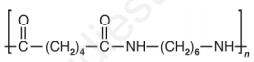
5. Nylon, bakelite and dacron are some of the important examples of condensation polymers.
6. A condensation of two different unsaturated monomers exhibits copolymerisation. A copolymer like Buna-S contains multiple units of 1, 3- Butadiene and styrene.
7. Natural rubber is cis-1, 4-polyisoprene. It can be made more tough by the process of vulcanization with sulphur.
8. Synthetic rubbers like Buna-N are usually obtained by copolymerisation of alkene and 1, 3-Butadiene derivatives.
9. In view of potential environmental hazards of synthetic polymeric wastes, certain biodegradable polymers such as PHBV and Nylon-2-Nylon-6 are developed as alternatives.
Please refer to the link below for CBSE Class 12 Chemistry Polymers Questions
Free study material for Chemistry
CBSE Class 12 Chemistry Assignments for Unit 15 Polymers
Chapter Practice Questions for Class 12 Chemistry
Access structured practice assignments for Unit 15 Polymers designed in alignment with the latest CBSE curriculum for Class 12 Chemistry. These printable sets cover objective and descriptive problem types to support thorough revision.
Why Practice Class 12 Chemistry Assignments?
- Exam Alignment: Questions strictly follow contemporary CBSE sample papers and grading schemes.
- Comprehensive Coverage: Features objective drills, case studies, and structured descriptive problems for Unit 15 Polymers.
- Pacing & Precision: Regular problem-solving builds critical calculation speed and test-taking accuracy.
Effective Strategy for Class 12 Chemistry Assignments
- Concept Foundation: Review the NCERT book for Class 12 Chemistry thoroughly before diving into assignment tasks.
- Self-Evaluation: Solve exercises independently before inspecting professional answer guides.
- Progress Monitoring: Note down complex formulas or concepts, clearing them up using available online practice aids.
FAQs
You can download free PDF assignments for Class 12 Chemistry Unit 15 Polymers from StudiesToday.com. These practice sheets have been updated for the 2026-27 session covering all concepts from latest NCERT textbook.
Yes, our teachers have given solutions for all questions in the Class 12 Chemistry Unit 15 Polymers assignments. This will help you to understand step-by-step methodology to get full marks in school tests and exams.
Yes. These assignments are designed as per the latest CBSE syllabus for 2026. We have included huge variety of question formats such as MCQs, Case-study based questions and important diagram-based problems found in Unit 15 Polymers.
Practicing topicw wise assignments will help Class 12 students understand every sub-topic of Unit 15 Polymers. Daily practice will improve speed, accuracy and answering competency-based questions.
Yes, all printable assignments for Class 12 Chemistry Unit 15 Polymers are available for free download in mobile-friendly PDF format.