

Download Class 12 Chemistry Practice Worksheets
Access comprehensive chapter-wise worksheets for Unit 7 Alcohols, Phenols and Ethers using the CBSE Class 12 Chemistry Alcohols Phenol And Ethers Worksheet Set 03. Designed to align with the 2026-27 academic syllabus for Class 12 Chemistry, these printable practice sets help students reinforce key concepts and improve their overall exam readiness.
Access Unit 7 Alcohols, Phenols and Ethers Practice Papers and Solutions
Access the complete worksheet PDF for Class 12 Chemistry below. Regular practice with these targeted academic tasks builds familiarity with standard question patterns and helps secure higher marks in final school examinations.
Q.1 Give the IUPAC name of the following.
CH3-C (CH3) =CH-CH2OH
Ans:-3-Methyl But-2-en 1-ol
Q.2 Phenols are much more acidic than alcohols. Why
Ans:-Due to electron with drowning nature of ph-group.
Q3 Give the IUPAC name of the following compound:
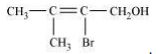
Solution :
2 − Bromo-3-methyl-but-2-ene-1-ol.
Q.4 What happen when phenol is treated with excess of bromine(aq).
Ans It gives 2,4,6-tribromo phenol.
Q.5 Write chemical equation Williamson synthesis.
Ans- R-X+R- O- Na ---------→ R-O-R + NaCl
Q.6 Mention one uses of methanol.
Ans – (i) As a denaturant for ethanol
Q.7 The boiling point of ethanol is higher than that methoxy methane.
Ans-Ethanol has inter molecular hydrogen bonding, methoxymehane does not have H-bonding.
Q.8 Name a substance that can be used as an antiseptic as well as a disinfectant.
Ans: Phenol can be used as an antiseptic as well as a disinfectant. 0.1% Soln of phenol is used as an antiseptic & 1% Soln of phenol is used as a disinfectant.
Q.9 Write the IUPAC name.
(CH3)3 C-OH
Ans- 2-methyl-2-propanol
Q.10 What is Nucleophiles.
Ans- The species which has high electrons density.
Q.11 Which catalyst are used in Friedel craft reaction?
Ans- Anh.AlCl3.
Q.12 Write a test to distinguish between primary, secondary and alcohols?
Please click the link below to download full pdf file for CBSE Class 12 Chemistry Alcohols Phenole And Ethers (1).
```html
Chapter 11 to 16: Alcohols, Phenols and Ethers
Question. Give the IUPAC name of the following. CH3-C (CH3) =CH-CH2OH
Answer: The systematic IUPAC name for this compound is 3-methylbut-2-en-1-ol.
In simple words: The carbon chain has four carbons with a double bond starting at the second carbon, an alcohol group at the first carbon, and a methyl branch at the third carbon.
Exam Tip: Number the carbon chain from the end closer to the hydroxyl (\( \text{-OH} \)) group, as it has higher priority than the double bond.
Question. Phenols are much more acidic than alcohols. Why
Answer: This difference exists because the phenyl ring is strongly electron-withdrawing. The \( -I \) and \( -R \) effects of the benzene ring help stabilize the resulting phenoxide ion by delocalizing its negative charge, whereas the electron-donating alkyl group in alcohols destabilizes the alkoxide ion.
In simple words: Phenols release hydrogen ions much more easily because the benzene ring helps spread out and stabilize the leftover negative charge.
Exam Tip: Always explain the relative stability of the phenoxide ion compared to the alkoxide ion in terms of resonance stabilization to score full marks.
Question. Give the IUPAC name of the following compound:
Answer: The correct IUPAC name of the given organic compound is 2-bromo-3-methylbut-2-en-1-ol.
In simple words: Numbering from the alcohol group, we find a bromine atom at carbon-2 and a methyl group at carbon-3 of a four-carbon unsaturated chain.
Exam Tip: When numbering, the hydroxyl group carbon gets the lowest possible number, and substituents like bromo and methyl are listed alphabetically.
Question. What happen when phenol is treated with excess of bromine(aq).
Answer: Treating phenol with an excess of aqueous bromine (bromine water) results in electrophilic substitution, producing a white precipitate of 2,4,6-tribromophenol.
In simple words: Phenol reacts quickly with bromine water to form 2,4,6-tribromophenol, appearing as a white solid.
Exam Tip: Remember that bromine water (\( \text{Br}_2/\text{H}_2\text{O} \)) is a strong polar medium that highly activates the phenol ring, resulting in trisubstitution.
Question. Write chemical equation Williamson synthesis.
Answer: Williamson's ether synthesis is a nucleophilic substitution reaction between an alkyl halide and a sodium alkoxide to form an ether: \[ \text{R-X} + \text{R'-O}^-\text{Na}^+ \rightarrow \text{R-O-R'} + \text{NaX} \]
In simple words: An alkyl halide is mixed with a metal alkoxide to synthesize an ether.
Exam Tip: This reaction works best with primary (\( 1^\circ \)) alkyl halides to minimize competing elimination reactions.
Question. Mention one uses of methanol.
Answer: Methanol is commonly used on an industrial scale to denature ethanol, making it highly toxic and completely unfit for human consumption.
In simple words: Methanol is mixed with drinking alcohol to make it poisonous for industrial use.
Exam Tip: Denatured alcohol is often colored with a dye like copper sulfate to make it easily recognizable.
Question. The boiling point of ethanol is higher than that methoxy methane.
Answer: Ethanol possesses polar \( \text{-OH} \) groups, which enable its molecules to associate via strong intermolecular hydrogen bonding. Methoxy methane lacks a hydrogen atom attached to oxygen, preventing it from forming these strong intermolecular attractions.
In simple words: Ethanol molecules stick to each other tightly through hydrogen bonds, so it takes more heat to boil it compared to ether.
Exam Tip: Always cite "intermolecular hydrogen bonding" as the key factor behind the higher boiling points of alcohols compared to isomeric ethers.
Question. Name a substance that can be used as an antiseptic as well as a disinfectant.
Answer: Phenol can be used as both an antiseptic and a disinfectant. A \( 0.2\% \) solution of phenol is used as an antiseptic, whereas a \( 1\% \) solution of phenol is used as a disinfectant.
In simple words: Phenol is used at very low concentration to clean wounds, and at higher concentration to clean floors.
Exam Tip: Be precise about the concentrations: \( 0.2\% \) for antiseptic use and \( 1\% \) for disinfectant use.
Question. Write the IUPAC name. (CH3)3 C-OH
Answer: The systematic IUPAC name for \( (\text{CH}_3)_3\text{C-OH} \) is 2-methylpropan-2-ol.
In simple words: The longest chain has three carbons with an alcohol group and a methyl group both at the second carbon.
Exam Tip: Standard IUPAC rules prefer the suffix format "propan-2-ol" over "2-propanol".
Question. What is Nucleophiles.
Answer: Nucleophiles are chemical species (either neutral or negatively charged) that possess a high electron density, typically containing a lone pair or negative charge, which they can donate to electron-deficient centers.
In simple words: Nucleophiles are electron-rich particles that love to attack positively charged atoms.
Exam Tip: Give common examples of nucleophiles, such as \( \text{OH}^- \), \( \text{CN}^- \box \), and \( \text{H}_2\text{O} \), to write a complete answer.
Question. Which catalyst are used in Friedel craft reaction?
Answer: Anhydrous aluminium chloride (\( \text{AlCl}_3 \)) is the Lewis acid catalyst typically used in Friedel-Crafts alkylation and acylation reactions.
In simple words: Anhydrous \( \text{AlCl}_3 \) is the catalyst that helps attach alkyl or acyl groups to a benzene ring.
Exam Tip: The catalyst must be strictly anhydrous to prevent its reaction with moisture, which would deactivate it.
Question. Write a test to distinguish between primary, secondary and alcohols?
Answer: The Lucas test, which uses a mixture of anhydrous zinc chloride and concentrated hydrochloric acid, is used to differentiate these alcohols. Tertiary alcohols produce immediate turbidity, secondary alcohols show turbidity after 5 minutes, and primary alcohols do not produce turbidity at room temperature.
In simple words: Lucas reagent is added to the alcohols; tertiary turns cloudy immediately, secondary takes a few minutes, and primary stays clear.
Exam Tip: Clearly describe the different times of appearance of turbidity (immediate vs 5 min vs no reaction) to secure full marks.
Question. Write the IUPAC name of CH3OH?
Answer: The systematic IUPAC name of the simplest alcohol \( \text{CH}_3\text{OH} \) is methanol.
In simple words: The IUPAC name for wood alcohol with one carbon is methanol.
Exam Tip: Do not confuse its common name (methyl alcohol) with its IUPAC name (methanol).
Question. Write the IUPAC name of CH3-O-CH3?
Answer: The systematic IUPAC name for dimethyl ether (\( \text{CH}_3\text{-O-CH}_3 \)) is methoxymethane.
In simple words: The IUPAC name for this symmetrical ether with one carbon on each side is methoxymethane.
Exam Tip: In ether nomenclature, the smaller alkyl group is treated as an alkoxy substituent on the larger alkane chain.
Question. Write the IUPAC name of CH3 CH2-O-CH3?
Answer: The IUPAC name for ethyl methyl ether (\( \text{CH}_3\text{CH}_2\text{-O-CH}_3 \)) is methoxyethane.
In simple words: Since methyl is the smaller group, it becomes the substituent "methoxy" on the parent chain "ethane".
Exam Tip: Always identify the smaller alkyl group as the alkoxy part and the larger group as the parent alkane chain.
Short Answer Questions (2 marks)
Question. Phenols are as a smaller dipole moment than methanol. Why
Answer: In phenol, the electron-withdrawing phenyl ring (\( -I \) and \( -R \) effects) pulls electron density away from the oxygen atom, reducing the polarity of the C-O bond. In methanol, the electron-donating methyl group (\( +I \) effect) pushes electron density toward the oxygen atom, making the C-O bond highly polar and resulting in a larger dipole moment.
In simple words: The benzene ring in phenol pulls electrons away from oxygen, making the bond less polar. In methanol, the methyl group pushes electrons toward oxygen, making it more polar.
Exam Tip: Contrast the \( -R \) effect of the aryl group with the \( +I \) effect of the alkyl group to justify the polarity differences.
Question. Explain why Phenol do not undergo substitution of OH group like alcohol.
Answer: Due to resonance, the C-O bond in phenol acquires a partial double bond character, which makes it much stronger and extremely difficult to cleave. Conversely, the C-O bond in alcohols is a weaker, pure single bond, which can be easily broken and replaced by a nucleophile during substitution reactions.
In simple words: Phenol's carbon-oxygen bond is reinforced by resonance, behaving like a double bond, so nucleophiles cannot easily break it.
Exam Tip: Mention the "sp2 hybridization of the carbon bonded to oxygen" and "resonance-induced double bond character" to write a highly graded answer.
Question. Give a test to distinguish between phenol and Benzyl alcohol.
Answer: Phenol reacts with neutral ferric chloride (\( \text{FeCl}_3 \)) solution to produce a highly characteristic violet-colored complex. Benzyl alcohol does not show any color change when treated with ferric chloride.
In simple words: Phenol turns violet when neutral ferric chloride is added, but benzyl alcohol does not show any reaction.
Exam Tip: Always specify that the ferric chloride used must be "neutral" to perform this test successfully.
Question. Give a test to distinguish ethanol and phenol.
Answer: Phenol is acidic enough to turn blue litmus paper red due to resonance stabilization of the phenoxide ion. Ethanol is a much weaker acid and does not show any reaction with litmus paper.
In simple words: Phenol is mildly acidic and turns blue litmus red, but ethanol is neutral to litmus.
Exam Tip: Alternatively, the ferric chloride test or reaction with aqueous \( \text{NaOH} \) can also be used to distinguish them.
Question. Write theWilliamson synthesis reaction
Answer: The Williamson ether synthesis involves a nucleophilic attack of an alkoxide ion on an alkyl halide to produce an ether: \[ \text{R-X} + \text{R'-ONa} \rightarrow \text{R-O-R'} + \text{NaX} \]
In simple words: An alkyl halide is reacted with sodium alkoxide to form an ether.
Exam Tip: To maximize the ether yield, always use a primary alkyl halide to prevent competing elimination reactions.
3 Marks Questions
Question. Write the reaction of phenol with Zn.
Answer: Heating phenol with zinc dust reduces it to benzene: \[ \text{C}_6\text{H}_5\text{OH} + \text{Zn} \xrightarrow{\Delta} \text{C}_6\text{H}_6 + \text{ZnO} \]
In simple words: Phenol is heated with zinc powder to remove the oxygen, leaving behind benzene.
Exam Tip: This reaction is a classic and very clean method to convert a phenol ring into a benzene ring.
Question. Write the kolbes reaction?
Answer: In Kolbe's reaction, treating phenol with sodium hydroxide forms sodium phenoxide. This intermediate undergoes electrophilic substitution with carbon dioxide under pressure, followed by acidification to produce salicylic acid (2-hydroxybenzoic acid): \[ \text{C}_6\text{H}_5\text{OH} \xrightarrow{\text{NaOH}} \text{C}_6\text{H}_5\text{ONa} \xrightarrow{\text{CO}_2, \Delta, \text{ Pressure}} o\text{-C}_6\text{H}_4(\text{OH})(\text{COONa}) \xrightarrow{\text{H}^+} o\text{-C}_6\text{H}_4(\text{OH})(\text{COOH}) \]
In simple words: Phenol is treated with sodium hydroxide and carbon dioxide to yield salicylic acid, which is used to make aspirin.
Exam Tip: Clearly identify "salicylic acid" as the major product of this reaction.
Question. (i) Explain the mechanism of Addition of Grignard’s reagent to the carbonyl group of a compound forming an adduct followed by hydrolysis.
(ii) Explain the mechanism of Acid catalysed dehydration of an alcohol forming an alkene.
(iii)Explain the mechanism of Acid catalysed hydration of an alkene forming an alcohol.
Answer:
(i) **Addition of Grignard's Reagent:**
A Grignard reagent is an organomagnesium halide (\( \text{R-MgX} \)), where the alkyl group carries a partial negative charge and the magnesium group has a partial positive charge. The nucleophilic alkyl group attacks the electrophilic carbonyl carbon atom of an aldehyde or ketone to form a tetrahedral intermediate (adduct): \[ \text{HCHO} + \text{CH}_3\text{MgBr} \rightarrow \text{CH}_3\text{-CH}_2\text{-OMgBr} \] Hydrolysis of this adduct with dilute acid yields a primary, secondary, or tertiary alcohol: \[ \text{CH}_3\text{-CH}_2\text{-OMgBr} \xrightarrow{\text{H}_2\text{O}/\text{H}^+} \text{CH}_3\text{CH}_2\text{OH} \text{ (Ethanol)} + \text{Mg(OH)Br} \]
(ii) **Acid-Catalyzed Dehydration of Alcohols:**
Heating alcohols with concentrated acids (like \( \text{H}_2\text{SO}_4 \)) dehydrates them to form alkenes. The mechanism proceeds in three distinct steps:
- **Step 1 (Protonation):** Rapid protonation of the alcohol oxygen to form an oxonium ion: \[ \text{CH}_3\text{-CH}_2\text{-OH} + \text{H}^+ \rightleftharpoons \text{CH}_3\text{-CH}_2\text{-}\text{O}^+\text{H}_2 \text{ (Oxonium ion)} \] - **Step 2 (Carbocation Formation):** Slow, rate-determining loss of a water molecule to generate a carbocation: \[ \text{CH}_3\text{-CH}_2\text{-}\text{O}^+\text{H}_2 \xrightarrow{\text{Slow}} \text{CH}_3\text{-CH}_2^+ \text{ (Carbocation)} + \text{H}_2\text{O} \] - **Step 3 (Deprotonation):** Rapid elimination of a proton from the adjacent carbon to yield the alkene: \[ \text{CH}_3\text{-CH}_2^+ \xrightarrow{\text{Fast}} \text{CH}_2\text{=CH}_2 \text{ (Alkene)} + \text{H}^+ \]
(iii) **Acid-Catalyzed Hydration of Alkenes:**
Alkenes react with water in the presence of an acid catalyst to produce alcohols following Markovnikov's rule:
- **Step 1 (Protonation of Alkene):** Electrophilic attack of \( \text{H}_3\text{O}^+ \) on the double bond to form a carbocation: \[ \text{R}_1\text{R}_2\text{C=CH}_2 + \text{H}_3\text{O}^+ \xrightarrow{\text{Slow}} \text{R}_1\text{R}_2\text{C}^+\text{-CH}_3 + \text{H}_2\text{O} \] - **Step 2 (Nucleophilic Attack):** Attack of a water molecule on the carbocation to form a protonated alcohol: \[ \text{R}_1\text{R}_2\text{C}^+\text{-CH}_3 + \text{H}_2\text{O} \rightleftharpoons \text{R}_1\text{R}_2\text{C}(\text{OH}_2^+)\text{-CH}_3 \] - **Step 3 (Deprotonation):** Transfer of a proton to another water molecule, yielding the alcohol: \[ \text{R}_1\text{R}_2\text{C}(\text{OH}_2^+)\text{-CH}_3 + \text{H}_2\text{O} \xrightarrow{\text{Fast}} \text{R}_1\text{R}_2\text{C(OH)-CH}_3 + \text{H}_3\text{O}^+ \]
In simple words: (i) Grignard reagents add to carbon-oxygen double bonds to make a complex that breaks down with acid to form alcohols. (ii) Acid pulls water out of alcohols in steps to yield alkenes. (iii) Alkenes react with water in acid to add a water molecule across the double bond, creating an alcohol.
Question 4. (i) The bp. of ethanol is higher than that of methoxy methane.
(ii) Phenol is more acidic than ethanol.
(iii) O & p nitrophenol are more acidic than phenol.
Answer:
(i) Ethanol molecules associate through strong intermolecular hydrogen bonding because they contain polar \( \text{-OH} \) groups. Methoxy methane lacks highly polar hydrogen-oxygen bonds, so it cannot participate in hydrogen bonding, resulting in a much lower boiling point.
(ii) Deprotonation of phenol produces the phenoxide ion, which is stabilized by resonance over the benzene ring. In contrast, deprotonation of ethanol yields the ethoxide ion, which lacks resonance stabilization and is further destabilized by the electron-donating (+I) effect of the ethyl group.
(iii) The presence of strongly electron-withdrawing nitro groups (\( -I \) and \( -R \) effects) at the ortho and para positions in nitrophenol further stabilizes the phenoxide charge, making them significantly more acidic than unsubstituted phenol.
In simple words: (i) Ethanol has tight hydrogen bonds that require more heat to boil compared to ether. (ii) Phenol is more acidic because its negative ion spreads its charge via resonance. (iii) Nitro groups pull electrons away, stabilizing the ion even more.
Question 5. How are the following conversions carried out?
(i) Benzyl chloride to benzyl alcohol,
(ii) Methyl magnesium bromide to 2-methylpropan-2-ol
Answer:
(i) **Benzyl chloride to benzyl alcohol:** Boiling benzyl chloride with aqueous potassium hydroxide (\( \text{aq. KOH} \)) replaces the chlorine atom with a hydroxyl group via nucleophilic substitution (\( \text{S}_{\text{N}}2 \)): \[ \text{C}_6\text{H}_5\text{CH}_2\text{Cl} \xrightarrow{\text{aq. KOH}} \text{C}_6\text{H}_5\text{CH}_2\text{OH} + \text{KCl} \]
(ii) **Methyl magnesium bromide to 2-methylpropan-2-ol:** Methyl magnesium bromide is reacted with acetone (propan-2-one) in dry ether to form a tetrahedral adduct, which is then hydrolyzed with dilute acid to yield the tertiary alcohol 2-methylpropan-2-ol: \[ \text{CH}_3\text{COCH}_3 + \text{CH}_3\text{MgBr} \xrightarrow{\text{dry ether}} (\text{CH}_3)_3\text{C-OMgBr} \xrightarrow{\text{H}_2\text{O}/\text{H}^+} (\text{CH}_3)_3\text{C-OH} + \text{Mg(OH)Br} \]
In simple words: (i) Benzyl chloride is heated with liquid potassium hydroxide to swap chlorine with OH. (ii) Grignard reagent is added to acetone, followed by acid washing to produce a tertiary alcohol.
5 Marks Questions
Question 1. (a) An Organic compound ‘ A’ with molecular formula C8H8O gives positive DNP and iodoform test. It does not reduces Tollens or Fehling reagent and doesnotdecolourisesBr2/H2O also.On oxidation with chromic acid gives a carboxylic acid (B) with molecular formula C7H6O2.Determine the structure of ‘A’ and ‘B’.
(b) Complete the following reactions by identifying A ,B and C:
(I) A +H2(g )------ Pd/BaSO4--------------> (CH3)2 CHCHO
(II) (CH3)3C-CO-CH3 + NaOI ----------> B + C
Answer:
(a) **Structure of A and B:**
- Since compound A (\( \text{C}_8\text{H}_8\text{O} \)) gives a positive 2,4-DNP test, it must contain a carbonyl group (aldehyde or ketone).
- It does not reduce Tollens' or Fehling's reagents, which means it is a ketone, not an aldehyde.
- A positive iodoform test indicates it is a methyl ketone containing a \( \text{CH}_3\text{CO-} \) group.
- It does not decolorize bromine water, which implies there is no aliphatic carbon-carbon double or triple bond; the unsaturation is due to an aromatic benzene ring.
- On oxidation with chromic acid, it yields carboxylic acid B (\( \text{C}_7\text{H}_6\text{O}_2 \)), which is **benzoic acid** (\( \text{C}_6\text{H}_5\text{COOH} \)).
- Therefore, compound A is **acetophenone** (\( \text{C}_6\text{H}_5\text{COCH}_3 \)).
(b) **Reaction Completion:**
(I) This is a Rosenmund reduction. The acyl chloride reactant A must be: \[ \text{A} = (\text{CH}_3)_2\text{CHCOCl} \text{ (2-Methylpropanoyl chloride)} \] (II) This is a haloform reaction on a methyl ketone: \[ \text{B} = (\text{CH}_3)_3\text{C-COONa} \text{ (Sodium 2,2-dimethylpropanoate)} \] \[ \text{C} = \text{CHI}_3 \text{ (Iodoform)} \]
In simple words: (a) A is acetophenone and B is benzoic acid. (b) For (I) A is 2-methylpropanoyl chloride, and for (II) B is the sodium salt of the carboxylic acid and C is the yellow solid iodoform.
Question 2. An Organic compound ‘ A’ with molecular formula C3H6 on treatment with aq.H2SO4 gives ‘B’ which on treatment with HCI/Zncl2 gives ‘C’. Thecompound ‘ C’ on treatment with ethanolic KOH gives back the compound ’A’ .Identify the compound A, B and C .
Answer:
The compound A is propene, B is propan-2-ol, and C is 2-chloropropane:
1. Propene (\( \text{C}_3\text{H}_6 \), compound A) undergoes acid-catalyzed hydration with aqueous \( \text{H}_2\text{SO}_4 \) to produce propan-2-ol (compound B) following Markovnikov's rule: \[ \text{CH}_3\text{-CH=CH}_2 + \text{H}_2\text{O} \xrightarrow{\text{aq. H}_2\text{SO}_4} \text{CH}_3\text{-CH(OH)-CH}_3 \] 2. Propan-2-ol on treatment with Lucas reagent (\( \text{HCl}/\text{ZnCl}_2 \)) undergoes nucleophilic substitution to yield 2-chloropropane (compound C): \[ \text{CH}_3\text{-CH(OH)-CH}_3 \xrightarrow{\text{HCl/ZnCl}_2} \text{CH}_3\text{-CH(Cl)-CH}_3 + \text{H}_2\text{O} \] 3. Heating 2-chloropropane with ethanolic potassium hydroxide (\( \text{KOH} \)) induces dehydrohalogenation (\( \beta \)-elimination) to regenerate propene (compound A): \[ \text{CH}_3\text{-CH(Cl)-CH}_3 \xrightarrow{\text{ethanolic KOH, } \Delta} \text{CH}_3\text{-CH=CH}_2 + \text{HCl} \]
In simple words: A is propene, which reacts with acid and water to form alcohol B (propan-2-ol). Treating B with zinc chloride and acid swaps the OH with chlorine to form C (2-chloropropane). Boiling C in alcohol-base removes HCl to regenerate propene.
Aldehydes, Ketones and Carboxylic Acids
Section-A (One Mark Questions)
Question. Name one distinguishing test between aldehydes and ketones?
Answer: Tollens' test is used to differentiate these groups. Aldehydes are easily oxidized and form a bright silver mirror on the inner walls of the test tube, whereas ketones are resistant to mild oxidation and do not react.
In simple words: Aldehydes react with Tollens' reagent to create a silver mirror, while ketones show no reaction.
Question. Give reason why Formaldehyde does not undergo aldol condensation?
Answer: Formaldehyde (\( \text{HCHO} \)) lacks any \( \alpha \)-hydrogen atoms. Since the presence of an acidic \( \alpha \)-hydrogen is required for enolate ion generation in the aldol reaction pathway, it cannot undergo aldol condensation.
In simple words: Formaldehyde cannot undergo aldol condensation because it does not have the necessary alpha-hydrogen atom.
Question. Carboxylic acids have higher boiling points than alcohols of same no. of carbon atoms?
Answer: Carboxylic acids form stable cyclic dimers via more extensive and stronger intermolecular hydrogen bonding, which holds their molecules together more tightly than the linear hydrogen bonds found in alcohols of similar molecular mass.
In simple words: Carboxylic acid molecules stick together in pairs (dimers) with very strong hydrogen bonds, requiring more heat to boil than alcohols.
Question. Write IUPAC name .of CH3COCH2COCH3.
Answer: The systematic IUPAC name of the given dione is pentane-2,4-dione.
In simple words: The five-carbon chain has two ketone carbonyl groups at the second and fourth positions.
Question. What product is obtained when Ethylbenzene is oxidized with alkaline KMnO4?
Answer: Vigorous oxidation of ethylbenzene with hot alkaline potassium permanganate (\( \text{KMnO}_4 \)) followed by acidification yields benzoic acid.
In simple words: The ethyl chain on the benzene ring is completely oxidized down to a single carboxylic acid group, producing benzoic acid.
Question. Give chemical test to distinguish between acetaldehyde and benzaldehyde.
Answer: Acetaldehyde contains a \( \text{CH}_3\text{CO-} \) group and gives a positive iodoform test (forming a yellow precipitate of \( \text{CHI}_3 \)), while benzaldehyde does not respond to this test.
In simple words: Acetaldehyde reacts with iodine and base to form a yellow solid, but benzaldehyde does not react.
Question. Write one chemical to distinguish between Formic acid and Acetic acid .
Answer: Formic acid behaves like an aldehyde because it contains a formyl hydrogen atom, allowing it to reduce Tollens' reagent to form a silver mirror. Acetic acid does not show this reaction.
In simple words: Formic acid reduces Tollens' reagent to create a shiny silver mirror, but acetic acid does not react.
Question. Give two important uses of formalin.
Answer: Formalin is widely used as a biological preservative for anatomical specimens and is also employed as a precursor in the industrial synthesis of Bakelite.
In simple words: It is used to preserve dead tissues and to manufacture plastic materials like Bakelite.
Question. How is formalin and trioxane related to methanal?
Answer: Formalin is a \( 40\% \) aqueous solution of gaseous methanal (formaldehyde), whereas trioxane is a solid cyclic trimer formed by the polymerization of three methanal molecules.
In simple words: Formalin is methanal gas dissolved in water, while trioxane is a solid made of three methanal units joined in a ring.
Question. Complete the following reactionand give the name of the major product. HCHO+ CH3MgX -----------------------------> ?
Answer: Methanal reacts with methylmagnesium halide via nucleophilic addition to form an adduct, which upon acid hydrolysis produces the primary alcohol ethanol: \[ \text{HCHO} + \text{CH}_3\text{MgX} \rightarrow \text{CH}_3\text{CH}_2\text{OMgX} \xrightarrow{\text{H}_2\text{O}/\text{H}^+} \text{CH}_3\text{CH}_2\text{OH} \text{ (Ethanol)} + \text{Mg(OH)X} \]
In simple words: Adding methyl Grignard reagent to formaldehyde and washing with acid yields ethanol.
Question. Draw the structural formula of Hex-2-en4-yn-oic acid.
Answer: The structural formula of hex-2-en-4-ynoic acid is: \[ \text{CH}_3\text{-C}\equiv\text{C-CH=CH-COOH} \]
In simple words: A six-carbon chain containing a carboxylic acid group at position 1, a double bond at position 2, and a triple bond at position 4.
Question. Arrange the following in the increasing order of acidic character. HCOOH, ClCH2COOH,CF3COOH,Cl3CCOOH
Answer: The increasing order of acidic strength is: \[ \text{HCOOH} < \text{ClCH}_2\text{COOH} < \text{CCl}_3\text{COOH} < \text{CF}_3\text{COOH} \]
In simple words: Fluoro and chloro groups pull electron density away from the carboxyl group, stabilizing the negative ion and increasing the acidity.
Question. Complete the reaction:- RCONH2+4NaOH+Br2 -------->
Answer: This is the Hofmann bromamide degradation reaction, which converts an amide to a primary amine with one less carbon atom: \[ \text{RCONH}_2 + \text{Br}_2 + 4\text{NaOH} \rightarrow \text{RNH}_2 + 2\text{NaBr} + \text{Na}_2\text{CO}_3 + 2\text{H}_2\text{O} \]
In simple words: Amides react with bromine and sodium hydroxide to degrade into primary amines.
Question. Give one chemical test to distinguish between Phenol and benzoic acid.
Answer: Phenol reacts with neutral ferric chloride (\( \text{FeCl}_3 \)) solution to produce a violet-colored coordination complex. Benzoic acid does not yield a violet color but instead reacts with sodium bicarbonate (\( \text{NaHCO}_3 \)) to produce brisk effervescence of \( \text{CO}_2 \).
In simple words: Phenol turns violet with neutral ferric chloride, whereas benzoic acid does not show this reaction.
Question. Most of the aromatic acids are solids while acetic acids and others of this series are liquids. Why?
Answer: Aromatic carboxylic acids have much higher molecular masses and larger surface areas than simple aliphatic acids. This leads to significantly stronger intermolecular van der Waals forces of attraction, keeping them in the solid state.
In simple words: Aromatic acids are heavier and have larger molecules, creating stronger molecular attractions that keep them solid at room temperature.
Section-B (2 Mark Questions)
Question. Would you expect benzaldehyde to be more or less reactive in nucleophilic addition reaction than Propanal? Explain your answer.
Answer: Benzaldehyde is less reactive than propanal toward nucleophilic addition because the carbonyl carbon in benzaldehyde is conjugated with the pi-electron cloud of the benzene ring. This resonance delocalizes the partial positive charge on the carbonyl carbon, making it less electrophilic and less prone to nucleophilic attack.
In simple words: Benzaldehyde is less reactive because the benzene ring shares its electrons with the carbonyl carbon, reducing its positive charge and making it less attractive to nucleophiles.
Question. Describe the Transesterification reaction giving an example.
Answer: Transesterification is the organic reaction where an ester reacts with an alcohol in the presence of an acid or base catalyst to exchange its alkoxy group, yielding a new ester and a new alcohol: \[ \text{CH}_3\text{COOC}_2\text{H}_5 + \text{CH}_3\text{OH} \xrightarrow{\text{H}^+} \text{CH}_3\text{COOCH}_3 + \text{C}_2\text{H}_5\text{OH} \]
In simple words: An ester is mixed with an alcohol to swap their carbon groups, creating a different ester and alcohol.
Question. Explain Hell- Volhard –Zelinsky reaction with an example.
Answer: In the HVZ reaction, carboxylic acids containing at least one \( \alpha \)-hydrogen atom are selectively halogenated at the \( \alpha \)-carbon when treated with chlorine or bromine in the presence of a catalytic amount of red phosphorus, followed by hydrolysis: \[ \text{R-CH}_2\text{-COOH} \xrightarrow{\text{(i) } \text{X}_2/\text{Red P, (ii) } \text{H}_2\text{O}} \text{R-CH(X)-COOH} \]
In simple words: Carboxylic acids with alpha-hydrogens are reacted with bromine or chlorine and red phosphorus to substitute the alpha-hydrogen with a halogen atom.
Question. Give simple chemical tests to distinguish between :- (i) Pentan-2-one and Pentane-3-one (ii) Ethanal and propanal
Answer:
(i) **Pentan-2-one and Pentane-3-one:** Pentan-2-one is a methyl ketone and reacts with \( \text{I}_2/\text{NaOH} \) to give a yellow precipitate of iodoform. Pentan-3-one does not undergo this reaction.
(ii) **Ethanal and Propanal:** Ethanal contains a \( \text{CH}_3\text{CO-} \) group and gives a positive iodoform test, whereas propanal does not.
In simple words: Both pentan-2-one and ethanal contain a methyl ketone group that reacts with iodine and base to form a yellow solid, distinguishing them from pentan-3-one and propanal.
Question. AlthoughPhenoxide ion has more number of resonating structures than Carboxylate ion, Carboxylic acids are more acidic than Phenol .Why?
Answer: In the carboxylate ion, the negative charge is delocalized over two highly electronegative oxygen atoms, which results in very stable resonance structures. In the phenoxide ion, the negative charge is delocalized over one oxygen atom and five carbon atoms of the ring, which are much less electronegative than oxygen. Therefore, the carboxylate ion is more stable, making carboxylic acids more acidic than phenol.
In simple words: The carboxylate ion spreads its negative charge over two highly electronegative oxygen atoms, making it much more stable than the phenoxide ion which spreads charge over carbon atoms.
Question. Why is there a large difference in the boiling points of butanal and butan-1-ol?
Answer: Butan-1-ol contains a polar \( \text{-OH} \) group, enabling its molecules to associate via strong intermolecular hydrogen bonding. Butanal molecules only interact via weaker dipole-dipole attractions, resulting in a much lower boiling point.
In simple words: Butan-1-ol has strong hydrogen bonds that hold its molecules together tightly, so it requires much more heat to boil than butanal.
Question. Name the electrophile produced in the reaction of benzene with benzoyl chloridein the presence of anhydrous AlCl3. Name the reaction also.
Answer: The electrophile generated in this reaction is the benzoylium cation (\( \text{C}_6\text{H}_5\text{CO}^+ \)). This conversion is known as the Friedel-Crafts acylation reaction.
In simple words: The reacting species is the benzoylium cation, and the process is called the Friedel-Crafts acylation reaction.
Question. Arrange the following in decreasing order of their acidic strength and give reason for your answer. CH3CH2OH, CH3COOH, ClCH2COOH, FCH2COOH, C6H5CH2COOH
Answer: The decreasing order of acidic strength is: \[ \text{FCH}_2\text{COOH} > \text{ClCH}_2\text{COOH} > \text{C}_6\text{H}_5\text{CH}_2\text{COOH} > \text{CH}_3\text{COOH} > \text{CH}_3\text{CH}_2\text{OH} \] Reason: Electron-withdrawing groups (like fluorine and chlorine) exhibit a \( -I \) inductive effect that stabilizes the conjugate base anion, whereas electron-donating groups (like the ethyl group) exhibit a \( +I \) inductive effect that destabilizes it.
In simple words: Halogens pull electron density away to stabilize the negative charge of the acid ion, making the acid stronger. Alkyl groups push electrons toward the oxygen, making it less stable and weaker.
Question. Write the names associated with the following reactions:- (i)
Answer: This reaction is known as the Rosenmund reduction.
In simple words: The catalytic hydrogenation of an acyl chloride to an aldehyde using palladium on barium sulfate is called the Rosenmund reduction.
Question. Complete the following reaction sequence.
Answer: This reaction is known as the Stephen reduction.
In simple words: The reduction of a nitrile to an aldehyde using tin(II) chloride and acid is called the Stephen reaction.
Question. Complete the following reaction sequence.
Answer: The products in the reaction sequence are:
- **A (Tert-butyl alcohol):** \( (\text{CH}_3)_3\text{C-OH} \)
- **B (Sodium tert-butoxide):** \( (\text{CH}_3)_3\text{C-ONa} \)
- **C (Tert-butyl methyl ether):** \( (\text{CH}_3)_3\text{C-O-CH}_3 \)
In simple words: First, methyl Grignard reagent adds to acetone to form tertiary alcohol A. Then, sodium metal replaces hydrogen to form alkoxide B. Finally, reacting B with methyl bromide synthesizes ether C.
Section-C (Three Marks Questions)
Question. What happens when :- (i) an aqueous solution of Sodium acetate is electrolysed (ii) Calcium acetate is dry distilled (iii) Sodium benzoate is heated with Sodalime
Answer:
(i) **Electrolysis of Sodium Acetate (Kolbe's Electrolysis):** Electrolyzing aqueous sodium acetate yields ethane gas at the anode along with carbon dioxide: \[ 2\text{CH}_3\text{COONa} + 2\text{H}_2\text{O} \xrightarrow{\text{electrolysis}} \text{C}_2\text{H}_6 + 2\text{CO}_2 + 2\text{NaOH} + \text{H}_2 \]
(ii) **Dry Distillation of Calcium Acetate:** Heating solid calcium acetate decomposes it to produce acetone (propan-2-one) and calcium carbonate: \[ (\text{CH}_3\text{COO})_2\text{Ca} \xrightarrow{\Delta} \text{CH}_3\text{COCH}_3 + \text{CaCO}_3 \]
(iii) **Decarboxylation of Sodium Benzoate:** Heating sodium benzoate with sodalime (mixture of \( \text{NaOH} \) and \( \text{CaO} \)) eliminates carbon dioxide to form benzene: \[ \text{C}_6\text{H}_5\text{COONa} + \text{NaOH} \xrightarrow{\text{CaO, } \Delta} \text{C}_6\text{H}_6 + \text{Na}_2\text{CO}_3 \]
In simple words: (i) Electrolysis makes ethane gas. (ii) Heating calcium acetate produces acetone. (iii) Heating sodium benzoate with sodalime yields benzene.
Question. Write IUPAC names of the following Compounds:- (i)CH3CO(CH2)4CH3 (ii) Ph-CH=CH-CHO (iii)
Answer: The systematic IUPAC names are:
(i) Heptan-2-one
(ii) 3-Phenylprop-2-enal
(iii) Cyclopentanecarbaldehyde
In simple words: These are the official IUPAC names for the ketone, unsaturated aromatic aldehyde, and cyclic aldehyde.
Question. Complete the following equations:- (i) CH3CONH2 --(P2O5 / heat)--> ? (ii) 2CH3CHO --(dil. NaOH)--> ? (iii) C6H5COOH --(HNO3/H2SO4)--> ?
Answer: The completed reactions are:
(i) Dehydration of acetamide yields acetonitrile: \[ \text{CH}_3\text{CONH}_2 \xrightarrow{\text{P}_2\text{O}_5, \Delta} \text{CH}_3\text{CN} + \text{H}_2\text{O} \]
(ii) Acid-catalyzed hydration of an alkene: \[ 2\text{CH}_3\text{CHO} \xrightarrow{\text{dil. NaOH}} \text{CH}_3\text{CH(OH)CH}_2\text{CHO} \]
(iii) Nitration of benzoic acid produces 3-nitrobenzoic acid (meta-product): \[ \text{C}_6\text{H}_5\text{COOH} \xrightarrow{\text{HNO}_3/\text{H}_2\text{SO}_4} m\text{-O}_2\text{N-C}_6\text{H}_4\text{-COOH} \]
In simple words: (i) Amides lose water to form nitriles. (ii) Aldehydes couple together in base to form aldols. (iii) Benzoic acid reacts with nitrating acid to add a nitro group at the meta-position.
Question. Explain the following:- (i)Gatterman-Koch reaction (ii) Clemensen reduction (iii)Wolf-Kishner Reduction
Answer:
(i) **Gattermann-Koch Reaction:** Formylation of benzene or its derivatives using carbon monoxide (\( \text{CO} \)) and hydrogen chloride (\( \text{HCl} \)) gas in the presence of anhydrous \( \text{AlCl}_3 \) or \( \text{CuCl} \) to synthesize benzaldehyde: \[ \text{C}_6\text{H}_6 + \text{CO} + \text{HCl} \xrightarrow{\text{Anhydrous AlCl}_3/\text{CuCl}} \text{C}_6\text{H}_5\text{CHO} + \text{HCl} \]
(ii) **Clemmensen Reduction:** Deoxygenation of the carbonyl group in aldehydes or ketones to a methylene group (\( \text{-CH}_2\text{-} \)) using zinc amalgam (\( \text{Zn-Hg} \)) and concentrated hydrochloric acid (\( \text{HCl} \)): \[ \text{>C=O} \xrightarrow{\text{Zn-Hg / HCl}} \text{>CH}_2 + \text{H}_2\text{O} \]
(iii) **Wolff-Kishner Reduction:** Reduction of carbonyl compounds to hydrocarbons by reacting them with hydrazine (\( \text{NH}_2\text{NH}_2 \)) followed by heating with potassium hydroxide (\( \text{KOH} \)) in ethylene glycol solvent: \[ \text{>C=O} \xrightarrow{\text{NH}_2\text{NH}_2, \text{ -}\text{H}_2\text{O}} \text{>C=N-NH}_2 \xrightarrow{\text{KOH/ethylene glycol, } \Delta} \text{>CH}_2 + \text{N}_2 \]
In simple words: (i) Benzene reacts with CO and HCl to produce benzaldehyde. (ii) Zinc amalgam and acid reduce ketones and aldehydes to alkanes. (iii) Hydrazine and base accomplish the same reduction.
Question. Predict the products of the following reactions (i)
Answer:
The addition-elimination condensation products are:
(i) **Cyclopentanone oxime:** \[ \text{C}_5\text{H}_8\text{=O} + \text{NH}_2\text{OH} \xrightarrow{\text{H}^+} \text{C}_5\text{H}_8\text{=N-OH} + \text{H}_2\text{O} \]
(ii) **Cyclohexanone 2,4-dinitrophenylhydrazone:** \[ \text{C}_6\text{H}_{10}\text{=O} + \text{NH}_2\text{-NH-C}_6\text{H}_3(\text{NO}_2)_2 \rightarrow \text{C}_6\text{H}_{10}\text{=N-NH-C}_6\text{H}_3(\text{NO}_2)_2 + \text{H}_2\text{O} \]
(iii) **Semicarbazone derivative:** \[ \text{R-CH=CH-CHO} + \text{NH}_2\text{-NH-CONH}_2 \xrightarrow{\text{H}^+} \text{R-CH=CH-CH=N-NH-CONH}_2 + \text{H}_2\text{O} \]
In simple words: Carbonyl groups react with ammonia derivatives to lose water and form imine-like double bonds (\( \text{C=N} \)) with the reagent.
Question. (6).An alkene ‘A’ (Mol. formula C5H10) on ozonolysis gives a mixture of two compounds ‘B’ and ‘C’. Compound ‘B’ gives positive Fehling’s test and also forms iodoform on treatment with I2 and NaOH. Compound ‘C’ does not give Fehling’s test but forms iodoform. Identify the compounds A, B and C. Write the reaction for ozonolysis and formation of iodoform from B and C
Answer:
- **Alkene A (2-Methylbut-2-ene, \( \text{C}_5\text{H}_{10} \)):** Its structure is \( (\text{CH}_3)_2\text{C=CH-CH}_3 \).
- **Compound B (Acetaldehyde, \( \text{CH}_3\text{CHO} \)):** Since it reduces Fehling's solution, it is an aldehyde. A positive iodoform test confirms it is a methyl carbonyl compound, hence \( \text{CH}_3\text{CHO} \).
- **Compound C (Acetone, \( \text{CH}_3\text{COCH}_3 \)):** Since it does not reduce Fehling's solution but gives a positive iodoform test, it is a methyl ketone, hence \( \text{CH}_3\text{COCH}_3 \).
**Ozonolysis reaction:** \[ (\text{CH}_3)_2\text{C=CH-CH}_3 \xrightarrow{\text{(i) } \text{O}_3, \text{ (ii) } \text{Zn/H}_2\text{O}} \text{CH}_3\text{CHO} \text{ (B)} + \text{CH}_3\text{COCH}_3 \text{ (C)} \]
In simple words: Alkene A is 2-methylbut-2-ene. Ozonolysis splits the double bond to yield acetaldehyde B and acetone C.
Section-D (Five Marks Questions)
Question. 1.An organic compound (A) with molecular formula C8H8O forms an orange-red precipitate with 2,4-DNP reagent and gives yellow precipitate on heating with iodine in the presence of sodium hydroxide. It neither reduces Tollens’ or Fehlings’ reagent, nor does it decolourise bromine water or Baeyer’s reagent. On drastic oxidation with chromic acid, it gives a carboxylic acid (B) having molecular formula C7H6O2. Identify the compounds (A) and (B) and explain the reactions involved.
Answer:
- Compound A (\( \text{C}_8\text{H}_8\text{O} \)) forms a 2,4-DNP derivative, indicating a carbonyl group. It does not reduce Tollens' or Fehling's reagents, so it must be a ketone. A positive iodoform test indicates it is a methyl ketone (\( \text{CH}_3\text{CO-} \)). It does not react with bromine water, indicating the unsaturation is due to a stable benzene ring. Thus, compound A is **acetophenone** (\( \text{C}_6\text{H}_5\text{COCH}_3 \)).
- Drastic oxidation of acetophenone with chromic acid breaks the chain to yield compound B (\( \text{C}_7\text{H}_6\text{O}_2 \default \)), which is **benzoic acid** (\( \text{C}_6\text{H}_5\text{COOH} \)).
In simple words: A is acetophenone and B is benzoic acid.
Question. 2 Write chemical reactions to affect the following transformations:
(i) Butan-1-ol to butanoic acid
(ii) Benzyl alcohol to phenylethanoic acid
(iii) 3-Nitrobromobenzene to 3-nitrobenzoic acid
(iv) 4-Methylacetophenone to benzene-1,4-dicarboxylic acid
(v) Cyclohexene to hexane-1,6-dioic acid
Answer: The synthetic pathways are:
(i) **Butan-1-ol to Butanoic acid:** Direct oxidation using Jones reagent: \[ \text{CH}_3\text{CH}_2\text{CH}_2\text{CH}_2\text{OH} \xrightarrow{\text{CrO}_3\text{-H}_2\text{SO}_4} \text{CH}_3\text{CH}_2\text{CH}_2\text{COOH} \]
(ii) **Benzyl alcohol to Phenylethanoic acid:** Conversion to halide, then nitrile, followed by acidic hydrolysis: \[ \text{C}_6\text{H}_5\text{CH}_2\text{OH} \xrightarrow{\text{HBr}} \text{C}_6\text{H}_5\text{CH}_2\text{Br} \xrightarrow{\text{KCN}} \text{C}_6\text{H}_5\text{CH}_2\text{CN} \xrightarrow{\text{H}_3\text{O}^+} \text{C}_6\text{H}_5\text{CH}_2\text{COOH} \]
(iii) **3-Nitrobromobenzene to 3-nitrobenzoic acid:** Grignard preparation followed by carboxylation with dry ice: \[ m\text{-O}_2\text{N-C}_6\text{H}_4\text{-Br} \xrightarrow{\text{Mg, ether}} m\text{-O}_2\text{N-C}_6\text{H}_4\text{-MgBr} \xrightarrow{\text{(i) }\text{CO}_2, \text{ (ii) }\text{H}_3\text{O}^+} m\text{-O}_2\text{N-C}_6\text{H}_4\text{-COOH} \]
(iv) **4-Methylacetophenone to benzene-1,4-dicarboxylic acid:** Vigorous oxidation with hot alkaline potassium permanganate: \[ p\text{-CH}_3\text{-C}_6\text{H}_4\text{-COCH}_3 \xrightarrow{\text{(i) }\text{KMnO}_4/\text{KOH, }\Delta, \text{ (ii) }\text{dil. H}_2\text{SO}_4} p\text{-HOOC-C}_6\text{H}_4\text{-COOH} \]
(v) **Cyclohexene to hexane-1,6-dioic acid:** Oxidative cleavage of the ring: \[ \text{Cyclohexene} \xrightarrow{\text{KMnO}_4\text{-H}_2\text{SO}_4, \Delta} \text{HOOC(CH}_2)_4\text{COOH} \]
In simple words: (i) Butanol is oxidized directly. (ii) Benzyl alcohol is brominated, cyanated, and then hydrolyzed. (iii) Grignard addition on dry ice adds a carbon group. (iv) Both alkyl groups on benzene are oxidized to acid groups. (v) The ring is split open with hot permanganate.
Question. 3. An organic compound contains 69.77% carbon, 11.63% hydrogen and rest oxygen. The molecular mass of the compound is 86. It does not reduce Tollens’ reagent but forms an addition compound with sodium hydrogensulphite and give positive iodoform test. On vigorous oxidation it gives ethanoic and propanoic acid. Write the possible structure of the compound.
Answer:
- Calculation of empirical formula:
C: \( \frac{69.77}{12} = 5.81 \) (ratio \( \approx 5 \))
H: \( \frac{11.63}{1} = 11.63 \) (ratio \( \approx 10 \))
O: \( \frac{18.60}{16} = 1.16 \) (ratio \( \approx 1 \))
Empirical formula is \( \text{C}_5\text{H}_{10}\text{O} \) (mass = 86). Molecular formula is also \( \text{C}_5\text{H}_{10}\text{O} \).
- The compound is a ketone because it does not reduce Tollens' reagent but forms a bisulfite adduct. A positive iodoform test confirms it is a methyl ketone, and vigorous oxidation yields ethanoic and propanoic acids. Thus, the structure is **pentan-2-one** (\( \text{CH}_3\text{COCH}_2\text{CH}_2\text{CH}_3 \)).
In simple words: The calculations yield pentan-2-one as the molecular structure.
Question. 4.An organic compound (A) molecular formula C8H16O2 was hydrolysed with dil. H2SO4 to give a carboxylic acid (B) and alcohol (C) . Oxidation of (C) with chromic acid produced (B).(C) on dehydration gives but-1-ene. Write equations for the reactions involved.
Answer:
- Since alcohol C undergoes dehydration to yield but-1-ene, C must be butan-1-ol (\( \text{CH}_3\text{CH}_2\text{CH}_2\text{CH}_2\text{OH} \)).
- Oxidation of butan-1-ol C with chromic acid produces carboxylic acid B, which must be butanoic acid (\( \text{CH}_3\text{CH}_2\text{CH}_2\text{COOH} \)).
- Since ester A hydrolyzes to give B and C, compound A must be butyl butanoate (\( \text{CH}_3\text{CH}_2\text{CH}_2\text{COOCH}_2\text{CH}_2\text{CH}_2\text{CH}_3 \)).
**Reactions:** \[ \text{CH}_3\text{CH}_2\text{CH}_2\text{COOCH}_2\text{CH}_2\text{CH}_2\text{CH}_3 + \text{H}_2\text{O} \xrightarrow{\text{dil. H}_2\text{SO}_4} \text{CH}_3\text{CH}_2\text{CH}_2\text{COOH (B)} + \text{CH}_3\text{CH}_2\text{CH}_2\text{CH}_2\text{OH (C)} \] \[ \text{CH}_3\text{CH}_2\text{CH}_2\text{CH}_2\text{OH (C)} \xrightarrow{\text{CrO}_3} \text{CH}_3\text{CH}_2\text{CH}_2\text{COOH (B)} \] \[ \text{CH}_3\text{CH}_2\text{CH}_2\text{CH}_2\text{OH (C)} \xrightarrow{\text{conc. H}_2\text{SO}_4} \text{CH}_3\text{CH}_2\text{CH=CH}_2 \text{ (But-1-ene)} + \text{H}_2\text{O} \]
In simple words: Ester A is butyl butanoate, which hydrolyzes into butanoic acid B and butanol C.
Question. 5.What is meant by the following terms:- (a) Cyanohydrin (b) Semicarbazone (c)Hemiacetal (d)Ketal (d)2,4 –DNP derivative
Answer:
(a) **Cyanohydrin:** Compounds containing a cyano (\( \text{-CN} \)) and a hydroxyl (\( \text{-OH} \)) group attached to the same carbon atom, formed by adding HCN to a carbonyl group.
(b) **Semicarbazone:** Condensation products formed by the reaction of aldehydes or ketones with semicarbazide (\( \text{NH}_2\text{NHCONH}_2 \)) in an acidic medium.
(c) **Hemiacetal:** Formed when an aldehyde reacts with one equivalent of alcohol in the presence of dry HCl gas, containing an alkoxy group and a hydroxyl group on the same carbon.
(d) **Ketal:** Formed by the reaction of ketones with dihydric alcohols (like ethylene glycol) in the presence of dry HCl gas.
(e) **2,4-DNP derivative:** Produced by the condensation of aldehydes or ketones with 2,4-dinitrophenylhydrazine reagent.
In simple words: These are various organic compounds produced by the chemical addition or condensation of reagents with aldehydes and ketones.
Amines
Question. Give the IUPAC name of H2N − CH2 − CH2 − CH = CH2.
Answer: The systematic IUPAC name for \( \text{H}_2\text{N-CH}_2\text{-CH}_2\text{-CH=CH}_2 \) is but-3-en-1-amine.
In simple words: Numbering starts from the amine group, giving us a four-carbon chain with a double bond at carbon-3.
Question. Write structure of methyl amine?
Answer: The structural formula of methylamine is \( \text{CH}_3\text{-NH}_2 \).
In simple words: The simplest primary amine consists of a methyl group attached to an amino group.
Question. Write the structure of methyl isocyanides?
Answer: The structure of methyl isocyanide is \( \text{CH}_3\text{NC} \).
In simple words: The formula shows a methyl group bonded directly to the nitrogen of an isocyanide group.
Question. Name the tests for Primary amine.
Answer: The Carbylamine test (or isocyanide test) is a diagnostic test used to identify primary amines.
In simple words: Primary amines are identified by heating them with chloroform and base to produce a terrible-smelling gas.
Question. Primary amines have higher b.p than tertiary amines.
Answer: Primary amines contain two polar N-H bonds, enabling their molecules to associate via extensive intermolecular hydrogen bonding. Tertiary amines do not have any hydrogen atoms attached to the nitrogen, so they cannot form hydrogen bonds.
In simple words: Primary amines form strong hydrogen bonds that hold molecules together, raising their boiling points.
Question. Why is alkyl amine more basic than ammonia?
Answer: The electron-donating (+I) inductive effect of the alkyl group increases the electron density on the nitrogen atom of alkylamines, making the lone pair more easily available for protonation.
In simple words: Alkyl groups push electrons toward the nitrogen atom, making it more basic than ammonia.
Question. why do amine react as nucleophile.
Answer: Amines act as nucleophiles because the nitrogen atom possesses a highly available, unshared lone pair of electrons.
In simple words: Amines are nucleophiles because the nitrogen atom has an extra pair of electrons to share.
Question. Why are aqueous solution of amine basic in nature?
Answer: Amines are basic in water because the electron-rich nitrogen atom can abstract a proton (\( \text{H}^+ \)) from water molecules, releasing free hydroxide ions (\( \text{OH}^- \)): \[ \text{R-NH}_2 + \text{H}_2\text{O} \rightleftharpoons \text{R-NH}_3^+ + \text{OH}^- \]
In simple words: Amines grab protons from water molecules, releasing hydroxide ions which make the solution basic.
Question. Name one test to distinguish between ethyl cynide and ethyl isocynide.
Answer: Acidic hydrolysis of ethyl cyanide yields propanoic acid. Conversely, hydrolysis of ethyl isocyanide with dilute hydrochloric acid yields ethylamine and formic acid.
In simple words: Acid hydrolysis turns the cyanide into a carboxylic acid, but turns the isocyanide into an amine and formic acid.
Question. Identify A and B C6H5NH2----------------------A------------------------B
Answer: The intermediates are:
- **A (Benzenediazonium chloride):** \( \text{C}_6\text{H}_5\text{N}_2^+\text{Cl}^- \)
- **B (Bromobenzene):** \( \text{C}_6\text{H}_5\text{Br} \)
In simple words: Aniline undergoes diazotisation with nitrous acid to yield benzenediazonium chloride A, which reacts with cuprous bromide (Sandmeyer reaction) to produce bromobenzene B.
Question. Name the reaction in which amide directly converted into amines.
Answer: The reaction where an amide is directly degraded into a primary amine containing one less carbon atom is known as the Hofmann bromamide reaction.
In simple words: Amides are converted to amines using bromine and base in the Hofmann bromamide reaction.
Question. Complete the following: RNH2 + CHCI3+ 3KOH------------------ ?
Answer: This is the Carbylamine reaction, which yields a foul-smelling alkyl isocyanide: \[ \text{R-NH}_2 + \text{CHCl}_3 + 3\text{KOH} \xrightarrow{\Delta} \text{R-NC} + 3\text{KCl} + 3\text{H}_2\text{O} \]
In simple words: Primary amines react with chloroform and base to form bad-smelling isocyanides.
Question. .Complete the following: RCONH2 + Br2 + 4 NaOH------------------ ?
Answer: This is the Hofmann bromamide degradation reaction: \[ \text{RCONH}_2 + \text{Br}_2 + 4\text{NaOH} \rightarrow \text{RNH}_2 + 2\text{NaBr} + \text{Na}_2\text{CO}_3 + 2\text{H}_2\text{O} \]
In simple words: Amides degrade into primary amines with one less carbon.
Question. Write the formula of hinsberg’s reagent.
Answer: The formula of Hinsberg's reagent is benzenesulfonyl chloride (\( \text{C}_6\text{H}_5\text{SO}_2\text{Cl} \)).
In simple words: Hinsberg's reagent is benzenesulfonyl chloride, used to distinguish primary, secondary, and tertiary amines.
Question. What is meant by diazotization?
Answer: Diazotisation is the low-temperature organic reaction where a primary aromatic amine (like aniline) reacts with nitrous acid (\( \text{NaNO}_2 + \text{HCl} \)) at \( 273\text{-}278\text{ K} \) to form a stable diazonium salt.
In simple words: Diazotisation is converting aniline into a reactive diazonium salt using cold nitrous acid.
2marks questions
Question. In an increasing order of basic strength: C6H5NH2,C6H5 N (CH3)2, (C2H5)2 NH & CH3NH2
Answer: The increasing order of basic strength is: \[ \text{C}_6\text{H}_5\text{NH}_2 < \text{C}_6\text{H}_5\text{N}(\text{CH}_3)_2 < \text{CH}_3\text{NH}_2 < (\text{C}_2\text{H}_5)_2\text{NH} \] Reason: Aliphatic amines are much stronger bases than aromatic amines because the nitrogen lone pair in aromatic amines is delocalized over the benzene ring through resonance. Among aliphatic amines, the secondary amine \( (\text{C}_2\text{H}_5)_2\text{NH} \) is stronger than primary \( \text{CH}_3\text{NH}_2 \) due to greater \( +I \) inductive effects.
In simple words: Aniline is the weakest base because its electrons are pulled into the benzene ring. Diethylamine is the strongest base because it has two electron-donating ethyl groups.
Question. In a decreasing order of basic strength: Aniline, p-nitroaniline& p-toluidine
Answer: The decreasing order of basic strength is: \[ p\text{-Toluidine} > \text{Aniline} > p\text{-Nitroaniline} \] Reason: The electron-donating methyl group (\( +I \) effect) in \( p \)-toluidine increases electron density on the ring, making it the most basic. The strongly electron-withdrawing nitro group (\( -I \) and \( -R \) effects) in \( p \)-nitroaniline delocalizes the lone pair even further, making it the least basic.
In simple words: Methyl groups push electrons to make the amine more basic, while nitro groups pull electrons away to make it much less basic.
Question. In an increasing order of pKb values: C2H5NH2, C6H5 NHCH3, (C2H5)2 NH & C6H5NH2
Answer: The increasing order of \( pK_b \) values (from strongest base to weakest base) is: \[ (\text{C}_2\text{H}_5)_2\text{NH} < \text{C}_2\text{H}_5\text{NH}_2 < \text{C}_6\text{H}_5\text{NHCH}_3 < \text{C}_6\text{H}_5\text{NH}_2 \] Reason: Since a lower \( pK_b \) value corresponds to a stronger basic character, the strongest base \( (\text{C}_2\text{H}_5)_2\text{NH} \) has the lowest \( pK_b \) value, while the weakest base aniline has the highest \( pK_b \) value.
In simple words: Stronger bases have lower pKb values, so diethylamine has the smallest pKb and aniline has the largest.
Question. Write a chemical reaction in which the iodide ion replaces the diazonium group in a diazonium salt.
Answer: Warming an aqueous solution of benzenediazonium chloride with potassium iodide replaces the diazonium group with an iodide ion to yield iodobenzene: \[ \text{C}_6\text{H}_5\text{N}_2^+\text{Cl}^- + \text{KI} \xrightarrow{\Delta} \text{C}_6\text{H}_5\text{I} + \text{KCl} + \text{N}_2 \]
In simple words: Warming the diazonium salt with potassium iodide is a simple method to synthesize iodobenzene.
Question. Why is an alkylamine more basic than ammonia?
Answer: Alkylamines are more basic than ammonia due to the electron-donating (+I) inductive effect of the alkyl group. The alkyl group pushes electron density toward the nitrogen atom, making its lone pair of electrons much more available to coordinate with a proton.
In simple words: The carbon chains in alkylamines push electrons toward the nitrogen atom, making it more basic than ammonia.
3marks questions
Question. Describe the Hofmann’s bromamidereaction
Answer: The Hofmann bromamide degradation reaction involves treating an amide with bromine in the presence of aqueous or ethanolic sodium hydroxide. This reaction yields a primary amine containing one less carbon atom than the starting amide: \[ \text{RCONH}_2 + \text{Br}_2 + 4\text{KOH} \rightarrow \text{RNH}_2 + 2\text{KBr} + \text{K}_2\text{CO}_3 + 2\text{H}_2\text{O} \] \[ \text{CH}_3\text{CONH}_2 + \text{Br}_2 + 4\text{KOH} \rightarrow \text{CH}_3\text{NH}_2 + 2\text{KBr} + \text{K}_2\text{CO}_3 + 2\text{H}_2\text{O} \]
In simple words: Amides react with bromine and alkali to lose their carbonyl group, degrading into primary amines with one less carbon.
Question. Describe the Gattermanreaction
Answer: The Gattermann reaction is a modification of the Sandmeyer reaction. In this process, benzenediazonium chloride is treated with metallic copper powder in the presence of hydrochloric acid or hydrobromic acid to yield chlorobenzene or bromobenzene: \[ \text{C}_6\text{H}_5\text{N}_2^+\text{Cl}^- \xrightarrow{\text{Cu/HCl}, \Delta} \text{C}_6\text{H}_5\text{Cl} + \text{N}_2 \]
In simple words: In the Gattermann reaction, copper powder and halogen acids are used to convert diazonium salts into chlorobenzene or bromobenzene.
Question. Describe the couplingreaction
Answer: A coupling reaction is the electrophilic substitution reaction of arenediazonium salts with highly activated aromatic compounds like phenols or aromatic amines in a weakly alkaline or acidic medium to yield brightly colored azo compounds: \[ \text{C}_6\text{H}_5\text{N}_2^+\text{Cl}^- + \text{C}_6\text{H}_5\text{OH} \xrightarrow{273\text{-}278\text{ K, } \text{OH}^-} p\text{-HOC}_6\text{H}_4\text{-N=N-C}_6\text{H}_5\text{ (Orange dye)} + \text{HCl} \]
In simple words: Diazonium salts couple with phenols or amines in mild base to form brightly colored azo dyes.
Question. pKb for aniline is more than that for methylamine.
Answer: In aniline, the unshared lone pair of electrons on the nitrogen atom is delocalized into the aromatic benzene ring through resonance. In methylamine, the electron-donating (+I) inductive effect of the methyl group increases the electron density on nitrogen. Therefore, aniline is a significantly weaker base and has a higher \( pK_b \) value than methylamine.
In simple words: Since aniline's electrons are pulled into the benzene ring by resonance, it is a weaker base and has a larger pKb value than methylamine.
Question. Methylamine Soln in water reacts with ferric chloride Soln to give a precipitate of ferric hydroxide.
Answer: Methylamine is more basic than water and abstracts a proton from water molecules, releasing hydroxide (\( \text{OH}^- \)): \[ \text{CH}_3\text{NH}_2 + \text{H}_2\text{O} \rightleftharpoons \text{CH}_3\text{NH}_3^+ + \text{OH}^- \] These free hydroxide ions react with \( \text{Fe}^{3+} \) ions present in the ferric chloride solution to yield a brown precipitate of hydrated ferric oxide (ferric hydroxide): \[ \text{FeCl}_3 \rightarrow \text{Fe}^{3+} + 3\text{Cl}^- \] \[ 2\text{Fe}^{3+} + 6\text{OH}^- \rightarrow 2\text{Fe(OH)}_3\downarrow \text{ (Brown precipitate)} \]
In simple words: Methylamine releases hydroxide ions in water, which then bind with iron ions to form a brown solid precipitate of ferric hydroxide.
5marks questions
Question. An aromatic compound ‘ A’ on treatment with aqueous ammonia and heating forms compound ‘B ‘ which on heatiog with Br2 and KOH forms a compound ‘ C’ of molecular formula C6H7N. Write the structures and IUPAC names of compounds A, B andC.
Answer: Compound A is **benzoic acid** (\( \text{C}_6\text{H}_5\text{COOH} \)). Treating it with aqueous ammonia and heating yields benzamide (compound B). Compound B is **benzamide** (\( \text{C}_6\text{H}_5\text{CONH}_2 \)). Heating it with bromine and potassium hydroxide (Hofmann bromamide reaction) yields aniline (compound C). Compound C is **aniline** (benzenamine, \( \text{C}_6\text{H}_5\text{NH}_2 \)), which has the molecular formula \( \text{C}_6\text{H}_7\text{N} \).
In simple words: Compound A is benzoic acid, B is benzamide, and C is aniline.
Question. Complete the following reactions: (i)C6H5NH2 +CHCI3 +alc.KOH--------- (II)C6H5N2Cl +H3PO2 +H2O---------------- (III)C6H5NH2 +H2SO4(CONC)--------------- (IV)C6H5N2Cl +C2H5OH------------------------ (V)C6H5NO2 + Fe/HCI----------------------------
Answer: The completed chemical equations are:
(i) Carbylamine reaction: \[ \text{C}_6\text{H}_5\text{NH}_2 + \text{CHCl}_3 + 3\text{KOH(alc.)} \xrightarrow{\Delta} \text{C}_6\text{H}_5\text{NC} + 3\text{KCl} + 3\text{H}_2\text{O} \]
(ii) Reduction of diazonium salt to benzene: \[ \text{C}_6\text{H}_5\text{N}_2^+\text{Cl}^- + \text{H}_3\text{PO}_2 + \text{H}_2\text{O} \rightarrow \text{C}_6\text{H}_6 + \text{H}_3\text{PO}_3 + \text{N}_2 + \text{HCl} \]
(iii) Sulfonation of aniline to form sulfanilic acid: \[ \text{C}_6\text{H}_5\text{NH}_2 + \text{H}_2\text{SO}_4\text{(conc.)} \rightarrow \text{NH}_2\text{-C}_6\text{H}_4\text{-SO}_3\text{H} + \text{H}_2\text{O} \]
(iv) Reduction of diazonium salt using ethanol: \[ \text{C}_6\text{H}_5\text{N}_2^+\text{Cl}^- + \text{C}_2\text{H}_5\text{OH} \rightarrow \text{C}_6\text{H}_6 + \text{CH}_3\text{CHO} + \text{N}_2 + \text{HCl} \]
(v) Reduction of nitrobenzene to aniline: \[ \text{C}_6\text{H}_5\text{NO}_2 + \text{Fe} + 6\text{HCl} \rightarrow \text{C}_6\text{H}_5\text{NH}_2 + \text{FeCl}_3 + 2\text{H}_2\text{O} \]
In simple words: (i) Aniline forms phenyl isocyanide. (ii) Diazonium salt reduces to benzene with hypophosphorous acid. (iii) Sulfonation yields sulfanilic acid. (iv) Ethanol reduces diazonium salt to benzene. (v) Iron and acid reduce nitrobenzene to aniline.
Free study material for Chemistry
Download Class 12 Chemistry Unit 7 Alcohols, Phenols and Ethers Practice Worksheets
Mastering Unit 7 Alcohols, Phenols and Ethers with Printable Worksheets
Review targeted practice exercises for Class 12 Chemistry Unit 7 Alcohols, Phenols and Ethers. Curated to match official CBSE guidelines, these printable problem sets support daily revision and improve overall test readiness.
Verified Solutions and NCERT Alignment
Built using official NCERT guidelines for Class 12 Chemistry, these practice sheets provide reliable academic support. Cross-reference your completed work with our detailed solutions to learn standard answer-writing formats for CBSE exams.
Additional Study Resources for Class 12 Chemistry
Wrap up your chapter revision by testing your knowledge against standard objective question formats. Explore our full library of free, up-to-date printable assignments to maximize your academic results in upcoming CBSE evaluations.
FAQs
You can download the latest chapter-wise printable worksheets for Class 12 Chemistry Unit 7 Alcohols, Phenols and Ethers for free from StudiesToday.com. These have been made as per the latest CBSE curriculum for this academic year.
Yes, Class 12 Chemistry worksheets for Unit 7 Alcohols, Phenols and Ethers focus on activity-based learning and also competency-style questions. This helps students to apply theoretical knowledge to practical scenarios.
Yes, we have provided solved worksheets for Class 12 Chemistry Unit 7 Alcohols, Phenols and Ethers to help students verify their answers instantly.
Yes, our Class 12 Chemistry test sheets are mobile-friendly PDFs and can be printed by teachers for classroom.
For Unit 7 Alcohols, Phenols and Ethers, regular practice with our worksheets will improve question-handling speed and help students understand all technical terms and diagrams.