

Official Class 12 Biology Revision Material: CBSE Class 12 Biology Biotechnology And Its Application Notes Set 01
Access comprehensive revision notes for Chapter 10 Biotechnology and Its Application using the CBSE Class 12 Biology Biotechnology And Its Application Notes Set 01. Designed to align with the 2026-27 academic syllabus for Class 12 Biology, these concept summaries help students streamline their exam preparation and review complex topics efficiently.
Chapter-wise Concept Summaries: Chapter 10 Biotechnology and Its Application
Access the complete concept summary PDF for Chapter 10 Biotechnology and Its Application below. Regular review of these targeted notes builds familiarity with complex Class 12 Biology themes and helps secure higher marks in final school evaluations.
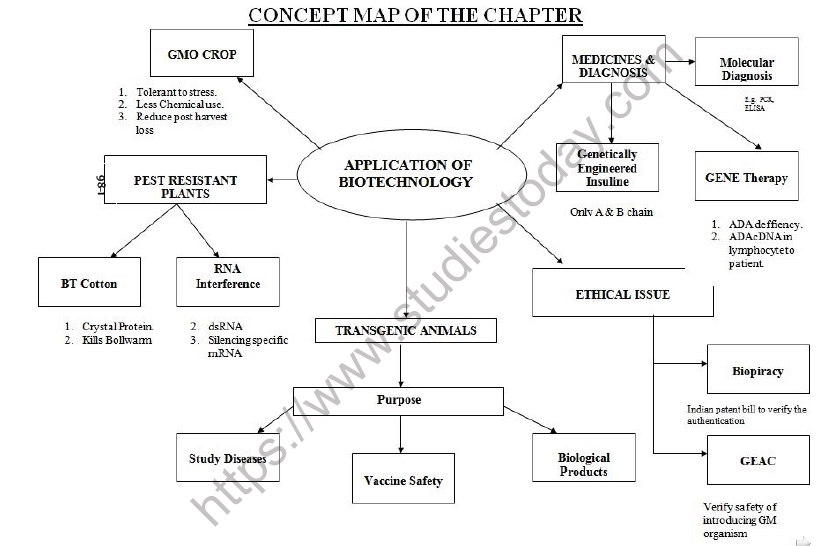
Biotechnology is making Genetically modified organisms-microbes, plants, animals for industrial production of Bio-Pharmaceuticals and other useful products.
Applications –
i) Diagnostic & therapeutic ii) Genetically modified crops
iii) Waste treatment iv) Energy production
v) Food processing vi) Bioremediation
Application in agriculture
Genetically modified organisms (GMO)-Plants, bacteria, fungi, animals.whose genes are altered by manipulation.
Transgenic crops(GMO) -Crops contain or express one or more useful foreign genes.
Advantages -i) More tolerant to stresses (heat, cold, draught).
ii) Pest resistants GM crops, reduce the use of Chemical pesticides. Eg- BTCotton
iii) Reduced post harvest losses. Eg- Flavr savr tomato.
iv) Enhance nutritional value of food. eg.- Golden Rice (Vitamin A enriched).
v) Increased efficiency of mineral use.
PEST RESISTANT PLANTS
Bt- cotton -- BT stands for Bacillus thuringiensis (Soil Bacteria). Bacterium produces proteins (Crystal Protein-cry I AC, cry II AB). A crystalliane insecticidal protein that kills the insects.Hence cry-Genes have been introduced in plants to produce crystal proteins as Protoxin (inactive toxin), which is converted to toxins in alkaline medium (i.e. in the gut of insects) and cause death of the insect larva.
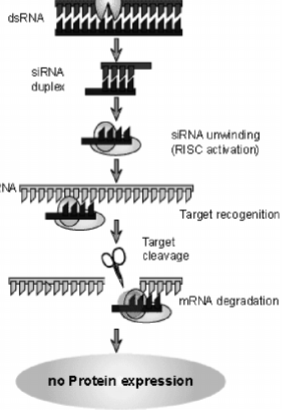
Protection of plants against nematodes –Nematode, Meloidogyne incognita infects tobacco plants & reduces yield. Specific genes (DNA) from nematodes introduced into the plants using Agrobacterium tumifecians (soil bacteria). Genes produce sense and antisense complementary RNA. Act as dsRNA and initiates RNAi ( RNA interference) and silences the specific mRNA. Complementary RNA neutralizes the specific RNA of nematodes by a process called RNA Interference and parasite cannot live in transgenic host.
In medicine- genetically engineered insulin—
rDNA technology was applied in therapeutic application by generating genetically engineered insulin for man. In 1983, Eli Lilly, an American company prepared 2 DNA sequences coding for chains A & B.
Human insulin consists of two short Polypeptide chains A & B being linked by disulphide bridges.In man, Insulin secreted as Prohormone containing C peptides that is removed during maturation.
In rDNA technique, insulin could be generated by preparing two separate DNA sequences of A & B chain which are incorporated into plasmids of E. coli to produce insulin chains.
Gene therapy
• Gene therapy involves correction of the gene defects in child or embryo.
• Adenosine deaminase deficiency is a kind of immuno-disorder caused by deletion of gene
coding for ADA.
• It can be cured by bone marrow transplantation or enzyme replacement therapy.
• A functional ADA-cDNA(through Retrovirus) is introduced in lymphocyte culture for genetic infusion and transfered to the patient body for normal functioning.
Molecular diagnosis --
Early & accurate detection of diseases substituting conventional diagnostic tecniques may be done by following methods:
PCR (Polymerase chain reaction): Short stretches of pathogenic genome is amplified for detection of suspected AIDS, Cancer or genetic disorder.
ELISA (Enzyme Linked Immunosorbent Assay) used to detect AIDS based on detection of antibodies produced against antigen of pathogen.
Transgenic Animals
Animals with manipulated genes or a foreign gene to be expressed are called as transgenic animals. They are useful-
1. To know how genes contribute to development of disease.
Biropiracy -- Some organizations and multinational companies exploit or patent bioresources of other nations without proper authorization. Indian patent bill is there to prevent such unauthorized exploitation.
GEAC- For validity of GM research and the safety of introducing GM organism Three mark question
1) What is the main advantage of producing genetically engineered insulin?
Ans- i) Produces only A&B peptides ii) No C-Peptides produced iii)No need to remove CPeptides during maturation.
2) What are the advantages of Molecular diagnosis technique?
Ans- i) Accurate ii) disease can be detected at very early stage iii)Can be diagnosed even if the number of pathogens is very low.
3)What are the potential risks ( Three ) of using GM food?
Ans – Potential risks- i) Products of transgene - allergic or toxic ii) Cause damage to natural environment iii) Weeds also become resistant iv) Can endanger native species
4)What is hirudin? How do you get it?
Ans- Anti coagulant obtained from transgenic Brassica napus.
5) How does agro bacterium help to increase Tobacco production?
Ans –i) Introduction of Nematode specific gene.
ii)Production of dsRNA(Sense and anti- Sense)
iii)Silence specific mRNA.
6) Why do farmers face the problems in Agro chemical based farming?
Ans – i) Too expensive ii) Conventional breeding procedure do not ensure increased production.
7) Why should farmers in India cultivate GM crops?
Ans - Tolerant to stress,pest resistant,less post-harvest losses, increased mineral use efficiency.
Five mark question
1)Explain the steps involved in the production of genetically engineered insulin?
Ans- i) Human insulin consists of 51 amino acids arranged in chains of A and B bearing 21 and 30 a. a respectively interconnected by disulphide bridges.
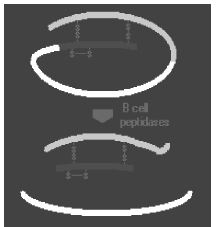
Diagram- Maturation of proinsulin into insulin after removal of c- peptide
ii) Insulin synthesized as prohormone has extra c -peptide which is removed during maturation.
iii) In 1983 , Eli Lilly, American company prepared two DNA sequences similar to A and B chains of human insulin(humulin).
iv) Chain A and B extracted and combined by creating disulphide bonds. Keywords of the chapter Genetically Modified Organism(GMO), Bt cotton, insecticidal proteins, cry genes, pest resistant plants, RNA interference(RNAi)/RNAsilencing, dsRNA, Genetically engineered insulin, gene therapy, ADA deficiency , c DNA, Molecular diagnosis, transgenic animals, Bio ethics, Genetic Engineering Approval Committee(GEAC), Bio piracy, Indian patent bill.
(HOTS) CHAPTER 12:
1.Name the disease in plants caused by Ti Plasmid?
Ans Crown gall disease.
2. What is the main objective of Gene therapy in biotechnological techniques?
Ans Gene therapy involves replacement of defective genes by normal genes.
3.Which organism is considered as Natural genetic engineer?
Ans Agrobacterium tumefaciens.
4.Which kind of bioweapon is most widely used ?
Ans Bacillus anthracis.
5.What is the main objective of herbicide resistant GM crop ?
Ans It effectively eliminates the weeds without involving manual labour .
6. From which species is human insulin commercially produced?
Ans Escherichia coli
7.Gene medicine refers to use of gene manipulation technology to ameliorate or
Ans even permanently cure diseases in human. Name the technique.
Definitions

Definitions
BIO PATENT :- A right given to inventor to get the economic benefits of the product. It also prevents the others to get benefit without permission.
BIOPIRACY :- The use of bio resources by multinationals companies & other organizations with out proper authorization from the countries & people concerned without compensatory payment.
ELISA :- It is a diagnostic technique based on the principle of antigen- antibody interaction.
GENE THERAPY :- A collection of methods that allow correction of agene defect that has been diagnosed in a child / embryo.
GENETICALLY MODIFIED ORGANISM (GMO):- Plants, bacteria , fungi &animals(organisms) whose genes have been altered by manipulations are called G.M.O.
GREEN REVOLUTION :- The process of increase in crop yields with the use of improved crop varieties, better management practices& use of agrochemicals.
PROBE :- These are the detectable sequence of polynucleotide which are used to detect the presence of complimentary DNA sequence.
TRANSGENIC ANIMALS :- Animals that had their DNA manipulated to possess & express an extra (Foreign) gene are known as transgenic animals.
TRANSPOSONS :- these are the mobile genetic elements which replicate via an RNA intermediate.
Patent
A set of exclusive rights granted by a state (national government) to an inventors or their assignee for a limited period of time in exchange for a public disclosure of an invention.
Patents are supposed to satisfy three criteria of : Novelty, non-obviousness, and Utility.
Novelty implies that the innovation must be new. It cannot be part of ‘prior art’ or existing knowledge. Non-obviousness implies that it may not be documented but is otherwise well known. The discored fact or product should be of a particular use for the human beings.
Controversies in India regarding patent and biopiracy
Turmeric : In May, 1995 the US Patent Office granted to the University of Mississippi Medical Center a patent for “Use of Turmeric in Wound Healing.”
Consider the implication of ‘turmeric patent’. If an Indian in America sprinkles turmeric powder – just as her ancestors in India have done for centuries – on her child’s scrape, she would in fact be infringing US patent laws and would be open to prosecution.
The patent was promptly challenged by Dr. R A Mashelkar, an Indian scientist who has done much to awaken India to Intellectual property Rights issues. After four months of submissions it was established that the use of turmeric as a healing agent was well-known in India for centuries. The patent was revoked.
Neem : In 1996, Vandana Shiva challenged the patent ranted to the firm of W.R. Grace & Co. by the European Patent Office, Munich for ‘fungicidal uses of neem oil’. Although the patent has been granted on an extraction technique, the Indian press described it as a patent on the neem tree itself: the result was widespread public outcry, which was echoed throughout the developing world. Vandana Shiva and Ajay phadke, who had researched neem in India, flagged ancient Indian texts to point out that there was on ‘novelty’ factor in neem’s magical properties that Grace & Co. had unveiled – Indians had known them for long. Legal action by the Indian government followed, with the patent eventually being overturned in 2005.
Basmati Rice : In September 1997, a Texas company called Rice Tec won a patent on “basmati rice lines and grains.” The patent secured lines of basmati and basmati-like rice and ways of selecting that rice for breeding. Rice Tec, owned by Prince Hans-Adam of Liechtenstein, international outrage over allegations of biopiracy. It has also caused a brief diplomatic crisis between India and United States with India threatening to take the matter to WTO ( World Trade Organization) as a violation of TRIPS (trade-related aspects of intellectual property rights) which could have resulted in a major embarrassment for the United States. Both voluntarily, and due to review decisions by the United States patent Office, Rice Tec lost most of the claims of the patent.
Free study material for Biology
Download CBSE Revision Notes: Class 12 Biology Chapter 10 Biotechnology and Its Application
Download Chapter Summary: Class 12 Biology Chapter 10 Biotechnology and Its Application
Explore reliable chapter overviews for Chapter 10 Biotechnology and Its Application tailored for Class 12 learners. Use these structured points to grasp difficult themes and ensure solid preparation for upcoming assessments.
Concept Clarification for Chapter 10 Biotechnology and Its Application
Each chapter summary is structured around standard CBSE textbooks, allowing students to check their understanding and clarify complex ideas early in their revision.
Additional Study Resources for Class 12 Biology
Wrap up your chapter revision by testing your knowledge against standard question formats. Everything on our platform is provided free of charge.
FAQs
You can download the teacher prepared revision notes for CBSE Class 12 Biology Biotechnology And Its Application Notes Set 01 from StudiesToday.com. These notes are designed as per 2026-27 academic session to help Class 12 students get the best study material for Biology.
Yes, our CBSE Class 12 Biology Biotechnology And Its Application Notes Set 01 include 50% competency-based questions with focus on core logic, keyword definitions, and the practical application of Biology principles which is important for getting more marks in 2026 CBSE exams.
Yes, our CBSE Class 12 Biology Biotechnology And Its Application Notes Set 01 provide a detailed, topic wise breakdown of the chapter. Fundamental definitions, complex numerical formulas and all topics of CBSE syllabus in Class 12 is covered.
These notes for Biology are organized into bullet points and easy-to-read charts. By using CBSE Class 12 Biology Biotechnology And Its Application Notes Set 01, Class 12 students fast revise formulas, key definitions before the exams.
No, all study resources on StudiesToday, including CBSE Class 12 Biology Biotechnology And Its Application Notes Set 01, are available for immediate free download. Class 12 Biology study material is available in PDF and can be downloaded on mobile.