

Download Class 12 Biology Concept Summaries: CBSE Class 12 Biology Human Reproduction Notes Set 01
Review targeted revision notes for Class 12 Biology with the CBSE Class 12 Biology Human Reproduction Notes Set 01. Built according to official educational guidelines for the 2026-27 academic year, these downloadable summaries for Chapter 02 Human Reproduction support daily study and last-minute exam readiness.
Access Chapter 02 Human Reproduction Notes and Study Material
Access the complete concept summary PDF for Chapter 02 Human Reproduction below. Regular review of these targeted notes builds familiarity with complex Class 12 Biology themes and helps secure higher marks in final school evaluations.
The Male reproductive system
1. Penis
a. Urination
b. Sexual intercourse
1. Corpus cavernosum- spongy tissue that fills with blood to make penis erect
2. Glans- the head, end of penis
3. Foreskin
i. Covers glans,
ii. May be removed surgically in an operation (circumcision)
2. Scrotum
a. Located behind penis
b. Contains two testes
c. Temperature sensitive (Sperm must be made in cooler conditions i.e, 2-3° C lower than body temperature)
3. Testes
a. Sperm is produced by the seminiferous tubules due to FSH
b. Testosterone is produced by Leydig cells due to LH
1. Causes the development of the male sex organs at ~8 weeks after conception.
2. Responsible for facial, armpit, and pubic hair, bone growth and muscular development.
c. Testes formed in the abdomen before birth. Descend through the "inguinal canal" during fetal or post-natal life. Sometimes it may take months/years to reach right place. Possible site for hernia.
4. Epididymis: Stores sperm until they have matured.
5. Vas deferens: Tube that leads from the epididymis to the urethra.Many sperm cells are stored here too.
6. Prostate gland: Provides an alkaline fluid that can protect sperm from harsh vaginal acids.
7. Seminal
Vesicles: Produce food for sperm. Food "Fructose"
8. Cowper's gland: Produces clear lubricating fluid
The Female Reproductive System
Ovary:
i) Each ovary contains immature ova (eggs) in follicles.
ii) Females born with lifetime supply of eggs(250,000-400,000 in each ovary)
iii) Ovaries release ovum -. Almost all ova degenerate between birth and puberty.
iv) Approx. 400 eggs will be ovulated over woman's life.
v) Egg is the largest human cell.
vi) Ovaries are located lower abdomen. 1 left and 1 on the right.
Fallopian tubes
i)Two thin tubes attached to the upper sides of uterus
ii) Tubes terminate near the ovaries but are not attached
iii)"Fimbriae" are finger-like structures on the end of each tube
iv)Tubes conduct egg to uterus by use of small hairs called "cilia"
v)Fertilization of ovum takes place in the ampullary-isthmic junction of the fallopian tubes. Egg viable for only 24-48 hours after ovulation.
Uterus:
i)Pear-shaped organ located in lower abdomen
ii)Muscles(myometrium) stretch to allow baby to develop. Oxytocin starts labor contractions.
iii)Lining of uterus (endometrium) thickens with blood-rich tissue due to progesterone
iv)Endometrium supports embryo/fetus during growth
v)Placenta It is the interface between baby and mother. If not pregnant, lining breaks down and is discharged from body through vagina. This is menstruation (period)
vi)Cervix connects uterus to vagina. Like a door that opens during ovulation. Cervical mucous closes the door at all other times.
Vagina:
Birth canal:
i)Menstrual blood leaves the body
ii) Organ of intercourse
iii) Muscular stretches to allow a baby to grow
iv)Vaginal opening partly remains closed by thin membrane of tissue called hymen. May be stretched or torn during any physical activity
Cervix:
i)Located at inner end of vagina
ii)Opening of uterus into vagina
iii) Mucous prevents bacteria and viruses from entering uterus
iv)Lets sperm into uterus after ovulation
v) Where baby also passes through during vaginal birth
Labia:
2 layers of skin, which fold over the opening to vagina and urethra
ii) Inner labia (labia minora)
iii)Outer labia (labia majora)
1.Two folds of skin, surround vaginal area
2. Pubic hair grows on outer labia
Clitoris:
i) Small organ, 5 to 10 millimeters long
ii) Located at junction of inner labia near front of body
iii) Contains erectile tissue& sexually sensitive
Mons pubis :Cushion like fatty tissue covered by skin and pubic hair
Gametogenesis & its hormonal regulation :
Ref: Concept Map Page C 3
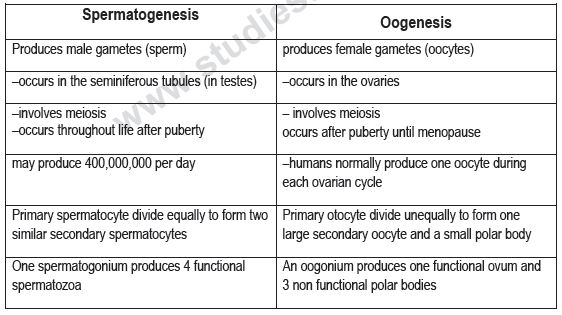
Differentiate between: Spermatogenesis and Oogenesis :


From Primordial Follicle to Tertiary Follicle
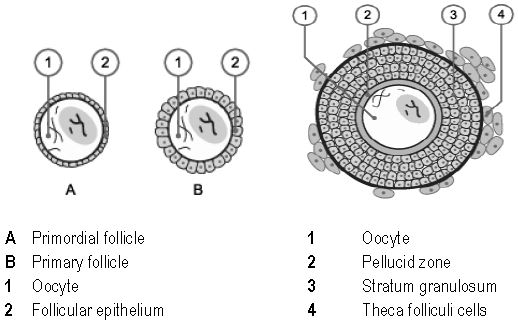
Primordial follicle: The surviving primary oocytes, at birth, are surrounded by thin, single layers cells of so-called follicular epithelial cells.
Primary follicle
The primordial follicles while developing into primary follicles the follicular epithelium that surrounds the oocyte becomes iso- to highly prismatic
Secondary follicle
Secondary follicles with follicular epitheliums encompassing multiple rows are formed called the stratum granulosum. Pellucid zone, between the oocyte and follicular epithelium becomes visible.
Tertiary follicle
A well-developed net of capillaries in the theca interna.
Antrum – a fluid filled cavity develops
The theca layer organized into Theca internal & Theca external
Tertiary follicle
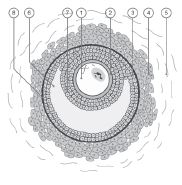
1 Oocyte
2 Pellucid zone
3 Stratum granulosum
4 Theca internal
5 Theca external
6 Antral follicle
7 Cumulus oophorus (Granulosa cells, together with the oocyte)
8 Basal lamina between theca and stratum granulosum


TERMS TO REMEMBER
Acrosome - the part of a sperm cell that contains an enzyme – (This enables a sperm cell to penetrate an egg.)
Afterbirth - placenta and fetal membrane expelled from the uterus after the birth of a baby
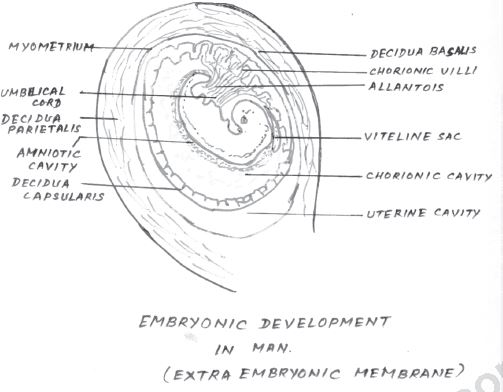
Amniotic sac - fluid-filled membrane or sac that surrounds the developing embryo while in the uterus.(protects baby from hard shocks, keeps it at a constant temperature. )
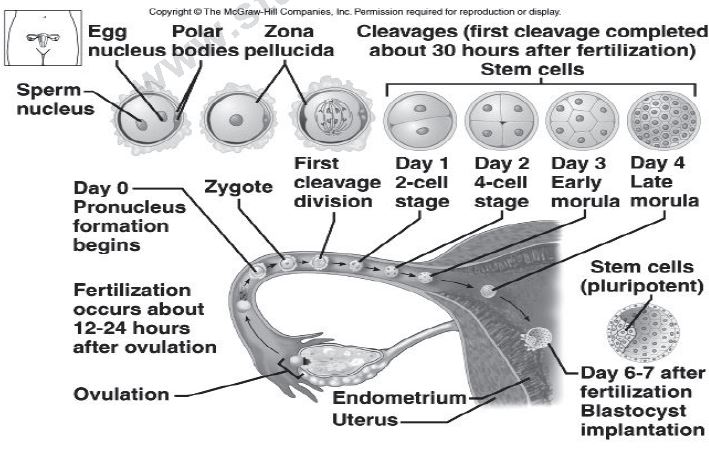
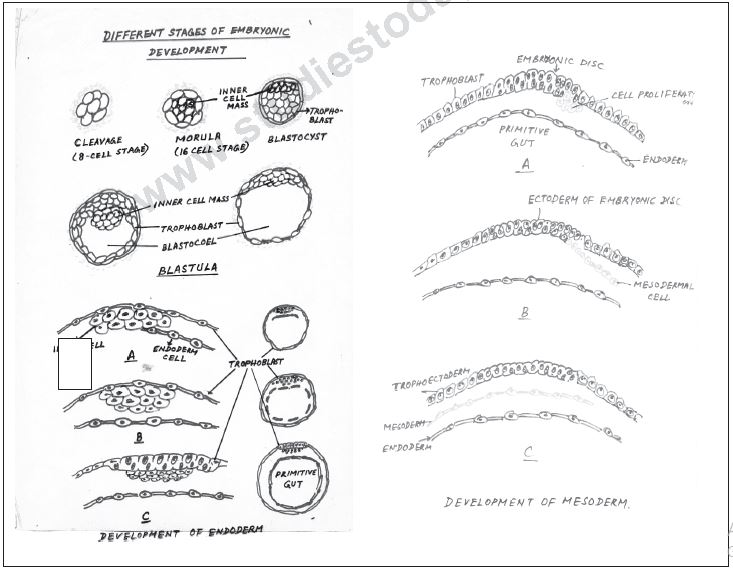
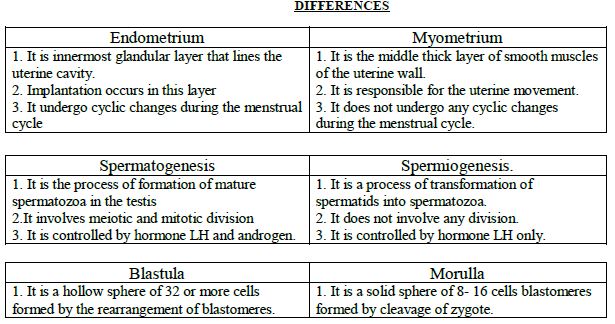
Birth - the process of being born.Process by which baby moves from the uterus into the outside world.Parturition Blastocyst = blastula = early stage of an embryo; a liquid-filled sphere whose wall is composed of a single layer of cells; during this stage (about eight days after fertilization) implantation in the wall of the uterus occurs.
Cervix - lower part, or neck, of uterus. (Opening to the uterus.)
Clitoris - small, sensitive organ in front of the vagina
Coitus - synonym for sexual intercourse
Conception - fertilization of an egg cell by a sperm cell
Corpus Luteum - After ovulation, this crater-like structure produces progesterone and estrogen. The corpus luteum is the old RUPTURED GRAFFIAN follicle. It means “yellow body”.
Cowper's glands - 2 glands that secrete an oily liquid, which cleans and lubricates the urethra of the male
Egg cell - a female sex cell (female gamete or ovum or secondary oocyte)
Ejaculation - the discharge of semen from the penis
Embryo - the unborn child developing in the uterus between the second and eighth weeks of life
Endometrium - the lining for the uterus – site for blastocyst implants and develops.
Epididymis - the tightly coiled tube at the back at each testis that holds newly created sperm – (each epididymis is like a nursery where sperm mature and learn to swim.)
Erection - condition of penis when it fills with blood and becomes firm, enlarged, and erect.
Fallopian tubes - tubes leading from each ovary to the uterus. Tubes carry the egg from ovary to the uterus. Fertilization occurs here. (Also known as the oviducts.)
Fimbria - A fimbria (plural fimbriae) Latin word, literally means "fringe." a fringe of tissue near the ovary leading to the fallopian tube
Fertile - able to conceive a child Fertilization union of sperm and egg.Conception.
Fertilized egg - egg after sperm has united with it. Zygote.
Fetus - unborn child developing in the uterus after the first eight weeks of life
Follicle - In ovaries. Each holds and nourishes an egg until ovulation. Nest. Becomes corpus luteum after ovulation.
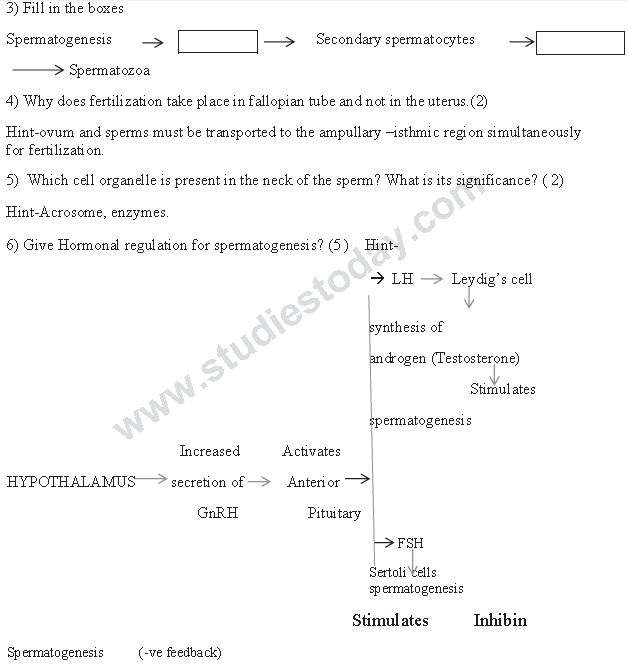
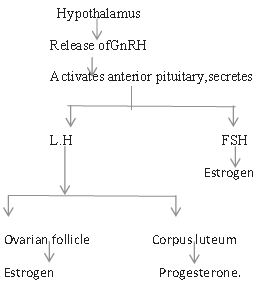
Foreskin – A sheath of skin that surrounds the penis. Follicle Stimulating Hormone - secreted from pituitary gland in both men and women. In women, FSH promotes the development of eggs and estrogen. In men, FSH promotes the development of sperm cells.
Fraternal twins - babies that develop from two eggs, each fertilized by a sperm cell; may or may not be of the same sex
Gamete – a sex cell. Sperm cells and egg cells are gametes.
Genitals - the reproductive or sex organs, especially the external organs
Germ Cell - egg or sperm cell.Gamete. In humans, germ cell contains 23 chromosomes
Hormones - chemical substances produced by the endocrine glands; they act in other parts of the body and affect maturation, growth, and behavior; LH, FSH, GH, Testosterone, Estrogen, Progesterone are all hormones.
Hymen - a thin bit of tissue, or membrane that may partially cover the opening of the vagina
Identical twins - babies that develop from a single fertilized egg that separates into two halves; identical twins are always of the same sex
Labia - two folds of skin surrounding the entrance of vagina
Labor - the muscular contractions that expel a baby from uterus during childbirth
Leydig Cells – when prompted by LH, Leydig cells create testosterone.
LH - Luteinizing Hormone - Secreted from pituitary gland, causes ovulation and formation of corpus Luteum in women. In men, LH causes Leydig cells to produce testosterone.
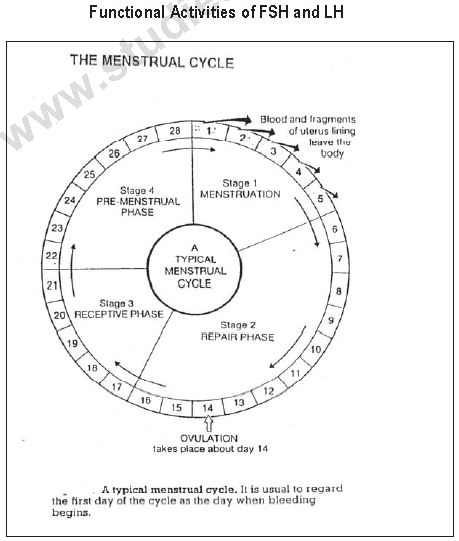
Menstrual cycle - periodic building up and sloughing off of lining of uterus approximately every
twenty - eight days
Menstruation - the periodic discharge of blood and waste material (unfertilized secondary oocyte / ova and the degenerating endometrium lining) from the uterus
Miscarriage - expulsion from the uterus of a fetus before it is developed sufficiently to live Also called spontaneous abortion
Myometrium – muscles of the uterus that stretch to accommodate the growth of the baby. These muscles contract during labor and push baby out.
Orgasm - the peak of sexual excitement when the male ejaculates semen,
Ovary - female sex glands; they produce egg cells, estrogen and progesterone.
Ovulation - the discharge, or release, of an egg cell / secondary oocyte from the ovary
Ovum - scientific name for an egg cell / secondary oocyte
Oxytocin - hormone, released from the pituitary gland , stimulates contractionof the myometrium of the uterus during labor and facilitates ejection of milk from the breast during nursing.
Penis - the male sex organ through which sperm cells leave the body; it also discharges urine
Placenta - network of blood vessels and other tissues by which the unborn child is attached to the wall of the uterus.grows out of the endometrium The umbilical cord is attached to it. It is the interface between mother and developing fetus.
Pregnancy - the process in a woman from conception to birth
Pregnant - the condition of a woman with an embryo or fetus in her uterus
Progesterone – pregnancy hormone, which is first produced by the corpus luteum and then by the placenta.
* increases lining of endometrium.
* maintains pregnancy
* helps develop mammary glands.
Prostate gland - surrounds the upper end of male urethra and produces part of the fluid that mixes with the sperm to form semen. Prostate fluid alkaline helps to protect sperm from vaginal acids.
Scrotum - pouch of loose skin containing the testes.Houses and air - conditions the testicles by moving and sweating.
Semen - the mixture of sperm and fluids released during ejaculation. Semen comprised of sperm, fructose, prostate fluid and oil from Cowper’s gland.
Seminal vesicles - small saclike organs opening into each vas deferens near the upper end of the urethra; produce part of the fluid that mixes with the sperm to form semen; provide food (fructose) for the sperm.
Seminiferous tubules - tubes in testes that produce sperm
Sexual intercourse - entry of penis into vagina and subsequent release of semen; also called coitus
Sperm - the male sex cell (male gamete or spermatozoon), which contains 23 chromosomes in human.
Spermatozoon - scientific name for sperm
Spontaneous abortion - - synonym for miscarriage
Testes - male sex glands; produce sperm cells and testosterone;
Testicles - synonym for testes
Testosterone – male hormone that regulates development of penis, muscles, body hair, change of voice.
Umbilical cord - ropelike structure connecting embryo or fetus to placenta within the uterus.
Urethra - the tube through which urine is expelled from the bladder in both males and females and through which semen leaves the male body
Uterus = womb - the hollow pear - shaped organ in which a baby develops before it is born;
Vagina - passage from the uterus to the outside of the body, accepts the penis during intercourse. It is the birth canal & menstrual fluids leave through it
Vas deferens - tube extending from each epididymis to the urethra in males
Womb - synonym for uterus
Yolk sac - a structure that develops for the nutrition of embryo during early embryonic life and then ceases to function
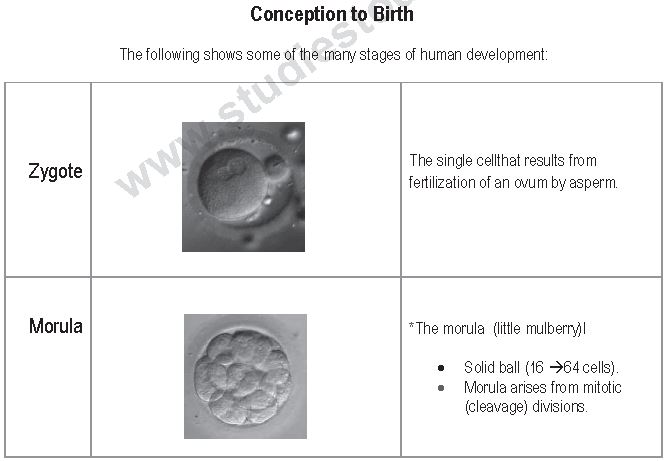
Zygote - The cell formed by the union of two gametes. [ fertilized ovum before cleavage.]
IMPORTANT NOTES
• An adult male produces over 1012 to 1013 sperms each day.
• Human female oogonial development by mitosis is completed by 25 weeks of foetus and no oogonia are formed after birth.
• Sperm entry into the ovum stimulates MPF (M phase promoting factor) & APC ( Anaphase promoting complex) for completion of Meiosis II.
• During Spermatogenesis, spermatogonium produces four sperms while in oogenesis, oogonium produces one ovum and two polar bodies.
• Human Sperm contains Clupein proteins.
• Yolk nucleus: A mass of mitochondria and golgi bodies near nucleus is called as yolk nucleus and controls vitellogenesis.
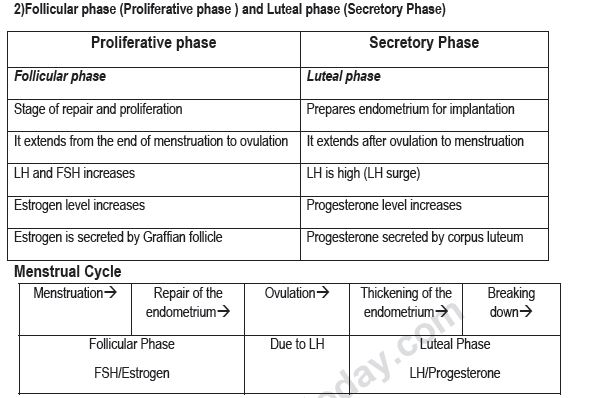
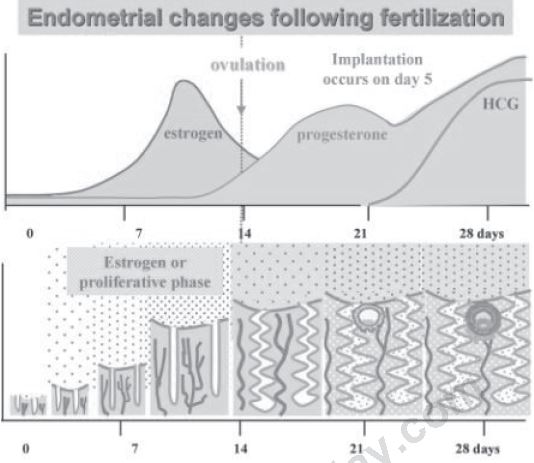
• Maximum level of estrogen – 12th day, LH-13th day, Progestrone – 21st day, Corpous luteum formation – 19th day of menstrual cycle.
• Menstrual cycle is absent during pregnancy, lactation periods and permanently during menopose.
• Two ovaries alternate in ovulation.
• 13 mature eggs are released per year, so about 416 eggs (13x32 years) are ovulated during whole reproductive period of human female.
• Menstruation is also called “Weeping of uterus for the lost ovum” or” Funeral of unfertilized eggs”.
• In human embryo, yolk sac degenerates since eggs is microlecithal, which shows evolutionary significance.
• Placenta acts as a physiological barriers and an ultra-filter between foetal and maternal blood.
• Progesterone is also called pregnancy hormone since its secretions controls pregnancy.
• Teratogens are physical, chemical, biological agents which may cause malformation in developing embryo.
• Period between fertilization and parturition is called gestation periods. Varies between 266 days up to 280 days ( 49 weeks)
1) Zygote undergoes mitosis to form 16 celled embryo. What is the stage known as? (1)
Hint-Blastomeres.
2)Name the important mammary gland secretions that help in resistance of the new born baby. 1)
Hint-Colostrum
DEFINITIONS:
CLOSOTRUM:- the first milk that comes out of the mammary gland of the mother immediately after child birth is called colostrums.
FOLLICULAR ATRESIA:- It is the process of degeneration of number of primary follicle in ovary of human female from birth to puberty.
GAMETOGENESIS :- It refers to the process of formation of gametes for sexual reproduction.
GRAFFIAN Follicle:- The mature follicle in the ovary is known as graffian follicle.
IMPLANTATION:- The process in which embryo become embedded / attached to the wall of uterus is called implantation.
LECTATION:- Due to the effect of hPL and progesterone after pregnancy there is starting of secretion of milk is called lactation.
L-H SURGE:- it refers to maximum level of L-H during middle of menstrual cycle.
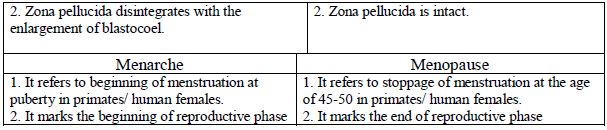
MENARCHE:- The beginning of menstruation at puberty in primate females is called as menarche.
OOGENESIS:- it is the formation of ova in the ovary by meiosis is known as oogenesis.
PRIMARY SEX ORGANS:- The organs producing male and female gametes are known as primary sex organs.
SECONDARY Sex Organs:- The sex organs which perform important functions in the reproduction but do not form gametes are called secondary sex organs.
SEMEN:- The mixture of seminal plasma and spermatozoa is called semen.
SPERMIATION:- It is the process of transformation of spermatids into spermatozoa is known as spermiation.
Please click the link below to download pdf file for CBSE Class 12 Biology Human Reproduction.
Free study material for Biology
Chapter 02 Human Reproduction Concepts and Summary for Class 12 Biology
Download Chapter Summary: Class 12 Biology Chapter 02 Human Reproduction
Access structured revision notes for Chapter 02 Human Reproduction designed in alignment with the latest CBSE curriculum for Class 12 Biology. These summaries help clarify core themes and support effective daily study.
Concept Clarification for Chapter 02 Human Reproduction
Cross-reference your comprehension with comprehensive NCERT solutions for Class 12 to ensure absolute clarity across all sub-topics in this chapter.
Additional Study Resources for Class 12 Biology
Wrap up your chapter revision by testing your knowledge against standard question formats. Everything on our platform is provided free of charge.
FAQs
You can download the teacher prepared revision notes for CBSE Class 12 Biology Human Reproduction Notes Set 01 from StudiesToday.com. These notes are designed as per 2026-27 academic session to help Class 12 students get the best study material for Biology.
Yes, our CBSE Class 12 Biology Human Reproduction Notes Set 01 include 50% competency-based questions with focus on core logic, keyword definitions, and the practical application of Biology principles which is important for getting more marks in 2026 CBSE exams.
Yes, our CBSE Class 12 Biology Human Reproduction Notes Set 01 provide a detailed, topic wise breakdown of the chapter. Fundamental definitions, complex numerical formulas and all topics of CBSE syllabus in Class 12 is covered.
These notes for Biology are organized into bullet points and easy-to-read charts. By using CBSE Class 12 Biology Human Reproduction Notes Set 01, Class 12 students fast revise formulas, key definitions before the exams.
No, all study resources on StudiesToday, including CBSE Class 12 Biology Human Reproduction Notes Set 01, are available for immediate free download. Class 12 Biology study material is available in PDF and can be downloaded on mobile.