

Revision Notes for Class 12 Biology: Chapter 07 Human Health and Diseases
Access comprehensive revision notes for Chapter 07 Human Health and Diseases using the CBSE Class 12 Biology Human Health And Disease Notes Set 02. Designed to align with the 2026-27 academic syllabus for Class 12 Biology, these concept summaries help students streamline their exam preparation and review complex topics efficiently.
Review Chapter 07 Human Health and Diseases for Class 12 Biology
Access the complete concept summary PDF for Chapter 07 Human Health and Diseases below. Regular review of these targeted notes builds familiarity with complex Class 12 Biology themes and helps secure higher marks in final school evaluations.
• Health is a state of complete physical, mental & social well- being. It is affected by genetic disorders, infections, change in life style (food, water, rest, exercise, habits etc).
• Mind influences immune system (through neural and Ayurveda system): It states that health is a state of body & mind endocrine systems) and thereby health. where there is a balance of certain humours. Persons with ‘black
• When the functioning of organs or systems of the body is bile’ belong to hot personality and would have fevers. adversely affected, it is called a disease.
• Diseases may be infectious (transmits from one person to circulation and demonstrated normal body temperature in another) or non-infectious (do not transmit. E.g. cancer).
• Disease causing organisms are called Pathogens. Parasites are pathogens as they harm the host.
Good humour hypothesis (by Hippocrates & Indian Ayurveda system): It states that health is a state of body & mind where there is a balance of certain humours. Persons with ‘black bile’ belong to hot personality and would have fevers.
William Harvey disproved this hypothesis. He discovered blood circulation and demonstrated normal body temperature in persons with black bile using thermometer.
COMMON INFECTIOUS DISEASES IN MAN
1. BACTERIAL DISEASES
a. Typhoid: Pathogen is Salmonella typhi.
• Mode of transmission: It enters small intestine through food & water and migrates to other organs via blood.
• Symptoms: Sustained high fever (39o-40o C), headache, weakness, stomach pain, constipation & loss of appetite.
Intestinal perforation and death may occur.
Widal test is used for confirmation of the disease.
Mary Mallon (Typhoid Mary) was a professional cook.
She was a typhoid carrier who spread typhoid for several years through the food she prepared.
b. Pneumonia: Pathogen is Streptococcus pneumoniae & Haemophilus influenzae.
It infects lung alveoli. The alveoli get filled with fluid leading to respiratory problems.
• Mode of transmission: Inhaling the droplets/aerosols released by an infected person. Sharing glasses and utensils with an infected person.
• Symptoms: Respiratory problems, fever, chills, cough, headache. In severe cases, lips and finger nails turn grey to bluish colour.
Other bacterial diseases: Dysentery, plague, diphtheria, etc.
2. VIRAL DISEASES
a. Common cold: Pathogen is Rhinoviruses.
It infects nose & respiratory passage but not lungs.
• Mode of transmission: Inhaling droplets resulting from cough or sneezes. Through contaminated objects (pens, books, cups, doorknobs, computer accessories) etc.
• Symptoms: Nasal congestion & discharge, fever, headache, sore throat, cough, hoarseness, tiredness etc. Common cold lasts for 3-7 days.
3. PROTOZOAN DISEASES
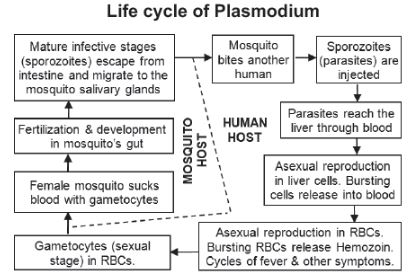
a. Malaria: Pathogen is Plasmodium sp. (P. vivax, P.malariae & P. falciparum).
Most serious (malignant) malaria is caused by P.falciparum.
• Mode of transmission: By female Anopheles mosquito.
• Symptoms: Haemozoin (toxin released by Plasmodium)causes chill and high fever recurring every 3-4 days.
b. Amoebiasis (Amoebic dysentery): Pathogen is Entamoeba histolytica.
• Mode of transmission: Houseflies (mechanical carriers) transmit parasites from faeces to food & water.
• Symptoms: Constipation, abdominal pain and cramps, stools with excess mucus and blood clots.
4. HELMINTH DISEASES
a. Ascariasis: Pathogen is Ascaris (Intestinal parasite).
• Mode of transmission: Soil, water, vegetables, fruits etc. contaminated with faeces containing eggs of parasites.
• Symptoms: Internal bleeding, muscular pain, fever, anaemia and blockage of intestinal passage.
b. Filariasis (Elephantiasis): Pathogen is Filarial worms or Wuchereria (W. bancrofti & W. malayi).
• Mode of transmission: Bite of female Culex mosquito.
• Symptoms: Filarial worms live in lymphatic vessels (usually of lower limbs). It causes chronic inflammation of the organs in which they live for many years. Limbs and genital organs may be deformed.
5. FUNGAL DISEASES
a. Ring worms: Pathogens are Microsporum, Trichophyton & Epidermophyton. They are seen in groin, b/w toes etc.
• Mode of transmission: From soil or by using towels, cloths, comb etc. Heat and moisture help fungi to grow.
• Symptoms: Dry, scaly lesions on skin, nails, scalp etc. Intense itching.
PREVENTION AND CONTROL OF DISEASES
Personal hygiene
Keep the body clean. Use clean drinking water, food etc.
Public hygiene
a. Proper disposal of wastes and excreta.
b. Periodic cleaning and disinfection of water reservoirs, pools, cesspools and tanks.
c. Avoid contact with infected persons or their belongings (to control air-borne diseases).
d. Standard practices of hygiene in public catering.
e. Control and eliminate the vectors (e.g. mosquitoes).
• Avoid stagnation of water.
• Regular cleaning of household coolers.
• Use of mosquito nets.
• Introduce larvivorous fishes like Gambusia in ponds.
• Spraying insecticides in ditches, drainage and swamps.
• Provide doors and windows with wire mesh.
These precautions can avoid vector-borne diseases like Malaria, Filariasis, Dengue & Chikun gunya
Vaccines & immunisation helped to control diseases like smallpox, polio, diphtheria, pneumonia & tetanus. Drugs like antibiotics also helped to treat infectious diseases
HUMAN IMMUNE SYSTEM
• It is the system that gives immunity to the body by recognizing, responding and remembering foreign antigens.
• It plays role in allergic reaction, autoimmune disease and organ transplantation.
• It includes lymphoid organs, tissues, cells & antibodies.
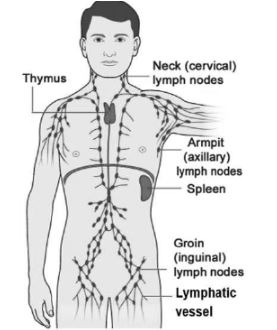
LYMPHOID ORGANS
These are the organs where origin/maturation & proliferation of lymphocytes occur. 2 types: Primary & Secondary.
a. Primary lymphoid organs The organs where lymphocytes are matured & differentiated to antigen-sensitive lymphocytes. It is 2 types:
1. Bone marrow: The site of formation of all blood cells including B & T-lymphocytes.
2. Thymus: A bilobed organ seen near the heart and beneath the breastbone. It is large during birth but gradually reduces in size and becomes very small size in puberty. Immature T-lymphocytes from bone marrow is migrated to thymus and matured.
b. Secondary lymphoid organs
• The organs, to which matured lymphocytes migrate from primary lymphoid organs, interact with antigens and then proliferate to become effector cells.
E.g. Spleen, lymph nodes, tonsils, Peyer’s patches, Mucosaassociated lymphoid tissue (MALT) & appendix.
• Spleen: Bean-shaped organ. Contains lymphocytes and phagocytes. It removes worn-out RBCs & microorganisms from blood. It is a reservoir of erythrocytes in foetus.
• Lymph nodes: Found in lymphatic system. They trap microorganisms or other antigens. Trapped antigens activate lymphocytes and cause immune response.
• MALT: Located within the lining of respiratory, digestive & urinogenital tracts. It constitutes 50% of lymphoid tissue.
IMMUNITY
It is the ability of the immune system to fight the pathogens.
It is 2 types: Innate and Acquired.
1. Innate (inborn) immunity
• It is the non-specific immunity present at the time of birth.
• It includes 4 types of Barriers:
a. Physical barriers: Prevents entry of microbes. E.g. Skin, Mucus coating of the respiratory, gastro-intestinal and urino-genital tracts. Mucus traps microbes.
b. Physiological barriers: They prevent microbial growth.
E.g. gastric HCl, saliva, tear etc.
c. Cellular barriers: Phagocytes like WBC [Polymorphonuclear leukocytes (PMNL) or neutrophils, monocytes and natural killer lymphocytes], macrophages etc.
d. Cytokine barriers: Virus infected cells secrete a cytokine protein called interferon. It protects non-infected cells from further viral infection.
2. Acquired (adaptive) immunity
• It is pathogen specific immunity developed during lifetime.
• It is characterized by memory, i.e. during first encounter of a pathogen, body produces primary response in low intensity. Second encounter of the same pathogen causes a secondary (anamnestic) response in high intensity.
• Primary and secondary immune responses are carried out with B-lymphocytes (B-cells) and T-lymphocytes (T-cells).
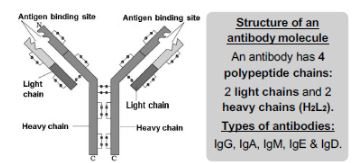
a. B-lymphocytes: Produce antibodies. These are the proteins to fight the pathogens.
b. T-lymphocytes: Help B-cells to produce antibodies.
Types of Acquired immune response
1. Humoral immune response/ Antibody mediated immunity (AMI): It is the immune response mediated by
antibodies. Antibodies are found in blood plasma. So called as Humoral immune response.
Vaccines & immunisation helped to control diseases like smallpox, polio, diphtheria, pneumonia & tetanus. Drugs like antibiotics also helped to treat infectious diseases.
2. Cell-mediated response / cell-mediated immunity (CMI): It is the immune response mediated by T-lymphocytes (Tcells). The body can differentiate ‘self’ and ‘non-self’ and the CMI causes Graft rejection.
Tissue matching & blood group matching are essential before undertaking any graft/ transplant. After this, the patient should take immuno-suppressants all his life.
Types of Acquired immunity
Acquired immunity is 2 types: Active and passive.
1. Active immunity: It is the immunity in which antibodies are produced in a host body when the host is exposed to antigens (e.g. living or dead microbes or other proteins).
It is a slow process. It is produced by 2 ways:
a. Natural Active Immunity: It is developed during natural infection by microbes.
b. Artificial Active Immunity: It is developed by injecting the microbes deliberately during immunization.
2. Passive immunity: Here, readymade antibodies are directly given to the body. It is 2 types:
a. Natural Passive Immunity: E.g.
• Antibodies (IgG) from mother → Placenta → Foetus
• Antibodies (IgA) in colostrum → infants
b. Artificial Passive Immunity: E.g.
• Anti-tetanus serum (ATS)
Immunization
This is based on ‘memory’ of the immune system. 2 types:
• Active Immunization (Vaccination)
• In this, a preparation of vaccine (antigenic proteins of pathogen or inactivated pathogen) is introduced into the body. It results in the development of antibodies.
• During actual infection, the antibodies neutralize antigens.
• The vaccines also generate memory B and T-cells. They recognize the pathogen quickly. E.g. Polio vaccine, Hepatitis B vaccine, DPT vaccine etc.
• Vaccines are produced using DNA recombinant technology (E.g. Hepatitis B vaccine produced from Yeast).
2. Passive Immunization
• It is the direct injection of pre-formed antibodies or antitoxin. It is required for quick immune response.§
• E.g. Immunization against Tetanus, snake venom etc.
Allergies
• It is the exaggerated response of the immune system to certain antigens present in the environment.
• Allergens: Substances causing allergy. E.g. mites in dust, pollens, animal dander, fur etc.
• Antibodies produced against the allergens are IgE type.
• IgE binds on mast cells to release chemicals like histamine and serotonin from them. It results in allergic reactions.
• Symptoms: Sneezing, watery eyes, running nose, difficulty in breathing, wheezing, skin rashes etc.
• Determination of cause of allergy: The patient is exposed to or injected with very small doses of possible allergens, and the reactions studied.
• Treatment: Drugs like anti-histamine, adrenaline and steroids quickly reduce the symptoms of allergy.
• Asthma is a respiratory disease due to allergy.
• Modern-day life style and protected environment provided early in life result in low immunity and more sensitivity to allergens. So, many children in metro cities suffer from allergies and asthma.
Autoimmunity
• In higher vertebrates, memory-based acquired immunity evolved based on the ability to differentiate foreign organisms from self-cells.
• Sometimes, due to genetic and other unknown reasons, the body attacks self-cells resulting in damage to the body. It is called auto-immune disease. E.g. Rheumatoid arthritis.
AIDS (Acquired Immuno Deficiency Syndrome)
• It is the deficiency of immune system.
• Syndrome means a group of symptoms.
• It is caused by HIV (Human Immunodeficiency Virus), a retrovirus having RNA genome.
• AIDS was first reported in America (1981).
• In the last 25 years, it killed over 25 million persons.
Transmission:
• Sexual contact with infected person.
• Transfusion of contaminated blood & blood products.
• Sharing of infected needles.
• From infected mother to her child through placenta.
High risk people of getting HIV:
• Individuals with multiple sexual partners.
• Drug addicts who take drugs intravenously.
• Individuals who require repeated blood transfusion.
• Children born to an HIV infected mother.
HIV does not spread by touch or physical contact. It spreads only through body fluids.
There is a time-lag (from few months to 5-10 years) between the infection and appearance of symptoms.
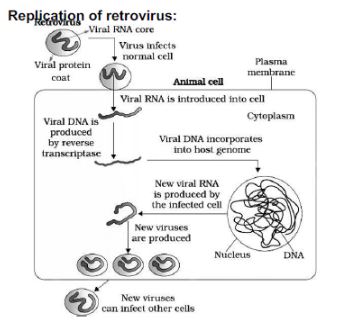
Life cycle of HIV:
HIV enters body → To macrophages (acts as HIV factory) → RNA genome replicates in presence of Reverse transcriptase to form viral DNA → Viral DNA incorporates into host DNA→ Infected cells produce virus particles → HIV enters into helper T-cells (TH lymphocytes) → Replicates & produce progeny viruses → Attack other TH cells → TH cells decrease → Weaken immunity.
• During this period, the person suffers from fever, diarrhoea and weight loss.
• Due to deficiency of TH cells, he may be infected with Mycobacterium, viruses, fungi & parasites like Toxoplasma.
• Diagnosis: ELISAtest (Enzyme-linked immuno-sorbent Assay).
• Treatment: Anti-retroviral drugs are partially effective. They can only prolong the life of the patient.
Prevention of AIDS:
o Educate people about AIDS through organisations like National AIDS Control Organisation (NACO), nongovernmental organisations (NGOs), WHO etc.
o Make blood (from blood banks) safe from HIV.
o Use disposable needles and syringes.
o Advocate safe sex and free distribution of condoms.
o Control drug abuse.
o Regular check-ups for HIV in susceptible population.
CANCER
• Cancer is an abnormal and uncontrolled multiplication of cells resulting in the formation of tumour (masses of cells).
• Normal cells show a contact inhibition (contact with the other cells inhibits their uncontrolled growth). Cancer cells do not have this property.
Types of Tumours
o Benign tumours: Confined to the place of its origin. They do not spread to other parts. Cause little damage.
o Malignant tumours: Mass of proliferating cells (neoplastic or tumour cells) that grow rapidly, invade and damage the surrounding normal tissues. Due to active division and growth, they starve normal cells by competing for nutrients.
Cells sloughed from tumours reach other sites via blood where they form a new tumour. This is called metastasis.
Causes of cancer (Carcinogens)
• Physical agents: E.g. Ionizing radiations like X-rays and gamma rays and non-ionizing radiations like UV.
• Chemical agents: Tobacco smoke (major cause of lung cancer), vinyl chloride, caffeine, nicotine, mustard gas etc.
• Biological agents: E.g. oncogenic viruses, c-onc (cellular oncogenes or proto oncogenes) etc. When C-onc in normal cells is activated, the cells become oncogenic.
Cancer detection and diagnosis
o Biopsy: A thin piece of the suspected tissue is stained and examined under microscope (histopathological studies).
In case of leukemia: Biopsy & histopathological studies.
Blood & bone marrow tests for increased cell counts.
o Imaging techniques:
• Radiography: Use of X-rays.
• CT (Computerized tomography) scan: Uses X-rays to generate a 3D image of the internals of an object.
• MRI (Magnetic Resonance Imaging): Uses magnetic fields and non-ionising radiations to detect pathological and physiological changes in the living tissue.
• Use of Antibodies against cancer-specific antigens.
• Molecular biology technique: To detect cancer related genes. Such individuals should avoid carcinogens (e.g. tobacco smoke).
Treatment of cancer
o Radiotherapy: Tumour cells are irradiated lethally, without damaging surrounding normal tissues.
o Chemotherapy: Use of chemotherapeutic drugs. Many drugs have side effects like hair loss, anaemia etc.
o Immunotherapy: The patients are given biological response modifiers (e.g. α- interferon) which activates their immune system and helps in destroying the tumour.
o Surgery.
Most cancers are treated by combination of surgery, radiotherapy and chemotherapy.
DRUGS, SMOKING AND ALCOHOL ABUSE
DRUGS
1. Opioids:
They bind to specific opioid receptors in CNS and gastrointestinal tract. E.g. morphine, heroin, brown sugar.
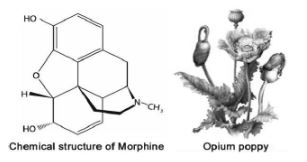
• Morphine is extracted from latex of Papaver somniferum (poppy plant). It is a sedative & painkiller. Used in surgery.
• Heroin (smack or diacetylmorphine) is a white, odourless, bitter crystalline compound. It is obtained by acetylation of morphine. It is taken by snorting and injection. Heroin is a depressant and slows down body functions.
2. Cannabinoids:
• They interact with cannabinoid receptors in the brain.
• Generally taken by inhalation and oral ingestion.
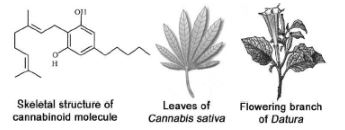
• Natural cannabinoids are obtained from inflorescences of Cannabis sativa (Hemp plant). Its flower tops, leaves & resin are used to make marijuana, hashish, charas & ganja.
• They affect cardiovascular system.
• Cannabinoids are abused by some sportspersons.
3. Coca alkaloid or cocaine (coke or crack):
• It is obtained from coca plant Erythroxylum coca.
• It interferes with transport of neurotransmitter dopamine.
• Cocaine is usually snorted.
• It stimulates CNS producing euphoria & increased energy.
• Excessive dosage of cocaine causes hallucinations.
• Atropa belladona & Datura are also hallucinogenic plants.
Drugs like barbiturates, amphetamines, benzodiazepines, etc. are used as medicines to treat mental illnesses like depression & insomnia. But their abuse causes impairment of physical, physiological or psychological functions.
SMOKING
• Tobacco has been used by human beings for over 400 years.
• It is smoked, chewed or used as a snuff.
• It contains many chemical substances like nicotine (an alkaloid). It stimulates adrenal gland to release adrenaline and nor-adrenaline, causing high BP and heart rate.
• Smoking causes cancers of lung, urinary bladder and throat, bronchitis, emphysema, coronary heart disease, gastric ulcer etc. Tobacco chewing causes oral cancer.
• Smoking increases CO content in blood and reduces oxyhaemoglobin. This causes O2 deficiency in the body.
ADOLESCENCE & DRUG/ALCOHOL ABUSE
• Adolescence is ‘a period’ and ‘a process’ during which a child becomes mature in terms of his/her attitudes and beliefs for effective participation in society.
• Adolescence is a bridge linking childhood and adulthood (period of 12-18 years of age). It is very vulnerable phase of mental and psychological development.
Causes of drug/alcohol use in Adolescence
• Curiosity and Experimentation.
• Need for adventure and excitement.
• To escape facing problems.
• Stress from pressure to excel in academics or examination.
• Television, movies, newspapers, internet etc.
• Unstable or unsupportive family structures & peer pressure.
Addiction and Dependence
• Addiction: It is a psychological attachment (euphoria and a temporary feeling of wellbeing) with drugs and alcohol.
With repeated use of drugs, the tolerance level of the receptors increases. Thus the receptors respond only to higher doses leading to greater intake and addiction.
• Dependence: It is the tendency of the body to manifest a characteristic and unpleasant withdrawal syndrome if regular dose of drugs/alcohol is abruptly discontinued. This results in anxiety, shakiness, nausea and sweating.
Dependence leads to social adjustment problems.
Effects of Drug/alcohol abuse
• Reckless behaviour, vandalism and violence.
• Coma and death due to respiratory failure, heart failure or cerebral haemorrhage.
• Drugs mixed with alcohol may cause death.
• Damage of nervous system and liver cirrhosis.
• Mental and social distress to family and friends.
• Social problems like stealing and spread of infectious diseases (e.g. AIDS, hepatitis B).
• Use of drugs and alcohol by pregnant woman affect the foetus (Foetal alcohol syndrome or FAS).
• Loss of sexual drive and necrospermia.
• Misuse of drugs by athletes (e.g. narcotic analgesics, anabolic steroids, diuretics & certain hormones to increase muscle strength and bulk and to promote aggressiveness).
Warning signs of drug/alcohol abuse in Adolescence period
• Drop in academic performance and absence from school.
• Lack of interest in personal hygiene.
• Withdrawal and isolation.
• Depression, fatigue, aggressive and rebellious behaviour.
• Change in sleeping and eating habits.
• Fluctuations in weight, appetite etc.
• Loss of interest in hobbies.
• Deteriorating relationships with family and friends.
Side effects of anabolic steroid abuse In males:
• Acne.
• Mood swings & depression.
• Increased aggressiveness.
• Reduced testicles.
• Decreased sperm.
• Kidney & liver dysfunction.
• Breast enlargement.
• Premature baldness
• Enlargement of prostate gland.
In females:
• Masculinisation
• Mood swings & depression
• Increased aggressiveness
• Excessive hair growth
• Abnormal menstrual cycle• Deepening of voice• Enlargement of clitoris
• In adolescent male & female: Severe facial and body acne, premature closure of the growth centres of the long bones resulting in stunted growth.
Prevention and control
1. Avoid undue peer pressure.
2. Education and counselling.
3. Seeking help from parents and peers.
4. Looking for danger signs.
5. Seeking professional and medical help.
a. Psychologists and psychiatrists.
b. De-addiction and rehabilitation programs.
Free study material for Biology
Chapter 07 Human Health and Diseases Concepts and Summary for Class 12 Biology
Download Chapter Summary: Class 12 Biology Chapter 07 Human Health and Diseases
Review targeted chapter notes for Class 12 Biology Chapter 07 Human Health and Diseases. Built according to official CBSE guidelines, these summaries highlight high-yield topics frequently tested in school evaluations.
Concept Clarification for Chapter 07 Human Health and Diseases
Each chapter summary is structured around standard CBSE textbooks, allowing students to check their understanding and clarify complex ideas early in their revision.
Additional Study Resources for Class 12 Biology
Follow up your revision by attempting the interactive online Biology MCQ test and practice worksheets for this chapter to verify your mastery. All platform resources are free to access.
FAQs
You can download the teacher prepared revision notes for CBSE Class 12 Biology Human Health And Disease Notes Set 02 from StudiesToday.com. These notes are designed as per 2026-27 academic session to help Class 12 students get the best study material for Biology.
Yes, our CBSE Class 12 Biology Human Health And Disease Notes Set 02 include 50% competency-based questions with focus on core logic, keyword definitions, and the practical application of Biology principles which is important for getting more marks in 2026 CBSE exams.
Yes, our CBSE Class 12 Biology Human Health And Disease Notes Set 02 provide a detailed, topic wise breakdown of the chapter. Fundamental definitions, complex numerical formulas and all topics of CBSE syllabus in Class 12 is covered.
These notes for Biology are organized into bullet points and easy-to-read charts. By using CBSE Class 12 Biology Human Health And Disease Notes Set 02, Class 12 students fast revise formulas, key definitions before the exams.
No, all study resources on StudiesToday, including CBSE Class 12 Biology Human Health And Disease Notes Set 02, are available for immediate free download. Class 12 Biology study material is available in PDF and can be downloaded on mobile.