

Class 7 Science Study Guide: Class 7 Science Respiration in Plants and Animals Exam Notes
Explore structured advanced study materials through the Class 7 Science Respiration in Plants and Animals Exam Notes. Tailored for Class 7 learners, utilizing these Science resources ensures thorough preparation and strengthens foundational knowledge before final CBSE evaluations.
Download Chapter 10 Respiration in Organisms Study Material PDF
Access the complete useful resource PDF for Class 7 Science below. Regular practice with these targeted academic notes builds familiarity with complex topics and helps secure higher marks in final school evaluations.
Class 7 Science Respiration in Plants and Animals Exam Notes. Please refer to the examination notes which you can use for preparing and revising for exams. These notes will help you to revise the concepts quickly and get good marks.
Covers following topics
1.Respiration
2.Breathing
3.Types of Respiration
4.Anaerobic Respiration in Human
5.Respiration in Plants
6.Respiration in Animals
7.Respiration system of human
8.Mechanism of respiration
Respiration
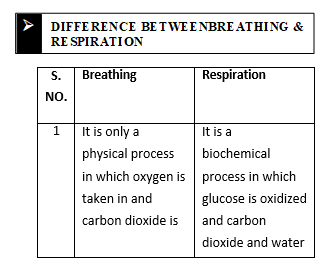
The process of taking oxygen into the cells, using it for enrgy release & then eliminating the waste products like CO2 & H2O is known as respiration. It is a very slow process. A number of enzyme help in the process of respiration.
Breathing
The process of taking in O2 rich air into the lungs & giving out carbon dioxide rich air is known as breathing.
Breathing process include 2 steps -
Inhalation :
The process of taking in air is called inhalation.
Exhalation :
Giving out of air is called exhalation.
Breathing involves only exchange of gases.
There are 2 types of respiration
◊ Aerobic respiration :
• In this types of respiration complete oxidation of glucose take place & CO2, H2O & Energy are released.
• Aerobic respiration takes place in the presence of oxygen & is carried out in the bodies of almost all living animals & plants
◊ Anaerobic respiration :

• In anaerobic respiration, there is incomplete oxidation of glucose CO2, ethyl alcohol & energy are the end products.
• Anaerobic respiration takes place in the absece of oxyen.
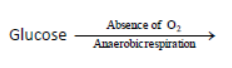
Alcohol + CO2 + Energy
• Yeast & some bacteria show anaerobic respiration.
• Anaerobic respiration in microorganism present in food & alcohol causes fermentation.
→ANAEROBIC RESPIRATION IN HUMAN
• During excessive physical exercise, anaerobic respiration takes place in muscle to produce lactic acid.
• The accumulation of lactic acid in the muscle cause fatigue & pain.
→RESPIRATION IN PLANTS
• Like all other living organisms, plants also respire for their survival. They also take in oxygen from the air and give out carbon dioxide. During this process most of the plants use atmospheric oxygen to break down glucose into carbon dioxide and water with the release of energy.
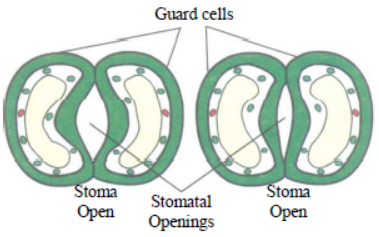
• In plants, breathing takes place through tiny holes or openings called stomata present under the leaves. Stomata traps air and the exchange of gases takes place inside the plant cells.
◊ Stomal Apparatus :
• A stomatal opening surrounded with two guard cells and several subsidiary cells is called stomatal apparatus.
The opening and closing of the stomata is brought about by the expansion and contraction of the guard cells. Guard cells expand and contract due to the flow of water in and out of the cells. The exchange of gases in plants is not as fast as in animals.
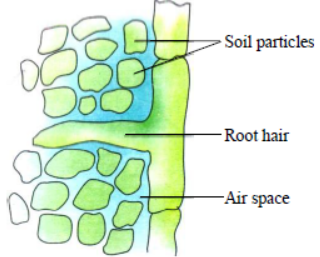
• Plant roots also respire. Roots take in oxygen from the air present between the soil particles.
• Some of the woody stems take in air through openings called lenticels.
→RESPIRATION IN ANIMALS
• Respiration through moist skin Eg. Frog & Earthworm
• Respiration through cell membrane Eg. Amoeba
• Respiration through Spiracles Eg. Cockroach
• Respiration through gills Eg. Fishes
→RESPIRATORY SYSTEM OF HUMAN
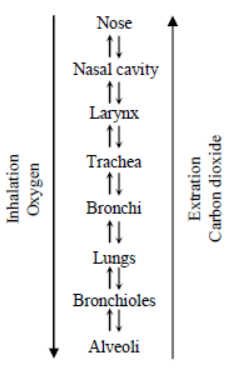
The respiratory system in human beings concsists of the following organs
◊ Nasal Cavity :
• Air enters the nose through the nostrils and reaches the nasal cavity.
◊ Larynx :
• The nasal cavity leads into the pharynx. From the pharynx air passes into a rectangular chamber called larynx
◊ Trachea :
• The trachea or wind pipe is a delicate muscular tube situated in the front of the neck. It is 12 cm in length and 2.5 cm in diameter. The trachea divides into two bronchi.
◊ Bronchi :
• Each bronchus leads to the lungs of its own side. Each bronchus then branches into smaller tubes known as bronchioles. They end in tiny globules called air sacs or alveoli where exchange of gases takes place.
◊ Lungs :
• Lungs are two in number and are present in the chest cavity of the body. Air sacs are richly supplied with blood vessels. When air enters the lungs, the blood takes in oxygen and gives out carbon dioxide and water
◊ Blood carries oxygen to all parts of the body from the lungs.
• When we exhale, the carbon dioxide rich air follows the reverse route finally moving out through the nose as shown below.
→MECHANISM OF BREATHING
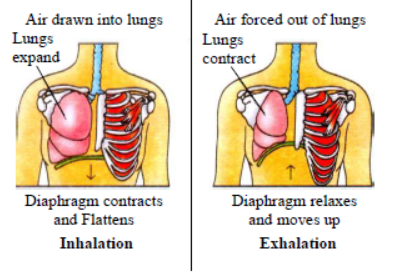
• Breathing takes place with the help of the intercostal muscles between the ribs and the diaphragm. When we breathe in, the intercostal muscles contract and the ribs are pushed outwards. The chest cavity becomes larger and the air rushes into the lungs.
• During breathing out, the intercostal muscles relax and the ribs move inwards. The chest cavity shrinks and the air containing carbon dioxide is pushed out of the lungs.
• Breathing rate : The number of times a person breathes in a minute is termed as the breathing rate. The normal breathing rate in adult at rest ranges from 12 to 20.
Please click on below link to download pdf file for Class 7 Science Respiration in Plants and Animals Exam Notes.
Free study material for Science
Useful Resources and Notes for Class 7 Science Chapter 10 Respiration in Organisms
Essential Notes for Class 7 Science
Access comprehensive study material for Chapter 10 Respiration in Organisms, including revision notes, concept maps, and high-probability questions. These resources are designed in alignment with the latest 2026 CBSE syllabus for Class 7 Science to support effective exam preparation.
Verified Solutions for Class 7 Science
Built using official NCERT guidelines for Class 7 Science, these materials provide reliable academic support. Integrating past examination questions and step-by-step solutions helps students understand official CBSE grading criteria.
Enhance Accuracy with Online Tests
Wrap up your chapter revision by testing your knowledge against standard objective question formats. Explore our full library of free, up-to-date sample papers and online assessments to secure top grades in your CBSE examinations.
FAQs
Our advanced study package for Chapter 10 Respiration in Organisms includes detailed concepts, diagrams, Mind Maps, and explanation of complex topics to ensure Class 7 students learn as per syllabus for 2026 exams.
The Mind Maps provided for Chapter 10 Respiration in Organisms act as visual anchors which will help faster recall during high-pressure exams.
Yes, teachers use our Class 7 Science resources for lesson planning as they are in simple language and have lot of solved examples.
Yes, You can download the complete, mobile-friendly PDF of the Science Chapter 10 Respiration in Organisms advanced resources for free.
Yes, our subject matter experts have updated the Chapter 10 Respiration in Organisms material to align with the rationalized NCERT textbooks and have removed deleted topics and added new competency-based questions.