

Multiple Choice Questions (MCQs) for Class 3 Science: ISO Olympiad
Explore reliable objective questions for ISO Olympiad tailored for Class 3 learners. Utilizing these Science multiple-choice formats ensures thorough preparation and strengthens problem-solving speed for upcoming school assessments.
Practice ISO Olympiad MCQs for Class 3 Science
Navigate directly to the 50 objective questions for ISO Olympiad using the digital viewer below. Each practice set includes verified answer keys, allowing students to instantly cross-check their work and identify areas requiring further revision.
1. How many sets of teeth does a person get in their lifetime?
(a) 3
(b) 2
(c) 4
(d) 1
Answer : (b) 2
2. Where do cabbage and mint store food ________.
(a) In their roots
(b) In their flowers
(c) In their fruits
(d) in their leaves
Answer : (d) Cabbage and mint store food in their leaves.
3. Photosynthesis is the process of making food in plants. Which one of the following gases is used in the process of photosynthesis?
(a) Nitrogen
(b) Oxygen
(c) Carbon dioxide
(d) Hydrogen
Answer : (c) Sunlight + carbon dioxide + water ® Glucose + oxygen. Thus photosynthesis needs carbon dioxide gas.
4. What causes a person to become sick from an infection?
(a) Germs
(b) Not practicing good hygiene
(c) Both (a) and (b)
(d) Snake
Answer : (c) A person can become sick from germs and not practicing good hygiene.
5. What do you mean by public transport?
(a) The transport system that is used by few people.
(b) The transport system that is used by large number of people
(c) The transport system that is used by an individual
(d) Both (a) and (b)
Answer : (b) Public transport is a shared passenger transport service which is available for use by large number of people. Buses, trains etc are example of public transport.
6. Which kind of soil is found at the beaches?
(a) Chalky soil
(b) Sandy soil
(c) Clayey soil
(d) Loamy soil
Answer : (b) Sandy soil is found at the beaches.
7. Which one of the following soil is the best for growing plants?
(a) Clayey soil
(b) Sandy soil
(c) Loamy soil
(d) All of these
Answer : (c) Loamy soil is a combinations of sand, silt and clay. Thus this soil combines the benefits of multiple type of soils that make it up and is considered the best for growing plants.
8. What % of the Earth is covered by the oceans?
(a) About 30%
(b) About 71%
(c) About 97%
(d) About 76%
Answer : (b) 71% of the Earth is covered by the oceans.
9. Match the following :
1. Glass A. Cloth
2. Plastics B. Window panes
3. Fibre C. Tubes
4. Rubber D. Televisions
(a) 1-D, 2-B, 3-A, 4-C
(b) 1-A, 2-D, 3-B, 4-C
(c) 1-B, 2-A, 3-D, 4-C
(d) 1-B, 2-D, 3-A, 4-C
Answer : (d) Glass is used for making windows panes.
Plastic is used for making television.
Fibre is used for making cloth
Rubber is used for making tubes
10. Statement A : All elements and plants breathe in oxygen.
Statement B : Plants make their food by using carbon dioxide gas.
(a) Statement A is correct
(b) Statement B is correct
(c) Statement A and B both are correct
(d) Neither statement A nor statement B is correct
Answer : (b) Statement A is wrong because only living things breathe in oxygen. Element are nonliving.
11. The soft green stem can be found in the ________.
(a) Pine tree
(b) Coconut tree
(c) Banana tree
(d) Neem tree
Answer : (c) Banana tree has soft green stem.
12. Which of the following constitutes our breathing system?
(a) Mouth, nose and windpipe
(b) Mouth and lungs
(c) Stomach, mouth and windpipe
(d) Nose, windpipe and lungs
Answer : (d) Nose, windpipe and lungs constitute our breathing system.
13. Identify the name of the organs of digestive system.
(a) Stomach
(b) Mouth
(c) Small intestine
(d) All of these
Answer : (d) Digestion starts from mouth where food is broken into smaller units with the help of teeth, then tongue helps to push the food into food pipe from where it enters the stomach.
After leaving stomach, food enters into small inestine where body absorbs nutrients from the food.
14. Which three planets are in correct order?
(a) Mercury, venus, Earth
(b) Earth, Mercury, venus
(c) venus, Mercury, Earth
(d) Mercury, Mars, Earth
Answer : (a) Mercury, Venus, Earth.
15. Identify the celestial body nearest to Earth.
(a) Sun
(b) Moon
(c) Mars
(d) Venus
Answer : (b) Moon is the nearest celestial body to the Earth.
16. Identify the colour of the humus.
(a) Dark green
(b) Light yellow
(c) Light brown
(d) Dark brown
Answer : (d) Humus is black or dark brown in colour. It is an organic material that forms in soil when plant and animal matter decay.
17. Which of the following statements is correct?
Statement A : The animals can feel changes around them because they have sense organs.
Statement B : The plants do not feel changes around them because they do not have sense organs.
(a) Statement A is correct
(b) Statement B is correct
(c) Statement A and B both are correct
(d) Neither statement A nor statement B is correct
Answer : (a) Animals can feel changes around them because they have sense organ. Plants feel changes but do not have sense organ.
18. Which one of the given options based on the following statements is correct?
Statement A : Birds have teeth to eat.
Statement B : Birds use their claws to `catch food and protect themselves.
(a) Statement A is correct
(b) Statement B is correct
(c) Statement A and B both are correct
(d) Neither statement A nor statement B is correct
Answer : (b) Birds don’t have teeth to eat.
19. Which one of the given options based on the following statements is correct?
Statement A : Surface of the Moon has mountains and huge ditches called craters.
Statement B : The moon revolves round the Sun.
(a) Statement A is correct
(b) Statement B is correct
(c) Statement A and B both are correct
(d) Neither statement A nor statement B is correct
Answer : (a) The surface of the moon has craters. Moon revolves around the earth.
20. Other celestial bodies whose sizes are smaller in comparison to the planets but they also revolve around the Sun, are called.
(a) Asteroids
(b) Satellites
(c) Comets
(d) All of these
Answer : (a) Asteroids are smaller than planets which revolve around sun.
21. The characteristic feature of a satellite is that it revolves around the earth. What is the moon called?
(a) Artificial satellite
(b) Natural satellite
(c) Both (a) and (b)
(d) Planet
Answer : (b) Moon is a Natural satellite.
22. The given picture is the movement of air from the sea towards the land.
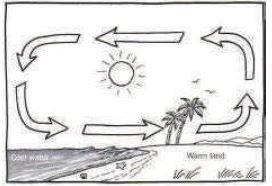
What is it called?
(a) Sea breeze
(b) Land breeze
(c) Warm air
(d) All of these
Answer : (a) The movement of air from the sea towards the land is known a sea breeze.
23. Why does the government advice to discard the use of polythene bags?
(a) polythenes are biodegradable
(b) polythenes are expensive
(c) polythenes are nonbiodegradable
(d) All of these
Answer : (c) Polythene bags are nonbiodegradable so they are not degraded by the help of micro organism, and cause environmental pollution. That is why government advice to discard the use of polythene bag.
24. Which of the following should come in the empty box in the flow chart given below
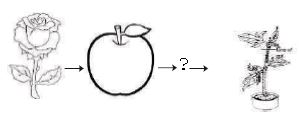
?Flower Fruit New plant
(a) Seed
(b) Bird
(c) Fruit
(d) Stem
Answer : (a) Flowers give rise to fruits.
Fruits bear seeds which give rise to a new plant.
25. We breathe fast after running.
Why does it happen?
(a) We require more oxygen after running
(b) We require less oxygen after running
(c) We require lots of energy after running.
(d) All of these
(e) None of these
Answer : (a) After running, the oxygen requirement of the body increases. That is why we breathe fast to fulfill the oxygen requirement of our body.
26. Consider the following statements :
Statement 1 : Omnivore eats both plants and animal products.
Statement 2 : Herbivore eats both plants and animal products.
Which one of the following is correct about the above statements?
(a) Statement 1 is true and 2 is false
(b) Statement 1 is false and 2 is true
(c) Both statements are false
(d) Both statements are true
(e) None of these
Answer : (a) Herbivores eat only plants and plant products
27. A type of plant which require support for their growth is called :
(a) Pitcher
(b) Herbs
(c) Climbers
(d) All of these
Answer : (c) Climbers require support for their growth.
28. Which of the following is NOT a function of the root?
(a) Support
(b) Production of food
(c) Storage of food
(d) Absorption of water mineral
Answer : (b) Production of food is carried out by leaves and other green parts of the plant.
29. Look at the following figure :
Which one of the following types of animal is this?
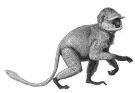
(a) Arboreal
(b) Carnivores
(c) Mammal
(d) All of these
Answer : (a) The image shown is a monkey which is an arboreal animal. Arboreal animals live on trees.
30. Match the following :
A B
1. Carnivore A. Frog
2. Herbivore B. Snake
3. Amphibian C. Goat
4. Reptile D. Lion
(a) 1-B, 2-C, 3-A, 4-D
(b) 1-D, 2-A, 3-C, 4-B
(c) 1-C, 2-D, 3-A, 4-B
(d) 1-D, 2-C, 3-A, 4-B
Answer : (d) Lion is a carnivore which eat other animals, goat is a herbivore, frog is an amphibian and snake is a reptile.
31. Look at the following picture.
Which one of the following types of root does the given figure have?
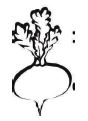
(a) Fibrous
(b) Tap
(c) Aerial
(d) All of these
Answer : (b) This is a turnip which has tap root.
32. Consider the following statements :
Statement 1 : Silk is synthetic fibre which is used to make dress.
Statement 2 : Cotton is synthetic fibre which is used to make dress.
Which one of the following is correct about the above statements?
(a) Statement 1 is true and 2 is false
(b) Statement 1 is false and 2 is true
(c) Both statements 1 and 2 are false
(d) Both statements 1 and 2 are true
Answer : (c) Silk and cotton both are natural fibre. Silk is obtained fom silk worm and cotton is obtained from cotton plant.
33. Which one of the following best describes a plant of mushroom?
(a) Desert plant
(b) Non green plant
(c) Under water plant
(d) All of these
Answer : (b) Mushroom is non-green plant.
34. Which one of the following animals has a very good sense of smelling?
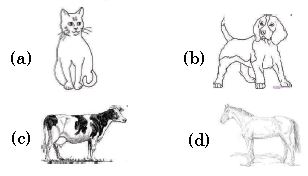
Answer : (b) Figure (b) is dog which has a very good sense of smelling.
35. What is the name of the red-hot substance that comes from volcanoes?
(a) Fire
(b) Magma
(c) Sand
(d) Lava
Answer : (d) Lava
Free study material for Science Olympiad NSO
ISO Olympiad Objective Questions & Solutions for Class 3 Science
About ISO Olympiad MCQs for Class 3 Science
Review structured objective questions for Class 3 Science ISO Olympiad. Built according to official CBSE guidelines, these MCQ sets support daily revision and core concept reinforcement.
How to Verify Your MCQ Answers
Each question includes structured solution keys mapped directly to standard CBSE textbooks, helping students evaluate their reasoning and correct mistakes early in their revision.
Enhance Speed with Online MCQ Tests
Follow up your worksheet practice by attempting the interactive online Science MCQ test for this chapter to evaluate your execution speed. All platform resources are free to access.
FAQs
You can get most exhaustive CBSE Class 3 Science ISO Olympiad MCQs with Answers Set 02 for free on StudiesToday.com. These MCQs for Class 3 Science are updated for the 2026-27 academic session as per CBSE examination standards.
Yes, our CBSE Class 3 Science ISO Olympiad MCQs with Answers Set 02 include the latest type of questions, such as Assertion-Reasoning and Case-based MCQs. 50% of the CBSE paper is now competency-based.
By solving our CBSE Class 3 Science ISO Olympiad MCQs with Answers Set 02, Class 3 students can improve their accuracy and speed which is important as objective questions provide a chance to secure 100% marks in the Science.
Yes, Science MCQs for Class 3 have answer key and brief explanations to help students understand logic behind the correct option as its important for 2026 competency-focused CBSE exams.
Yes, you can also access online interactive tests for CBSE Class 3 Science ISO Olympiad MCQs with Answers Set 02 on StudiesToday.com as they provide instant answers and score to help you track your progress in Science.