

Practice MCQs for Class 3 Science Birds
Review structured MCQ sets for Class 3 Science Birds. Built according to official CBSE guidelines, these downloadable questions support daily revision and core concept reinforcement.
Access Birds Questions and Solutions
Access the complete set of multiple-choice questions for Birds below. This focused format allows students to isolate specific topics for thorough review and uninterrupted practice alongside official CBSE textbooks.
Class : III
Subject : Science
Topic : Birds - Beaks, Claws and Nests
Question. Birds fly with their
a) legs
b) wings
c) fins
d) body
Answer : B
Question. Birds have
a) feathers
b) feet
c) beaks
d) all of these
Answer : D
Question. Birds’ bodies are shaped like
a) car
b) train
c) aeroplane
d) motorbike
Answer : C
Question. Birds have ________ on their bodies
a) muscles
b) feathers
c) bones
d) none of these
Answer : B
Question. Birds have _______ kind of feathers
a) 4
b) 3
c) 15
d) 25
Answer : B
Question. These type of feathers keep the body warm
a) body feathers
b) flight feathers
c) all of these
d) down feathers
Answer : A
Question. These feathers cover a bird’s body
a) body
b) flight
c) all of these
d) down
Answer : A
Question. These feathers help a bird to fly
a) body
b) down
c) flight
d) all of these
Answer : C
Question. ________ can not fly
a) ostrich
b) pigeon
c) cuckoo
d) None of these
Answer : A
Question. ________ can fly
a) pigeon
b) kiwi
c) emu
d) ostrich
Answer : A
Question. Birds build ________ when they have to lay eggs
a) burrow
b) nests
c) house
d) shed
Answer : B
Question. A ________ make a hole in a tree trunk with its beak
a) woodpecker
b) pigeon
c) sparrow
d) penguin
Answer : A
Question. ________ bird weaves grass to make a nest
a) weaver
b) woodpecker
c) pigeon
d) sparrow
Answer : A
Question. The baby birds grow inside the
a) shelves
b) eggs
c) pupa
d) cupboard
Answer : B
Question. Which is the largest bird in the world?
a) pigeon
b) kiwi
c) ostrich
d) emu
Answer : C
Question. Birds do not have teeth. They have ________
a) beaks
b) tongue
c) muscles
d) all of these
Answer : A
Question. Eagles eat the
a) seeds
b) grass
c) flesh
d) fruits
Answer : C
Question. Birds have ________ which are suitable for their eating habits
a) beaks
b) claws
c) both
d) none of these
Answer : C
Question. Which of the following is a seed eating bird?
a) sparrow
b) hawk
c) vulture
d) eagle
Answer : A
Question. Which of the following has strong curved beak
a) parrot
b) crane
c) duck
d) ostrich
Answer : A
Question. Which of the following has broad, flat beak?
a) pelican
b) duck
c) parrot
d) sparrow
Answer : B
Question. Which one of the following is the smallest bird?
a) bee humming bird
b) penguin
c) ostrich
d) all of these
Answer : A
Question. Which bird makes ‘caw caw’ sound?
a) cuckoo
b) pigeon
c) crow
d) owl
Answer : C
Question. Claws of flesh- eating birds are called
a) talons
b) palms
c) toes
d) all of these
Answer : A
Fill in the blanks :
Question. Swimming birds have ................... feet.
Answer : Webbed
Question. The long and flat feathers are called ...............feather.
Answer : Flight
Question. The beaks of birds are hard with .................. edges.
Answer : Sharp
Question. Sparrow makes the ................... nest.
Answer : Cup
Question. A .................... nest is built in the trunk of trees.
Answer : Cavity
True or False :
Question. Down feathers help the birds in flying.
Answer : False
Question. The mother bird break her eggs and the chicks come out.
Answer : False
Question. Wings help the birds in walking.
Answer : False
Question. Young birds do not have good sense of smell.
Answer : True
Question. Strainer beaks are long and thin.
Answer : False
Answer in one word :
Question. The presence of what saves the feathers of water birds from rotting.
Answer : Oil glands
Question. The smallest bird in the world.
Answer : Bee humming bird
Question. The feathers that keep the bird warm.
Answer : Down feathers
Question. The largest bird in the world.
Answer : Ostrich
Question. The shape of the body that birds have.
Answer : Stream lined
Give two examples of each :
Question. Aquatic birds
Answer : Duck, Swan
Question. Birds that have hard and horny beak
Answer : Sparrow, Pigeon
Question. Flightless birds
Answer : Kiwi, Ostrich
Question. Birds that make cavity nest
Answer : Parrot, Woodpecker
Question. Birds that have scratching claws
Answer : Pheasants, Chicken
Question. Birds that have hooked beak
Answer : Eagle, Owl
Define :
Question. Ornithology
Answer : Study of birds is called ornithology.
Question. Talons
Answer : Sharp and curved claws of flesh eating birds are called talons.
Question. Nectar
Answer : Sweet liquid present inside the flowers is called nectar.
Question. Gland
Answer : A part of body that makes some liquid.
Answer These Questions :
Question. Why do birds make nests?
Answer : Birds make nests to lay their eggs and take care of their young ones.
Question. Why can an ostrich not fly?
Answer : An ostrich can not fly because -
1. They have smaller wing bones.
2. They have heavy and solid bones.
3. They are heavy and have more feathers on their body
Question. How does a tailor bird make its nest?
Answer : A tailor bird sews leaves together with its beak to make a nest. It uses its sharp beak as a needle to sew the leaves with cotton hair wool or spider web.
Question. What are the special features of birds?
Answer : Special features of birds are -
1. Birds have a streamlined body.
2. They have wings.
3. Their bones are hollow , light and filled with air.
Question. Why are the bones of flying birds hollow from inside ?
Answer : Bones of flying birds are hollow from inside because such bones make their body light and help them to fly in air.
Give reason :
Question. Parent birds sit on their eggs.
Answer : Parents birds sit on their eggs to kepp the eggs warm till the babies inside get fully developed.
Question. A duck have a flat and broad beak.
Answer : A duck have a flat and broad beak because that beak have tiny holes on the sides which strain small plants and animals from the muddy water.
Question. Which of the following senses is weakest in birds?
a) Hearing
b) Sight
c) Smell
d) Touch
Answer: C
Explanation: Most birds have poor senses of smell and taste.
Question. Which of these is not a function of the claws?
a) Climbing
b) Warming the body temperature.
c) Protection from prey
d) Swimming
Answer: B
Explanation: claws do not help in warming the body temperature. This is the function of the feathers.
Question. Which of the following is the main difference between a bat and an owl? 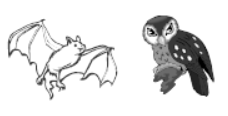
a) Owl fly in the day , bats in the night
b) Bats feed on flowers, while owls eat insects
c) Bats have ears, owls do not
d) Owls have feathers beak, bats do not
Answer: D
Explanation: Bats are mammals that have wings and can fly. They are not birds because they give birth to young ones and do not have beaks or feathers.
Question. Which bird’s eye are larger than its brain?
a) Eagle
b) Ostrich
c) Owl
d) Pigeon
Answer: B
Explanation: the eye of the ostrich is bigger than its brain.
Question. Birds make their nests using_________
a) branches, leaves
b) wool
c) cement
d) cloth
Answer: A
Explanation: birds make their nests using branches and leaves and intertwine them.
Question. Baby birds do not have _________.
a) beaks
b) feathers
c) eyes
d) throat
Answer: B
Question. Fill in the blank with an example. 
a) Crane
b) Duck
c) Eagle
d) Parrot
Answer: B
Explanation: Duck is a Wading Bird
Question. Unscramble the given letters and select the option that gives name of the bird that nests in holes made in tree trunk.
a) EnpgInu
b) CODEWPOKRE
c) RAOBDTLIIR
d) EGIPNO
Answer: B
Explanation: Option b) on unscrambling gives the name – Woodpecker. A woodpecker makes a hole in a tree trunk with its sharp and pointed beak and use it as its nest.
Question. ___________ and ___________ are the largest and smallest bird respectively.
a) Penguin, crow
b) Eagle, woodpecker
c) Flamingo, sparrow
d) Ostrich, humming Bird
Answer: D
Explanation: Ostrich is the largest and humming bird is the smallest bird.
Question. Which of the following parts of a bird is most important to help the bird fly in the air?
a) Down feathers
b) Flight feathers
c) Beak and legs
d) Colour of the bird
Answer: B
Explanation: Flight feathers. The feathers attached to the wings and tail-bone, help the bird to fly. These feathers are called the flight feathers.
Question. Which of the following birds dive into water to catch fishes?
a) Hornbill
b) Kingfisher
c) Owl
d) Gannet
Answer: B
Explanation: Kingfisher dives in the water to catch fishes because of its long sharp beak.
Question. Which kind of birds walk and run on the ground?
a) Wading birds
b) Swimming birds
c) Perching birds
d) Scratching birds
Answer: D
Explanation: Scratching birds like hens and cocks have strong feet with three toes in front and a short toe at the back. Each of these toes has sharp horny claws which make them
walk and run on the ground.
Question. Woodpecker : wood :: kingfisher : ?
a) King
b) Fish
c) Egg
d) Wood
Answer: B
Explanation: woodpecker pecks on wood while kingfisher eats fish.
Question. Which of the following birds have the type of feet shown in the given picture? 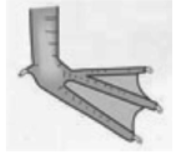
a) Birds that eat fish
b) Birds that live mostly in water
c) Birds that eat worms
d) Birds that perch on trees
Answer: B
Explanation: The feet shown in the given figure is of webbed type. In such type of feet, a skin web is present between three front toes. This type of feet helps in swimming as they help to push water back while swimming and are present in water birds like ducks, goose, etc.
Question. Which of the following types of feathers give streamlined shape to the bird’s body?
a) Down feathers
b) Flight feathers
c) Contour feathers
d) All of these
Answer: C
Explanation: Contour feathers give streamlined shape to the bird’s body.
Question. 
Identify which of these is ‘X’? 
Answer: A
Explanation: Peacock is our National bird. It has long neck and crown on its head. It has colourful, long feathers and it shows its dance in the rainy season.
Question. Birds have different kinds of beaks depending on ___________.
a) how it drinks.
b) how big it gets.
c) where it lives.
d) the kind of food it eats.
Answer: D
Explanation: the main function of beak is feeding, it is thus shaped according to what a bird eats.
Question. What’s the easiest way to tell the difference between wading birds and perching birds?
a) Difference in wingspan
b) Difference in body size
c) Difference in foot structure
d) Difference in eyes.
Answer: C
Explanation: the easiest way to tell the difference between wading birds and perching birds is by the difference in their foot structure.
Question. Match the following. 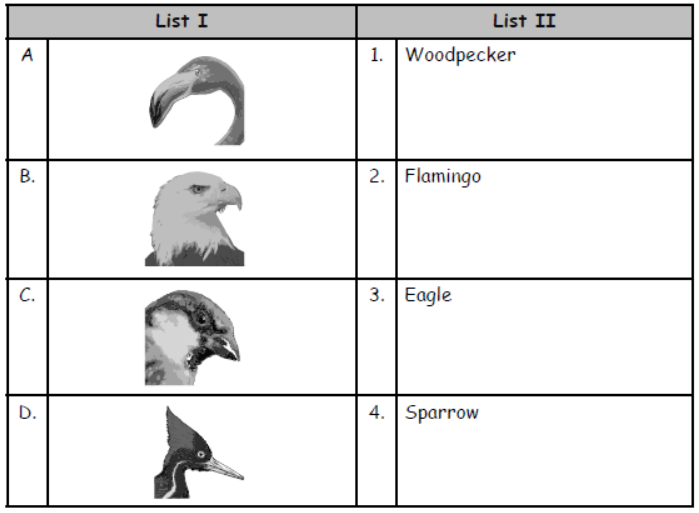
A B C D
a) 4 1 2 3
b) 3 4 1 2
c) 1 2 3 4
d) 2 3 4 1
Answer: D
Question. Look at the picture and identify which bird can swim very well in water. 
Answer: A
Explanation: Duck. Swimming birds like duck have special webs of skin between the toes. These birds can push back water with the help of the webbed feet while swimming.
Question. Which is the National Bird of India?
a) Flamingo
b) Peacock
c) Parrot
d) Owl
Answer: B
Explanation: Peacock is the national bird of India.
Question. What three traits make scavenger birds different from other kinds of birds.
a) Feathers, wings, bones
b) Air sacs, height, tail
c) Hooked beak, keen vision, sharp talons
d) Preen gland, toungue, warm-blooded
Answer: C
Explanation: hooked beak, keen vision, sharp talons.
Question. Which of the statement below is false?
a) Birds have teeth within their beaks.
b) Birds have ears covered with feathers.
c) The eyes of a bird are located on either side of the head.
d) Birds move their neck continuously.
Answer: A
Explanation: Birds do not have teeth.
Question. Which bird does not make its nest. It lays its eggs in a crow’s nest?
a) Flamingo
b) Koel
c) Pigeon
d) Grey heron
Answer: B
Explanation: A cuckoo (koel) does not make its nest. It lays its eggs in a crow’s nest.
Question. Which beak of bird is best for probing insects in the sand and mud? 
Answer: D
Explanation: Duck is an aquatic animal. It uses its beak to probe insects in the sand and mud. It has holes on its beak. It takes in muddy water containing insects etc. through beak, water moves out through the holes and insects etc. are swallowed.
Question. While watching a programme on TV, Sohan saw a duck swimming in water. He got curious to know how can a bird swim. His elder brother Shyam explained him about the claws and feet of birds. what would you do if you were in same situation?
a) Scold Sohan on asking such silly questions
b) Switch off the TV.
c) Ask Sohan to read the book and find out the answer himself.
d) Explain the type of claws and feet duck has and help him understand clearly.
Answer: D
Explanation: Explain the type of claws and feet duck has and help him understand clearly.
Question. Why don't the birds fall when they sleep on the branch of a tree?
a) Because of the shape of their claws that hold on to the branch very firmly.
b) Birds do not sleep on the branches, they sleep in their nests.
c) Because their feathers balance their weight.
d) None of these
Answer: A
Explanation: When birds sit, a tendon on the backside of the ankle automatically flexes locking their toes around the branch. With feet locked, sleeping birds don’t fall. As the
bird stands up its feet releases.
Question. Read the passage and choose the correct options.
Birds have no ___(1)___ but they all have beaks and ___(2)___ . Different kinds of ___(3)___ have different kinds of beaks and claws. Beaks and claws tell us a lot about birds.
1. a) teeth b) legs c) eyes d) mouth
2. a) knives b) claws c) shovels d) peaks
3. a) men b) women c) birds d) insects
Answer: 1. a) teeth 2. b) claws 3. c) birds
Question. Match Column I with Column II and select the correct option.
Column I Column II
A. Flight feathers 1. Give shape to the bird’s body
B. Down feathers 2. Help the bird to lift up from ground and provide balance
C. Body feathers 3. Keep the bird warm
a) A - 1, B - 2, C - 3
b) A - 2, B - 3, C - 1
c) A - 3, B - 2, C - 1
d) A - 3, B - 1, C - 2
Answer: B
Question. The given picture shows foot of a bird. Which of the birds given below can have this type of foot? 
a) Crow
b) Rooster
c) Woodpecker
d) Duck
Answer: C
Explanation: Climbing birds like woodpeckers and parakeets have two toes pointing in front and two pointing back. These toes help them to climb trees and to cling on to them.
Question. Talking bird is __________. 
Answer: B
Question. Vultures make their nests____________.
a) on tall trees
b) on small trees
c) in walls
d) under the ground
Answer: A
Explanation: Vultures make big nests on tall trees with sticks. Their nests look like a shallow cup.
Question. Which of the following birds has webbed feet?
a) Duck
b) Eagle
c) Hen
d) Pigeon
Answer: A
Explanation: Duck. Mostly water birds have webbed feet and out of all these birds, duck is a water bird.
Question. Consider the following Statements and choose the correct option.
Statement A: Eagles attack and eat small animals.
Statement B: A woodpecker has two toes in front and two toes at the back.
a) Statement A is correct and B is wrong
b) Statement B is correct and A is wrong
c) Both the Statements are correct
d) Both the Statements are wrong.
Answer: C
Explanation: Both the statements are correct
Question. I am the smallest bird with a long beak. I love sucking nectar from flowers. Identify me?
a) Humming bird
b) Sparrow
c) Falcon
d) Ostrich
Answer: A
Explanation: Humming birds is the smallest bird.
Question. Birds are the only animals that have ___________
1. Wings 2. Legs 3. Feathers
a) 1 only
b) 1 and 2 only
c) 1 and 3 only
d) 3 only
Answer: D
Explanation: Birds are the only animals that have feathers.
Question. I am a big bird with a sharp hooked beak to tear meat. I have powerful claws. Who am I?
a) sparrow
b) owl
c) woodpecker
d) crow
Answer: B
Question. Study the given diagram and select the correct option regarding it. 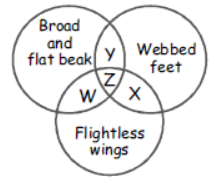
a) X is penguin
b) Z is crane
c) Y is duck
d) Both a) and c)
Answer: D
Question. Find the odd one out 
Answer: D
Explanation: Dove. Rest of the birds cannot fly.
Question. Four children made the following statements about birds. Whose statements about birds are true ?
a) Ashok and Beena
b) Beena and Shuchi
c) Beena, Shuchi and Enna
d) Beena, Shuchi and Ashok
Answer: C
Question. In olden days, which bird was used to send letter from one place to another?
a) Crow
b) Sparrow
c) Pigeons
d) Peacock
Answer: C
Question. Match the feet and claws to the correct bird: 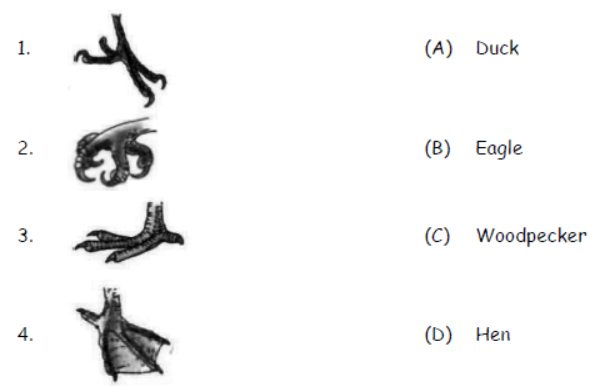
1 2 3 4
a) A B C D
b) C B D A
1 2 3 4
c) B C A D
d) D C A B
Answer: B
Explanation: 1. c), 2. b), 3. d), 4. a)
Question. The given picture shows the beak of a bird. Which of the following is most likely the food of this bird?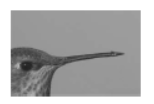
a) Fish
b) Grains
c) Nectar
d) Nuts
Answer: C
Explanation: The beak shown in the given picture is long and pointed, which helps the birds like hummingbird, sunbird to poke into flowers and suck nectar.
Question. Which of the following is not a flightless bird?
a) Puffins
b) Kiwi
c) Penguins
d) All of these
Answer: A
Explanation: Although puffins look a lot like penguins, the big difference is that puffins can fly.
Question. The nest shown here is made by __________. 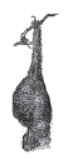
a) Tailor bird
b) Weaver bid
c) Humming bird
d) Owl
Answer: B
Question. Which of the following statements are INCORRECT?
1. Swimming birds have webbed feet.
2. Perching birds have two toes in front and two at the back.
3. Climbing birds have three toes pointed upwards and one pointed downwards.
4. Wading birds have long legs with spread out toes.
a) 1 and 4
b) 2 and 3
c) 1 and 3
d) 2 and 4
Answer: B
Explanation: Perching birds have three toes in front and one at the back. This type of feet help them to hold on to a branch.
Climbing birds have two toes pointing upwards and two toes pointing downwards.
These toes help them to climb trees and to cling on to them.
Question. An arrow is pointing at a part of the whale. Which part of a bird is most similar to this part of the killer whale? 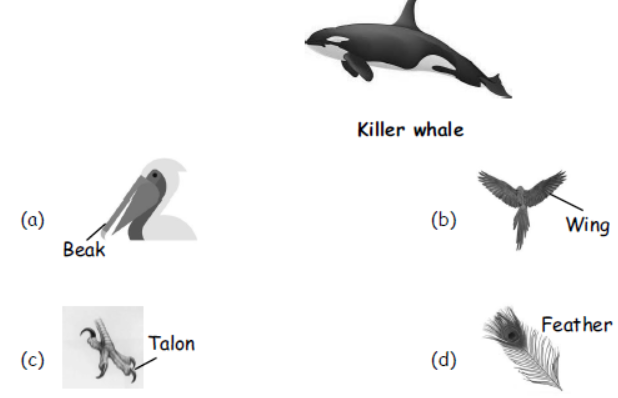
Answer: B
Explanation: An arrow is pointing towards dorsal fin of killer whale. Fin helps it in swimming and wing helps the bird in flying.
Question. Match the birds with their food: 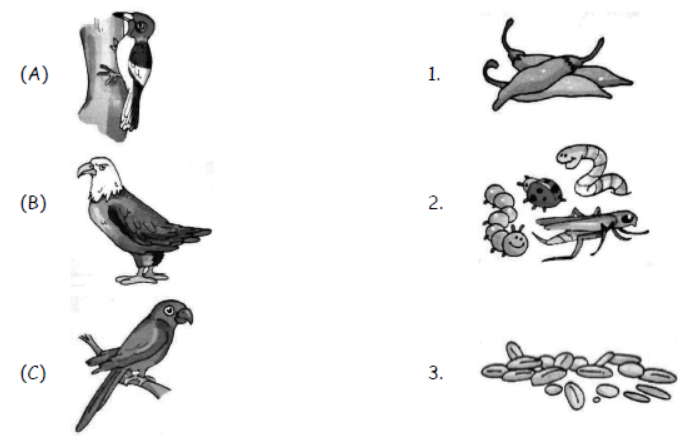

A B C D
a) 2 4 1 3
b) 4 1 2 3
A B C D
c) 2 3 1 4
d) 1 2 3 4
Answer: A
Explanation: 1. b), 2. d), 3. a), 4. c)
Question. Which bird, though known for melodious singing, lays her eggs in a crow’s nest?
a) Flamingo
b) Koel
c) Pigeon
d) Grey heron
Answer: B
Explanation: koel bird does not make its own nest and lay its egg in crow’s nest.
Question. Below are the shapes and function of their beaks. Match the following with the corresponding shape and their function.
| List I | List II |
| A. chisel shaped, flat & pointed | 1. catching and tearing prey |
| B. long and tubular | 2. spearing fish |
| C. Spear shaped | 3. drilling for insects |
| D. hooked | 4. sucking nectar from flowers |
A B C D
a) 3 4 2 1
b) 1 2 3 4
c) 2 3 1 4
d) 4 2 1 3
Answer: A
Explanation: chisel shaped, flat & pointed- (iii) drilling for insects; b) long and tubular-(iv) sucking nectar from flowers; c) Spear shaped- (ii) Spearing fish; d) Hooked-(i)
catching and tearing prey
Question. Birds build nests using grass, leaves, thread, twigs and cotton. They lay their eggs in the nest. Different birds make different types of nests.
Choose the correct statement about bird’s nest.
a) The penguin makes a nest on the ground with the help of pebbles and stones
b) The weaver bird uses its beak like a needle to make nest
c) A sparrow makes its nest in the form a shallow cup
d) Vulture pecks at a tree to make a nest
Answer: A
Explanation: The correct statements are –
A tailor bird uses its beak-like a needle to make nest.
Eagle and vulture makes nest in the form of shallow cup and woodpecker pecks at a tree to make a nest.
Question. Birds have different types of beaks that help them do special jobs in order to survive. Choose the correct statement about bird’s beaks.
a) A short, thick beak helps a bird reach into tree bark and get insects.
b) A long, thin beak helps a bird tear meat.
c) A spoon-shaped beak helps a bird scoop up water.
d) A hooked beak helps a bird break up seeds.
Answer: C
Explanation: spoon-shaped beak helps a bird scoop up water.
Directions : Refer to the given flow chart and answer the following questions. 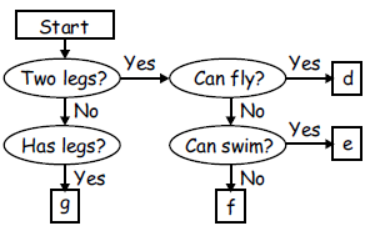
Question. Select the correct option to fill the empty spaces d, e, f and g in the given flow chart.
d e f g
a) Ostrich Penguin Lizard Pigeon
b) Pigeon Ostrich Penguin Lizard
c) Pigeon Penguin Ostrich Lizard
d) Penguin Pigeon Lizard Ostrich
Answer: C
Explanation: Penguin has two legs and can fly d). Penguin has two legs, it cannot fly but can swim (e). Ostrich has two legs, but it can neither fly nor swim (f). Lizard has legs but four not two (g).
Question. Which of these birds uses its beak as a needle to sew leaves with materials like thread, straw and dry twigs?
a) Woodpecker
b) Weaver bird
c) Tailor bird
d) None of these
Answer: C
Explanation: The tailor bird uses its beak like a needle to sew leaves together and make nest.
Woodpecker lives in tree holes while weaver bird makes its nest by weaving grass, twigs, etc. together.
Question. Study the given classification chart. Which of the following birds belong to group Y and group Z, respectively? 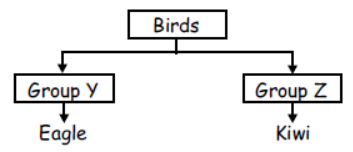
Y Z
a) Bat Penguin
b) Goose Flamingo
c) Ostrich Emu
d) Goose Penguin
Answer: D
Explanation: Goose and eagle are flying birds whereas penguin and kiwi are flightless birds.
Question. Birds migrate because of________________ and ________________ factors.
a) water and climate
b) personal and professional
c) food and shelter
d) environmental and genetic
Answer: D
Explanation: Birds migrate because of environmental and genetic factors.
Question. Which of the following birds has claws as shown in the figure. 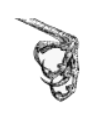
a) Parrots
b) Hawks
c) Sparrows
d) Hen
Answer: B
Explanation: raptors such as hawks have such claws to capture and kill their preys.
Question. I am a bird. My name starts with a “C.” I am a smart bird having black feathers. Who am I?
a) Cardinal
b) Cock
c) Crow
d) Crane
Answer: C
Explanation: I am crow.
Question. Select the correct option regarding the given flow chart.
a) An omnivorous black bird that says caw-caw can be placed at 'd'
b) A flightless bird found in desert can be placed at 'g'.
c) A black and white coloured bird that lives at poles can be placed at 'f'.
d) A bird that weaves a nest from grass can be placed at 'e'.
Answer: A
Explanation: The bird in option a) is crow that has two legs and can fly. Thus, it can be placed at 'd' Option b) is ostrich which can neither fly nor swim but has two legs so it can not be placed at 'g'. Actually, no bird can be placed at 'g'. Option c) is Penguin that can not fly but can swim so it can not be placed at 'f'. Option d) is weaver bird which can fly but can not swim so it can not be placed at 'e'.
Direction: Refer to the given word grid and answer the following questions. 
Question. Birds with which of the following foot type is NOT present in the given word grid? 
Answer: A
Explanation: The word grid has parrot with foot type c), penguin with foot type b), and heron with foot type d). But no bird with foot type, talon a) is present in the word grid.
Question. Refer to the given pictures of a heron and a kingfisher. Both have similar long, sharp pointed beaks, but their feet are quite different. What does it suggest? 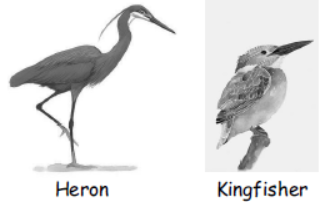
a) They eat similar kind of food
b) They live in different habitats
c) Their hunting methods are different
d) All of these
Answer: D
Explanation: Herons live near water and feed on variety of aquatic animals like fish, amphibians, aquatic insects etc. The most common hunting technique for the heron is to sit motionless on the edge of or standing in shallow water and wait until its food comes within range. It uses its beak to spear the food. Herons may also walk slowly, snatching food when it is observed. Kingfisher occupies a wide range of habitats but they are mostly found in forests. They also feed on variety of animals especially fish and other animals like amphibians. worms. insects etc. Kingfishers usually hunt from an exposed perch, when a food is observed, it swoops down to snatch it and then beat the food on a perch in order to kill it and then swallow it.
Question. In reference to the bird’s adaptation, which of these is INCORRECTLY paired?
a) Talons - For grasping prey
b) Streamlined body - Reducing weight for flight
c) Down feathers - Keeping warm
d) Wings and tail - Flying and balancing
Answer: B
Explanation: Streamlined body of bird helps it to fly in the air.
Question. Choose the correct option
A. The humming birds are the only birds that can fly backwards.
B. Parrots are the longest living birds.
C. An ostrich’s eye is not bigger than its brain.
D. A woodpecker can peck 50 times a second.
a) TFTF
b) FTFT
c) TTFF
d) FFTT
Answer: C
Question. Four pupils made a statement each about the ostrich shown below. 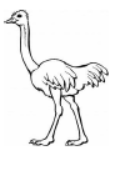
Anu Ostriches are birds.
Anil Ostriches can fly.
Rohan Ostriches lay eggs.
Sonal Ostriches have feathers.
Which pupil did not make a correct statement?
a) Anu
b) Anil
c) Rohan
d) Sonal
Answer: B
Explanation: Anil did not make a correct statement. Ostrich is a bird, which cannot fly. It lays eggs and have feathers also.
Question. The beak of a Pigeon is strong, short and hard that helps it to crack open its food. Which among these beaks serves the same function? 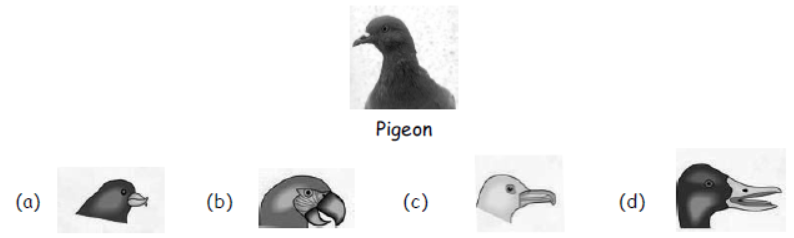
Answer: A
Explanation: The beak of sparrow helps it to crack open its food.
Multiple Choice Questions (MCQs) for Class 3 Science Birds
About Birds MCQs for Class 3 Science
Explore reliable practice questions for Birds tailored for Class 3 Science learners. Use these multiple-choice formats to evaluate preparedness and strengthen problem-solving skills.
How to Verify Your MCQ Answers
Cross-reference your completed choices with comprehensive NCERT solutions for Class 3 Science to ensure absolute clarity across all sub-topics in this chapter.
Enhance Speed with Online MCQ Tests
Explore our broader library of printable assignments, chapter notes, and mock tests designed to support continuous revision and secure higher marks in CBSE assessments.
FAQs
You can get most exhaustive CBSE Class 3 Science Birds MCQs for free on StudiesToday.com. These MCQs for Class 3 Science are updated for the 2026-27 academic session as per CBSE examination standards.
Yes, our CBSE Class 3 Science Birds MCQs include the latest type of questions, such as Assertion-Reasoning and Case-based MCQs. 50% of the CBSE paper is now competency-based.
By solving our CBSE Class 3 Science Birds MCQs, Class 3 students can improve their accuracy and speed which is important as objective questions provide a chance to secure 100% marks in the Science.
Yes, Science MCQs for Class 3 have answer key and brief explanations to help students understand logic behind the correct option as its important for 2026 competency-focused CBSE exams.
Yes, you can also access online interactive tests for CBSE Class 3 Science Birds MCQs on StudiesToday.com as they provide instant answers and score to help you track your progress in Science.