

Download CBSE MCQs for Class 3 Science: Practice
Access targeted multiple-choice questions for Practice designed to align with the latest CBSE academic syllabus for Class 3 Science. These objective practice sets help students evaluate their conceptual understanding and improve exam readiness.
Chapter-wise Objective Questions: Practice
Access the complete set of multiple-choice questions for Practice below. This focused format allows students to isolate specific topics for thorough review and uninterrupted practice alongside official CBSE textbooks.
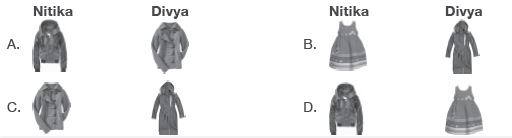
Question. Refer to the given conversation on phone between two friends
Nitika – Hello Divya! How is the day? Blowers seem not enough to stay warm at my place.
Divya – Is it so? Here, we are trying to ward off heat with air conditioners.
Which clothes would Nitika and Divya be wearing respectively?
Answer: D
Question. Which of the following statements about beaks of birds is/are true?
a. Beaks can be used as weapons.
b. Beaks are primarily used for feeding.
c. Beaks are used to preen and make nests.
d. Beaks are used in courtship displays.
(a) a and b only
(b) d only
(c) a, b and c only
(d) a, b, c and d
Answer: D
Question. The given diagram shows a box being pushed by a boy.
Identify the three forces, W, X and Y acting on the box and select the correct option regarding these.
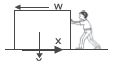
(a) Force W opposes motion while force X causes water and air to stay on Earth.
(b) Force X pulls everything down while force Y opposes motion.
(c) Force Y makes stationary objects move while force W causes movement of water in oceans.
(d) Force W makes stationary objects move while force X wears away tyres etc.
Answer: D
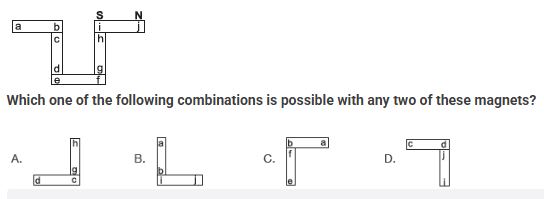
Question. The given diagram shows how five magnets can be arranged such that they stick to one another.
Answer: B
Question. Which of these is an INCORRECT relationship?
(a) Lungs : Nose : Intestine
(b) Stomach : Mouth : Teeth
(c) Kidney : Lungs : Skin
(d) Capillaries : Heart : Veins
Answer: A
Question. A beaker of water was heated continuously over a burner and the temperature of the water was recorded simultaneously. The graph obtained on plotting this data is shown here. Which one of the following best explains what happened between points E and F on the graph?
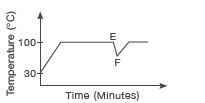
(a) The water in the beaker was stirred
(b) There is no more water left in the beaker.
(c) Some iced water was poured into the beaker.
(d) Some boiling water was poured into the beaker.
Answer: C
Question. Four pupils observed the plant in the Science garden as shown here and made the following statements.
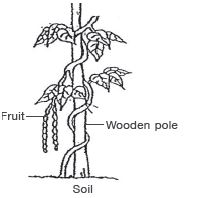
Ritu : The plant has weak stem.
Siddhi : The wooden pole provides support to the plant.
Manha : The leaves grow upwards to trap less light.
Manya : The plant is in the adult stage of its life cycle.
Which of these pupils’ statements is/are correct?
Ritu Siddhi Manha Manya
(a) ✓ × ✓ ×
(b) × ✓ ✓ ✓
(c) ✓ × ✓ ✓
(d) ✓ ✓ × ✓
Answer: D
Question. Which of her senses can Jyoti use to distinguish a mango slice from a biscuit in the dark?
(a) Senses of hearing and touch
(b) Senses of touch and taste
(c) Senses of hearing and sight
(d) Senses of touch and sight
Answer: B
Question. Select the INCORRECT statements.
(a) Planets and stars do not have light of their own, they shine because they reflect the light of Sun that falls on them.
(b) Rotation of the Earth on its axis causes seasons.
(c) Inner planets are made up of frozen gases whereas outer planets are made up of rocks and iron.
(d) All of these.
Answer: D
Question. Read the given statement.
X is a food preservation method in which excess salt and oil is added to food, while in Y food is packed in microbe-free containers.
Now, select the option that on unscrambling correctly identifies the method X or Y.
(a) X – INICPKLG
(b) Y – RIDNYG
(c) X – GNCNAIN
(d) Y – GIPIKCLN
Answer: A
Question. Four students were asked to draw a diagram which shows path of light through holes in three sheets put parallely. Which of these students’ diagram is correct?

(a) Jaya
(b) Aditya
(c) Surabhi
(d) Sudhir
Answer:
C
Question. Shruti observed the Moon from 14th to 29th January. She noted that the waxing crescent appeared on 14th January. Which of the following diagrams most correctly shows the phase of the Moon Shruti would observe on 29th January?

Answer: B
Question. The given table shows some of the things the Sharma family did
Mr. Sharma Placed newspaper in recycling pile after reading it.
Mrs. Sharma Wrapped rubbish in a double layer of plastic bag before throwing it.
Megha Threw plastic cotton buds out of the window after cleaning her ears with them.
Achin Threw plastic wrap out of the window after finishing the snack it contained
Whose actions will have a negative impact on the environment?
(a) Achin only
(b) Achin and Megha only
(c) Mr. and Mrs. Sharma only
(d) Mrs. Sharma, Achin and Megha
Answer: D
Question. Which amongst the given planets takes the longest time in going around the Sun once?
(a) Mercury
(b) Uranus
(c) Jupiter
(d) Saturn
Answer: B
Question. Vedant wants to heat object Q but without putting it on the stove directly. He set-up an experiment as shown here. The object P should be made of which of the following materials so that object Q can be heated?
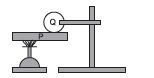
(a) Wood
(b) Rubber
(c) Iron
(d) Plastic
Answer: C
Question. Study the given chart which describes a desert. Based on the given chart, desert plants most likely compete for .
(a) Sunlight
(b) Water
(c) Space
(d) Protection from animals
Answer: B
Question. Swati washed her clothes in the morning and wanted them to dry under the sunlight. Which of the areas shown in the figure should she NOT choose in order to ensure the maximum time of sunlight exposure?
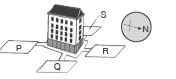
(a) Park P only
(b) Park P and Park R
(c) Park Q and Park S
(d) Park S only
Answer: C
Question. Navpreet has just finished her dinner. She ate a bowl of noodles, a chicken drumstick, some vegetables and a wedge of papaya Select the correct option regarding the food she ate.
(a) Noodles give her proteins for body building.
(b) Chicken drumstick gives her carbohydrates for energy.
(c) Papaya wedge gives her vitamins.
(d) Vegetables give her fats for energy.
Answer: C
Question. Which of the following is a way to help control environmental pollution?
(a) Travelling by car instead of bicycle.
(b) Use of pesticides to keep insects away from plants.
(c) Burning waste materials at dump sites.
(d) Reuse of cans, bottles and newspapers whenever possible.
Answer: D
Question. The table given below shows the amount of water used by four different families in January, February, March and April. All four families watched a ‘Water Conservation (Save Water) Programme’ in March. Which family is likely to have understood the objective of conservation of water?
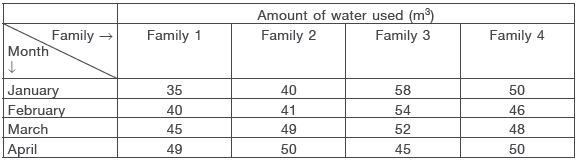
(a) Family 1
(b) Family 2
(c) Family 3
(d) Family 4
Answer: C
Question. Study the given diagram carefully and select the correct option regarding it.
(a) Leaves Q and R cannot make food
(b) Leaves P and Q cannot make food
(c) To leaves Q and R, sunlight is not available.
(d) To leaf P, water is not available.
Answer: B
Question. Which among these animals are more closely related than the others?

(a) a and d
(b) b and c
(c) c and d
(d) a and b
Answer: C
Question. The nestlings unlike their parents lack .
(a) Beaks
(b) Wings
(c) Flight feathers
(d) Hollow bones
Answer: C
Question. The given diagram shows three kinds of birds (d, e and f) possessing different types of feet. Select the option with correct examples of any two from d, e or f.
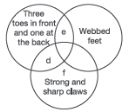
(a) d – Hen; f – Crane
(b) e – Swan; f – Hen
(c) d – Sparrow; e – Woodpecker
(d) d – Penguin; f – Crow
Answer: B
Question. A note is shown here which Shashank had made about different types of houses.
Unfortunately, when he had finished writing, accidentally some ink spilt over the page and covered some of the keywords. Select the correct sequence of hidden words to complete the note.
(a) Nomads, Tents, Huts, Snow, Poles
(b) Igloos, Caravans, Tents, Paper, Mud
(c) Igloos, Caravans, Stilt houses, Mud, Iron
(d) Nomads, Tents, Caravans, Mud, Stilts
Answer: D
Question. Match the column I with column II and select the correct option.
Column I Column II
(a) Bread and rice (1) Potato and sugar
(b) Orange and lemon (2) Fish and cheese
(c) Milk and pulses (3) Grapes and papaya
(a) a-2, b-3, c-1
(b) a-1, b-2, c-3
(c) a-1, b-3, c-2
(d) a-3, b-1, c-2
Answer: C
Question. is a useful means of communication for the armymen working in remote, under-developed areas and can be used for communicating some information to hearing impaired persons.
(a) Newspaper, Cell phone
(b) Wireless communication, Television
(c) Newspaper, Radio
(d) Both B and C
Answer: B
Question. The given diagram represents the water cycle.
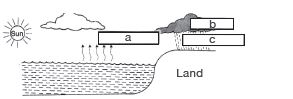
Select the correct option regarding the processes that are labelled as ‘a’, ‘b’ and ‘c’.
(a) In processes ‘a’ and ‘b’, one state of water changes into another state.
(b) In process ‘a’, the state of water with fixed volume changes to the state of water which does not have fixed volume.
(c) In process ‘c’, liquid or solid state of water may fall on Earth’s surface.
(d) All of these.
Answer: D
Question. Which of the following is an INCORRECT match?
Object Made up of Floats on water
(a) Eraser Rubber No
(b) Coin Metal Yes
(c) Spoon Plastic Yes
(d) Disposable cup Styrofoam Yes
Answer: B
Question. Two different shaped magnets (X and Y) are shown here and their parts are labelled Select the option that correctly identifies their strongest parts.
Magnet X Magnet Y
(a) R s
(b) Q r
(c) P r
(d) R q
Answer: A
Question. Which of the labelled parts in the figure shown here secrete(s) digestive juices?
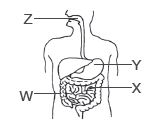
(a) Y only
(b) X, Y and Z only
(c) W and X only
(d) W and Y only
Answer: B
Download Chapter MCQs: Class 3 Science Practice
About Practice MCQs for Class 3 Science
Review structured objective questions for Class 3 Science Practice. Built according to official CBSE guidelines, these MCQ sets support daily revision and core concept reinforcement.
How to Verify Your MCQ Answers
Cross-reference your completed choices with comprehensive NCERT solutions for Class 3 Science to ensure absolute clarity across all sub-topics in this chapter.
Enhance Speed with Online MCQ Tests
Explore our broader library of printable assignments, chapter notes, and mock tests designed to support continuous revision and secure higher marks in CBSE assessments.
FAQs
You can get most exhaustive CBSE Class 3 Science Practice MCQs Set 01 for free on StudiesToday.com. These MCQs for Class 3 Science are updated for the 2026-27 academic session as per CBSE examination standards.
Yes, our CBSE Class 3 Science Practice MCQs Set 01 include the latest type of questions, such as Assertion-Reasoning and Case-based MCQs. 50% of the CBSE paper is now competency-based.
By solving our CBSE Class 3 Science Practice MCQs Set 01, Class 3 students can improve their accuracy and speed which is important as objective questions provide a chance to secure 100% marks in the Science.
Yes, Science MCQs for Class 3 have answer key and brief explanations to help students understand logic behind the correct option as its important for 2026 competency-focused CBSE exams.
Yes, you can also access online interactive tests for CBSE Class 3 Science Practice MCQs Set 01 on StudiesToday.com as they provide instant answers and score to help you track your progress in Science.