

Download CBSE MCQs for Class 3 Science: ISO Olympiad
Review structured MCQ sets for Class 3 Science ISO Olympiad. Built according to official CBSE guidelines, these downloadable questions support daily revision and core concept reinforcement.
Chapter-wise Objective Questions: ISO Olympiad
Navigate directly to the 50 objective questions for ISO Olympiad using the digital viewer below. Each practice set includes verified answer keys, allowing students to instantly cross-check their work and identify areas requiring further revision.
1. Which of the following senses work for a tiger in the night?
(a) Sense of touch
(b) Sense of smell
(c) Sense of sight
(d) All of these
Answer : (b) Sense of smell works for a tiger in the night.
2. Which of the following is NOT correct regarding mushrooms and vultures?
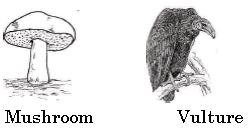
(a) Both of them can not prepare food on their own
(b) Both of them feed on dead matter
(c) Both of them are animals
(d) Both of them breathe air
Answer : (c) Mushroom is a vegetable and vulture is a scavenger.
3. Duck, mouse and fish can be grouped together because
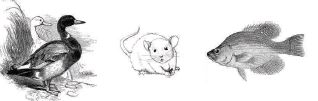
(a) they eat both plants and animals
(b) they lay eggs
(c) of their similar outer body covering
(d) they live in water
Answer : (a) Duck, mouse and fish can be grouped together because they eat both plants and animals.
4. Match the following and select the correct answer :
A. Dogs i. burrows
B. fish ii. kennels
C. Hens iii. aquarium
D. Rabbit iv. coops
(a) A-ii, B-iii, C-iv, D-i
(b) A-i, B-iii, C-ii, D-iv
(c) A-ii, B-iii, C-i, D-iv
(d) A-i, B-ii, C-iii, D-iv
Answer : (a) Dog lives in kennel, fish lives in aquarium, Hen lives in coops, Rabbit lives in burrows.
Dog, fish, hen and rabbit are pet animals.
5. What system is in charge of the senses?
(a) The Skeletal System
(b) The Circulatory System
(c) The Digestive System
(d) The Nervous System
Answer : (d) Nervous system is in charge of the senses.
6. Which of the following statements is true?
(a) Birds have teeth
(b) All birds can fly
(c) The peacock can fly over long distances
(d) The duck is an aquatic bird
Answer : (d) Only statement-The duck is an aquatic bird is true.
7. Which of the following birds uses its beak to climb branches?
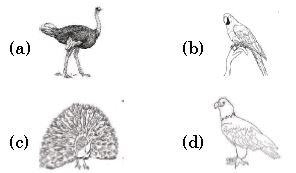
Answer : (b) A parrot uses its beak to climb branches of tree.
8. What did people use to tell time before clocks and watches?
(a) Stars
(b) Cell phones
(c) Clouds
(d) Shadows
Answer : (d) Shadows
9. Which of the following birds nest is very attractive?
(a) Woodpecker
(b) Patridge
(c) Bulbul
(d) Weaver bird
Answer : (d) Weaver bird’s nest is very attractive.
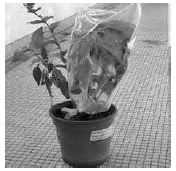
10. The figure given below shows an experiment, where a leaf is covered with a plastic bag. After an hour, it was observed that droplets of water were formed inside the bag. These droplets come out from which of the following parts of the leaf?
(a) Leaf blade
(b) Leaf vein
(c) Stomata
(d) Leaf stalk
Answer : (c) When a leaf is covered with a plastic bag. After an hour it was observed that droplets of water are formed inside the bag.
These droplets come out from stomata of the leaf.
11. Which of the following should come in the empty box given below? Water from roots → ▭ → Water in the leaves
(a) Flowers
(b) Stem
(c) Fruit
(d) Bark
Answer : (b) Water from roots ® stem ® water in leaves
12. Which of the following is used to observe the cells of a leaf?
(a) Camera
(b) Magnifying glass
(c) Telescope
(d) Microscope
Answer : (d) A microscope is used to observe the cells of a leaf.
13. When you are eating sugarcane, you are actually eating the ——.
(a) fruits of sugarcane
(b) roots of sugarcane
(c) stem of sugarcane
(d) grains of sugarcane
Answer : (c) When you are eating sugarcane, you are actually eating the stem of sugarcane.
14. In the experiment shown below, water was poured into a container which has some soil. Air bubbles were seen rising. What does this
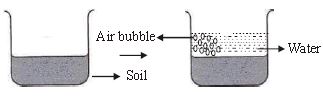
(a) Soil contains moisture
(b) Soil contains water
(c) Soil contains air
(d) None of these
Answer : (c) In this experiment air bubbles were seen rising. This shows soil contains air.
15. Which soil can hold both water and air in adequate amounts?
(a) Sandy soil
(b) Gravel
(c) Clayey soil
(d) Loamy soil
Answer : (d) Loamy soil can hold both water and air in adequate amounts, that is why this soil is said to be the best soil for growing plants
16. What provides information to your brain about external conditions?
(a) Heart
(b) Blood vessels
(c) Nerve receptors
(d) Bones
Answer : (c) Nerve receptors provides information to your brain about external conditions.
17. A puddle of water on a marble floor is left untouched for some hours.
How will it change?
(a) It becomes smaller
(b) It becomes larger
(c) It changes into ice
(d) It changes into marble
Answer : (a) If a puddle of water on a marble floor is left untouched for some hours, it will become smaller, due to evaporation.
18. The days are longer in
(a) summer season
(b) rainy season
(c) winter season
(d) spring season
Answer : (a) The days are longer in summer season
19. What small particles make up matter?
(a) Molecules
(b) Dust
(c) Gas
(d) Lima Beans
Answer : (a) Molecules
20. Which part of the Earth will receive almost the same amount of sunlight throughout the year?
(a) North Pole
(b) South Pole
(c) Equator
(d) Any part of Earth
Answer : (c) Equator of earth will receive almost the same amount of sunlight throughout the year.
21. Match the following and select the correct answer :
System Function
A. Circulatory i. Helps in system production of offspring
B. Skeletal system ii. Helps the body to move
C. Reproductive iii. Helps in system the movement of blood
D. Respiratory iv. Helps in system exchange of air
(a) A-iii, B-iv, C-i, D-ii
(b) A-iii, B-ii, C-i, D-iv
(c) A-iv, B-iii, C-ii, D-i
(d) A-iii, B-i, C-iv, D-ii
Answer : (b) In human body
A: Circulatory system helps in the movement of blood.
B: Skeletal system helps the body to move.
C: Reproductive system helps in production of offspring
D: Respiratory system helps in exchange of air.
22. Which organ of our body belongs to both the respiratory and the excretory system?
(a) Lungs
(b) Skin
(c) Kidneys
(d) Intestine
Answer : (a) Lungs is the organ in human body which belongs to both the respiratory and the excretory system?
23. What does the following figure represent?
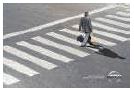
(a) Pedestrian crossing
(b) Place where U-turns can be made
(c) Speed limit zone
(d) No speed limit
Answer : (a) The figure represents a man crossing the road using pedestrian crossing.
24. Which of the following kind of houses is most effective in a place that is very hot and dry?
(a) A house made of bricks and mortar
(b) A house made up of ice
(c) A house made up of clay and thatch or coconut branches
(d) All of these
Answer : (c) A house made up of clay and thatch or coconut branches is most effective in a place that is very hot and dry.
25. Why are doors very important in a house?
(a) They stop cold winds from entering
(b) They protect us from animals and thieves
(c) They facilitate ventilation
(d) They support the walls
Answer : (b) Doors are very important in a house because they protect us from animals and theives
26. Cotton clothes are preferred during summer because these clothes
(a) are light
(b) do not absorb heat
(c) allow the body heat to escape
(d) All of these
Answer : (d) Cotton clothes are preferred during summers because they are light, do not absorb heat and allow the body heat to escape.
27. Which of the following statements is NOT true?
(a) Fire protected early man from wild animals
(b) Fire protected early man from cold
(c) Fire helped the early man to eat roasted food
(d) Early man produced fire with the help of a match box
Answer : (d) Early man produced fire with the help of stones. Match box was invented much later.
28. Which of these catch fire quickly?
(a) Stone
(b) Sand
(c) Wood
(d) Iron
Answer : (c) Wood catches fire quickly.
29. ________ is very useful in communication for the people working in police and army.
(a) Newspaper
(b) Wireless communication
(c) Television
(d) Telegram
Answer : (b) Policeman and army people works in very far places so wireless communication is very useful in communication for them.
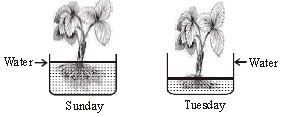
30. The diagrams show a plant in a cup on a Sunday and again next Tuesday. In the beginning the cup was filled to the top with water. By
Tuesday, the level of the water has decreased. What is the reason?
(a) Water in the cup has frozen
(b) Water in the cup has condensed
(c) Water has been absorbed by the roots
(d) Water has disappeared from the cup
Answer : (c) In this experiment, by tuesday the level of water has decreased because it has been absorbed by the roots.
31. Which of the following diagrams does NOT represent the growth of an organism?
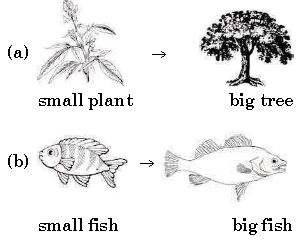
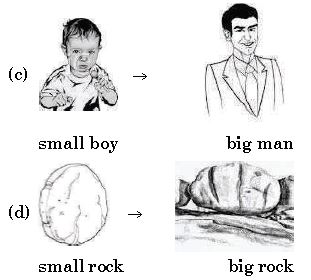
Answer : (d) Rock is not a living organism, therefore it will not grow.
32. Which of the following plant has the sense of touch?
(a) Touch-me-not
(b) Sunflower
(c) Carrot
(d) Jasmine
Answer : (a) Touch-me not plant has the sense of touch.
33. Some animals first swallow the food without chewing it. After sometime, when they relax they bring this food back inot their mouth from stomach. Then they chew it well very slowly. Such animals are called
(a) gnawing animals
(b) cud chewing animals
(c) blood sucking animals
(d) flesh eating animals
Answer : (b) Some animals like snake, squirrel etc swallow the food without chewing it and after sometime they bring this food back into their mouth from stomach. These animals are called cud chewing animals.
34. Snake is a
(a) parasite
(b) producer
(c) herbivore
(d) carnivore
Answer : (d) Snake is a carnivore.
35. Which of the following parts of a bird is most important to help the bird fly in the air?
(a) Down feathers
(b) Flight feathers
(c) Beak and legs
(d) Colour of the bird
Answer : (b) Flight feathers help the bird fly in the air.
36. Veins
(a) absorb water and minerals from the soil
(b) absorb carbon dioxide from the atmosphere
(c) transport water, food and minerals in a leaf
(d) release oxygen and carbon dioxide inot the atmosphere
Answer : (c) Veins in plants transport water, food and minerals in a leaf.
37. Which of the following present in the soil is most helpful to the growth of plants?
(a) Humus
(b) Sand
(c) Clay
(d) Small porous rocks
Answer : (a) Humus, a dark brown material in soil that is formed when plants and animals decay, is the most helpful material present in the soil for the growth of plants.
38. Which of the following shows the correct arrangement of layers of the soil?
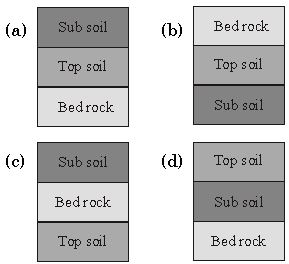
Answer : (d) Top soil, Sub soil and Bed rock is the correct arrangement of layers of the soil from top to bottom.
39. Which of the following is not a good habit?
(a) Washing our hands before eating food.
(b) Eating regularly at the same time in a day.
(c) Swallowing the food without chewing it.
(d) Eating fresh and warm food.
Answer : (c) Swallowing the food without chewing it is not a good habit. Because chewing mix the food with saliva and helps in digestions.
40. Study the flow chart given below : Plants → X → Lion
The arrow sign means “is eaten by”.
Which of the following animals can X be?
(a) Snake
(b) Eagle
(c) Goat
(d) Frog
Answer : (c) Plant is eaten by goat, goat is eaten by lion.
Free study material for Science Olympiad NSO
ISO Olympiad Objective Questions & Solutions for Class 3 Science
About ISO Olympiad MCQs for Class 3 Science
Explore reliable practice questions for ISO Olympiad tailored for Class 3 Science learners. Use these multiple-choice formats to evaluate preparedness and strengthen problem-solving skills.
How to Verify Your MCQ Answers
Cross-reference your completed choices with comprehensive NCERT solutions for Class 3 Science to ensure absolute clarity across all sub-topics in this chapter.
Enhance Speed with Online MCQ Tests
Follow up your worksheet practice by attempting the interactive online Science MCQ test for this chapter to evaluate your execution speed. All platform resources are free to access.
FAQs
You can get most exhaustive CBSE Class 3 Science ISO Olympiad MCQs with Answers Set 05 for free on StudiesToday.com. These MCQs for Class 3 Science are updated for the 2026-27 academic session as per CBSE examination standards.
Yes, our CBSE Class 3 Science ISO Olympiad MCQs with Answers Set 05 include the latest type of questions, such as Assertion-Reasoning and Case-based MCQs. 50% of the CBSE paper is now competency-based.
By solving our CBSE Class 3 Science ISO Olympiad MCQs with Answers Set 05, Class 3 students can improve their accuracy and speed which is important as objective questions provide a chance to secure 100% marks in the Science.
Yes, Science MCQs for Class 3 have answer key and brief explanations to help students understand logic behind the correct option as its important for 2026 competency-focused CBSE exams.
Yes, you can also access online interactive tests for CBSE Class 3 Science ISO Olympiad MCQs with Answers Set 05 on StudiesToday.com as they provide instant answers and score to help you track your progress in Science.