

Revision Notes for Class 11 Chemistry: Chapter 08 Organic Chemistry Some Basic Principles & Techniques
Explore reliable concept summaries and revision materials through the CBSE Class 11 Chemistry Organic Chemistry Some Basic Principles And Techniques Notes. Tailored for Class 11 learners, utilizing these notes for Chemistry Chapter 08 Organic Chemistry Some Basic Principles & Techniques ensures thorough preparation and strengthens core academic definitions before final evaluations.
Review Chapter 08 Organic Chemistry Some Basic Principles & Techniques for Class 11 Chemistry
View or download the dedicated Chapter 08 Organic Chemistry Some Basic Principles & Techniques revision resource below. Engaging with these structured concept notes daily ensures continuous academic progress and mastery of the 2026-27 curriculum for Chemistry.
Organic chemistry : Some Basic Principles and Techniques Organic compounds are the hydrocarbons and their derivatives and organic chemistry is that branch of chemistry that deals with the study of these compounds
Tetravalency of carbon
The atomic number of Carbon is 6 and its electronic configuration is 2,4 i.e. it has 4 valence electrons. Thus carbon is always tetracovalent, i.e. it forms 4 covalent bonds with other atoms
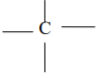
Due to tetravalency of carbon it has a tetrahedron shape.
Catenation- The self linking property of carbon is known as catenation. This is the main reason of existence of such large number of compounds
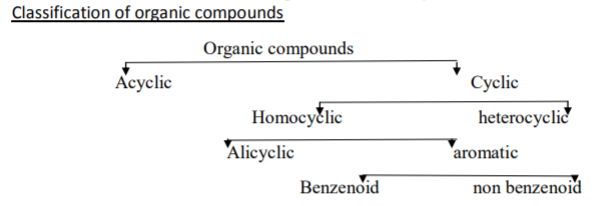
Functional groups:A functional group may be defined as an atom or a group of atoms present in a molecule which largely determines the chemical properties.
CLASS OF ORGANIC NAME OF FUNCTIONAL STRUCTURE COMPOUNDS GROUP
Alkenes double bond =C=C=
Alkynes triple bond - C Ξ C -
Halogens halogen - X ( F,Cl,Br,I )
Alcohols hydroxyl -OH
Aldehydes aldehydic(formyl) -CHO
Carboxylic acids carboxyl -COOH
Acid amides amides -CONH2
Primary amines amino - NH2
HOMOLOGOUS SERIES
Homologous series is defined as a family or group of structurally similar organic compounds all members of which contain the same functional group, show a gradation in physical and similarity in chemical properties and any two adjacent members of which differ by -CH2 group. The individual members of this group are called homologues and the phenomenon is called homology.
NOMENCLATURE OF ORGANIC COMPOUNDS
Organic chemistry deals with millions of compounds. In order to clearly identify them, a systematic method of naming known as IUPAC system of nomenclature is adopted. The names are such that the listener can deduce the structure from it. The IUPAC name consists of three parts:
Prefix Word root Suffix EX: 3 methlyoctane
NOMENCLATURE OF ALKANES Straight chain alkanes:
The names of such compounds is based on their chain structure,and end with suffix ‘-ane’ and carry a prefix indicating the number of carbon atoms present in the chain.
Branched chain hydrocarbons:
1.) The longest carbon chain in the molecule is identified.
2.) The numbering is done in such a way that the branched carbon atoms get the lowest possible value.
3.) The names of the alkyl groups attached as a branch are then prefixed to the name of the parent alkane and its position is indicated by numbers.
4.) The lower number is given to the first in alphabetical order.
5.) The carbon atom of the branch that attaches to the root alkane is numbered 1.
Organic compounds having Functional Groups:
The longest chain of carbon atoms containing the functional groups is numbered in such a way that the functional group attached to the carbon atom gets the lowest possible number in the chain. When there are more functional groups then a priority order is followed as: -COOH, -SO3H, -COOR, COCl, -CONH2, -CN, -HC=O, =C=O, -OH, -NH2, =C=C=, -CΞ C-.
ISOMERISM
Two or more compounds having the same molecular formula but different physical and chemical properties are called isomers and this phenomenon is called isomerism.
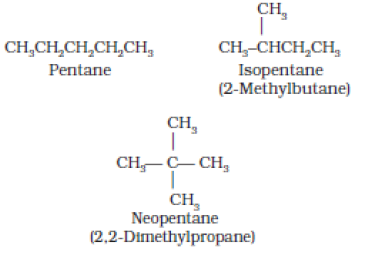
Chain isomerism: When two or more compounds having same molecular formula but different carbon skeletons are referred to as chain isomers.
Position Isomerism : Compounds which have the same structure of carbon chain but differ in position of double or triple bonds or functional group are called position isomers and this phenomenon is called Position Isomerism. e g
CH3-CH2-CH=CH2 CH3-CH = CH – CH3
Functional Isomerism :Compounds which have the same molecular formula but different functional group are called functional isomers and this phenomenon is called functional Isomerism. e g
CH3 – CH2 – OH CH3 – O – CH3
Metamerism:It is due to the presence of different alkyl groups on either side of functional group in the molecule. Ex. C4H10O represents C2H5OC2H5 and
CH3OC3H7
CH3- → C H2 → CH2 Cl
The atoms or groups which shows +R effect are halogens,-OH , -OR,-NH2
The atoms or groups which shows -R effect are –COOH , -CHO , -CN
CBSE Class XI Chemistry Organic chemistry - Some Basic Principles and Techniques Concepts.
Free study material for Chemistry
Download CBSE Revision Notes: Class 11 Chemistry Chapter 08 Organic Chemistry Some Basic Principles & Techniques
About Chapter 08 Organic Chemistry Some Basic Principles & Techniques Revision Notes
Access structured revision notes for Chapter 08 Organic Chemistry Some Basic Principles & Techniques designed in alignment with the latest CBSE curriculum for Class 11 Chemistry. These summaries help clarify core themes and support effective daily study.
How to Use These Revision Notes
Each chapter summary is structured around standard CBSE textbooks, allowing students to check their understanding and clarify complex ideas early in their revision.
Enhance Practice with MCQs and Worksheets
Wrap up your chapter revision by testing your knowledge against standard question formats. Everything on our platform is provided free of charge.
FAQs
You can download the teacher prepared revision notes for CBSE Class 11 Chemistry Organic Chemistry Some Basic Principles And Techniques Notes from StudiesToday.com. These notes are designed as per 2026-27 academic session to help Class 11 students get the best study material for Chemistry.
Yes, our CBSE Class 11 Chemistry Organic Chemistry Some Basic Principles And Techniques Notes include 50% competency-based questions with focus on core logic, keyword definitions, and the practical application of Chemistry principles which is important for getting more marks in 2026 CBSE exams.
Yes, our CBSE Class 11 Chemistry Organic Chemistry Some Basic Principles And Techniques Notes provide a detailed, topic wise breakdown of the chapter. Fundamental definitions, complex numerical formulas and all topics of CBSE syllabus in Class 11 is covered.
These notes for Chemistry are organized into bullet points and easy-to-read charts. By using CBSE Class 11 Chemistry Organic Chemistry Some Basic Principles And Techniques Notes, Class 11 students fast revise formulas, key definitions before the exams.
No, all study resources on StudiesToday, including CBSE Class 11 Chemistry Organic Chemistry Some Basic Principles And Techniques Notes, are available for immediate free download. Class 11 Chemistry study material is available in PDF and can be downloaded on mobile.