

Download Class 11 Chemistry Concept Summaries: CBSE Class 11 Chemistry Revision Notes Set 03
Review targeted revision notes for Class 11 Chemistry with the CBSE Class 11 Chemistry Revision Notes Set 03. Built according to official educational guidelines for the 2026-27 academic year, these downloadable summaries for All topics support daily study and last-minute exam readiness.
Access All topics Notes and Study Material
Navigate directly to the revision notes for All topics using the digital viewer below. Each summary is structured to highlight high-weightage sections, allowing students to instantly access critical definitions and focus on core exam topics.
Class XI: Chemistry
Chapter 1: Some Basic Concepts of Chemistry
Top concepts
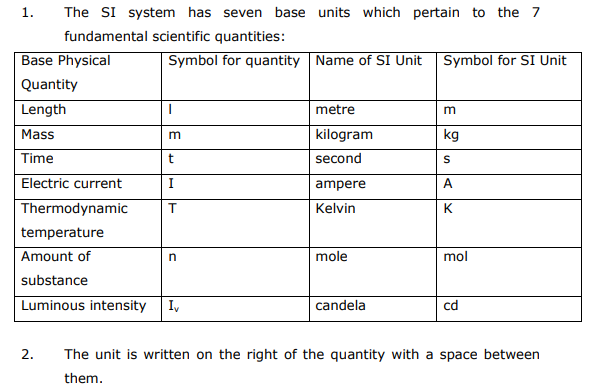
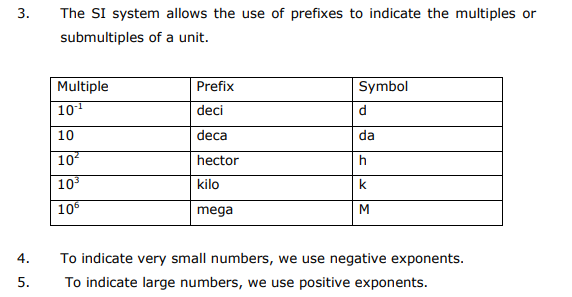
6. Scientific notation is the proper representation of a number in exponential form.
7. Precision indicates how closely repeated measurements match each other.
8. Accuracy indicates how closely a measurement matches the correct o expected value.
9. A result is valid only if it is both accurate and precise.
10. Significant figures are meaningful digits which are known with certainty.
11. There are certain rules for determining the number of significant figures:
i) All non-zero digits are significant
ii) Zeros preceding the first non-zero digit are not significant
iii) Zeros between two non-zero digits are significant.
iv) Zeros at the end or right of the number are significant provided they are on the right side of the decimal point. But, if otherwise, the zeros are not significant.
12. During addition and subtraction, the result cannot have more digits to the right of the decimal point than either of the original numbers.
13. In multiplication and division with significant figures, the answer cannot have more significant figures than either of the original numbers.
14. There are 5 basic laws of chemical combinations that govern every reaction: Law of conservation of mass, law of definite proportions, law of multiple proportions, Gay Lussac’s law of gaseous volumes, and lastly, Avogadro law.
15. Law of Conservation of Mass: Antoine Lavoisier established the Law of Conservation of Mass. It states that matter can neither be created nor destroyed. In other words, we can say that during any physical or chemical change, the total mass of reactants is equal to the total mass of products.
16. Law of definite proportions: Joseph Proust showed that a given compound always contains exactly the same proportion of elements by weight.
17. Law of multiple proportions: Dalton proposed the law of multiple proportions. According to this law if two elements can combine to form more than one compound, the mass of one element that combines with the fixed mass of the other element is in the ratio of small whole numbers
18. Gay Lussac’s Law of gaseous volumes: When gases combine or are produced in a chemical reaction they do so in a simple ratio by volume, provided all the gases are at same temperature and pressure.
19. Avogadro law: At the same temperature and pressure, equal volumes of gases contain equal number of molecules.
20. Dalton’s atomic theory: In 1808, Dalton published ‘A New System of Chemical Philosophy’ in which he proposed the following :
• Matter consists of indivisible atoms.
• All the atoms of a given element have identical properties including identical mass. Atoms of different elements differ in mass.
• Compounds are formed when atoms of different elements combine in a fixed ratio.
• Chemical reactions involve reorganisation of atoms. These are neither created nor destroyed in a chemical reaction.
21. Dalton’s theory could explain the laws of chemical combination.
22. The number 23 6.022 ×10²³ is called Avogadro’s constant or Avogadro’s number.
23. A mole is a collection of 23 6.022 ×10²³ particles.
24. One mole is the amount of a substance that contains as many particles or entities as there are atoms in exactly 12 g (or 0.012 kg) of the 12C
25. The mass of one mole of a substance in grams is called its molar mass.
26. The molar mass in grams is numerically equal to the atomic/molecular/formula mass in u.(u is the unified mass)
27. Molarity is the number of moles of solute in per liter of solution. Unit is moles per liter.
28. Molality is the number of solute present in 1kg of solvent.
29. Atomic Mass: Average relative mass of an atom of an element as compared with the mass of a carbon atom taken as 12 amu
30. Atomic mass expressed in grams is called gram atomic mass
31. Molecular Mass: Sum of the atomic masses of elements present in a molecule
32. Molecular mass expressed in grams is called gram molecular mass
33. Formula Mass: Sum of atomic masses of all atoms in a formula unit of the compound
34. Following relations given below can be summarized
• One mole of atoms = 23 6.022 ×10²³ atoms=Gram atomic mass of element
• One mole of molecules= 23 6.022 ×10²³ molecules= Gram molecular mass of substance
35. An empirical formula represents the simplest whole number ratio of various atoms present in a compound.
36. Molecular formula shows the exact number of different types of atoms present in a molecule of a compound.
37. If the mass per cent of various elements present in a compound is known, its empirical formula can be determined.
38. Molecular formula = n (Empirical formula), where n is a simple number and may have values 1, 2, 3….
39. Following steps should be followed to determine empirical formula of the compound
• Step 1: Conversion of mass per cent of various elements into grams.
• Step 2: Convert mass obtained in step1 into number of moles
• Step 3: Divide the mole value obtained in step 2 by the smallest mole value (out of the mole value of various elements calculated)
• Step 4: In case the ratios are not whole numbers, then they may be converted into whole number by multiplying by the suitable coefficient.
• Step 5: Write empirical formula by mentioning the numbers after writing the symbols of respective elements.
40. Anything that has mass and occupies space is called matter
41. Matter can either be a mixture or be a pure substance
42. Homogenous mixtures are those whose components completely mix with each other to make a uniform composition
43. Heterogeneous mixtures are not uniform, and their components are separable through physical methods
44. Pure substances can be elements or compounds
45. An element consists of only one type of particles
46. Two or more atoms of different elements combine to form a molecule of a compound
47. The constituents of a compound can be separated only by chemical methods.
48. A compound has properties different from its constituent elements
49. Isotopes are elements with same atomic number but different mass number.
50. Atomic mass is donated by “u” – unified mass.
51. One mole is the amount of a substance that contains as many particles as there are atoms in exactly12 g of the 12C isotope
52. The mass of one mole of a substance in grams is called its molar mass
53. Out of various reactants in a reaction ,a reactant that is completely consumed in a chemical reaction is called limiting reagent
54. Stoichiometry gives a quantitative relation between reactant and product in a reaction. It also helps us in identifying limiting reagents
Please refer to attached file for CBSE Class 11 Chemistry Revision Notes Set C
Free study material for Chemistry
Revision Notes and Key Concepts for Class 11 Chemistry All topics
Quick Revision Notes: All topics (CBSE)
Review targeted chapter notes for Class 11 Chemistry All topics. Built according to official CBSE guidelines, these summaries highlight high-yield topics frequently tested in school evaluations.
Expert Study Material for Class 11 Chemistry
Each chapter summary is structured around standard CBSE textbooks, allowing students to check their understanding and clarify complex ideas early in their revision.
Complete Your Chapter Revision
Wrap up your chapter revision by testing your knowledge against standard question formats. Everything on our platform is provided free of charge.
FAQs
You can download the teacher prepared revision notes for CBSE Class 11 Chemistry Revision Notes Set 03 from StudiesToday.com. These notes are designed as per 2026-27 academic session to help Class 11 students get the best study material for Chemistry.
Yes, our CBSE Class 11 Chemistry Revision Notes Set 03 include 50% competency-based questions with focus on core logic, keyword definitions, and the practical application of Chemistry principles which is important for getting more marks in 2026 CBSE exams.
Yes, our CBSE Class 11 Chemistry Revision Notes Set 03 provide a detailed, topic wise breakdown of the chapter. Fundamental definitions, complex numerical formulas and all topics of CBSE syllabus in Class 11 is covered.
These notes for Chemistry are organized into bullet points and easy-to-read charts. By using CBSE Class 11 Chemistry Revision Notes Set 03, Class 11 students fast revise formulas, key definitions before the exams.
No, all study resources on StudiesToday, including CBSE Class 11 Chemistry Revision Notes Set 03, are available for immediate free download. Class 11 Chemistry study material is available in PDF and can be downloaded on mobile.