

Chemistry Concept Notes for Class 11: All topics
Explore reliable concept summaries and revision materials through the CBSE Class 11 Chemistry Revision Notes Set 02. Tailored for Class 11 learners, utilizing these notes for Chemistry All topics ensures thorough preparation and strengthens core academic definitions before final evaluations.
Download All topics Revision Notes PDF
Navigate directly to the revision notes for All topics using the digital viewer below. Each summary is structured to highlight high-weightage sections, allowing students to instantly access critical definitions and focus on core exam topics.
REMEDIAL ACTION PLAN
L‐1 Some Basic Concepts of Chemistry
Chemistry deals with the composition, structure and properties of matter.
Anything that has mass and occupies space is called matter.
Matter mainly exists in three forms ‐ solid, liquid and gaseous forms. These forms are inter convertible
by changing the temperature and pressure.
SOLID <‐‐‐‐> LIQUID <‐‐‐‐> GAS
Solids have a definite volume and definite shape. The particles are closely attached and there is not much freedom of movement.
Liquids does not have a definite shape but have a definite volume. The particles are not so close and there is a freedom of movement.
Gases neither have definite shape nor have a definite volume. The particles are situated as far as they can and are able to move freely.
BASIC CLASSIFICATION OF MATTER
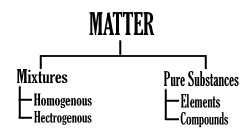
Mixtures ‐ are the combination of two or more atoms which are combined in a ratio If the ratio is uniform throughout the mixture, then it is a homogeneous mixture If the ratio is not uniform throughout the mixture, then it is a heterogeneous mixture
Pure Substances ‐ consist of either one type of atoms or the combination of them in a fixed ratio. If only one type of atom is present in it, then it is called an element If more than one type is present, it is called a compound Molecules are are the combination of two or more atoms Physical Properties can be measured or identified without changing the composition of the substance. Chemical Properties occur due to a chemical change on the constituents.
Mass: It is the amount of matter present in a substance. It is independent of location. Weight: It is the amount of force excerted on an object by gravity. It changes according to the change in gravitational force.
Volume: It is the amount of space occupied by an object.
LAWS OF CHEMICAL COMBINATION
Law of Conservation of Mass (Antonie Lavoisier) ‐ Mass can neither be created nor be destroyed.
Law of Definite Proportions (Joseph Proust) ‐ A given compound always contains the same elements in the same proportion by mass.
Law of Multiple Proportions (John Dalton) ‐ When two or more elements combine to form more thanone compound, a fixed mass of one compound to a different mass of other always brings simple whole number ratios.
Gay Lussac's Law ‐ When gases combine or are produced in a chemical reaction, they do so in a simple ratio provided all gases are in the same temperature and pressure.
Avogadro's Law ‐ Equal Volumes of gases at the same temperature and pressure should contain equal number of molecules.
Scientific NotationIn which any number can be represented in the form N × 10n(Where n is an exponenthaving positive or negative values and N can vary between 1 to 10).e.g. We can write 232.508 as 2.32508 x10²in scientific notation. Similarly, 0.00016can be written as 1.6 x 10⁻⁴
Precision refers to the closeness of various measurements for the same quantity.Accuracy is the agreement of a particular value to the true value of the result
Significant FiguresThe reliability of a measurement is indicated by the number of digits used torepresent it. To express it more accuratelywe express it with digits that are knownwith certainty. These are called as Significant figures. They contain all thecertaindigits plus one doubtful digit in a number.


Please click the link below to download pdf file for CBSE Class 11 Chemistry Revision Basic Concepts.
Free study material for Chemistry
All topics Concepts and Summary for Class 11 Chemistry
Download Chapter Summary: Class 11 Chemistry All topics
Explore reliable chapter overviews for All topics tailored for Class 11 learners. Use these structured points to grasp difficult themes and ensure solid preparation for upcoming assessments.
Concept Clarification for All topics
Each chapter summary is structured around standard CBSE textbooks, allowing students to check their understanding and clarify complex ideas early in their revision.
Additional Study Resources for Class 11 Chemistry
Wrap up your chapter revision by testing your knowledge against standard question formats. Everything on our platform is provided free of charge.
FAQs
You can download the teacher prepared revision notes for CBSE Class 11 Chemistry Revision Notes Set 02 from StudiesToday.com. These notes are designed as per 2026-27 academic session to help Class 11 students get the best study material for Chemistry.
Yes, our CBSE Class 11 Chemistry Revision Notes Set 02 include 50% competency-based questions with focus on core logic, keyword definitions, and the practical application of Chemistry principles which is important for getting more marks in 2026 CBSE exams.
Yes, our CBSE Class 11 Chemistry Revision Notes Set 02 provide a detailed, topic wise breakdown of the chapter. Fundamental definitions, complex numerical formulas and all topics of CBSE syllabus in Class 11 is covered.
These notes for Chemistry are organized into bullet points and easy-to-read charts. By using CBSE Class 11 Chemistry Revision Notes Set 02, Class 11 students fast revise formulas, key definitions before the exams.
No, all study resources on StudiesToday, including CBSE Class 11 Chemistry Revision Notes Set 02, are available for immediate free download. Class 11 Chemistry study material is available in PDF and can be downloaded on mobile.