NEET Botany Cell Cycle Chapter Notes

Download the latest NEET Botany Cell Cycle Chapter Notes in PDF format. These Full Course Cell Cycle revision notes are carefully designed by expert teachers to align with the 2025-26 syllabus. These notes are great daily learning and last minute exam preparation and they simplify complex topics and highlight important definitions for Full Course students.

Chapter-wise Revision Notes for Full Course Cell Cycle Cell Cycle

To secure a higher rank, students should use these Full Course Cell Cycle Cell Cycle notes for quick learning of important concepts. These exam-oriented summaries focus on difficult topics and high-weightage sections helpful in school tests and final examinations.

Cell Cycle Revision Notes for Full Course Cell Cycle


Learning Objectives:-

The learner will be able to,

• Outline the cell cycle and different stages in cell division.

• Recognise the importance of mitosis in the production of genetically identical cells.

• Have an insight on the significant of mitosis and meiosis.

• Understand how a single cell divides to a whole organism.

• Familiarize the behaviour of chromosomes in plants and animal cells during meiosis.

• Know about crossing over and random assortment of homologous chromosomes and its importance.
Chapter Outline
 
7.1 History of cell division
7.2 Cell cycle
7.3 Cell Division
7.4 Difference between Mitosis and Meiosis
7.5 Mitogens
 
One of the most important features of the living cells is their power to grow and divide. New cells are formed by the division of pre-existing cells. Cells increase in number by cell division. The parent cell divides and passes on genetic material to the daughter cells.
 
NEET Botany Cell Cycle Chapter Notes
 
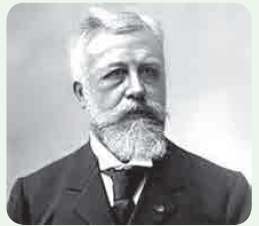
Edouard Van Beneden, a Belgian cytologist, embryologist and marine biologist. He was Professor of Zoology at the University of Liège. He contributed to cytogenetics by his works on the roundworm Ascaris. In his work he discovered how chromosomes organized meiosis (the production of gametes).
 
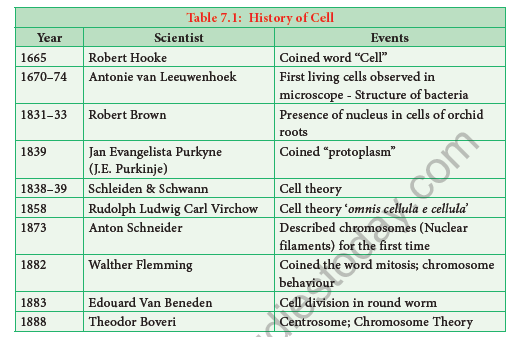
7.1 History of a Cell
 NEET-Botany-Cell-Cycle-Chapter-Notes 1
 
7.1.1 The Role of the Nucleus
 
As studied earlier, the nucleus is the organising centre of the cell. The information in the nucleus is contained within structures called chromosomes.
 
These uniquely:
 
• Control activities of the cell.
• Genetic information copied from cell to cell while the cell divides.
• Hereditary characters are passed on to new individuals when gametic cells fuse together in sexual reproduction.
 
7.1.2 Chromosomes
 
At the time when a nucleus divides, the chromosomes become compact and multicoiled structure. Only in this condensed state do the chromosomes become clearly visible in cells. All other times, the chromosomes are very long,thin, uncoiled threads. In this condition they give the stained nucleus the granular appearance. The granules are called chromatin.
 
The four important features of the chromosome are:
 
• The shape of the chromosome is specific: The long, thin, lengthy structured chromosome contains a short, constricted region called centromere. A centromere may occur anywhere along the chromosome, but it is always in the same position on any given chromosome.
 
• The number of chromosomes per species is fixed: for example the mouse has 40 chromosomes, the onion has 16 and humans have 46.
 
• Chromosomes occur in pairs: The chromosomes of a cell occur in pairs, called homologous pairs. One of each pair come originally from each parent. Example, human has 46
chromosomes, 23 coming originally from each parent in the process of sexual reproduction.
 
• Chromosomes are copied: Between nuclear divisions, whilst the chromosomes are uncoiled and cannot be seen, each chromosome is copied.The two identical structures formed are called chromatids.
 
7.1.3 Nuclear Divisions
 
There are two types of nuclear division,as mitosis and meiosis. In mitosis, the daughter cells formed will have the same number of chromosomes as the parent cell, typically diploid (2n) state. Mitosis is the nuclear division that occurs when cells grow or when cells need to be replaced and when organism reproduces asexually. In meiosis, the daughter cells contain half the number of chromosomes of the parent cell and is known as haploid state (n).
 
Whichever division takes place, it is normally followed by division of the cytoplasm to form separate cells, called as cytokinesis.
 
7.2 Cell Cycle
 
Definition: A series of events leading to the formation of new cell is known as cell cycle. The phenomenonal changes leading to formation of new population take place in the cell cycle. It was discovered by Prevost and Dumans (1824). The series of events include several phases.
 
7.2.1 Duration of Cell Cycle
 
Different kinds of cells have varied duration for cell cycle phases. Eukaryotic cell divides every 24 hours. The cell cycle is divided into mitosis and interphase. In cell cycle 95% is spent for interphase whereas the mitosis and cytokinesis last
only for an hour.
NEET-Botany-Cell-Cycle-Chapter-Notes 2
 
 
The different phases of cell cycle are as follows (Figure 7.1).
 
7.2.2 Interphase
 
Longest part of the cell cycle, but it is of extremely variable length. At first glance the nucleus appears to be resting but this is not the case at all. The chromosomes previously visible as thread like structure, have dispersed. Now they are actively involved in protein synthesis, at least for most of the interphase.
NEET-Botany-Cell-Cycle-Chapter-Notes 3
 
Reproduction in Flowering Plants
NEET Botany Reproductive Morphology Chapter Notes

NEET Full Course Cell Cycle Cell Cycle Notes

Students can use these Revision Notes for Cell Cycle to quickly understand all the main concepts. This study material has been prepared as per the latest NEET syllabus for Full Course. Our teachers always suggest that Full Course students read these notes regularly as they are focused on the most important topics that usually appear in school tests and final exams.

NCERT Based Cell Cycle Summary

Our expert team has used the official NCERT book for Full Course Cell Cycle to design these notes. These are the notes that definitely you for your current academic year. After reading the chapter summary, you should also refer to our NCERT solutions for Full Course. Always compare your understanding with our teacher prepared answers as they will help you build a very strong base in Cell Cycle.

Cell Cycle Complete Revision and Practice

To prepare very well for y our exams, students should also solve the MCQ questions and practice worksheets provided on this page. These extra solved questions will help you to check if you have understood all the concepts of Cell Cycle. All study material on studiestoday.com is free and updated according to the latest Cell Cycle exam patterns. Using these revision notes daily will help you feel more confident and get better marks in your exams.

Where can I download latest NEET Full Course Cell Cycle Cell Cycle notes

You can download notes for Full Course Cell Cycle Cell Cycle for latest academic session from StudiesToday.com

Are the revision notes available for Cell Cycle Full Course Cell Cycle for the latest NEET academic session

Yes, the notes issued for Full Course Cell Cycle Cell Cycle have been made available here for latest NEET session

Is there any charge for the Full Course Cell Cycle Cell Cycle notes

There is no charge for the notes for NEET Full Course Cell Cycle Cell Cycle, you can download everything free of charge

Which is the best online platform to find notes for Cell Cycle Full Course Cell Cycle

www.studiestoday.com is the best website from which you can download latest notes for Cell Cycle Cell Cycle Full Course

Where can I find topic-wise notes for Full Course Cell Cycle Cell Cycle

Come to StudiesToday.com to get best quality topic wise notes for Full Course Cell Cycle Cell Cycle