

Official Class 10 Science Worksheets: Chapter 05 Life Processes
Access printable practice worksheets for Chapter 05 Life Processes designed to align with the 2026-27 academic syllabus for Class 10 Science. These structured exercises help students evaluate their conceptual understanding and improve exam readiness.
Chapter-wise Practice Material: Chapter 05 Life Processes
Access the complete worksheet PDF for Chapter 05 Life Processes below. Regular practice with these targeted questions builds familiarity with standard exam patterns and helps secure higher marks in final Science evaluations.
Question. The diagram given below represents the liver, kidney and some associated blood vessels. Identify the vessel from the labelled parts A-D in which the blood will contain the lowest concentration of urea.
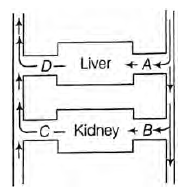
(a) A
(b) B
(c) C
(d) D
Answer : C
Question. In amoeba the digestion is intracellular because:
(a) Amoeba is unicellular
(b) Amoeba is multicellular
(c) Amoeba is found in a pond
(d) Amoeba is a microscopic animal
Answer : A
Question. Proteins →A Peptones
Identify the enzyme A involved in the above reaction.
(a) Salivary amylase
(b) Bile juice
(c) Pepsin
(d) Lipase
Answer : C
Question. The movement of water and dissolved minerals from the roots of the leaves is best explained by:
(a) Cohesion-tension theory
(b) Translocation
(c) Tensile strength
(d) Pressure-flow hypothesis
Answer : A
Question. Digestion of food in human starts from:
(a) Duodenum
(b) Small intestine
(c) Mouth
(d) Large intestine
Answer : C
Question. Which of the following is used in manufacturing of varnishes, glazing agents, etc?
(a) Tannin
(b) Resins
(c) Essential oil
(d) Rubber
Answer : B
Question. The process of transpiration in plants helps in:
(a) Opening of stomata
(b) Absorption of CO2 from atmosphere
(c) Upward conduction of water and minerals
(d) Absorption of O2 from atmosphere
Answer : C
Question. Flame cells are the excretory structures in
(a) arthropods
(b) platyhelminths
(c) anneelids
(d) crustaceans
Answer : B
Question. Choose the incorrect pair.
(a) Ultrafiltration-Glomerulus
(b) Concentration of urine-Collecting duct
(c) Transport of urine-Ureter
(d) Storage of urine-Urinary bladder
Answer : B
Question. An experiment is set up as shown. Flasks 1 and 2 contain lime water. Air is pumped through the flasks.
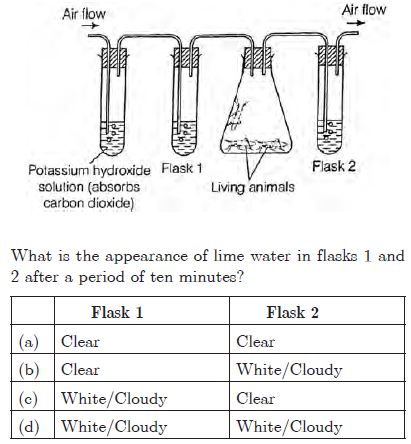
Answer : B
Question. Digestion of starch starts from:
(a) Stomach
(b) Intestine
(c) Oesophagus
(d) Mouth
Answer : D
Question. Which of the following is not a component of plasma?
(a) water
(b) globulins
(c) fibrinogen
(d) platelets
Answer : D
Question. What is the term used when vessels open and let more blood through?
(a) Vasoconstriction
(b) Vasodilatation
(c) Increased permeability
(d) None of these
Answer : B
Question. The diagram given along side shows the human excretory system. Identify the function of part labelled as X .
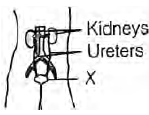
(a) To excrete urea
(b) To produce urea
(c) To produce urine
(d) To store urine
Answer : D
Question. In the figure given along side, the structures associated with human kidneys are marked (X,Y and Z ). The relative concentrations of urea in these structures is
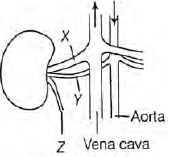
(a) X is sometimes higher than Y
(b) Y is always higher than Z
(c) Y is always lower than Z
(d) Z is sometimes lower than X
Answer : C
Question. Dialysing unit (artificial kidney) contains a fluid which is almost same as plasma except that is has
(a) high glucose
(b) high urea
(c) no urea
(d) high uric acid
Answer : C
Question. Observe the figure given below which represents the control of water concentration in the blood.
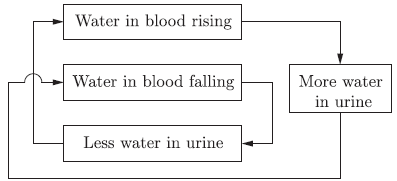
This is negative feedback system because
(a) It decreases the amount of water in the blood
(b) It increases any change occurring in the amount of water in the blood
(c) It reverses any change occurring in the amount of water in the blood
(d) It increases the amount of water in the blood
Answer : C
Question. Most often during a kidney disorder, the colour of urine changes from yellow to others. A patient is secreting dark colured urine which turns to blue or black later. This is due to the presence of which of the following?
(a) Homogentisic acid
(b) Methaemoglobin
(c) Coproporphyrin
(d) Both (a) and (b)
Answer : A
Question. Veins can be differentiated from arteries because the veins:
(a) have valves
(b) have hard walls
(c) have pure blood in them
(d) have thick walls
Answer : A
Question. The correct order of air reaching from atmosphere to the lungs is through:
(a) external nares, larynx, trachea and air sac
(b) laryx, trachea, air sac and external nares
(c) trachea, air sac, external nares and larynx
(d) air sac, trachea, larynx and external nares
Answer : A
Question. The breakdown of pyruvate to give carbon-di-oxide, water and energy takes place in:
(a) cytoplasm
(b) mitochondria
(c) chloroplast
(d) nucleus
Answer : B
Question. Which one indicates hypertension or high Blood Pressure (BP)?
(a) 120/80
(b) 110/70
(c) 130/80
(d) 140/90
Answer : B
Question. Main excretory organ of humans is
(a) kidney
(b) lungs
(c) skin
(d) liver
Answer : A
Question. Root cap has no role in water absorption because:
(a) It has no direct connection with the vascular system
(b) It has no cells containing chloroplasts
(c) It has no root hairs
(d) It has loosely arranged cells.
Answer : C
Question. Example(s) of liquid waste product in plants is/are
(a) rubber
(b) clove oil
(c) gum
(d) All of these
Answer : D
Question. Figure given below is representing the dialysis machine for removing nitrogenous wastes in patient with a kidney failure.
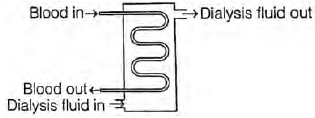
which substances out of the following in the dialysis fluid should be at a lower concentration than in the blood of patient?
(a) Glucose and urea
(b) Glucose and amino acids
(c) Salts and urea
(d) Glucose and salts
Answer : C
Question. Which substances will be present in the glomerular filtrate from the kidneys of a mammal?
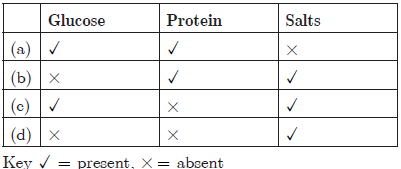
Answer : C
Question. A healthy woman consumes a litre of water at once.
1. How will be the internal environment of her body affected by this?
2. A corrective measure to bring the arising condition to normal state is.
Select the correct option for (i) and (ii) from those given below:

Answer : B
FILL IN THE BLANK :
Question. Largest digestive gland in the human body is .......... .
Answer : liver
Question. Glomerulus occurs in .......... capsule.
Answer : Bowman’s
Question. Man is .......... in nutrition.
Answer : heterotrophic
Question. .......... secretes bile and cholesterol.
Answer : liver
Question. Two .......... are present on both sides of the stomata.
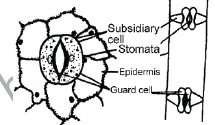
Answer : gard cells
Question. .......... (of bile juice) help in emulsification of fats.
Answer : Bile salts
Question. .......... valve separates the left atrium from the left ventricle.
Answer : tricuspid
Question. Pressure in the arteries during ventricular relaxation is called .......... pressure.
Answer : diastolic
Question. A plant pigment known as .......... is involved in the phenomenon of photoperiodism.
Answer : phytochrome
Question. The structural and functional units of lungs is .......... .
Answer : alveoli
Question. Energy rich compound generated during photosynthesis is .......... .
Answer : ATP
Question. The major function of the .......... blood cells is to transport oxygen.
Answer : red
Question. .......... are regarded as complete photosynthetic units of plants.
Answer : Chloroplasts
Question. .......... movements occur along the gut.
Answer : Peristaltic
Question. Carbonic anchydrase regulates the formation of ..........
Answer : bicarbonates
Question. ......... are the lymphatic capillaries arising from the small intestine.
Answer : lacteals
Question. Ninety percent of the water lost by the plants during transpiration is through the .......... of the leaf.
Answer : stomata
Question. .......... are fat soluble vitamins.
Answer : Vitamin A, D, E and K
Question. .......... node is present near the opening of superior and inferior vena cavae.
Answer : Sinu-auricular
Question. In ......... , waste is removed by diffusion.
Answer : kidney
Question. The thin double-walled sac enclosing the heart is called ..........
Answer : pericardium
Question. Rings of .......... present in trachea, bronchi and bronchioles prevent their collapse when air is not passing through them.
Answer : cartilage
Question. .......... involves the intake of complex material prepared by other organisms.
Answer : Heterotrophic
Question. Blood circulation in humans is called ......... circulation.
Answer : double
Question. The .......... prevents the entry of food into the respiratory tract.
Answer : epiglottis
Question. Principal waste product of metabolism in humans is .........
Answer : Water
Question. .......... are the solid bodies in fruits in which waste is stored.
Answer : raphides
Question. Contraction of heart is known as ..........
Answer : systole
Question. Diffusion is insufficient to meet .......... requirement of multicellular organisms like humans.
Answer : oxygen
Question. .......... veins pour their .......... blood into left atrium.
Answer : Pulmonary, oxygenated
Question. Starch changes blue in .......... solution.
Answer : iodine
Question. Synthesis of ATP using light energy in photosynthesis is .......... .
Answer : photophosphorylation
Question. The functional unit of the mammalian kidney is the .......... .
Answer : nephron
Question. In human, the right lung is .......... lobed.
Answer : 3
Question. Second heart sound heard as .......... is due to closure of .......... valves at the beginning of ventricular diastole.
Answer : Dup/Dubb, semilunar
Question. The semiliquid mixture of partially digested food found in the stomach is called .......... .
Answer : chyme
Question. Kidney eliminate the excretory waste materials as their aqueous solution, called .......... .
Answer : urine
Very Short Answer
Short Answer

Long Answer
ORAL QUESTIONS
1. Do plants also need oxygen?
2. How does food passes through alimentary canal?
3. What regulate the exit of food from the stomach into small intestine?
4. In which part of the alimentary canal food is completely digested absorbed?
5. In which cell organelle breakdown of pyruvate takes place using oxygen?
6. Which structures stop backward flow of blood in atria and ventricles?
7. The filtered urine is collected in which part of nephron?
8. Which part of the plant excretes some waste substances into the soil?
9. Name the process used to remove urea from the blood.
10. The process by which evaporation of water from the plants mainly through the stomata.
QUIZ
1. Digestion of starch in humans takes from which organ?
2. Absorption of energy takes place in sunlight by the pigment.
3. Is chloroplast is non – lining structure?
4. What is the function of amylase?
5. Name the organ responsible for respiration in fish.
6. Which is more harmful urea or ammonia?
7. Which contains less nitrogenous wastes, the renal vein or renal artery?
PUZZLES
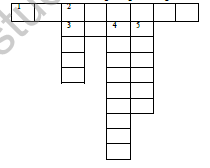
1. => Across
2. Aerial part which eliminates waste from the plant body
4. Unicellular plant that carryout fermentation.
↓ Down
1. Transports oxygen in the body.
3. Carry impure blood.
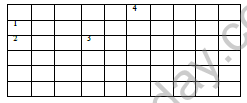
2. => Across
1. Help in respiration in water.
4. Removed through urine.
↓ Down
2. Help to breath in air
3. The process by nitrogenous waste is removed.
4. Organism that takes in food with the help of pseudopodia.
Label The Diagram Of Respiratory System
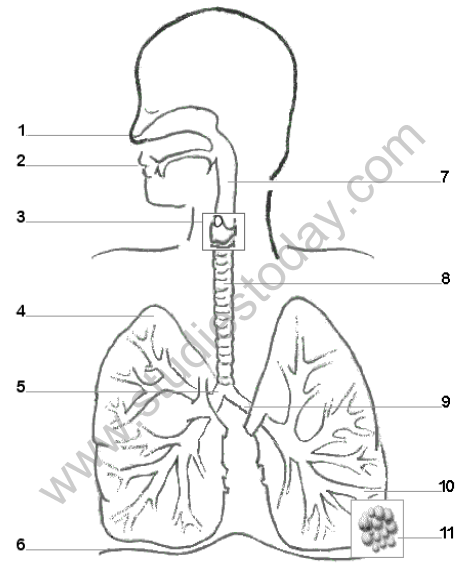
Cross word puzzle- Circulatory system
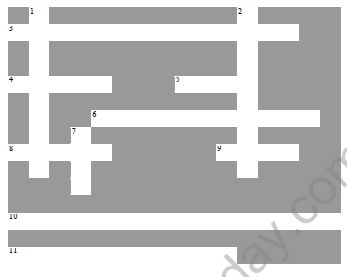
Clues for solving the cross word puzzle
ACROSS DOWN
3. The only vein that carries oxygenated blood to the heart 1. The number of heart beats per minute.
4. The organ which beats continously to act as a pump for 2. The two lower chambers of the heart.
the transport of blood.
5. The number of chambers in the human heart. 7. The heart is roughly the size of your ______.
6. A doctor uses this instrument to amplify the sound of the heart.
8. The two upper chambers of the heart.
9. The heart is located on this side of the chest cavity.
10. The only artery that carries deoxygenated blood from the heart.
11. They form the connection between the arteries and veins
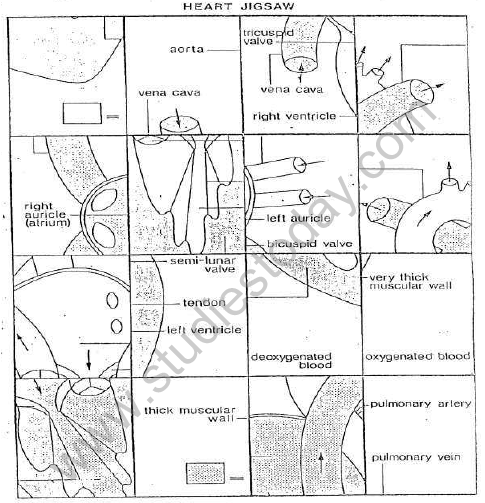
To understand the structure of heart the students can the following jig-saw puzzle.
Photosynthesis – Crossword puzzle
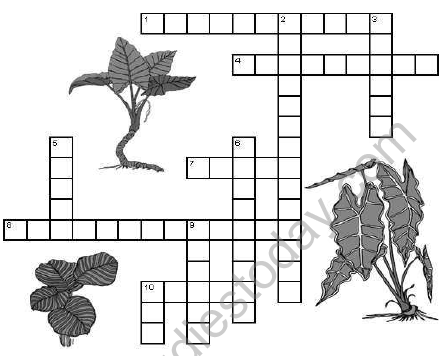
Across Down
1 A plant pigment that absorbs sunlight. (11) 2 The process by which plants and some bacteria
4 The links between the energy that carnivores use the energy from sunlight to produce sugar.(14)
get from eating to the energy captured by photosynthesis. (4,5) 3 Part of the plant where photosynthesis generally occurs. (6)
7 Chlorophyll absorbs every color of sunlight except this. (5) 5 A compound needed for photosynthesis. (5)
8 A compound needed for photosynthesis. (6,7) 6 An animal that eats plants. (9)
10 The product of photosynthesis. (5) 9 A by-product of photosynthesis. (6)
use the energy from sunlight to produce sugar. 10 Number of molecules of oxygen produced
along with one molecule of sugar. (3)
SEMINAR
1. Balanced diet from different regions of India.
2. Reason for kidney failure and remedy for it.
3. Modes of nutrition in different types of organism.
PROJECT
♦ Prepare project on glands, their location (pictures) functions and various abnormalities of digestive system.
♦ Food pyramida.
a. Cut a large triangle using chart paper and divide it into sections that represent the nutrients required by our body.
b. Ask students to bring pictures of foods from news papers, magazines, etc.
c. Ask the students to paste the pictures in the appropriate section of the Pyramid.
♦ Students can be asked to work on the project on various respiratory diseases.
♦ Students can identify the heart sounds using a Stethoscope.
♦ Collection of data on haemoglobin levels in men, women and children.
♦ Collection of data on blood pressure. (Instrument used - normal range of blood pressure, causes of low or high blood pressure, prevention & control of high blood pressure.)
Free study material for Science
Chapter 05 Life Processes Practice Sheet and Solutions for Class 10 Science
Chapter 05 Life Processes Printable Worksheet for Class 10 Science
Access structured practice worksheets for Chapter 05 Life Processes designed in alignment with the latest CBSE curriculum for Class 10 Science. These printable problem sets help students build accuracy and prepare effectively for school tests.
How to Use These Practice Sheets
Each worksheet is structured around standard CBSE textbooks, allowing students to check their working steps and correct mistakes early in their revision.
Enhance Speed with Online Practice
Wrap up your chapter revision by testing your knowledge against standard question formats. Everything on our platform is provided free of charge.
FAQs
You can download the teacher-verified PDF for CBSE Class 10 Biology Life Processes Worksheet Set 05 from StudiesToday.com. These practice sheets for Class 10 Science are designed as per the latest CBSE academic session.
Yes, our CBSE Class 10 Biology Life Processes Worksheet Set 05 includes a variety of questions like Case-based studies, Assertion-Reasoning, and MCQs as per the 50% competency-based weightage in the latest curriculum for Class 10.
Yes, we have provided detailed solutions for CBSE Class 10 Biology Life Processes Worksheet Set 05 to help Class 10 and follow the official CBSE marking scheme.
Daily practice with these Science worksheets helps in identifying understanding gaps. It also improves question solving speed and ensures that Class 10 students get more marks in CBSE exams.
All our Class 10 Science practice test papers and worksheets are available for free download in mobile-friendly PDF format. You can access CBSE Class 10 Biology Life Processes Worksheet Set 05 without any registration.