

Access the latest CBSE Class 10 Biology Life Processes Respiration In Animals Worksheet. We have provided free printable Class 10 Science worksheets in PDF format, specifically designed for Chapter 5 Life Processes. These practice sets are prepared by expert teachers following the 2025-26 syllabus and exam patterns issued by CBSE, NCERT, and KVS.
Chapter 5 Life Processes Science Practice Worksheet for Class 10
Students should use these Class 10 Science chapter-wise worksheets for daily practice to improve their conceptual understanding. This detailed test papers include important questions and solutions for Chapter 5 Life Processes, to help you prepare for school tests and final examination. Regular practice of these Class 10 Science questions will help improve your problem-solving speed and exam accuracy for the 2026 session.
Download Class 10 Science Chapter 5 Life Processes Worksheet PDF
Question. Whales respire through :
(A) Lungs
(B) Gills
(C) Moist skin
(D) Buccal cavity
Answer : A
Question. Lining of trachea is made of :
(A) Simple squamous epithelium
(B) Simple cuboidal epithelium
(C) Pseudostratified epithelium
(D) Stratified cuboidal epithelium
Answer : C
Question. Fruits kept in refrigerator maintain their flavour and taste for longer period due to :
(A) Non - availability of O2
(B) Presence of excess CO2
(C) Slowing down of respiration
(D) Presence of excess moisture
Answer : B
Question. No respiratory pigment is found in :
(A) Cockroach
(B) Earthworm
(C) Rabbit
(D) Frog
Answer : A
Question. The shortest part of respiratory system is
(A) Trachea
(B) pharynx
(C) Larynx
(D) Bronchi.
Answer : B
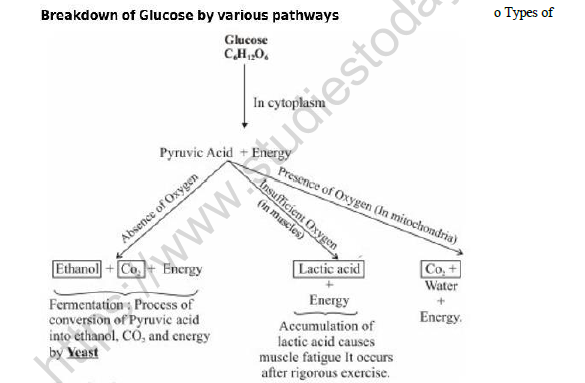
Question. The pyruvic acid formed during glycolysis is oxidised to CO2 and H2O in a cycle called
(A) Calvin cycle
(B) nitrogen cycle
(C) Hill cycle
(D) Krebs' cycle
Answer : D
Question. Cardiac notch is found on :
(A) Right lung
(B) Left lung
(C) Diaphragm
(D) None of the above
Answer : B
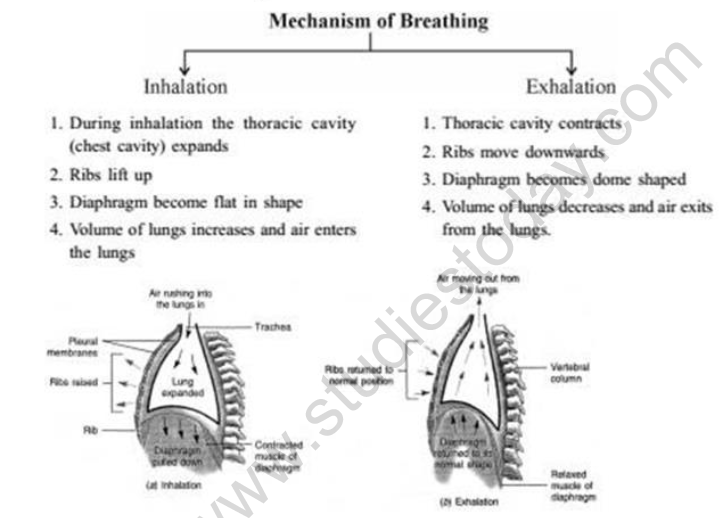
Question. During inspiration, air passes into lungs due to :
(A) Increase in volume of thoracic cavity and fall in lung pressure
(B) Fall in pressure inside the lungs
(C) Increased volume of thoracic cavity
(D) Muscular expansion of lungs
Answer : A
Question. Which reaction take place in Mitochondria ?
(A) Oxidative phosphorylation
(B) Photolysis
(C) Photophosphorylation
(D) Starch synthesis
Answer : A
Question. Kreb’s Cycle takes place in :
(A) Cytoplasm
(B) Mitochondria
(C) Nucleus
(D) Ribosome
Answer : B
Question. R.Q. for glucose is
(A) 1
(B) 0.5
(C) 2
(D) 0.05
Answer : A
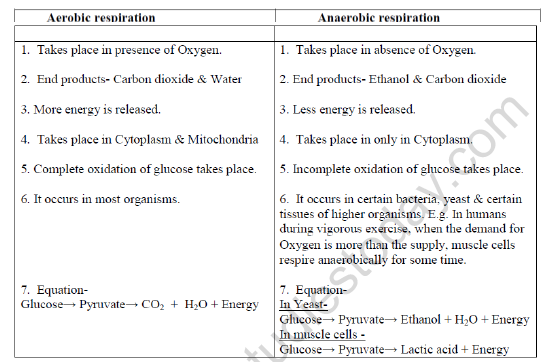
Question. Anaerobic respiration in human body occurs inside :
(A) Liver
(B) White muscles
(C) Red muscles
(D) Kidney
Answer : D
Question. Rings of cartilage are present in the following :
(A) Oesophagus
(B) Trachea
(C) Throat
(D) Duodenum
Answer : B
Question. Which scientist discovered “Tricarboxylic acid” cycle ?
(A) Krab
(B) Watson and Crick
(C) Sanger
(D) Edison
Answer : A
Question. The lungs of early bony fishes evolved into swim bladders. This change had the primary effect of :
(A) Improving feeding efficiency
(B) Supplementing gill respiration
(C) Aiding reproduction
(D) Providing buoyancy
Answer : D
Question. Higher concentration of CO2 causes :
(A) Low transport of O2 in blood
(B) Low diffusion of O2 in blood
(C) Quick diffusion of O2
(D) All of these
Answer : C
Question. EMP is _______.
(A) Glycolysis
(B) Kreb’s cycle
(C) ETS
(D) Fermentation
Answer : A
Question. The end product of glycolysis is :
(A) Phosphoric acid
(B) Malic acid
(C) Pyruvic acid
(D) Fumaric acid
Answer : C
Question. The sequence of process related with respiration is
(A) Kreb’s cycle Glycolysis Electrontransport system
(B) Glycolysis Kreb’s cycle Electrontransport system
(C) Electrontransport system Kreb’s cycle Glycolysis
(D) None of above
Answer : B
Question. During lack of oxygen in tissues of our body, the pyruvate is converted into lactic acid in :
(A) Mitochondria
(B) Nucleus
(C) Cytoplasm
(D) Ribosome
Answer : C
Question. Where is the Gaseous exchange takes place during respiration in human being ?
(A) Alveoli
(B) Pharynx
(C) Larophaynx
(D) Trachea
Answer : A
Please click on below link to download CBSE Class 10 Biology Life ProcessesRespiration In Animals Worksheet
Free study material for Science
Chapter 5 Life Processes CBSE Class 10 Science Worksheet
Students can use the Chapter 5 Life Processes practice sheet provided above to prepare for their upcoming school tests. This solved questions and answers follow the latest CBSE syllabus for Class 10 Science. You can easily download the PDF format and solve these questions every day to improve your marks. Our expert teachers have made these from the most important topics that are always asked in your exams to help you get more marks in exams.
NCERT Based Questions and Solutions for Chapter 5 Life Processes
Our expert team has used the official NCERT book for Class 10 Science to create this practice material for students. After solving the questions our teachers have also suggested to study the NCERT solutions which will help you to understand the best way to solve problems in Science. You can get all this study material for free on studiestoday.com.
Extra Practice for Science
To get the best results in Class 10, students should try the Science MCQ Test for this chapter. We have also provided printable assignments for Class 10 Science on our website. Regular practice will help you feel more confident and get higher marks in CBSE examinations.
FAQs
You can download the teacher-verified PDF for CBSE Class 10 Biology Life Processes Respiration In Animals Worksheet from StudiesToday.com. These practice sheets for Class 10 Science are designed as per the latest CBSE academic session.
Yes, our CBSE Class 10 Biology Life Processes Respiration In Animals Worksheet includes a variety of questions like Case-based studies, Assertion-Reasoning, and MCQs as per the 50% competency-based weightage in the latest curriculum for Class 10.
Yes, we have provided detailed solutions for CBSE Class 10 Biology Life Processes Respiration In Animals Worksheet to help Class 10 and follow the official CBSE marking scheme.
Daily practice with these Science worksheets helps in identifying understanding gaps. It also improves question solving speed and ensures that Class 10 students get more marks in CBSE exams.
All our Class 10 Science practice test papers and worksheets are available for free download in mobile-friendly PDF format. You can access CBSE Class 10 Biology Life Processes Respiration In Animals Worksheet without any registration.