

Biology Objective Questions and Answers: Animal Tissues
Access targeted multiple-choice questions for Animal Tissues designed to align with the latest NEET academic syllabus for NEET Biology. These objective practice sets help students evaluate their conceptual understanding and improve exam readiness.
Download Animal Tissues MCQs with Answers
View or download the dedicated Animal Tissues MCQ resource below. Practicing these 50 objective questions regularly builds familiarity with standard exam patterns and helps secure higher marks in final Biology evaluations.
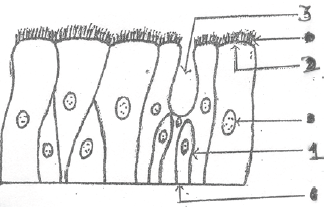
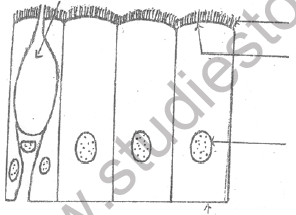
Tissue is the group of cells having similar structure & function. Animals contain 4 basic types of tissues which are :- epithelial tissue, connective tissue, muscular tissue and nervous tissue. Epithelial tissue can be derived from any of the three germinal layers. Epithelial tissues are of different types such as : Squamous, cuboidal, columnar, ciliated, pseudo-stratified, stratified, and transitional.
Functions of epithelial tissue : Protection, secretion & absroption. There are 3 types of connective tissues which are differentiated on the basis of extracellular material. Secreted by cells themselves.
(a) Connective tissue proper- (soft jelly like matrix with fibres) - are of five types : areolar, adipose, white fibrous, tendon and legament.
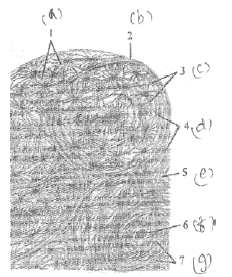
(b) Skeletal tissue (Supportive connective tissue) includes cartilage and bones which form the endoskeleton of the vertebrate body. The Cartilages are classified in to four group : Hyaline, white fibrous, yellow elastic fibro cartilage and calicified cartilage.
(c) Blood (fluid connective tissue) is a fibre-free fluid extra cellular matrix.
It is a mobile connective tissue (Vascular/Fluid tissue). It is composed of plasma, blood cells and blood platlets. It is a opaque trubid fluid.
Blood cells are erythrocytes and Leucocytes. There are five types of leucocytes : neutrophils, eosinophils, basophils, monocytes and lymphocytes.
WBCs are colourless, nucleated found in blood (and lymph). Which are devoid of haemoglobin.
They are capable of coming out of blood capillaries through the process of diapendesis. (i. e. Greek Word - diapendesis - leaping through)
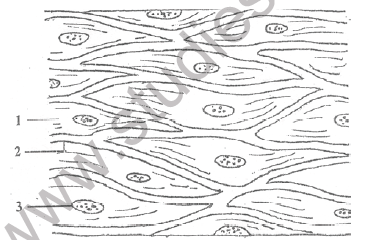
(d) Mascular tissue (mostly mesodermal origin) is made up of elongated and contractive cells :
called muscles cells or myocytes.
There are three types of Muscular tissue : Skeletal muscle (striated), non striated and cardiac,
. Myoglobin - Muscle haemoglobin
. Myoblasts - Muscle forming cells.
. Myology : study of all aspects of muscles & accessory structures .
(e) The nervous tissue it is composed of two types of cells - (a) neurons : (Nerve cells) are structural & functional unit, they transmit nerve impulses, (b) neuroglia. Neuron has one or more processes extending from it . (i) Axon - carries impulses away from the cell body.
(ii) dendrites (G.K. dendron tree) take nerve impulse to the cell body.
On the basis of number of processes, neurons are : unipolar, bipolar & multipolar.
The nerve fibres may be surrounded by two concentric sheath. The inner is known as medullary or myelin sheath.
Myelin is secreted by schwann cells in peripheral nerve fibes and oligodendrocytes in central Nervons system.
Schwann cells form the outer sheath called neurilema (GK. neuron- nerve, lemna-skin).
There is a physical gap between the nerve ending of axon and dendrites called synapse.
(B) Stratified epithelium
(D) Columnar epithelium
(B) Squamous epithelium
(D) Ciliated epithelium
(B) Digestive gland
(D) Cartilage
(B) Pseudo - stratified epithelium
(D) Columnar epithelium
(B) Pseudo-stratified epithelium
(D) Transitional epithelium
(B) Ciliated epithelium, columnar epithelium
(D) Cuboidal epithelium, ciliated epithelium
(B) Helps to remove mucus from trachea
(D) Protect inner tissue cells
(B) Malpighian tubule
(D) Malpighian body
(B) Squamous Stratified epithelium
(D) Cuboidal Stratified epithelium
(B) Stratified Ciliated Keratinised
(D) Stratified Columnar Keratinised
(B) White fibres
(C) Yellow fibre
(D) White fibrous
(B) Mast cells
(C) Histocytes
(D) All above
(B) Tendon
(C) Cartilage
(D) Ligament
(B) White-fibro cartilage
(D) Areolar tissue
(B) Elastin
(C) (A) and (B)
(D) (A) or (B)
(B) White fibrous tissue
(D) Areolar tissue
(B) White fibrous tissue
(D) Areolar tissue
(B) While elastic cartilage
(D) (B) and (C) both
(B) Cartilage
(D) (B) and (C) both
(B) Adipose tissue
(D) Tendon
(B) White-fibro cartilage
(D) White fibrous tissue
(B) Adipose cell
(C) Phagocytic cell
(D) Mast cells
(B) Cellular Cartilage
(D) Tendon
(B) Phagocytic cell
(C) Fibroblasts
(D) Mast cell
(B) Hyaline cartilage
(D) Yellow elastic cartilage
(B) Calcified cartilage
(D) White fibrous tissue
(B) Perichondrium
(C) Lacunae
(D) Chondroblasts
(B) Ear pinna
(D) all above
(B) Ossein
(C) Elastin
(D) Actin
(B) is yellow in colour
(D) all above
(B) Lymphocytes
(C) Basophils
(D) Erythrocytes
(B) carbon dioxide
(C) Lysine
(D) Immunoglobulin
(B) 7.5± 3.5 x 10³
(D) 39,00,000 to 55,00,000
(B) Leucocytes
(C) Bloood platlets
(D) Above all
(B) Neutrophils
(C) Basophils
(D) Monocytes
(B) A - bands
(C) Z - bands
(D) I - bands
(B) Voluntary muscle tissue
(D) Skeletal muscle tissue
(B) H - bands
(C) Z - bands
(D) A - bands
(B) Neurilemma
(C) Myelin Sheath
(D) (A) and (C) both
(B) Multipolar neuron
(C) Bipolar neuron
(D) All the above
(B) Constritions at regular intervals called nodes of ranvier
(D) Synapes
Question. A : Squamous epithelium protect the under lying tissue.
R : Outer most layer of skin of frog made up of squamous epithelium.
Answer: A
Question. A : Thickness of skin layer is maintained.
R : In compound epithelium, layer rested on basement membrane shows power of cell division.
Answer: A
Question. A : Mast cells are found in areolar tissue.
R : Mast cells produces heparin, histamine etc.
Answer: B
Question. A : Cartilage bond connects the joints.
R : Matrix of cartilage is dense.
Answer: D
Question. A : Yellow elastin cartilage has elastin.
R : Whie fibrous cartilage has bundles of collagen, fibres
Answer: B
Question. A : Blood has properties of clotting
R : Blood has plasma protein fibrinogen.
Answer: A
Question. A : Muscle fibre of skeletal muscle is multi nucleate.
R : In each animals muscle fibres are attached to bones by tendons.
Answer: C
Question. A : Thick and thin filaments overlap for some distance within the ‘A’ band
R : Thin Filaments slides over thick filaments
Answer: B
(B) Nucleus and mitochondria
(D) Flagellum and medullary sheath
(B) Trachea
(D) Ureter/urinary bladder
(B) Ecology
(C) Histology
(D) Anatomy
(B) Periosteum
(C) Endosteum
(D) Perichondrium
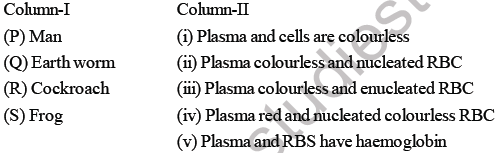
(B) (P-iv), (Q-v), (R-iii), (S-ii)
(D) (P-v), (Q-iii), (R-i), (S-iv)
(B) Chromatophares
(C) Haversian canals
(D) Adipose cells
(B) Muscular
(C) Nervous
(D) Connective
(B) Lymphocytes
(C) Thrombocytes
(D) Basophils
(B) Areolar tissue
(D) Glandular epithelium
(B) Cuboidal epithelium
(C) Columnar epithelium
(D) Ciliatal epithelium
(B) Basement membrane
(C) Hyaluronic acid
(D) Fluid
(B) Monocytes
(C) Lymphocytes
(D) Eosinophils
(B) Fibrinogen
(C) albumin
(D) Serum amylase
(B) bone
(C) Lymph
(D) Nerve
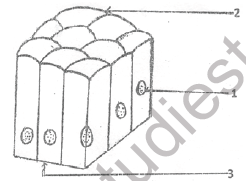
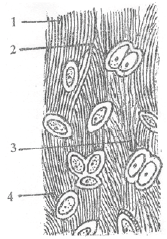
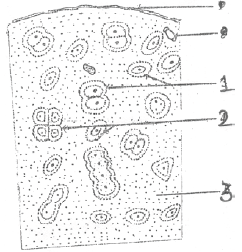

(B) Actin, tropomyosin, troponin
(D) Myosin, actin and tropomyosin
(B) Lungs
(C) Thyroid gland
(D) Uterine tube
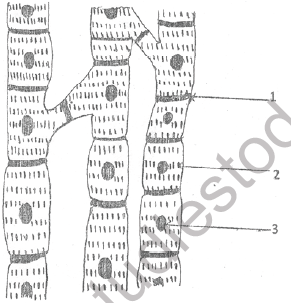

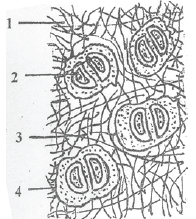
(B) Hyaline cartilage
(D) Yellow elastic cartilage
Practice MCQs for NEET Biology Animal Tissues
About Animal Tissues MCQs for NEET Biology
Review structured objective questions for NEET Biology Animal Tissues. Built according to official NEET guidelines, these MCQ sets support daily revision and core concept reinforcement.
How to Verify Your MCQ Answers
Built using the official NCERT book for NEET, these Biology objective sets provide reliable academic guidance. Pair your practice with our recommended NCERT solutions to master optimal problem-solving approaches.
Enhance Speed with Online MCQ Tests
Follow up your worksheet practice by attempting the interactive online Biology MCQ test for this chapter to evaluate your execution speed. All platform resources are free to access.
FAQs
You can get most exhaustive NEET Biology Animal Tissues MCQs Set 04 for free on StudiesToday.com. These MCQs for NEET Biology are updated for the 2026-27 academic session as per NEET examination standards.
Yes, our NEET Biology Animal Tissues MCQs Set 04 include the latest type of questions, such as Assertion-Reasoning and Case-based MCQs. 50% of the NEET paper is now competency-based.
By solving our NEET Biology Animal Tissues MCQs Set 04, NEET students can improve their accuracy and speed which is important as objective questions provide a chance to secure 100% marks in the Biology.
Yes, Biology MCQs for NEET have answer key and brief explanations to help students understand logic behind the correct option as its important for 2026 competency-focused NEET exams.
Yes, you can also access online interactive tests for NEET Biology Animal Tissues MCQs Set 04 on StudiesToday.com as they provide instant answers and score to help you track your progress in Biology.