

Class 12 Business Studies Practice Set: Chapter 07 Directing
Review targeted practice sets for Class 12 Business Studies Chapter 07 Directing. Built according to official educational guidelines for the 2026-27 academic year, these downloadable worksheets support daily revision and core concept reinforcement.
Download Chapter 07 Directing Worksheet PDF
View or download the dedicated Chapter 07 Directing practice resource below. Engaging with these objective and subjective questions daily ensures continuous academic progress and mastery of the 2026-27 curriculum.
Leadership styles refer to a leader’s behaviour. Behavioural pattern which the leader reflects in his role as a leader is often described as the style of leadership.
A Leadership style is the result of the leader’s philosophy, personality, and experience and value system. It also depends upon the type of followers and the atmosphere prevailing in the organization.
Different types of leadership style are:
1. Autocratic leadership
2. Participative leadership – Democratic
3. Free rein leadership – Laissez Faire
A leader may use all styles over a period of time but one style tends to predominate as his normal way of using power.
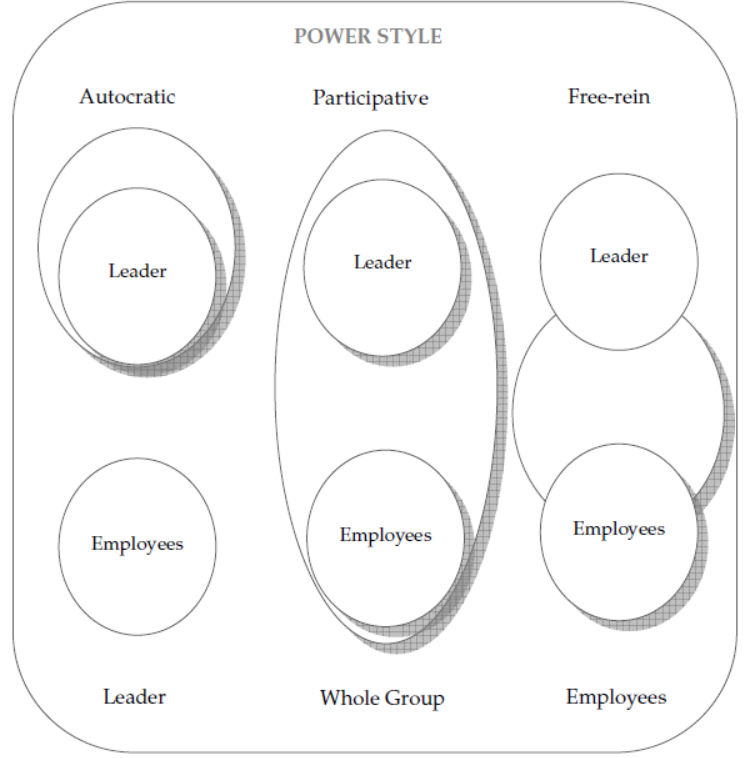
1.Autocratic or Authoritarian Leader
An autocratic leader gives orders and insists that they are obeyed. He determines the policies for the group without consulting them.
He does not give information about future plans but simply tells the group what immediate steps they must take.
Under this style, all decision making power is centralized in the leader as shown in the diagram. He does not give the subordinates any freedom to influence his decision.
It is like “bossing people around.” This style should normally be used on rare occasions.
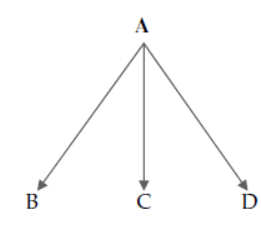
When should authoritarian leadership be applied?
- It is best applied to situations where there is little time for group decision-making
- or where the leader is the most knowledgeable member of the group.
2. Democratic or Participative Leader
A democratic leader gives order only after consulting the group and works out the policies with the acceptance of the group.
He never asks people to do things without working out the long term plans on which they are working. He favours decision making by the group as shown in the diagram. This improves the attitude of the employees towards their jobs and the organization thereby increasing their morale.
Using this style is of mutual benefit – it allows them (subordinates) to become part of the team and helps leaders (seniors) to make better decisions.
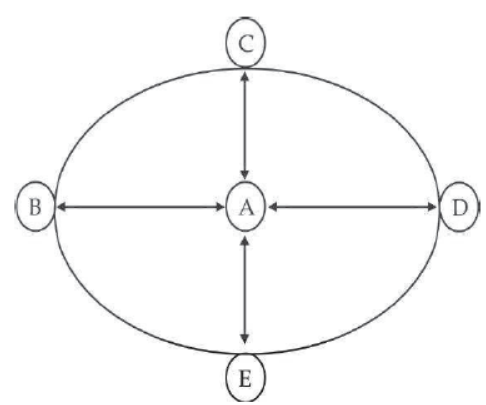
A is the leader – Group Centered – Leadership
When should Participative/democratic leadership be applied?
- It works best in situations where group members are skilled and eager to share their knowledge.
- It is also important to have plenty of time to allow people to contribute, develop a plan and then vote on the best course of action
This style should NOT be used when:
- In situations where roles are unclear or time is of the essence, democratic leadership can lead to communication failures and uncompleted projects.
3. Laissez Faire or Free Rein Leader
A free rein leader gives complete freedom to the subordinates. Such a leader avoids use of power. He depends largely upon the group to establish its own goals and work out its own problems. Group members work themselves as per their own choice and competence. The leader exists as a contact man with the outsiders to bring information and the resources the group requires for accomplishing the job.
NOTE: This is also known as laissez faire which means no interference in the affairs of others. [French: laissesz means to let / allow and faire means to do.
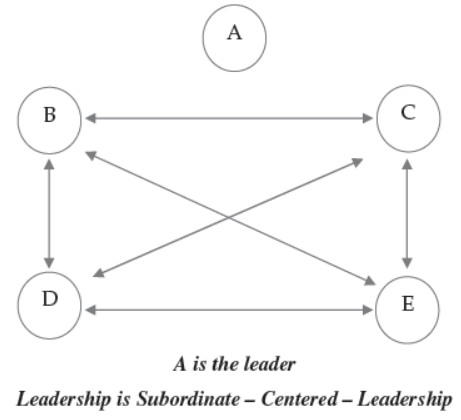
When should laissez faire/free rein leadership be applied?
This is an effective style to use when:
• Followers are highly skilled, experienced, and educated.
• Followers have pride in their work and the drive to do it successfully on their own.
• Outside experts, such as staff specialists or consultants are being used.
• Followers are trustworthy and experienced.
This style should NOT be used when:
• Followers feel insecure at the unavailability of a leader.
• The leader cannot or will not provide regular feedback to their followers.
Example Mr. Ulhas, CEO of I Create India, distributes the work for the month. He delegates the work to his staff Ms. Ranju, Ms. Anjana, Ms. Geeta and Mr. Dinesh as per his discretion. (Mr. Ulhas is behaving as an autocratic leader) Mr. Ulhas has realized that due to absence of Ms. Geeta, the work will not get over as scheduled. He discusses with his staff members to meet the dead line. Everybody decided to do over time and planned to stay back accordingly. (Mr. Ulhas is behaving as a democratic leader)
Mr. Ulhas wants to give a party to all staff members for timely completion of the task.
Mr. Ulhas asks the other members of staff to fix the venue and the menu for the occasion. (Mr. Ulhas is behaving as a free rein leader)
Most appropriate style of leadership for a leader/manager depends upon:
• the demands of the situation
• the requirements of the people involved
• the challenges facing the organization
Very Short Answer
Question. 'Leadership is a part of management but not all of it. Clarify.
Answer: Leadership is an element of directing function of management
Question. "Leadership transforms potential into reality. How?
Answer: Through influencing subordinates.
Question. What is meant by 'Feedback in communication process?
Answer: It refers to signal Pointing out to what extent the receiver has really received and understand the sender's message correctly.
Question. What is meant by 'Grapevine's?
Answer: It refers to a Pathway of informal communication in which the information moves in a Zigzag manner leaving no indication from which point it started.
Question. What type of information are passed through formal communication?
Answer: Organisational information are passed through it.
KEY CONCEPT QUESTIONS WITH ANSWERS
Question. „Directing is the least important function of management.‟ Do you agree with this statement? Give any two reasons in support of your answer.
Answer: No, I don‟t agree with this statement.
Importance of direction: Direction may be regarded as the heart of the management process.
It is explained under the following parts:
a. Initiates action: All organizational activates are initiated through direction.
b. Integrates employees‟ efforts: At all levels of management the subordinates under the managers. Managers integrate the work of subordinates.
c. Means of motivation : Directing helps in motivating employees towards organizational goals
Question. “The post of supervisor should be abolished in the hierarchy of managers”. Do you agree? Give any three reasons in support of your answer.
Answer: No, I don‟t agree. Because a supervisor performs the following functions to achieve organization roles.
Functions of the supervisor:
a) Planning the work. The supervisor has to determine work schedule for every job.
b) Issuing orders : Supervisor issues orders to the workers for achieving coordination in his work.
c) Providing guidance and leader ship: The supervisor leads the workers of his department.
Question. What is meant by „Esteem needs‟ and „Self-actualization needs‟ in relation to motivation of the employees? 4M
Answer:
i. Esteem Needs : these needs are needs for self esteem and need for other esteem.
For Example: Self-respect, self-confidence etc.
ii. Self-actualization Needs: This is the needs to be what one is capable of becoming and includes needs for optimal development.
Question. It is through motivation that managers can inspire their subordinates to give their best to the organisation‟. In the light of this statement, explain, in brief, the importance of motivation.
Answer: Importance of motivation:
i. Motivation sets in motion the action of people: Motivation builds the will to work among employees and puts them into action.
ii. Motivation includes the efficiency of work performance: Performance of employees dependence not only on individual abilities but also on his willing ness.
iii. Motivation ensures achievement of organizational goals: If employees are not motivated, no purpose can be served by planning organizing and staffing.
iv. Motivation creates friendly relationships: Motivation creates friendly and supportive relationships between employer and employees.
v. Motivation leads to stability in the employees: Motivation helps in reducing absenteeism and turnover.
vi. Motivation helps to change negative / indifferent attitudes of an employee
Question. Are the terms „leader‟ and „manager‟ synonymous?
Answer: No.
Question. “All managers are leaders, but all leaders are not managers.” Do you agree with this statement? Give any three reasons in support of your answer.
Answer: Yes, I agree with this statement.
Difference between leadership and managership :
Basis Leadership Managership
Origin Leadership originates out of individual influence. Managership originates out of official power and rights. Formal Rights A leader has no formal rights A manager has certain formal rights Follower & subordinates A leader has followers A manager has subordinates.
Question. A leader can influence the behavior of his subordinates only if he has certain qualities.
Explain any five such qualities of a good leader.
Answer: Qualities of a good leader:
i. Intelligence: A leader should examine every problem in the right perspective. He should have required knowledge and competence
ii. Communication Skills: A leader is the source of information for all the members of his group.
iii. Listening skills: Receiving feed back about one self is most important then only the leader can improve upon him-self.
iv. Ability to inspire people: A leader should be an example and inspire people to deal with the „Why question‟.
v. Self Confidence: A leader most has confidence in his own ability to accomplish task.
vi. Empathy: A leader should be able to understand the feelings of the subordinates.
Question. “Managerial functions cannot be carried out without an efficient system of communication.” Do you agree? Give any three reasons in support of your answer.
Answer: Yes, I agree with this statement.
Communication is important because of the following reasons.
i. Communication facilitates planning in a number of ways:
ii. Communication helps management in arriving at vital decisions:
iii. Communication is necessary in creating unity of action of action:
Question. Mention one barrier to effective communication.
Answer: Poor listening skills of people.
Question. Give any one measure to improve communication.
Answer: Communicate according to the needs of receiver.
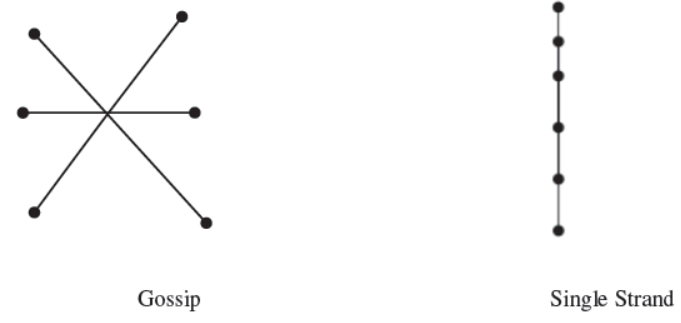
Question. What do you mean by grapevine? Explain two types of grapevine along with diagram.
Answer: Grapevine: The network or pathway of informal communicat ion is known as grade point communication. Two types of grapevine communication
Question. Explain any three measures to overcome the barriers to improve communications effectiveness.
Answer:
1. Clarify the areas before communication: Before communicating to employees a manager should make an analysis of the subject matter.
2. Consult others before communication: A manager should encourage participation of subordinates which will ensure their support and cooperation.
3. Communicate according to the needs of receiver: The manager should make adjustments according to the needs of the receiver.
QUESTIONS WITH DIFFERENT DIFFICULTY LEVELS
Question. It is concerned with instructing guiding and inspiring people in the organization to achieve its objectives.
Name it.
Answer: Directing
Question. Every manager from top executive to superior performs the function of directing. Which characteristic of directing is referred here?
Answer: Directing takes place every level of management.
Question. It means overseeing the subordinates at work. Which element of directing is referred to?
Answer: Supervision.
Question. Supervisor acts as a link between workers and management. How?
Answer: Supervisor conveys management ideas to the workers on one hand and workers problems to the management on the other.
Question. It refers to the way in which urges, drives, desires, aspirations, strivings or needs direct control and explain the behavior of human beings. Which element of directing is indicated here?
Answer: Motivation.
Question. Motivation can be either positive or negative. Give two examples of negative motivation.
Answer: (a) Stopping increments (b) Treating
Question. Which need in the hierarchy theory of motivation refers to affection, acceptance and friendship?
Answer: Belonging needs
Question. It is an incentive offered over and above the wages/salary to the employees. Name the type of financial incentive referred here.
Answer: Bonus
Question. Name the incentive which refers to „give more autonomy and powers to subordinates‟ and how are people affected by this incentives?
Answer: Employee Empowerment : Due to this incentive people start feeling that their jobs are important and they contribute positively to use their skills and talent in the job performance.
Question. It is defined as a process of influencing other people to work willingly for group objectives. Mention this element of directing.
Answer: Leadership
Question. „Courgae, will power, judgment, flexibility, knowledge and integrity‟. What is being indicated here?
Answer: Qualities of a good leader are indicated here.
Question. Leader should not wait for opportunities to come to his way, rather he should grab the opportunity and use it to the advantage of organization. Which quality of leader is being referred here?
Answer: Initiative.
Question. It is process by which people create and share information with one another in order to reach common understanding. Which element of directing is referred here?
Answer: Communication.
Question. Which element in communication process relates to the process of converting encoded symbols of the sender?
Answer: Decoding
Question. In which kind of communication network, a subordinate is allowed to communicate which his immediate superior as well as his superior‟s superior?
Answer: Inverted V.
Question. Amit and Mikki are working in the same organization but different departments. One day at lunch time Mikki informed Amit that due to computerization many people are going to be retrenched soon from the organization.
Answer: It is an example of informal communication.
Limitations of informal communication.
Messages tend to be distorted.
It often carries roomers.
It is unsystematic.
Question. There are some barriers in communication which are concerned with the state of mind of both the sender and the receiver. State any three such barriers.
Answer: It refers to physiological barriers :
i. Premature evaluation
ii. Loss by transmission and poor retention.
iii. Lack of attention.
Click below to download practice worksheet for CBSE Class 12 Business Studies Directing Worksheet Set D
Free study material for Business Studies
Download CBSE Practice Material: Class 12 Business Studies Chapter 07 Directing
Download Practice Sheet: Chapter 07 Directing (Class 12 Business Studies)
Access structured practice worksheets for Chapter 07 Directing designed in alignment with the latest CBSE curriculum for Class 12 Business Studies. These printable problem sets help students build accuracy and prepare effectively for school tests.
Concept Clarification for Chapter 07 Directing
Built using the official NCERT book for Class 12 Business Studies, these practice materials provide reliable academic guidance. Pair your practice with our recommended NCERT solutions to master optimal problem-solving approaches.
Additional Study Resources for Class 12 Business Studies
Wrap up your chapter revision by testing your knowledge against standard question formats. Everything on our platform is provided free of charge.
FAQs
You can download the teacher-verified PDF for CBSE Class 12 Business Studies Directing Worksheet Set 04 from StudiesToday.com. These practice sheets for Class 12 Business Studies are designed as per the latest CBSE academic session.
Yes, our CBSE Class 12 Business Studies Directing Worksheet Set 04 includes a variety of questions like Case-based studies, Assertion-Reasoning, and MCQs as per the 50% competency-based weightage in the latest curriculum for Class 12.
Yes, we have provided detailed solutions for CBSE Class 12 Business Studies Directing Worksheet Set 04 to help Class 12 and follow the official CBSE marking scheme.
Daily practice with these Business Studies worksheets helps in identifying understanding gaps. It also improves question solving speed and ensures that Class 12 students get more marks in CBSE exams.
All our Class 12 Business Studies practice test papers and worksheets are available for free download in mobile-friendly PDF format. You can access CBSE Class 12 Business Studies Directing Worksheet Set 04 without any registration.