SENIOR SECTION
DEPARTMENT OF SOCIAL SCIENCE
CLASS: IX
TOPIC: CHAPTER: 5- VEGETATION AND WILDLIFE
Summary
Flora: Plant species of a particular region or period are called flora.
Fauna: The animal species of a particular region or period are called fauna.
Factors which affect the diversity of flora and fauna:
RELIEF:
Land and Soil
CLIMATE
Temperature, Humidity, Photoperiod (Sunlight) and Precipitation.
Ecosystem: All the plants and animals in an area are interdependent on each other. The plants and animals; along with their physical environment make the ecosystem. A very large ecosystem is called a biome. Biomes are identified on the basis of plants.
TYPES OF VEGETATION
There are five major types of vegetation in India: Tropical Rainforests, Tropical Deciduous Forests, Tropical Thorn Forests and Scrubs, Montane Forests and Mangrove Forests.
WILD LIFE
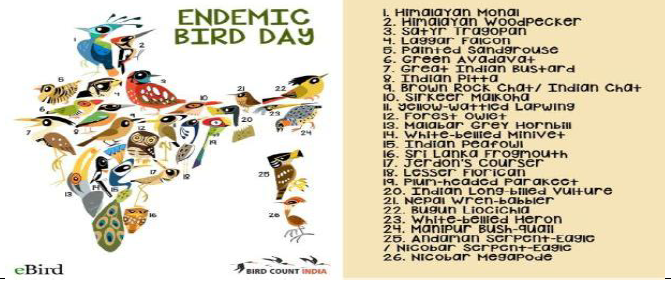
There are more than 90,000 animal species in India. There are more than 2000 species of birds in India. Elephants are found in the hot wet forests of Assam, Karnataka and Kerala. One-horned rhinos are found in the swampy and marshy lands of Assam and West Bengal. Wild ass and camels are found in the Rann of Kachchh and Thar Desert. Indian bison, nilgai, chousingha, gazel and many other species of deer and some other animals are found in India. India is the only country in the world which has both tigers and lions.
• The fourteen biosphere reserves are: Sunderbans, Gulf of Mannar, the Nilgiris, Nanda Devi, Nokrek, Great Nicobar, Manas, Simlipal, Dihang-Dibang, Dibru Saikhowa, Agasthyamalai, Kanchenjunga, Pachmari, Achanakmar-Amarkantak.
• Project Tiger, Project Rhino, Project Great Indian Bustard and many other ecodevelopmental projects have been introduced.
• 89 National Parks, 490 Wildlife sanctuaries and Zoological gardens are set up to take care of Natural heritage.
Question
1. What number of plant species does India have? State it’s ranking in Asia and in the world?
Ans With about 47,000 plant species India occupies tenth place in the world and fourth in Asia in plant diversity.
2. What number of flowering plants does India have? How much it accounts to the world’s total?
Ans
There are about 15,000 flowering plants in India which account for 6 per cent in the world’s total number of flowering plants.
3. What number of animal species does India have?
Ans India has 90,000 species of animals
4. Define the following:
a)Natural Vegetation: Natural vegetation refers to a plant community which has grown naturally without human aid and has been left undisturbed by humans for a long time.
b)Virgin Vegetation: Natural vegetation which has been left undisturbed by humans for a long time. This is termed as a virgin vegetation.
c)Endemic or indigenous species: The virgin vegetation, which are purely Indian are known as endemic or indigenous species .
d)Exotic plants: Those plants which have come from outside India are termed as exotic plants.
5. Differentiate between Flora and Fauna. (Meaning and No. of species)
Ans
1) The term flora is used to denote plants of a particular region or period.
2) There are 47000 species of plants.
1) Similarly, the species of animals are referred to as fauna .
2) There are 90,000 species of animals in India.
6. How does land and soil (relief factor) affect natural vegetation?
Ans Land:
1)The nature of land influences the type of vegetation.
2) The fertile level is generally devoted to agriculture.
3) The undulating and rough terrains are areas where grassland and woodlands develop and give shelter to a variety of wild life.
Soil :
1) The sandy soils of the desert support cactus and thorny bushes.
2) Wet, marshy, deltaic soils support mangroves and deltaic vegetation. 3)The hill slopes with some depth of soil have conical trees.
7. How do temperature, sunlight and precipitation (climate factor) affect natural vegetation?
Ans )Temperature
●The character and extent of vegetation are mainly determined by temperature along with humidity in the air, precipitation and soil.
● On the slopes of the Himalayas and the hills of the Peninsula above the height of 915 metres, the fall in the temperature affects the types of vegetation and its growth, and changes it from tropical to subtropical temperate and alpine vegetation.
Photoperiod (Sunlight )
●The variation in duration of sunlight at different places is due to differences in latitude, altitude, season and duration of the day.
● Due to longer duration of sunlight, trees grow faster in sunlight.
Precipitation
●In India almost the entire rainfall is brought in by the advancing southwest monsoon (June to September) and retreating northeast monsoons.
●Areas of heavy rainfall have more dense vegetation as compared to other areas of less rainfall.
8. Why are the southern slopes in the Himalayan region covered with thick vegetation?
Ans
Factors affecting are:
●Plenty of sunlight
●Plenty of rainfall
9. Why are the western slopes of the Western Ghats covered with thick forests, and not the eastern slopes?
Ans
Western slopes are located on the windward side of the western ghats and receive more rainfall from the winds originating from the Arabian sea , Eastern slopes on the other hand receive comparatively less or no rain.
10. How are forests important to us? State four points.(any four) Forests are renewable resources and play a major role in enhancing the quality of environment:
Ans
1. modify local climate, 5. Provide livelihood for many communities
2.control soil erosion, 6. offer panoramic or scenic view for recreation
3.regulate stream flow,
4.support a variety of industries
11. State the factors that have led to the changes in India’s natural vegetation. India’s natural vegetation has undergone many changes due to
Ans
several factors such as:
*the growing demand for cultivated land.
*development of industries.
*mining.
*urbanisation and
*over-grazing of pastures.
12. a)Name any two regions that have natural vegetation in real sense.
Ans
*In some inaccessible regions like the Himalayas
* the hilly regions of central India
* the marusthali (desert type).
b) The vegetation cover of India in large parts is no more natural in real sense. Give two reasons.
Ans
*the vegetation of most of the areas has been modified at some places.
*It has been replaced or degraded by human occupancy.
13. What was the actual forest area cover in India in the year 2011?
Ans) In 2011, the actual forest cover in India was only 21.05 per cent.
14. What is an ecosystem?
Ans All the plants and animals in an area are interdependent and interrelated to each other in their physical environment, thus,forming an ecosystem.
15. How do the human beings influence the ecology of a region?
Ans
i) They utilise the vegetation and wild life.
ii)The greed of human beings leads to over utilisation of these resources. iii) They cut the trees .
iv) They kill the animals creating ecological imbalance.
16. What is a ‘biome’? How are they identified?
Ans A very large ecosystem on land having distinct types of vegetation and animal life
is called a biome. The biomes are identified on the basis of plants
17. Name the major types of vegetation that are found in our country. The following major types of vegetation may be identified in our country (Figure 5.3).
Ans
(i) Tropical Rain Forests
(ii) Tropical Deciduous Forests
(iii) Tropical Thorn Forests and Scrubs
(iv) Montane Forests
Please click on below link to download CBSE Class 9 Social Science Vegetation and Wildlife Worksheet