

Practice MCQs for NEET Chemistry Amines
Review structured MCQ sets for NEET Chemistry Amines. Built according to official NEET guidelines, these downloadable questions support daily revision and core concept reinforcement.
Access Amines Questions and Solutions
Navigate directly to the 50 objective questions for Amines using the digital viewer below. Each practice set includes verified answer keys, allowing students to instantly cross-check their work and identify areas requiring further revision.
Question:
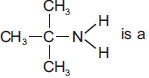
- a) Primary amine
- b) Secondary amine
- c) Tertiary amine
- d) Ammonium salt
Answer: Primary amine
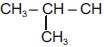
Question: The correct IUPAC name for

- a) Allyl methylamine
- b) 2-Amino4-pentene
- c) 4-Aminopent-I -ene
- d) N-Methylprop-2-en-1-amine
Answer: N-Methylprop-2-en-1-amine
Question: The compound having the molecular formula C3H9N can represent
- a) Trimethylamine
- b) n-propylamine
- c) Isopropylamine
- d) All of these
Answer: All of these
Question: A secondary amine is
- a) A compound with two –NH2 group
- b) A compound with two carbon atoms and a –NH2 group
- c) A compound with a –NH2 group on the carbon atom in number two position
- d) A compound in which two of the hydrogens of NH3 have been replaced by alkyl or aryl groups
Answer: A compound in which two of the hydrogens of NH3 have been replaced by alkyl or aryl groups
Question: Best method for preparing primary amines from alkyl halides without changing the number of carbon atoms in the chain is
- a) Hoffmann bromamide reaction
- b) Gabriel phthalimide synthesis
- c) Sandmeyer reaction
- d) Reaction with NH3
Answer: Gabriel phthalimide synthesis
Question: Gabriel phthalimide reaction is used for the preparation of
- a) Primary aromatic amines
- b) Secondary amines
- c) Aliphatic primary amines
- d) Tertiary amines
Answer: Aliphatic primary amines
Question: Gabriel phthalimide reaction is used for the preparation of
- a) Primary aromatic amines
- b) Secondary amines
- c) Aliphatic primary amines
- d) Tertiary amines
Answer: Aliphatic primary amines
Question: When acetamide is treated with Br2 and caustic soda, then we get
- a) Bromoacetic acid
- b) Acetic acid
- c) Methylamine
- d) Ethane
Answer: Methylamine
Question:

In above reaction hybridisation state of carbon changes from
- a)

- b)

- c)

- d)

Answer:
Question: Amines are basic in character because they have
- a) A lone pair of electrons on the nitrogen atom
- b) A hydroxyl group in the molecule
- c) Replaceable hydrogen atom
- d) Saturated C atom
Answer: A lone pair of electrons on the nitrogen atom
Question: Which is most basic?
- a) Benzylamine
- b) Aniline
- c) Acetamide
- d) o-methyl aniline
Answer: Benzylamine
Question: Aliphatic amines are ______ basic than NH3 but aromatic amines are ______ basic than NH3 .
- a) More, less
- b) Less, more
- c) Both (1) & (2)
- d) None of these
Answer: More, less
Question: Amongst the following, the strongest base in aqueous medium is
- a) CH3NH2
- b) (CH3)3N
- c) (CH3)2NH
- d) C6H5NHCH3
Answer: (CH3)2NH
Question: Which of the following is the weakest Bronsted base?
- a)

- b)

- c)

- d) CH3NH2
Answer:
Question: The correct increasing order of basic strength for the following compounds is
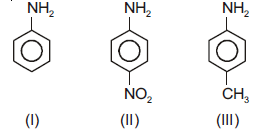
- a) II < III < I
- b) III < I < II
- c) III < II < I
- d) II < I < III
Answer: II < I < III
Question: Which of the following is the least basic?
- a)
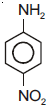
- b)
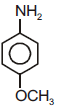
- c)

- d) All are equally basic
Answer:
Question: The one which is the least basic
- a) NH3
- b) C6H5NH2
- c) (C6H5)3N
- d) (C6H5)2NH
Answer: (C6H5)3N
Question: Strongest base is
- a) CH2= CH – CH2– NH2
- b) CH ≡ C – CH2– NH2
- c) CH3CH2CH2NH2
- d)

Answer: CH3CH2CH2NH2
Question: CH3CH2NH2 is more basic than CH3CONH2 because
- a) Acetamide is amphoteric in character
- b) In CH3CH2NH2 the electron pair on N-atom is delocalised by resonance
- c) In CH3CH2NH2 there is no resonance, while in acetamide the lone pair of electrons on N-atom is delocalised and therefore less available for protonation
- d) Acetamide is derivative of acid
Answer: In CH3CH2NH2 there is no resonance, while in acetamide the lone pair of electrons on N-atom is delocalised and therefore less available for protonation
Question: Which one is the most volatile?
- a) CH3CH2CH2NH2
- b) (CH3)3N
- c)

- d) CH3OH
Answer: (CH3)3N
Question: Aniline on reaction with acetyl chloride gives
- a) Phenol
- b) Acetamide
- c) Acetanilide
- d) Benzene
Answer: Acetanilide
Question: The compound obtained by heating a mixture of a primary amine and chloroform with ethanolic potassium hydroxide is
- a) An alkyl isocyanide
- b) An alkyl halide
- c) An amide
- d) An amide and nitro compound
Answer: An alkyl isocyanide
Question: The decreasing order of the basic character of NH3, CH3NH2, C2H5NH2 and C6H5NH2 is
- a) NH3> CH3NH2> C2H5NH2> C6H5NH2
- b) C2H5NH2> CH3NH2> NH3> C6H5NH2
- c) C6H5NH2> C2H5NH2> CH3NH2> NH3
- d) CH3NH2> C2H5NH2> C6H5NH2> NH3
Answer: C2H5NH2> CH3NH2> NH3> C6H5NH2
Question: An organic compound (A) on reduction gave a compound (B). Upon treatment with HNO2 , (B) gave ethyl alcohol and on warming with CHCl3 and alcoholic KOH, (B) gave an offensive smell. The compound (A) is
- a) CH3NH2
- b) CH3NC
- c) CH3CN
- d) C2H5CN
Answer: CH3CN
Question: Which would not react with benzene sulphonyl chloride in aqueous NaOH?
- a) Aniline
- b) N, N-dimethylaniline
- c) p-toluidine
- d) N-ethyl aniline
Answer: N, N-dimethylaniline
Question: Reaction of nitrous acid with aliphatic primary amine in the cold gives
- a) A diazonium salt
- b) An alcohol
- c) A nitrite
- d) A dye
Answer: An alcohol
Question: A compound X has the molecular formula C7H7NO. On treatment with Br2 and KOH, X gives an amine Y. The latter gives carbylamine test. Y upon diazotisation and coupling with phenol gives an azo dye. Thus X is
- a) C6H5CONH2
- b) C6H5CH2NO
- c) C6H5COONH4
- d) All of these
Answer: C6H5CONH2
Question: An amine reacts with C6H5SO2Cl and the product is soluble in alkali, amine is
- a) 1° amine
- b) 2° amine
- c) 3° amine
- d) All of these
Answer: 1° amine
Question: Tautomerism is shown by
- a) CH3– O – NO
- b) CH3– CH2– NO2
- c) CH3CH2CN
- d)
Answer: CH3– CH2– NO2
Question: The gas evolved when methylamine reacts with nitrous acid is
- a) NH3
- b) N2
- c) H2
- d) C2H6
Answer: N2
More Questions.......................................
Question: A compound ‘A’ when treated with HNO3 (in presence of H2SO4)gives compound B, which is then reduced with Sn and HCl to aniline. The compound is
- a) Toluene
- b) Benzene
- c) Ethane
- d) Acetamide
Answer: Benzene
Question: A mixture of 1°, 2° and 3° amines can be separated by Hinsberg’s reagent which is
- a) Benzoyl chloride
- b) Acetyl chloride
- c) Benzene sulphonyl chloride
- d) Benzyl chloride
Answer: Benzene sulphonyl chloride
Question: Identify X in the series.
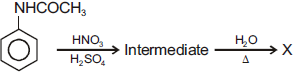
- a)
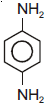
- b)
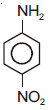
- c)
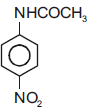
- d)

Answer:
Question: Bromine water reacts with aniline to give
- a) o-Bromoaniline
- b) m-Bromoaniline
- c) p-Bromoaniline
- d) 2, 4, 6-Tribromoaniline
Answer: 2, 4, 6-Tribromoaniline
Question: Amines are highly soluble in
- a) CCl4
- b) Diethyl ether
- c) Benzene
- d) Water
Answer: Water
Question: Which of the following forms a stable diazonium salt at 273 - 278 K?
- a) Ethylamine
- b) Aniline
- c) Dimethylamine
- d) Benzylamine
Answer: Aniline
Question: Which one of the following compounds gives dye test?
- a) Aniline
- b) Methylamine
- c) Diphenylamine
- d) Ethylamine
Answer: Aniline
Question: 2, 4, 6-tribromo aniline is a product of
- a) Electrophilic addition on C6H5NH2
- b) Electrophilic substitution on C6H5NH2
- c) Nucleophilic addition on C6H5NH2
- d) Nucleophilic substitution on C6H5NH2
Answer: Electrophilic substitution on C6H5NH2
Question: Benzenediazonium chloride on reaction with water gives
- a) Phenol
- b) Aniline
- c) Benzylamine
- d) Benzaldehyde
Answer: Phenol
Question: The strongest ortho-para and strongest meta directing groups are respectively
- a) –NO2 and –NH2
- b) –CONH2 and –NH2
- c) –NH2 and –NO2
- d) –NH2 and CONH2
Answer: –NH2 and –NO2
Question: Benzenediazonium chloride on reaction with phenol in weakly basic medium gives
- a) Diphenyl ether
- b) p-Hydroxyazobenzene
- c) Chlorobenzene
- d) Benzene
Answer: p-Hydroxyazobenzene
Question: When benzenediazonium chloride is heated with fluoro boric acid, fluorobenzene is formed. This reaction is called
- a) Balz Schiemann reaction
- b) Gattermann reaction
- c) Sandmeyer reaction
- d) Hofmann bromamide reaction
Answer: Balz Schiemann reaction
Question: Benzenediazonium chloride is reduced to benzene by
- a) Water
- b) Hypophosphorous acid
- c) Hypophosphoric acid
- d) Phosphine
Answer: Hypophosphorous acid
Question: Diazotisation can be carried out by the action of NaNO2 and dilute HCI at ice cold temperature
- a) Aromatic secondary amine
- b) Aromatic primary amine
- c) Aromatic nitro compound
- d) Aliphatic amine
Answer: Aromatic primary amine
Question: When benzene diazonium chloride is treated with cuprous chloride and HCI the product formed is
- a) Chlorobenzene
- b) Benzene
- c) Phenol
- d) Chloroazobenzene
Answer: Chlorobenzene
Question: The end product (Z) of the following reaction is
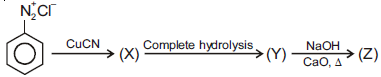
- a) A cyanide
- b) A carboxylic acid
- c) An amine
- d) An arene
Answer: An arene
Question:

The product (A) will be
- a) RNHCOCH3
- b) RN(COCH3)2
- c)
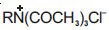
- d) R–CONH2
Answer: RNHCOCH3
Question: Alanine, the amino acid the respective structure at pH = 2 and pH = 10 will be
- a)

- b)

- c)

- d)

Answer:
Question: Arrange the following compound in decreasing order of boiling point
- a) (CH3)3N < CH3NHC2H5< C3H7NH2< C3H7OH
- b) (CH3)3N < C3H7NH2< C3H7OH < CH3NHC2H5
- c) C3H7NH2< CH3NHC2H5< (CH3)3N
- d) (CH3)3N < CH3NHC2H5< C3H7OH < CH3H7NH2
Answer: (CH3)3N < CH3NHC2H5< C3H7NH2< C3H7OH
Question: Which one of the following on reduction with lithium aluminium hydride yields a secondary amine?
- a) Methyl isocyanide
- b) Acetamide
- c) Methyl cyanide
- d) Nitroethane
Answer: Methyl isocyanide
Question: Which product is formed, when acetonitrile is hydrolysed partially with cold concentrated HCl?
- a) Methyl cyanide
- b) Acetic anhydrides
- c) Acetic acid
- d) Acetamide
Answer: Acetamide
Question: Which of the following pair make fastest coupling reaction in acidic medium?
- a)

- b)
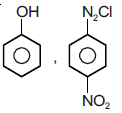
- c)
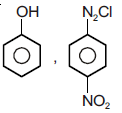
- d)
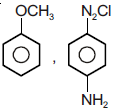
Answer:
Question: Which of the following statements about primary amines is ‘False’?
- a) Alkyl amines are stronger bases than ammonia
- b) Alkyl amines are stronger bases than aryl amines
- c) Alkyl amines react with nitrous acid to produce alcohols
- d) Aryl amines react with nitrous acid to produce phenols
Answer: Aryl amines react with nitrous acid to produce phenols
Question: The reaction of the benzyl chloride with sodium cyanide followed by reduction with hydrogen in the presence of nickel gives
- a) β-phenyl ethylamine
- b) N-isobutylaniline
- c) Benzyl amine
- d) Aniline
Answer: β-phenyl ethylamine
Question: The most reactive compound towards Hofmann bromamide degradation is
- a)
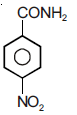
- b)
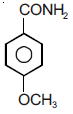
- c)
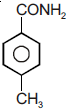
- d)
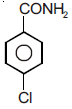
Answer:
Question: Amine is obtained as major product in
- a)
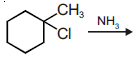
- b)
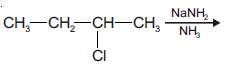
- c)

- d) All of these
Answer:
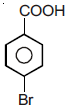
Question:
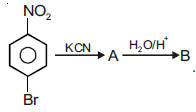
The major product (B) is
- a)
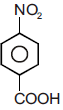
- b)
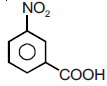
- c)
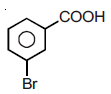
- d)
Answer:
Question: Benzylamine and aniline can be distinguish by
- a) HNO2 acid
- b) CHCl3/KOH
- c) Br2 water
- d) Schiff ’s reagent
Answer: Br2 water
Question: 4-Nitro-N, N-dimethyl benzenamine is
- a)
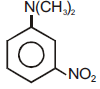
- b)
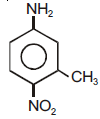
- c)
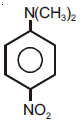
- d)
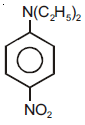
Answer:
Question: N-phenyl hydroxylamine is obtained when nitro benzene is reacted with
- a) Sn/HCl
- b) Zn/NH4Cl/H2O
- c) As2O3/NaOH
- d) Zn/NaOH
Answer: Zn/NH4Cl/H2O
Multiple Choice Questions (MCQs) for NEET Chemistry Amines
Chapter MCQs with Answers for NEET Chemistry
Test your conceptual understanding of Amines with these targeted multiple-choice questions. Designed in alignment with the latest NEET curriculum for NEET Chemistry, these problem sets build accuracy and prepare students for objective exams.
Expert Practice Material for NEET Chemistry
Each question includes structured solution keys mapped directly to standard NEET textbooks, helping students evaluate their reasoning and correct mistakes early in their revision.
Complete Your Chapter Revision
Follow up your worksheet practice by attempting the interactive online Chemistry MCQ test for this chapter to evaluate your execution speed. All platform resources are free to access.
FAQs
You can get most exhaustive NEET Chemistry Amines MCQs Set 01 for free on StudiesToday.com. These MCQs for NEET Chemistry are updated for the 2026-27 academic session as per NEET examination standards.
Yes, our NEET Chemistry Amines MCQs Set 01 include the latest type of questions, such as Assertion-Reasoning and Case-based MCQs. 50% of the NEET paper is now competency-based.
By solving our NEET Chemistry Amines MCQs Set 01, NEET students can improve their accuracy and speed which is important as objective questions provide a chance to secure 100% marks in the Chemistry.
Yes, Chemistry MCQs for NEET have answer key and brief explanations to help students understand logic behind the correct option as its important for 2026 competency-focused NEET exams.
Yes, you can also access online interactive tests for NEET Chemistry Amines MCQs Set 01 on StudiesToday.com as they provide instant answers and score to help you track your progress in Chemistry.