

Chemistry Objective Questions and Answers: Organic Chemistry Some Basic Principles and Techniques
Explore reliable objective questions for Organic Chemistry Some Basic Principles and Techniques tailored for NEET learners. Utilizing these Chemistry multiple-choice formats ensures thorough preparation and strengthens problem-solving speed for upcoming school assessments.
Download Organic Chemistry Some Basic Principles and Techniques MCQs with Answers
View or download the dedicated Organic Chemistry Some Basic Principles and Techniques MCQ resource below. Practicing these 50 objective questions regularly builds familiarity with standard exam patterns and helps secure higher marks in final Chemistry evaluations.
Question: Names of some compounds are given. Which one is not correct in IUPAC system ?
- a)
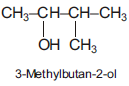
- b)
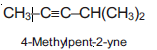
- c)
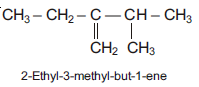
- d)
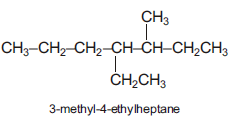
Answer:
Question: The best method for the separation of naphthalene and benzoic acid from their mixture is
- a) Chromatography
- b) Crystallisation
- c) Distillation
- d) Sublimation
Answer: Sublimation
Question: The correct order of increasing bond length of C – H, C – O, C – C and C = C is
- a)

- b)

- c)

- d)

Answer:
Question: Homolytic fission of the following alkanes forms free radicals CH3– CH3, CH3– CH2– CH3, (CH3)2CH – CH3,CH3– CH2– CH (CH3)2. Increasing order of stability of the radicals is
- a)

- b)

- c)

- d)

Answer:
Question: Nitrogen detection in an organic compound is carried out by Lassaigne's test. The blue colour formed corresponds to which of the following formulae?
- a) Fe3[Fe(CN)6]3
- b) Fe3[Fe(CN)6]2
- c) Fe4[Fe(CN)6]3
- d) Fe4[Fe(CN)6]2
Answer: Fe4[Fe(CN)6]3
Question: Which one is a nucleophilic substitution reaction among the following?
- a)

- b)

- c)
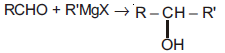
- d)

Answer:
Question: For the given alkane

The IUPAC name is
- a) 1, 1 dimethyl-5-ethyloctane
- b) 6-ethyl-2-methylnonane
- c) 4-ethyl-8-methylnonane
- d) 2-methyl, -6-propyloctane
Answer: 6-ethyl-2-methylnonane
Question: Most stable carbocation is
- a)

- b)

- c)

- d)

Answer:
Question: Lowest pKa is associated with
- a)
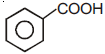
- b)
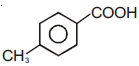
- c)
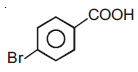
- d)
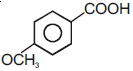
Answer:
Question: Which of the following chemical system is non-aromatic?
- a)

- b)

- c)

- d)

Answer:
Question: Arrange the following in increasing order of stability.

- a) e < d < c < b < a
- b) e < d < c < a < b
- c) d < e < c < a < b
- d) a < e < d < c < b
Answer: e < d < c < a < b
Question: An organic compound contains carbon, hydrogen and oxygen. Its elemental analysis gave C, 38.71% and H,9.67%. The empirical formula of the compound would be
- a) CH4O
- b) CH3O
- c) CH2O
- d) CHO
Answer: CH3O
Question: The most suitable method of the separation of a 1 : 1 mixture of ortho-and para-nitrophenols is
- a) Crystallization
- b) Chromatography
- c) Steam distillation
- d) Sublimation
Answer: Steam distillation
Question:
The IUPAC name for 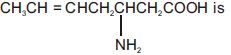
- a) 3-amino hept-5-enoic acid
- b) β-amino δ–heptenoic acidx
- c) 5-amino 2-heptenoic acid
- d) 5-amino hex-2-ene-carboxylic acid
Answer: 3-amino hept-5-enoic acid
Question: The number of structural isomers in C4H10O will be
- a) 7
- b) 8
- c) 5
- d) 6
Answer: 7
Question: The IUPAC name of (CH3)2CH–CH2–CH2Br is
- a) 1-bromo-3-methyl butane
- b) 2-methyl-3-bromo propane
- c) 1-bromo pentane
- d) 2-methyl and 4-bromo butane
Answer: 1-bromo-3-methyl butane
Question: Among the following compounds (I-III) the correct order of rate of electrophillic substitution is
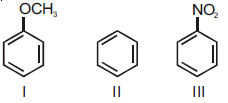
- a) I > II > III
- b) I = II > III
- c) II > III > I
- d) III < I < II
Answer: I > II > III
Question: Tautomerism is exhibited by
- a) R3CNO2
- b) RCH2NO2
- c) (CH3)3CNO
- d) (CH3)2NH
Answer: RCH2NO2
Question: Which one of the following compounds will be most easily attacked by an electrophile?
- a)

- b)

- c)

- d)

Answer:
More Questions.......................................
Question: Which one of the following orders is correct regarding the –I effect of the substituents?
- a)

- b)

- c)

- d)

Answer:
Question: Increasing order of electrophilic substitution for following compounds

- a) IV < I < II < III
- b) III < II < I < IV
- c) I < IV < III < II
- d) II < III < I < IV
Answer: IV < I < II < III
Question: The incorrect IUPAC name is
- a)

- b)

- c)

- d)

Answer:
Question: IUPAC name of the following is

- a) 1, 5-hexenyne
- b) 1-hexene-5-yne
- c) 1-hexyne-5-ene
- d) 1, 5-hexynene
Answer: 1-hexene-5-yne
Question:
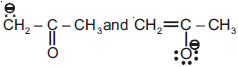
are
- a) Resonating structures
- b) Tautomers
- c) Geometrical isomers
- d) Optical isomers
Answer: Resonating structures
Question: Name of the compound given below is
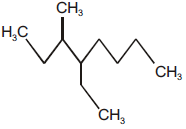
- a) 4-ethyl-3-methyloctane
- b) 3-methyl-4-ethyloctane
- c) 2, 3-diethylheptane
- d) 5-ethyl-6-methyloctane
Answer: 4-ethyl-3-methyloctane
Question: The molecular formula of diphenyl methane,  is C13H12 . How many structural isomers are possible when one of the hydrogen is replaced by a chlorine atom?
- a) 6
- b) 4
- c) 8
- d) 7
Answer: 4
Question: The number of structural isomers in C4H10O will be
- a) 7
- b) 8
- c) 5
- d) 6
Answer: 7
Question: The best method for the separation of naphthalene and benzoic acid from their mixture is
- a) Chromatography
- b) Crystallisation
- c) Distillation
- d) Sublimation
Answer: Sublimation
Question: What is the hybridisation state of benzyl carbonium ion

- a) sp3
- b) sp2
- c) spd2
- d) sp2d
Answer: sp2
Question: Which of the following compounds will exhibit cis-trans (geometrical) isomerism?
- a) Butanol
- b) 2-Butyne
- c) 2-Butenol
- d) 2-Butene
Answer: 2-Butene
Multiple Choice Questions (MCQs) for NEET Chemistry Organic Chemistry Some Basic Principles and Techniques
NEET Chemistry Organic Chemistry Some Basic Principles and Techniques Objective Test Questions
Explore reliable practice questions for Organic Chemistry Some Basic Principles and Techniques tailored for NEET Chemistry learners. Use these multiple-choice formats to evaluate preparedness and strengthen problem-solving skills.
NCERT-Aligned Objective Questions and Solutions
Built using the official NCERT book for NEET, these Chemistry objective sets provide reliable academic guidance. Pair your practice with our recommended NCERT solutions to master optimal problem-solving approaches.
Next Steps in Your Exam Preparation
Follow up your worksheet practice by attempting the interactive online Chemistry MCQ test for this chapter to evaluate your execution speed. All platform resources are free to access.
FAQs
You can get most exhaustive NEET Chemistry Organic Chemistry Some Basic Principles and Techniques MCQs Set 03 for free on StudiesToday.com. These MCQs for NEET Chemistry are updated for the 2026-27 academic session as per NEET examination standards.
Yes, our NEET Chemistry Organic Chemistry Some Basic Principles and Techniques MCQs Set 03 include the latest type of questions, such as Assertion-Reasoning and Case-based MCQs. 50% of the NEET paper is now competency-based.
By solving our NEET Chemistry Organic Chemistry Some Basic Principles and Techniques MCQs Set 03, NEET students can improve their accuracy and speed which is important as objective questions provide a chance to secure 100% marks in the Chemistry.
Yes, Chemistry MCQs for NEET have answer key and brief explanations to help students understand logic behind the correct option as its important for 2026 competency-focused NEET exams.
Yes, you can also access online interactive tests for NEET Chemistry Organic Chemistry Some Basic Principles and Techniques MCQs Set 03 on StudiesToday.com as they provide instant answers and score to help you track your progress in Chemistry.