

Chemistry Objective Questions and Answers: Hydrocarbons
Access targeted multiple-choice questions for Hydrocarbons designed to align with the latest NEET academic syllabus for NEET Chemistry. These objective practice sets help students evaluate their conceptual understanding and improve exam readiness.
Download Hydrocarbons MCQs with Answers
View or download the dedicated Hydrocarbons MCQ resource below. Practicing these 50 objective questions regularly builds familiarity with standard exam patterns and helps secure higher marks in final Chemistry evaluations.
Question: The difference in potential energy between eclipsed and staggered form of ethane is
- a) 4 kJ/mol
- b) 12.55 kJ/mol
- c) 2 kJ/mol
- d) 44 kJ/mol
Answer: 12.55 kJ/mol
Question: Eclipsed form of ethane has higher energy due to
- a) Torsional strain
- b) Steric strain
- c) Angle strain
- d) Both (1) & (2)
Answer: Both (1) & (2)
Question: The angle strain in cyclopentane is
- a) 72°
- b) 1°28’
- c) 44’
- d) 108°
Answer: 44’
Question: Which one is most stable?
- a) Cyclopropane
- b) Cyclobutane
- c) Cyclopentane
- d) Cyclohexane
Answer: Cyclohexane
Question: The chair form is _______ stable than boat form by potential energy _______ kJ/mol.
- a) More, 44 kJ/mol
- b) Less, 44 kJ/mol
- c) More, 12.55 kJ/mol
- d) Less, 4 kJ/mol
Answer: More, 44 kJ/mol
Question: Which one is not aromatic compound?
- a)

- b)

- c)

- d)

Answer:
Question: Which one of the following statement is not correct for sigma- and pi-bonds formed between two carbon atoms?
- a) Sigma-bond is stronger than a pi-bond
- b) Bond energies of sigma- and pi-bonds are of the order of 264 kJ/mol and 347 kJ/mol, respectively
- c) Free rotation of atoms about a sigma-bond is allowed but not in case of a pi-bond
- d) Sigma-bond determines the direction between carbon atoms but a pi-bond has no primary effect in this regard
Answer: Bond energies of sigma- and pi-bonds are of the order of 264 kJ/mol and 347 kJ/mol, respectively
Question:
- a)
- b)
- c)
- d) Both (2) & (3)
Answer: Both (2) & (3)
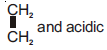
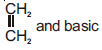
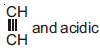
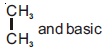
Question: On electrolysis of sodium succinate, the alkene obtained is ______ and nature of solution after electrolysis is ______.
- a)
- b)
- c)
- d)
Answer:
Question: Which one is not prepared by Wurtz reaction?
- a) C2H6
- b) n-C4H10
- c) CH4
- d)
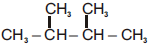
Answer: CH4
Question:

can be prepared by
- a) Wurtz reaction
- b) Fittig reaction
- c) Wurtz Fittig reaction
- d) Frankland reaction
Answer: Wurtz Fittig reaction
Question:

The incorrect statement for C is
- a)

- b)

- c)

- d)

Answer:
Question: In the following compounds the decreasing order of B.P. is

- a) (I) > (II) > (III)
- b) (I) > (III) > (II)
- c) (II) > (III) > (I)
- d) (III) > (II) > (I)
Answer: (I) > (II) > (III)
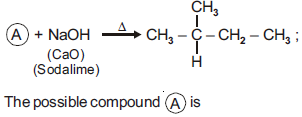
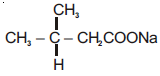
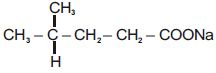
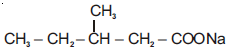
Question:
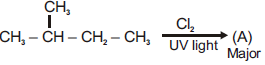
The compound "A" is
- a)
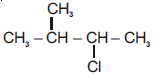
- b)
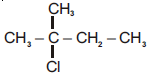
- c)
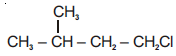
- d)
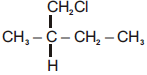
Answer:
Question:
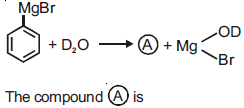
- a) Benzene
- b) Duetero benzene
- c) Duetero toluene
- d) Both (2) & (3)
Answer: Duetero benzene
Question: In iodination ; for preparation of iodomethane compound used is
- a) HIO3
- b) HgO
- c) Both (1) & (2)
- d) HI
Answer: Both (1) & (2)
Question: In chlorination the relation rate of abstraction of H in 3°, 2° and 1°C atom respectively
- a) 5 : 3.8 : 2
- b) 5 : 3.8 : 1
- c) 1600 : 82 : 1
- d) 1600 : 5 : 82
Answer: 5 : 3.8 : 1
Question: In which alkane isomerization will not occur?
- a) C2H6
- b) C4H10
- c) C5H10
- d) C6H14
Answer: C2H6
Question:
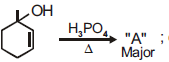
compound "A" is
- a)

- b)

- c)

- d)

Answer:
Question:
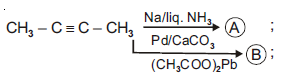
The minimum heat of hydrogenation is in
- a)

- b)

- c) Both have equal
- d) Cannot predict
Answer:
Question:
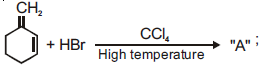
- b)

- c)

- d)

Answer:
Question: In which of the following reactions Markovnikov’s rule is not observed ?
- a)

- b)

- c)

- d) Both (2) & (3)
Answer: Both (2) & (3)
Question: The reaction of CH3CH = CH2 with HOCl will yield
- a) 2-chloro-1-propanol
- b) 3-chloro-2-propanol
- c) 1-chloro-2-propanol
- d) 1-chloro-1-propanol
Answer: 1-chloro-2-propanol
Question: What is X in the following sequence of reactions?

- a) Methane
- b) Ethanoic acid
- c) Propane
- d) None of these
Answer: Ethanoic acid
Question: Addition of HBr to propene
- a) Follows Markovnikov’s rule
- b) Does not follow Markovnikov’s rule
- c) Follows Markovnikov’s rule but the product rearranges to give anti–Markovnikov’s product
- d) Follows free radical mechanism
Answer: Follows Markovnikov’s rule
Question: In an attempt to prepare propane by Wurtz reaction 1 mole of methyl bromide and 1 mole of ethyl bromide are treated with sodium. Assuming equal probability for all possible reaction. How many g of propane will be obtained?
- a) 44 g
- b) 22 g
- c) 33 g
- d) 14.67 g
Answer: 14.67 g
Question: Addition of HBr to 2-methyl-1-propene in the presence of hydrogen-peroxide produces
- a) 1-Bromobutane
- b) 2-Bromopropane
- c) 2-Bromo-2-methylpropane
- d) 1-Bromo-2-methylpropane
Answer: 2-Bromo-2-methylpropane
Question: Toluene

Here Y is
- a) Benzaldehyde
- b) Toluene
- c) Benzoic acid
- d) Ethylbenzene
Answer: Benzoic acid
Question: C6H5CH2CH2CH3 is when oxidised in the presence of alk. KMnO4, the product obtained is
- a) C6H5CHO
- b) C6H5COOH
- c) C6H5CH2CH2CHO
- d) C6H5COCH3
Answer: C6H5COOH
Question:

Z is
- a) Acetic acid
- b) Acetic anhydride
- c) Acetone
- d) Chloromethane
Answer: Chloromethane
More Questions............................................
Question:
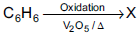
Here, X is
- a) Maleic anhydride
- b) Acetic acid
- c) Propanoic acid
- d) Succinic acid
Answer: Maleic anhydride
Question: In Kharasch effect; reaction follows
- a) Free radical substitution
- b) Electrophilic addition
- c) Free radical addition
- d) Nucleophilic addition
Answer: Free radical addition
Question:
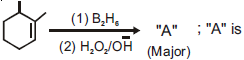
- a)

- b)

- c)

- d)

Answer:
Question:

is
- a) CH3– CH = CH – CH3
- b) CH2= CH – CH2– CH3
- c)
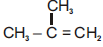
- d) Both (2) & (3)
Answer: CH2= CH – CH2– CH3
Question:
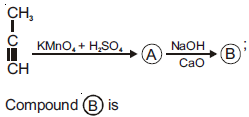
- a) C2H6
- b) CH4
- c) CH3COOH
- d) CH3COONa
Answer: CH4
Question:
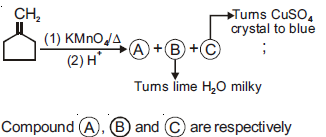
- a)
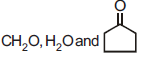
- b)
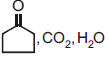
- c)
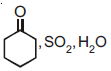
- d)
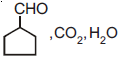
Answer:
Question:
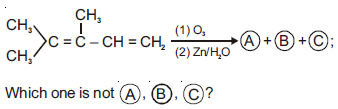
- a)
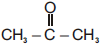
- b) CH2O
- c)
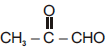
- d) CH3CHO
Answer: CH3CHO
Question:
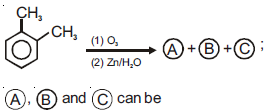
- a)
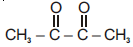
- b)

- c)
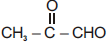
- d) All of these
Answer: All of these
Question: Baeyer’s reagent is
- a) 1% Alkaline KMnO4
- b) Acidic KMnO4
- c) Neutral KMnO4
- d) Aq. Br2 solution
Answer: 1% Alkaline KMnO4
Question: Acetylene when oxidized with chromic acid gives
- a) Ethylene glycol
- b) Oxalic acid
- c) Formic acid
- d) Acetic acid
Answer: Acetic acid
Question: The catalyst used to reduce an alkyne to alkene is
- a) Raney Nickel
- b) Palladium
- c) Lindlar’s catalyst
- d) Iron
Answer: Lindlar’s catalyst
Question: Benzene undergoes substitution reaction more easily than addition because
- a) It has a cyclic structure
- b) It has three double bonds
- c) Of delocalization of π-electrons
- d) It has six hydrogen atoms
Answer: Of delocalization of π-electrons
Question: A mixture of C2H6, C2H4 and C2H2 is bubbled through alkaline solution of copper (I) chloride, contained in Woulf’s bottle.The gas coming out is
- a) Original mixture
- b) C2H6
- c) C2H6 and C2H4mixture
- d) C2H4 and C2H2
Answer: C2H6 and C2H4mixture
Question: Ethylene + S2Cl2—→ "A" ; The compound "A" is
- a) Lewisite
- b) Mustard oil
- c) Mustard gas
- d) Insecticide
Answer: Mustard gas
Question:

Addition of H2O in the reaction is an example of
- a) Electrophilic addition
- b) Nucleophilic addition
- c) Free radical addition
- d) Electrophilic substitution
Answer: Nucleophilic addition
Question: Monomer of neoprene is
- a) Chloroprene
- b) Acetylene
- c) Vinyl acetylene
- d) Both (2) & (3)
Answer: Acetylene
Question:
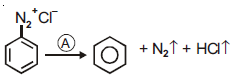
Compound "A" is
- a) H3PO2
- b) H3PO3
- c) H3PO4
- d) Both (1) & (2)
Answer: Both (1) & (2)
Question:

Compound "A" is
- a) Isopropyl benzene
- b) Cumene
- c) An alkyl derivative of benzene
- d) All of these
Answer: All of these
Question: In sulphonation of benzene; electrophilic reagent used is
- a)

- b) SO3
- c)

- d)

Answer: SO3
Question: Which one is o, p-directing group for electrophilic substitution reaction?
- a)

- b)

- c)

- d)

Answer:
Question:
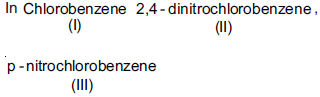
The decreasing order of reactivity towards electrophilic substitution reaction is
- a) (I) > (II) > (III)
- b) (I) > (III) > (II)
- c) (II) > (I) > (III)
- d) (III) > (I) > (II)
Answer: (I) > (III) > (II)
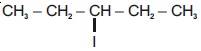
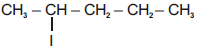
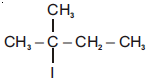
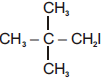
Question:
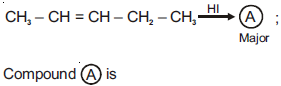
- a)
- b)
- c)
- d)
Answer:
Question: The electrophile which attacks in Friedel-Craft acylation is
- a)

- b)

- c)

- d) Both (1) & (3)
Answer:
Question: Which of the following shows geometrical isomerism?
- a) But-1-ene
- b) But-2-ene
- c) Prop-1-ene
- d) Pent-1-ene
Answer: But-2-ene
Question:

The best suitable reagent 'A' is
- a) C3H8S2/H2/Ni
- b) N2H4/KOH
- c) Zn–Hg/conc. HCl
- d) HI/P(red)
Answer: N2H4/KOH
Question:
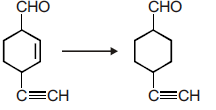
The most suitable reagent for given conversion is
- a) Diimide
- b) H2/Ni2B
- c) Zn/dil. HCl
- d) LiAlH4
Answer: Diimide
Question: Consider the following two structures
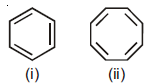
Choose the correct statement
- a) Both (i) & (ii) are conjugated system
- b) (i) & (ii) both show resonance
- c) (i) & (ii) both are aromatic
- d) (i) is less stable than (ii)
Answer: Both (i) & (ii) are conjugated system
Question:
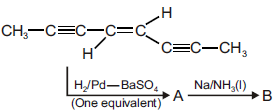
In above reaction product (B) is
- a)
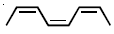
- b)
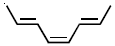
- c)
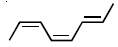
- d)
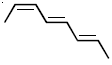
Answer:
Question: In the given reaction
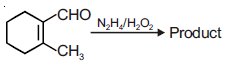
The product will be
- a)

- b)

- c)
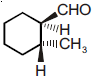
- d) Mixture of (1) & (2)
Answer:
Question:

Product (C) is
- a) Mixture of n-butane, ethane
- b) Only propane
- c) Only ethane
- d) n-hexane
Answer: Only propane
Multiple Choice Questions (MCQs) for NEET Chemistry Hydrocarbons
About Hydrocarbons MCQs for NEET Chemistry
Review structured objective questions for NEET Chemistry Hydrocarbons. Built according to official NEET guidelines, these MCQ sets support daily revision and core concept reinforcement.
How to Verify Your MCQ Answers
Cross-reference your completed choices with comprehensive NCERT solutions for NEET Chemistry to ensure absolute clarity across all sub-topics in this chapter.
Enhance Speed with Online MCQ Tests
Follow up your worksheet practice by attempting the interactive online Chemistry MCQ test for this chapter to evaluate your execution speed. All platform resources are free to access.
FAQs
You can get most exhaustive NEET Chemistry Hydrocarbons MCQs Set 01 for free on StudiesToday.com. These MCQs for NEET Chemistry are updated for the 2026-27 academic session as per NEET examination standards.
Yes, our NEET Chemistry Hydrocarbons MCQs Set 01 include the latest type of questions, such as Assertion-Reasoning and Case-based MCQs. 50% of the NEET paper is now competency-based.
By solving our NEET Chemistry Hydrocarbons MCQs Set 01, NEET students can improve their accuracy and speed which is important as objective questions provide a chance to secure 100% marks in the Chemistry.
Yes, Chemistry MCQs for NEET have answer key and brief explanations to help students understand logic behind the correct option as its important for 2026 competency-focused NEET exams.
Yes, you can also access online interactive tests for NEET Chemistry Hydrocarbons MCQs Set 01 on StudiesToday.com as they provide instant answers and score to help you track your progress in Chemistry.