

Multiple Choice Questions (MCQs) for NEET Chemistry: Chemistry In Everyday Life
Access targeted multiple-choice questions for Chemistry In Everyday Life designed to align with the latest NEET academic syllabus for NEET Chemistry. These objective practice sets help students evaluate their conceptual understanding and improve exam readiness.
Practice Chemistry In Everyday Life MCQs for NEET Chemistry
Navigate directly to the 50 objective questions for Chemistry In Everyday Life using the digital viewer below. Each practice set includes verified answer keys, allowing students to instantly cross-check their work and identify areas requiring further revision.
Question: Chemotherapy is
- a) Use of heat for therapeutic effect
- b) Use of chemical for therapeutic effect
- c) Use of natural reagent for therapeutic effect
- d) All of these
Answer: Use of natural reagent for therapeutic effect
Question: How do enzyme catalyse the reaction?
- a) By holding the substrate molecule for chemical reaction
- b) By providing functional groups which will attack the substrate to carry out chemical reaction
- c) Both (1) & (2)
- d) Neither (1) nor (2)
Answer: Both (1) & (2)
Question: Drugs which compete with natural substrate for their attachment on the active sites of enzymes are called
- a) Enzyme Inhibitors
- b) Competitive Inhibitors
- c) Non-competitive Inhibitors
- d) Drug targets
Answer: Competitive Inhibitors
Question: Drugs which interfere with natural action of histamine by competing with histamine are called
- a) Antidepressant
- b) Antihistamines
- c) Antimicrobial
- d) Antipyretic
Answer: Antihistamines
Question: Barbituric acid and its derivatives constitutes an important class of
- a) Narcotic analgesic
- b) Antiallergic
- c) Tranquilizers
- d) Antimicrobial
Answer: Tranquilizers
Question: Important function of the drug with the following structure
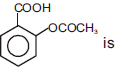
- a) Reducing fever
- b) Relieving pain
- c) Anti blood clotting action
- d) All of these
Answer: All of these
Question: Non-narcotics includes all, except
- a) Ibuprofen
- b) Paracetamol
- c) Opiate
- d) Diclofenac sodium
Answer: Opiate
Question: Bacteriostatic drugs work by
- a) Arresting the growth of organisms
- b) By increasing immunity and resistance of body to infection
- c) By killing the organism in the body
- d) Both (1) & (3)
Answer: Arresting the growth of organisms
Question: Antibiotics which do not have bactericidal action among the following is
- a) Penicillin
- b) Tetracycline
- c) Ofloxacin
- d) Streptomycin
Answer: Tetracycline
Question: Antiseptic which is a mixture of chloroxylenol and α-terpineol is
- a) Savlon
- b) Dettol
- c) Bithional
- d) Salol
Answer: Dettol
More Questions.............................
Question: Drugs which contain mixture of norethindrone and ethynylestradiol are
- a) Antibiotics
- b) Antifertility
- c) Antiseptic
- d) Antacid
Answer: Antifertility
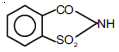
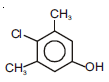
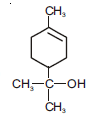
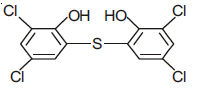
Question: The correct structure of Bithional is
- a)
- b)
- c)
- d)

Answer:
Question: Salvarsan is an antimicrobial agent which is used for curing
- a) Malaria
- b) Allergy
- c) Syphilis
- d) Depression
Answer: Syphilis
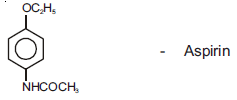
Question: Which is mismatched regarding the structure?
- a)
- b)
- c)
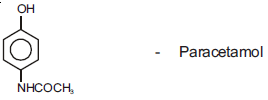
- d) Both (2) & (3)
Answer:
Question: Drugs can be classified on the basis of
- a) Pharmocological effect
- b) Drug action
- c) Chemical structure
- d) All of these
Answer: All of these
Question: Antacids include
- a) Omeprazole
- b) Lansoprazole
- c) Sodium bicarbonate
- d) All of these
Answer: All of these
Question: Drawback of excess of hydrogen carbonate taking as antacid is
- a) It is insoluble
- b) It can make stomach alkaline and trigger the production of even more acid
- c) It causes ulcer
- d) It causes pain and irritation
Answer: It can make stomach alkaline and trigger the production of even more acid
Question: Tranquilizers are prescribed for curing
- a) Anxiety, stress, irritability
- b) The growth of microorganism
- c) Pain, Fever
- d) All of these
Answer: Anxiety, stress, irritability
Question: Tincture of iodine is
- a) Iodoform
- b) 100% Iodine
- c) 2-3% Iodine solution in alcohol-water
- d) Iodobenzene
Answer: 2-3% Iodine solution in alcohol-water
Question: 0.2% of solution of phenol and 0.2–0.4 ppm chlorine in aqueous solution respectively behave as
- a) Antiseptic, Disinfectant
- b) Disinfectant, Antiseptic
- c) Disinfectant, Disinfectant
- d) Antiseptic, Antiseptic
Answer: Antiseptic, Disinfectant
Question: Birth control pills essentially contains
- a) Synthetic estrogen
- b) Synthetic progesterone
- c) Both (1) & (2)
- d) Neither (1) nor (2)
Answer: Both (1) & (2)
Question: Which is mismatched, regarding the examples?
- a) Broad spectrum Antibiotic - Chloramphenicol
- b) Narrow spectrum antibiotic - Ampicillin
- c) Antiseptic - Furacine
- d) Antifertility - Novestrol
Answer: Narrow spectrum antibiotic - Ampicillin
Question: Chemicals are added to food for
- a) Preservation
- b) Enhancing the appeal
- c) Adding nutritive value
- d) All of these
Answer: All of these
Question: The first popular artificial sweetening agent is
- a) Saccharin
- b) Aspartame
- c) Alitame
- d) Both (2) & (3)
Answer: Saccharin
Question: The compound with structure
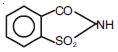
is used as
- a) Food preservative
- b) Artificial sweetener
- c) Medicine
- d) Edible colour
Answer: Artificial sweetener
Question: The main disadvantage associated with use of aspartame is
- a) Its sweetening power is less
- b) It is unstable at cooking temperature
- c) It provide calories
- d) It is difficult to control its sweetness
Answer: It is unstable at cooking temperature
Question: Which of the following can be used as food preservative?
- a) Vegetable oil
- b) Table salt
- c) Sodium benzoate
- d) All of these
Answer: All of these
Question: Among the following, the maximum high potency sugar is
- a) Saccharin
- b) Alitame
- c) Sucralose
- d) Aspartame
Answer: Alitame
Question: Soaps are sodium or potassium salt of long chain fatty acids like
- a) Palmitic acid
- b) Oleic acid
- c) Stearic acid
- d) All of these
Answer: All of these
Question:

Product ‘A’ in the above reaction is
- a) Acetone
- b) Glycol
- c) Methanol
- d) Glycerol
Answer: Glycerol
Multiple Choice Questions (MCQs) for NEET Chemistry Chemistry In Everyday Life
Download Multiple Choice Questions: Chemistry In Everyday Life (NEET Chemistry)
Explore reliable practice questions for Chemistry In Everyday Life tailored for NEET Chemistry learners. Use these multiple-choice formats to evaluate preparedness and strengthen problem-solving skills.
Concept Clarification for Chemistry In Everyday Life
Cross-reference your completed choices with comprehensive NCERT solutions for NEET Chemistry to ensure absolute clarity across all sub-topics in this chapter.
Additional Study Resources for NEET Chemistry
Follow up your worksheet practice by attempting the interactive online Chemistry MCQ test for this chapter to evaluate your execution speed. All platform resources are free to access.
FAQs
You can get most exhaustive NEET Chemistry Chemistry In Everyday Life MCQs Set 01 for free on StudiesToday.com. These MCQs for NEET Chemistry are updated for the 2026-27 academic session as per NEET examination standards.
Yes, our NEET Chemistry Chemistry In Everyday Life MCQs Set 01 include the latest type of questions, such as Assertion-Reasoning and Case-based MCQs. 50% of the NEET paper is now competency-based.
By solving our NEET Chemistry Chemistry In Everyday Life MCQs Set 01, NEET students can improve their accuracy and speed which is important as objective questions provide a chance to secure 100% marks in the Chemistry.
Yes, Chemistry MCQs for NEET have answer key and brief explanations to help students understand logic behind the correct option as its important for 2026 competency-focused NEET exams.
Yes, you can also access online interactive tests for NEET Chemistry Chemistry In Everyday Life MCQs Set 01 on StudiesToday.com as they provide instant answers and score to help you track your progress in Chemistry.