

Class 11 Biology Practice Assignments: CBSE Class 11 Biology Morphology of Flowering Plants Assignments
Explore structured practice materials through the CBSE Class 11 Biology Morphology of Flowering Plants Assignments. Tailored for Class 11 learners, utilizing these Biology assignments ensures thorough preparation and strengthens foundational knowledge before final CBSE evaluations.
Download Chapter 05 Morphology Of Flowering Plants Assignment PDF with Solutions
View or download the dedicated CBSE Class 11 Biology Morphology of Flowering Plants Assignments resource below. Engaging with these assignments under focused study conditions ensures continuous academic progress and mastery of the 2026-27 curriculum.
Question. Placenta and pericarp are both edible portions in
(a) apple
(b) banana
(c) tomato
(d) potato.
Answer. C
Question. An aggregate fruit is one which develops from
(a) multicarpellary syncarpous gynoecium
(b) multicarpellary apocarpus gynoecium
(c) complete inflorescence
(d) multicarpellary superior ovary.
Answer. B
Question. How many plants in the list given below have composite fruits that develop from an inflorescence?
Walnut, poppy, radish, fig, pineapple, apple, tomato, mulberry.
(a) Four
(b) Five
(c) Two
(d) Three
Answer. D
Question. The coconut water and the edible part of coconut are equivalent to
(a) endosperm
(b) endocarp
(c) mesocarp
(d) embryo.
Answer. A
Question. A drupe develops in
(a) mango
(b) wheat
(c) pea
(d) tomato.
Answer. A
Question. A fruit developed from hypanthodium inflorescence is called
(a) sorosis
(b) syconus
(c) caryopsis
(d) hesperidium.
Answer. B
Question. Cotyledons and testa respectively are edible parts in
(a) walnut and tamarind
(b) french bean and coconut
(c) cashew nut and litchi
(d) groundnut and pomegranate.
Answer. D
Question. The fleshy receptacle of syconus of fig encloses a number of
(a) berries
(b) mericarps
(c) achenes
(d) samaras.
Answer. C
Question. Dry indehiscent single-seeded fruit formed from bicarpellary syncarpous inferior ovary is
(a) berry
(b) cremocarp
(c) caryopsis
(d) cypsela.
Answer. D
Question. The fruit is chambered, developed from inferior ovary and has seeds with succulent testa in
(a) guava
(b) cucumber
(c) pomegranate
(d) orange.
Answer. C
Question. Pineapple (Ananas) fruit develops from
(a) a multilocular monocarpellary flower
(b) a unilocular polycarpellary flower
(c) a multipistillate syncarpous flower
(d) a cluster of compactly borne flowers on a common axis.
Answer. D
Question. In which of the following fruits, the edible part is the aril ?
(a) Litchi
(b) Custard apple
(c) Pomegranate
(d) Orange
Answer. A
Question. Which of the following represents the edible part of the fruit of litchi?
(a) Mesocarp
(b) Endocarp
(c) Pericarp
(d) Juicy aril
Answer. D
Question. Edible part of mango is
(a) endocarp
(b) receptacle
(c) epicarp
(d) mesocarp.
Answer. D
Question. Juicy hair-like structures observed in the lemon fruit develop from
(a) exocarp
(b) mesocarp
(c) endocarp
(d) mesocarp and endocarp.
Answer. C
Question. Geocarpic fruit is
(a) potato
(b) peanut
(c) onion
(d) garlic.
Answer. B
Question. Edible part in mango is
(a) mesocarp
(b) epicarp
(c) endocarp
(d) epidermis.
Answer. A
Question. Edible part of banana is
(a) epicarp
(b) mesocarp and less developed endocarp
(c) endocarp and less developed mesocarp
(d) epicarp and mesocarp.
Answer. C
Question. Geocarpic fruit is
(a) carrot
(b) radish
(c) groundnut
(d) turnip.
Answer. C
Question. Which plant will lose its economic value, if its fruits are produced by induced parthenocarpy?
(a) Orange
(b) Banana
(c) Grape
(d) Pomegranate
Answer. D
Question. Which of the following is a ‘true fruit’?
(a) Banana
(b) Fig
(c) Apple
(d) Pear
Answer. A
Question. Fruit of Mangifera indica is
(a) berry
(b) drupe
(c) capsule
(d) siliqua.
Answer. B
Question. Mango juice is obtained from
(a) epicarp
(b) mesocarp
(c) endocarp
(d) pericarp and thalamus.
Answer. B
Question. Fruit of groundnut is
(a) legume
(b) caryopsis
(c) berry
(d) nut.
Answer. A
Question. The body of the ovule is fused within the funicle at
(a) hilum
(b) micropyle
(c) nucellus
(d) chalaza.
Answer. A
Question. Cotyledon of maize grain is called
(a) coleoptile
(b) scutellum
(c) plumule
(d) coleorhiza.
Answer. B
Question. The wheat grain has an embryo with one large, shield shaped cotyledon known as
(a) scutellum
(b) coleoptile
(c) epiblast
(d) coleorhiza.
Answer. A
Question. Which one of the following statements is correct?
(a) The seed in grasses is not endospermic.
(b) Mango is a parthenocarpic fruit.
(c) A proteinaceous aleurone layer is present in maize grain.
(d) A sterile pistil is called a staminode.
Answer. C
Case Based MCQs
Direction Read the following and answer the questions that follow
Flower morphology consists of a large number of parameters, including the number and shape of petals, number of stamens, petal size and number and arrangement of styles and ovaries. Some of these characters, for example, the size of floral organs, seem to be controlled by several genes, whereas single (five petals) versus double (> 10 petals) was shown to be inherited by a single gene. Wild rose species (with the exception of Rosa sericea and Rosa omeiensis) normally have five petals but a variable number of stamens and styles.
Question. A modified shoot wherein the shoot apical meristem changes into floral meristem is known as
(a) inflorescence
(b) thalamus
(c) peduncle
(d) flower
Answer. D
Question. Individual flowers are attached to inflorescence axis by
(a) peduncle
(b) petiole
(c) pedicel
(d) bract
Answer. C
Question. A flower which can be divided into two exactly equal halves by any vertical plane passing through centre is
(a) zygomorphic
(b) actinomorphic
(c) hypogynous
(d) epigynous
Answer. B
Question. Epipetalous is condition of
(a) placentation
(b) position of ovary
(c) stamens
(d) aestivation of petals
Answer. C
Question. Match the following columns.
Column I Column II
A. Calyx and corolla 1. Bisexual
B. Androecium and 2. Unisexual
gynoecium
C. A flower having either 3. Accessory organs
only stamen or
only carpels
D. When a flower 4. Reproductive organs
has both
androecium
and gynoecium
Codes
A B C D
(a) 3 4 2 1
(b) 4 3 1 2
(c) 1 2 4 3
(d) 2 1 3 4
Answer. A
Identify the given representation of flower with its various parts and answer the questions that follows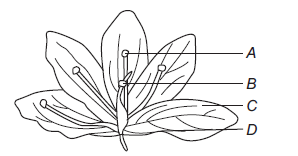
Question. Choose the incorrect match for the labels A, B, C and D in the above figure.
(a) A–Androecium
(b) B–Gynoecium
(c) C–Pedicel
(d) D–Calyx
Answer. C
Question. The term ‘polyadelphous’ is related to
(a) gynoecium
(b) androecium
(c) corolla
(d) calyx
Answer. B
Question. Ovary is half-inferior in the flowers of
(a) guava
(b) plum
(c) brinjal
(d) cucumber
Answer. B
Question. The enlarged basal part on which lies the elongated tube of style is
(a) corolla
(b) calyx
(c) ovary
(d) ovule
Answer. C
Question. Trimerous, tetramerous and pentamerous are terms related to
(a) placentation
(b) position of ovary
(c) number of floral appendages
(d) number of stamens
Answer. C
Identify the given floral diagram and answer the questions that follow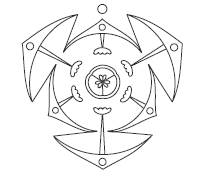
Question. The given floral formula is of
(a) Aloe
(b) lupin
(c) chilli
(d) All of these
Answer. A
Question. Which of the following is the correct representation of floral diagram given above?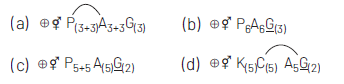
Answer. A
Question. Plants having the above given floral diagram are
(a) leguminous
(b) dicots
(c) medicinal and perennial
(d) having pinnately compound leaves
Answer. C
Question. The given floral formula is of plants belonging to
(a) dicots
(b) monocots
(c) Both dicots and monocots
(d) monoecious plants
Answer. B
Question. Choose the incorrect match for family in the floral diagram.
(a) Fruit – Capsule
(b) Seed – Endospermic
(c) Androecium – Epipetalous
(d) Gynoecium – Inferior ovary
Answer. D
Direction Read the following and answer the questions that follow
Floral formula is a symbolic and numerical representation of various floral parts of a plant family. It helps to ascertain the symmetry, sexuality and the arrangement of various floral parts like calyx, corolla, androecium and gynoecium. It also helps to describe the families of flowering plants in a sequential, brief and scientific language. While writing the floral formula, the bract are represented first, followed by bracteate, symmetry, sex of flower, calyx, corolla, androecium and gynoecium. The number of parts of each structure is indicated in numerals after their relevant symbol.
Question. The number of ‘K’ and ‘C’ in family–Solanaceae is
(a) 5 and 6, respectively
(b) 5 each
(c) 6 each
(d) 3 and 6, respectively
Answer. B
Question. The symbol G(3) represents
(a) tricarpellary gynoecium
(b) inferior ovary
(c) apocarpous ovary
(d) All of the above
Answer. A
Question. Petunia belongs to the family
(a) Liliaceae
(b) Fabaceae
(c) Solanaceae
(d) Orchidaceae
Answer. C
Question. To represent bracteate and actinomorphic condition, which symbol is used?
(a) Brs
(b) Brl%
(c) Brl
(d) Brr
Answer. D
Question. Study and identify the correct conclusions with respect to the floral diagram given below.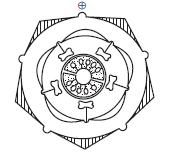
I. The calyx has 5 gamosepalous sepals.
II. Corolla has 5 gamopetalous petals.
III. Flowers possess radial symmetry.
IV. Androecium has 5 polyandrous stamens.
Codes
(a) I and II
(b) III and IV
(c) I, II, III and IV
(d) I, II and IV
Answer. C
Free study material for Biology
Chapter Assignment & Practice Material for Class 11 Biology Chapter 05 Morphology Of Flowering Plants
Revision Assignment: Chapter 05 Morphology Of Flowering Plants (CBSE)
Access structured practice assignments for Chapter 05 Morphology Of Flowering Plants designed in alignment with the latest CBSE curriculum for Class 11 Biology. These printable sets cover objective and descriptive problem types to support thorough revision.
Key Advantages of Solving Chapter 05 Morphology Of Flowering Plants Assignments
- Curriculum Standards: Assignments match modern CBSE sample formats to ensure relevant preparation.
- Thorough Revision: Detailed problem sets reinforce core concepts and eliminate conceptual weak spots.
- Execution Speed: Timed practice with assignment sets sharpens overall response timing.
Effective Strategy for Class 11 Biology Assignments
- Initial Reading: Begin by reading the NCERT book for Class 11 Biology to build a baseline understanding.
- Independent Testing: Attempt assignment questions unassisted, then verify work using provided answer keys.
- Supplementary Aids: Leverage revision notes and worksheets whenever you encounter difficult topics.
FAQs
You can download free PDF assignments for Class 11 Biology Chapter 05 Morphology Of Flowering Plants from StudiesToday.com. These practice sheets have been updated for the 2026-27 session covering all concepts from latest NCERT textbook.
Yes, our teachers have given solutions for all questions in the Class 11 Biology Chapter 05 Morphology Of Flowering Plants assignments. This will help you to understand step-by-step methodology to get full marks in school tests and exams.
Yes. These assignments are designed as per the latest CBSE syllabus for 2026. We have included huge variety of question formats such as MCQs, Case-study based questions and important diagram-based problems found in Chapter 05 Morphology Of Flowering Plants.
Practicing topicw wise assignments will help Class 11 students understand every sub-topic of Chapter 05 Morphology Of Flowering Plants. Daily practice will improve speed, accuracy and answering competency-based questions.
Yes, all printable assignments for Class 11 Biology Chapter 05 Morphology Of Flowering Plants are available for free download in mobile-friendly PDF format.