

Official Class 9 Science Worksheets: Chapter 12 Improvement in Food Resources
Access comprehensive chapter-wise worksheets for Chapter 12 Improvement in Food Resources using the CBSE Class 9 Biology Improvement In Food Resources Worksheet Set 01. Designed to align with the 2026-27 academic syllabus for Class 9 Science, these printable practice sets help students reinforce key concepts and improve their overall exam readiness.
Solved Practice Worksheets for Science
Access the complete worksheet PDF for Class 9 Science below. Regular practice with these targeted academic tasks builds familiarity with standard question patterns and helps secure higher marks in final school examinations.
Question. Which one of the following includes only macronutrients?
(A) C,N, Ca
(B) H, Fe, P
(C) O, K, Cl
(D) K, S, Zn
Answer : A
Question. Green maturing refers to
(A) add green leaves to the soil
(B) grow young and green crops of leguminous plants along with non leguminous
(C) add decomposed organic matter to soil
(D) none of these
Answer : B
Question. Damp grains in storage gets heated due to
(A) infestation by insects
(B) decrease in humidity
(C) decrease in atmospheric pressure
(D) high moisture content and growth of moulds
Answer : D
Question. The principal cereal crop of India is
(A) wheat
(B) rice
(C) maize
(D) sorghum
Answer : B
Question. which is the most important source of food and fodder ?
(A) Algae
(B) Fungi
(C) Lichen
(D) Cereal
Answer : D
Question. Rotation of crops is essential for
(A) getting different kinds of crops
(B) increasing quality of minerals
(C) increasing quality of proteins
(D) increasing fertility of soil
Answer : D
Question. Weedicides among the following are
(A) 2, 4-D, nitrofen, atrazine
(B) atrazine, BHC, pyrethrum
(C) Pyrethrum, EDB, methyl bromide
(D) 2, 4-D , BHC, EDB
Answer : A
Question. The science of vegetable culture is called as
(A) Agriculture
(B) Horticulture
(C) Olericulture
(D) Floriculture
Answer : C
Question. All animals are
(A) Parasitic
(B) saprophytic
(C) autotrophic
(D) heteotrophic
Answer : D
Question. Murrah, Surti and Mehsana are the indigenous breeds of
(A) cows
(B) buffaloes
(C) poultry
(D) pigs
Answer : B
Question. Vermicomposting involves
(A) earthworm
(B) cockroach
(C) leech
(D) roundworm
Answer : A
Question. Improved storage structures include
(A) grain silos
(B) pusa bin
(C) pusa kothar
(D) all of these
Answer : D
Question. Transfer of seedling from the nurseries to the main field is termed as
(A) weeding
(B) sowing
(C) transplantation
(D) ploughing
Answer : C
Question. Nodules with nitrogen – fixing bacteria are present in
(A) mustard
(B) wheat
(C) gram
(D) cotton
Answer : C
Question. Application of nitrogenous manure to a plant causes
(A) vigorous vegetative growth
(B) early flowering
(C) early
(D) growth retardation due to toxicity to NH3
Answer : A
Question. Honey bee culture is called as
(A) pisciculture
(B) apiculture
(C) sericulture
(D) horticulture
Answer : B
Question. Inland fisheries is referred to
(A) culturing fish in fresh water
(B) deep sea fisheries
(C) extraction of oil from fishes
(D) capturing fishes from seas
Answer : A
Question. chemical used to kill rats and moles is called as
(A) fungicide
(B) nematicide
(C) rodenticide
(D) insecticide
Answer : C
Question. Cropping pattern involving a definite pattern of rows is called as
(A) crop rotation
(B) mixed cropping
(C) inter cropping
(D) monoculture
Answer : C
Question. cattle food rich in one or more nutrients but lacks fibres is called as
(A) roughage
(B) concentrate
(C) sap
(D) none of these
Answer : B
Question. The unwanted wild plants growing alonwith the crop plants are called
(A) weeds
(B) seedling
(C) minor crops
(D) grasses
Answer : A
Question. IR36 and Pusa Basmati are high yielding varieties of
(A) rice
(B) wheat
(C) maize
(D) mustard
Answer : A
Question. The element which is required in largest quantity by plants is
(A) sulphur
(B) calcium
(C) phosphorus
(D) nitrogen
Answer : D
Question. Hybridization can be
(A) intervarietal
(B) interspecific
(C) intergeneric
(D) all of these
Answer : D
Answer the following questions:
1. How do plants get nutrients?
2. What are the desirable agronomic characteristics for crop improvement?
3. Why should preventive measures and biological controls methods be preferred for protecting crops?
4. What factors are responsible for losses of grains during storage?
5. Mention two advantages of animal husbandry.
6. What are Kharif and Rabi crops?
7. State one importance of photoperiod in agriculture
8. What is mariculture?
9. What is vermicompost?
10. What is crop rotation?
11. List two desirable traits for fodder crops?
12. What is the advantage of green manure?
13. Why there is a need for varietal improvement?
14. Define hybridization.
15. Define green revolution and white revolution.
16. What is animal husbandry? Differentiate between Milch and draught animals.
17. Distinguish between Apiculture and Aquaculture.
18. How does the deficiency of nutrients affect the growth of plants?
19. Why should weeds be constantly removed from cultivated fields?
20. Define manures. What are its three different kinds?
Q1. What are milch animals?
Q2. Name two cattle breeds which shows excellent resistance of diseases.
Q3. Mention two signs of a healthy animal.
Q4. Name any two local varieties of bees that are used for commercial honey production in India.
Q5. How is the use of manures beneficial for our environment?
Q6. List the important preventive measures to control weeds.
Q7. What are the advantages of bee keeping?
Q8. What are the main elements of animal husbandry?
Q9. Give the merits and demerits of fish culture?
Q10. Write the modes by which insects affect the crop yield.
Q11. Why is excess use of fertilizers detrimental for the environment?
Q12. Define the terms hybridization and photoperiod.
Q13. Differentiate between compost and vermicompost?
Q14. What is green manure?
Q15. What do you understand by organic farming?
ONE MARK QUESTIONS
1. Name two weeds which compete for food, space and light with the main crop.
2. Give one advantage of building small check dams to stop the rain water from flowing away.
3. Plants get carbon, oxygen and hydrogen from_____________________ and ____________________.
4. Name the revolutions to increase food and milk production.
TWO MARKS QUESTIONS
5. Define hybridization and its types.
6. Enumerate two differences between mixed cropping and intercropping.
7. Give two advantages of using manure over fertilizer.
8. State any four factors for which crop variety improvement is done.
9. Define the term photoperiod. State its significance.
THREE MARKS QUESTIONS
10. Mention the three different ways in which crop plants can be attacked by insect pests. Suggest one control measure and two preventive measures against pests.
11. What is irrigation? Explain any two kinds of water resources available to supply water for irrigation.
12. Farmers should use quality seeds, adopt irrigation, use fertilizer if needed and use crop protection measures. Justify the statement giving reasons. FIVE
MARKS QUESTIONS
13. a) Differentiate between macro nutrients and micro nutrients. b) Briefly describe the formation of compost. What is vermi-compost? c) Name the plants used as green manure and the nutrients they supply to the soil.
14. Mr.Raghuveer singh has 30 cents of land and still believes in joint family system so his two sons with their families live together. Earlier the land gave good yield of crops now the yield has drastically reduced. His grandson showed these two methods of cropping patterns (farming) as a solution.
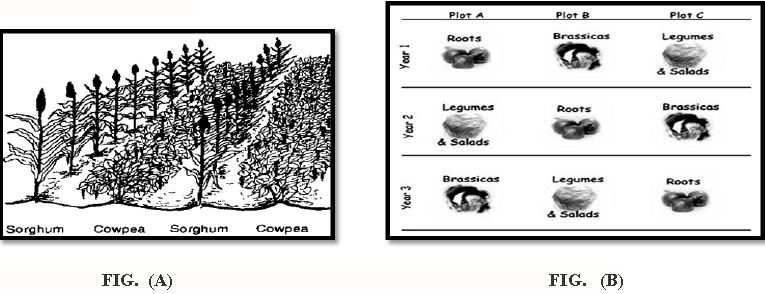
a) Identify the two methods shown in the fig. A & B.
b) State the advantages of these two methods.
c) Comment on the suggestions given by his grandson.
d) Explain organic farming
1. Which one is not a source of carbohydrate? a) Rice b) Millets c) Sorghum d) Gram __________________________________.
2. State two objectives of organic farming.
3. Choose the correct options given about manure: (i) Manure contains large quantities of organic matter and small quantities of nutrients. (ii) It increases the water holding capacity of sandy soil. (iii) It helps in draining out of excess of water from clayey soil. (iv) Its excessive use pollutes environment because it is made of animal excretory waste.
(a) (i),(ii) & (iv)
(b) (i), (iii)&(iv)
(c) (i),(ii) and (iii)
(d) only(iv)
4. What are weeds? Mention any two methods of preventing the growth of weeds?
5. Fill in the blanks : (a) Kharif crops are cultivated from _________________________to __________________________. (b) Rabi crops are cultivated from _____________________to______________________________. (c) Paddy, maize, green gram, soyabean, cotton, pigeon pea, ground nut and black gram are ________________crops. (d) Wheat, gram, pea, mustard, linseed, barley, potato, tomato, cumin, oat and fenugreek are _______________ crops.
6. What is a GM crop? Name any one such crop which is grown in India.
7. State the two major factors to be considered while aiming for optimum yields in crop production.
8.
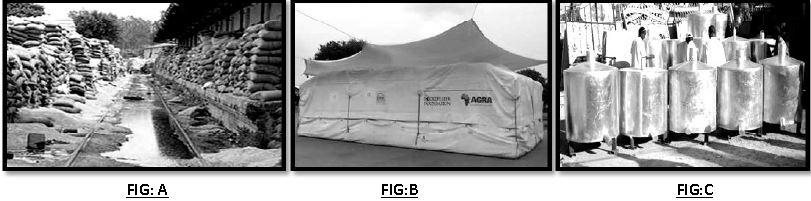
Arvind returned to his village in agra after completing his M.Sc in Agricultural sciences. He saw the condition of the storage of food grains shown in fig.A. He suggested the simple method shown in fig.B as immediate remedial method but later after educating farmers, he wants to at least introduce the method shown in fig.C. a) List the two factors responsible for the loss of food grains shown in fig.A. b) Give two values which are inculcated in Arvind’s attitude towards the villagers. c) List two preventive and control measures to be used before grains are stored for future use in fig.C.
ONE MARK QUESTIONS
1.Define animal husbandry.
2.Give one difference between milch and draught animals.
3.Name two shell fish.
4.State one major problem faced by the farmers dealing with composite fish culture.
TWO MARKS QUESTIONS
5.What is pasturage and how is it related to honey production?
6.Mention any four desirable traits for which cross breeding programs between Indian and foreign breeds are undertaken in Poultry farming.
7.State one difference between : a) Inland and Marine fishery b) Culture and Capture fishery.
8.Name two finned marine fishes of high economic value. Give the scientific names of marine and fresh water prawns.
THREE MARKS QUESTIONS
9.Explain the food requirements of dairy animals. Describe two main components of cattle feed.
10.Why is Italian bee considered to be the best yielder?
11. Suggest three methods which ensure the production of clean milk and humane cattle farming techniques.
12. List two reasons of beekeeping to be used as a source of income. Name two local varieties of bees used for honey production. Name an Italian bee variety brought to India to increase the yield of honey. FIVE MARKS QUESTIONS
13. Enlist the differences between broilers and layers with respect to their purpose of breeding and daily food requirement? Suggest four methods to prevent the occurrence of infectious diseases in poultry farm.
14. a) Explain composite fish culture in detail.
b) Suggest one method to overcome the lack of good quality seeds available for composite fish culture.
c) Give two advantages of composite fish culture.
15. a) State one factor on which the production of milk depends.
b) Name two exotic and local breeds of cattle.
c) Enumerate the desired qualities for which these exotic and local animals are cross bred.
1.What is common in poultry, fisheries and bee keeping with respect to the increase in production of animals?
2.What do feed additives given to the cattle contain? Why is it essential for dairy animals?
3.Inland fisheries refers to : a) culturing fish in freshwater
b) trapping and capturing fishes from sea coast
c) deep sea fisheries
d) extraction of oil from fishes ______
4. How does Bombay duck differ from common carp? ______
5. Give one example of indigenous and exotic poultry breeds. _________
6. How is the shelter provided to the boiler different from the layers? ________
7. Observe the figure and answer the questions:
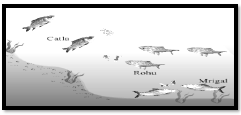
a) Name the process shown in the system. _____________.
b) Name the fish which feed only on weeds. __________.
c) Give one advantage of this system. ________
8. Look at the cattle shed shown in fig:A and fig.B.
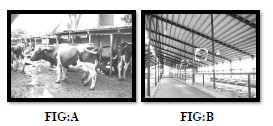
a) Which one is better? Give reasons.
b) The parasites seen in cattle are external or internal. Enlighten this statement.
c) List two signs of a healthy cattle. ___
d) Infectious diseases in cattle are caused by __________and ____________.
e) Regular ____________ are given to farm animals against these infectious diseases.
Free study material for Science
Chapter 12 Improvement in Food Resources Printable Worksheets and Exercises for Class 9 Science
Practice Exercises for Class 9 Science Chapter 12 Improvement in Food Resources
Access structured practice worksheets for Chapter 12 Improvement in Food Resources aligned with the 2026 CBSE curriculum. These downloadable exercises for Class 9 Science help students build accuracy and reinforce core concepts for upcoming school tests.
Step-by-Step Solutions and Practice Guidelines
Each worksheet draws directly from authorized standard textbooks to maintain academic accuracy. Evaluating your finished exercises against expert-verified solutions helps master the formal presentation standards expected in school evaluations.
Enhance Speed with Online Practice
Wrap up your chapter revision by testing your knowledge against standard objective question formats. Explore our full library of free, up-to-date printable assignments to maximize your academic results in upcoming CBSE evaluations.
FAQs
You can download the latest chapter-wise printable worksheets for Class 9 Science Chapter 12 Improvement in Food Resources for free from StudiesToday.com. These have been made as per the latest CBSE curriculum for this academic year.
Yes, Class 9 Science worksheets for Chapter 12 Improvement in Food Resources focus on activity-based learning and also competency-style questions. This helps students to apply theoretical knowledge to practical scenarios.
Yes, we have provided solved worksheets for Class 9 Science Chapter 12 Improvement in Food Resources to help students verify their answers instantly.
Yes, our Class 9 Science test sheets are mobile-friendly PDFs and can be printed by teachers for classroom.
For Chapter 12 Improvement in Food Resources, regular practice with our worksheets will improve question-handling speed and help students understand all technical terms and diagrams.