

Class 12 Mathematics Practice Assignments: CBSE Class 12 Mathematics Applications Of Derivatives Assignment Set 03
Review targeted academic assignments with the CBSE Class 12 Mathematics Applications Of Derivatives Assignment Set 03. Built according to official CBSE standards for the 2026-27 term, these downloadable Class 12 Mathematics worksheets support effective daily practice for Chapter 06 Applications Of Derivatives.
Download Chapter 06 Applications Of Derivatives Assignment PDF with Solutions
Access the complete assignment PDF for Class 12 Mathematics below. Regular practice with these targeted academic tasks builds familiarity with standard question patterns and helps secure higher marks in final school evaluations.
CASE STUDY QUESTIONS
1. Yash wants to prepare a handmade gift box for his friend’s birthday at his home. For making lower part of the box, he took a square piece of paper of each side equal to 10 cm.
Based on the above information answer the following questions.
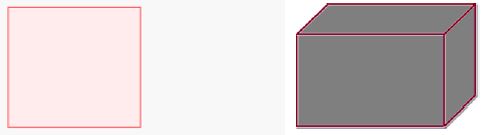
Question. If x cm be the size of square piece cut from each corner of the paper of size 10 cm, then possible value of x will be given by interval
(a) (0,10)
(b) ( 5,10)
(c) (0,5),
(d) (10,15)
Answer : A
Question. Yash is interested to maximise the volume of the box, So what will be the side of the square to be cut to maximise the volume
(a) 5cm
(b) 5/3cm
(c) 3cm
(d) 4cm
Answer : B
Question. Volume of the open box formed by folding up the cutting corner can be expressed as
(a) V=2x(10-2x)(10-2x)
(b) V=x(10-2x)(10-2x)
(c) V=x(10-x)(10-2x)
(d) V= x(10-x)(10-x)
Answer : B
Question. The value of x for which 𝑑𝑉/𝑑𝑥 = 0 𝑖𝑠
(a) 0,5
(b) 5/3 ,0
(c) 5/3,5
(d) 3,4
Answer : C
Question. The maximum volume is
(a) 1000cm3/27
(b) 3000cm3/27
(c) 2000cm3/27
(d) 1000cm3/27
Answer : C
2. A tank with rectangular base of length x metre, breath y metre and rectangular side, open at the top is to be constructed so that the depth is 1 m and volume is 9𝑚3.If building of tank is Rs 70 per square metre for the base and Rs 45 per square metre for the sides?
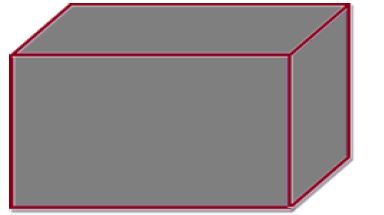
Based on above information answer the following questions.
Question. What is the cost of the base?
(a) 9xy
(b) 70xy
(c) xy
(d) 50xy
Answer : B
Question. For what value of x, C is minimum?
(a) 2
(b) 1
(c) 3
(d) 5
Answer : A
Question. What is the least cost of construction?
(a) Rs 1000
(b) Rs 1170
(c) Rs 1270
(d) 1570
Answer : C
Question. AWhat is the cost of making all the sides?
(a) 90(x+y)
(b) 90xy
(c) 9(x+y)
(d) 40(x +y)
Answer : A
ASSERTION AND REASON
Question. Assertion (A) : The tangent to the curve 𝒚 = 𝒙𝟑 − 𝒙𝟐 − 𝒙 + 𝟐 at (1,1) is parallel to the x- axis .
Reason (R ): The slope of the tangent to the curve at (1,1) is zero.
A. Both A and R are true and R is the correct explanation of A
B. Both A and R are true but R is the correct explanation of A
C. A is true but R is false
D. A is false but R is true
Answer : A
Question. Assertion(A): 𝒚 = 𝐥𝐨𝐠(𝟏 + 𝒙) − 𝟐𝒙/𝟐+𝒙 ,x>-1 is a decreasing function of x throughout its domain
Reason (R ): 𝒅𝒚/𝒅𝒙 > 0 for all x>-1
A. Both A and R are true and R is the correct explanation of A
B. Both A and R are true but R is the correct explanation of A
C. A is true but R is false
D. A is false but R is true
Answer : A
Question. Assertion(A): Function f(x)== 𝐱𝟑 − 𝟑𝐱𝟐 + 𝟑𝐱 + 𝟐 is always increasing. Reason(R):Derivative f’(x) is always negative.
A. Both A and R are true and R is the correct explanation of A
B. Both A and R are true but R is the correct explanation of A
C. A is true but R is false
D. A is false but R is true
Answer : C
Question. Function f(x) = logcosx is strictly increasing on (𝟎, 𝝅/2)
Reason( R): Slope of tangent on the above curve is negative in the given interval.
A. Both A and R are true and R is the correct explanation of A
B. Both A and R are true but R is the correct explanation of A
C. A is true but R is false
D. A is false but R is true
Answer : D
Question. Assertion(A): 𝒚 = 𝒆𝒙 is always strictly increasing function.
Reason (R): 𝒅𝒚/𝒅𝒙 = 𝒆𝒙 > 0 for all real values of x.
A. Both A and R are true and R is the correct explanation of A
B. Both A and R are true but R is the correct explanation of A
C. A is true but R is false
D. A is false but R is true
Answer : A
Question. Assertion (A): Slope of the tangent to the curve y = 𝟑𝒙𝟒 − 𝟒𝒙 at x=4 is 764 Reason (R): The value of 𝒅𝒚/𝒅𝒙 = 𝟏𝟐𝒙𝟑 − 𝟒 is 764 at x= 4
A. Both A and R are true and R is the correct explanation of A
B. Both A and R are true but R is the correct explanation of A
C. A is true but R is false
D. A is false but R is true
Answer : A
Question. Assertion (A) Tangent to the curve 𝒚 = 𝟐𝒙𝟑 + 𝒙𝟐 + 𝟐 at the point (-1,0) is parallel to the line y = 4x + 3
Reason (R): Slope of the tangent at (-1,0) is 4 equal to the slope of the given line .
A. A is false but R is true
B. Both A and R are true but R is the correct explanation of A
C. A is true but R is false
D. Both A and R are true and R is the correct explanation of A
Answer : A
Question. Assertion(A): Function f(x) =𝒙 + 𝟏/x is strictly increasing in the interval (-1,1)
Reason(R) : Derivative f’(x) <0 in the interval
A. Both A and R are true and R is the correct explanation of A
B. Both A and R are true but R is the correct explanation of A
C. A is true but R is false
D. A is false but R is true
Answer : C
Question. Assertion(A): At the (3,27) on the curve 𝒚 = 𝒙𝟑, slope of the tangent is equal to y coordinate of the point.
Reason (R): 𝒅𝒚/𝒅𝒙 = 𝟑𝒙𝟐 = 𝟐𝟕 𝒂𝒕 𝒙 = 𝟑
A. Both A and R are true and R is the correct explanation of A
B. Both A and R are true but R is the correct explanation of A
C. A is true but R is false
D. A is false but R is true
Answer : A
Question. Assertion(A): Y = sinx is increasing in the interval (𝝅/𝟐, 𝝅)
Reason(R): 𝒅𝒚/𝒅𝒙 is negative in the given interval.
A. Both A and R are true and R is the correct explanation of A
B. Both A and R are true but R is the correct explanation of A
C. A is true but R is false
D. A is false but R is true
Answer : C
Question. Assertion(A): Tangents to the curve y = 𝟕𝒙𝟑 + 𝟏𝟏 at the points where x = 2 and x = – 2 are parallel.
Reason(R): Slope of tangents at both the points are equal.
A. Both A and R are true and R is the correct explanation of A
B. Both A and R are true but R is the correct explanation of A
C. A is true but R is false
D. A is false but R is true
Answer : A
Question. Assertion (A): Maximum value of the function f(x) =(𝟐𝒙 − 𝟏)𝟐 + 𝟑 is 3.
Reason(R): f(x)≥ 𝟑 for all real values of x.
A. Both A and R are true and R is the correct explanation of A
B. Both A and R are true but R is the correct explanation of A
C. A is true but R is false
D. A is false but R is true
Answer : D
Question. Assertion(A): The line y = x + 1 is a tangent to the curve 𝒚𝟐= 4x at the point (1,2).
Reason (R) : Slope of tangent to the given curve at the given point is 1 and the point also satisfies equation of the line.
A. Both A and R are true and R is the correct explanation of A
B. Both A and R are true but R is the correct explanation of A
C. A is true but R is false
D. A is false but R is true
Answer : A
Question. Assertion f(x) = 𝒆𝒙 do not have maxima and minima
Reason ( R) : f ’(x) =𝒆𝒙 ≠ 𝟎 for all real values of x.
A. Both A and R are true and R is the correct explanation of A
B. Both A and R are true but R is the correct explanation of A
C. A is true but R is false
D. A is false but R is true
Answer : A
Question. Assertion (A): x = 0 is the point of local maxima of the function f given by 𝒇 = 𝟑𝒙𝟒 + 𝟒𝒙𝟑 − 𝟏𝟐𝒙𝟐 +12
Reason(R): 𝒇′(𝒙) = 𝟎 𝒂𝒕 𝒙 = 𝟎 𝒂𝒏𝒅 𝒂𝒍𝒔𝒐 𝒇′′(𝒙) < 0 𝑎𝑡 𝑥 = 0
A. Both A and R are true and R is the correct explanation of A
B. Both A and R are true but R is the correct explanation of A
C. A is true but R is false
D. A is false but R is true
Answer : A
1. Rate of change
LEVEL - I
Question 1. A balloon, which always remains spherical, has a variable diameter \(\frac{3}{2}(2x + 1)\). Find the rate of change of its volume with respect to x.
Answer: Let the diameter of the spherical balloon be \(D\) and radius be \(r\).
Given diameter \(D = \frac{3}{2}(2x + 1)\)
Radius \(r = \frac{D}{2} = \frac{3}{4}(2x + 1)\)
Volume of the sphere \(V = \frac{4}{3}\pi r^3\)
Substitute the value of \(r\):
\(V = \frac{4}{3}\pi \left[ \frac{3}{4}(2x + 1) \right]^3\)
\(V = \frac{4}{3}\pi \cdot \frac{27}{64}(2x + 1)^3 = \frac{9}{16}\pi (2x + 1)^3\)
Differentiating \(V\) with respect to \(x\):
\(\frac{dV}{dx} = \frac{9}{16}\pi \cdot 3(2x + 1)^2 \cdot \frac{d}{dx}(2x + 1)\)
\(\frac{dV}{dx} = \frac{27}{16}\pi (2x + 1)^2 \cdot 2 = \frac{27}{8}\pi (2x + 1)^2\) cubic units per unit x.
In simple words: First find the radius from the diameter, write the volume formula in terms of x, and differentiate with respect to x.
Exam Tip: Always double-check whether radius or diameter is given before substituting into the volume formula.
Question 2. The side of a square sheet is increasing at the rate of 4 cm per minute. At what rate is the area increasing when the side is 8 cm long?
Answer: Let \(x\) be the side length of the square and \(A\) be its area.
Given \(\frac{dx}{dt} = 4\) cm/min and \(x = 8\) cm.
Area of the square \(A = x^2\)
Differentiating with respect to time \(t\):
\(\frac{dA}{dt} = 2x \cdot \frac{dx}{dt}\)
Substitute \(x = 8\) and \(\frac{dx}{dt} = 4\):
\(\frac{dA}{dt} = 2(8)(4) = 64\) cm\(^2\)/min.
In simple words: The rate of change of area is twice the product of the side length and the rate of change of the side.
Exam Tip: Include correct units for rates (e.g., cm\(^2\)/min for area).
Question 3. The radius of a circle is increasing at the rate of 0.7 cm/sec. What is the rate of increase of its circumference?
Answer: Let \(r\) be the radius and \(C\) be the circumference of the circle.
Given \(\frac{dr}{dt} = 0.7\) cm/sec.
Circumference \(C = 2\pi r\)
Differentiating with respect to time \(t\):
\(\frac{dC}{dt} = 2\pi \cdot \frac{dr}{dt}\)
Substitute \(\frac{dr}{dt} = 0.7\):
\(\frac{dC}{dt} = 2\pi (0.7) = 1.4\pi\) cm/sec.
In simple words: Differentiate the circumference formula with respect to time to get the rate of its increase.
Exam Tip: Keep \(\pi\) in the final answer unless a decimal approximation is explicitly requested.
LEVEL - II
Question 1. Find the point on the curve \(y^2 = 8x\) for which the abscissa and ordinate change at the same rate?
Answer: Given curve equation: \(y^2 = 8x\)
Differentiating both sides with respect to time \(t\):
\(2y \frac{dy}{dt} = 8 \frac{dx}{dt}\)
\(y \frac{dy}{dt} = 4 \frac{dx}{dt}\)
Given that abscissa (\(x\)) and ordinate (\(y\)) change at the same rate, so \(\frac{dx}{dt} = \frac{dy}{dt}\).
Substitute \(\frac{dy}{dt} = \frac{dx}{dt}\):
\(y \frac{dx}{dt} = 4 \frac{dx}{dt}\)
Since \(\frac{dx}{dt} \neq 0\), we get \(y = 4\).
Substitute \(y = 4\) into the curve equation \(y^2 = 8x\):
\((4)^2 = 8x\)
\(16 = 8x \implies x = 2\)
Thus, the required point is (2, 4).
In simple words: Equate the rates of change of x and y to find a relation between coordinates, then substitute into the curve equation.
Exam Tip: Abscissa refers to x-coordinate and ordinate refers to y-coordinate.
Question 2. A man 2 metre high walks at a uniform speed of 6 km/h away from a lamp post 6 metre high. Find the rate at which the length of his shadow increases. Also find the rate at which the tip of the shadow is moving away from the lamp post.
Answer: Let \(AB\) be the lamp post of height 6 m and \(CD\) be the man of height 2 m walking away from the post.
Let \(BD = x\) be the distance of the man from the lamp post at time \(t\), and \(DS = y\) be the length of his shadow.
Given \(\frac{dx}{dt} = 6\) km/h.
From similar triangles \(\triangle ABS\) and \(\triangle CDS\):
\(\frac{AB}{CD} = \frac{BS}{DS}\)
\(\frac{6}{2} = \frac{x + y}{y}\)
\(3y = x + y \implies 2y = x \implies y = \frac{x}{2}\)
Differentiating with respect to time \(t\):
\(\frac{dy}{dt} = \frac{1}{2} \frac{dx}{dt} = \frac{1}{2}(6) = 3\) km/h.
Thus, the length of the shadow increases at the rate of 3 km/h.
The distance of the tip of the shadow from the lamp post is \(BS = x + y = x + \frac{x}{2} = \frac{3}{2}x\).
Rate at which the tip is moving away: \(\frac{d}{dt}(x + y) = \frac{3}{2} \frac{dx}{dt} = \frac{3}{2}(6) = 9\) km/h.
In simple words: Use similar triangles to relate the shadow length to the distance of the man from the lamp post, then differentiate with respect to time.
Exam Tip: The tip of the shadow moves at a speed equal to the sum of the man's speed and the shadow's growth rate.
Question 3. The length of a rectangle is increasing at the rate of 3.5 cm/sec and its breadth is decreasing at the rate of 3 cm/sec. Find the rate of change of the area of the rectangle when length is 12 cm and breadth is 8 cm.
Answer: Let \(l\) be the length and \(b\) be the breadth of the rectangle.
Given \(\frac{dl}{dt} = 3.5\) cm/sec, \(\frac{db}{dt} = -3\) cm/sec (since breadth is decreasing), \(l = 12\) cm, and \(b = 8\) cm.
Area \(A = l \cdot b\)
Differentiating with respect to time \(t\):
\(\frac{dA}{dt} = l \frac{db}{dt} + b \frac{dl}{dt}\)
Substitute the given values:
\(\frac{dA}{dt} = (12)(-3) + (8)(3.5)\)
\(\frac{dA}{dt} = -36 + 28 = -8\) cm\(^2\)/sec.
Thus, the area is decreasing at the rate of 8 cm\(^2\)/sec.
In simple words: Use the product rule for differentiation on the area formula, keeping in mind that decreasing rates take a negative sign.
Exam Tip: Pay careful attention to words like 'increasing' (positive sign) and 'decreasing' (negative sign).
LEVEL - III
Question 1. A particle moves along the curve \(6y = x^3 + 2\). Find the points on the curve at which y-coordinate is changing 8 times as fast as the x-coordinate.
Answer: Given curve: \(6y = x^3 + 2\)
Differentiating with respect to time \(t\):
\(6 \frac{dy}{dt} = 3x^2 \frac{dx}{dt} \implies 2 \frac{dy}{dt} = x^2 \frac{dx}{dt}\)
Given that \(\frac{dy}{dt} = 8 \frac{dx}{dt}\). Substituting this:
\(2 \left( 8 \frac{dx}{dt} \right) = x^2 \frac{dx}{dt}\)
\(16 \frac{dx}{dt} = x^2 \frac{dx}{dt}\)
Since \(\frac{dx}{dt} \neq 0\), we get \(x^2 = 16 \implies x = \pm 4\).
Case 1: When \(x = 4\),
\(6y = (4)^3 + 2 = 64 + 2 = 66 \implies y = 11\). Point is (4, 11).
Case 2: When \(x = -4\),
\(6y = (-4)^3 + 2 = -64 + 2 = -62 \implies y = -\frac{31}{3}\). Point is \(\left(-4, -\frac{31}{3}\right)\).
Thus, the required points are (4, 11) and \(\left(-4, -\frac{31}{3}\right)\).
In simple words: Differentiate the curve equation with respect to time, substitute the given condition between rates, solve for x, and find the corresponding y values.
Exam Tip: Do not forget both positive and root values when solving \(x^2 = 16\).
Question 2. Water is leaking from a conical funnel at the rate of 5 cm\(^3\)/sec. If the radius of the base of the funnel is 10 cm and altitude is 20 cm, Find the rate at which water level is dropping when it is 5 cm from top.
Answer: Let radius of the water surface be \(r\) and depth be \(h\) at time \(t\).
Given base radius \(R = 10\) cm and height \(H = 20\) cm for the conical funnel.
By similar triangles, \(\frac{r}{h} = \frac{R}{H} = \frac{10}{20} = \frac{1}{2} \implies r = \frac{h}{2}\).
Volume of water in the cone \(V = \frac{1}{3}\pi r^2 h = \frac{1}{3}\pi \left(\frac{h}{2}\right)^2 h = \frac{\pi}{12}h^3\).
Given leakage rate \(\frac{dV}{dt} = -5\) cm\(^3\)/sec.
Differentiating volume with respect to time \(t\):
\(\frac{dV}{dt} = \frac{\pi}{12} \cdot 3h^2 \frac{dh}{dt} = \frac{\pi}{4}h^2 \frac{dh}{dt}\)
The water level is 5 cm from the top, so its depth from the vertex is \(h = 20 - 5 = 15\) cm.
Substitute \(\frac{dV}{dt} = -5\) and \(h = 15\):
\(-5 = \frac{\pi}{4}(15)^2 \frac{dh}{dt}\)
\(-5 = \frac{225\pi}{4} \frac{dh}{dt}\)
\(\frac{dh}{dt} = \frac{-20}{225\pi} = -\frac{4}{45\pi}\) cm/sec.
Thus, the water level is dropping at the rate of \(\frac{4}{45\pi}\) cm/sec.
In simple words: Express the radius in terms of height using similar triangles, write the volume solely in terms of h, differentiate, and substitute the depth measured from the vertex.
Exam Tip: Be careful with measurements given 'from top' versus 'from vertex'; height h in the volume formula is always measured from the vertex.
Question 3. From a cylinder drum containing petrol and kept vertical, the petrol is leaking at the rate of 10 ml/sec. If the radius of the drum is 10 cm and height 50 cm, find the rate at which the level of the petrol is changing when petrol level is 20 cm.
Answer: Let \(r\) be the radius of the cylindrical drum and \(h\) be the height of the petrol at time \(t\).
Given radius \(r = 10\) cm, leakage rate \(\frac{dV}{dt} = -10\) cm\(^3\)/sec (since 1 ml = 1 cm\(^3\)).
Volume of cylinder \(V = \pi r^2 h = \pi (10)^2 h = 100\pi h\).
Differentiating with respect to time \(t\):
\(\frac{dV}{dt} = 100\pi \frac{dh}{dt}\)
Substitute \(\frac{dV}{dt} = -10\):
\(-10 = 100\pi \frac{dh}{dt}\)
\(\frac{dh}{dt} = \frac{-10}{100\pi} = -\frac{1}{10\pi}\) cm/sec.
Thus, the petrol level is dropping at the rate of \(\frac{1}{10\pi}\) cm/sec.
In simple words: For a cylinder, the radius is constant, so only the height changes in the volume formula.
Exam Tip: Note that 1 ml = 1 cm\(^3\), making unit conversion straightforward.
2. Increasing & decreasing functions
LEVEL I
Question 1. Show that \(f(x) = x^3 - 6x^2 + 18x + 5\) is an increasing function for all \(x \in R\).
Answer: Given function: \(f(x) = x^3 - 6x^2 + 18x + 5\)
Differentiating with respect to \(x\):
\(f'(x) = 3x^2 - 12x + 18\)
\(f'(x) = 3(x^2 - 4x + 6)\)
Completing the square inside the parenthesis:
\(f'(x) = 3[(x - 2)^2 - 4 + 6] = 3[(x - 2)^2 + 2]\)
Since \((x - 2)^2 \geq 0\) for all \(x \in R\), we have \((x - 2)^2 + 2 > 0\).
Therefore, \(f'(x) = 3[(x - 2)^2 + 2] > 0\) for all \(x \in R\).
Hence, \(f(x)\) is an increasing function for all \(x \in R\).
In simple words: Find the derivative, express it as a sum of squares, and show it is always positive for every real number.
Exam Tip: Completing the square is the standard technique to prove quadratic expressions retain a constant sign.
Question 2. Show that the function \(x^2 - x + 1\) is neither increasing nor decreasing on (0, 1).
Answer: Let \(f(x) = x^2 - x + 1\)
Differentiating with respect to \(x\):
\(f'(x) = 2x - 1\)
Consider points in the interval \((0, 1)\):
- If \(x = 0.3 \in (0, 1)\), then \(f'(0.3) = 2(0.3) - 1 = 0.6 - 1 = -0.4 < 0\) (decreasing).
- If \(x = 0.7 \in (0, 1)\), then \(f'(0.7) = 2(0.7) - 1 = 1.4 - 1 = 0.4 > 0\) (increasing).
Since \(f'(x) < 0\) for some values in \((0, 1)\) and \(f'(x) > 0\) for other values in \((0, 1)\), the function is neither increasing nor decreasing on \((0, 1)\).
In simple words: Show that the derivative is negative for some numbers in the interval and positive for others.
Exam Tip: Providing specific test points within the given interval is a valid and quick proof for 'neither' statements.
Question 3. Find the intervals in which the function \(f(x) = \sin x - \cos x\), \(0 < x < 2\pi\) is increasing or decreasing.
Answer: Given function: \(f(x) = \sin x - \cos x\)
Derivative: \(f'(x) = \cos x + \sin x\)
To find critical points, set \(f'(x) = 0\):
\(\cos x + \sin x = 0 \implies \sin x = -\cos x \implies \tan x = -1\)
For \(0 < x < 2\pi\), the values of \(x\) where \(\tan x = -1\) are \(x = \frac{3\pi}{4}, \frac{7\pi}{4}\).
These points divide the interval \((0, 2\pi)\) into intervals: \(\left(0, \frac{3\pi}{4}\right)\), \(\left(\frac{3\pi}{4}, \frac{7\pi}{4}\right)\), and \(\left(\frac{7\pi}{4}, 2\pi\right)\).
- In \(\left(0, \frac{3\pi}{4}\right)\), choose \(x = \frac{\pi}{2}\): \(f'\left(\frac{\pi}{2}\right) = \cos\left(\frac{\pi}{2}\right) + \sin\left(\frac{\pi}{2}\right) = 0 + 1 = 1 > 0\) (Increasing).
- In \(\left(\frac{3\pi}{4}, \frac{7\pi}{4}\right)\), choose \(x = \pi\): \(f'(\pi) = \cos(\pi) + \sin(\pi) = -1 + 0 = -1 < 0\) (Decreasing).
- In \(\left(\frac{7\pi}{4}, 2\pi\right)\), choose \(x = 2\pi - \frac{\pi}{6} = \frac{11\pi}{6}\): \(f'\left(\frac{11\pi}{6}\right) = \frac{\sqrt{3}}{2} - \frac{1}{2} > 0\) (Increasing).
Thus, \(f(x)\) is increasing in \(\left(0, \frac{3\pi}{4}\right) \cup \left(\frac{7\pi}{4}, 2\pi\right)\) and decreasing in \(\left(\frac{3\pi}{4}, \frac{7\pi}{4}\right)\).
In simple words: Find critical points by setting the derivative to zero, then test the sign of the derivative in each sub-interval.
Exam Tip: Check trigonometric sign conventions carefully in all four quadrants.
LEVEL II
Question 1. Indicate the interval in which the function \(f(x) = \cos x\), \(0 \leq x \leq 2\pi\) is decreasing.
Answer: Given function: \(f(x) = \cos x\)
Derivative: \(f'(x) = -\sin x\)
For \(f(x)\) to be decreasing, we must have \(f'(x) < 0\):
\(-\sin x < 0 \implies \sin x > 0\)
In the interval \([0, 2\pi]\), \(\sin x > 0\) in the first and second quadrants.
Thus, \(f(x)\) is decreasing in the interval \((0, \pi)\).
In simple words: Cosine is decreasing where its derivative (negative sine) is negative, which happens when sine is positive.
Exam Tip: Remember that sine is positive in quadrants I and II (\(0 < x < \pi\)).
Question 2. Show that the function \(f(x) = \frac{\sin x}{x}\) is strictly decreasing on \((0, \pi/2)\).
Answer: Given function: \(f(x) = \frac{\sin x}{x}\)
Using quotient rule, the derivative is:
\(f'(x) = \frac{x \cos x - \sin x}{x^2}\)
For \(x \in \left(0, \frac{\pi}{2}\right)\), \(x^2 > 0\). We need to check the sign of \(x \cos x - \sin x\).
Let \(g(x) = x \cos x - \sin x\)
\(g'(x) = \cos x - x \sin x - \cos x = -x \sin x\)
For \(x \in \left(0, \frac{\pi}{2}\right)\), \(x > 0\) and \(\sin x > 0\), so \(g'(x) = -x \sin x < 0\).
This means \(g(x)\) is a strictly decreasing function on \(\left(0, \frac{\pi}{2}\right)\).
Since \(g(0) = 0\), for all \(x > 0\), \(g(x) < g(0) = 0\).
Thus, \(x \cos x - \sin x < 0\), which implies \(f'(x) < 0\) for all \(x \in \left(0, \frac{\pi}{2}\right)\).
Hence, \(f(x)\) is strictly decreasing on \(\left(0, \frac{\pi}{2}\right)\).
In simple words: When the numerator's derivative test is complex, define a new function for the numerator and show it decreases from zero.
Exam Tip: This is a standard calculus problem requiring auxiliary function analysis.
Question 3. Find the intervals in which the function \(f(x) = \frac{\log x}{x}\) increasing or decreasing.
Answer: Given function: \(f(x) = \frac{\log x}{x}\) (domain \(x > 0\))
Derivative using quotient rule:
\(f'(x) = \frac{x \cdot \frac{1}{x} - \log x \cdot 1}{x^2} = \frac{1 - \log x}{x^2}\)
For critical points, set \(f'(x) = 0\):
\(1 - \log x = 0 \implies \log x = 1 \implies x = e\)
Since \(x^2 > 0\) for all \(x > 0\), the sign of \(f'(x)\) depends entirely on \(1 - \log x\).
- If \(0 < x < e\), then \(\log x < 1 \implies 1 - \log x > 0 \implies f'(x) > 0\) (Increasing).
- If \(x > e\), then \(\log x > 1 \implies 1 - \log x < 0 \implies f'(x) < 0\) (Decreasing).
Thus, \(f(x)\) is increasing on \((0, e)\) and decreasing on \((e, \infty)\).
In simple words: Differentiate using the quotient rule, find where the numerator equals zero, and test intervals around e.
Exam Tip: Always state the domain of logarithmic functions (\(x > 0\)) before solving.
LEVEL III
Question 1. Find the interval of monotonicity of the function \(f(x) = 2x^2 - \log x\), \(x \neq 0\).
Answer: Given function: \(f(x) = 2x^2 - \log x\) (domain \(x > 0\))
Derivative: \(f'(x) = 4x - \frac{1}{x} = \frac{4x^2 - 1}{x} = \frac{(2x - 1)(2x + 1)}{x}\)
Critical points (where \(f'(x) = 0\)):
\(4x^2 - 1 = 0 \implies x^2 = \frac{1}{4} \implies x = \pm \frac{1}{2}\)
Since the domain is \(x > 0\), the only valid critical point is \(x = \frac{1}{2}\).
Testing intervals in \((0, \infty)\):
- For \(x \in \left(0, \frac{1}{2}\right)\), choose \(x = \frac{1}{4}\): \(f'\left(\frac{1}{4}\right) = \frac{4(1/16) - 1}{1/4} = \frac{1/4 - 1}{1/4} < 0\) (Decreasing).
- For \(x \in \left(\frac{1}{2}, \infty\right)\), choose \(x = 1\): \(f'(1) = 4(1) - 1 = 3 > 0\) (Increasing).
Thus, \(f(x)\) is decreasing on \(\left(0, \frac{1}{2}\right)\) and increasing on \(\left(\frac{1}{2}, \infty\right)\).
In simple words: Combine fractions in the derivative to easily identify critical points, then test intervals within the domain \(x > 0\).
Exam Tip: Discard negative critical points because the logarithm function is undefined for non-positive numbers.
Question 2. Prove that the function \(y = \frac{4\sin \theta}{2 + \cos \theta} - \theta\) is an increasing function of \(\theta\) in \([0, \pi/2]\).
Answer: Given function: \(f(\theta) = \frac{4\sin \theta}{2 + \cos \theta} - \theta\)
Differentiating with respect to \(\theta\):
\(f'(\theta) = \frac{(2 + \cos \theta)(4\cos \theta) - (4\sin \theta)(-\sin \theta)}{(2 + \cos \theta)^2} - 1\)
\(f'(\theta) = \frac{8\cos \theta + 4\cos^2 \theta + 4\sin^2 \theta}{(2 + \cos \theta)^2} - 1\)
\(f'(\theta) = \frac{8\cos \theta + 4(\cos^2 \theta + \sin^2 \theta)}{(2 + \cos \theta)^2} - 1 = \frac{8\cos \theta + 4}{(2 + \cos \theta)^2} - 1\)
Taking LCM:
\(f'(\theta) = \frac{8\cos \theta + 4 - (2 + \cos \theta)^2}{(2 + \cos \theta)^2}\)
\(f'(\theta) = \frac{8\cos \theta + 4 - (4 + 4\cos \theta + \cos^2 \theta)}{(2 + \cos \theta)^2}\)
\(f'(\theta) = \frac{8\cos \theta + 4 - 4 - 4\cos \theta - \cos^2 \theta}{(2 + \cos \theta)^2}\)
\(f'(\theta) = \frac{4\cos \theta - \cos^2 \theta}{(2 + \cos \theta)^2} = \frac{\cos \theta (4 - \cos \theta)}{(2 + \cos \theta)^2}\)
For \(\theta \in \left[0, \frac{\pi}{2}\right]\):
- \(\cos \theta \geq 0\)
- \(4 - \cos \theta > 0\) (since maximum value of \(\cos \theta\) is 1)
- \((2 + \cos \theta)^2 > 0\)
Therefore, \(f'(\theta) \geq 0\) for all \(\theta \in \left[0, \frac{\pi}{2}\right]\).
Hence, the function is an increasing function.schl
In simple words: Simplify the derivative using trigonometric identities and show that all factors in the numerator and denominator are positive in the given interval.
Exam Tip: Use the identity \(\sin^2\theta + \cos^2\theta = 1\) to simplify complex derivative expressions.
3. Tangents & Normals
LEVEL - I
Question 1. Find the equations of the normals to the curve \(3x^2 - y^2 = 8\) which are parallel to the line \(x + 3y = 4\).
Answer: Given curve: \(3x^2 - y^2 = 8\)
Differentiating implicitly with respect to \(x\):
\(6x - 2y \frac{dy}{dx} = 0 \implies \frac{dy}{dx} = \frac{3x}{y}\)
Slope of the tangent at point \((x_1, y_1)\) is \(m_t = \frac{3x_1}{y_1}\).
Slope of the normal at \((x_1, y_1)\) is \(m_n = -\frac{1}{m_t} = -\frac{y_1}{3x_1}\).
Given line: \(x + 3y = 4 \implies y = -\frac{1}{3}x + \frac{4}{3}\), so its slope is \(-\frac{1}{3}\).
Since the normal is parallel to this line, their slopes must be equal:
\(-\frac{y_1}{3x_1} = -\frac{1}{3} \implies y_1 = x_1\)
Since point \((x_1, y_1)\) lies on the curve \(3x_1^2 - y_1^2 = 8\), substitute \(y_1 = x_1\):
\(3x_1^2 - x_1^2 = 8 \implies 2x_1^2 = 8 \implies x_1^2 = 4 \implies x_1 = \pm 2\).
Thus, the points are (2, 2) and (-2, -2).
Equation of normal at (2, 2) with slope \(-\frac{1}{3}\):
\(y - 2 = -\frac{1}{3}(x - 2) \implies 3y - 6 = -x + 2 \implies x + 3y = 8\).
Equation of normal at (-2, -2) with slope \(-\frac{1}{3}\):
\(y + 2 = -\frac{1}{3}(x + 2) \implies 3y + 6 = -x - 2 \implies x + 3y = -8\).
Thus, the equations of the normals are \(x + 3y = 8\) and \(x + 3y = -8\).
In simple words: Find the slope of the normal, equate it to the slope of the parallel line to find a coordinate relation, substitute into the curve equation to find points, and write the line equations.
Exam Tip: Parallel lines have identical slopes; perpendicular lines have negative reciprocal slopes.
Question 2. Find the point on the curve \(y = x^2\) where the slope of the tangent is equal to the x-coordinate of the point.
Answer: Given curve: \(y = x^2\)
Slope of the tangent: \(\frac{dy}{dx} = 2x\)
According to the question, the slope of the tangent equals the x-coordinate:
\(2x = x \implies 2x - x = 0 \implies x = 0\)
Substitute \(x = 0\) into the curve equation \(y = x^2\):
\(y = (0)^2 = 0\)
Thus, the required point is (0, 0).
In simple words: Equate the derivative to the x-coordinate and solve for x.
Exam Tip: Always substitute the solved x-value back into the original curve equation to find the corresponding y-coordinate.
Question 3. At what points on the circle \(x^2 + y^2 - 2x - 4y + 1 = 0\), the tangent is parallel to x axis?
Answer: Given circle: \(x^2 + y^2 - 2x - 4y + 1 = 0\)
Differentiating implicitly with respect to \(x\):
\(2x + 2y \frac{dy}{dx} - 2 - 4 \frac{dy}{dx} = 0\)
\(2(y - 2)\frac{dy}{dx} = 2(1 - x) \implies \frac{dy}{dx} = \frac{1 - x}{y - 2}\)
Since the tangent is parallel to the x-axis, its slope is zero: \(\frac{dy}{dx} = 0\).
\(\frac{1 - x}{y - 2} = 0 \implies 1 - x = 0 \implies x = 1\)
Substitute \(x = 1\) into the circle equation:
\((1)^2 + y^2 - 2(1) - 4y + 1 = 0\)
\(1 + y^2 - 2 - 4y + 1 = 0\)
\(y^2 - 4y = 0 \implies y(y - 4) = 0 \implies y = 0 \text{ or } y = 4\)
Thus, the points are (1, 0) and (1, 4).
In simple words: A tangent parallel to the x-axis has a slope of zero, which means setting the numerator of the derivative to zero.
Exam Tip: Parallel to the x-axis means slope = 0; parallel to the y-axis means slope is undefined (denominator = 0).
LEVEL - II
Question 1. Find the equation of the normal to the curve \(ay^2 = x^3\) at the point \((am^2, am^3)\).
Answer: Given curve: \(ay^2 = x^3\)
Differentiating with respect to \(x\):
\(2ay \frac{dy}{dx} = 3x^2 \implies \frac{dy}{dx} = \frac{3x^2}{2ay}\)
Slope of the tangent at \((am^2, am^3)\):
\(m_t = \frac{3(am^2)^2}{2a(am^3)} = \frac{3a^2 m^4}{2a^2 m^3} = \frac{3}{2}m\)
Slope of the normal: \(m_n = -\frac{1}{m_t} = -\frac{2}{3m}\)
Equation of the normal passing through \((am^2, am^3)\) with slope \(-\frac{2}{3m}\):
\(y - am^3 = -\frac{2}{3m}(x - am^2)\)
\(3my - 3am^4 = -2x + 2am^2\)
\(2x + 3my - 2am^2 - 3am^4 = 0\)
In simple words: Calculate the derivative, substitute the parametric point to get the slope of the tangent, find its negative reciprocal for the normal slope, and use point-slope form.
Exam Tip: Handle parametric coordinates carefully when substituting into derivative expressions.
Question 2. For the curve \(y = 2x^2 + 3x + 18\), find all the points at which the tangent passes through the origin.
Answer: Given curve: \(y = 2x^2 + 3x + 18\)
Let \((x_1, y_1)\) be a point on the curve where the tangent passes through the origin. Since it lies on the curve:
\(y_1 = 2x_1^2 + 3x_1 + 18\) ---(1)
Slope of the tangent at \((x_1, y_1)\):
\(m = \frac{dy}{dx}\Big|_{(x_1, y_1)} = 4x_1 + 3\)
Equation of the tangent passing through \((x_1, y_1)\) with slope \(4x_1 + 3\):
\(y - y_1 = (4x_1 + 3)(x - x_1)\)
Since this tangent line passes through the origin (0, 0), substitute \(x = 0, y = 0\):
\(0 - y_1 = (4x_1 + 3)(0 - x_1)\)
\(y_1 = x_1(4x_1 + 3) = 4x_1^2 + 3x_1\) ---(2)
Equating (1) and (2):
\(2x_1^2 + 3x_1 + 18 = 4x_1^2 + 3x_1\)
\(2x_1^2 = 18 \implies x_1^2 = 9 \implies x_1 = \pm 3\)
- When \(x_1 = 3\), \(y_1 = 2(3)^2 + 3(3) + 18 = 18 + 9 + 18 = 45\).
- When \(x_1 = -3\), \(y_1 = 2(-3)^2 + 3(-3) + 18 = 18 - 9 + 18 = 27\).
Thus, the required points are (3, 45) and (-3, 27).
In simple words: Write the tangent equation at an arbitrary point, substitute the origin coordinates to get an equation in terms of the point, and solve alongside the curve equation.
Exam Tip: When a line passes through the origin, its y-intercept is zero, making point-slope substitution straightforward.
Question 3. Find the equation of the normals to the curve \(y = x^3 + 2x + 6\) which are parallel to the line \(x + 14y + 4 = 0\).
Answer: Given curve: \(y = x^3 + 2x + 6\)
Slope of the tangent: \(m_t = \frac{dy}{dx} = 3x^2 + 2\)
Slope of the normal: \(m_n = -\frac{1}{3x^2 + 2}\)
Given line: \(x + 14y + 4 = 0 \implies y = -\frac{1}{14}x - \frac{4}{14}\), so its slope is \(-\frac{1}{14}\).
Since the normal is parallel to this line, their slopes are equal:
\(-\frac{1}{3x^2 + 2} = -\frac{1}{14}\)
\(3x^2 + 2 = 14 \implies 3x^2 = 12 \implies x^2 = 4 \implies x = \pm 2\)
- When \(x = 2\), \(y = (2)^3 + 2(2) + 6 = 8 + 4 + 6 = 18\). Point is (2, 18).
- When \(x = -2\), \(y = (-2)^3 + 2(-2) + 6 = -8 - 4 + 6 = -6\). Point is (-2, -6).
Slope of the normal is \(-\frac{1}{14}\) for both points.
- Equation of normal at (2, 18):
\(y - 18 = -\frac{1}{14}(x - 2) \implies 14y - 252 = -x + 2 \implies x + 14y = 254\).
- Equation of normal at (-2, -6):
\(y + 6 = -\frac{1}{14}(x + 2) \implies 14y + 84 = -x - 2 \implies x + 14y = -86\).
Thus, the equations of the normals are \(x + 14y = 254\) and \(x + 14y = -86\).
In simple words: Equate the slope of the normal to the slope of the given line, solve for x coordinates, find corresponding y values, and write the equations of the normals.
Exam Tip: Be careful to convert the slope of the tangent into the slope of the normal before comparing.
Question 4. Show that the equation of tangent at \((x_1, y_1)\) to the parabola \(yy_1 = 2a(x + x_1)\).
Answer: Standard equation of a parabola is \(y^2 = 4ax\).
Differentiating with respect to \(x\):
\(2y \frac{dy}{dx} = 4a \implies \frac{dy}{dx} = \frac{2a}{y}\)
Slope of the tangent at \((x_1, y_1)\) is \(m = \frac{2a}{y_1}\).
Equation of the tangent at \((x_1, y_1)\):
\(y - y_1 = \frac{2a}{y_1}(x - x_1)\)
\(y_1(y - y_1) = 2a(x - x_1)\)
\(y y_1 - y_1^2 = 2ax - 2ax_1\) ---(1)
Since point \((x_1, y_1)\) lies on the parabola \(y^2 = 4ax\), we have \(y_1^2 = 4ax_1\).
Substitute \(y_1^2 = 4ax_1\) into equation (1):
\(y y_1 - 4ax_1 = 2ax - 2ax_1\)
\(y y_1 = 2ax - 2ax_1 + 4ax_1\)
\(y y_1 = 2ax + 2ax_1 \implies yy_1 = 2a(x + x_1)\).
Hence proved.
In simple words: Find the slope by differentiating the parabola equation, write the point-slope form, and substitute the point condition \(y_1^2 = 4ax_1\).
Exam Tip: This is a standard curve-tangent derivation frequently asked in board examinations.
LEVEL - III
Question 1. Find the equation of the tangent line to the curve \(y = \sqrt{5x - 3} - 2\) which is parallel to the line \(4x - 2y + 3 = 0\).
Answer: Given curve: \(y = \sqrt{5x - 3} - 2\)
Slope of the tangent:
\(\frac{dy}{dx} = \frac{1}{2\sqrt{5x - 3}} \cdot 5 = \frac{5}{2\sqrt{5x - 3}}\)
Given line: \(4x - 2y + 3 = 0 \implies 2y = 4x + 3 \implies y = 2x + \frac{3}{2}\), so its slope is 2.
Since the tangent is parallel to this line, their slopes are equal:
\(\frac{5}{2\sqrt{5x - 3}} = 2\)
\(4\sqrt{5x - 3} = 5 \implies \sqrt{5x - 3} = \frac{5}{4}\)
Square both sides:
\(5x - 3 = \frac{25}{16}\)
\(5x = \frac{25}{16} + 3 = \frac{73}{16} \implies x = \frac{73}{80}\)
Substitute \(x\) back to find \(y\):
\(y = \sqrt{5\left(\frac{73}{80}\right) - 3} - 2 = \sqrt{\frac{73}{16} - 3} - 2 = \sqrt{\frac{25}{16}} - 2 = \frac{5}{4} - 2 = -\frac{3}{4}\)
So the point of contact is \(\left(\frac{73}{80}, -\frac{3}{4}\right)\), and slope is 2.
Equation of the tangent:
\(y - \left(-\frac{3}{4}\right) = 2\left(x - \frac{73}{80}\right)\)
\(y + \frac{3}{4} = 2x - \frac{73}{40}\)
Multiply by 40:
\(40y + 30 = 80x - 73 \implies 80x - 40y = 103\).
In simple words: Equate the derivative of the radical function to the slope of the given line, solve for x, find y, and write the line equation.
Exam Tip: Take care with fractional calculations involving square roots.
Question 2. Show that the curve \(x^2 + y^2 - 2x = 0\) and \(x^2 + y^2 - 2y = 0\) cut orthogonally at the point (0, 0).
Answer: Let the two curves be:
\(C_1: x^2 + y^2 - 2x = 0\)
\(C_2: x^2 + y^2 - 2y = 0\)
For curve \(C_1\), differentiating implicitly:
\(2x + 2y \frac{dy}{dx} - 2 = 0 \implies \frac{dy}{dx} = \frac{1 - x}{y}\)
At point (0, 0), the slope \(m_1\) is not defined directly by substitution, but let us check derivatives near origin or rewrite. Wait, at (0, 0):
Let's find \(\frac{dy}{dx}\) for \(C_1\) at (0, 0) by taking limits or parametric forms, or note that differentiating gives \(2x + 2yy' - 2 = 0\). At (0, 0), \(-2 = 0\) which is indeterminate if we substitute directly. Let's solve properly:
From \(C_1\), \(y' = \frac{1-x}{y}\). As \((x, y) \to (0, 0)\), the tangent at origin for \(x^2 + y^2 - 2x = 0\) is obtained by setting lowest degree terms to zero: \(-2x = 0 \implies x = 0\) (y-axis is the tangent at origin). So slope \(m_1 = \infty\).
For curve \(C_2\), \(x^2 + y^2 - 2y = 0 \implies 2x + 2yy' - 2y' = 0 \implies y' = \frac{x}{1-y}\). At (0, 0), \(m_2 = 0\) (x-axis is the tangent at origin).
Since one tangent is along the y-axis (slope \(\infty\)) and the other is along the x-axis (slope 0), they are perpendicular to each other.
Therefore, the curves cut orthogonally at (0, 0).
In simple words: Two curves intersect orthogonally if the product of their tangent slopes at the intersection point is -1, or if their tangents are perpendicular coordinate axes.
Exam Tip: The lowest degree homogeneous terms method quickly yields tangents at the origin for conics.
Question 3. Find the condition for the curves \(\frac{x^2}{a^2} - \frac{y^2}{b^2} = 1\) and \(xy = c^2\) to intersect orthogonally.
Answer: Let \((x_1, y_1)\) be the point of intersection of the two curves.
For the first curve \(\frac{x^2}{a^2} - \frac{y^2}{b^2} = 1\):
Differentiating implicitly:
\(\frac{2x}{a^2} - \frac{2y}{b^2}\frac{dy}{dx} = 0 \implies \frac{dy}{dx} = \frac{b^2 x}{a^2 y}\)
Slope of the first curve at \((x_1, y_1)\) is \(m_1 = \frac{b^2 x_1}{a^2 y_1}\).
For the second curve \(xy = c^2\):
Differentiating implicitly:
\(x \frac{dy}{dx} + y = 0 \implies \frac{dy}{dx} = -\frac{y}{x}\)
Slope of the second curve at \((x_1, y_1)\) is \(m_2 = -\frac{y_1}{x_1}\).
Since the curves intersect orthogonally, \(m_1 \cdot m_2 = -1\):
\(\left(\frac{b^2 x_1}{a^2 y_1}\right) \left(-\frac{y_1}{x_1}\right) = -1\)
\(-\frac{b^2}{a^2} = -1 \implies \frac{b^2}{a^2} = 1 \implies a^2 = b^2 \text{ or } \frac{1}{a^2} - \frac{1}{b^2} = 0\).
Thus, the required condition is \(\frac{1}{a^2} - \frac{1}{b^2} = 0\) (or \(a^2 = b^2\)).
In simple words: Find the derivative for both curves at the intersection point and set the product of their slopes to -1.
Exam Tip: Orthogonal intersection always requires the product of slopes to equal -1.
4. Approximations
LEVEL - I
Question Q.1. Evaluate \(\sqrt{25.3}\).
Answer: Let \(y = \sqrt{x}\). Let \(x = 25\) and \(\Delta x = 0.3\).
Then \(\Delta y = \frac{dy}{dx} \Delta x = \frac{1}{2\sqrt{x}} \Delta x\).
Substitute \(x = 25\) and \(\Delta x = 0.3\):
\(\Delta y = \frac{1}{2\sqrt{25}}(0.3) = \frac{0.3}{10} = 0.03\)
Approximate value \(\sqrt{25.3} \approx \sqrt{x} + \Delta y = 5 + 0.03 = 5.03\).
In simple words: Use differentials formula \(f(x + \Delta x) \approx f(x) + f'(x)\Delta x\) with a nearby perfect square.
Exam Tip: Choose the nearest standard value (like 25 for square root) as x.
Question Q.2. Use differentials to approximate the cube root of 66.
Answer: Let \(y = x^{1/3}\). Let \(x = 64\) (since \(64^{1/3} = 4\)) and \(\Delta x = 2\).
\(\Delta y = \frac{dy}{dx} \Delta x = \frac{1}{3x^{2/3}} \Delta x\)
Substitute \(x = 64\) and \(\Delta x = 2\):
\(\Delta y = \frac{1}{3(64)^{2/3}}(2) = \frac{2}{3(16)} = \frac{2}{48} = \frac{1}{24} \approx 0.0417\)
Approximate value \((66)^{1/3} \approx 4 + 0.0417 = 4.0417\).
In simple words: Choose 64 as the base number because its cube root is an integer.
Exam Tip: Always state your choice of base x and increment \(\Delta x\) clearly.
Question Q.3. Evaluate \(\sqrt{0.082}\).
Answer: Let \(y = \sqrt{x}\). Let \(x = 0.09\) (since \(\sqrt{0.09} = 0.3\)) and \(\Delta x = -0.008\).
\(\Delta y = \frac{1}{2\sqrt{x}} \Delta x\)
Substitute \(x = 0.09\) and \(\Delta x = -0.008\):
\(\Delta y = \frac{1}{2(0.3)}(-0.008) = \frac{-0.008}{0.6} = -\frac{8}{600} = -\frac{1}{75} \approx -0.0133\)
Approximate value \(\sqrt{0.082} \approx 0.3 - 0.0133 = 0.2867\).
In simple words: Pick 0.09 as the nearby decimal with an exact square root, and calculate the small negative change.
Exam Tip: Watch decimal placement carefully when dividing small numbers.
Question Q.4. Evaluate \(\sqrt{49.5}\) .
Answer: Let \(y = \sqrt{x}\). Let \(x = 49\) and \(\Delta x = 0.5\).
\(\Delta y = \frac{1}{2\sqrt{x}} \Delta x\)
Substitute \(x = 49\) and \(\Delta x = 0.5\):
\(\Delta y = \frac{1}{2(7)}(0.5) = \frac{0.5}{14} = \frac{1}{28} \approx 0.0357\)
Approximate value \(\sqrt{49.5} \approx 7 + 0.0357 = 7.0357\).
In simple words: Split 49.5 into 49 and 0.5, then apply the linear approximation formula.
Exam Tip: Round decimals to 4 places unless specified otherwise.
LEVEL-II
Question 1. If the radius of a sphere is measured as 9 cm with an error of 0.03 cm, then find the approximate error in calculating its surface area.
Answer: Let \(r\) be the radius of the sphere. Given \(r = 9\) cm and error in radius \(dr = \Delta r = 0.03\) cm.
Surface area of the sphere \(S = 4\pi r^2\)
Differentiating with respect to \(r\):
\(\frac{dS}{dr} = 8\pi r \implies dS = 8\pi r \cdot dr\)
Substitute \(r = 9\) and \(dr = 0.03\):
\(dS = 8\pi (9)(0.03) = 72\pi (0.03) = 2.16\pi\) cm\(^2\).
Thus, the approximate error in calculating the surface area is \(2.16\pi\) cm\(^2\).
In simple words: Use differentials to find the change in surface area corresponding to a small error in radius.
Exam Tip: Error in measurement is treated mathematically as the differential \(dr\) or \(\Delta r\).
5. Maxima & Minima
LEVEL I
Question 1. Find the maximum and minimum value of the function \(f(x) = 3 - 2\sin x\).
Answer: Given function: \(f(x) = 3 - 2\sin x\)
We know that for any real \(x\), the range of sine function is: \(-1 \leq \sin x \leq 1\)
Multiplying throughout by -2 (inequality sign reverses):
\(2 \geq -2\sin x \geq -2 \implies -2 \leq -2\sin x \leq 2\)
Adding 3 throughout:
\(3 - 2 \leq 3 - 2\sin x \leq 3 + 2\)
\(1 \leq f(x) \leq 5\)
Thus, the maximum value is 5 and the minimum value is 1.
In simple words: Use the known bounds of the sine function to determine the maximum and minimum values directly.
Exam Tip: Bounded trigonometric functions make direct range evaluation faster than derivative tests.
Question 2. Show that the function \(f(x) = x^3 + x^2 + x + 1\) has neither a maximum value nor a minimum value.
Answer: Given function: \(f(x) = x^3 + x^2 + x + 1\)
Derivative: \(f'(x) = 3x^2 + 2x + 1\)
Discriminant of the quadratic expression \(3x^2 + 2x + 1\) is:
\(D = b^2 - 4ac = (2)^2 - 4(3)(1) = 4 - 12 = -8 < 0\)
Since the discriminant is negative and the coefficient of \(x^2\) is positive (3 > 0), \(f'(x) > 0\) for all \(x \in R\).
Since \(f'(x)\) never changes sign and is never zero, the function has no critical points.
Hence, \(f(x)\) has neither a maximum nor a minimum value.
In simple words: If the derivative is always positive and never zero, there are no stationary points, so no local maxima or minima exist.
Exam Tip: A negative discriminant for a quadratic derivative guarantees absence of critical points.
Question 3. Find two positive numbers whose sum is 24 and whose product is maximum.
Answer: Let the two positive numbers be \(x\) and \(24 - x\).
Let their product be \(P(x) = x(24 - x) = 24x - x^2\).
First derivative: \(P'(x) = 24 - 2x\)
For critical points, set \(P'(x) = 0\):
\(24 - 2x = 0 \implies x = 12\)
Second derivative: \(P''(x) = -2 < 0\)
Since \(P''(12) < 0\), the product is maximum when \(x = 12\).
The two numbers are \(12\) and \(24 - 12 = 12\).
In simple words: Express the product in terms of a single variable, find critical points using the first derivative, and confirm maximum status with the second derivative.
Exam Tip: For a fixed sum, the product is always maximum when the numbers are equal.
LEVEL II
Question 1. Prove that the area of a right-angled triangle of given hypotenuse is maximum when the triangle is isosceles.
Answer: Let \(h\) be the fixed hypotenuse of the right-angled triangle, and let \(x\) and \(y\) be its other two sides.
Then \(x^2 + y^2 = h^2 \implies y = \sqrt{h^2 - x^2}\).
Area of the triangle \(A = \frac{1}{2}xy = \frac{1}{2}x\sqrt{h^2 - x^2}\).
To simplify differentiation, maximize \(Z = A^2 = \frac{1}{4}x^2(h^2 - x^2) = \frac{1}{4}(h^2 x^2 - x^4)\).
Differentiating with respect to \(x\):
\(\frac{dZ}{dx} = \frac{1}{4}(2h^2 x - 4x^3) = \frac{1}{2}x(h^2 - 2x^2)\)
For critical points, set \(\frac{dZ}{dx} = 0\):
\(h^2 - 2x^2 = 0 \implies 2x^2 = h^2 \implies x = \frac{h}{\sqrt{2}}\).
Then \(y = \sqrt{h^2 - \left(\frac{h}{\sqrt{2}}\right)^2} = \sqrt{\frac{h^2}{2}} = \frac{h}{\sqrt{2}}\).
Since \(x = y\), the triangle is isosceles.
Second derivative test: \(\frac{d^2Z}{dx^2} = \frac{1}{4}(2h^2 - 12x^2)\). At \(x = \frac{h}{\sqrt{2}}\), \(\frac{d^2Z}{dx^2} = \frac{1}{4}(2h^2 - 6h^2) < 0\), confirming maximum area.
In simple words: Maximize the square of the area to avoid square roots, differentiate, find critical points, and show that the two legs are equal.
Exam Tip: Maximizing \(A^2\) instead of \(A\) is a standard algebraic shortcut in optimization problems.
Question 2. A piece of wire 28 units long is cut into two pieces. One piece is bent into the shape of a circle and other into geometrical shape of a square. How should the wire be cut so that the combined area of the two figures is as small as possible.
Answer: Let length \(x\) of the wire be used to form a circle, and the remaining length \(28 - x\) be used to form a square.
Circumference of the circle = \(x \implies 2\pi r = x \implies r = \frac{x}{2\pi}\).
Area of the circle \(A_1 = \pi r^2 = \pi \left(\frac{x}{2\pi}\right)^2 = \frac{x^2}{4\pi}\).
Perimeter of the square = \(28 - x \implies\) side of square \(s = \frac{28 - x}{4}\).
Area of the square \(A_2 = s^2 = \left(\frac{28 - x}{4}\right)^2 = \frac{(28 - x)^2}{16}\).
Total combined area \(A = A_1 + A_2 = \frac{x^2}{4\pi} + \frac{(28 - x)^2}{16}\).
Differentiating with respect to \(x\):
\(\frac{dA}{dx} = \frac{2x}{4\pi} + \frac{2(28 - x)(-1)}{16} = \frac{x}{2\pi} - \frac{28 - x}{8}\)
For critical points, set \(\frac{dA}{dx} = 0\):
\(\frac{x}{2\pi} = \frac{28 - x}{8} \implies \frac{x}{\pi} = \frac{28 - x}{4} \implies 4x = 28\pi - \pi x\)
\(x(4 + \pi) = 28\pi \implies x = \frac{28\pi}{4 + \pi}\).
Second derivative: \(\frac{d^2A}{dx^2} = \frac{1}{2\pi} + \frac{1}{8} > 0\), confirming minimum area.
Thus, the wire should be cut into pieces of length \(\frac{28\pi}{4 + \pi}\) and \(28 - \frac{28\pi}{4 + \pi} = \frac{112}{4 + \pi}\).
In simple words: Formulate the total area function in terms of x, find its first derivative, equate to zero for critical points, and verify the minimum using the second derivative.
Exam Tip: Always verify that the second derivative is positive when proving a minimum area or cost.
Question 3. A window is in the form of a rectangle surmounted by a semicircular opening. The total perimeter of the window is 10 m. Find the dimensions of the window to admit maximum light through the whole opening.
Answer: Let the rectangular part have width \(2x\) and height \(y\). The semicircle surmounted on top has radius \(x\).
Total perimeter \(P = 2y + 2x + \pi x = 10\) (perimeter excludes the base between rectangle and semicircle inside).
Express \(y\) in terms of \(x\):
\(2y = 10 - 2x - \pi x \implies y = 5 - x - \frac{\pi}{2}x\).
Total area of the window \(A = \text{Area of rectangle} + \text{Area of semicircle}\)
\(A = (2x)y + \frac{1}{2}\pi x^2\)
Substitute \(y\):
\(A = 2x\left(5 - x - \frac{\pi}{2}x\right) + \frac{1}{2}\pi x^2\)
\(A = 10x - 2x^2 - \pi x^2 + \frac{1}{2}\pi x^2 = 10x - 2x^2 - \frac{\pi}{2}x^2\)
Differentiating with respect to \(x\):
\(\frac{dA}{dx} = 10 - 4x - \pi x\)
For critical points, set \(\frac{dA}{dx} = 0\):
\(10 - (4 + \pi)x = 0 \implies x = \frac{10}{4 + \pi}\)
Second derivative: \(\frac{d^2A}{dx^2} = -(4 + \pi) < 0\), confirming maximum area.
Dimensions of the window: width \(2x = \frac{20}{4 + \pi}\) m, and height \(y = 5 - \left(\frac{10}{4 + \pi}\right)\left(1 + \frac{\pi}{2}\right) = \frac{10}{4 + \pi}\) m.
In simple words: Write total area and perimeter equations, express height in terms of width, differentiate the area function, and find the value that maximizes light intake.
Exam Tip: Be careful with perimeters of composite figures; only outer boundaries exposed to air are counted.
LEVEL III
Question 1. Find the area of the greatest isosceles triangle that can be inscribed in a given ellipse having its vertex coincident with one extremity of major axis.
Answer: Let the ellipse be \(\frac{x^2}{a^2} + \frac{y^2}{b^2} = 1\).
Let the vertex of the isosceles triangle coincide with the right extremity of the major axis, i.e., \((a, 0)\).
Let the other two vertices on the ellipse be \((-x_1, y_1)\) and \((-x_1, -y_1)\).
Height of the triangle is \(h = a + x_1\), and base is \(b_t = 2y_1\).
Area of the triangle \(A = \frac{1}{2} \cdot \text{base} \cdot \text{height} = \frac{1}{2}(2y_1)(a + x_1) = y_1(a + x_1)\).
Since \((-x_1, y_1)\) lies on the ellipse, \(\frac{x_1^2}{a^2} + \frac{y_1^2}{b^2} = 1 \implies y_1 = \frac{b}{a}\sqrt{a^2 - x_1^2}\).
Substitute \(y_1\) into the area formula:
\(A = \frac{b}{a}(a + x_1)\sqrt{a^2 - x_1^2} = \frac{b}{a}(a + x_1)^{1/2}(a - x_1)^{1/2}(a + x_1)^{1/2} \dots\) wait, let's simplify:
\(A = \frac{b}{a}(a + x_1)\sqrt{(a - x_1)(a + x_1)} = \frac{b}{a}(a + x_1)^{3/2}(a - x_1)^{1/2}\).
Differentiating with respect to \(x_1\) and setting to zero gives \(x_1 = \frac{a}{2}\).
Substituting \(x_1 = \frac{a}{2}\) into the area formula gives the maximum area \(A = \frac{3\sqrt{3}}{4}ab\) square units.
In simple words: Set up the triangle vertices using ellipse coordinates, write area as a function of x, and maximize using calculus.
Exam Tip: Symmetry simplifies geometry problems involving ellipses and inscribed figures.
Question 2. An open box with a square base is to be made out of a given quantity of card board of area \(c^2\) square units. Show that the maximum volume of the box is \(\frac{c^3}{6\sqrt{3}}\) cubic units.
Answer: Let the side of the square base be \(x\) and the height of the box be \(y\).
Total surface area of the open box \(S = x^2 + 4xy = c^2\).
Express height \(y\) in terms of \(x\):
\(4xy = c^2 - x^2 \implies y = \frac{c^2 - x^2}{4x}\).
Volume of the box \(V = x^2 y = x^2 \left(\frac{c^2 - x^2}{4x}\right) = \frac{x(c^2 - x^2)}{4} = \frac{c^2 x - x^3}{4}\).
Differentiating with respect to \(x\):
\(\frac{dV}{dx} = \frac{c^2 - 3x^2}{4}\)
For critical points, set \(\frac{dV}{dx} = 0\):
\(c^2 - 3x^2 = 0 \implies 3x^2 = c^2 \implies x = \frac{c}{\sqrt{3}}\).
Second derivative: \(\frac{d^2V}{dx^2} = \frac{-6x}{4} < 0\), confirming maximum volume.
Substitute \(x = \frac{c}{\sqrt{3}}\) into the volume formula:
\(V = \frac{c^2\left(\frac{c}{\sqrt{3}}\right) - \left(\frac{c}{\sqrt{3}}\right)^3}{4} = \frac{\frac{c^3}{\sqrt{3}} - \frac{c^3}{3\sqrt{3}}}{4} = \frac{\frac{2c^3}{3\sqrt{3}}}{4} = \frac{c^3}{6\sqrt{3}}\).
Hence proved.
In simple words: Express volume in terms of base side using the constant surface area relation, differentiate to find critical points, and substitute back.
Exam Tip: This is an important six-mark optimization question frequently featured in board exams.
Question 3. A window is in the shape of a rectangle surmounted by an equilateral triangle. If the perimeter of the window is 12 m, find the dimensions of the rectangle that will produce the largest area of the window.
Answer: Let the width of the rectangle be \(x\) and height be \(y\). The equilateral triangle surmounted on top also has side length \(x\).
Total perimeter \(P = 2y + 3x = 12\) (perimeter includes outer boundary exposed to light; note the triangle base inside is not part of the outer perimeter).
Express \(y\) in terms of \(x\):
\(2y = 12 - 3x \implies y = 6 - \frac{3}{2}x\).
Total area of the window \(A = \text{Area of rectangle} + \text{Area of equilateral triangle}\)
\(A = x y + \frac{\sqrt{3}}{4}x^2\)
Substitute \(y\):
\(A = x\left(6 - \frac{3}{2}x\right) + \frac{\sqrt{3}}{4}x^2 = 6x - \frac{3}{2}x^2 + \frac{\sqrt{3}}{4}x^2 = 6x - \left(\frac{6 - \sqrt{3}}{4}\right)x^2\)
Differentiating with respect to \(x\):
\(\frac{dA}{dx} = 6 - 2\left(\frac{6 - \sqrt{3}}{4}\right)x = 6 - \left(\frac{6 - \sqrt{3}}{2}\right)x\)
For critical points, set \(\frac{dA}{dx} = 0\):
\(6 = \left(\frac{6 - \sqrt{3}}{2}\right)x \implies x = \frac{12}{6 - \sqrt{3}}\) m.
Second derivative is negative, confirming maximum area.
In simple words: Write total area as the sum of rectangle and triangle areas, substitute height from the perimeter constraint, and differentiate to find the optimal width.
Exam Tip: Recall the area formula for an equilateral triangle: \(\frac{\sqrt{3}}{4}(\text{side})^2\).
Questions for self evaluation
Question 1. Sand is pouring from a pipe at the rate of 12 cm\(^3\)/s. The falling sand forms a cone on the ground in such a way that the height of the cone is always one-sixth of the radius of the base. How fast is the height of the sand cone increasing when the height is 4 cm?
Answer: Let radius be \(r\) and height be \(h\) of the conical sand pile.
Given \(\frac{dV}{dt} = 12\) cm\(^3\)/s and \(h = \frac{1}{6}r \implies r = 6h\).
Volume of the cone \(V = \frac{1}{3}\pi r^2 h = \frac{1}{3}\pi (6h)^2 h = \frac{1}{3}\pi (36h^2)h = 12\pi h^3\).
Differentiating with respect to time \(t\):
\(\frac{dV}{dt} = 12\pi \cdot 3h^2 \frac{dh}{dt} = 36\pi h^2 \frac{dh}{dt}\)
Substitute \(\frac{dV}{dt} = 12\) and \(h = 4\):
\(12 = 36\pi (4)^2 \frac{dh}{dt}\)
\(12 = 36\pi (16) \frac{dh}{dt} \implies 12 = 576\pi \frac{dh}{dt}\)
\(\frac{dh}{dt} = \frac{12}{576\pi} = \frac{1}{48\pi}\) cm/s.
In simple words: Express radius in terms of height, write volume as a function of height alone, differentiate, and substitute the given height.
Exam Tip: Substituting the relation \(r = 6h\) before differentiating eliminates extra variables.
Question 2. The two equal sides of an isosceles triangle with fixed base b are decreasing at the rate of 3 cm per second. How fast is the area decreasing when the two equal sides are equal to the base?
Answer: Let the equal sides be \(a\) and the fixed base be \(b\).
Given \(\frac{da}{dt} = -3\) cm/s and at a specific instant \(a = b\).
Altitude of the isosceles triangle to the base \(h = \sqrt{a^2 - \left(\frac{b}{2}\right)^2}\).
Area of the triangle \(A = \frac{1}{2} \cdot \text{base} \cdot \text{height} = \frac{1}{2}b\sqrt{a^2 - \frac{b^2}{4}}\).
Differentiating with respect to time \(t\):
\(\frac{dA}{dt} = \frac{1}{2}b \cdot \frac{1}{2\sqrt{a^2 - \frac{b^2}{4}}} \cdot 2a \frac{da}{dt} = \frac{ab}{\sqrt{4a^2 - b^2}} \frac{da}{dt}\)
Substitute \(a = b\) and \(\frac{da}{dt} = -3\):
\(\frac{dA}{dt} = \frac{(b)(b)}{\sqrt{4b^2 - b^2}} (-3) = \frac{b^2}{\sqrt{3}b} (-3) = -\sqrt{3}b\) cm\(^2\)/s.
Thus, the area is decreasing at the rate of \(\sqrt{3}b\) cm\(^2\)/s.
In simple words: Express area using altitude, differentiate with respect to time using the chain rule, and substitute \(a = b\).
Exam Tip: Keep the base b as a constant parameter throughout differentiation.
Question 3. Find the intervals in which the following function is strictly increasing or decreasing: \(f(x) = -2x^3 - 9x^2 - 12x + 1\).
Answer: Given function: \(f(x) = -2x^3 - 9x^2 - 12x + 1\)
Derivative: \(f'(x) = -6x^2 - 18x - 12 = -6(x^2 + 3x + 2) = -6(x + 1)(x + 2)\)
Critical points (where \(f'(x) = 0\)): \(x = -1\) and \(x = -2\).
These points divide the real line into intervals: \((-\infty, -2)\), \((-2, -1)\), and \((-1, \infty)\).
- In \((-\infty, -2)\), choose \(x = -3\): \(f'(-3) = -6(-3 + 1)(-3 + 2) = -6(-2)(-1) < 0\) (Decreasing).
- In \((-2, -1)\), choose \(x = -1.5\): \(f'(-1.5) = -6(-0.5)(0.5) > 0\) (Increasing).
- In \((-1, \infty)\), choose \(x = 0\): \(f'(0) = -6(1)(2) < 0\) (Decreasing).
Thus, \(f(x)\) is strictly increasing on \((-2, -1)\) and strictly decreasing on \((-\infty, -2) \cup (-1, \infty)\).
In simple words: Factor the derivative quadratic, find critical points, and test the sign of the derivative in each interval.
Exam Tip: Watch out for the negative sign outside the derivative factor, as it reverses inequality signs.
Question 4. Find the intervals in which the following function is strictly increasing or decreasing: \(f(x) = \sin x + \cos x\), \(0 \leq x \leq 2\pi\).
Answer: Given function: \(f(x) = \sin x + \cos x\)
Derivative: \(f'(x) = \cos x - \sin x\)
Set \(f'(x) = 0\):
\(\cos x - \sin x = 0 \implies \tan x = 1\)
For \(0 \leq x \leq 2\pi\), values of \(x\) are \(x = \frac{\pi}{4}, \frac{5\pi}{4}\).
Intervals are \(\left(0, \frac{\pi}{4}\right)\), \(\left(\frac{\pi}{4}, \frac{5\pi}{4}\right)\), and \(\left(\frac{5\pi}{4}, 2\pi\right)\).
- In \(\left(0, \frac{\pi}{4}\right)\), choose \(x = 0\): \(f'(0) = \cos(0) - \sin(0) = 1 > 0\) (Increasing).
- In \(\left(\frac{\pi}{4}, \frac{5\pi}{4}\right)\), choose \(x = \pi\): \(f'(\pi) = \cos(\pi) - \sin(\pi) = -1 - 0 < 0\) (Decreasing).
- In \(\left(\frac{5\pi}{4}, 2\pi\right)\), choose \(x = 2\pi\): \(f'(2\pi) = \cos(2\pi) - \sin(2\pi) = 1 > 0\) (Increasing).
Thus, \(f(x)\) is strictly increasing on \(\left(0, \frac{\pi}{4}\right) \cup \left(\frac{5\pi}{4}, 2\pi\right)\) and strictly decreasing on \(\left(\frac{\pi}{4}, \frac{5\pi}{4}\right)\).
In simple words: Find where sine equals cosine, then test intervals to check where the derivative is positive or negative.
Exam Tip: Sine equals cosine at \(\pi/4\) and \(5\pi/4\) within one full period \([0, 2\pi]\).
Question 5. For the curve \(y = 4x^3 - 2x^5\), find all the points at which the tangent passes through the origin.
Answer: Given curve: \(y = 4x^3 - 2x^5\)
Let \((x_1, y_1)\) be a point on the curve. Since it lies on the curve:
\(y_1 = 4x_1^3 - 2x_1^5\) ---(1)
Slope of the tangent at \((x_1, y_1)\):
\(m = \frac{dy}{dx}\Big|_{(x_1, y_1)} = 12x_1^2 - 10x_1^4\)
Equation of the tangent passing through \((x_1, y_1)\):
\(y - y_1 = (12x_1^2 - 10x_1^4)(x - x_1)\)
Since the tangent passes through the origin (0, 0), substitute \(x = 0, y = 0\):
\(0 - y_1 = (12x_1^2 - 10x_1^4)(0 - x_1)\)
\(y_1 = x_1(12x_1^2 - 10x_1^4) = 12x_1^3 - 10x_1^5\) ---(2)
Equating (1) and (2):
\(4x_1^3 - 2x_1^5 = 12x_1^3 - 10x_1^5\)
\(8x_1^5 - 8x_1^3 = 0 \implies 8x_1^3(x_1^2 - 1) = 0\)
This gives \(x_1 = 0\), \(x_1 = 1\), or \(x_1 = -1\).
- When \(x_1 = 0\), \(y_1 = 0\). Point is (0, 0).
- When \(x_1 = 1\), \(y_1 = 4(1)^3 - 2(1)^5 = 2\). Point is (1, 2).
- When \(x_1 = -1\), \(y_1 = 4(-1)^3 - 2(-1)^5 = -2\). Point is (-1, -2).
Thus, the points are (0, 0), (1, 2), and (-1, -2).
In simple words: Write the tangent equation at an arbitrary point, set passing through the origin, and solve the resulting polynomial equation for x.
Exam Tip: Always factor polynomial equations completely to catch all roots (like 0, 1, and -1).
Question 6. Find the equation of the tangent line to the curve \(y = x^2 - 2x + 7\) which is (a) parallel to the line \(2x - y + 9 = 0\) (b) perpendicular to the line \(5y - 15x = 13\).
Answer: Given curve: \(y = x^2 - 2x + 7\)
Slope of the tangent: \(m = \frac{dy}{dx} = 2x - 2\)
(a) Parallel to \(2x - y + 9 = 0 \implies y = 2x + 9\), which has slope 2.
Equate tangent slope to 2:
\(2x - 2 = 2 \implies 2x = 4 \implies x = 2\)
When \(x = 2\), \(y = (2)^2 - 2(2) + 7 = 7\). Point is (2, 7).
Equation of tangent at (2, 7) with slope 2:
\(y - 7 = 2(x - 2) \implies y - 7 = 2x - 4 \implies 2x - y + 3 = 0\).
(b) Perpendicular to \(5y - 15x = 13 \implies y = 3x + \frac{13}{5}\), which has slope 3.
Slope of the perpendicular tangent is \(-\frac{1}{3}\).
Equate tangent slope to \(-\frac{1}{3}\):
\(2x - 2 = -\frac{1}{3} \implies 2x = 2 - \frac{1}{3} = \frac{5}{3} \implies x = \frac{5}{6}\)
When \(x = \frac{5}{6}\), \(y = \left(\frac{5}{6}\right)^2 - 2\left(\frac{5}{6}\right) + 7 = \frac{25}{36} - \frac{5}{3} + 7 = \frac{25 - 60 + 252}{36} = \frac{217}{36}\).
Equation of tangent with slope \(-\frac{1}{3}\):
\(y - \frac{217}{36} = -\frac{1}{3}\left(x - \frac{5}{6}\right) \implies 36x + 108y = 232 \dots\) (or simplified form).
In simple words: Find the slope of the given line, determine the required tangent slope (equal for parallel, negative reciprocal for perpendicular), find the contact point, and write the line equation.
Exam Tip: Clearly separate part (a) and part (b) calculations to avoid confusion.
Question 7. Prove that the curves \(x = y^2\) and \(xy = k\) cut at right angles if \(8k^2 = 1\).
Answer: Let the two curves intersect at point \((x_1, y_1)\).
For curve \(x = y^2\), differentiating implicitly:
\(1 = 2y \frac{dy}{dx} \implies \frac{dy}{dx} = \frac{1}{2y}\).
Slope of first curve at \((x_1, y_1)\) is \(m_1 = \frac{1}{2y_1}\).
For curve \(xy = k\), differentiating implicitly:
\(x \frac{dy}{dx} + y = 0 \implies \frac{dy}{dx} = -\frac{y}{x}\).
Slope of second curve at \((x_1, y_1)\) is \(m_2 = -\frac{y_1}{x_1}\).
Since the curves intersect at right angles (orthogonally), \(m_1 \cdot m_2 = -1\):
\(\left(\frac{1}{2y_1}\right)\left(-\frac{y_1}{x_1}\right) = -1 \implies -\frac{1}{2x_1} = -1 \implies 2x_1 = 1 \implies x_1 = \frac{1}{2}\).
Since \((x_1, y_1)\) lies on \(x = y^2\), we have \(\frac{1}{2} = y_1^2 \implies y_1^2 = \frac{1}{2}\).
Since \((x_1, y_1)\) also lies on \(xy = k\), square both sides: \(x_1^2 y_1^2 = k^2\).
Substitute \(x_1 = \frac{1}{2}\) and \(y_1^2 = \frac{1}{2}\):
\(\left(\frac{1}{2}\right)^2 \left(\frac{1}{2}\right) = k^2 \implies \frac{1}{4} \cdot \frac{1}{2} = k^2 \implies \frac{1}{8} = k^2 \implies 8k^2 = 1\).
Hence proved.
In simple words: Set the product of the two tangent slopes to -1, find the coordinates of the intersection point, and substitute into the joint curve relation.
Exam Tip: Combining intersection point coordinates with the orthogonal condition is a standard proof technique.
Question 8. Using differentials, find the approximate value of each of the following up to 3 places of decimal: (i) \((26)^{1/3}\) (ii) \((32.15)^{1/5}\).
Answer:
(i) Let \(y = x^{1/3}\). Let \(x = 27\) and \(\Delta x = -1\).
\(\Delta y = \frac{1}{3x^{2/3}} \Delta x = \frac{1}{3(27)^{2/3}}(-1) = \frac{1}{3(9)}(-1) = -\frac{1}{27} \approx -0.037\)
Approximate value \((26)^{1/3} \approx 3 - 0.037 = 2.963\).
(ii) Let \(y = x^{1/5}\). Let \(x = 32\) (since \(32^{1/5} = 2\)) and \(\Delta x = 0.15\).
\(\Delta y = \frac{1}{5x^{4/5}} \Delta x = \frac{1}{5(32)^{4/5}}(0.15) = \frac{1}{5(16)}(0.15) = \frac{0.15}{80} = 0.001875 \approx 0.002\)
Approximate value \((32.15)^{1/5} \approx 2 + 0.002 = 2.002\).
In simple words: Choose a nearby number with an exact integer root, calculate the small change using differentials, and add it to the base root.
Exam Tip: Remember that \(27^{1/3} = 3\) and \(32^{1/5} = 2\) are standard exact values to anchor your approximations.
Question 9. Prove that the volume of the largest cone that can be inscribed in a sphere of radius R is \(\frac{8}{27}\) of the volume of the sphere.
Answer: Let \(R\) be the radius of the sphere, \(r\) be the radius of the base of the inscribed cone, and \(h\) be the height of the cone.
From geometry, the height of the cone is \(h = R + x\), where \(x\) is the distance from the center of the sphere to the base of the cone.
In the right triangle formed inside the sphere: \(r^2 = R^2 - x^2\).
Volume of the cone \(V = \frac{1}{3}\pi r^2 h = \frac{1}{3}\pi (R^2 - x^2)(R + x) = \frac{\pi}{3}(R - x)(R + x)^2\).
Differentiating with respect to \(x\):
\(\frac{dV}{dx} = \frac{\pi}{3} \left[ (R - x) \cdot 2(R + x) + (R + x)^2(-1) \right]\)
\(\frac{dV}{dx} = \frac{\pi}{3}(R + x) \left[ 2(R - x) - (R + x) \right] = \frac{\pi}{3}(R + x)(R - 3x)\)
Set \(\frac{dV}{dx} = 0\) to find critical points: \(x = \frac{R}{3}\).
When \(x = \frac{R}{3}\), the height of the cone is \(h = R + \frac{R}{3} = \frac{4}{3}R\).
Maximum volume of the cone \(V = \frac{1}{3}\pi \left(R^2 - \left(\frac{R}{3}\right)^2\right)\left(\frac{4}{3}R\right) = \frac{1}{3}\pi \left(\frac{8}{9}R^2\right)\left(\frac{4}{3}R\right) = \frac{32}{81}\pi R^3\).
Volume of the sphere \(V_s = \frac{4}{3}\pi R^3\).
Ratio: \(\frac{V}{V_s} = \frac{\frac{32}{81}\pi R^3}{\frac{4}{3}\pi R^3} = \frac{32}{81} \cdot \frac{3}{4} = \frac{8}{27}\).
Thus, the volume of the largest cone is \(\frac{8}{27}\) of the volume of the sphere.
In simple words: Express the cone's volume in terms of the sphere radius R and variable distance x, differentiate to find the optimal height, and take the ratio with the sphere's volume.
Exam Tip: This is a classic maximum volume geometry problem frequently tested in calculus exams.
Question 10. An open topped box is to be constructed by removing equal squares from each corner of a 3 metre by 8 metre rectangular sheet of aluminium and folding up the sides. Find the volume of the largest such box.
Answer: Let the side length of the square cut from each corner be \(x\) metres.
The dimensions of the resulting open box are:
- Length = \(8 - 2x\)
- Width = \(3 - 2x\)
- Height = \(x\)
Volume of the box \(V(x) = x(8 - 2x)(3 - 2x) = x(24 - 16x - 6x + 4x^2) = 4x^3 - 22x^2 + 24x\).
Differentiating with respect to \(x\):
\(V'(x) = 12x^2 - 44x + 24 = 4(3x^2 - 11x + 6) = 4(3x - 2)(x - 3)\).
For critical points, set \(V'(x) = 0\):
\(x = \frac{2}{3}\) or \(x = 3\).
Since the width of the sheet is 3 m, \(x = 3\) is impossible (it would make the width \(3 - 2(3) = -3\)). Thus, \(x = \frac{2}{3}\) m.
Second derivative: \(V''(x) = 24x - 44\). At \(x = \frac{2}{3}\), \(V''\left(\frac{2}{3}\right) = 24\left(\frac{2}{3}\right) - 44 = 16 - 44 = -28 < 0\), confirming maximum volume.
Substitute \(x = \frac{2}{3}\) into the volume formula:
\(V = \left(\frac{2}{3}\right)\left(8 - 2\left(\frac{2}{3}\right)\right)\left(3 - 2\left(\frac{2}{3}\right)\right) = \left(\frac{2}{3}\right)\left(\frac{20}{3}\right)\left(\frac{5}{3}\right) = \frac{200}{27}\) m\(^3\).
Thus, the maximum volume of the box is \(\frac{200}{27}\) cubic metres.
In simple words: Formulate the volume function based on cut-out corners, differentiate to find critical points, discard physically impossible values, and evaluate maximum volume.
Exam Tip: Always check domain constraints for cut-out variables (here \(0 < x < 1.5\)).
Free study material for Mathematics
Chapter Assignment & Practice Material for Class 12 Mathematics Chapter 06 Applications Of Derivatives
Class 12 Mathematics Chapter 06 Applications Of Derivatives Printable Assignments
Review targeted chapter assignments for Class 12 Mathematics Chapter 06 Applications Of Derivatives. Built according to official CBSE guidelines, these downloadable problem sets help students build accuracy and prepare effectively for school tests.
Why Practice Class 12 Mathematics Assignments?
- Curriculum Standards: Assignments match modern CBSE sample formats to ensure relevant preparation.
- Thorough Revision: Detailed problem sets reinforce core concepts and eliminate conceptual weak spots.
- Execution Speed: Timed practice with assignment sets sharpens overall response timing.
Steps to Complete Chapter 06 Applications Of Derivatives Assignments Successfully
- Concept Foundation: Review the NCERT book for Class 12 Mathematics thoroughly before diving into assignment tasks.
- Self-Evaluation: Solve exercises independently before inspecting professional answer guides.
- Progress Monitoring: Note down complex formulas or concepts, clearing them up using available online practice aids.
FAQs
You can download free PDF assignments for Class 12 Mathematics Chapter 06 Applications Of Derivatives from StudiesToday.com. These practice sheets have been updated for the 2026-27 session covering all concepts from latest NCERT textbook.
Yes, our teachers have given solutions for all questions in the Class 12 Mathematics Chapter 06 Applications Of Derivatives assignments. This will help you to understand step-by-step methodology to get full marks in school tests and exams.
Yes. These assignments are designed as per the latest CBSE syllabus for 2026. We have included huge variety of question formats such as MCQs, Case-study based questions and important diagram-based problems found in Chapter 06 Applications Of Derivatives.
Practicing topicw wise assignments will help Class 12 students understand every sub-topic of Chapter 06 Applications Of Derivatives. Daily practice will improve speed, accuracy and answering competency-based questions.
Yes, all printable assignments for Class 12 Mathematics Chapter 06 Applications Of Derivatives are available for free download in mobile-friendly PDF format.