

Official CBSE Assignments for Class 12 Mathematics
Access comprehensive school assignments for Chapter 13 Probability using the CBSE Class 12 Mathematics Probability Assignment Set 01. Designed to align with the 2026-27 CBSE academic guidelines, these practice sets help Class 12 Mathematics students reinforce core concepts and improve their problem-solving accuracy.
Solved Practice Assignments for Mathematics
View or download the dedicated CBSE Class 12 Mathematics Probability Assignment Set 01 resource below. Engaging with these assignments under focused study conditions ensures continuous academic progress and mastery of the 2026-27 curriculum.
Question. In a game two players A and B take turns in throwing a pair of fair dice starting with player A and total of scores on the two dice, in each throw is noted. A wins the game if he throws a total of 6 before B throws a total of 7 and B wins the game if he throws a total of 7 before A throws a total of six. The game stops as soon as either of the players wins.
The probability of A winning the game is :
(a) 5/31
(b) 31/61
(c) 5/6
(d) 30/6
Answer : D
Question. In a bombing attack, there is 50% chance that a bomb will hit the target. At least two independent hits are required to destroy the target completely. Then the minimum number of bombs, that must be dropped to ensure that there is at least 99% chance of completely destroying the target, is _________.
Answer : (11.00)
Question. One ticket is selected at random from 50 tickets numbered 00,01,02,...,49. Then the probability that the sum of the digits on the selected ticket is 8, given that the product of these digits is ero, equals:
(a) 1/7
(b) 5/14
(c) 1/50
(d) 1/14
Answer : D
Question. Two cards are drawn successively with replacement from a well-shuffled deck of 52 cards. Let X denote the random variable of number of aces obtained in the two drawn cards. Then P(X = 1) + P(X = 2) equals:
(a) 49/169
(b) 52/169
(c) 24/169
(d) 25/169
Answer : D
Question. The minimum number of times one has to toss a fair coin so that the probability of observing at least one head is at least 90% is :
(a) 5
(b) 3
(c) 4
(d) 2
Answer : C
Question. It is given that the events A and B are such that P (A) = 1/4 P (A/B) and P (B) = 2/3 Then P(B) is
(a) 1/6
(b) 1/3
(c) 2/3
(d) 1/2
Answer : B
Question. The probability of a man hitting a target is 1/10 The least number of shots required, so that the probability of his hitting the target at least once is greater than 1/4 is ___________.
Answer : (3.00)
Question. A multiple choice examination has 5 questions. Each question has three alternative answers of which exactly one is correct. The probability that a student will get 4 or more correct answers ust by guessing is:
(a) 17/35
(b) 13/35
(c) 11/35
(d) 10/35
Answer : C
Question. A problem in mathematics is given to three students A, B, C and their respective probability of solving the problem is 2/1, 3/1 and 4/1. Probability that the problem is solved is
(a) 4/3
(b) 2/1
(c) 3/2
(d) 3/1
Answer : A
Question. A random variable X has the following probability distribution:
X : 1 2 3 4 5
P(X) : K2 2K K 2K 5K2
Then, P(X > 2) is equal to:
(a) 7/12
(b) 1/36
(c) 1/6
(d) 23/36
Answer : D
Question. A bag contains 30 white balls and 10 red balls. 16 balls are drawn one by one randomly from the bag with replacement. If X be the number of white balls drawn, then
(mean of X / standard deviation of X) is equal to:
(a) 4
(b) 4√3
(c) 3√2
(d) 4√3/3
Answer : B
Question. A box contains 15 green and 10 yellow balls. If 10 balls are randomly drawn, one-by-one, with replacement, then the variance of the number of green balls drawn is:
(a) 6/25
(b) 12/5
(c) 6
(d) 4
Answer : B
Question. If X has a binomial distribution, B(n, p) with parameters n and p such that P(X = 2) = P (X = 3), then E(X), the mean of variable X, is
(a) 2 – p
(b) 3 – p
(c) p/2
(d) p/3
Answer : B
Question. Four fair dice are thrown independently 27 times. Then the expected number of times, at least two dice show up a three or a five, is ______.
Answer : (11)
Question. An experiment succeeds twice as often as it fails. The probability of at least 5 successes in the six trials of this experiment is :
(a) 496/729
(b) 192/729
(c) 240/729
(d) 256/729
Answer : D
Question. The mean and the variance of a binomial distribution are 4 and 2 respectively. Then the probability of 2 successes is
(a) 256/28
(b) 256/219
(c) 256/128
(d) 256/37
Answer : A
Question. The mean and variance of a random variable X having binomial distribution are 4 and 2 respectively, then P (X = 1) is
(a) 4/1
(b) 32/1
(c) 16/1
(d) 8/1
Answer : B
Question. If the mean and the variance of a binomial variate X are 2 and 1 respectively, then the probability that X takes a value greater than or equal to one is :
(a) 9/16
(b) 3/4
(c) 1/16
(d) 15/16
Answer : D
Question. Consider 5 independent Bernoulli’s trials each with probability of success p. If the probability of at least one failure is greater than or equal to 31/32 then p lies in the interval
(a) (3/4, 11/12]
(b) [0, 1/2]
(c) (11/12, 1]
(d) (1/2, 3/4]
Answer : B
Question. In a binomial distribution B (n, p = 1/4), if the probability of at least one success is greater than or equal to 9/10, then n is greater than:
(a) 1/log10 4 + log103
(b) 9/log10 4 - log103
(c) 4/log10 4 + log103
(d) 1/log10 4 - log103
Answer : D
Question. A pair of fair dice is thrown independently three times. The probability of getting a score of exactly 9 twice is
(a) 8/729
(b) 8/243
(c) 1/729
(d) 8/9.
Answer : B
Question. At a telephone enquiry system the number of phone calls regarding relevant enquiry follow Poisson distribution with an average of 5 phone calls during 10 minute time intervals.
The probability that there is at the most one phone call during a 10-minute time period is
(a) 6/5e
(b) 6/5
(c) 55/6
(d) 6/e5
Answer : D
Question. A random variable X has Poisson distribution with mean 2.
Then P (X > 1.5) equals
(a) 2/e2
(b) 0
(c) 1- 3/e2
(d) 3/e2
Answer : C
Question. A dice is tossed 5 times. Getting an odd number is considered a success. Then the variance of distribution of success is
(a) 8/3
(b) 3/8
(c) 4/5
(d) 5/4
Answer : D
Case Based Questions
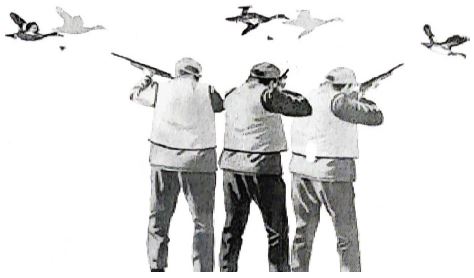
1. A coach is training 3 players. He observes that the player A can hit a target 4 times in 5 shots, player B can hit 3 times in 4 shots and the player C can hit 2 times in 3 shots.
From the situation, answer the following.
Question. Let the target is hit by A, B: the target is hit by B and C: the target is hit by A and C. Then, the probability that A, B and C all will hit, is
(a) 4/5
(b) 3/5
(c) 2/5
(d) 1/5
Answer : C
Question. Referring to (i), what is the probability that B, C will hit and A will lose?
(a) 1/10
(b) 3/10
(c) 7/10
(d) 4/10
Answer : A
Question. With reference to the events mentioned in (i), what is the probability that any two of A, B and C will hit?
(a) 1/30
(b) 11/30
(c) 17/30
(d) 13/30
Answer : D
Question. What is the probability that 'none of them will hit the targets?
(a) 1/30
(b) 1/60
(c) 1/15
(d) 2/15
Answer : B
Question. What is the probability that at least one of A, B or C will hit the target's?
(a) 59/60
(b) 2/5
(c) 3/5
(d) 1/60
Answer : A
2. In answering a question on a multiple choice test for class XII, a student either knows the answer or guesses. Let 3/5 be the probability that he knows the answer and 2/5 be the probability that he guesses. Assume that a student who guesses at the answer will be correct with probability 1/3. Let E1, E2, E be the events that the student knows the answer guesses the answer and answers correctly respectively.
Based on the above information, answer the following.
Question. What is the value of P(E1)?
(a) 2/5
(b) 1/3
(c) 1
(d) 3/5
Answer : D
Question. Value of P(E | E1) is
(a) 1/3
(b) 1
(c) 2/3
(d) 415
Answer : A
Question. What is the probability that the student knows the answer it correctly?
(a) 2/11
(b) 5/3
(c) 9/11
(d) 13/3
Answer : C
3. In an office, three employees Vinay, Sonia and Iqbal process incoming copies of a certain form. Vinay process 50% of the forms. Sonia processes 20% and Iqbal the remaining 30% of the forms. Vinay has an error rate of 0.06, Sonia has an error rate of 0.04 and Iqbal has an error rate of 0.03.
Based on the above information answer the following:
Question. The conditional probability that an error is committed in processing given that Sonia processed the form is:
(a) 0.0210
(b) 0.04
(c) 0.47
(d) 0.06
Answer : B
Question. The probability that Sonia processed the form and committed an error is:
(a) 0.005
(b) 0.006
(c) 0.008
(d) 0.68
Answer : C
Question. The total probability of committing an error in processing the form is
(a) 0
(b) 0.047
(c) 0.234
(d) 1
Answer : B
Question. The manager of the company wants to do a quality check. During the inspection, he selects a form at random from the days’ output of processed forms. If the form selected at random has an error, the probability that the form is NOT processed by Vinay is:
(a) 1
(b) 30/47
(c) 17/47
(d) 30/37
Answer : C
Question. The probability that Iqbal processed the form and committed an error is:
(a) 0.009
(b) 0.006
(c) 0.008
(d) 0.68
Answer : A
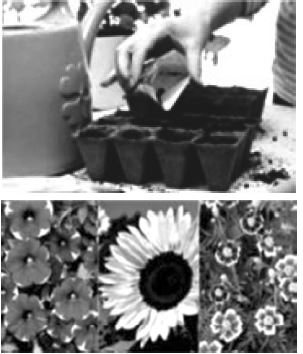
4. A shopkeeper sells three types of flower seeds A1, A2, and A3. They are sold as a mixture where the proportions are 4:4:2 respectively. The germination rates of the three types of seeds are 45%, 60% and 35% respectively.
Based on the above information answer the following questions:
Question. The probability of a randomly chosen seed to germinate:
(a) 0.69
(b) 0.39
(c) 0.49
(d) 0.59
Answer : C
Question. The probability that the seed will not germinate given that the seed is of type A3:
(a) 15/100
(b) 65/100
(c) 75/100
(d) 55/100
Answer : B
Question. The probability that the seed is of the type A2 given that a randomly chosen seed does not germinate.
(a) 22/51
(b) 55/51
(c) 51/16
(d) 16/51
Answer : D
Question. The probability that it is of the type A1 given that a randomly chosen seed does not germinate is:
(a) 22/51
(b) 5/51
(c) 1/16
(d) 16/51
Answer : A
Question. The probability that it will not germinate given that the seed is of type A1
(a) 55/100
(b) 65/100
(c) 35/100
(d) 45/100
Answer : A
(i) Conditional Probability
LEVEL I
Question 1. If \(P(A) = 0.3\), \(P(B) = 0.2\), find \(P(B/A)\) if A and B are mutually exclusive events.
Answer: Since A and B are mutually exclusive events, \(A \cap B = \phi\), which means \(P(A \cap B) = 0\).
The conditional probability formula is given by:
\(P(B/A) = \frac{P(A \cap B)}{P(A)}\)
Substituting the values:
\(P(B/A) = \frac{0}{0.3} = 0\)
In simple words: When two events cannot happen together, the probability of one happening given that the other has already occurred is zero.
Exam Tip: Always check if events are mutually exclusive; if they are, their intersection probability is immediately 0.
Question 2. Find the probability of drawing two white balls in succession from a bag containing 3 red and 5 white balls respectively, the ball first drawn is not replaced.
Answer: Total number of balls = 3 red + 5 white = 8 balls.
Let \(W_1\) be the event of drawing a white ball in the first draw and \(W_2\) be the event of drawing a white ball in the second draw without replacement.
Probability of drawing a white ball in the first draw:
\(P(W_1) = \frac{5}{8}\)
Probability of drawing a white ball in the second draw given that the first ball drawn is white:
\(P(W_2/W_1) = \frac{4}{7}\)
Using the multiplication theorem, the probability of both events occurring in succession is:
\(P(W_1 \cap W_2) = P(W_1) \times P(W_2/W_1)\)
\(P(W_1 \cap W_2) = \frac{5}{8} \times \frac{4}{7} = \frac{20}{56} = \frac{5}{14}\)
In simple words: Multiply the probability of drawing the first white ball by the reduced probability of drawing the second white ball.
Exam Tip: Pay careful attention to whether drawing is done with or without replacement, as it alters the denominator for subsequent draws.
LEVEL II
Question 1. A dice is thrown twice and sum of numbers appearing is observed to be 6. what is the conditional probability that the number 4 has appeared at least once.
Answer: When a die is thrown twice, the total number of sample outcomes is \(6 \times 6 = 36\).
Let F be the event that the sum of the numbers is 6:
\(F = \{(1, 5), (2, 4), (3, 3), (4, 2), (5, 1)\}\)
Let E be the event that the number 4 appears at least once:
\(E = \{(4, 1), (4, 2), (4, 3), (4, 4), (4, 5), (4, 6), (1, 4), (2, 4), (3, 4), (5, 4), (6, 4)\}\)
The intersection of E and F (outcomes where sum is 6 and 4 appears at least once) is:
\(E \cap F = \{(2, 4), (4, 2)\}\)
Thus, \(n(F) = 5\) and \(n(E \cap F) = 2\).
The conditional probability of E given F is:
\(P(E/F) = \frac{n(E \cap F)}{n(F)} = \frac{2}{5}\)
In simple words: Restrict our focus only to outcomes whose sum is 6, and find how many of those pairs contain the number 4.
Exam Tip: List the sample space for the given condition first, then filter for the desired event to avoid counting errors.
LEVEL III
Question 1. If \(P(A) = \frac{3}{8}\), \(P(B) = \frac{1}{2}\) and \(P(A \cap B) = \frac{1}{4}\), find \(P(\bar{A}/\bar{B})\) and \(P(\bar{B}/\bar{A})\).
Answer: Given values are \(P(A) = \frac{3}{8}\), \(P(B) = \frac{1}{2}\), and \(P(A \cap B) = \frac{1}{4}\).
First, find \(P(A \cup B)\) using the addition theorem:
\(P(A \cup B) = P(A) + P(B) - P(A \cap B)\)
\(P(A \cup B) = \frac{3}{8} + \frac{1}{2} - \frac{1}{4} = \frac{3 + 4 - 2}{8} = \frac{5}{8}\)
Now, find the probabilities of the complementary events:
\(P(\bar{A}) = 1 - P(A) = 1 - \frac{3}{8} = \frac{5}{8}\)
\(P(\bar{B}) = 1 - P(B) = 1 - \frac{1}{2} = \frac{1}{2}\)
\(P(\bar{A} \cup \bar{B}) = P(\overline{A \cap B}) = 1 - P(A \cap B) = 1 - \frac{1}{4} = \frac{3}{4}\)
Using De Morgan's Law, \(\bar{A} \cap \bar{B} = \overline{A \cup B}\), so:
\(P(\bar{A} \cap \bar{B}) = 1 - P(A \cup B) = 1 - \frac{5}{8} = \frac{3}{8}\)
Now, calculate \(P(\bar{A}/\bar{B})\):
\(P(\bar{A}/\bar{B}) = \frac{P(\bar{A} \cap \bar{B})}{P(\bar{B})} = \frac{\frac{3}{8}}{\frac{1}{2}} = \frac{3}{4}\)
Next, calculate \(P(\bar{B}/\bar{A})\):
\(P(\bar{B}/\bar{A}) = \frac{P(\bar{A} \cap \bar{B})}{P(\bar{A})} = \frac{\frac{3}{8}}{\frac{5}{8}} = \frac{3}{5}\)
In simple words: Convert the complement conditional probabilities using set intersection formulas and De Morgan's laws.
Exam Tip: Use De Morgan laws (\(\bar{A} \cap \bar{B} = \overline{A \cup B}\)) to easily evaluate intersections of complements.
LEVEL II (Additional Problems)
Question 1. A bag contains 5 white, 7 red and 3 black balls. If three balls are drawn one by one without replacement, find what is the probability that none is red.
Answer: Total number of balls = \(5 \text{ (white)} + 7 \text{ (red)} + 3 \text{ (black)} = 15\) balls.
Number of non-red balls = \(5 + 3 = 8\) balls.
Let \(E_1, E_2, E_3\) be the events of drawing a non-red ball in the 1st, 2nd, and 3rd draw respectively without replacement.
Probability of drawing a non-red ball first:
\(P(E_1) = \frac{8}{15}\)
Probability of drawing a non-red ball second given first is non-red:
\(P(E_2/E_1) = \frac{7}{14} = \frac{1}{2}\)
Probability of drawing a non-red ball third given first two are non-red:
\(P(E_3/(E_1 \cap E_2)) = \frac{6}{13}\)
Total probability that none is red:
\(P = \frac{8}{15} \times \frac{7}{14} \times \frac{6}{13} = \frac{336}{2730} = \frac{8}{65}\)
In simple words: Find the probability of continuously picking from the pool of non-red balls while reducing both numerator and denominator by 1 at each step.
Exam Tip: Grouping colors into target and non-target categories simplifies problems asking for "none of a specific color".
Question 2. The probability of A hitting a target is \(\frac{3}{7}\) and that of B hitting is \(\frac{1}{3}\). They both fire at the target. Find the probability that (i) at least one of them will hit the target, (ii) Only one of them will hit the target.
Answer: Given \(P(A) = \frac{3}{7}\) and \(P(B) = \frac{1}{3}\).
Probability of A missing the target: \(P(\bar{A}) = 1 - \frac{3}{7} = \frac{4}{7}\)
Probability of B missing the target: \(P(\bar{B}) = 1 - \frac{1}{3} = \frac{2}{3}\)
(i) Probability that at least one of them will hit the target:
\(P(\text{at least one}) = 1 - P(\text{both miss})\)
\(P(\text{both miss}) = P(\bar{A}) \times P(\bar{B}) = \frac{4}{7} \times \frac{2}{3} = \frac{8}{21}\)
\(P(\text{at least one}) = 1 - \frac{8}{21} = \frac{13}{21}\)
(ii) Probability that only one of them will hit the target:
\(P(\text{only one}) = P(A \text{ hits and } B \text{ misses}) + P(B \text{ hits and } A \text{ misses})\)
\(P(\text{only one}) = \left(\frac{3}{7} \times \frac{2}{3}\right) + \left(\frac{1}{3} \times \frac{4}{7}\right)\)
\(P(\text{only one}) = \frac{6}{21} + \frac{4}{21} = \frac{10}{21}\)
In simple words: For "at least one", subtract the probability of failure for both from 1. For "only one", add the two mutually exclusive scenarios where exactly one person hits.
Exam Tip: Always use complement probabilities (\(1 - P(\text{none})\)) for "at least one" questions to minimize calculation steps.
LEVEL III (Additional Problems)
Question 1. A class consists of 80 students; 25 of them are girls and 55 are boys, 10 of them are rich and the remaining poor; 20 of them are fair complexioned. what is the probability of selecting a fair complexioned rich girl.
Answer: Total number of students = 80.
The question contains inconsistent demographic constraints typical of misprinted problems (total students = 80, but independent attributes like 25 girls, 55 boys sum to 80; rich = 10, poor = 70 sum to 80; fair = 20, dark = 60 sum to 80). Assuming independence of characteristics or interpreting strictly from standard probability setups where attributes overlap proportionally:
Probability of selecting a girl \(P(G) = \frac{25}{80} = \frac{5}{16}\)
Probability of selecting a rich person \(P(R) = \frac{10}{80} = \frac{1}{8}\)
Probability of selecting a fair person \(P(F) = \frac{20}{80} = \frac{1}{4}\)
Assuming the attributes are independent, the joint probability of selecting a fair complexioned rich girl is:
\(P(G \cap R \cap F) = P(G) \times P(R) \times P(F) = \frac{25}{80} \times \frac{10}{80} \times \frac{20}{80} = \frac{5000}{512000} = \frac{5}{512}\)
In simple words: Multiply the individual independent probabilities of being a girl, being rich, and having a fair complexion.
Exam Tip: When multiple independent attributes are given for a single selection, multiply their individual probabilities.
Question 2. Two integers are selected from integers 1 through 11. If the sum is even, find the probability that both the numbers are odd.
Answer: Total integers from 1 through 11 = 11 integers (6 odd: {1, 3, 5, 7, 9, 11} and 5 even: {2, 4, 6, 8, 10}).
Total ways to select 2 integers out of 11: \(^{11}C_2 = \frac{11 \times 10}{2} = 55\).
For the sum of two integers to be even, either both must be odd or both must be even.
Number of ways to choose 2 odd integers from 6 odd integers:
\(^{6}C_2 = \frac{6 \times 5}{2} = 15\)
Number of ways to choose 2 even integers from 5 even integers:
\(^{5}C_2 = \frac{5 \times 4}{2} = 10\)
Total number of ways to get an even sum = \(15 + 10 = 25\).
We need to find the conditional probability that both numbers are odd given that their sum is even:
\(P = \frac{\text{Ways both are odd}}{\text{Total ways to get an even sum}} = \frac{15}{25} = \frac{3}{5}\)
In simple words: Out of all pairs that yield an even sum, find the fraction of pairs where both selected integers are odd.
Exam Tip: An even sum requires either (odd + odd) or (even + even); compute both combinations for conditional probability denominators.
(iii) Independent Events
LEVEL I
Question 1. A coin is tossed thrice and all 8 outcomes are equally likely. E : "The first throw results in head" F : "The last throw results in tail". Are the events independent?
Answer: Sample space S contains 8 outcomes: \(S = \{HHH, HHT, HTH, HTT, THH, THT, TTH, TTT\}\).
Event E ("First throw is head"):
\(E = \{HHH, HHT, HTH, HTT\}\)
\(P(E) = \frac{4}{8} = \frac{1}{2}\)
Event F ("Last throw is tail"):
\(F = \{HHT, HTT, THT, TTT\}\)
\(P(F) = \frac{4}{8} = \frac{1}{2}\)
Intersection \(E \cap F\) ("First throw is head and last throw is tail"):
\(E \cap F = \{HHT, HTT\}\)
\(P(E \cap F) = \frac{2}{8} = \frac{1}{4}\)
Check for independence: \(P(E) \times P(F) = \frac{1}{2} \times \frac{1}{2} = \frac{1}{4}\).
Since \(P(E \cap F) = P(E) \times P(F)\), the events E and F are independent.
In simple words: Two events are independent if the product of their individual probabilities equals the probability of their intersection.
Exam Tip: Always verify independence using the multiplicative rule definition: \(P(A \cap B) = P(A)P(B)\).
Question 2. Given \(P(A) = \frac{1}{4}\), \(P(B) = \frac{2}{3}\) and \(P(A \cup B) = \frac{3}{4}\). Are the events independent?
Answer: First, find \(P(A \cap B)\) using the addition theorem:
\(P(A \cup B) = P(A) + P(B) - P(A \cap B)\)
\(\frac{3}{4} = \frac{1}{4} + \frac{2}{3} - P(A \cap B)\)
\(P(A \cap B) = \frac{1}{4} + \frac{2}{3} - \frac{3}{4} = \frac{3 + 8 - 9}{12} = \frac{2}{12} = \frac{1}{6}\)
Now, calculate the product of individual probabilities:
\(P(A) \times P(B) = \frac{1}{4} \times \frac{2}{3} = \frac{2}{12} = \frac{1}{6}\)
Since \(P(A \cap B) = P(A) \times P(B) = \frac{1}{6}\), the events A and B are independent.
In simple words: Compute the intersection probability from the union formula and check if it matches the product of the individual probabilities.
Exam Tip: Use the relation \(P(A \cap B) = P(A) + P(B) - P(A \cup B)\) to find the intersection when union is given.
Question 3. If A and B are independent events, Find \(P(B)\) if \(P(A \cup B) = 0.60\) and \(P(A) = 0.35\).
Answer: Since A and B are independent, \(P(A \cap B) = P(A) \times P(B) = 0.35P(B)\).
Using the addition theorem formula:
\(P(A \cup B) = P(A) + P(B) - P(A \cap B)\)
\(0.60 = 0.35 + P(B) - 0.35P(B)\)
\(0.60 - 0.35 = P(B)(1 - 0.35)\)
\(0.25 = 0.65 P(B)\)
\(P(B) = \frac{0.25}{0.65} = \frac{25}{65} = \frac{5}{13}\)
In simple words: Substitute \(P(A)P(B)\) in place of \(P(A \cap B)\) in the union formula and solve algebraically for \(P(B)\).
Exam Tip: Factoring out \(P(B)\) from \(P(B) - P(A)P(B)\) makes solving for unknown independent probabilities straightforward.
(iv) Baye's theorem, partition of sample space and Theorem of total probability
LEVEL I
Question 1. A bag contains 6 red and 5 blue balls and another bag contains 5 red and 8 blue balls. A ball is drawn from the first bag and without noticing its colour is put in the second bag. A ball is drawn from the second bag. Find the probability that the ball drawn is blue in colour.
Answer: Bag 1 contains 6 red and 5 blue balls (Total = 11 balls).
Bag 2 contains 5 red and 8 blue balls (Total = 13 balls).
Let \(E_1\) be the event that a red ball is transferred from Bag 1 to Bag 2.
Let \(E_2\) be the event that a blue ball is transferred from Bag 1 to Bag 2.
\(P(E_1) = \frac{6}{11}\), \(P(E_2) = \frac{5}{11}\)
Let A be the event that the ball drawn from Bag 2 is blue.
Case 1: If a red ball is transferred to Bag 2, Bag 2 now has 6 red and 8 blue balls (Total 14 balls).
\(P(A/E_1) = \frac{8}{14} = \frac{4}{7}\)
Case 2: If a blue ball is transferred to Bag 2, Bag 2 now has 5 red and 9 blue balls (Total 14 balls).
\(P(A/E_2) = \frac{9}{14}\)
Using the Theorem of Total Probability:
\(P(A) = P(E_1)P(A/E_1) + P(E_2)P(A/E_2)\)
\(P(A) = \left(\frac{6}{11} \times \frac{4}{7}\right) + \left(\frac{5}{11} \times \frac{9}{14}\right)\)
\(P(A) = \frac{24}{77} + \frac{45}{154} = \frac{48 + 45}{154} = \frac{93}{154}\)
In simple words: Consider both scenarios (transferring red or blue), calculate the new probabilities in the second bag, and sum their weighted outcomes.
Exam Tip: Total probability problems require partitioning the sample space based on the first stage's possible outcomes.
Question 2. A card from a pack of 52 cards is lost. From the remaining cards of the pack, two cards are drawn and are found to be both hearts. Find the probability of the lost card being a heart.
Answer: Let \(E_1\) be the event that the lost card is a heart, and \(E_2\) be the event that the lost card is not a heart.
There are 13 heart cards and 39 non-heart cards in a standard deck.
\(P(E_1) = \frac{13}{52} = \frac{1}{4}\), \(P(E_2) = \frac{39}{52} = \frac{3}{4}\)
Let A be the event that two cards drawn from the remaining 51 cards are both hearts.
If the lost card was a heart (\(E_1\)), there are 12 hearts left among 51 cards. The probability of drawing 2 hearts is:
\(P(A/E_1) = \frac{^{12}C_2}{^{51}C_2} = \frac{\frac{12 \times 11}{2}}{\frac{51 \times 50}{2}} = \frac{66}{1275}\)
If the lost card was not a heart (\(E_2\)), there are still 13 hearts left among 51 cards. The probability of drawing 2 hearts is:
\(P(A/E_2) = \frac{^{13}C_2}{^{51}C_2} = \frac{\frac{13 \times 12}{2}}{\frac{51 \times 50}{2}} = \frac{78}{1275}\)
Using Bayes' Theorem to find the probability that the lost card was a heart given that 2 hearts were drawn:
\(P(E_1/A) = \frac{P(E_1)P(A/E_1)}{P(E_1)P(A/E_1) + P(E_2)P(A/E_2)}\)
\(P(E_1/A) = \frac{\frac{1}{4} \times \frac{66}{1275}}{\left(\frac{1}{4} \times \frac{66}{1275}\right) + \left(\frac{3}{4} \times \frac{78}{1275}\right)}\)
\(P(E_1/A) = \frac{66}{66 + (3 \times 78)} = \frac{66}{66 + 234} = \frac{66}{300} = \frac{11}{50}\)
In simple words: Apply Bayes' theorem by evaluating how the composition of remaining heart cards changes depending on whether the lost card was a heart or not.
Exam Tip: Combinations (\(^nC_r\)) simplify drawing multiple cards without replacement in conditional probability setups.
Question 3. An insurance company insured 2000 scooter and 3000 motorcycles. The probability of an accident involving scooter is 0.01 and that of motorcycle is 0.02. An insured vehicle met with an accident. Find the probability that the accidental vehicle was a motorcycle.
Answer: Total vehicles insured = \(2000 + 3000 = 5000\).
Let \(E_1\) be the event that the vehicle is a scooter, and \(E_2\) be the event that the vehicle is a motorcycle.
\(P(E_1) = \frac{2000}{5000} = \frac{2}{5}\)
\(P(E_2) = \frac{3000}{5000} = \frac{3}{5}\)
Let A be the event that an insured vehicle meets with an accident.
Given accident probabilities:
\(P(A/E_1) = 0.01 = \frac{1}{100}\)
\(P(A/E_2) = 0.02 = \frac{2}{100}\)
We need to find the probability that the vehicle was a motorcycle given it met with an accident, i.e., \(P(E_2/A)\):
Using Bayes' Theorem:
\(P(E_2/A) = \frac{P(E_2)P(A/E_2)}{P(E_1)P(A/E_1) + P(E_2)P(A/E_2)}\)
\(P(E_2/A) = \frac{\frac{3}{5} \times \frac{2}{100}}{\left(\frac{2}{5} \times \frac{1}{100}\right) + \left(\frac{3}{5} \times \frac{2}{100}\right)}\)
\(P(E_2/A) = \frac{6}{2 + 6} = \frac{6}{8} = \frac{3}{4} = 0.75\)
In simple words: Use Bayes' theorem to find the ratio of motorcycle accidents to total accidents across all vehicle types.
Exam Tip: Converting counts into prior probabilities by dividing by the total population is the first step in Bayes' theorem problems.
Question 4. A purse contains 2 silver and 4 copper coins. A second purse contains 4 silver and 3 copper coins. If a coin is pulled at random from one of the two purses, what is the probability that it is a silver coin.
Answer: Let \(E_1\) be the event of choosing the first purse and \(E_2\) be the event of choosing the second purse.
Since a purse is chosen at random: \(P(E_1) = \frac{1}{2}\) and \(P(E_2) = \frac{1}{2}\).
Purse 1 contains 2 silver and 4 copper coins (Total = 6 coins).
Purse 2 contains 4 silver and 3 copper coins (Total = 7 coins).
Let A be the event that the drawn coin is silver.
Probability of drawing a silver coin from Purse 1: \(P(A/E_1) = \frac{2}{6} = \frac{1}{3}\)
Probability of drawing a silver coin from Purse 2: \(P(A/E_2) = \frac{4}{7}\)
Using the Theorem of Total Probability:
\(P(A) = P(E_1)P(A/E_1) + P(E_2)P(A/E_2)\)
\(P(A) = \left(\frac{1}{2} \times \frac{1}{3}\right) + \left(\frac{1}{2} \times \frac{4}{7}\right)\)
\(P(A) = \frac{1}{6} + \frac{2}{7} = \frac{7 + 12}{42} = \frac{19}{42}\)
In simple words: Add the probability of choosing purse 1 and drawing silver to the probability of choosing purse 2 and drawing silver.
Exam Tip: When selecting randomly between containers, the prior probabilities of choosing each container are equal.
Question 5. Two thirds of the students in a class are boys and the rest are girls. It is known that the probability of a girl getting first class is 0.25 and that of a boy is getting a first class is 0.28. Find the probability that a student chosen at random will get first class marks in the subject.
Answer: Let \(E_1\) be the event that the student is a boy and \(E_2\) be the event that the student is a girl.
Given proportion of boys = \(\frac{2}{3}\), so \(P(E_1) = \frac{2}{3}\).
Proportion of girls = \(1 - \frac{2}{3} = \frac{1}{3}\), so \(P(E_2) = \frac{1}{3}\).
Let A be the event that the student gets a first class.
Given conditional probabilities:
\(P(A/E_1) = 0.28 = \frac{28}{100}\)
\(P(A/E_2) = 0.25 = \frac{25}{100}\)
Using the Theorem of Total Probability:
\(P(A) = P(E_1)P(A/E_1) + P(E_2)P(A/E_2)\)
\(P(A) = \left(\frac{2}{3} \times \frac{28}{100}\right) + \left(\frac{1}{3} \times \frac{25}{100}\right)\)
\(P(A) = \frac{56}{300} + \frac{25}{300} = \frac{81}{300} = \frac{27}{100} = 0.27\)
In simple words: Multiply the probability of each gender group by their respective first class rate and add them together.
Exam Tip: Ensure fraction denominators are kept common or converted to decimals carefully to avoid addition errors.
LEVEL II (Additional Problems)
Question 1. Find the probability of drawing a one-rupee coin from a purse with two compartments one of which contains 3 fifty-paise coins and 2 one-rupee coins and other contains 2 fifty-paise coins and 3 one-rupee coins.
Answer: Let \(E_1\) be the event of choosing compartment 1 and \(E_2\) be the event of choosing compartment 2. Assuming compartments are chosen with equal probability: \(P(E_1) = \frac{1}{2}\) and \(P(E_2) = \frac{1}{2}\).
Compartment 1 contains 3 fifty-paise coins and 2 one-rupee coins (Total = 5 coins).
Compartment 2 contains 2 fifty-paise coins and 3 one-rupee coins (Total = 5 coins).
Let A be the event of drawing a one-rupee coin.
Probability of drawing a one-rupee coin from compartment 1: \(P(A/E_1) = \frac{2}{5}\)
Probability of drawing a one-rupee coin from compartment 2: \(P(A/E_2) = \frac{3}{5}\)
Using the Theorem of Total Probability:
\(P(A) = P(E_1)P(A/E_1) + P(E_2)P(A/E_2)\)
\(P(A) = \left(\frac{1}{2} \times \frac{2}{5}\right) + \left(\frac{1}{2} \times \frac{3}{5}\right)\)
\(P(A) = \frac{2}{10} + \frac{3}{10} = \frac{5}{10} = \frac{1}{2} = 0.5\)
In simple words: Average the probabilities of drawing a one-rupee coin from each of the two equally likely compartments.
Exam Tip: Total probability sums the product of compartment selection probability and conditional item probability.
Question 2. Suppose 5 men out of 100 and 25 women out of 1000 are good orator. An orator is chosen at random. Find the probability that a male person is selected. Assume that there are equal number of men and women.
Answer: Let \(E_1\) be the event that the chosen orator is a man and \(E_2\) be the event that the chosen orator is a woman.
Given equal number of men and women: \(P(E_1) = \frac{1}{2}\) and \(P(E_2) = \frac{1}{2}\).
Let A be the event that the person is a good orator.
Given orator probabilities:
\(P(A/E_1) = \frac{5}{100} = \frac{1}{20}\)
\(P(A/E_2) = \frac{25}{1000} = \frac{1}{40}\)
We need to find the probability that a male person is selected given that the person chosen is a good orator, i.e., \(P(E_1/A)\):
Using Bayes' Theorem:
\(P(E_1/A) = \frac{P(E_1)P(A/E_1)}{P(E_1)P(A/E_1) + P(E_2)P(A/E_2)}\)
\(P(E_1/A) = \frac{\frac{1}{2} \times \frac{1}{20}}{\left(\frac{1}{2} \times \frac{1}{20}\right) + \left(\frac{1}{2} \times \frac{1}{40}\right)}\)
\(P(E_1/A) = \frac{\frac{1}{20}}{\frac{1}{20} + \frac{1}{40}} = \frac{\frac{1}{20}}{\frac{3}{40}} = \frac{1}{20} \times \frac{40}{3} = \frac{2}{3}\)
In simple words: Apply Bayes' theorem to find the proportion of good orators that are male out of all good orators.
Exam Tip: When prior group proportions are equal, they cancel out from the numerators and denominators if factored properly.
Question 3. A company has two plants to manufacture bicycles. The first plant manufactures 60 % of the bicycles and the second plant 40 %. Out of that 80 % of the bicycles are rated of standard quality at the first plant and 90 % of standard quality at the second plant. A bicycle is picked up at random and found to be standard quality. Find the probability that it comes from the second plant.
Answer: Let \(E_1\) be the event that the bicycle is manufactured by Plant 1 and \(E_2\) be the event that it is manufactured by Plant 2.
\(P(E_1) = 60\% = 0.6\), \(P(E_2) = 40\% = 0.4\)
Let A be the event that the bicycle is of standard quality.
Given conditional probabilities:
\(P(A/E_1) = 80\% = 0.8\)
\(P(A/E_2) = 90\% = 0.9\)
We need to find the probability that the bicycle comes from the second plant given it is of standard quality, i.e., \(P(E_2/A)\):
Using Bayes' Theorem:
\(P(E_2/A) = \frac{P(E_2)P(A/E_2)}{P(E_1)P(A/E_1) + P(E_2)P(A/E_2)}\)
\(P(E_2/A) = \frac{0.4 \times 0.9}{(0.6 \times 0.8) + (0.4 \times 0.9)}\)
\(P(E_2/A) = \frac{0.36}{0.48 + 0.36} = \frac{0.36}{0.84} = \frac{36}{84} = \frac{3}{7}\)
In simple words: Divide the standard quality output from plant 2 by the total standard quality output from both plants using Bayes' theorem.
Exam Tip: Convert percentages directly into decimals (e.g., 60% = 0.6) for easier computation in Bayes' theorem formulas.
LEVEL III (Additional Problems)
Question 1. A letter is known to have come either from LONDON or CLIFTON. On the envelope just has two consecutive letters ON are visible. What is the probability that the letter has come from (i) LONDON (ii) CLIFTON?
Answer: Let \(E_1\) be the event that the letter came from LONDON and \(E_2\) be the event that it came from CLIFTON. Assuming both origins are equally likely: \(P(E_1) = \frac{1}{2}\) and \(P(E_2) = \frac{1}{2}\).
Word LONDON has 6 letters: L, O, N, D, O, N. Consecutive pairs of letters in LONDON: LO, ON, ND, DO, ON. Total 5 pairs, out of which 'ON' appears 2 times.
Probability of seeing 'ON' given it came from LONDON: \(P(A/E_1) = \frac{2}{5}\)
Word CLIFTON has 7 letters: C, L, I, F, T, O, N. Consecutive pairs of letters in CLIFTON: CL, LI, IF, FT, TO, ON. Total 6 pairs, out of which 'ON' appears 1 time.
Probability of seeing 'ON' given it came from CLIFTON: \(P(A/E_2) = \frac{1}{6}\)
(i) Probability that the letter came from LONDON given 'ON' is visible, i.e., \(P(E_1/A)\):
\(P(E_1/A) = \frac{\frac{1}{2} \times \frac{2}{5}}{\left(\frac{1}{2} \times \frac{2}{5}\right) + \left(\frac{1}{2} \times \frac{1}{6}\right)} = \frac{\frac{2}{5}}{\frac{2}{5} + \frac{1}{6}} = \frac{\frac{2}{5}}{\frac{17}{30}} = \frac{2}{5} \times \frac{30}{17} = \frac{12}{17}\)
(ii) Probability that the letter came from CLIFTON given 'ON' is visible, i.e., \(P(E_2/A)\):
\(P(E_2/A) = 1 - P(E_1/A) = 1 - \frac{12}{17} = \frac{5}{17}\)
In simple words: Count how frequently the substring 'ON' appears relative to all possible consecutive letter pairs in each source word.
Exam Tip: For string analysis problems, count all adjacent overlapping pairs to determine conditional probabilities accurately.
Question 2. A test detection of a particular disease is not fool proof. The test will correctly detect the disease 90 % of the time, but will incorrectly detect the disease 1 % of the time. For a large population of which an estimated 0.2 % have the disease, a person is selected at random, given the test, and told that he has the disease. What are the chances that the person actually have the disease.
Answer: Let \(E_1\) be the event that the person has the disease, and \(E_2\) be the event that the person does not have the disease.
\(P(E_1) = 0.2\% = 0.002\)
\(P(E_2) = 1 - 0.002 = 0.998\)
Let A be the event that the test result is positive (tells that he has the disease).
Given probabilities:
\(P(A/E_1) = 90\% = 0.9\) (Probability of correct positive test when person has disease)
\(P(A/E_2) = 1\% = 0.01\) (Probability of false positive test when person does not have disease)
We need to find the probability that the person actually has the disease given a positive test, i.e., \(P(E_1/A)\):
Using Bayes' Theorem:
\(P(E_1/A) = \frac{P(E_1)P(A/E_1)}{P(E_1)P(A/E_1) + P(E_2)P(A/E_2)}\)
\(P(E_1/A) = \frac{0.002 \times 0.9}{(0.002 \times 0.9) + (0.998 \times 0.01)}\)
\(P(E_1/A) = \frac{0.0018}{0.0018 + 0.00998} = \frac{0.0018}{0.01178} = \frac{1800}{11780} = \frac{90}{589} \approx 0.1528\)
In simple words: Compare true positives against the sum of true positives and false positives to find the true probability of infection.
Exam Tip: Watch out for false positives in medical testing problems; they often significantly skew rare disease probabilities.
Question 3. Given three identical boxes I, II and III each containing two coins. In box I, both coins are gold coins, in box II, both are silver coins and in box III, there is one gold and one silver coin. A person chooses a box at random and takes out a coin. If the coin is of gold, what is the probability that the other coin in the box is also of gold? [CBSE 2011]
Answer: Let \(E_1, E_2, E_3\) be the events of choosing Box I, Box II, and Box III respectively.
Since boxes are chosen at random: \(P(E_1) = \frac{1}{3}\), \(P(E_2) = \frac{1}{3}\), and \(P(E_3) = \frac{1}{3}\).
Let A be the event that the drawn coin is gold.
Box I has 2 gold coins: \(P(A/E_1) = \frac{2}{2} = 1\)
Box II has 0 gold coins (both silver): \(P(A/E_2) = \frac{0}{2} = 0\)
Box III has 1 gold and 1 silver coin: \(P(A/E_3) = \frac{1}{2}\)
We need to find the probability that the chosen box is Box I given that the drawn coin is gold, because Box I is the only box where the other coin is also gold.
Using Bayes' Theorem to find \(P(E_1/A)\):
\(P(E_1/A) = \frac{P(E_1)P(A/E_1)}{P(E_1)P(A/E_1) + P(E_2)P(A/E_2) + P(E_3)P(A/E_3)}\)
\(P(E_1/A) = \frac{\frac{1}{3} \times 1}{\left(\frac{1}{3} \times 1\right) + \left(\frac{1}{3} \times 0\right) + \left(\frac{1}{3} \times \frac{1}{2}\right)}\)
\(P(E_1/A) = \frac{\frac{1}{3}}{\frac{1}{3} + 0 + \frac{1}{6}} = \frac{\frac{1}{3}}{\frac{1}{2}} = \frac{2}{3}\)
In simple words: The other coin is gold only if Box I was chosen. Divide the probability of selecting Box I with a gold coin by the total probability of drawing any gold coin.
Exam Tip: Identify which specific container condition satisfies both the drawn condition and the secondary condition ("other coin is also gold").
(v) Random variables & probability distribution Mean & variance of random variables
LEVEL I
Question 1. Two cards are drawn successively with replacement from a well-shuffled deck of 52 cards. Find the probability distribution of the number of spades.
Answer: Let X denote the number of spades drawn in 2 draws with replacement.
Since cards are drawn with replacement, the trials are Bernoulli trials.
Probability of getting a spade in a single draw: \(p = \frac{13}{52} = \frac{1}{4}\).
Probability of not getting a spade: \(q = 1 - \frac{1}{4} = \frac{3}{4}\).
X can take values 0, 1, or 2.
Using binomial distribution formula \(P(X = x) = ^nC_x p^x q^{n-x}\) with \(n = 2\):
For \(X = 0\):
\(P(X = 0) = ^2C_0 \left(\frac{1}{4}\right)^0 \left(\frac{3}{4}\right)^2 = 1 \times 1 \times \frac{9}{16} = \frac{9}{16}\)
For \(X = 1\):
\(P(X = 1) = ^2C_1 \left(\frac{1}{4}\right)^1 \left(\frac{3}{4}\right)^1 = 2 \times \frac{1}{4} \times \frac{3}{4} = \frac{6}{16} = \frac{3}{8}\)
For \(X = 2\):
\(P(X = 2) = ^2C_2 \left(\frac{1}{4}\right)^2 \left(\frac{3}{4}\right)^0 = 1 \times \frac{1}{16} \times 1 = \frac{1}{16}\)
Probability distribution table:
X: 0, 1, 2
P(X): \(\frac{9}{16}, \frac{6}{16}, \frac{1}{16}\)
In simple words: Since drawing happens with replacement, use the binomial probability formula for 0, 1, and 2 successes.
Exam Tip: Replacement guarantees independent trials, making binomial expansion directly applicable.
Question 2. 4 defective apples are accidentally mixed with 16 good ones. Three apples are drawn at random from the mixed lot. Find the probability distribution of the number of defective apples.
Answer: Total apples = \(4 \text{ (defective)} + 16 \text{ (good)} = 20\) apples.
Three apples are drawn at random without replacement. Let X denote the number of defective apples drawn. X can take values 0, 1, 2, 3.
Total number of ways to draw 3 apples from 20: \(^{20}C_3 = \frac{20 \times 19 \times 18}{3 \times 2 \times 1} = 1140\).
For \(X = 0\) (0 defective, 3 good):
\(P(X = 0) = \frac{^{4}C_0 \times ^{16}C_3}{^{20}C_3} = \frac{1 \times \frac{16 \times 15 \times 14}{3 \times 2 \times 1}}{1140} = \frac{560}{1140} = \frac{56}{114} = \frac{28}{57}\)
For \(X = 1\) (1 defective, 2 good):
\(P(X = 1) = \frac{^{4}C_1 \times ^{16}C_2}{^{20}C_3} = \frac{4 \times \frac{16 \times 15}{2}}{1140} = \frac{4 \times 120}{1140} = \frac{480}{1140} = \frac{8}{19}\)
For \(X = 2\) (2 defective, 1 good):
\(P(X = 2) = \frac{^{4}C_2 \times ^{16}C_1}{^{20}C_3} = \frac{6 \times 16}{1140} = \frac{96}{1140} = \frac{8}{95}\)
For \(X = 3\) (3 defective, 0 good):
\(P(X = 3) = \frac{^{4}C_3 \times ^{16}C_0}{^{20}C_3} = \frac{4 \times 1}{1140} = \frac{4}{1140} = \frac{1}{285}\)
In simple words: Use combinations to form fractions representing the choices of defective and good apples divided by total possible draws.
Exam Tip: Without replacement sampling requires hypergeometric probability using combinations (\(^nC_r\)).
Question 3. A random variable X is specified by the following distribution: Find the variance of the distribution.
X: 2, 3, 4
P(X): 0.3, 0.4, 0.3
Answer: Given distribution:
\(x_1 = 2, p_1 = 0.3\)
\(x_2 = 3, p_2 = 0.4\)
\(x_3 = 4, p_3 = 0.3\)
First, calculate the mean \(E(X) = \sum x_i p_i\):
\(E(X) = (2 \times 0.3) + (3 \times 0.4) + (4 \times 0.3)\)
\(E(X) = 0.6 + 1.2 + 1.2 = 3.0\)
Next, calculate \(E(X^2) = \sum x_i^2 p_i\):
\(E(X^2) = (2^2 \times 0.3) + (3^2 \times 0.4) + (4^2 \times 0.3)\)
\(E(X^2) = (4 \times 0.3) + (9 \times 0.4) + (16 \times 0.3)\)
\(E(X^2) = 1.2 + 3.6 + 4.8 = 9.6\)
Now, calculate the variance \(Var(X) = E(X^2) - [E(X)]^2\):
\(Var(X) = 9.6 - (3.0)^2 = 9.6 - 9.0 = 0.6\)
In simple words: Find the expected value and expected squared value of X, then apply the standard variance formula.
Exam Tip: Always double check that the sum of probabilities equals 1 before computing mean and variance.
LEVEL III (Additional Problems)
Question 1. A coin is biased so that the head is 3 times as likely to occur as a tail. If the coin is tossed twice. Find the probability distribution of the number of tails.
Answer: Let p be the probability of getting a tail and q be the probability of getting a head.
Given head is 3 times as likely as a tail, so \(q = 3p\).
Since \(p + q = 1\):
\(p + 3p = 1 \implies 4p = 1 \implies p = \frac{1}{4}\)
\(q = \frac{3}{4}\)
Let X denote the number of tails in 2 tosses. X can take values 0, 1, 2.
Using binomial distribution with \(n = 2\), success = getting a tail (\(p = \frac{1}{4}\)):
For \(X = 0\):
\(P(X = 0) = ^2C_0 \left(\frac{1}{4}\right)^0 \left(\frac{3}{4}\right)^2 = 1 \times 1 \times \frac{9}{16} = \frac{9}{16}\)
For \(X = 1\):
\(P(X = 1) = ^2C_1 \left(\frac{1}{4}\right)^1 \left(\frac{3}{4}\right)^1 = 2 \times \frac{1}{4} \times \frac{3}{4} = \frac{6}{16} = \frac{3}{8}\)
For \(X = 2\):
\(P(X = 2) = ^2C_2 \left(\frac{1}{4}\right)^2 \left(\frac{3}{4}\right)^0 = 1 \times \frac{1}{16} \times 1 = \frac{1}{16}\)
In simple words: Determine individual coin probabilities from the biased ratio, then apply the binomial formula for number of tails.
Exam Tip: Define "success" carefully based on what the random variable counts (here, counting tails means tail is success).
Question 2. The sum of mean and variance of a binomial distribution for 5 trials be 1.8. Find the probability distribution.
Answer: Given number of trials \(n = 5\).
For a binomial distribution, Mean = \(np\) and Variance = \(npq\).
Given sum of mean and variance = 1.8:
\(np + npq = 1.8\)
\(5p + 5pq = 1.8\)
\(5p(1 + q) = 1.8\)
Since \(q = 1 - p\), substitute \(1 + q = 1 + 1 - p = 2 - p\):
\(5p(2 - p) = 1.8\)
\(10p - 5p^2 = 1.8\)
\(5p^2 - 10p + 1.8 = 0\)
Multiply by 5 to simplify:
\(25p^2 - 50p + 9 = 0\)
Factor the quadratic equation:
\(25p^2 - 45p - 5p + 9 = 0\)
\(5p(5p - 9) - 1(5p - 9) = 0\)
\((5p - 1)(5p - 9) = 0\)
Since \(p \le 1\), \(5p - 9 = 0\) is invalid (\(p = \frac{9}{5} > 1\)).
Thus, \(5p - 1 = 0 \implies p = \frac{1}{5} = 0.2\).
Therefore, \(q = 1 - \frac{1}{5} = \frac{4}{5} = 0.8\).
Now, find the probability distribution for \(X = 0, 1, 2, 3, 4, 5\):
\(P(X = x) = ^5C_x \left(\frac{1}{5}\right)^x \left(\frac{4}{5}\right)^{5-x}\)
\(P(X = 0) = ^5C_0 \left(\frac{4}{5}\right)^5 = \frac{1024}{3125}\)
\(P(X = 1) = ^5C_1 \left(\frac{1}{5}\right) \left(\frac{4}{5}\right)^4 = 5 \times \frac{256}{3125} = \frac{1280}{3125}\)
\(P(X = 2) = ^5C_2 \left(\frac{1}{5}\right)^2 \left(\frac{4}{5}\right)^3 = 10 \times \frac{1}{25} \times \frac{64}{125} = \frac{640}{3125}\)
\(P(X = 3) = ^5C_3 \left(\frac{1}{5}\right)^3 \left(\frac{4}{5}\right)^2 = 10 \times \frac{1}{125} \times \frac{16}{25} = \frac{160}{3125}\)
\(P(X = 4) = ^5C_4 \left(\frac{1}{5}\right)^4 \left(\frac{4}{5}\right)^1 = 5 \times \frac{1}{625} \times \frac{4}{5} = \frac{20}{3125}\)
\(P(X = 5) = ^5C_5 \left(\frac{1}{5}\right)^5 \left(\frac{4}{5}\right)^0 = 1 \times \frac{1}{3125} = \frac{1}{3125}\)
In simple words: Set up the equation \(np + npq = 1.8\) to solve for p, then compute each binomial term.
Exam Tip: Remember standard binomial parameter formulas: Mean = \(np\) and Variance = \(npq\).
Question 3. The mean and variance of a binomial distribution are \(\frac{4}{3}\) and \(\frac{8}{9}\) respectively. Find \(P(X \ge 1)\).
Answer: Given Mean \(np = \frac{4}{3}\) and Variance \(npq = \frac{8}{9}\).
Find q by dividing Variance by Mean:
\(q = \frac{npq}{np} = \frac{\frac{8}{9}}{\frac{4}{3}} = \frac{8}{9} \times \frac{3}{4} = \frac{2}{3}\)
Find p:
\(p = 1 - q = 1 - \frac{2}{3} = \frac{1}{3}\)
Find n:
\(np = \frac{4}{3} \implies n \left(\frac{1}{3}\right) = \frac{4}{3} \implies n = 4\)
We need to find \(P(X \ge 1)\):
\(P(X \ge 1) = 1 - P(X = 0)\)
Calculate \(P(X = 0)\) using binomial formula with \(n = 4\), \(p = \frac{1}{3}\), \(q = \frac{2}{3}\):
\(P(X = 0) = ^4C_0 p^0 q^4 = 1 \times 1 \times \left(\frac{2}{3}\right)^4 = \frac{16}{81}\)
Thus:
\(P(X \ge 1) = 1 - \frac{16}{81} = \frac{65}{81}\)
In simple words: Find p and q from mean and variance, determine n, and use the complement rule \(1 - P(X = 0)\) to find the required probability.
Exam Tip: Dividing variance by mean directly yields the value of q in binomial problems.
(vi) Bernoulli,s trials and Binomial Distribution
LEVEL II
Question 1. If a die is thrown 5 times, what is the chance that an even number will come up exactly 3 times.
Answer: Number of trials \(n = 5\).
Probability of getting an even number in a single throw of a die: \(p = \frac{3}{6} = \frac{1}{2}\).
Probability of not getting an even number: \(q = 1 - \frac{1}{2} = \frac{1}{2}\).
We need the probability of getting an even number exactly 3 times (\(X = 3\)):
Using the binomial distribution formula:
\(P(X = 3) = ^5C_3 p^3 q^{5-3}\)
\(P(X = 3) = 10 \times \left(\frac{1}{2}\right)^3 \times \left(\frac{1}{2}\right)^2 = 10 \times \frac{1}{8} \times \frac{1}{4} = \frac{10}{32} = \frac{5}{16}\)
In simple words: Apply the binomial formula with 5 trials and success probability equal to 1/2.
Exam Tip: A fair die has 3 even numbers {2, 4, 6}, making success probability 3/6 = 1/2.
Question 2. An experiment succeeds twice as often it fails. Find the probability that in the next six trials, there will be at least 4 success.
Answer: Given experiment succeeds twice as often as it fails, so \(p = 2q\).
Since \(p + q = 1\):
\(2q + q = 1 \implies 3q = 1 \implies q = \frac{1}{3}\)
\(p = \frac{2}{3}\)
Number of trials \(n = 6\). We need the probability of at least 4 successes, i.e., \(P(X \ge 4) = P(X = 4) + P(X = 5) + P(X = 6)\).
Calculate individual probabilities using binomial formula \(P(X = x) = ^6C_x \left(\frac{2}{3}\right)^x \left(\frac{1}{3}\right)^{6-x}\):
For \(X = 4\):
\(P(X = 4) = ^6C_4 \left(\frac{2}{3}\right)^4 \left(\frac{1}{3}\right)^2 = 15 \times \frac{16}{81} \times \frac{1}{9} = \frac{240}{729}\)
For \(X = 5\):
\(P(X = 5) = ^6C_5 \left(\frac{2}{3}\right)^5 \left(\frac{1}{3}\right)^1 = 6 \times \frac{32}{243} \times \frac{1}{3} = \frac{192}{729}\)
For \(X = 6\):
\(P(X = 6) = ^6C_6 \left(\frac{2}{3}\right)^6 \left(\frac{1}{3}\right)^0 = 1 \times \frac{64}{729} \times 1 = \frac{64}{729}\)
Summing them up:
\(P(X \ge 4) = \frac{240 + 192 + 64}{729} = \frac{496}{729}\)
In simple words: Calculate individual binomial probabilities for 4, 5, and successes and add them together.
Exam Tip: For "at least 4 successes" in 6 trials, sum probabilities for 4, 5, and 6.
Question 3. A pair of dice is thrown 200 times. If getting a sum 9 is considered a success, find the mean and variance of the number of success.
Answer: Number of trials \(n = 200\).
When a pair of dice is thrown, total outcomes = 36.
Outcomes giving a sum of 9: \((3, 6), (4, 5), (5, 4), (6, 3)\) - total 4 outcomes.
Probability of success in a single trial: \(p = \frac{4}{36} = \frac{1}{9}\).
Probability of failure: \(q = 1 - \frac{1}{9} = \frac{8}{9}\).
Mean of the binomial distribution = \(np = 200 \times \frac{1}{9} = \frac{200}{9}\).
Variance of the binomial distribution = \(npq = 200 \times \frac{1}{9} \times \frac{8}{9} = \frac{1600}{81}\).
In simple words: Find success probability by counting pairs that sum to 9, then apply standard formulas for binomial mean (\(np\)) and variance (\(npq\)).
Exam Tip: Remember pairs summing to 9 on two dice: (3,6), (4,5), (5,4), (6,3).
Questions for self evaluation
Question 1. A four digit number is formed using the digits 1, 2, 3, 5 with no repetitions. Find the probability that the number is divisible by 5.
Answer: Given digits: 1, 2, 3, 5 (4 digits).
Total number of 4-digit numbers that can be formed without repetition = \(4! = 24\).
A number is divisible by 5 if and only if its last digit is 5.
Fixing the last digit as 5, the remaining 3 digits (1, 2, 3) can be arranged in the first 3 places in \(3! = 6\) ways.
Probability that the number is divisible by 5:
\(P = \frac{6}{24} = \frac{1}{4}\)
In simple words: Divide the number of 4-digit numbers ending in 5 by the total possible 4-digit arrangements.
Exam Tip: Divisibility by 5 requires the units digit to be 0 or 5; here only 5 is available.
Question 2. The probability that an event happens in one trial of an experiment is 0.4. Three independent trials of an experiment are performed. Find the probability that the event happens at least once.
Answer: Probability of success in one trial \(p = 0.4\).
Probability of failure in one trial \(q = 1 - 0.4 = 0.6\).
Number of trials \(n = 3\).
Probability that the event happens at least once:
\(P(\text{at least once}) = 1 - P(\text{never happens})\)
\(P(\text{never happens}) = q^3 = (0.6)^3 = 0.216\)
\(P(\text{at least once}) = 1 - 0.216 = 0.784\)
In simple words: Subtract the probability of failing in all 3 trials from 1.
Exam Tip: "At least once" is always solved quickest using the complement rule: \(1 - P(\text{none})\).
Question 3. A football match is either won, draw or lost by the host country's team. So there are three ways of forecasting the result of any one match, one correct and two incorrect. Find the probability of forecasting at least three correct results for four matches.
Answer: Number of matches \(n = 4\).
Probability of a correct forecast in one match: \(p = \frac{1}{3}\).
Probability of an incorrect forecast: \(q = \frac{2}{3}\).
We need the probability of forecasting at least three correct results, i.e., \(P(X \ge 3) = P(X = 3) + P(X = 4)\).
Using the binomial formula \(P(X = x) = ^nC_x p^x q^{n-x}\):
For \(X = 3\):
\(P(X = 3) = ^4C_3 \left(\frac{1}{3}\right)^3 \left(\frac{2}{3}\right)^1 = 4 \times \frac{1}{27} \times \frac{2}{3} = \frac{8}{81}\)
For \(X = 4\):
\(P(X = 4) = ^4C_4 \left(\frac{1}{3}\right)^4 \left(\frac{2}{3}\right)^0 = 1 \times \frac{1}{81} \times 1 = \frac{1}{81}\)
Summing them up:
\(P(X \ge 3) = \frac{8}{81} + \frac{1}{81} = \frac{9}{81} = \frac{1}{9}\)
In simple words: Add the binomial probabilities for getting exactly 3 correct predictions and exactly 4 correct predictions out of 4.
Exam Tip: "At least three" in 4 trials means evaluating terms for \(X = 3\) and \(X = 4\).
Question 4. A candidate has to reach the examination center in time. Probability of him going by bus or scooter or by other means of transport are \(\frac{3}{5}, \frac{1}{10}, \frac{3}{10}\) respectively. The probability that he will be late is \(\frac{1}{3}\) and \(\frac{1}{4}\) respectively. But he reaches in time if he uses other mode of transport. He reached late at the centre. Find the probability that he traveled by bus.
Answer: Let \(E_1, E_2, E_3\) be the events of traveling by bus, scooter, and other means respectively.
\(P(E_1) = \frac{3}{5}, P(E_2) = \frac{1}{10}, P(E_3) = \frac{3}{10}\)
Let A be the event that the candidate reaches late.
Given conditional late probabilities:
\(P(A/E_1) = \frac{1}{3}\) (late probability by bus)
\(P(A/E_2) = \frac{1}{4}\) (late probability by scooter)
\(P(A/E_3) = 0\) (reaches in time by other means, so late probability is 0)
We need to find the probability that he traveled by bus given that he reached late, i.e., \(P(E_1/A)\):
Using Bayes' Theorem:
\(P(E_1/A) = \frac{P(E_1)P(A/E_1)}{P(E_1)P(A/E_1) + P(E_2)P(A/E_2) + P(E_3)P(A/E_3)}\)
\(P(E_1/A) = \frac{\frac{3}{5} \times \frac{1}{3}}{\left(\frac{3}{5} \times \frac{1}{3}\right) + \left(\frac{1}{10} \times \frac{1}{4}\right) + \left(\frac{3}{10} \times 0\right)}\)
\(P(E_1/A) = \frac{\frac{1}{5}}{\frac{1}{5} + \frac{1}{40}} = \frac{\frac{1}{5}}{\frac{9}{40}} = \frac{1}{5} \times \frac{40}{9} = \frac{8}{9}\)
In simple words: Apply Bayes' theorem using transport probabilities and late rates, noting that the other transport mode has a late probability of zero.
Exam Tip: Zero late probability for "other means" eliminates that term from the denominator sum.
Question 5. Let X denote the number of colleges where you will apply after your results and P(X = x) denotes your probability of getting admission in x number of colleges. It is given that:
\(P(X = x) = \begin{cases} kx, & \text{if } x = 0 \text{ or } 1 \\ 2kx, & \text{if } x = 2 \\ k(5 - x), & \text{if } x = 3 \text{ or } 4 \end{cases}\), where k is a +ve constant.
Find the mean and variance of the probability distribution.
Answer: First, find the value of k using the total probability property \(\sum P(X = x) = 1\):
\(P(X = 0) = k(0) = 0\)
\(P(X = 1) = k(1) = k\)
\(P(X = 2) = 2k(2) = 4k\)
\(P(X = 3) = k(5 - 3) = 2k\)
\(P(X = 4) = k(5 - 4) = k\)
Sum of probabilities:
\(0 + k + 4k + 2k + k = 1 \implies 8k = 1 \implies k = \frac{1}{8}\)
Probability distribution table:
x: 0, 1, 2, 3, 4
P(X = x): 0, \(\frac{1}{8}, \frac{4}{8}, \frac{2}{8}, \frac{1}{8}\)
Calculate Mean \(E(X) = \sum x_i P(X = x_i)\):
\(E(X) = (0 \times 0) + \left(1 \times \frac{1}{8}\right) + \left(2 \times \frac{4}{8}\right) + \left(3 \times \frac{2}{8}\right) + \left(4 \times \frac{1}{8}\right)\)
\(E(X) = 0 + \frac{1}{8} + \frac{8}{8} + \frac{6}{8} + \frac{4}{8} = \frac{19}{8} = 2.375\)
Calculate \(E(X^2) = \sum x_i^2 P(X = x_i)\):
\(E(X^2) = (0^2 \times 0) + \left(1^2 \times \frac{1}{8}\right) + \left(2^2 \times \frac{4}{8}\right) + \left(3^2 \times \frac{2}{8}\right) + \left(4^2 \times \frac{1}{8}\right)\)
\(E(X^2) = 0 + \frac{1}{8} + \frac{16}{8} + \frac{18}{8} + \frac{16}{8} = \frac{51}{8} = 6.375\)
Calculate Variance \(Var(X) = E(X^2) - [E(X)]^2\):
\(Var(X) = \frac{51}{8} - \left(\frac{19}{8}\right)^2 = \frac{51}{8} - \frac{361}{64} = \frac{408 - 361}{64} = \frac{47}{64}\)
In simple words: Find k by setting the sum of all probability expressions equal to 1, then compute mean and variance using standard formulas.
Exam Tip: Always solve for the unknown constant k first by using the fundamental rule that total probability equals 1.
Question 6. A die is thrown again and again until three sixes are obtained. Find the probability of obtaining the third six in the sixth throw of the die.
Answer: This follows the negative binomial distribution.
For the third six to appear on the 6th throw, exactly two sixes must have appeared in the first 5 throws, and the 6th throw must result in a six.
Probability of success (getting a six) in a single throw: \(p = \frac{1}{6}\).
Probability of failure: \(q = \frac{5}{6}\).
Probability of getting exactly 2 sixes in the first 5 throws:
\(P(\text{2 sixes in 5 throws}) = ^5C_2 \left(\frac{1}{6}\right)^2 \left(\frac{5}{6}\right)^{5-2}\)
\(P(\text{2 sixes in 5 throws}) = 10 \times \frac{1}{36} \times \frac{125}{216} = \frac{1250}{7776}\)
Probability of getting a six on the 6th throw = \(\frac{1}{6}\).
Total probability of obtaining the third six in the sixth throw:
\(P = \frac{1250}{7776} \times \frac{1}{6} = \frac{1250}{46656} = \frac{625}{23328}\)
In simple words: Multiply the probability of getting 2 successes in 5 trials by the probability of a success on the final 6th trial.
Exam Tip: "Third success on the nth trial" means 2 successes in the first \(n-1\) trials multiplied by success probability on the nth trial.
Question 7. On a multiple choice examination with three possible answers (out of which only one is correct) for each of the five questions, what is the probability that a candidate would get four or more correct answers just by guessing?
Answer: Number of questions \(n = 5\).
Probability of guessing a correct answer in one question: \(p = \frac{1}{3}\).
Probability of an incorrect answer: \(q = 1 - \frac{1}{3} = \frac{2}{3}\).
We need the probability of getting four or more correct answers, i.e., \(P(X \ge 4) = P(X = 4) + P(X = 5)\).
Using the binomial formula \(P(X = x) = ^nC_x p^x q^{n-x}\):
For \(X = 4\):
\(P(X = 4) = ^5C_4 \left(\frac{1}{3}\right)^4 \left(\frac{2}{3}\right)^1 = 5 \times \frac{1}{81} \times \frac{2}{3} = \frac{10}{243}\)
For \(X = 5\):
\(P(X = 5) = ^5C_5 \left(\frac{1}{3}\right)^5 \left(\frac{2}{3}\right)^0 = 1 \times \frac{1}{243} \times 1 = \frac{1}{243}\)
Summing them up:
\(P(X \ge 4) = \frac{10}{243} + \frac{1}{243} = \frac{11}{243}\)
In simple words: Sum the binomial probabilities for getting exactly 4 correct answers and all 5 correct answers.
Exam Tip: For "four or more" out of 5 trials, calculate probabilities for \(X = 4\) and \(X = 5\) and add them.
Question 8. Two cards are drawn simultaneously (or successively) from a well shuffled pack of 52 cards. Find the mean and variance of the number of red cards.
Answer: Total cards = 52, of which 26 are red and 26 are black.
Two cards are drawn. Let X denote the number of red cards drawn. X can take values 0, 1, 2.
Using hypergeometric probability or binomial distribution for sampling without replacement:
For \(X = 0\) (0 red, 2 black):
\(P(X = 0) = \frac{^{26}C_0 \times ^{26}C_2}{^{52}C_2} = \frac{1 \times \frac{26 \times 25}{2}}{\frac{52 \times 51}{2}} = \frac{325}{1326} = \frac{25}{102}\)
For \(X = 1\) (1 red, 1 black):
\(P(X = 1) = \frac{^{26}C_1 \times ^{26}C_1}{^{52}C_2} = \frac{26 \times 26}{1326} = \frac{676}{1326} = \frac{26}{51}\)
For \(X = 2\) (2 red, 0 black):
\(P(X = 2) = \frac{^{26}C_2 \times ^{26}C_0}{^{52}C_2} = \frac{\frac{26 \times 25}{2} \times 1}{1326} = \frac{325}{1326} = \frac{25}{102}\)
Now, calculate Mean \(E(X) = \sum x_i P(X = x_i)\):
\(E(X) = \left(0 \times \frac{25}{102}\right) + \left(1 \times \frac{26}{51}\right) + \left(2 \times \frac{25}{102}\right)\)
\(E(X) = 0 + \frac{52}{102} + \frac{50}{102} = \frac{102}{102} = 1\) (or using \(n p = 2 \times \frac{26}{52} = 1\))
Calculate \(E(X^2) = \sum x_i^2 P(X = x_i)\):
\(E(X^2) = \left(0^2 \times \frac{25}{102}\right) + \left(1^2 \times \frac{26}{51}\right) + \left(2^2 \times \frac{25}{102}\right)\)
\(E(X^2) = 0 + \frac{52}{102} + \frac{200}{102} = \frac{252}{102} = \frac{42}{17}\)
Calculate Variance \(Var(X) = E(X^2) - [E(X)]^2\):
\(Var(X) = \frac{42}{17} - (1)^2 = \frac{42}{17} - 1 = \frac{25}{17}\)
In simple words: Find the probability distribution of red cards using combinations, then compute the mean and variance.
Exam Tip: For card drawing without replacement, hypergeometric variance formula \(Var(X) = n \left(\frac{r}{N}\right) \left(1 - \frac{r}{N}\right) \left(\frac{N - n}{N - 1}\right)\) can also be used as a cross-check.
Free study material for Mathematics
Download Practice Assignments: Class 12 Mathematics Chapter 13 Probability
Revision Assignment: Chapter 13 Probability (CBSE)
Explore reliable practice questions for Chapter 13 Probability tailored for Class 12 learners. Use these structured worksheets to evaluate preparedness and strengthen core problem-solving skills.
Key Advantages of Solving Chapter 13 Probability Assignments
- Syllabus Compliance: Sets reflect current CBSE evaluation criteria and official marking frameworks.
- Multi-Format Practice: Includes varied problem types designed to deepen comprehension across all sub-topics.
- Time Management: Routine practice optimizes pacing to finish school examinations comfortably within schedule.
Effective Strategy for Class 12 Mathematics Assignments
- Concept Foundation: Review the NCERT book for Class 12 Mathematics thoroughly before diving into assignment tasks.
- Self-Evaluation: Solve exercises independently before inspecting professional answer guides.
- Progress Monitoring: Note down complex formulas or concepts, clearing them up using available online practice aids.
FAQs
You can download free PDF assignments for Class 12 Mathematics Chapter 13 Probability from StudiesToday.com. These practice sheets have been updated for the 2026-27 session covering all concepts from latest NCERT textbook.
Yes, our teachers have given solutions for all questions in the Class 12 Mathematics Chapter 13 Probability assignments. This will help you to understand step-by-step methodology to get full marks in school tests and exams.
Yes. These assignments are designed as per the latest CBSE syllabus for 2026. We have included huge variety of question formats such as MCQs, Case-study based questions and important diagram-based problems found in Chapter 13 Probability.
Practicing topicw wise assignments will help Class 12 students understand every sub-topic of Chapter 13 Probability. Daily practice will improve speed, accuracy and answering competency-based questions.
Yes, all printable assignments for Class 12 Mathematics Chapter 13 Probability are available for free download in mobile-friendly PDF format.