

Chapter-wise Worksheets for Class 6 Science: Chapter 01 Food Where Does It Come From
Review targeted academic worksheets with the CBSE Class 6 Science Food Where Does It Come From Worksheet Set 02. Built according to official educational standards for the 2026-27 term, these downloadable Class 6 Science resources support effective daily practice and detailed self-evaluation for Chapter 01 Food Where Does It Come From.
Practice Class 6 Science Worksheets: Chapter 01 Food Where Does It Come From
Access the complete worksheet PDF for Class 6 Science below. Regular practice with these targeted academic tasks builds familiarity with standard question patterns and helps secure higher marks in final school examinations.
Match the Column
DIRECTIONS : Match column I with column II and select the correct answers using the code given below the columns
Question.
Column-I Column-II
A. Roots (p) Tomato, brinjal
B. Stems (q) Carrot, turnip
C. Fruits (r) Spinach, lettuce
D. Leaves (s) Banana, potato
(a) A→ (r); B → (p); C → (s); D → (q)
(b) A→ (q); B → (s); C → (p); D → (r)
(c) A → (q); B → (r); C → (p); D → (s)
(d) A → (s); B → (q); C → (r); D → (p)
Answer : B
Question. Match the following:-
Column-I Column-II
A. Scavenger (p) Mosquito
B. Parasite (q) Bacteria
C. Decomposer (r) Vulture
(a) A → (q), B → (r), C → (p)
(b) A → (r), B → (p), C → (q)
(c) A → (p), B → (a), C → (q)
(d) A → (r), B → (q), C → (p)
Answer : B
Question.
Column-I Column-II
A. Herbivores (p) Animals that feed on other animals only.
B. Carnivores (q) The animals that eat both plants and animals
C. Omnivores (r) Animals that eat only plants and plant products
(a) A → (q); B → (r); C → (p)
(b) A → (r); B → (p); C → (q)
(c) A → (p), B → (q); C → (r)
(d) A → (r); B → (q); C → (p)
Answer : B
Question.
Column-I Column-II
A. Cereals (p) Mostly extracted from seeds
B. Spices (q) Rice, wheat, maize, barley.
C. Oils (r) Bittergourd, bottle-gourd, okra.
D. Vegetables (s) Add flavour to food
(a) A → (q); B → (r); C → (s); D → (p)
(b) A → (r); B → (q); C → (p); D → (s)
(c) A → (q); B → (s); C → (p); (D) → (r)
(d) A → (r); B → (q); C → (p); (D) → (r)
Answer : C
Question.
Column-I Column-II
A. Mustard (p) Cheese, curd, cream
B. Milk providing (q) Rice, wheat, cereals.
C. Food material (r) Two parts of its plant are used as food items
D. Milk products (s) Cows, goats, buffaloes
(a) A → (p); B → (q), C → (r); D → (s)
(b) A → (q); B → (r); C → (s); D → (p)
(c) A → (r); B → (s); C → (q); D → (p)
(d) A → (q); B → (s); C → (p); D → (r)
Answer : C
Passage Based Questions
DIRECTIONS (Qs.6-17 ) : Read the passage (s) given below and answer the questions that follow.
Passage-1
Look at the following food chain and then answer the questions that follow.
Grain → grasshopper → frogs → snakes → owls → bacteria
Question. Name a producer in this food chain
(a) grasshopper
(b) owl
(c) grain
(d) None of these
Answer : C
Question. Which organism in this food chain is responsible for recycling nutrients?
(a) Snakes
(b) Bacteria
(c) Owls
(d) Grasshopper
Answer : B
Question. Which of the following are consumers ?
(a) Only frogs and snakes
(b) Grasshopper, frogs and snakes
(c) Owls and bacteria
(d) Grasshopper, frogs, snakes and owls
Answer : D
Passage-2
For preparation of a dish of boiled rice, we take raw rice and boil it in water. Just two materials are needed to prepare a dish of boiled rice.
However, in case of preparation of some food items we may need many ingredients.
Question. Choose the ingredients used to prepare boiled rice
(a) raw rice
(b) water
(c) Both (a) and (b)
(d) None of these
Answer : C
Question. Rice is
(a) a cereal
(b) a plant product
(c) seed of plant
(d) All of the above
Answer : D
Question. For preparation of any food item we only need.
(a) always one ingredient
(b) always two ingredients
(c) always many ingredients
(d) None of these
Answer : D
Passage-3
Plants are the sources of food ingredients like grains,
cereals, vegetables and fruits. Animals provide us meat, meat products, eggs.
Cows and buffaloes are milk providing animals.
Question. Which of the following food items are not of plant source?
(a) Grains
(b) Cereals
(c) Milk
(d) Fruits
Answer : C
Question. Egg is product
(a) of animal source
(b) of plant source
(c) Both (a) and (b)
(d) None of these
Answer : A
Question. Which of the following came from animals source?
(a) Beef
(b) Pork
(c) Meat
(d) All of these
Answer : D
Passage-4
You must have seen a beehive and the bees buzzing about it.
Bees collect nectar from flowers and convert it into honey and store it in their hive.
Question. Nectar is
(a) collected from flowers by bees
(b) stored by bees in their hive as such
(c) Both (a) and (b)
(d) None of these
Answer : C
Question. We collect from bee hive
(a) honey
(b) nectar
(c) Both (a) and (b)
(d) None of these
Answer : A
Question. The material for production of honey is obtained from which part of the flower?
(a) Root
(b) Stem
(c) Leaves
(d) Flower
Answer : D
Assertion/ Reason Based Questions
DIRECTIONS : The questions in this segment consists of two statements, one labelled as “Assertion A” and the other labelled as “Reason R”. You are to examine these two statements carefully and decide if the Assertion A and Reason R are individually true and if so, whether the reason is a correct explanation of the assertion. Select your answers to these items using codes given below.
(a) Both A and R are true and R is the correct explanation of A.
(b) Both A and R are true but R is not the correct explanation of A.
(c) A is true but R is false.
(d) A is false but R is true.
Question. Assertion (A) : Various materials needed to prepare a food item are called ingredients.
Reason (R) : To prepare a dish of boiled rice we need just two materials.
Answer : B
Question. Assertion (A) : Food provides energy for life activities and also protects the body from several diseases and keeps it fit and healthy.
Reason (R) : Rice and wheat are cereal foods. They are obtained from animal source.
Answer : C
Question. Assertion (A) : We use different parts of plants as our food.
Reason (R) : In plants food is stored in root, stem, seeds, fruits but not in flowers.
Answer : C
Question. Assertion (A) : Herbivores do not eat meat but they can eat fruits.
Reason (R) : Cow is a herbivores animal.
Answer : B
Question. Assertion (A) : Dog is an omnivores animal.
Reason (R) : An omnivores animal is one that can eat both plant and animal products.
Answer : A
Figure Based Questions
DIRECTIONS : Carefully observe pictures given below and answer the following questions.
Question. The articles in the given pictures below belong to which category?
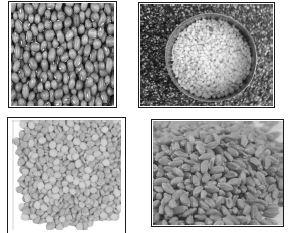
(a) Plant roots
(b) Plant seeds
(c) Plants fruits
(d) Plant leaves
Answer : B
Question. What is the source of articles given in the following figures?
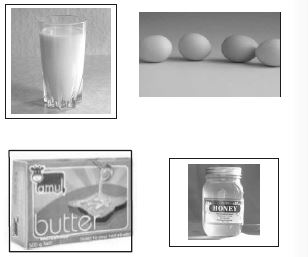
(a) Plant
(b) Animals
(c) Humans
(d) Both plants and animals
Answer : B
Question. Which of the following parts of a mustard plant can be used to prepare your food?
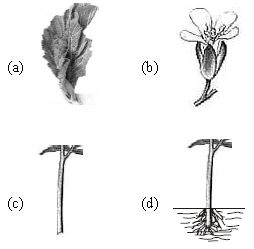
Answer : A
Question. Which one of the following is a herbivores animal ?
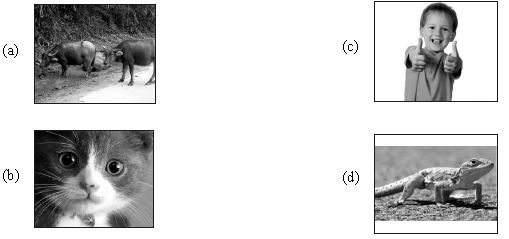
Answer : A
Very Short Answer Type Questions :
Question. Name four food items that we get from animals?
Answer : The food items that we get from animals are milk, meat, egg, honey.
Question. Name two edible stems.
Answer : The two edible stems are-sugarcane and onion.
Question. What are the animals that eat only plants and plants products called?
Answer : The animals that eat only plants and plants products are called herbivore.
Question. What is the rearing of honeybee on a large scale called?
Answer : The rearing of honeybee on a large scale is called Apiculture.
Short Answer Type Questions :
Question. Distinguish between-herbivore, carnivore and omnivore.
Answer :
Question. Why do we need food?
Answer : "Food is one of necessary thing for us because of the following reasons:
• Food provides nutrients.
• Nutrients provide energy for body activities and all functions of the body.
• Energy is used in different processes of a living organism like breathing, digesting food, etc.
• Energy from food keeps us warm.
• Food is also used for "growth and repair" of the different body parts.
• It also helps to keep the immune system healthy."
Question. What is food chain? Give one example.
Answer : A food chain shows how each living thing gets food, and how nutrients and energy are passed from creature to creature. Food chains begin with plant-life, and end with animal-life. Some animals eat plants, some animals eat other animals. A simple food chain could start with grass, which then eaten up by grasshopper, then mouse, and the mouse was eaten by owl.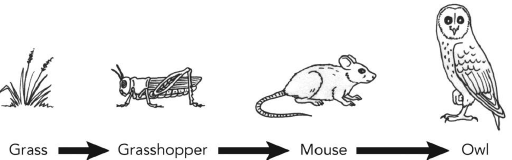
Question. What is the main difference between scavengers and decomposers?
Answer : Scavenger and decomposer are two types of organisms that are responsible for the recycling of organic matter. The main difference between scavenger and decomposer is that scavenger consumes dead plants, animals or carrion to break down the organic materials into small particles whereas decomposer consumes the small particles produced by the scavengers. Scavengers can be animals such as birds, crabs, insects, and worms. They can be also called as detritivores. Decomposers are manly fungi. Earthworms and bacteria are also decomposers. The biological term for decomposers is saprotrophs.
Question. How can food problem be solved?
Answer : The food problem of country can be solved by the following ways-
• We should grow more food crops by using modern method of farming.
• We should store food grains properly.
• We should not waste food in any way.
Question. How scavengers and decomposers are useful to us?
Answer : Decomposers and scavengers break down dead plants and animals. They also break down the waste (poop) of other organisms. Decomposers are very important for any ecosystem. If they weren't in the ecosystem, the plants would not get essential nutrients, and dead matter and waste would pile up.so they help to keep the earth clean.
Free study material for Science
CBSE Class 6 Science Worksheets for Chapter 01 Food Where Does It Come From
Download Chapter Worksheets: Class 6 Science
Access structured practice worksheets for Chapter 01 Food Where Does It Come From aligned with the 2026 CBSE curriculum. These downloadable exercises for Class 6 Science help students build accuracy and reinforce core concepts for upcoming school tests.
Concept Clarification for Chapter 01 Food Where Does It Come From
Designed around the official curriculum for Class 6 Science, these practice sheets guarantee standard compliance. Reviewing step-by-step solutions after completion sharpens your accuracy and clarifies complex sub-topics within Chapter 01 Food Where Does It Come From.
Effective Revision Strategies for School Exams
Follow up your worksheet practice by attempting the interactive online MCQ tests for Chapter 01 Food Where Does It Come From to evaluate your execution speed. All printable assignments and revision sheets on our platform are updated for the 2026 session and available free of charge.
FAQs
You can download the latest chapter-wise printable worksheets for Class 6 Science Chapter 01 Food Where Does It Come From for free from StudiesToday.com. These have been made as per the latest CBSE curriculum for this academic year.
Yes, Class 6 Science worksheets for Chapter 01 Food Where Does It Come From focus on activity-based learning and also competency-style questions. This helps students to apply theoretical knowledge to practical scenarios.
Yes, we have provided solved worksheets for Class 6 Science Chapter 01 Food Where Does It Come From to help students verify their answers instantly.
Yes, our Class 6 Science test sheets are mobile-friendly PDFs and can be printed by teachers for classroom.
For Chapter 01 Food Where Does It Come From, regular practice with our worksheets will improve question-handling speed and help students understand all technical terms and diagrams.