

Multiple Choice Questions (MCQs) for Class 7 Science: All Chapters
Explore reliable objective questions for All Chapters tailored for Class 7 learners. Utilizing these Science multiple-choice formats ensures thorough preparation and strengthens problem-solving speed for upcoming school assessments.
Practice All Chapters MCQs for Class 7 Science
View or download the dedicated All Chapters MCQ resource below. Practicing these 50 objective questions regularly builds familiarity with standard exam patterns and helps secure higher marks in final Science evaluations.
Multiple Choice Questions
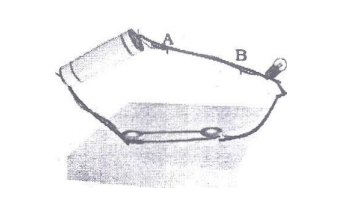
(a) Compass needle will show deflection
(b) Compass needle will not show deflection
(c) The compass needle will become red hot
(d) The compass needle will break
Show Answer & Explanation
Answer: (a) Compass needle will show deflection
Explanation:
- A wire carrying current has a magnetic field around it.
- This field pushes a nearby compass needle away from its position.
- So the answer is (a) the compass needle will show deflection.
(a) Sand
(b) Clay
(c) Pieces of plastic
(d) Silt
Show Answer & Explanation
Answer: (c) Pieces of plastic
Explanation:
- Loamy soil is a mix of sand, clay and silt, along with humus.
- Pieces of plastic are not a natural part of soil.
- So the answer is (c) pieces of plastic.
(a) Gills
(b) Lungs
(c) Moist Skin
(d) Spiracles
Show Answer & Explanation
Answer: (c) Moist Skin
Explanation:
- An earthworm has no gills or lungs.
- It takes in air through its moist skin.
- So the answer is (c) moist skin.
(a) 4 m
(b) 3 m
(c) 2 m
(d) 8 m
Show Answer & Explanation
Answer: (a) 4 m
Explanation:
- The image is as far behind the mirror as the object is in front.
- After moving, Sita is 4 − 2 = 2 m from the mirror, so her image is 2 m behind it.
- Distance between Sita and her image = 2 + 2 = 4 m.
- So the answer is (a) 4 m.
(a) Greater
(b) Lesser
(c) Same
(d) Double
Show Answer & Explanation
Answer: (a) Greater
Explanation:
- More turns of wire in the coil make a stronger magnetic field.
- So the electromagnet becomes stronger.
- So the answer is (a) greater.
(a) Seed
(b) Flower
(c) Fruit
(d) Both (a) and (c)
Show Answer & Explanation
Answer: (c) Fruit
Explanation:
- After fertilisation, the ovary grows and ripens into the fruit.
- The ovules inside the ovary become the seeds, not the ovary itself.
- So the answer is (c) fruit.
(a) Xylem
(b) Phloem
(c) Root hair
(d) Both (a) and (c)
Show Answer & Explanation
Answer: (c) Root hair
Explanation:
- Root hairs are thin outgrowths of root cells.
- They give a large surface area for absorbing water and minerals.
- Xylem only carries the water upwards.
- So the answer is (c) root hair.
(a) Gum
(b) Plywood
(c) Sealing wax
(d) Kerosene
Show Answer & Explanation
Answer: (d) Kerosene
Explanation:
- Gum, plywood and sealing wax (lac) come from forests.
- Kerosene is made from petroleum, which is not a forest product.
- So the answer is (d) kerosene.
(a) Joule
(b) Maxwell
(c) Oersted
(d) Newton
Show Answer & Explanation
Answer: (c) Oersted
Explanation:
- Hans Christian Oersted saw a compass needle move near a wire carrying current.
- This showed that electric current has a magnetic effect.
- So the answer is (c) Oersted.
(a) Bryophyllum
(b) Rose
(c) Potato
(d) Jasmine
Show Answer & Explanation
Answer: (a) Bryophyllum
Explanation:
- Bryophyllum grows new plants from the notches on its leaves.
- Rose and jasmine grow from stem cuttings, and potato from its eyes on the tuber (stem).
- So the answer is (a) Bryophyllum.
(a) Greater
(b) Lesser
(c) Same
(d) Double
Show Answer & Explanation
Answer: (a) Greater
Explanation:
- More turns of wire in the coil make a stronger magnetic field.
- So the electromagnet becomes stronger.
- So the answer is (a) greater.
(a) Clay
(b) Silt
(c) Humus
(d) Sand
Show Answer & Explanation
Answer: (c) Humus
Explanation:
- Humus is the decayed plant and animal matter in soil.
- It adds minerals and helps the soil hold water and air.
- So the answer is (c) humus.
(a) Oersted
(b) Maxwell
(c) Joule
(d) Newton
Show Answer & Explanation
Answer: (a) Oersted
Explanation:
- Hans Christian Oersted saw a compass needle move near a wire carrying current.
- This showed that electric current has a magnetic effect.
- So the answer is (a) Oersted.
(a) 5 m
(b) 10 m
(c) 2 m
(d) 7 m
Show Answer & Explanation
Answer: (a) 5 m
Explanation:
- The image is as far behind the mirror as the object is in front.
- After moving 1 m, Neha is 6 − 1 = 5 m from the mirror.
- So her image is also 5 m behind the mirror.
- So the answer is (a) 5 m.
(a) Seed
(b) Fruit
(c) Flower
(d) Both (a) and (c)
Show Answer & Explanation
Answer: (b) Fruit
Explanation:
- After fertilisation, the ovary grows and ripens into the fruit.
- The ovules inside the ovary become the seeds, not the ovary itself.
- So the answer is (b) fruit.
(a) Xylem
(b) Phloem
(c) Root hair
(d) Both (a) and (c)
Show Answer & Explanation
Answer: (c) Root hair
Explanation:
- Root hairs are thin outgrowths of root cells.
- They give a large surface area for absorbing water and minerals.
- Xylem only carries the water upwards.
- So the answer is (c) root hair.
(a) Real
(b) Virtual
(c) Imageless
(d) None of the above
Show Answer & Explanation
Answer: (b) Virtual
Explanation:
- A real image can be caught on a screen.
- A virtual image cannot be caught on a screen.
- So the answer is (b) virtual.
(a) Potato
(b) Bryophyllum
(c) Rose
(d) Jasmine
Show Answer & Explanation
Answer: (b) Bryophyllum
Explanation:
- Bryophyllum grows new plants from the notches on its leaves.
- Rose and jasmine grow from stem cuttings, and potato from its eyes on the tuber (stem).
- So the answer is (b) Bryophyllum.
(a) Gills
(b) Moist Skin
(c) Lungs
(d) Spiracles
Show Answer & Explanation
Answer: (b) Moist Skin
Explanation:
- An earthworm has no gills or lungs.
- It takes in air through its moist skin.
- So the answer is (b) moist skin.
(a) Gum
(b) Plywood
(c) Sealing wax
(d) Kerosene
Show Answer & Explanation
Answer: (d) Kerosene
Explanation:
- Gum, plywood and sealing wax (lac) come from forests.
- Kerosene is made from petroleum, which is not a forest product.
- So the answer is (d) kerosene.
(a) Iron
(b) Brass
(c) Aluminum
(d) Steel
Show Answer & Explanation
Answer: (a) Iron
Explanation:
- An electromagnet needs a core that is easily magnetised.
- Iron becomes magnetic quickly and loses it when the current stops.
- Brass and aluminium are non-magnetic, and steel keeps its magnetism.
- So the answer is (a) iron.
(a) Sandy soil
(b) Clayey soil
(c) Loam
(d) Gravel
Show Answer & Explanation
Answer: (b) Clayey soil
Explanation:
- Clay particles are very fine and packed close together.
- So they hold more water than the other soils listed.
- So the answer is (b) clayey soil.

(a) Compass needle will show deflection
(b) Compass needle will not show deflection
(c) The compass needle will become red hot
(d) The compass needle will break
Show Answer & Explanation
Answer: (a) Compass needle will show deflection
Explanation:
- A wire carrying current has a magnetic field around it.
- This field pushes a nearby compass needle away from its position.
- So the answer is (a) the compass needle will show deflection.
(a) 3 m
(b) 6 m
(c) 2 m
(d) 7 m
Show Answer & Explanation
Answer: (a) 3 m
Explanation:
- The image is as far behind the mirror as the object is in front.
- After moving 2 m, Ram is 5 − 2 = 3 m from the mirror.
- So his image is also 3 m behind the mirror.
- So the answer is (a) 3 m.
(a) Joule
(b) Maxwell
(c) Oersted
(d) Newton
Show Answer & Explanation
Answer: (c) Oersted
Explanation:
- Hans Christian Oersted saw a compass needle move near a wire carrying current.
- This showed that electric current has a magnetic effect.
- So the answer is (c) Oersted.
(a) Potato
(b) Rose
(c) Bryophyllum
(d) Jasmine
Show Answer & Explanation
Answer: (c) Bryophyllum
Explanation:
- Bryophyllum grows new plants from the notches on its leaves.
- Rose and jasmine grow from stem cuttings, and potato from its eyes on the tuber (stem).
- So the answer is (c) Bryophyllum.
(a) Seed
(b) Flower
(c) Fruit
(d) Both (a) and (c)
Show Answer & Explanation
Answer: (c) Fruit
Explanation:
- After fertilisation, the ovary grows and ripens into the fruit.
- The ovules inside the ovary become the seeds, not the ovary itself.
- So the answer is (c) fruit.
(a) Real
(b) Virtual
(c) Imageless
(d) None of the above
Show Answer & Explanation
Answer: (b) Virtual
Explanation:
- A real image can be caught on a screen.
- A virtual image cannot be caught on a screen.
- So the answer is (b) virtual.
(a) Xylem
(b) Root hair
(c) Phloem
(d) Both (a) and (b)
Show Answer & Explanation
Answer: (b) Root hair
Explanation:
- Root hairs are thin outgrowths of root cells.
- They give a large surface area for absorbing water and minerals.
- Xylem only carries the water upwards.
- So the answer is (b) root hair.
(a) Clay
(b) Silt
(c) Humus
(d) Sand
Show Answer & Explanation
Answer: (c) Humus
Explanation:
- Humus is the decayed plant and animal matter in soil.
- It adds minerals and helps the soil hold water and air.
- So the answer is (c) humus.
(a) only a physical change can be reversed.
(b) only a physical change causes new materials to form.
(c) only a chemical change can be reversed.
(d) both chemical and physical changes form new materials.
Show Answer & Explanation
Answer: (a) only a physical change can be reversed.
Explanation:
- A physical change makes no new material and can often be reversed.
- A chemical change makes a new material and is hard to reverse.
- So (b), (c) and (d) are wrong.
- So the answer is (a).
(a) roots
(b) stems
(c) leaves
(d) flowers
Show Answer & Explanation
Answer: (c) leaves
Explanation:
- Photosynthesis needs chlorophyll, light, water and carbon dioxide.
- Leaves are broad, green and full of chlorophyll.
- So the answer is (c) leaves.
(a) has a sour and strong taste
(b) feels soapy to the touch
(c) can chemically burn or irritate skin
(d) turns litmus red
Show Answer & Explanation
Answer: (b) feels soapy to the touch
Explanation:
- Bases feel soapy or slippery to the touch.
- Sour taste and turning blue litmus red are signs of acids.
- So the answer is (b) feels soapy to the touch.
(a) goat
(b) camel
(c) sheep
(d) yak
Show Answer & Explanation
Answer: (b) camel
Explanation:
- The alpaca belongs to the camel family.
- Its soft wool is used to make cloth.
- So the answer is (b) camel.
(a) 50 m/s
(b) 5 m/s
(c) 10 m/s
(d) 0.5 m/s
Show Answer & Explanation
Answer: (b) 5 m/s
Explanation:
- Speed = distance ÷ time.
- Speed = 50 m ÷ 10 s = 5 m/s.
- So the answer is (b) 5 m/s.
(a) Cyclone
(b) Hurricane
(c) Typhoon
(d) Thunderstorm
Show Answer & Explanation
Answer: (d) Thunderstorm
Explanation:
- Cyclone, hurricane and typhoon are the same kind of storm with different names.
- A thunderstorm is a different, smaller kind of storm.
- So the answer is (d) thunderstorm.
What is the only difference that the girl in the picture can tell between the 2 beakers that she is holding ?
(a) its content
(b) its size
(c) its temperature
(d) its smell
Show Answer & Explanation
Answer: (c) its temperature
Explanation:
- The two beakers look alike and hold the same kind of liquid.
- They differ in temperature: one is at 60°C and the other at 10°C.
- A blindfolded girl can feel this by touch.
- So the answer is (c) its temperature.
(A) organisms eat a lot to generate body heat.
(B) bones of some organisms are hollow to reduce body weight.
(C) streamlined body of some organisms to reduce air or water resistance.
(a) A only
(b) A and B only
(c) B and C only
(d) A, B and C
Show Answer & Explanation
Answer: (a) A only
Explanation:
- Behavioural adaptation is a change in what an organism does.
- Eating a lot to make body heat is a behaviour.
- Hollow bones and a streamlined body are body structures.
- So the answer is (a) A only.
(a) it absorbs water and mineral salts.
(b) it is connected to the small intestine.
(c) it breaks down food into smaller pieces.
(d) it transports chewed food into the stomach.
Show Answer & Explanation
Answer: (d) it transports chewed food into the stomach.
Explanation:
- The oesophagus is the food pipe that joins the mouth to the stomach.
- It carries chewed food down by muscle movement.
- It does not absorb or break down food.
- So the answer is (d) it transports chewed food into the stomach.
(a) there is no digestive juice in the mouth.
(b) food is digested completely in the stomach.
(c) the large intestine is narrower than the small intestine.
(d) inside the large intestine, most of the water from the undigested food is absorbed by the body.
Show Answer & Explanation
Answer: (d) inside the large intestine, most of the water from the undigested food is absorbed by the body.
Explanation:
- The mouth has saliva, which is a digestive juice.
- Digestion is completed in the small intestine, and the large intestine is wider than the small one.
- The large intestine absorbs most of the water from undigested food.
- So the answer is (d).
(a) Strong winds
(b) Tidal waves
(c) Heavy rains
(d) Volcanic eruptions
Show Answer & Explanation
Answer: (d) Volcanic eruptions
Explanation:
- A cyclone brings strong winds, tidal waves and heavy rains.
- Volcanic eruptions come from inside the earth and are not part of a cyclone.
- So the answer is (d) volcanic eruptions.
(a) km/h
(b) m/s
(c) s/m
(d) mm/s
Show Answer & Explanation
Answer: (c) s/m
Explanation:
- Speed is distance divided by time.
- km/h, m/s and mm/s are all distance per time.
- s/m is time per distance, so it cannot be a unit of speed.
- So the answer is (c) s/m.
(a) Longitude
(b) Distance from mountain
(c) Distance from sea
(d) Winds
Show Answer & Explanation
Answer: (a) Longitude
Explanation:
- Climate depends on latitude, height, nearby mountains, distance from the sea and winds.
- Longitude does not change the climate of a place.
- So the answer is (a) longitude.
(a) Fungus
(b) Algae
(c) Bacteria
(d) Virus
Show Answer & Explanation
Answer: (c) Bacteria
Explanation:
- Pea plants have root nodules.
- Rhizobium bacteria live in these nodules and give the plant nitrogen, and the plant gives them food.
- So the answer is (c) bacteria.
(a) Blue litmus
(b) Methyl orange
(c) Phenolphthalein
(d) Methylene blue
Show Answer & Explanation
Answer: (d) Methylene blue
Explanation:
- Blue litmus, methyl orange and phenolphthalein change colour with acids and bases.
- Methylene blue is a dye and is not used as an acid-base indicator.
- So the answer is (d) methylene blue.
(a) Calories
(b) Celsius
(c) joules
(d) Watt
Show Answer & Explanation
Answer: (b) Celsius
Explanation:
- Temperature is measured in degrees Celsius.
- Calories and joules measure heat energy, and watt measures power.
- So the answer is (b) Celsius.
(a) Change of state
(b) Expansion
(c) Change of temperature
(d) all of these
Show Answer & Explanation
Answer: (d) all of these
Explanation:
- Heat can change the state of a substance, such as ice to water.
- Heat also makes things expand and raises their temperature.
- So the answer is (d) all of these.
(a) Oxygen
(b) Nitrogen
(c) Carbon dioxide
(d) hydrogen
Show Answer & Explanation
Answer: (c) Carbon dioxide
Explanation:
- Carbon dioxide reacts with lime water to form calcium carbonate.
- Calcium carbonate makes the lime water look milky.
- So the answer is (c) carbon dioxide.
(a) Alpaca
(b) Rayon
(c) Mohair
(d) Vicuna
Show Answer & Explanation
Answer: (b) Rayon
Explanation:
- Alpaca, mohair and vicuna are wool from animals.
- Rayon is made from wood pulp by chemical treatment, so it is a man-made fibre.
- So the answer is (b) rayon.
(a) Carbon dioxide
(b) Light
(c) Chlorophyll
(d) Nitrogen
Show Answer & Explanation
Answer: (d) Nitrogen
Explanation:
- Photosynthesis needs carbon dioxide, water, light and chlorophyll.
- Nitrogen is not needed for it.
- So the answer is (d) nitrogen.
(a) Oxygen
(b) Carbon dioxide
(c) Nitrogen
(d) Chlorine
Show Answer & Explanation
Answer: (a) Oxygen
Explanation:
- White blood cells use oxygen to destroy invading bacteria.
- Carbon dioxide and nitrogen are not used for this.
- So the answer is (a) oxygen.
(a) 21%
(b) 16.4%
(c) 18%
(d) 20%
Show Answer & Explanation
Answer: (a) 21%
Explanation:
- Air that we breathe in has about 21% oxygen.
- Exhaled air has less oxygen, about 16%.
- So the answer is (a) 21%.
(a) 23%
(b) 4.4%
(c) 6%
(d) 0.04%
Show Answer & Explanation
Answer: (b) 4.4%
Explanation:
- Inhaled air has only about 0.04% carbon dioxide.
- Exhaled air has about 4.4% carbon dioxide.
- So the answer is (b) 4.4%.
(a) 9 - 12
(b) 15 - 18
(c) 21 - 24
(d) 30 - 33
Show Answer & Explanation
Answer: (b) 15 - 18
Explanation:
- An adult at rest breathes in and out about 15 to 18 times in a minute.
- The other ranges are too low or too high.
- So the answer is (b) 15 - 18.
(a) Lactic acid
(b) Acetic acid
(c) Alcohol
(d) Malic acid
Show Answer & Explanation
Answer: (a) Lactic acid
Explanation:
- During heavy work, muscles may not get enough oxygen.
- Then glucose breaks down partly and makes lactic acid, which causes cramps.
- So the answer is (a) lactic acid.
(a) move down and inwards
(b) move upwards
(c) move outwards
(d) do not move at all
Show Answer & Explanation
Answer: (a) move down and inwards
Explanation:
- During exhalation the diaphragm moves up.
- The ribs move down and inwards, so the chest becomes smaller and air goes out.
- So the answer is (a) move down and inwards.
(a) Lungs
(b) Gills
(c) Spiracles
(d) Skin
Show Answer & Explanation
Answer: (c) Spiracles
Explanation:
- A cockroach has small openings on the sides of its body called spiracles.
- Air enters through them into the air tubes.
- So the answer is (c) spiracles.
(a) Bronchus
(b) Tracheae
(c) Nostrils
(d) blowholes
Show Answer & Explanation
Answer: (b) Tracheae
Explanation:
- Insects have a network of air tubes inside the body.
- These tubes are called tracheae.
- So the answer is (b) tracheae.
(a) Diaphragm
(b) Ribs
(c) Spiracles
(d) Tracheae
Show Answer & Explanation
Answer: (a) Diaphragm
Explanation:
- The diaphragm is a large sheet of muscle below the lungs.
- It separates the chest cavity from the abdomen.
- So the answer is (a) diaphragm.
(a) Lungs
(b) Kidney
(c) Spiracles
(d) Skin
Show Answer & Explanation
Answer: (a) Lungs
Explanation:
- Birds are air-breathing animals with a pair of lungs.
- Kidneys remove waste, and spiracles are found in insects.
- So the answer is (a) lungs.
Free study material for Science
All Chapters Objective Questions & Solutions for Class 7 Science
About All Chapters MCQs for Class 7 Science
Review structured objective questions for Class 7 Science All Chapters. Built according to official CBSE guidelines, these MCQ sets support daily revision and core concept reinforcement.
How to Verify Your MCQ Answers
Cross-reference your completed choices with comprehensive NCERT solutions for Class 7 Science to ensure absolute clarity across all sub-topics in this chapter.
Enhance Speed with Online MCQ Tests
Wrap up your chapter revision by testing your knowledge against standard question formats. Everything on our platform is provided free of charge.
FAQs
You can get most exhaustive CBSE Class 7 Science All Chapters MCQs Set 02 for free on StudiesToday.com. These MCQs for Class 7 Science are updated for the 2026-27 academic session as per CBSE examination standards.
Yes, our CBSE Class 7 Science All Chapters MCQs Set 02 include the latest type of questions, such as Assertion-Reasoning and Case-based MCQs. 50% of the CBSE paper is now competency-based.
By solving our CBSE Class 7 Science All Chapters MCQs Set 02, Class 7 students can improve their accuracy and speed which is important as objective questions provide a chance to secure 100% marks in the Science.
Yes, Science MCQs for Class 7 have answer key and brief explanations to help students understand logic behind the correct option as its important for 2026 competency-focused CBSE exams.
Yes, you can also access online interactive tests for CBSE Class 7 Science All Chapters MCQs Set 02 on StudiesToday.com as they provide instant answers and score to help you track your progress in Science.