

Practice MCQs for Class 6 Science Chapter 10 Motion and Measurement of Distances
Access targeted multiple-choice questions for Chapter 10 Motion and Measurement of Distances designed to align with the latest CBSE academic syllabus for Class 6 Science. These objective practice sets help students evaluate their conceptual understanding and improve exam readiness.
Access Chapter 10 Motion and Measurement of Distances Questions and Solutions
View or download the dedicated Chapter 10 Motion and Measurement of Distances MCQ resource below. Practicing these 50 objective questions regularly builds familiarity with standard exam patterns and helps secure higher marks in final Science evaluations.
Motion and Measurement of Distances
Question. Which of the following is not a unit of distance:
a. Metre
b. Feet
c. Kilogram
d. Kilometer
Answer: C
Question. Which of the following does not involve combination of motion:
a. Earth
b. Bike
c. Pendulum
d. Rolling ball
Answer: C
Question. A girl uses a worn out ruler to measure the length of a table in her room. She placed the ruler such that the mark 3.0 cm coincides with one end and the other end coincides with the mark 33.5 cm. The length of the table is ____ cm.
a. 33.5
b. 36.5
c. 33.8
d. 30.5
Answer: D
Question. Which of the following is a standard unit of measurement
a. Mutthi
b. Metre
c. Foot
d. Arm length
Answer: B
Question. Which of the following is correct:
a. 100mm=1cm
b. 10mm=1m
c. 100cm= 1m
d. 100m= 1km
Answer: A
Question.The correct length is:
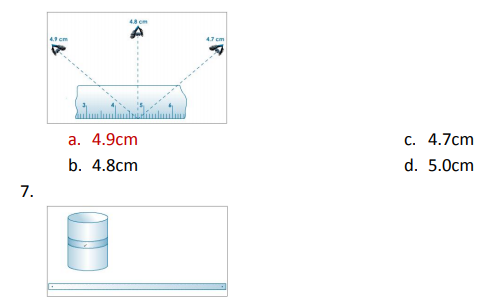
A method for measuring circumference of a cylindera.:
a. Wind a strip of paper closely round the object once and prick the overlapping position with a pin (Shown in figure above).Unwind the paper strip and measure the distance between the two pinholes. This measure is the measure of the circumference.
b. Mark a point on the cylinder. The mark coincides with the zero of the scale. Now role the cylinder along the scale till the point reappears.
c. Put bands of different sizes on the cylinder. The band that just fits the cylinder is used to find the circumference.
d. There is no accurate method for measuring the circumference of the cylinder
Answer: A
8.
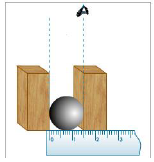
A simple method for measuring diameter of a sphere
a. Place the sphere between two note books. Keep the scale across and read the distance between the two books on the ruler accurately.
b. Place the sphere between two blocks in contact with a ruler as shown in figure above. Read the distance between the two blocks on the ruler accurately.
c. Take a string and wind it closely around the sphere. Then measure the length of the string.
d. We cannot measure the diameter of the sphere.
Answer: B
Question. While measuring the length of a kerchief, the reading of the scale at one end is 2.0 cm and at the other end is 33.1 cm. What is the length of the kerchief?
a. 33.1cm
b. 30.1cm
c. 31.1cm
d. 29.1cm
Answer: C
Question. The height of a person is 1.65 m. express the height in cm
a. 165 cm
b. 16.5cm
c. 1650cm
d. 1.65cm
Answer: A
Question: The SI unit of length is
a) metre
b) ohm
c) centimetre
d) kelvin
Answer: metre
Question: Speedometer measures
a) instantaneous speed
b) speed
c) average speed
d) instantaneous velocity
Answer: instantaneous speed
Question: The area of rectangle is given as the product of length
a) breadth
b) side
c) volume
d) none of these
Answer: breadth
Question: 1 dm is equal to
a) 1/10 m
b) 1/100 m
c) 100 m
d) none of these
Answer: 1/10 m
Question: 1 cm3 = ________ m3
a) 10–6
b) 10–3
c) 109
d) 106
Answer: 10–6
Question: What is the correct ascending order ?
a) 1cm, 1dm, 1m, 1dam
b) 1cm, 1dam, 1m, 1dm
c) 1cm, 1dam, 1dm, 1m
d) 1m, 1dm, 1cm,1dam
Answer: 1cm, 1dm, 1m, 1dam
Question: Motion of the pendulum is
a) Oscillatory
b) Rotational
c) Circular
d) Linear
Answer: Oscillatory
Question: Motion of the stone dropped under gravity
a) Linear
b) Circular
c) Rotational
d) Vibrational
Answer: Linear
Question: Motion of the point on blade of a moving fan
a) Circular
b) Vibrational
c) Oscillatory
d) None of these
Answer: Circular
Question: Motion which repeats itself after a regular interval of time
a) Periodic
b) Non Periodic
c) Rotational
d) Vibrational
Answer: Periodic
Question. The SI unit of length is :
(A) kelvin
(B) metre
(C) ohm
(D) centimetre
Answer: B
Question. Speedometer measures
(A) speed
(B) average speed
(C) instantaneous speed
(D) instantaneous velocity
Answer: C
Question. The area of rectangle is given as the product of length:
(A) breadth
(B) side
(C) volume
(D) none of these
Answer: A
Question. 1 dm is equal to :
(A) 1/10 m
(B) 1/100 m
(C) 100 m
(D) none of these
Answer: A
Question. 1 cm3 = ________ m3
(A) 10–6
(B) 10–3
(C) 109
(D) 106
Answer: A
Question. What is the correct ascending order ?
(A) 1cm, 1dam, 1dm, 1m
(B) 1cm, 1dam, 1m, 1dm
(C) 1m, 1dm, 1cm,1dam
(D) 1cm, 1dm, 1m, 1dam
Answer: D
Question. Motion of the pendulum is :
(A) Linear
(B) Circular
(C) Rotational
(D) Oscillatory
Answer: D
Question. Motion of the stone dropped under gravity :
(A) Linear
(B) Circular
(C) Rotational
(D) Vibrational
Answer: A
Question. Motion of the point on blade of a moving fan :
(A) Linear
(B) Circular
(C) Oscillatory
(D) Vibrational
Answer: B
Question. Motion which repeats itself after a regular interval of time :
(A) Periodic
(B) Non Periodic
(C) Rotational
(D Vibrational
Answer: A
Question. The graph alongside shows the distance travelled by Sita in her car from 6pm to 9pm one evening. How many kilometres did Sita travel from 6pm to 9pm that evening?
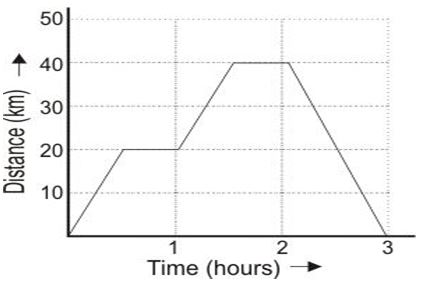
(A) 20 km
(B) 40 km
(C) 60Km
(D) 80 km
Answer: D
Question. The heart of a 1 month old baby may beat up to (maximum) _____ times per minute
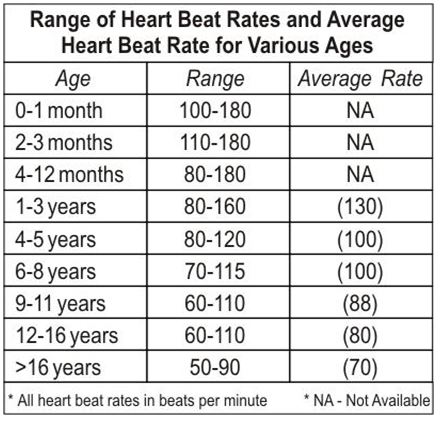
(A) 50
(B) 100
(C) 110
(D) 180
Answer: D
Question. From the table, we learn that from birth our heart beat rate _____
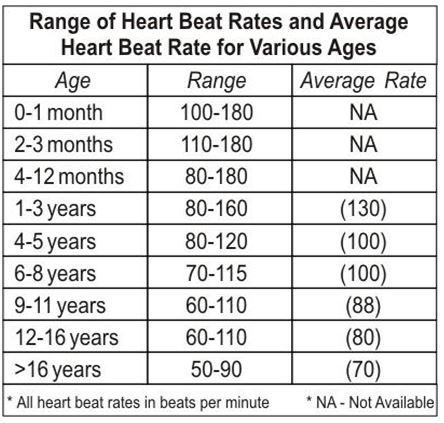
(A) initially decreases with age and then stays same.
(B) initially increases with age and then stays same.
(C) decreases continually with age.
(D) increases continually with age.
Answer: A
Question. Saroja dropped two papers, P and Q of the same size as shown in the figure from the same height. She recorded the time taken by the papers to reach the ground. Which of the following times recorded could be correct?
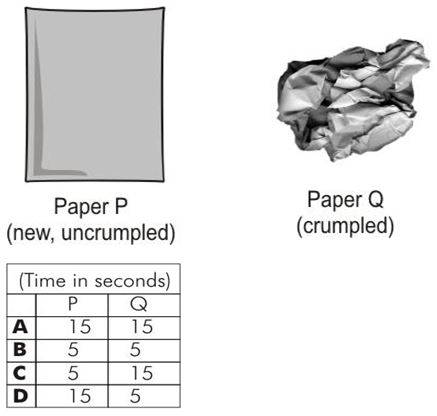
(A) A
(B) B
(C) C
(D) D
Answer: D
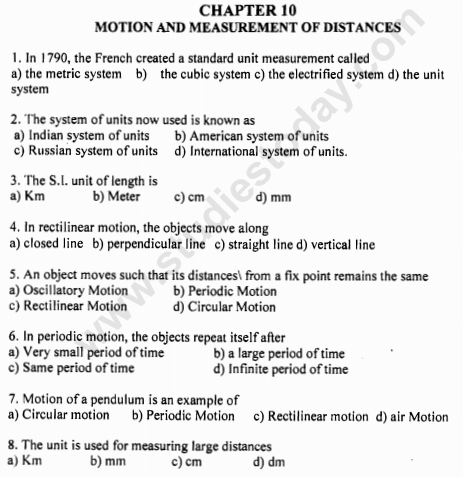
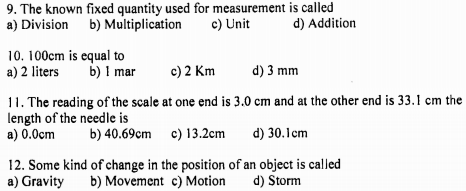
Answers Key

Free study material for Science
Chapter 10 Motion and Measurement of Distances Objective Questions & Solutions for Class 6 Science
About Chapter 10 Motion and Measurement of Distances MCQs for Class 6 Science
Review structured objective questions for Class 6 Science Chapter 10 Motion and Measurement of Distances. Built according to official CBSE guidelines, these MCQ sets support daily revision and core concept reinforcement.
How to Verify Your MCQ Answers
Cross-reference your completed choices with comprehensive NCERT solutions for Class 6 Science to ensure absolute clarity across all sub-topics in this chapter.
Enhance Speed with Online MCQ Tests
Wrap up your chapter revision by testing your knowledge against standard question formats. Everything on our platform is provided free of charge.
FAQs
You can get most exhaustive CBSE Class 6 Science Motion and Measurement of Distances MCQs for free on StudiesToday.com. These MCQs for Class 6 Science are updated for the 2026-27 academic session as per CBSE examination standards.
Yes, our CBSE Class 6 Science Motion and Measurement of Distances MCQs include the latest type of questions, such as Assertion-Reasoning and Case-based MCQs. 50% of the CBSE paper is now competency-based.
By solving our CBSE Class 6 Science Motion and Measurement of Distances MCQs, Class 6 students can improve their accuracy and speed which is important as objective questions provide a chance to secure 100% marks in the Science.
Yes, Science MCQs for Class 6 have answer key and brief explanations to help students understand logic behind the correct option as its important for 2026 competency-focused CBSE exams.
Yes, you can also access online interactive tests for CBSE Class 6 Science Motion and Measurement of Distances MCQs on StudiesToday.com as they provide instant answers and score to help you track your progress in Science.