

Download CBSE Class 12 Accountancy Assignments
Review targeted academic assignments with the CBSE Class 12 Accountancy Financial Statement Analysis Assignment. Built according to official CBSE standards for the 2026-27 term, these downloadable Class 12 Accountancy worksheets support effective daily practice for Part 2 Chapter 04 Analysis Of Financial Statements.
Access CBSE School Assignments and Answers
Access the complete assignment PDF for Class 12 Accountancy below. Regular practice with these targeted academic tasks builds familiarity with standard question patterns and helps secure higher marks in final school evaluations.
LEARNING OBJECTIVES:
After studying the lesson, students will be able to:
¶ Understand the meaning of financial statements and their objectives.
¶ Identify the parties interested in the financial statements.
¶ Understand the meaning of financial analysis and its objectives
¶ Understand the parties interested in financial Analysis
¶ Analyse the limitation of financial analysis
¶ Prepare comparative Income statement and Position Statement.
¶ Prepare Common Size Statements
¶ Understand the tools of Financial Analysis.
SALIENT POINTS:-
• Analysis of Financial statement is the systematic process of identifying the financial strength and weaknesses of the firm by establishing the relationship between the items of the Balance Sheet and income statement.
• The information available from the Analysis, serves the interest of different sections like Management, shareholders, workers, creditors, government, Potential Investors, Economist and Researchers and Stock Exchange.
• Financial analysis can be External Analysis and Internal Analysis, Horizontal analysis and Vertical Analysis.
• External Analysis: when analysis is made on the basis of Published statements, reports and information then this is known as External analysis.
• Internal Analysis: This analysis is based upon the information available to the business only.
• Horizontal Analysis: This analysis is based on the financial statements of different years of the same business unit or financial statements of a particular year of different business units.
• Vertical Analysis: According to this analysis financial statement of the same period or different items of the same financial statements are compared.
• Comparative statements, Common Size statements, Trend Analysis, Ratio Analysis, Fund Flow Statement, Cash flow statement are the Tools of financial statement analysis.
• Comparative Statements: it helps in ascertaining change in the items of income statement and Position Statement of different years in terms of figures and percentage.
Question. Which of the following is device of comparative statements?
(a) Comparison expressed in terms of absolute data
(b) Comparison expressed in terms of percentages
(c) Comparison expressed in terms of ratios
(d) All of the Above
Answer: D
Question. Financial Statement Analysis Objectives/Need is
(a) All of the options
(b) Measure the profitability of the business
(c) Measure the financial strength of the business
(d) Make comparative study within the firm and with other forms
Answer: A
Question. Financial analysis become useless because it:
(a) Measures the profitability
(b) Measures the Solvency
(c) Lacks Qualitative Analysis
(d) Makes a comparative study
Answer: C
Question. In the Statement of Profit & Loss of a Common Size Statement:
(a) Figure of net revenue from operations is assumed to be equal to 100
(b) Figure of gross profit is assumed to be equal to 100
(c) Figure of net profit is assumed to be equal to 100
(d) Figure of assets is assumed to be equal to 100
Answer: A
Question. Interest on Loans is
(a) Direct Expenses
(b) Indirect Expenses
(c) Operating Expenses
(d) None of the Above
Answer: B
Question. Importance of Comparative Statement is
(a) All of the options
(b) Make the data simple and more understandable
(c) Indicate the trend with respect to the previous year
(d) compare the firm performance with the performance of other firm in the same business
Answer: A
Question. In which analysis Financial Statement for a single year analysed
(a) Dynamic Analyses
(b) Vertical Analysis and Dynamic Analyses
(c) Vertical Analysis
(d) None of the options
Answer: C
Question. An equation in which total assets are multiplied to profit margin is classified as
(a) Du DuPont equation
(b) Turnover equation
(c) Preference equation
(d) None of the options
Answer: A
Question. Operating Expenses is include
(a) All of the options
(b) Office and Administrative expenses
(c) Selling and Distribution expenses
(d) Provision for doubtful debts
Answer: A
Question. Rent received, Profit on sale of fixed assets, Compensation for acquisition of land are example of
(a) Operating Incomes
(b) Non-operating Incomes
(c) Operating expenses
(d) None of the options
Answer: B
Question. Main limitation of analysis of financial statements is
(a) Affected by window dressing
(b) Difficulty in forecasting
(c) Do not reflect changes in price level
(d) All of the Above
Answer: D
Question. In a common-size Balance Sheet, total equity and liabilities are assumed to be equal to :
(a) 1,000
(b) 100
(c) 10
(d) 1
Answer: B
Question. each item is expressed as a percentage of some common base in
(a) Common size statement
(b) Fund Flow Statement
(c) Cash Flow Statement
(d) Cash Flow Statement
Answer: A
Question. Comparative Financial Statements show:
(a) Financial position of a concern
(b) Earning capacity of a concern
(c) Both of them
(d) None of these
Answer: C
Question. Comparative statement are also known as
(a) Horizontal analysis
(b) Dynamic analysis
(c) Vertical analysis
(d) External analysis
Answer: A
Question. Importance of Comparative Statements
(a) Make Presentation Simpler
(b) All of the options
(c) Help in Drawing Conclusion
(d) Help in Detection of Problems
Answer: B
Question. For a healthy business the current ratio lies between
(a) 0 to 1.5
(b) 3 to 4.5
(c) 4.5 to 6
(d) 1.5 to 3
Answer: D
Question. What will be the trend percentage, if the Inventory of a firm is Rs.2,00,000; Rs.2,40,000; Rs.3,00,000 and Rs.4,00,000 respectively?
(a) 1, 1.2, 1.5,2
(b) 10, 12, 15,20
(c) 100, 120, 150, 200
(d) None of the Above
Answer: C
Question. The analysis of financial statement by a shareholder is an example of:
(a) External Analysis
(b) Internal Analysis
(c) Vertical Analysis
(d) Horizontal Analysis
Answer: A
Question. Feature of financial analysis is to present the data contained in financial statements in
(a) Easy form
(b) Convenient and rational groups
(c) Comparable form
(d) All of the Above
Answer: D
Question. Which of the following is not a limitation of Financial Statement Analysis?
(a) Ignores the Qualitative Elements
(b) Not free from personal bias
(c) Intra-firm Comparison
(d) Ignores the price level changes
Answer: C
Question. An Annual Report is issued by a company to its:
(a) Management
(b) Directors
(c) Auditors
(d) Management
Answer: A
Question. Which of the following is untrue :
(a) Common size Balance Sheet
(b) Common size Statement of Profit & Loss
(c) Common size cash Flow Statement
(d) None of the Above
Answer: C
Question. Common size analysis is also known as ______ Analysis
(a) Vertical
(b) Vertical
(c) Vertical
(d) None of the options
Answer: A
Question. Which objective is not fulfilled by comparative financial statement:
(a) Indicate the extent of change in assets and liabilities
(b) Indicate the extent of change in items of Statement of Pofit & Loss
(c) Show effect of operative activities on assets and liabilities
(d) Show the direction of change in assets and liabilities
Answer: B
Question. The analysis of financial statements is important for
(a) management
(b) trade unions
(c) creditors
(d) All of the above
Answer: D
Question. Which of the following is not an objective of comparative statement analysis?
(a) To compare with other firms and industrial data
(b) To judge the financial instability
(c) To help in forecasting and planning
(d) Understand complex data in simplified manner
Answer: B
Question. Cost of material consumed was Rs 6,00,000 in 2021-22 and total revenue from operations was Rs 10,00,000, then percentage of cost of material consumed to total revenue from operations is
(a) 60%
(b) 30%
(c) 25%
(d) 18%
Answer: A
Question. In comparative statements, percentage change can be calculated with the help of which of the follwing formula?
(a) Absolute Change ×100/Amount of Previous Year
(b) Absolute Change ×100/Amount of Current Year
(c) Absolute Change ×100/Amount of Total Profit
(d) None of these
Answer: A
Question. Revenue from operations on 31st March, 2021 was Rs 15,00,000 and on 31st March, 2020 was Rs12,00,000, then what will be the percentage change in revenue from operations?
(a) 50%
(b) 62%
(c) 45%
(d) 25%
Answer: D
Question. Tangible assets are Rs 4,00,000 on 31st March, 2020 and intangible assets are Rs 2,00,000. Total assets of the firm are Rs 10,00,000, then what will be the percentage of tangible assets to total assets?
(a) 48%
(b) 50%
(c) 40%
(d) 32%
Answer: C
Question. If shareholders’ fund of Grow Ltd. was Rs 4,00,000 in 31st December, 2019 and Rs 5,00,000 in 31st December, 2020, then what is the percentage change in shareholders’ fund?
(a) 10%
(b) 25%
(c) 30%
(d) Data insufficient
Answer: B
Question. The financial statements of a business enterprise include
(a) balance sheet
(b) statement of profit and loss account
(c) cash flow statement
(d) All of the above
Answer: D
Question. When financial statements for a single year are analysed, it is called
(a) vertical analysis
(b) horizontal analysis
(c) lateral analysis
(d) circular analysis
Answer: A
Question. An Annual Report is issued by a company to its
(a) directors
(b) auditors
(c) shareholders’
(d) management
Answer: C
Question. Long-term borrowings of a firm on 31st March, 2021 was Rs 5,00,000 and Rs 8,00,000 on 31st March, 2022.What will be the absolute change and percentage change in comparative balance sheet?
(a) Rs 4,00,000, 80% respectively
(b) Rs 3,00,000, 60% respectively
(c) Rs 5,00,000, 35% respectively
(d) Rs 8,00,000, 25% respectively
Answer: B
Question. Balance sheet provides information about financial position of enterprise
(a) at a point in time
(b) over a period of time
(c) for a period of time
(d)None of the above
Answer: A
Question. Which of the following is not a tool of financial analysis?
(a) Comparative income statement
(b) Comparative position statement
(c) Statement of profit and loss
(d) Cash flow statement
Answer: C
Question. Which item is assumed to be 100 while preparing common size statement of profit and loss?
(a) Total income
(b) Cost of revenue from operations
(c) Revenue from operations
(d) None of the above
Answer: C
Question. Calculate amount of tax to be deducted. Revenue from Operations Rs 5,00,000 Other income (% of Revenue from Operations) 20% Expenses (% of Operating Revenue) 40% Tax Rate 30%
(a) Rs 1,50,000
(b) Rs 1,20,000
(c) Rs 1,00,000
(d) Rs 2,00,000
Answer: B
Question. The most commonly used tools for financial analysis are
(a) horizontal analysis
(b) vertical analysis
(c) ratio analysis
(d) All of these
Answer: D
Question. If shareholders’ fund of XYZ Ltd. was Rs 10,00,000, long-term borrowings was Rs 1,40,000 and trade payable was Rs 3,60,000, then what will be the percentage of shareholders’ fund to the total liabilities side of balance sheet?
(a) 70%
(b) 33.33%
(c) 66.66%
(d) Data insufficient
Answer: C
Question. In common size balance sheet,
(a) amount of share capital is taken as 100
(b) amount of current liabilities is taken as 100
(c) amount of total assets is taken as 100
(d) None of the above
Answer: C
Question. Fixed assets of a company increased from Rs 3,00,000 to Rs 4,00,000. What is the percentage change?
(a) 25%
(b) 33.3%
(c) 20%
(d) 50%
Answer: B
Question. Horizontal analysis provides information in
(a) absolute terms
(b) percentage terms
(c) Both ((a) and ((b)
(d) different terms
Answer: C
Question. Sumatra limited wants to assess the future profit earning capacity of its business. It will conduct
(a) external analysis
(b) short-term analysis
(c) long-term analysis
(d) None of these
Answer: C
Question. Comparative balance sheet consists of ……… columns.
(a) five
(b) three
(c) six
(d) four
Answer: A
Question. Comparative statement of profit and loss is also known as
(a) statement showing absolute and percentage changes
(b) statement showing only percentage change
(c) income and expenditure account
(d) None of the above
Answer: A
Question. Comparative statements are also known as
(a) dynamic analysis
(b) horizontal analysis
(c) vertical analysis
(d) external analysis
Answer: B
Question. Total of equity and liabilities is Rs 15,00,000 and share capital is Rs 3,00,000 as on 31st March, 2020. What will be the percentage of share capital shown in the common size balance sheet?
(a) 18%
(b) 20%
(c) 15%
(d) 25%
Answer: B
Question. If net revenue from operations is Rs 1,20,000, cost of revenue from operations is Rs 40,000 and operating expenses are Rs 20,000, what will be the percentage of operating income on net revenue from operations?
(a) 45%
(b) 55%
(c) 50%
(d) 65%
Answer: C
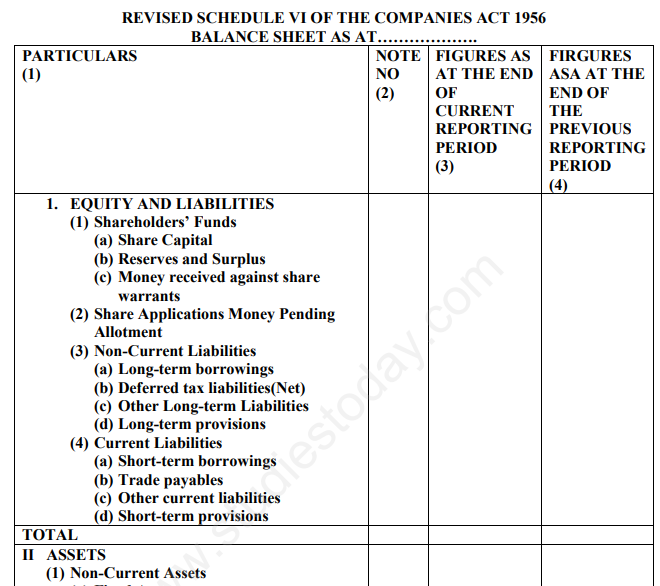
Please refer to attached file for CBSE Class 12 Accountancy Financial Statement Analysis Assignment
Free study material for Accountancy
CBSE Class 12 Accountancy Assignments for Part 2 Chapter 04 Analysis Of Financial Statements
Download Assignment: Part 2 Chapter 04 Analysis Of Financial Statements (Class 12 Accountancy)
Explore reliable practice questions for Part 2 Chapter 04 Analysis Of Financial Statements tailored for Class 12 learners. Use these structured worksheets to evaluate preparedness and strengthen core problem-solving skills.
Key Advantages of Solving Part 2 Chapter 04 Analysis Of Financial Statements Assignments
- Exam Alignment: Questions strictly follow contemporary CBSE sample papers and grading schemes.
- Comprehensive Coverage: Features objective drills, case studies, and structured descriptive problems for Part 2 Chapter 04 Analysis Of Financial Statements.
- Pacing & Precision: Regular problem-solving builds critical calculation speed and test-taking accuracy.
How to Approach Accountancy Part 2 Chapter 04 Analysis Of Financial Statements Assignments
- Initial Reading: Begin by reading the NCERT book for Class 12 Accountancy to build a baseline understanding.
- Independent Testing: Attempt assignment questions unassisted, then verify work using provided answer keys.
- Supplementary Aids: Leverage revision notes and worksheets whenever you encounter difficult topics.
FAQs
You can download free PDF assignments for Class 12 Accountancy Part 2 Chapter 04 Analysis Of Financial Statements from StudiesToday.com. These practice sheets have been updated for the 2026-27 session covering all concepts from latest NCERT textbook.
Yes, our teachers have given solutions for all questions in the Class 12 Accountancy Part 2 Chapter 04 Analysis Of Financial Statements assignments. This will help you to understand step-by-step methodology to get full marks in school tests and exams.
Yes. These assignments are designed as per the latest CBSE syllabus for 2026. We have included huge variety of question formats such as MCQs, Case-study based questions and important diagram-based problems found in Part 2 Chapter 04 Analysis Of Financial Statements.
Practicing topicw wise assignments will help Class 12 students understand every sub-topic of Part 2 Chapter 04 Analysis Of Financial Statements. Daily practice will improve speed, accuracy and answering competency-based questions.
Yes, all printable assignments for Class 12 Accountancy Part 2 Chapter 04 Analysis Of Financial Statements are available for free download in mobile-friendly PDF format.