¶ Balanced Diet and Nutrition: Macro and Micro Nutrients.
¶ Nutritive and Non-nutritive components of diet
¶ Eating for weight control - A healthy weight, the Pitfall of dieting, FoodIntoleranceand Food Myths.
¶ Sports Nutrition & its Effects on performance (Fluid & Meal in take, pre,during and post Competition).
¶ Food Supplements for children'
2.1 Balanced diet and Nutrition :
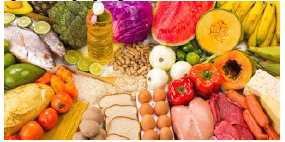
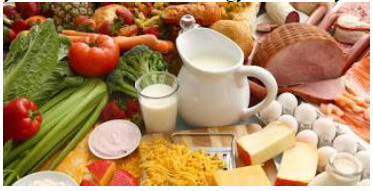
A diet which contains the proper amount of each nutrient, i.e. like carbohydrate, fat, protein etc is called Balanced Diet. A diet which consists of all the essential food constituents’ viz.
protein, carbohydrates, fats, vitamins, minerals and water in correct proportion is called balanced diet. A balanced diet contains sufficient amounts of fiber and the various nutrients (carbohydrates, fats, proteins, vitamins, and minerals) to ensure good health. Food should also provide the appropriate amount of energy and adequate amounts of water.
A.Balanced Diet: - A complete food, a diet contains adequate amounts of all the necessary nutrients required for proper growth & maintenance of body.
B.Nutrition: - It is the process of obtaining & consuming food or breaking downfood & substances taken in by the mouth to use for energy in the body.
C.Nutrients: - The energic food in our diet consists of various types of essentialchemicals for our body termed as nutrients: - e.g. Protein, fat, carbohydrates, vitamins &minerals.
Goals of nutrition :
(i)stay hydrated
(ii)provide immediate fuel
(ììí) boost performance
(ív) preserve muscle and
(v)improve recovery.
Macro nutrients
Macronutrients mainly include carbohydrates, proteins and fats and also water which are required in large quantities and their main function being the release of energy in body.
Macronutrients include Carbon, Oxygen, Hydrogen, and Nitrogen.

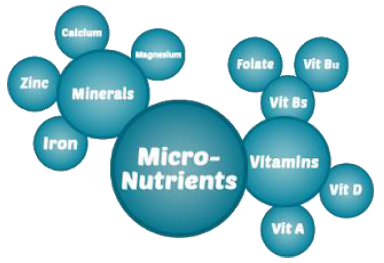
Micro nutrients
Micronutrients mainly comprise vitamins and minerals which are required in minute quantities. However, both macro nutrients as well as micro nutrients are essential. Micro nutrients are chlorine, iron, manganese, zinc, boron, sodium, copper, molybdenum and nickel.
2.2 Non-Nutritive and Nutritive Components of Diet
Nutritive components of diet :
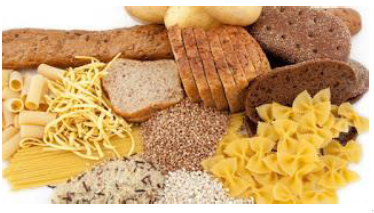
CARBOHYDRATES-
Carbohydrates are needed to provide energy during exercise.
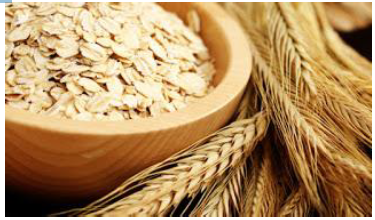
Carbohydrates are stored mostly in the muscles and liver. Complex carbohydrates are found in foods such as pasta, bagels, whole grain breads, and rice. They provide energy, fiber, vitamins, and minerals. These foods are low in fat. Simple sugars, such as soft drinks, jams and jellies, and candy provide a lot of calories, but they do not provide vitamins, minerals, and other nutrients.
PROTEIN-
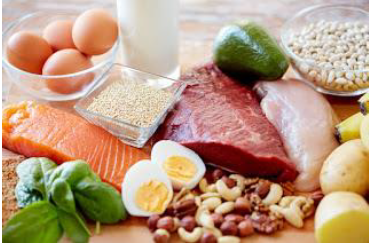
Protein is important for muscle growth and to repair body tissues. Protein can also be used by the body for energy, but only after carbohydrate stores have been used up. Only strength training and exercise will change muscle. Athletes, even body builders, need only a little bit of extra protein to support muscle growth. Athletes can easily meet this increased need by eating more total calories (eating more food).
FAT-
It provides the highest concentration of energy of all the nutrients. One gram of fat equals nine calories. One pound of stored fat provides approximately 3,600 calories of energy. Saturated fats are found primarily in animal sources like meat, egg yolks, yogurt, cheese, butter, milk. This type of fat is often solid at room temperature. Unsaturated fats include monounsaturated and polyunsaturated fats, which are typically found in plant food sources and are usually liquid at room temperature.
Vitamin-
A well-planned and nutritionally adequate diet should meet an athlete‘s vitamin and mineral needs. Supplements will only be of any benefit if your diet is inadequate or you have a diagnosed deficiency, such as an iron or calcium deficiency. Use of vitamin and mineral supplements is potentially dangerous and they should not be taken without the advice of a qualified health professional.
Minerals: -
Mineral are very essential in our diet. Four percent of our body weight is made up minerals. These are required for healthy teeth, bones and muscles. It is also used by body for various activities such as transmission of nerve, impulses formation of hormones and maintenance of heart beat etc.

Macro Minerals: -
a)Calcium: Calcium is among the top macro-minerals in terms of growth and development of our bones and teeth. It helps in blood clotting. Its deficiency maycause rickets. The sources are cheese, milk, orange, juice, eggs, green leafy vegetables andcereals.
b)Potassium: Potassium is one of the most required minerals in diet. It is helpful inkeeping the nervous system and muscular system fir and active all the time. it helps inmaintaining the amount of water in blood and tissues. Its main sources are banana, tomatoes, greenleafy vegetables, beans etc.
c)Sodium: It helps in muscular activities. It also helps in transmission of nerveimpulses.
The sources are table salts, pickles and butter etc.
d)Magnesium: It repairs and maintains body cells. It is found in meat, brown rice,beans and whole grains etc.
e)Phosphorus: Phosphorus helps in the formation of bone and teeth. It keeps themuscles and nerve activities normal. The sources are egg, fish, liver, milk, and unpolished rice etc.
Micro Minerals:
a) Iodine: It produces the hormones for the thyroid gland. It is also significant for proper growth and development. Lack of iodine can cause goiter(swollen thyroid gland) and mental retardation. The sources are iodized salt, fish and sea food.
b) Iron: it is essential in the production of hemoglobin. Its deficiency causes anemia.The sources are meat, egg, dry fruits, spinach banana and greet leaf vegetables.
c)Chromium: it is essential in the production of hemoglobin. Its deficiency may cause diabetes. The sources are soya beans, black gram, carrot, tomato, groundnuts, bajraand barley.
Non nutritive components of diet :
a)Water
b)Roughage
c)Artificial sweeteners
d)Preservatives
e)Plant products
Fibre or roughage has no nutritive value. It is undigested part of the food or it can be said that it cannot be digested by human intestinal tract. It consists of water and improves intestinal function by adding bulk to the food. It helps the individual to satisfy the appetite. It
prevents constipation.
2.3 Eating for weight control :-
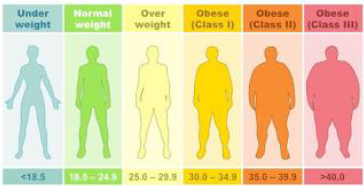
A healthy weight is a weight that lowers your risk for health problems, generally body mass index (BMI) and waist size are good ways to achieve healthy weight.
Methods to calculate BMI = Weight in Kg/(Height in m)
Category BMI
Under Weight
Normal Weight
Over Weight
Obesity Class I
Obesity Class II
Obesity class III
A healthy weight is considered to be one that is between 19-25 BMI. If the BMI is between 25- 29 an adult is considered overweight and if it is above 30, the person is considered to be obese.
Since, 3500 calories equals both one equals about one pound of fat, if you cut 500 calories from your typical diet each day, you will lose one pound weight a week.
Here are some useful tips for weight control with proper eating:
a.Avoid common pitfalls: diet, especially fat diets or quick fix pills and plans, oftenset you up for failure. Prepare a plan that is more realistic.
b.Put a stop to emotional eating: We don’t always eat simply to satisfy hunger. Alltoo often, we turn to food for comfort and stress relief. When this happens, we frequentlypack on pounds.
c.Tune in what you eat : Do not eat while at your desk or working, and in front of the TV screen. The result is that we consume much more than we need, often withoutrealizing it.
Counter this tendency by practicing “mindful” eating: pay attention to what you eat,savor each bite, and choose foods that are both nourishing and enjoyable
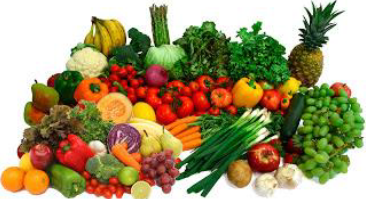
d.Fill up with fruit, veggies and fibre: to lose weight, you have to eat fewer calories.But that doesn’t necessarily mean you have to eat less food. You an fill up while on a diet,as long as you choose your foods wisely.
e.Indulge without overindulging: Do not avoid some type of food (ice cream orcookies or chips) completely. Instead of denying yourself the unhealthy foods you love, simplyeat them less often.
f.Take charge of your food environment: Set yourself up for success by taking charge of your off environment: when you eat and what foods are available.
g.Make healthy lifestyle changes: You can support your dieting efforts by makinghealthy lifestyle choices .
Factors to control body weight :
1.Balanced diet
2.Drinks lots of water
3.Eating lot of fibrous food
4.Regular Medical Checkup
5.Avoid Fats
6.Medicine only by doctors advice
7.Physical Activity
8.Avoid Drinking
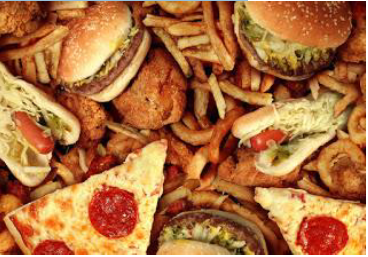
9.Avoid junk food
10.Meals in small shifts
11.Follow Hygenic Habits
12.Do not Dieting
13.Never try sliming pills
14.Avoid over eating
15.Balancing the intakes of calories and expenditure of calories.
Food myths:
a.Eggs increases cholesterol level so avoid them: There is no doubt that eggs are goodsource of health. An egg provides you various nutrients. It is as per daily requirements of cholesterol by our bodies. So, if you take one egg daily there is no problem ofcholesterol level.
b.Drinking while eating makes you fat: The actual fact behind this misconception is that enzymes and their digestive juices will be diluted by drinking water while eating which slows down your digestion which may lead to excess body fat.
(i) Myth: Low fat or No fat diet are good.
Fact: Body needs fats for energy, tissue repair and to transport vitamin A.D, E.K. Just cut down on salivated fat eating un saturated fats.
(ii) Myth: Dieting or Fasting may loose weight.
Fact: It may be true in short term but ultimately it hinder weight loss. Loosing over the long term burns off fat whereas crash dieting or fasting not only removes fat but who leans muscles.
(iii) Myth: Food eaten late night is more fattening.
Fact: It doesn’t make much change.
(iv) Myth: Low fat milk has less calcium that full fat milk.
Fact :- Skimmed and semi skimmed actually have more calcium because it is inwatery part and not in creamy part of milk.
(v) Myth: Vegetarian cannot build muscles.
Fact: Vegetarian can built muscles as meat eaters by getting their proteins from vegetables such as cheese nuts pulses. Etc.
(vi) Myth: Healthy food is expensive.
Fact: Tinned, stored, packed food is expensive. Whereas local & seasonal food isinexpensive.
PITFALL OF DIETING:
An individual who is overweight wants to reduce weight they starve for reducing weight many times skip meals to lose weight, sometimes take slimming pills.
- ¶ Extreme Reduction of Calories.
- ¶ Restriction on some nutrients
- ¶ Intake of calories through drinking
- ¶ Under estimating the calories.
- ¶ Intake of tabelled foods.
- ¶ Not preferring physical activities.
Food Intolerance:
Food intolerance is that when a person has difficulty in digesting a particular food.
Symptoms : Nausea, Vomiting, Pain in joints, headache and rashes on skin, Diarrhea, sweating, palpitations, burning sensations on the skin stomach.
Food Intolerance means the individual elements of certain foods that can not be properly processed and absorbed by our digestive system. The main cause of food intolerance is the complete absence of enzymes responsible for breaking down or absorbing the food elements.
Food intolerance can cause nausea, stomach pain, diarhhoea, vomiting, gas cramps,heartburn, headaches, irritability, etc.
Causes : Absence of activity of enzymes responsible for breaking down the food elements.
These are usually innate sometimes diet related or due to illness.
2.4 Sports Nutrition (Fluid & Meal in take, pre, during and post Competition)
Nutrition before competition:
At least a week before the competition sportsperson
should take complex carbohydrate food which usually helps in increasing glycogen store.
The fuel for the muscle is usually provided in meals 3-4 days prior to the competition. The diet should depend on the intensity of the activity. The diet should be rich carbohydrate, low in fat and protein. Two hours before the competition a high carbohydrate energy drink can be considered sufficient.
Nutrition during competition:
It is important to stay hydrated and maintain sugar level so that sportsperson may not undergo fatigue. If the duration of the competition is more than 60 mins than ½ to 1 cup carbohydrate drink after 10-20 mins and if the duration is less than 60 mins than carbohydrate drink after every 20-30 mins.
Nutrition after competition:
After competition it is important to recover properly , so the first preference should be given to replacement of fluid loss and this can be easily done by the intake of water or replacement drink. Meals after competition should be taken within 2 hours. For best glycogen restoration 100-200 grams of carbohydrate along with lean protein like meat or chicken should be taken. It will help in building, maintaining, and repairing of muscles. Atleast 20 gms of protein is required after completion for complete recovery.
2.5 Food Supplement
Food Supplement means a nutrient that is added to your diet to nourish your body as you are not taking this nutrient in adequate amount in your regular diet. Food supplements generally includes vitamins, fibers, minerals, fatty acids among other substances.
Advantages of Food Supplements :
(a)Supplements can contribute to improve muscular strength, endurance and overall physical performance.
(b)Some supplements are used in combination with drugs as a method of complimentary or alternative treatment of health conditions.
(c)Food supplements gives vitamin and minerals which protect the body fromdisease.
Disadvantages of Food supplements
(a) Food supplements can cause adverse sideeffects also, it they are not consumed in the right quantity. They can damage liver and reducebone strength.
(d)Weight-loss supplements may contain numerous untested ingredients that have notbeen examined for safety or effectiveness in children. The possibility of productcontamination is the main safety concern about dietary supplements for both children and adults, butthe danger may be grater for children.
Precautions for food supplements
1.Do not pay heed to the words of salesmen or advertisements which claim that these supplements will improve child‘s brain.
2.First of all ensure that there is a lack of essential nutrients in a child needs to takefood supplements or not.
3.Before purchasing an individual should ensure that it is free from preservatives,contains no fillers and does not contain any added sugar.