Topics of Unit : 4
¶ Concept of Disability & Disorder
¶ Types of Disability, its causes & nature (cognitive disability, intellectualdisability, physical disability)
¶ Types of Disorder, its cause & nature (ADHD, SPD, ASD, ODD, OCD)
¶ Disability Etiquettes
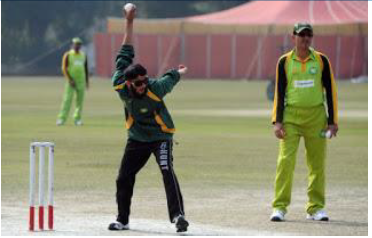
¶ Advantage of Physical Activities for children with special needs
¶ Strategies to make Physical Activities assessable for children with specialneed.
4.1 Concept of Disability & Disorder
Concept of Disability:
Disability is an impairment that may be cognitive, developmental, intellectual, mental, physical etc. It affects the everyday activities of the individual to a considerable amount. It may be present in an individual from birth or occur during one’s lifetime. Disability has different meanings in different societies of the world. Disability is an injury that restricts the functions or movements of an individual. It is the consequence of an impairment caused to an individual. Disability is a medical condition which does not permit an individual to perform any activity or movement in a normal way.
Concept of Disorder:
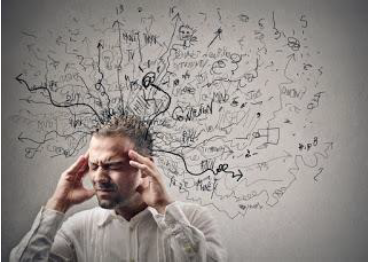
Disorder is usually used for mental disabilities. Disorder is any ailment that disturbs the health of an individual. Disorder creates hindrance in an individual’s performance and reduces his efficiency. In the beginning disorder seems to be ordinary but they usually grow or spread in a harmful manner in an individual. Most probably, a disorder can not be detected on time, as a result of which, a simple disorder is changed into a disability. A disorder disrupts the normal functioning of an individual.
4.2 Types of disability
1.Cognitive Disability:
It is a neurological disorder that creates hindrances or obstruction for an individual to store, process and produce information. This ability can affect an individual’s ability or capability to read, compute, speak and write.
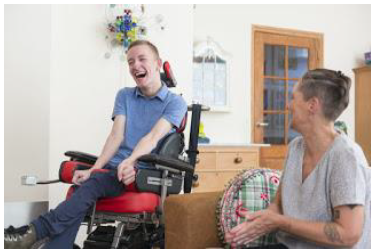
The individual’s, who have this type of disability, usually have following symptoms:
i)Memory disorder: An individual who has auditory problems or difficulty inremembering something that he heard, said or saw before sometime.
ii)Hyperactivity: An individual with cognitive disability may not have attention for along period. He finds it difficult to stay at one place.
iii)Dyslexia: An individual with cognitive disability may exhibit dyslexia. It meanshe may have difficulty in writing, reading, speaking, etc.
2.Intellectual disability:
It is a disability characterized by significant limitations both in intellectual functioning (reasoning, learning, problem solving) and in adaptivebehavior,
which covers a range of everyday social and practical skills. Indeed, this disability isrelated to the individual’s thought process, communication, money, learning, problem solvingand judgment.
3.Physical disability:
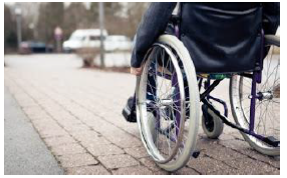
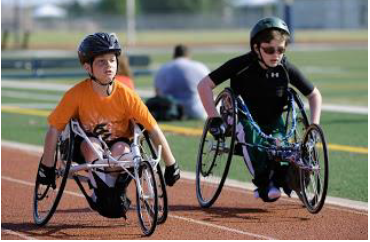
It is a limitation on individual’s physical functioning, mobility, dexterity or stamina. Other impairments such as respiratory disorders, blindness, epilepsy andsteep disorders, which limit other facets of daily living are also included in physicaldisabilities.
Physical disability may either be motor deficiency or sensory impairment.
Causes of disability
a) Genetic cause:
Abnormalities in genes and genetic inheritance cause intellectual disability in children. Sometimes, diseases, illness and over exposure to x-rays maycause genetic disorder.
b) Mental health problems:
Problems such as depression, bipolar disorder etc. may lead to disability. They tend to be some of the most misunderstood disabilities.
c) Accidents:
Accidents may occur anywhere, anytime and to anyone. These accidents may happen at workplace, on the roads or in the air. These accidents may lead to disability.
4.3 Types of disorders
a)Attention Deficit Hyperactivity Disorder (ADHD)
b)Sensory processing disorder (SPD)
c)Autism spectrum disorder (ASD)
d)Oppositional defiant disorder (ODD)
e)Obsessive compulsive disorder (OSD)
Attention Deficit Hyperactivity Disorder (ADHD):
it is a group of behavioral symptoms
that include inattentiveness, hyperactivity and impulsiveness. It is medical conditions that affects how well can someone sit still, focus and pay attention. The individual with ADHD have some problems focusing in some activities. This type of disorder is found more common in boys than in girls.
The various causes of ADHD are as follows:
a) Genetic factors: It is not a disorder that passed socially. Studies shows that parents, siblings, and children of people with ADHD may be up to five times more likely tohave the disorder than the people who are not related to someone with ADHD.
b) Brain injuries: When a baby’s brain is damaged before or after birth this couldmake the baby more likely to develop ADHD later on.
c) Low birth weight: It is observed that children with low birth weight are more likely to develop ADHD.
d) Trauma and brain diseases: Trauma during birth and brain diseases may lead to develop ADHD.
e) Diet: There are a number of evidences which shows that taking a particular type of food or food additives play a significant role in causing ADHD.
Sensory Processing Disorder (SPD) :
It is a condition in which the brain has difficulty in receiving and responding to the information that comes in through senses. It refers to the way the nervous system receives messages from the senses and then turns them into proper motor and behavioral responses. Sensory Processing Disorder may affect one sense such as touch, sight, taste or movement. It may also affect multiple senses. In fact, the person may scream when touched or may vomit or dive under the table after hearing the sound of a leaf blower outside the window.
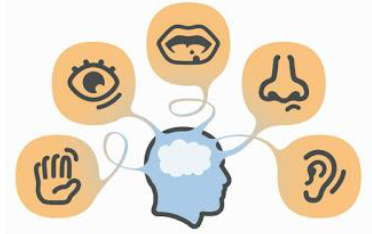
The various causes of SPD are as follows:
a) Genetic Factor: Studies indicate that children born to adults who have Autism Spectrum
Disorder (ASD) may be at a higher risk to develop SPD. Scientists allude that thecause of SPD are coded into child’s genetic material.
b)Low birth weight: It is also considered one of the causes of sensory processingdisorder.
c)Environmental factors: Usually, children who are adopted often experiences sensory processing disorder due to some restrictions in their early lives or poor parental care.
Autism Spectrum Disorder is a disorder that affects development. Here, the wordspectrum refers to the range of symptoms and their severity. Generally, the young children with ASD have difficulties with communication, language, social skill and behavior. In otherwords,
Autism Spectrum Disorder (ASD) :
It is characterized by social interaction difficulties, communication challenges and a tendency to engage in repetitive behavior.
The various causes of Autism Spectrum Disorder are as follows:
a) Genetic factors: It seems to play a very significant role. The first thing is that something happens at the time of fetal development that alters genes and secondly child inherits problematic genes from one or both the parents.
b) Environmental factors: It is not certain that environment causes ASD. But mothers exposed to high level of pesticides and air pollution may also be at a higher risk of having a child with ASD.
Oppositional Defiant Disorder (ODD):
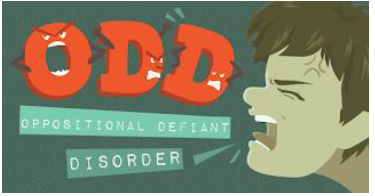
It is a set or group of behavioral disorders called disruptive behavior disorders. It is called by this name because children with such disorders always tend to disrupt those around them.
Physicians define this disorder as a pattern of disobedient, hostile and defiant behavior directed toward authority figures. The individuals affected by this disorder usually rebel, argue with adults, refuse to obey and are obstinate.
The various causes of Oppositional Defiant Disorder are as follows:
a) Biological or Genetic factors: Children are more susceptible of developing ODD if they have a parent with a history of ADHD or ODD.
b) Physical factors: the presence of ODD traits has been linked to the existence of abnormal amounts of some brain chemicals. These brain chemicals, known as neurotransmitters,keep the brain chemicals themselves balance properly.
c)Psychological factors: Children may develop ODD if they don’t have good relationwith parents or have neglectful parents or have inability to develop social relationship.
d)Social factors: Oppositional Defiant Disorder may be due to inconsistent discipline, divorce, poverty, chaotic environment I the family and exposure to violence.
Obsessive Compulsive Disorder (OCD):
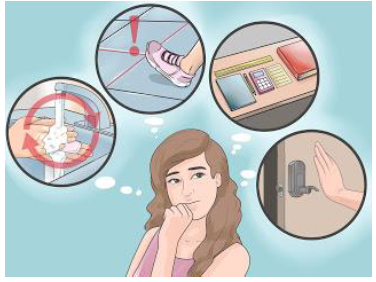
It is a mental health disorder that affects people of all ages and walks of life. It occurs when an individual gets caught in a cycle of obsessions and compulsions. It can be said that persons with OCD are plagued to constant thoughts of fears that cause them to perform rituals or routines.
Obsessive Compulsive Disorder is a type of mental disorder that causes repeated u unwanted thoughts. To get rid of unwanted thoughts, he/she performs the same task/activity again and again.
Causes of Obsessive Compulsive Disorder:
The exact cause of Obsessive Compulsive Disorder is still unknown. Research studies suggest that there may be a problem with the way one part of the brain sends information to another part. Serotonin is the chemical in the brain that sends messages from one part to another. Insufficiency of serotonin may help in causing Obsessive Compulsive Disorder.
4.4 Disability Etiquettes :
¶ When talking with a person with a disability, speak directly to that personrather than through a companion or sign language interpreter.
¶ When introduced to a person with a disability, it is appropriate to offer to shakehands. People with limited hand use or who wear an artificial limb can usually shake hands. (Shaking hands with the left hand is an acceptable greeting.)
¶ When meeting a person who is visually impaired, always identify yourself and others who may be with you. When conversing in a group, remember toidentify the person to whom you are speaking.
¶ If you offer assistance, wait until the offer is accepted. Then listen to or ask for instructions.
¶ Treat adults as adults. Address people who have disabilities by their first names only when extending the same familiarity to all others. (Never patronize peoplewho use wheelchairs by patting them on the head or shoulder.)
¶ Leaning on or hanging on to a person’s wheelchair is similar to leaning on hanging on to a person and is generally considered annoying. The chair is partof the personal body space of the person who uses it.
¶ Listen attentively when you’re talking with a person who has difficultyspeaking. Be patient and wait for the person to finish, rather than correcting orspeaking for the person. If necessary, ask short questions that require short answers, a nod or shake of the head. Never pretend to understand if you arehaving difficulty doing so. Instead, repeat what you have understood and allow the person to respond. The response will clue you in and guide your understanding.
¶ When speaking with a person who uses a wheelchair or a person who usescrutches, place yourself at eye level in front of the person to facilitate the conversation.
¶ To get the attention of a person who is deaf, tap the person on the shoulder or wave your hand. Look directly at the person and speak clearly, slowly, and expressively to determine if the person can read your lips. Not all people who are deaf can read lips. For those who do lip read, be sensitive to their needs byplacing yourself so that you face the light source and keep hands, cigarettes and food away from your mouth when speaking.
¶ Relax. Don’t be embarrassed if you happen to use accepted, common expressions such as “See you later,” or “Did you hear about that?” that seems to relate to a person’s disability. Don’t be afraid to ask questions when you’reunsure of what to do.
4.5 Advantages of physical activities for children with Special needs
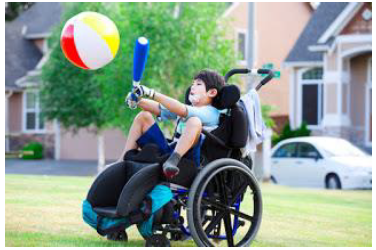
a) Reduced level of anxiety, stress and depression: physical activities may help in reducing the level of anxiety, stress and depression of children with disabilities.

b) Improved social interaction: physical activities provide ample opportunities for improving the social interaction among children with special needs. Social relationsare developed during involvement in physical activities.
c) Better emotional and psychological health: physical activities are beneficial for children with special needs because such activities improve psychological and emotional health.
d) Cognitive benefits: physical activities lead to cognitive skill improvement inchildren with disabilities. These activities allow them to discover and access strengths that cannot be challenged in the classroom setting.
4.6 Strategies to make physical activities accessible for children with special needs
a) Medical check-up: if we want to make physical activities accessible for the children with special needs, we need to understand the type of disabilities of children and for this purpose complete medical check-up of the children is required. Because without complete medical check-up, the teachers of physical education cannot come to know about the type of disability child is facing.

b) Activities based on interests: Physical activities must be based on interest,aptitudes, abilities, previous experience and limitations of children with special needs. The teachers of physical education should have deep knowledge of limitations, interest and aptitudes of children.
c) Different instructional strategies: A variety of different instructional strategies such as verbal, visual and peer teaching should be used for performing various types of physical activities. By this children get opportunity to learn by their own and becomeindependent.
d) Modification of rules: Rules can be modified according to the needs of the children.They can be provided extra time or attempt to perform a physical activity.
e) Specific environment: For special needs children the area should be limited. In caseof children who have autism, they must be provided specific area because they may needsome time to relax.