

Official NCERT Solutions for Class 5 Environmental Studies: Chapter 08 A treat for mosquitoes
Access comprehensive textbook solutions for Chapter 08 A treat for mosquitoes using the official curriculum guides for Class 5 Environmental Studies. Designed to align with the 2026-27 NCERT standards, these detailed answers help students reinforce core academic concepts.
Chapter-wise Solutions for Environmental Studies: Chapter 08 A treat for mosquitoes
Navigate directly to the solved Environmental Studies textbook exercises using the digital viewer below. Each solution includes detailed step-by-step explanations, allowing students to instantly cross-check their work and identify areas requiring further revision.
NCERT Solutions for Class 5 EVS for Chapter 8 A treat for mosquitoes
1. Do you know anyone who has had malaria?
Ans. Yes, once one of my friends suffered from malaria.
2. How did they find out that they had malaria.
Ans. It was found out by examining his blood.
3. What problems did they having on malaria?
Ans. At times he used to suffer fever with chills and rigors. He also became weak.
4. What other diseases can be caused by mosquito bites?
Ans. Diseases like dengue, chickengunia, filaria etc. are caused by mosquito bite.
5. In which season is malaria more common? Why do you think this happens?
Ans. Malaria is more common during the rainy season. This is because water logged and damp places provides suitable breeding environment for the mosquitoes.
6. What do you do in your house to protect yourself from mosquitoes? Also find out form your friends about what they do?
Ans. In our well as my friend’s house mosquitoes repellent devices and mosquito nets are used to protect ourselves from mosquitoes. Besides, we remain vigil that there should not be any water logging in our surroundings. We also keep our coolers, pots etc. are clean.
7. Look at the report of the blood test given on text page. Which words in the report helps us to know that the patient has malaria?
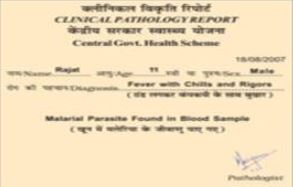
Ans. It is clearly mentioned in the report that malarial parasite has been found in blood sample of the patient.
8.
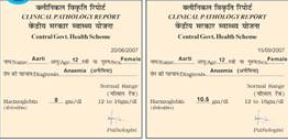
Look at Aarti’s blood report and find out the minimum haemoglobin required.
Ans. Minimum haemoglobin requirement is 12gm/dl.
9. How much did Aarti’s heamoglobin go up and how long did it take for that?
Ans. Aarti’s haemoglobin increased by 2.5 gm/dl i.e. around 30% in about three months.
10. What does the newspaper report say about the problems caused by anemia?
Ans. Newspaper report tells that anaemia is affecting both physical as well as mental health of the children suffering from it. Due to anaemia, children do not grow well, and their energy levels are low. This also affects their ability to study properly.
11. Have you or anyone in your family ever needed to get a blood test? When and why?
Ans. Yes. Last year I had got a blood test done. It was because doctors feared that I might suffering from anaemia.
12. What was found out by the blood test?
Ans. It was found that I was suffering from anaemia.
13. Have you had a health check-up in your school? What did the doctor tell you?
Ans. Yes, last month we have had a health check-up in your school. The doctor told me I was healthy.
14. Have you seen any poster like this put up anywhere?
Ans. Yes, such posters are put up near my school.
15. Who do you think puts up such posters, or gives ads in the newspaper?
Ans. The government would have been putting up such posters and giving information in the newspaper.
16. What are the same of the important points given in the poster?
Ans. In the poster it has been warned to remain alert about the mosquitoes because they can spread malaria, dengue and chickengunia. Some precautionary measures are also advised to keep off mosquitoes.
17. Why do you think pictures of a tank, cooler and pots are shown in the poster?
Ans. Because these are the stuff where breeding of mosquitoes can takes place if they are water logged or are not cleaned up regularly.
18. Why do you think it talks about putting fish in the tank. What do you think the fish eats?
Ans. It is told so because fishes eat up mosquitoes larvae that have been developing in the water.
19. What will happen when oil is spread on the water?
Ans. When oil is spread on water, the eggs and larvae of mosquitoes growing there would have been killed.
20. Which diseases are spread by flies and how?
Ans. Flies spread dysentery, cholera, typhoid, antrax etc. Flies are easily attracted by filth. They used to sit on dirty and fulthy matters. Again when these sit upon the food, microbes are mixed into the foo from there these can enter human body.
21. Since how many days has the water collected here?
Ans. For almost 8-10 days water has been collected there.
22. Has it caused any problem in the area?
Ans. Yes, it is causing many problems. The entire area is turned into a mess and breeding place of mosquitoes and germs.
23. Who is responsible for keeping these places clean?
Ans. Within the school premises, it is the responsibility of school authority while outside the school, the local municipality is responsible for the same.
24. Who is supposed to get the gutters and drains repaired?
Ans. The local municipality is responsible to get the gutters and drains repaired.
25. Can any larvae be seen in the collected water?
Ans. Yes, the larvae of mosquitoes can easily be seen in the collected water.
26. Find out who is responsible for keeping the area around your school clean. Write a letter from your class, reporting your findings suggestions. Find out to whom the letter should be written, and to which office it should be sent.
Ans. The local municipality is responsible for keeping the area around our school clean. So, the letter should be addressed to the Mayor and be sent to the local municipal corporation office.
Letter to the Mayor
To,
The Mayor
Municipal Corporation of Delhi
New Delhi
Subject: Request for better cleanliness around Sarvodaya Vidyalaya, Rohini, Sector-8
Respected Sir,
Through this letter, we the students of Sarvodaya Vidyalaya, Rohini, Sector-8 went to bring into your notice about the fifth and garbage collection around the school. The entire area has been turned into a mess and become a heaven for stray dogs and germs. Last weeks heavy rains have only aggravated the situation. The drains and pits are water logged and became the breeding ground of mosquitoes.
So, you are requested to look into the matter immediately and order to clean up garbage in the area.
Thanking you,
Your Sincerely,
Student of Class V
Sarvodaya Vidyalaya
Sector-8 Rohini
Delhi
27. If there is a pond or river around your house or school. Go and look around and observe these things:
Can you see algae in or around the water?
Ans. Yes, I can see algae in or around the water.
28. Where else have you seen algae?
Ans. We saw it near drain, handpump, on damp walls etc.
29. Are there plant growing on the side or in the water? Find out their names. Draw some of these in your notebook.
Ans. Yes, there are some small plants growing around the side or in the water. These are liver worts, mosses etc.
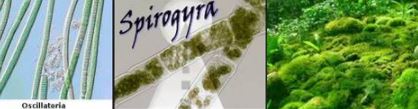
30. Do you think these were planted by someone or did they grow on their own?
Ans. These grow on their own.
31. What else can you see in the water? Make a list.
Ans. Besides algae, small fishes, frogs, larvae, floating insects and mosquitoes are also seen.
32. What can you do so that mosquitoes do not breed in your house, school and neighbourhood?
Ans. This can be done by-
(i) Not allowing the area around us to get water logged.
(ii) Regularly cleaning the coolers and water tanks.
(iii) Spraying DDT and oil in drains, pits etc.
(iv) Cultivating fishes in nearby ditches, pits, ponds etc.
33. How can you find out if someone has malaria?
Ans. If malarial parasites are found in blood sample of that person, it means he or she has malaria, otherwise not.
Question. Plants have very tiny structures in their leaves called 'stomata'.See the picture of stomata shown here. Through which instrument would you view this?
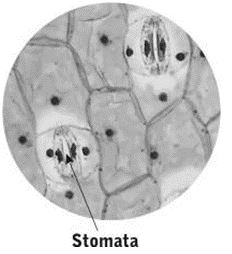
(a) Telescope
(b) Microscope
(c) Spectacles
(d) Can be seen through the naked eye.
Answer : B
Question. In which cell of the table shown should we place a COCKROACH?
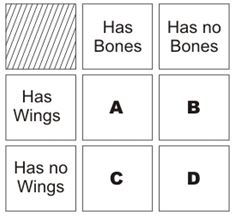
(a) A
(b) B
(c) C
(d) D
Answer : B
Question. Which of these will you use to closely observe an insect like a cockroach?
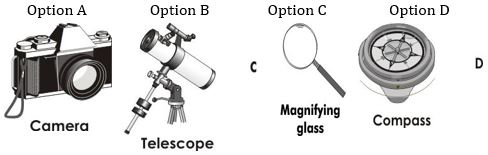
Answer : C
Free study material for Environmental Studies
Environmental Studies Class 5 Curriculum Solutions: Chapter 08 A treat for mosquitoes
Official NCERT Solutions for Chapter 08 A treat for mosquitoes
Explore reliable textbook solutions for Chapter 08 A treat for mosquitoes tailored for Class 5 learners. Utilizing these complete exercise answers ensures your preparation aligns exactly with official NCERT standards for Environmental Studies.
Step-by-Step Explanations for Chapter 08 A treat for mosquitoes
Beyond providing final answers, these guides offer step-by-step breakdowns for complex queries in the Class 5 Environmental Studies module. This approach helps students balance theoretical depth with practical problem-solving skills required for NCERT exams.
Next Steps in Your Environmental Studies Revision
These resources act as an effective roadmap for daily homework tasks and independent study. Supplement your review of Chapter 08 A treat for mosquitoes with official sample papers and interactive practice tests available on our platform free of charge.
FAQs
The complete and updated NCERT Solutions Class 5 Environmental Studies Chapter 8 A treat for mosquitoes is available for free on StudiesToday.com. These solutions for Class 5 Environmental Studies are as per latest NCERT curriculum.
Yes, our experts have revised the NCERT Solutions Class 5 Environmental Studies Chapter 8 A treat for mosquitoes as per 2026 exam pattern. All textbook exercises have been solved and have added explanation about how the Environmental Studies concepts are applied in case-study and assertion-reasoning questions.
Toppers recommend using NCERT language because NCERT marking schemes are strictly based on textbook definitions. Our NCERT Solutions Class 5 Environmental Studies Chapter 8 A treat for mosquitoes will help students to get full marks in the theory paper.
Yes, we provide bilingual support for Class 5 Environmental Studies. You can access NCERT Solutions Class 5 Environmental Studies Chapter 8 A treat for mosquitoes in both English and Hindi medium.
Yes, you can download the entire NCERT Solutions Class 5 Environmental Studies Chapter 8 A treat for mosquitoes in printable PDF format for offline study on any device.