

Step-by-Step Textbook Solutions for Class 5 Environmental Studies Chapter 13 A shelter so high
Access comprehensive textbook solutions for Chapter 13 A shelter so high using the official curriculum guides for Class 5 Environmental Studies. Designed to align with the 2026-27 NCERT standards, these detailed answers help students reinforce core academic concepts.
Download Chapter 13 A shelter so high Textbook Solutions PDF
Navigate directly to the solved Environmental Studies textbook exercises using the digital viewer below. Each solution includes detailed step-by-step explanations, allowing students to instantly cross-check their work and identify areas requiring further revision.
NCERT Solutions for Class 5 EVS for Chapter 13 A shelter so high
1. Check in your map. Which states would one pass through while travelling from Mumbai to Kashmir?
Ans. The states through which one would pass through while travelling form Mumbai to Kashmir are: Maharastra, Gujarat, Rajasthan, Punjab, Haryana, Himachal Pardesh and Jammu and Kashmir.
2. Gaurav Jani passed through several states while going from Mumbai to Delhi. Find the capital cities of these states. Was there any other big town on his way?
Ans. The states through which Gaurav Jani passed through, while going from Mumbai to Delhi, along with the capitals are as follows:
Maharastra – Mumbai
Gujarat – Gandhi Nagar
Rajasthan – Jaipur
Haryana – Chandigarh
Many big town would have been these in his way such as Ahmedabad, Udaipur, Ajmer etc.
3. Is Manali a plain or a hilly area? In which state is it?
Ans. Manali is a hilly area. It is in Himachal Pardesh.
4. Have you ever stayed in a tent? Where? What was it like?
Ans. Yes, I stayed in a tent in mountains of Manali. It was very adventurous and exciting experience.
5. Imagine that you were to stay alone in a small tent for two days and could take with you only 10 things. Make a list of these ten things.
Ans. If I would have to stay alone in a small tent for two days. I would take these 10 things along with me-cloths, sweater, blanked, torch, packaged food items, water, thick woolen, shoes, camera and canvas for preparing tent.
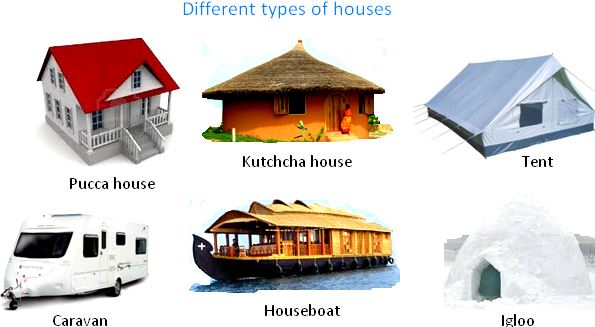
6. What are the different type of houses that you have seen? Tell your friends about it. Make drawing too.
Ans. I have seen different type of houses in different areas like
(i) Houses made up of wood, which are found in hilly areas.
(ii) Houses made up of wood, which are found in hilly areas.
(iii) Houses made up of cement, bricks, glass etc. that are found in cities.
These houses are strong and can withstand heavy rains and storms, but the houses made up of mud and bamboo or of wood cannot withstand such climatic conditions.
7. During winters, Tashi and his family live on the ground floor. Why would they be doing so?
Ans. As there were no windows on the ground floor hence, the ground floor was protected from the cold winds. Thus, in order to protect them, from the icy cold winds of the winter season, they live on the ground floor.
8. What is the roof of your house like? What all is the roof used for?
Ans. The roof of my house is made up of bricks and cement. This roof is used for drying clothes preparing potato chips, papad badis, aam papad etc. It is also used for sleeping in summers, getting sunlight in winters.
9. At what height is the place where you live?
Ans. I am living in Delhi. This place is situated at a height of 216 metres above the sea land.
10. Why did Gaurav Jani say – This place is so high that it is difficult to breather normally?
Ans. At high attitudes, that is, as we go up the mountains, the level of oxygen in the air becomes less. As a result the breathing becoming more difficult and one has to rapidly draw more oxygen with force. Thus, Gaurav Jani said this place is so high that is difficult to breathe normally.
11. Have you ever been to a hilly place? Where?
Ans. Yes, I have been to a hilly place few years back. It was in Manali.
12. At what height was it? Did you have any difficulty in breathing there?
Ans. Manali is about 2050 metres above the sea level. Yes, breathing was a little difficult in Manali.
13. Which is the highest place you have been to?
Ans. I have been to Rohtangpas. It is about 4111 metres above the sea level.
14. For the Changpas their animals are a very important part of their life. Is any animal part of your life? For example as a pet, or as helpers in farming. List five ways in which different animals are a part of your life.
Ans. Yes, my pet dog Herry has become a part of my life. Five ways in which different animals are a part of our life are:
(1) Dog – People often keep it as a pet or for protecting their house from thieves.
(2) Cow – It is used to obtain milk.
(3) Buffalo – It is used to plough fields and to carry goods.
(4) Goat – IT is used to obtain milk and meat.
15. You read that in Chagthang the temperature drops below . Look at newspaper or TV to find cities in India or abroad where the temperature drops below . In which months do you expect to see this?
Ans. The other cities in India where the temperature drops below Srinagar, Ladhak, Shimla etc. Places outside India having temperature below are Minnisota, etawa etc. This kind of temperature
16. The houses in different part of Jammu and Kashmir are made to suit the climate and the needs of the people there. Are there different types of houses in the place where you live? If yes, think about the reasons.
Ans. Yes, there are different types of houses in the place I live. Some of them are made up of cement, bricks, glass, steel. These are strong and built in such a way so that these can with stand different adverse conditions like heavy rains and storms. Apart from these, some houses are made up of mud, bamboo, grass etc. These are small huts which cannot with stand the heavy rains and storms. The reason for making these kinds of huts as the poor people cannot even earn to eat enough. How can they afford big and strong houses?
17. Think of your own house. Is there something special in it like a sloping roof as it rains a lot or a courtyard where you can sleep when it is hot or where things are kept in the sun. Make a drawing.
Ans. Yes, my house has sloping roof for protection against sun light and rain and a courtyard also where we can sleep in summer or things are kept in the sun.
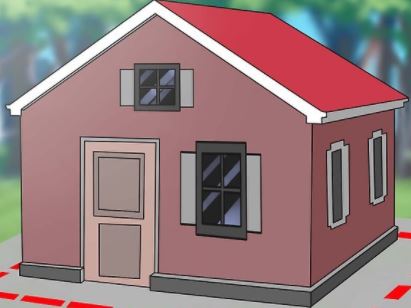
18. What are the materials used for making your house? It is mud, brick, stone, wood or cement?
Ans. The materials used for making my houses are mud, brick, stone, wood, cement glass etc.
19. Can you guess the similarities and differences in the life of Bakarwals people and the life of Changpas.
Ans. Both the Bakarwal’s and the Changpa’s live in the mountains of Jammu and Kashmir. Both of them move from one place to another, and keep on wandering. Both of them are dependent on animals like goat, yak, sheep, etc. They earn their livelihood by selling the wool obtained from these animals. But the main difference between the two is where the Bakarwal’s graze any type of goats and sheep and at any place, the Changpa’s graze only special type of goats, at very high and colder place. This is because at higher and colder places, these goats develop more and softer hair from which the famous pashmina wool is obtained and thus they stay at high mountains even under excessively low temperatures.
20. You read about different kinds of shelters in Jammu and Kashmir – some on high mountains, some on water, some with beautiful designs in wood and stone and some mobile shelters that can even be packed and carried to another place. Describe how these shelters suit the needs of the people who live there.
Ans. The shelters of the people living on the mountains of Jammu and Kashmir are basically in the form of a tent called as Rebo. These can be packed up and carried easily and quickly. These are made up of yak hair that are very strong and warm and protect them from icy cold winds within a short period of time. Since these people keep on wandering on high mountains according to the climatic conditions and to graze their animals, therefore such shelters are very much suited to the needs of the people. Some houses are made up of word which provide protection from the cold weather are in the from of boat by which they can more from place.
21. How are these different from the house you live in?
Ans. The houses in Jammu and Kashmir are mainly made up of wood, tent etc. These are light weighted and mobile i.e. can be carried from place to place. But our houses are made up of bricks, cement, steel, glass. These are very strong and mobile i.e. cannot be shifted from one place. These are permanent.
Question. Ameena asked for a glass of water at her friend, Sushma's place. The glass was misty and had tiny droplets of water on it. Which of these could be the temperature of the water, if the room temperature was 300C?
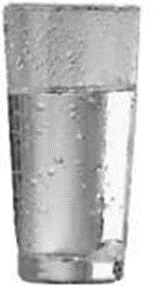
(a) -4 °C
(b) 10 °C
(c) 30 °C
(d) 70 °C
Answer : B
Question. Igloos are usually made of
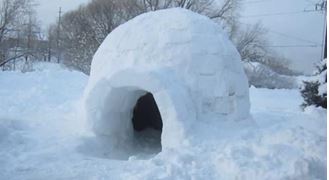
(a) Snow
(b) White clay
(c) White cement
(d) Marble
Answer : A
Question. Kashyap places a long, wide, thin plank over a stream in order to help him to cross it. Which of the following would be the MOST STABLE way for him to cross the stream?

Answer : B
Question. Choose the appropriate unit to indicate the distance between Delhi and Chennai.
(a) Kilometers
(b) Kiloliters
(c) Millimeters
(d) Milliliters
Answer : A
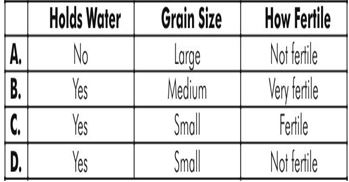
Question. Study the table below showing some properties of four different materials A, B, C and D. Which row could be describing SAND?
(a) A
(b) B
(c) C
(d) D
Answer : A
Free study material for Environmental Studies
NCERT Solutions for Class 5 Environmental Studies Chapter 13 A shelter so high
Accessing Chapter 13 A shelter so high Solutions
Access structured NCERT textbook solutions for Chapter 13 A shelter so high. Designed in alignment with the latest academic curriculum for Class 5 Environmental Studies, these answers cover all end-of-chapter exercises to support daily learning and homework completion.
Concept-Driven Answers for Class 5 Environmental Studies
Each solution includes detailed reasoning to foster genuine comprehension of Chapter 13 A shelter so high concepts. Reviewing these step-by-step breakdowns allows learners to master both analytical and descriptive questions expected in school evaluations.
Maximizing Study Efficiency
Consistent practice with these solution guides cultivates faster problem-solving habits and clearer logical structuring. For a complete preparation experience, pair these textbook answers with our dedicated revision notes and sample papers for Class 5 Environmental Studies.
FAQs
The complete and updated NCERT Solutions Class 5 Environmental Studies Chapter 13 A shelter so high is available for free on StudiesToday.com. These solutions for Class 5 Environmental Studies are as per latest NCERT curriculum.
Yes, our experts have revised the NCERT Solutions Class 5 Environmental Studies Chapter 13 A shelter so high as per 2026 exam pattern. All textbook exercises have been solved and have added explanation about how the Environmental Studies concepts are applied in case-study and assertion-reasoning questions.
Toppers recommend using NCERT language because NCERT marking schemes are strictly based on textbook definitions. Our NCERT Solutions Class 5 Environmental Studies Chapter 13 A shelter so high will help students to get full marks in the theory paper.
Yes, we provide bilingual support for Class 5 Environmental Studies. You can access NCERT Solutions Class 5 Environmental Studies Chapter 13 A shelter so high in both English and Hindi medium.
Yes, you can download the entire NCERT Solutions Class 5 Environmental Studies Chapter 13 A shelter so high in printable PDF format for offline study on any device.