

School Assignments for Class 9 Science: Chapter 10 Work And Energy
Review targeted academic assignments with the CBSE Class 9 Science Work and Energy assignment. Built according to official CBSE standards for the 2026-27 term, these downloadable Class 9 Science worksheets support effective daily practice for Chapter 10 Work And Energy.
Practice Class 9 Science Assignments: Chapter 10 Work And Energy
View or download the dedicated CBSE Class 9 Science Work and Energy assignment resource below. Engaging with these assignments under focused study conditions ensures continuous academic progress and mastery of the 2026-27 curriculum.
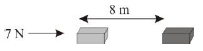
Question: What is the work done against gravity when a body is moved horizontally along a frictionless surface ?
Answer: Zero
Question: How much work is done when a body of mass m is raised to a height h above the ground ?
Answer: m × g × h
Question: A stretched rubber band.
Answer: Potential energy
Question: If the speed of a body is halved, what will be the change in its kinetic energy ?
Answer: Becomes one-fourth
Question: What happens to the potential energy of a body when its height is doubled ?
Answer: Potential energy gets doubled
Question: A compressed spring.
Answer: Potential energy
Question: A stone kept on roof-top.
Answer: Potential energy
Question: What is the condition for a force to do work on a body ?
Answer: The force should produce motion in the body
Question: By how much will the kinetic energy of a body increase if its speed is doubled ?
Answer: Becomes four times
State whether the following objects possess kinetic energy, potential energy, or both :
Question: Which would have a greater effect on the kinetic energy of an object : doubling the mass or doubling the velocity ?
Answer: Doubling the velocity
Question: A bird running on the ground
Answer: Only kinetic energy
Question: Two bodies A and B of equal masses are kept at heights of h and 2h respectively. What will be the ratio of their potential energies ?
Answer: 1 : 2
Question: What is the kinetic energy of a body of mass 1 kg moving with a speed of 2 m/s ?
Answer: 2 J
Question: A flying aeroplane
Answer: Both kinetic energy and potential energy
Question: A stretched spring lying on the ground.
Answer: Only potential energy (rather elastic potential energy)
Question: A load of 100 kg is pulled up by 5 m. Calculate the work done. (g = 9.8 m/s2)
Answer: 4900 J
Question: State whether the following statement is true or false :
The potential energy of a body of mass 1 kg kept at a height of 1 m is 1 J.
Answer: False
Question: How fast should a man of 50 kg run so that his kinetic energy be 625 J ?
Answer: 5 m/s
Question: A man climbing a hill
Answer: Both kinetic energy and potential energy
Question: A ceiling fan in the off position
Answer: Only potential energy
Question: Water stored in the reservoir of a dam.
Answer: Potential energy
Question: A running car.
Answer: Kinetic energy
Fill in the following blanks with suitable words :
Question: Work is measured as a product of ……………….. and ……………..
Answer: force ; distance
Question: The ability of a body to do work is called ………………… The ability of a body to do work because of its motion is called…………….
Answer: energy ; kinetic energy
Question: 1 joule is the work done when a force of one ………….. moves an object through a distance of one………… in the direction of …………………
Answer: newton ; metre ; force
Question: The sum of the potential and kinetic energies of a body is called …………… energy.
Answer: mechanical
Question: The work done on a body moving in a circular path is ……………..
Answer: zero
Question : What is energy of a body?
Question : Define kinetic energy.
Question : What is potential energy?
Question : What will be the work done by a force if displacement of the body is zero?
Question : When is work done on a body positive?
Question : Can energy be converted from one form to another?
Question : Define power.
Question : What will be the new kinetic energy of a body if its velocity is doubled?
Question : What will be the potential energy of an object of mass 5 kg kept at a height of 10 metres from the ground? Take g = 10 m/s2.
Question : A green plant is carrying out photosynthesis. What is the work done in this process?
Question : What is mechanical energy of an object?
Question : How we can define one watt?
Question : Give a mathematical expression for the work done when a force is acting on an object in the direction of its displacement.
Question : How average power can be calculated?
Question : When a ball is thrown in upward direction, work is done by the force of gravity. When a ball comes down freely towards the earth, in this case too work is done by the force of gravity. What is the difference in the nature of work done in the two cases?
Question : When work done is positive on a body?
Question : What will be the new kinetic energy of a body if its velocity is doubled?
Question : A constant force of 10N displaces a body through 5 m. Find the work done by the force?
Question : What will be the work done if a stone of mass 2 kg is raised through a height of 10cm?
Question : An object of mass 10kg is moving with speed 4 m/sec. What is the kinetic energy of the object?
Question : An object of mass 10kg is at a certain height above the ground. If the potential energy of the object is 200J. Find the height of the object from the ground.
Question : A person is holding a heavy bag on his head for 20 minutes and gets tired. Has he done some work or not? Explain.
Question : A body of mass5 kg is kept on a table. If it is displaced by a force of 10N by 2 m on the table on the same horizontal line, find the work done by the gravitational force.
Question : What is law of conservation of energy?
Question : A man of mass 50kg climbs a tower of height 45m in 5 seconds with the help of a rope. Find the power of the man.
Question : If a particle falls through a height; its potential energy decreases. Does this violate the law of conservation of energy? Explain why?
Question : A ball of mass 2kg is kept on a tower of height 30m. Find its potential energy at this point. If it is allowed to fall freely, find its kinetic energy when it just touches the ground.
Question : What is the work done by the force of gravity on a satellite moving round the earth?
Question : What will be the work done to stop a moving cycle of mass 30kg which is moving with speed 54km/hr ?
Question : A freely falling body stops when it hits the ground. What happens to its kinetic energy?
Question : Prove that the kinetic energy of a body moving with speed v is equal to 1/2 mv2.
Exam Questions NCERT Class 9 Science Chapter 11 work And Energy
Question. Name the transformation of energy involved in the following cases :
(a) When a body is thrown upwards.
(b) When a body falls from the top of a hill.
(c) When coal burns.
(d) When a gas burns.
(e) When water falls from a height.
Ans : (a) Kinetic energy into potential energy.
(b) Potential energy into kinetic energy.
(c) Chemical energy into heat energy.
(d) Chemical energy into heat energy.
(e) Potential energy into kinetic energy.
Question. What are the factors on which the work done depends?
Ans : The work done by a force depends upon :
(i) The magnitude of the force.
(ii) The magnitude of the displacement.
(iii) The angle between force and displacement.
Question. What is power? What is its SI unit?
Ans : It is defined as the rate of doing work. Its unit is watt.
Question. Which type of energy is present in a battery?
Ans : Chemical energy.
Question. Name the energy present in an object due to its position or configuration.
Ans : Potential energy.
Question. Give one example of potential energy due to position.
Ans : Water stored in the reservoir of a dam has potential energy.
Question. (a) An arrow moves forward when released from a stretched bow. Explain the transformation of energy in the process.
(b) A boy of mass 50 kg climbs up a vertical height of 100 m. Calculate the amount of potential energy he gains.
Ans : (a) When the bow is stretched it stores potential energy. When the arrow is released the potential energy stored in the bow gets transformed into the kinetic energy of the arrow.
(b) Given m = 50 kg, h = 100 m,
g = 10 ms–1, PE = ?
PE = mgh = 50 × 10 × 100 = 5000 J
Question. Give an example of potential energy due to change in shape.
Ans : A stretched bow has potential energy due to change of shape.
Question. What type of energy is possessed by a flying bird and a flying aeroplane?
Ans : Both potential energy and kinetic energy.
Question. When do we say that work is done?
Ans : Work is said to be done when a force causes displacement of an object in the direction of applied force.
Question. Write an expression for the work done when a force is acting on an object in the direction of its displacement.
Ans : Work done = Force × Displacement
Question. Define : (a) power (b) work done (c) kinetic energy.
Give SI unit of each.
Ans : (a) The rate of doing work is called power. Its SI unit is watt.
(b) Work is the product of force and displacement. Its SI unit is joule.
(c) It is the energy possessed by a body by virtue of its motion. Its SI unit is joule.
Question. Find the energy in kWh consumed in 10 hours by a machine of power 500 W.
Ans : W = P × t
= 500 × 10 = 5000 Wh = 5 kWh.
Question. When is work said to be done against the force of gravity?
Ans : When a body is lifted, the work is done against the force of gravity.
Question. Calculate the cost of using a 2 kWh immersion rod for heating water in a house for one hour each day for 60 days if the rate is 1.50 per unit kWh.
Ans : E = Pt = 2 kW × 60 × 1 h
= 120 kWh = 120 unit
The cost of using a 2 kWh immersion rod for heating
water = 120 × 1.5 = Rs 180
Question. A work of 4900 J is done on load of mass 50 kg to lift it to a certain height. Calculate the height through which the load is lifted.
Ans : Work done on road to lift = mgh
4900 = 50 × 9.8 h
h=10m
Question. What is the SI unit of work done and power?
Ans : Joule and Watt.
Question. When is 1 joule of work said to be done?
Ans : When a force of 1 newton acting on a body displaces it 1m in its own direction.
Question. Does work done depend upon the velocity of the body.
Ans : No.
Question. State the law of conservation of energy.
Ans : It states that energy can neither be created nor destroyed. It can only change its form.
KEY CONCEPTS
1.Work Done By A Constant Force
- Work is a scalar quantity equal to the product of the displacement x and the component of the force Fx in the direction of the displacement..
- Work is defined as a force acting upon an object to cause a displacement
- Mathematically, work can be expressed by the following equation.
- W= F x d cos q ( cos 00 = 1)
- where F = force, d = displacement, and the angle (theta) is defined as the anglebetween the force and the displacement vector
- Three things are necessary for the performance of work:
- There must be an applied force F.
- There must be a displacement x.
- The force must have a component along the displacement
Negative Work
The friction force f opposes the displacement
Positive Work
Force F contributes to displacement x.
Test Yourself:
1.Calculate Work when F= 40 N and x = 4 m.
2.Calculate Work when F = -10 N and x = 4 m.
3.A lawn mower is pushed a horizontal distance of 20 m by a force of 200 N directed at an angle of 300 with the ground. What is the work of this force?
4.A student lifts a 50 pound (lb) ball 4 feet (ft) in 5 seconds (s). How many joules of work has the student completed?
2.Energy And Its Forms
James Joule
The metric system unit of energy is the joule (J), after James Joule.
• Mechanical energy is the energy which is possessed by an object due to its motion or its stored energy of position
Forms of Energy
• Kinetic energy : is the energy of motion
Energy which a body possesses because of its motion, which occurs anywhere from an atomic level to that of a whole organism
Examples of Kinetic Energy: This is not an all-inclusive list.
- Electrical – The movement of atoms
- Electromagnetic or Radiant – The movement of waves
- Thermal or Heat – The movement of molecules
- Motion – The movement of objects
- Sound – The movement through waves
Engineers generally refer to thermal/heat energy as “internal energy” and use “kinetic energy” strictly in reference to motion.
Potential Energy (Stored energy or gravitational energy)
- The capacity to do work by virtue of position or configuration
- an object can store energy as the result of its position or elastic source
- Potential Energy is maximum at the maximum HEIGHT
Energy transformation involves the conversion of one form of energy into another form.
Examples of energy transformation include:
• Chemical – Food is consumed and converted into motion for playing sports or taking a test.
• Radiant – Sunlight is consumed by plants and converted into energy for growth.
• Electrical – Energy transferred to an oven is converted to thermal energy for heating our food.
Now you know the basic forms of energy. The next question is “What are the energy sources?”
There are renewable and nonrenewable sources of energy. A renewable energy source is a form of energy that is constantly and rapidly replenished by natural processes.
Examples of renewable energy sources include:
• Biomass – The use of a living or once living organism as fuel
• Hydropower – The energy produced from the movement of water
• Geothermal – The use of heat from within the Earth or from the atmosphere near oceans to warm houses or other buildings
• Wind – The use of wind to generate electricity
Solar – The use of the sun as a source of heat; for instance, to heat a room within a house, etc.
Energy Conversion
Examples
Fossil fuels Chemical → Heat → Mechanical → Electrical
Solar cells Sunlight → Electrical
Wind turbines Kinetic → Mechanical → Electrical
Hydroelectric Gravitational potential → Mechanical → Electrical
Nuclear Nuclear → Heat → Mechanical → Electrical
3. Potential energy of an object at a height
An object increases its energy when raised through a height.
The potential energy of an object at a height depends on the ground level or the zero level
4. Law Of Conservation Of Energy
The principle of Conservation of Mechanical Energy
The total mechanical energy (E=KE+PE) of an object remains constant as the object moves, provided that the net work done by external non-conservative forces is zero, Wnc=0J
Total mechanical energy: the sum of kinetic energy and gravitational potential energy
E = KE + PE
Wnc = (KEf - KE0) + (PEf - PE0)
Wnc = (KEf + PEf) - (KE0 + PE0)
Wnc = Ef - E0
Ef = KEf + PEf) E0 = KE0 + PE0
5. Rate of Doing Work & Commercial Unit Of Energy
POWER
Rate at which work is performed or energy is expended
P = W/t
Watt is the base unit of Power
One watt is equal to 1 joule of work per second
Types of Power
- Electrical Power
Uses electrical energy to do work
- Mechanical Power
Uses mechanical energy to do work (linear, rotary)
- Fluid Power
Uses energy transferred by liquids (hydraulic) and gases (pneumatic)
• Power is the rate that we use energy.
• Power = Work or Energy / Time
• P = W/t = F x d/t = F v
• The unit joule is too small .The bigger unit of energy called kilowatt hour (kW h)
1 kW h is the energy used in one hour
at the rate of 1000 J s–1 (or 1 kW).
1 kW h = 1 kW *1 h
= 1000 W*3600 s
= 3600000 J
1 kW h = 3.6 x 10⁶ J.
Important Points for Work Problems:
• Always draw a free-body diagram, choosing the positive x-axis in the same direction as the displacement.
• Work is negative if a component of the force is opposite displacement direction
• Work done by any force that is at right angles with displacement will be zero (0).
• For resultant work, you can add the works of each force, or multiply the resultant force times the net displacement.
• Energy is the ability to move
• Potential is stored energy (Statics)
• Dependant on height
• Kinetic is moving energy (Dynamics)
• Dependant on velocity
• Springs store energy dependant on distance and constant
KEY CONCEPTS
1. Production of Sound
Sound is produced due to the vibration of objects. Vibration is the rapid to and fro motion of an object. Vibrating objects are the source of all sounds Irregular, chaotic vibrations produce noise Regular, controlled vibration can produce music All sound is a combination of pure frequencies A stretched rubber band when plucked vibrates and produces sound.
2. Propagation of Sound
When an object vibrates, the particles around the medium vibrate. The particle in contact with the vibrating object is first displaced from its equilibrium position The disturbance produced by the vibrating body travels through the medium but the particles do not move forward themselves.
A wave is a disturbance which moves through a medium by the vibration of the particles of the medium. So sound is considered as a wave.Sound waves Require medium for transmission.Sound waves are called mechanical waves. When a vibrating object moves forward, it pushes and compresses the air in front of it forming a region of high pressure called compression (C). When the vibrating object moves backward, it forms a region of low pressure called rarefaction (R).
A vibrating object producing a series of compressions (C) and rarefaction (R)
In these waves the particles move back and forth parallel to the direction of propagation of the disturbance. Such waves are called longitudinal waves.
There is another kind of waves called transverse waves. In these waves the particles oscillate up and down perpendicular to the propagation of the direction of disturbance.
Sound propagates in a medium as a series of compressions (C) and rarefactions (R).
Compressions are the regions of high pressure and density where the particles are crowded and are represented by the upper portion of the curve called crest.
Rarefactions are the regions of low pressure and density where the particles are spread out and are represented by the lower portion of the curve called trough
Characteristics of a sound wave
Frequency of sound wave
The number of oscillations per unit time is called the frequency of the sound wave.
It is represented by the symbol ٧ (Greek letter nu). Its SI unit is hertz (Hz)
Time period of sound wave
Frequency and time are represented as follows:-
٧ for one oscillation
T = 1/V or V = 1/T
Amplitude of sound wave
The amplitude of sound wave is the height of the crest or tough.
It is represented by the letter A.
The SI unit is the same as that of density or pressure.
The wavelength is the distance between the "crests" of two waves that are next to each other.
The amplitude is how high the crests are.
Pitch and loudness of sound
The pitch of sound (shrillness or flatness) depends on the frequency of vibration.
If the frequency is high, the sound has high pitch and if the frequency is low, the sound has low pitch
Speed of sound
The speed of sound is more in solids, less in liquids and least in gases.
The speed of sound also depends on the temperature of the medium. If the temperature of the medium is more, the speed of sound is more
3. Reflection of Sound
Sound gets reflected at the surface of a solid or liquid and follows the laws of reflection.
i) The angle of incidence is equal to the angle of reflection.
ii) The incident ray, the reflected ray and normal at the point of incidence all lie in the same plane.
4. Echo
If we shout or clap near a reflecting surface like tall building or a mountain, we hear the same sound again. This sound which we hear is called echo. It is caused due to the reflection
of sound.
To hear an echo clearly, the time interval between the original sound and the echo must be at least 0.1 s.
Since the speed of sound in air is 344 m/s, the distance travelled by sound in 0.I s = 344
m/s x 0.1 s = 34.4 m
So to hear an echo clearly, the minimum distance of the reflecting surface should be half this distance that is 17.2 m.
Reverberation
Echoes may be heard more than once due to repeated or multiple reflections of sound from several reflecting surfaces. This causes persistence of sound called reverberation.
In big halls or auditoriums to reduce reverberation, the roofs and walls are covered by sound absorbing materials like compressed fibre boards, rough plaster or draperies.
5. Uses Of Multiple Reflection Of Sound
Megaphones, horns, musical instruments like trumpets, etc. are deigned to send sound by multiple reflection in a particular direction without spreading in all directions.
ii) Doctors listen to sounds from the human body through a stethoscope. The sound of heartbeat reaches the doctor’s ears by multiple reflection.
iii) Generally the ceilings of cinema halls and auditoriums are curved so that sound after multiple reflection reaches all parts of the hall.
Sometimes a curved sound board is placed behind the stage so that sound after multiple reflection spreads evenly across the hall.
6. Range of Hearing
Human beings can hear sound frequencies between 20 Hz and 2000 Hz.
Sound whose frequency is less than 20 Hz is called infrasonic sound Sound whose frequency is more than 2000 Hz is called ultrasonic sound
7. Uses of ultrasonic sound
Ultrasonic sound is used to clean objects like electronic Components, used to detect cracks in metal blocks, used in ultra sound scanners for getting images of internal organs of the human body used to break small stones formed in the kidneys into fine grains.
8 Sonar
It is a device which uses ultrasonic waves to measure distance, direction and speed of underwater objects. The distance of the object can be calculated by knowing the speed of sound in water and the time taken between the transmission and reception of ultrasound
9.Structure of the human ear
The sound waves passes through the ear canal to a thin membrane called eardrum. The eardrum vibrates. The vibrations are amplified by the three bones of the middle ear called hammer, anvil and stirrup. Middle ear then transmits the sound waves to the inner ear. The brain then interprets the signals as sound.
What have you learnt
Longitudinal waves: Those in which the direction of vibration is the same as their direction of propagation. So the movement of the particles of the medium is either in the same or in
the opposite direction to the motion of the wave. Exemple: sound waves, what changes in this case is the pressure of the medium (air, water or whatever it be).
Transverse waves: The oscillations occur perpendicularly to the direction of energy transfer.
Exemple: a wave in a tense string. Here the varying magnitude is the distance from the equilibrium horizontal position A general property of waves is that their speed relative to medium depends on the properties of medium but is independent of the motion of the source of waves. If the observer is in motion with respect to the medium, the velocity of wave propagation relative to the observer wil be different. A remarkable exception is encountered in the case of light
PROPERTIES
Frequency
- Wavelength
- period
- Amplitude
- Intensity
- Speed
- Direction
Perception of Sound
For humans, hearing is limited to frequencies between about 20 Hz and 20000 Hz, with the upper limit generally ecreasing with age.
Free study material for Science
Download Practice Assignments: Class 9 Science Chapter 10 Work And Energy
Class 9 Science Chapter 10 Work And Energy Printable Assignments
Review targeted chapter assignments for Class 9 Science Chapter 10 Work And Energy. Built according to official CBSE guidelines, these downloadable problem sets help students build accuracy and prepare effectively for school tests.
Why Practice Class 9 Science Assignments?
- Syllabus Compliance: Sets reflect current CBSE evaluation criteria and official marking frameworks.
- Multi-Format Practice: Includes varied problem types designed to deepen comprehension across all sub-topics.
- Time Management: Routine practice optimizes pacing to finish school examinations comfortably within schedule.
Effective Strategy for Class 9 Science Assignments
- Initial Reading: Begin by reading the NCERT book for Class 9 Science to build a baseline understanding.
- Independent Testing: Attempt assignment questions unassisted, then verify work using provided answer keys.
- Supplementary Aids: Leverage revision notes and worksheets whenever you encounter difficult topics.
FAQs
You can download free PDF assignments for Class 9 Science Chapter 10 Work And Energy from StudiesToday.com. These practice sheets have been updated for the 2026-27 session covering all concepts from latest NCERT textbook.
Yes, our teachers have given solutions for all questions in the Class 9 Science Chapter 10 Work And Energy assignments. This will help you to understand step-by-step methodology to get full marks in school tests and exams.
Yes. These assignments are designed as per the latest CBSE syllabus for 2026. We have included huge variety of question formats such as MCQs, Case-study based questions and important diagram-based problems found in Chapter 10 Work And Energy.
Practicing topicw wise assignments will help Class 9 students understand every sub-topic of Chapter 10 Work And Energy. Daily practice will improve speed, accuracy and answering competency-based questions.
Yes, all printable assignments for Class 9 Science Chapter 10 Work And Energy are available for free download in mobile-friendly PDF format.