

Step-by-Step Textbook Solutions for Class 12 Chemistry Chapter 01 Solutions
Explore reliable textbook solutions for Chapter 01 Solutions tailored for Class 12 learners. Utilizing these Chemistry answers ensures thorough preparation and strengthens foundational knowledge before final NCERT evaluations.
Download Chapter 01 Solutions Textbook Solutions PDF
Access the complete solution PDF for Class 12 Chemistry below. Regular practice with these targeted textbook answers builds familiarity with standard question patterns and helps secure higher marks in final school evaluations.
Assertion and Reason
Note: Read the Assertion (A) and Reason (R) carefully to mark the correct option out of the options given below:
a. If both assertion and reason are true and the reason is the correct explanation of the assertion.
b. If both assertion and reason are true but reason is not the correct explanation of the assertion.
c. If assertion is true but reason is false.
d. If the assertion and reason both are false.
e. If assertion is false but reason is true.
Question. Assertion: Perfectly ideal solution is not possible with respect to binary solution of two liquids.
Reason: No two substances can have exactly the same nature of intermolecular forces and also of the same magnitude.
Answer : A
Question. Assertion: The difference in the boiling points of equimolar solution of HCl and HF decreases as their molarity is decreased.
Reason: The extent of dissociation decreases steadily with increasing dilution.
Answer : C
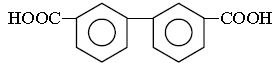
Question. Assertion: The molar mass obtained for benzoic acid in benzene is found to be nearly.
Reason: Benzoic acid has the formula
Answer : C
Question. Assertion: Van’f Hoff factor is equal to unity if the electrolytic solute undergoes 100% dissociation.
Reason: Van’t Hoff factor for sucrose solution is unity.
Answer : D
Question. Assertion: The dissolution of CCl4 in CH3OH involves Δ + ve, and the process is non-spontaneous.
Reason: When 4 CCl and CH3 OH is mixed, weaker attraction replace stronger attractions.
Answer : D
Question. Assertion: Addition of Hgl2 to KI (aq) shows an increase in vapour pressure of solvent.
Reason: Addition of Hgl2 to KI causes increase in effective number of particles.
Answer : C
Question. Assertion: Out of various colligative properties, osmotic pressure is used for determination of molecular masses of polymers.
Reason: Polymer solutions do not possess constant boiling point or freezing point.
Answer : C
Question. Assertion: Elevation in boiling point is inversely proportional to relative lowering of vapour pressure for dilute solutions.
Reason: Relative lowering of vapour pressure is directly proportional to mole fraction of solute.
Answer : C
Question. Assertion: The difference in the boiling points of equimolar solution of HCl and HF decreases as their molarity is decreased.
Reason: The extent of dissociation decreases steadily with increasing dilution.
Answer : C
Question. Assertion: The dissolution of gases in water is always an endothermic process.
Reason: The dissolution of gases in water proceed with a negative value of ΔS,
Answer : D
Comprehension Based
Paragraph –III
Those physical properties of a solution which depend upon the number of particles in a given amount of the solution or mole fraction of solute are called colligative properties. The colligative properties are independent of the nature, structure, shape or chemical composition of the particles present in the solution. Some examples are relative lowering of vapour pressure, osmotic pressure, elevation of boiling point and depression of freezing point. The study of colligative properties is useful in calculating the molecular masses of dissolved substances.
Question. The molal lowering of vapour pressure of a liquid is 1.08 mm at 25°C. Calculate the vapour pressure of liquid at 25°C. (Molecular weight of liquid = 18)
a. 30 mm
b. 60 mm
c. 300 mm
d. 600 mm
Answer : B
Question. A solution containing 5.1 g of glycerine per litre is found to be isotonic with 1% solution of fructose. What is the molecular weight of glycerine?
a. 183.6
b. 91.8
c. 45.8
d. 67.8
Answer : B
Question. Phenol associates in benzene to a certain extent to form dimer. A solution containing 0.2 g of phenol in 10.0 g of benzene has its freezing point depressed by 0.69 K. The fraction of phenol that is dimerised is: [Kf for benezene = 5.12 K kg mol–1]
a. 26.7%
b. 2.67%
c. 73.3%
d. 7.33%
Answer : C
Integer
Question. 12.2g of benzoic acid (Mw = 122) in 100 g water has elevation in boiling point of 0.27. Kb = 0.54 kg mol–1. If there is 100% polymerization, the number of molecules of benzoic acid in associated state is?
Answer : 2
Question. The Van’t Hoff factor for a solute which does not dissociate or associate in solution is?
Answer : 1
Question. The total number of colligative properties are:
Answer : 4
Question. If for sucrose, elevation in boiling point is 1.0ºC, then what will be the boiling point of NaCl solution for same molar concentration?
Answer : 4
Question. The osmotic pressure of a solution containing 40 g of solute (molecular mass 246) per liter at 27ºC is (R= 0.0882 atm L mol–1)?
Answer : 4
Please click the link below to download NCERT Class 12 Chemistry Solutions Solutions.
Free study material for Chemistry
NCERT Solutions for Class 12 Chemistry Chapter 01 Solutions
Textbook Solutions for Class 12 Chemistry Chapter 01 Solutions
Explore reliable textbook solutions for Chapter 01 Solutions tailored for Class 12 learners. Utilizing these complete exercise answers ensures your preparation aligns exactly with official NCERT standards for Chemistry.
Mastering Theoretical and Practical Questions
Each solution includes detailed reasoning to foster genuine comprehension of Chapter 01 Solutions concepts. Reviewing these step-by-step breakdowns allows learners to master both analytical and descriptive questions expected in school evaluations.
Effective Self-Study and Homework Assistance
Consistent practice with these solution guides cultivates faster problem-solving habits and clearer logical structuring. For a complete preparation experience, pair these textbook answers with our dedicated revision notes and sample papers for Class 12 Chemistry.
FAQs
The complete and updated NCERT Solutions Class 12 Chemistry Chapter 2 Solutions is available for free on StudiesToday.com. These solutions for Class 12 Chemistry are as per latest NCERT curriculum.
Yes, our experts have revised the NCERT Solutions Class 12 Chemistry Chapter 2 Solutions as per 2026 exam pattern. All textbook exercises have been solved and have added explanation about how the Chemistry concepts are applied in case-study and assertion-reasoning questions.
Toppers recommend using NCERT language because NCERT marking schemes are strictly based on textbook definitions. Our NCERT Solutions Class 12 Chemistry Chapter 2 Solutions will help students to get full marks in the theory paper.
Yes, we provide bilingual support for Class 12 Chemistry. You can access NCERT Solutions Class 12 Chemistry Chapter 2 Solutions in both English and Hindi medium.
Yes, you can download the entire NCERT Solutions Class 12 Chemistry Chapter 2 Solutions in printable PDF format for offline study on any device.