

Geography Objective Questions and Answers: All Chapters
Access targeted multiple-choice questions for All Chapters designed to align with the latest CBSE academic syllabus for Class 11 Geography. These objective practice sets help students evaluate their conceptual understanding and improve exam readiness.
Download All Chapters MCQs with Answers
Access the complete set of multiple-choice questions for All Chapters below. This focused format allows students to isolate specific topics for thorough review and uninterrupted practice alongside official CBSE textbooks.
SECTION -1
MULTIPLE CHOICE QUESTIONS
CONCEPTUAL UNDERSTANDING
Question. The technique of cartography in geography refers to –
a) Geo-Informatics
b) Field Survey methods
c) Skill of Map making
d) Statistical Techniques
Answer: C
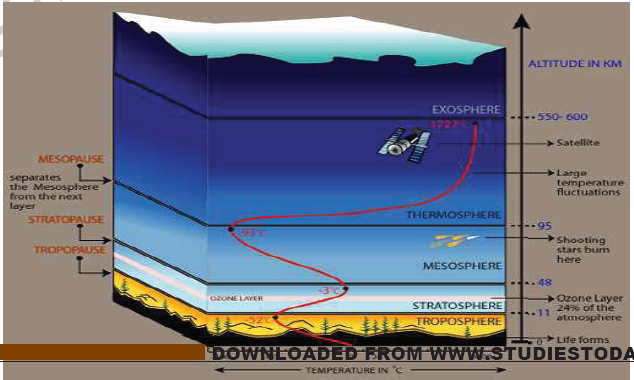
Question. Which one of the following gas in the atmosphere acts as a filter and absorbs the ultra-violet radiations and shield life on the earth from intense, harmful form of energy.
a) Oxygen
b) Ozone
c) Nitrogen
d) Carbon-di- oxide.
Answer: B
Question. Stalactites and stalagmites are the depositional features related to which type of landforms?
a) Karst topography
b) Glaciers
c) Running Water
d) Ocean Currents
Answer: A
INFERENTIAL TYPE
Question. The interactions between the physical environment and human being has been very clearly described by a poet in the following line,“You created the soil, I created the cup, you created night, I created lamp, you created wilderness, and I created flower beds”.What inference will you derive from the lines above?
a) Humanised Nature
b) Naturalised human beings.
c) Synthesis of Nature and Human being
d) All the above.
Answer: C
Question. The continental drift theory put forward by Alfred Wegner advocated that all the continents are formed of a single continental mass, called Pangaea. In support of his theory he gave variety of evidences. Which one of the following evidence does not support this concept?
a) Placer deposits
b) Distribution of fossils
c) Conventional current theory
d) Jig-saw-fit.
Answer: C
HIGHER MENTAL ABILITY TYPE
Question. The captain of a ship observed that it was local noon. He turned on the radio and listened to the 7.00 a.m. B.B.C. news. What was his longitude at that point of time?
a) 75 E
b) 75 W
c) 20 E
d) 65 W
Answer: A
Question. During the photosynthesis, carbon- di -oxide combines with water in the presence of sunlight to form: ___________
a) proteins
b) carbohydrates
c) amino acids
d) vitamins
Answer: B
Question. If the surface air pressure is 1,000 mb, the air pressure at 1 km above the surface will be________________:
a) 700 mb
b) 600 mb
c) 1,300 mb
d) 1,100 mb
Answer: D
MULTI DISCIPLINARY TYPE
Question. Bio-geography is a sub-branch of geography and is closely related to which field of Science.
a) Physics related to Astronomy
b) Botany related to Ecology
c) Mathematics related to Statistics
d) Geology related to Earth Science
Answer: B
Question. Which one of the following disciplines attempt temporal synthesis?
a) Sociology
b) Anthropology
c) Geography
d) History
Answer: D
Question. A mineral is a naturally occurring inorganic substance, having an orderly atomic structure and a definite chemical composition and physical properties. To which discipline of science can you correlate this definition of mineral.
a) Physics
b) Chemistry
c) Biology
d) Astronomy
Answer: B
CONSTRUCT QUES. BASED ON ANSWERS
Question. Read the following passage and frame a question:
“The long term average rainfall for the country is 1160 mm: which is the highest anywhere in the world for a country of comparable size. The annual rainfall however fluctuates widely leads to --- ----------------------------------------------------------”.
a) Farming is restricted to a few areas.
b) Underground water is not recharged.
c) There is inadequate water for urban areas.
d) There are frequent droughts in some areas and floods in other.
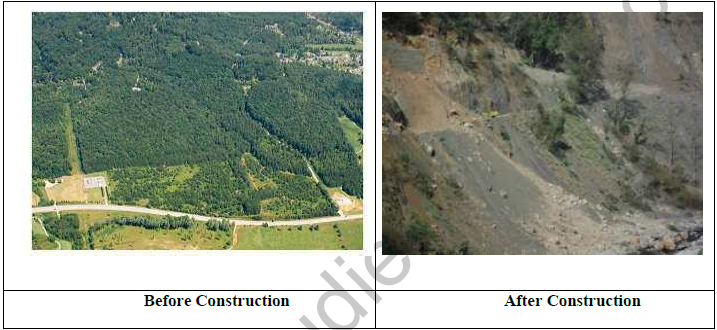
Question. “In India, debris, avalanches and landslides occur very frequently in the Himalayas”.
Answer: what is the weather disturbances happen in Himalayas?


Practice MCQs for Class 11 Geography All Chapters
Class 11 Geography All Chapters Objective Test Questions
Test your conceptual understanding of All Chapters with these targeted multiple-choice questions. Designed in alignment with the latest CBSE curriculum for Class 11 Geography, these problem sets build accuracy and prepare students for objective exams.
NCERT-Aligned Objective Questions and Solutions
Each question includes structured solution keys mapped directly to standard CBSE textbooks, helping students evaluate their reasoning and correct mistakes early in their revision.
Next Steps in Your Exam Preparation
Explore our broader library of printable assignments, chapter notes, and mock tests designed to support continuous revision and secure higher marks in CBSE assessments.
FAQs
You can get most exhaustive CBSE Class 11 Geography MCQs and Short Questions for free on StudiesToday.com. These MCQs for Class 11 Geography are updated for the 2026-27 academic session as per CBSE examination standards.
Yes, our CBSE Class 11 Geography MCQs and Short Questions include the latest type of questions, such as Assertion-Reasoning and Case-based MCQs. 50% of the CBSE paper is now competency-based.
By solving our CBSE Class 11 Geography MCQs and Short Questions, Class 11 students can improve their accuracy and speed which is important as objective questions provide a chance to secure 100% marks in the Geography.
Yes, Geography MCQs for Class 11 have answer key and brief explanations to help students understand logic behind the correct option as its important for 2026 competency-focused CBSE exams.
Yes, you can also access online interactive tests for CBSE Class 11 Geography MCQs and Short Questions on StudiesToday.com as they provide instant answers and score to help you track your progress in Geography.