CBSE Class 9 Social Science What is Democracy Assignment

Read and download the CBSE Class 9 Social Science What is Democracy Assignment for the 2025-26 academic session. We have provided comprehensive Class 9 Social Science school assignments that have important solved questions and answers for Democratic Politics I Chapter 1 What Is Democracy. These resources have been carefuly prepared by expert teachers as per the latest NCERT, CBSE, and KVS syllabus guidelines.

Solved Assignment for Class 9 Social Science Democratic Politics I Chapter 1 What Is Democracy

Practicing these Class 9 Social Science problems daily is must to improve your conceptual understanding and score better marks in school examinations. These printable assignments are a perfect assessment tool for Democratic Politics I Chapter 1 What Is Democracy, covering both basic and advanced level questions to help you get more marks in exams.

Democratic Politics I Chapter 1 What Is Democracy Class 9 Solved Questions and Answers


WHAT IS DEMOCRACY? WHY DEMOCRACY?

The rulers are elected by the people. People have a say in the decision making of the Government. There are fundamental rights in it. A democratic government is a better government because it is a more accountable form of government. Democracy improves the quality of decision making. Democracy provides a method to deal with differences and conflicts. Democracy enhances the dignity of citizens. A democratic government rules within limits set by constitutional law and citizens rights. The most common form of democracy is representative democracy.
 
What are its demerits? Leaders keep changing in a democracy. This leads to instability. Democracy is all about political competition and power play. There is no scope for morality. So many people have to be consulted in a democracy that it leads to delays.
Elected leaders do not know the best interest of the people. It leads to bad decisions. Ordinary people dont know what is good for them; they should not decide anything. Democracy leads to corruption for it is based on electoral competition.
 
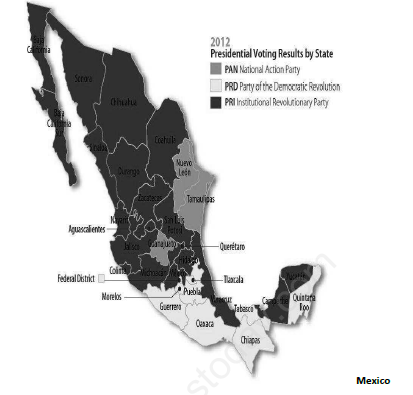
China and Mexico are not democracies. In China the elections do not offer any choice to the people. They have to vote for the ruling party (Communist Party) and the candidates approved by it. In Mexico the (PRI) the ruling party ensures that its candidates are not defeated.
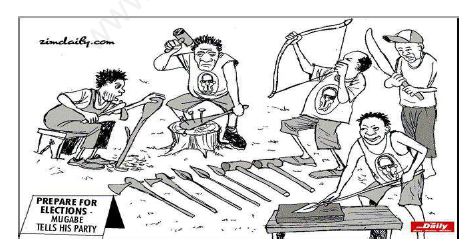
In Zimbabwe elections are always won by ZANU-PF (Robert Mugabe) uses unfair means to remain in power.
CBSE Class 9 Social Science-What is Democracy 1
CBSE Class 9 Social Science-What is Democracy 2
CBSE Class 9 Social Science-What is Democracy 3
 
Question. Differentiate between Democratic and Non- Democratic Government?
Answer. Democratic Government:
1. It is a form of Government in which the rulers are elected by the people.
2. People have a say in the decision making of the Government.
3. There are fundamental rights in it.
4. There is dignity of human beings in it.
 
Non- Democratic Government:
1. It is a form of Government in which rulers are not elected by the people.
2. People have no say in the decision making of the Government.
3. There are only fundamental duties in it.
4. There is no dignity of human beings in it.

Question. Define Democracy. Examine the features of democracy. OR Whose rule is democracy considered to be? 
Answer.
A simple definition:"Democracy is a form of government in which the rulers are elected by the people".
1. The first feature, in a democracy the final decision making power must rest with those elected by the people.
2. The second feature, a democracy must be based on a free and fair election where those currently in power have a fair chance of losing.
3. The third feature of democracy, in a democracy, each adult citizen must have one vote and each vote must have one value.
4. The final feature of democracy, a democratic government rules within the limits set by constitutional laws and citizens’ rights.

Question. Point out the features of elections held in China. OR Which party was ruling in China in 2002? Mention its two features. OR Is China a democratic country? Give two arguments in favour of your answer. 
Answer.
1. In China, elections are regularly after every five years for electing the country’s parliament, calledQuanguo‘eRenmiDaibiaoDahui (National People's Congress).
2. The National People’s Congress has the power to appoint the President of the country.
3. It has nearly 3,000 members elected from all over China. Some members are elected by the army.
4.Before contesting elections, a candidate needs the approval of the Chinese Communist Party oreight smaller parties allied to it were allowed to contest elections held in 2002-’03.
5. The government is always formed by the Communist Party.

Question. Critically evaluate the defects of the elections held in Mexico.
Answer. 
1. Since its independence in 1930, Mexico holds elections after every six years to elect its President.
The country has never been under a military or a dictator.
2. Until 2000 every election was won by a party called PRI (Institutional Revolutionary Party).Opposition parties did contest elections, but never managed to win because PRI uses many dirty tricks to win elections.
3. All those who were employed in government offices had to attend its party meetings. Teachers of government schools used to force parents to vote for the PRI.
4. Media largely ignored the activities of opposition political parties except to criticise them.
Sometimes the polling booths were shifted from one place to another in the last minute, which made it difficult for people to cast their votes.
5. The PRI spent a large sum of money in the campaign for its candidates.

Question. Give a brief account of Robert Mugabe and his rule in Zimbabwe.
Answer.
1. Robert Mugabe, the leader of ZANU-PF has been ruling the country since independence in 1980.
Elections have been held regularly and always won by ZANU-PF.
2. President Mugabe is popular but also uses unfair practices in elections. Over the years his government has changed the constitution several times to increase the powers of the President and make him less accountable.
3. Opposition party workers are harassed and their meeting disrupted. Public protests and demonstrations against the government are declared illegal. There is a law that limits the right to criticize the President.
4. Television and radio are controlled by the government and give only the ruling party’s version.
There are independent newspapers but the government harasses those journalists who go against it.
5. The government has ignored some court judgments that went against it and has pressurized judges.

Question. "The popular approval of the rulers is necessary in a democracy, but it is not sufficient". Justify the statement with suitable example. OR A democratic government rules within limits set by constitutional law and citizens' rights'. Critically analyze the statement with an example.
Answer.
1. Example:President Mugabe is popular but also uses unfair practices in elections. Over the years his government has changed the constitution several times to increase the powers of the President and make him less accountable.
2. Popular governments can be undemocratic. Popular leaders can be autocratic. To have access to democracy, it is important to look before and after the elections.
3. There should be sufficient room for normal political activity, including political opposition, in the period before elections. This requires that the state should respect some basic rights of the citizen. They should have freedom of public opinions, to form associations, to protest and take other political actions.
4. Everyone should be equal in the eyes of law. These rights must be protected by an independent judiciary obeyed by everyone.
5. A democratic government cannot do whatever it likes, simply because it has won an election. It has to respect some basic rules.

Question. Discuss the arguments against democracy. OR Write any 3 major hindrances in the successful working of Democracy.
Answer.
1. Leaders keep changing in a democracy. This leads to instability.
2. Democracy is all about political competition and power play. There is no scope for morality.
3. So many people have to be consulted in a democracy that it leads to delays.
4. Elected leaders do not know the best interest of the people. It leads to bad decisions. Ordinary people don’t know what is good for they; they should not decide anything.
5. Democracy leads to corruption for it is based on electoral competition.

Question. Why Democracy? OR Analyse the arguments in favour of Democracy. ORIs India a democratic country? Write any three arguments in favour of your answer. 
Answer.
1. A democratic government is a better government because it is a more accountable form of government.
1. Democracy improves the quality of decision making.
2. Democracy provides a method to deal with differences and conflicts.
3. Democracy enhances the dignity of citizens.
4. Democracy is better than other forms of government because it allows us to correct its own mistakes.

Question. "The majority of people rule through their elected representatives". Why? O‘ Name two kinds of democracies. Which one is most prevalent in the contemporary world? Why?
Answer. This become necessary because:
1. Modern democracies involve such a large number of people that it is physically impossible for them to sit together and take a collective decision.
2. Even if they could, the citizen does not have the time, the desire or the skills to take part in all the decisions.


Question : Here is some information about four countries. Based on this information, how would you classify each of these countries. Write ‘democratic’, ‘undemocratic’ or ‘not sure’ against each of these.
 
(a) Country A: People who do not accept the country’s official religion do not have a right to vote
Answer: Undemocratic
 
(b) Country B: The same party has been winning elections for the last twenty years
Answer: Not sure
 
(c) Country C: Ruling party has lost in the last three elections
Answer: Democratic
 
(d) Country D: There is no independent election commission
Answer: Undemocratic
 
 
Question : Here is some information about four countries. Based on this information, how would you classify each of these countries. Write ‘democratic’, ‘undemocratic’ or ‘not sure’ against each of these.
 
(a) Country P: The parliament cannot pass a law about the army without the consent of the Chief of Army
Answer: Undemocratic
 
(b) Country Q: The parliament cannot pass a law reducing the powers of the judiciary
Answer: Undemocratic
 
(c) Country R: The country’s leaders cannot sign any treaty with another country without taking permission from its neighbouring country.
Answer: Not sure
 
(d) Country S: All the major economic decisions about the country are taken by officials of the central bank which the ministers cannot change.
Answer: Not sure
 
 
Question : Which of these is not a good argument in favour of democracy? Why?
(a) People feel free and equal in a democracy
(b) Democracies resolve conflict in a better way than others
(c) Democratic government is more accountable to the people
(d) Democracies are more prosperous than others
Answer: Economic prosperity depends on many factors; like availability of natural resources, quality of human resources, finance, geopolitical scenario, etc. A particular form of government is some role to play, so it cannot be seen as a good argument in favour of democracy.
 
 
Question : Each of these statements contains a democratic and an undemocratic element. Write out the two separately for each statement.
 
(a) A minister said that some laws have to be passed by the parliament in order to conform to the regulations decided by the World Trade Organisation.
Answer: The fact that the laws need to be passed by the parliament is democratic, while conformation to the WTO regulations is undemocratic.
 
(b) The Election Commission ordered re-polling in a constituency where large scale rigging was reported.
Answer: Re-polling is democratic, while rigging is undemocratic.
 
(c) Women’s representation in the parliament has never reached 10 per cent. This led women’s organisations to demand one-third seats for women.
Answer: Poor level of women’s representation is undemocratic, while the demand for onethird seats is democratic.
 
 
Question : Which of these is not a valid reason for arguing that there is a lesser possibility of famine in a democratic country?
(a) Opposition parties can draw attention to hunger and starvation.
(b) Free press can report suffering from famine in different parts of the country.
(c) Government fears its defeat in the next elections.
(d) People are free to believe in and practise any religion.
Answer: (d) People are free to believe in and practise any religion.
 
 
Question : There are 40 villages in a district where the government has made no provision for drinking water. These villagers met and considered many methods of forcing the government to respond to their need. Which of these is not a democratic method?
(a) Filing a case in the courts claiming that water is part of right to life.
(b) Boycotting the next elections to give a message to all parties.
(c) Organising public meetings against government’s policies.
(d) Paying money to government officials to get water.
Answer: (d) Paying money to government officials to get water.
 
 
Question : Write a response to the following arguments against democracy:
 
(a) Army is the most disciplined and corruption-free organisation in the country. Therefore army should rule the country.
Answer: Army officers are not elected by people and hence an army rule would be undemocratic.
 
(b) Rule of the majority means the rule of ignorant people. What we need is the rule of the wise, even if they are in small numbers.
Answer: Democracy is based on the idea of universal adult franchise. Restricting the rulers from a small section comprising of ‘wise’ people would defeat the purpose of representational democracy.
 
(c) If we want religious leaders to guide us in spiritual matters, why not invite them to guide us in politics as well. The country should be ruled by religious leaders.
Answer: Religious leaders are not elected by people and hence a country should not be ruled by religious leaders.
 
 
Question : Are the following statements in keeping with democracy as a value? Why?
 
(a) Father to daughter: I don’t want to hear your opinion about your marriage.
In our family children marry where the parents tell them to.
Answer: In this case, the daughter does not have the freedom of choice, hence this is undemocratic.
 
(b) Teacher to student: Don’t disturb my concentration by asking me questions in the classroom.
Answer: The teacher may be involved in thinking about an important topic and hence is asking the student not to disturb her. It cannot be said with surety whether the teacher’s request is democratic or not.
 
(c) Employee to the officer: Our working hours must be reduced according to the law.
Answer: The employee is asking for a fundamental right and hence it is democratic.
 
 
Question : Consider the following facts about a country and decide if you would call it a democracy. Give reasons to support your decision.
 
(a) All the citizens of the country have right to vote. Elections are held regularly.
Answer: Regular elections and universal adult franchise are two important features of a democracy and hence this is a democratic situation.
 
(b) The country took loan from international agencies. One of the conditions for giving loan was that the government would reduce its expenses on education and health.
Answer: An international agency should not interfere in the internal matters of a country. Hence this is undemocratic.
 
(c) People speak more than seven languages but education is available only in one language, the language spoken by 52 percent people of that country.
Answer: This is an example where majority view is being imposed and hence is undemocratic.
 
(d) Several organisations have given a call for peaceful demonstrations and nationwide strikes in the country to oppose these policies. Government has arrested these leaders.
Answer: Democratic government should provide the right to protest. The government is denying such right to its citizens and hence is undemocratic.
 
(e) The government owns the radio and television in the country. All the newspapers have to get permission from the government to publish any news about government’s policies and protests.
Answer: Freedom of media is very important for a democracy. This is an undemocratic
example.
 
Contemporary India Chapter 01 India Size and Location
CBSE Class 9 Social Science India Size Location Assignment
Contemporary India Chapter 02 Physical Features of India
CBSE Class 9 Social Science Physical Features of India Assignment
Contemporary India Chapter 03 Drainage
CBSE Class 9 Social Science Drainage Assignment
Contemporary India Chapter 05 Natural Vegetation and Wildlife
CBSE Class 9 Social Science Natural Vegetation And Wildlife Assignment
Contemporary India Chapter 06 Population
CBSE Class 9 Social Science Population Assignment
Democratic Politics I Chapter 01 What is Democracy?
CBSE Class 9 Social Science What is Democracy Assignment
Democratic Politics I Chapter 02 Constitutional Design
CBSE Class 9 Social Science Constitutional Design Assignment
Democratic Politics I Chapter 03 Electoral Politics
CBSE Class 9 Social Science Electoral Politics Assignment
Democratic Politics I Chapter 04 Working of Institutions
CBSE Class 9 Social Science Working of Institutions Assignment
Democratic Politics I Chapter 05 Democratic Rights
CBSE Class 9 Social Science Democratic Rights Assignment
India and Contemporary I Chapter 01 The French Revolution
CBSE Class 9 Social Science French Revolution Assignment
India and Contemporary I Chapter 02 Socialism In Europe And The Russian Revolution
CBSE Class 9 Social Science Socialism In Europe And The Russian Revolution Assignment
India and Contemporary I Chapter 03 Nazism and the Rise of Hitler
CBSE Class 9 Social Science Nazism Rise of Hitler Assignment
India and Contemporary I Chapter 04 Forest Society and Colonialism
CBSE Class 9 Social Science Forest Society Colonialism Assignment
More Assignments for Class 9 Social Science
CBSE Class 9 Social Science Collection of Assignments

CBSE Class 9 Social Science Democratic Politics I Chapter 1 What Is Democracy Assignment

Access the latest Democratic Politics I Chapter 1 What Is Democracy assignments designed as per the current CBSE syllabus for Class 9. We have included all question types, including MCQs, short answer questions, and long-form problems relating to Democratic Politics I Chapter 1 What Is Democracy. You can easily download these assignments in PDF format for free. Our expert teachers have carefully looked at previous year exam patterns and have made sure that these questions help you prepare properly for your upcoming school tests.

Benefits of solving Assignments for Democratic Politics I Chapter 1 What Is Democracy

Practicing these Class 9 Social Science assignments has many advantages for you:

  • Better Exam Scores: Regular practice will help you to understand Democratic Politics I Chapter 1 What Is Democracy properly and  you will be able to answer exam questions correctly.
  • Latest Exam Pattern: All questions are aligned as per the latest CBSE sample papers and marking schemes.
  • Huge Variety of Questions: These Democratic Politics I Chapter 1 What Is Democracy sets include Case Studies, objective questions, and various descriptive problems with answers.
  • Time Management: Solving these Democratic Politics I Chapter 1 What Is Democracy test papers daily will improve your speed and accuracy.

How to solve Social Science Democratic Politics I Chapter 1 What Is Democracy Assignments effectively?

  1. Read the Chapter First: Start with the NCERT book for Class 9 Social Science before attempting the assignment.
  2. Self-Assessment: Try solving the Democratic Politics I Chapter 1 What Is Democracy questions by yourself and then check the solutions provided by us.
  3. Use Supporting Material: Refer to our Revision Notes and Class 9 worksheets if you get stuck on any topic.
  4. Track Mistakes: Maintain a notebook for tricky concepts and revise them using our online MCQ tests.

Best Practices for Class 9 Social Science Preparation

For the best results, solve one assignment for Democratic Politics I Chapter 1 What Is Democracy on daily basis. Using a timer while practicing will further improve your problem-solving skills and prepare you for the actual CBSE exam.

Where can I download the latest CBSE Class 9 Social Science Chapter Democratic Politics I Chapter 1 What Is Democracy assignments?

You can download free PDF assignments for Class 9 Social Science Chapter Democratic Politics I Chapter 1 What Is Democracy from StudiesToday.com. These practice sheets have been updated for the 2025-26 session covering all concepts from latest NCERT textbook.

Do these Social Science Chapter Democratic Politics I Chapter 1 What Is Democracy assignments include solved questions?

Yes, our teachers have given solutions for all questions in the Class 9 Social Science Chapter Democratic Politics I Chapter 1 What Is Democracy assignments. This will help you to understand step-by-step methodology to get full marks in school tests and exams.

Are the assignments for Class 9 Social Science Chapter Democratic Politics I Chapter 1 What Is Democracy based on the 2026 exam pattern?

Yes. These assignments are designed as per the latest CBSE syllabus for 2026. We have included huge variety of question formats such as MCQs, Case-study based questions and important diagram-based problems found in Chapter Democratic Politics I Chapter 1 What Is Democracy.

How can practicing Chapter Democratic Politics I Chapter 1 What Is Democracy assignments help in Social Science preparation?

Practicing topicw wise assignments will help Class 9 students understand every sub-topic of Chapter Democratic Politics I Chapter 1 What Is Democracy. Daily practice will improve speed, accuracy and answering competency-based questions.

Can I download Social Science Chapter Democratic Politics I Chapter 1 What Is Democracy assignments for free on mobile?

Yes, all printable assignments for Class 9 Social Science Chapter Democratic Politics I Chapter 1 What Is Democracy are available for free download in mobile-friendly PDF format.