

Official Class 5 Science Worksheets: Nervous System And Sense Organs
Explore structured practice materials through the CBSE Class 5 Science Nervous System And Sense Organs Worksheet. Tailored for Class 5 learners, utilizing these Science worksheets ensures thorough preparation and strengthens problem-solving accuracy before final school evaluations.
Solved Practice Worksheets for Science
View or download the dedicated CBSE Class 5 Science Nervous System And Sense Organs Worksheet resource below. Engaging with these practice papers under focused study conditions ensures continuous academic progress and mastery of the 2026-27 curriculum for Nervous System And Sense Organs.
Sense Organs
1. We become aware of our surroundings by seeing, hearing, feeling and tasting.
2. We use our sense organs to obtain information about our environment.
3. Sense organs are the organs that give messages about our surroundings to our nervous system.
4. The sense organs include the eyes, the ears, the nose, the tongue and the skin.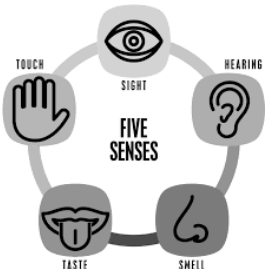
Eyes
1. We get most of the information about the environment through our eyes.
2. The eyelids and Eyelashes protect our eyes from dirt, strong light and injuries.
3. The eye is covered over by a transparent covering called cornea.
4. Iris is the coloured layer that gives people distinct eye colour.
5. Light enters the eye through an opening called pupil.
6. The lens is present behind the iris.
7. The inner part of our eye has a very thin layer of tissues called the retina which captures the light that enters the eye and send it to the brain through the optic nerve.
8. The eyes are connected to the brain by the optic nerves that carry messages to the brain and the brain tells us what we are looking at.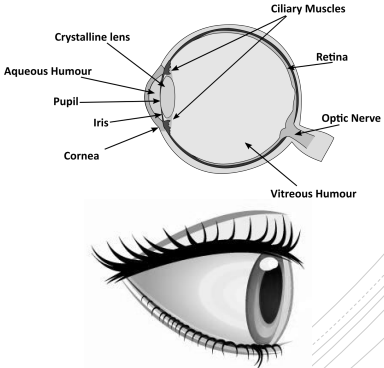
Nose
1. As a sense organ the function of nose is to smell.
2. In addition to smelling nose also helps us to breathe.
3. The nose has two holes called nostrils.
4. The shape of the nose is due to the bones and cartilages.
5. The nasal septum separates the nostrils and divides the nasal cavity into two.
6. The nasal cavity is separated from the mouth by a bony structure called the palate.
7. Olfactory nerves are there in nose that helps it to smell.
8. When the inhaled air comes in contact with the Olfactory nerves, they send signals to the brain and then smell is identified. 
Ears
1. The ears help us to hear sounds.
2. The outer part of the ear that we can see is called the pinna.
3. Pinna gathers sound and sends it to the eardrum.
4. The eardrum vibrates when hit by sound and transmit the vibration to the internal ear through the middle ear.
5. From here, they are carried to the brain through a special nerve as messages for interpretation.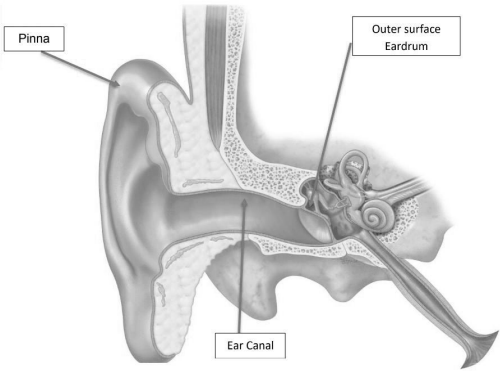
Tongue
1. The tongue is a fleshy sense organ.
2. It helps us to speak, chew and taste.
3. The tongue has thousands of taste buds which have nerve endings that carry messages to the brain.
4. The primary tastes that the tongue sense are sweet, salty, sour and bitter.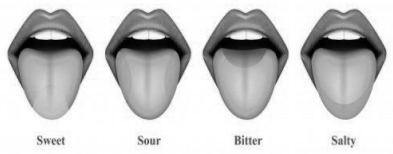
Skin
1. The skin is the largest organ and the outer covering of the body.
2. It protects the internal organs of the body.
3. It has millions of nerve endings that can detect sensations like heat, cold, pain and pressure. The skin carries out many functions needed for our survival which include wound healing, protection, maintaining the body temperature and preventing infections.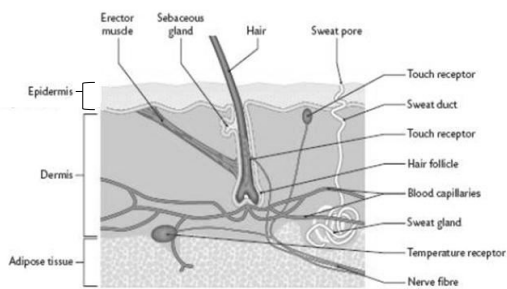
I. FILL IN THE BLANKS
1. _______________ gives shape and support to our body.
2. The ______________ protects the brain.
3. The part of the eye on which an image is formed is the _____________________.
4. The nerve at the back of the retina is ________________.
5. The __________________ is the thinking part of the brain.
6. The nerves are made up of __________________.
7. ____________________ nerves carry impulses to the brain.
8. The little brain is the __________________.
9. The heart and lungs are protected by the ____________________.
10. Reflex actions are due to the messages sent by the _________________.
11. Nerves which carry messages from the brain are ___________.
12. Eyeballs are protected by __________________.
NAME THE FOLLOWING
1. The system that controls all other systems of our body.
___________________________
2. The other name of the brain stem.
___________________________
3.The largest part of the brain.
___________________________
4. The actions controlled by the spinal cord
___________________________
5. The control centre of the body.
___________________________
6. The three kinds of nerves.
a____________________b______________c ________________
7. The part of the brain that helps to control the movements during reflex action. ___________________________
8. The nerve cells which bind together to form a nerve.
______________________
9. The organ that controls our heartbeat and breathing.
_______________________
10. The part of the brain that helps to control the movements during reflex action.
WRITE TRUE or FALSE
1. The skin forms a covering to protect the internal organs in our body. _______________
2. Medulla makes up 90 percent of the brain tissues. ____________
3. The total length of all the nerves present in the body of an adult human being is about 72 km. __________________
4. We must always breathe through the mouth. ____________
5. It is dangerous to clean our ears with a hairpin or toothpicks. __________
6. Nerve cells have special thread like parts called fibres. ___________
7. The medulla helps to maintain our body balance. ____________
8. Coughing, sneezing, blinking and jumping are human reflexes _________
I. Name the following:
Question 1. The control centre of our body.
Answer: Brain
In simple words: The brain acts as the main command hub that controls all body functions.
Exam Tip: Remember that the brain along with the spinal cord forms the central nervous system.
Question 2. The system that controls all the other systems of our body.
Answer: Nervous system
In simple words: The nervous system coordinates and regulates all body activities.
Exam Tip: Key components are the brain, spinal cord, and nerves.
Question 3. Nerves that carry impulses to the brain.
Answer: Sensory nerves
In simple words: Sensory nerves transmit messages from sense organs to the brain and spinal cord.
Exam Tip: Do not confuse sensory nerves with motor nerves, which carry messages away from the brain.
Question 4. The actions which are automatic.
Answer: Reflex actions
In simple words: Reflex actions happen instantly without thinking, controlled mainly by the spinal cord.
Exam Tip: A classic example is pulling your hand away immediately after touching a hot object.
Question 5. The sense organs through which we get different odours.
Answer: Nose
In simple words: The nose has specialized nerve endings that detect smells in the air.
Exam Tip: Olfactory receptors in the nasal cavity are responsible for the sense of smell.
Question 6. The nerve cells which bind together to form a nerve.
Answer: Neurons (or Nerve fibres)
In simple words: Neurons are the structural and functional units of the nervous system.
Exam Tip: A nerve is simply a bundle of many nerve fibres held together.
Question 7. The largest part of the brain.
Answer: Cerebrum
In simple words: The cerebrum handles thinking, learning, memory, and our senses.
Exam Tip: This question is repeated later in the worksheet as well.
Question 8. The organ which detects the sense of taste.
Answer: Tongue
In simple words: Taste buds on the tongue help us identify sweet, salty, sour, and bitter tastes.
Exam Tip: Taste buds are tiny structures located on the upper surface of the tongue.
Question 9. A nerve at the back of the retina.
Answer: Optic nerve
In simple words: The optic nerve carries visual messages from the eye to the brain.
Exam Tip: The point where the optic nerve leaves the eye has no photoreceptors and is called the blind spot.
Question 10. The brain stem which connects the brain to the spinal cord.
Answer: Medulla (or Medulla oblongata)
In simple words: The medulla controls involuntary actions like breathing and heartbeat.
Exam Tip: Also known as the brain stem, it connects the cerebrum and cerebellum to the spinal cord.
Question 11. The four types of taste.
Answer: Sweet, salty, sour, and bitter
In simple words: These are the four primary tastes recognized by our taste buds.
Question 12. The nerves which are connected to the sense organs.
Answer: Sensory nerves
In simple words: Sensory nerves bring information from our eyes, ears, nose, tongue, and skin to the brain.
Exam Tip: Sensory receptors convert environmental stimuli into nerve impulses.
Question 13. The largest part of the brain.
Answer: Cerebrum
In simple words: The cerebrum occupies the major portion of the human brain.
Exam Tip: It is divided into two halves called hemispheres.
Question 14. The part of the eye which gives the eye its colour.
Answer: Iris
In simple words: The iris is the colored ring of muscle around the pupil.
Exam Tip: It controls the amount of light entering the eye by adjusting the size of the pupil.
Question 15. The part our body that controls heartbeat and breathing.
Answer: Medulla
In simple words: The medulla manages vital life functions automatically even when we sleep.
Exam Tip: Damage to the medulla can be fatal because it controls essential involuntary processes.
II. Fill in the blanks:
Question 1. The skull protects the __________.
Answer: Brain
In simple words: The hard bony skull acts like a helmet protecting our delicate brain.
Exam Tip: The backbone or vertebral column similarly protects the spinal cord.
Question 2. The nerves are made up of __________.
Answer: Nerve cells (or Neurons)
In simple words: Millions of tiny neurons link up to form nerve fibers and nerves.
Exam Tip: Neurons consist of a cell body, dendrites, and an axon.
Question 3. __________ gives shape and support to our body.
Answer: Skeleton
In simple words: The skeletal system provides the structural framework for the body.
Exam Tip: An adult human skeleton is made up of 206 bones.
Question 4. The __________ is the thinking part of the brain.
Answer: Cerebrum
In simple words: Reasoning, logic, and intelligence are seated in the cerebrum.
Exam Tip: It also controls our voluntary muscles.
Question 5. The __________ are the most important sense organs.
Answer: Eyes (Note: All sense organs are important, but eyes provide the maximum sensory input)
In simple words: Eyes allow us to see the world around us.
Exam Tip: Protect your eyes by maintaining proper reading distance and lighting.
Question 6. The heart and the lungs are protected by __________.
Answer: Ribcage
In simple words: The ribcage forms a protective cage of bones around our chest organs.
Question 7. The __________ forms a covering for the entire body surface.
Answer: Skin
In simple words: Skin is the largest organ of the human body and provides the sense of touch.
Exam Tip: It protects internal organs from germs and regulates body temperature.
Question 8. The three parts of the brain are __________.
Answer: Cerebrum, cerebellum, and medulla
In simple words: The brain is divided into these three main functional regions.
Exam Tip: Learn the specific functions of each of these three parts.
Question 9. We must always breathe through the __________.
Answer: Nose
In simple words: Nasal hair and mucus filter dust and germs from the air we breathe.
Exam Tip: Breathing through the mouth bypasses this natural filtering and warming system.
Question 10. The __________ nerves carry orders from the brain.
Answer: Motor nerves
In simple words: Motor nerves transmit instructions from the brain and spinal cord to muscles and glands.
Exam Tip: Motor nerves tell our muscles when and how to move.
Download Class 5 Science Nervous System And Sense Organs Practice Worksheets
Mastering Nervous System And Sense Organs with Printable Worksheets
Access structured practice worksheets for Nervous System And Sense Organs aligned with the 2026 CBSE curriculum. These downloadable exercises for Class 5 Science help students build accuracy and reinforce core concepts for upcoming school tests.
Verified Solutions and NCERT Alignment
Designed around the official curriculum for Class 5 Science, these practice sheets guarantee standard compliance. Reviewing step-by-step solutions after completion sharpens your accuracy and clarifies complex sub-topics within Nervous System And Sense Organs.
Additional Study Resources for Class 5 Science
Wrap up your chapter revision by testing your knowledge against standard objective question formats. Explore our full library of free, up-to-date printable assignments to maximize your academic results in upcoming CBSE evaluations.
FAQs
You can download the latest chapter-wise printable worksheets for Class 5 Science Nervous System And Sense Organs for free from StudiesToday.com. These have been made as per the latest CBSE curriculum for this academic year.
Yes, Class 5 Science worksheets for Nervous System And Sense Organs focus on activity-based learning and also competency-style questions. This helps students to apply theoretical knowledge to practical scenarios.
Yes, we have provided solved worksheets for Class 5 Science Nervous System And Sense Organs to help students verify their answers instantly.
Yes, our Class 5 Science test sheets are mobile-friendly PDFs and can be printed by teachers for classroom.
For Nervous System And Sense Organs, regular practice with our worksheets will improve question-handling speed and help students understand all technical terms and diagrams.