

Official Class 11 Accountancy Revision Material: CBSE Class 11 Accountancy Theory Base Of Accounting Concepts And Illustrations
Explore reliable concept summaries and revision materials through the CBSE Class 11 Accountancy Theory Base Of Accounting Concepts And Illustrations. Tailored for Class 11 learners, utilizing these notes for Accountancy Chapter 02 Theory Base of Accounting ensures thorough preparation and strengthens core academic definitions before final evaluations.
Chapter-wise Concept Summaries: Chapter 02 Theory Base of Accounting
Navigate directly to the revision notes for Chapter 02 Theory Base of Accounting using the digital viewer below. Each summary is structured to highlight high-weightage sections, allowing students to instantly access critical definitions and focus on core exam topics.
Theory Base Of Accounting
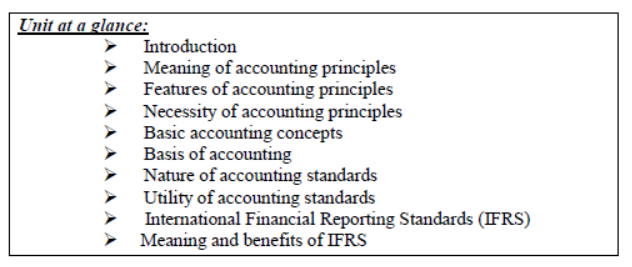
“A mode of conduct imposed on an accountant by custom, law and professional body.” – Kohler
Introduction: To maintain uniformity in recording transactions and preparing financial statements, accountants should follow Generally Accepted Accounting Principles.
Meaning of Accounting Principles: Accounting principles are the rules of action or conduct adopted by accountants universally while recording accounting transactions. GAAP refers to the rules or guidelines adopted for recording and reporting of business transactions, in order to bring uniformity in the preparation and presentation of financial statements.
Features of accounting principles:
(1) Accounting principles are manmade.
(2) Accounting principles are flexible in nature
(3) Accounting principles are generally accepted.
Necessity of accounting principles: Accounting information is meaningful and useful for users if the accounting records and financial statements are prepared following generally accepted accounting information in standard forms which are understood.
Basic accounting concepts
(1) Business entity concepts
This concept assumes that business has a distinct and separate entity from its owners. Therefore business transactions are recorded in the books of accounts from the business point of view and not owners. For example, If owner bring Rs. 1,00,000 as capital in business. It is treated as liability of business to owner. Similarly if owner withdrew Rs. 5,000 from business for personal use, it is treated as reduction of owner‟s capital and consequently reduction in liability of business towards owner.
(2)Money measurement concept
This concept states that transactions and events that can be expressed in money terms are recorded in the books of accounts. Non monetary transactions cannot be recorded in the books like appointment of manager, capabilities of human resources etc. Another aspect is the records of transactions are to be kept not in physical unit but in monetary unit. For example, an organisation has 2 buildings, 15 computers, 20 office tables are not recorded because they are physical unit and not in monetary unit. Limitation of this concept is the value of rupee does not remain same over a period of time. As changes in the value of money is not reflected in books does not reflect fair view of business affairs.
(3) Going concern concept
This concept assumes that business shall continue to carry out its operations indefinitely for a long period of time and would not be liquidated in the foreseeable future. It provides the very basis for showing the value of assets in the balance sheet. An asset may be defined as a bundle of services. For example, a machine purchased for Rs. 2,00,000 and its estimated useful life say 10 years. The cost of machinery is spread on suitable basis over next 10 years for ascertaining the profit or loss for each year. The total cost of the machine is not treated as an expense in the year of purchase itself.
(4) Accounting period concept
Accounting period refers to span of time at the end of which financial statements are prepared to know the profits or loss and financial position of business. Information is required to by different users at regular intervals for decision making. For example, bankers require information periodically because they want to ensure safety and returns of their investments. Similarly management requires information at regular interval to assess the performance and funds requirement. Therefore they are prepared at regular interval, normally a period of one year. This interval of time is called accounting period.
(5) Cost concept
According to this concept all assets are recorded in the books of accounts at the purchase price which includes the purchase price, cost of acquisition, transportation and installation. For example, if an asset purchased for Rs. 1,00,000 and spent Rs. 10,000 on its installation. Therefore asset will be recorded in the books of accounts at Rs. 1,10,000. This concept is historical in nature. For example, if machine purchased for Rs. 75,000, the purchase or acquisition price will remain same for all years to come, though its market value may change. The main limitation of this concept is that it does not show the true value of asset and may lead to hidden profits.
(6) Dual aspect concept
This concept provides the very basis for recording the transaction in the books of accounts. It states that every transaction entered in the books has two aspects. For example, Man as started business with cash Rs. 50,000. In this transaction asset (cash) increases and liability (capital of owner) also increases. This principle is also known as duality principle. This principle is commonly expressed in fundamental accounting equation given below. Assets = Liabilities + Capital This equation states that assets of business are always equal to the claims of owners and outsiders.
(7) Revenue recognition concept ( Realisation concept)
According to this principle revenue is considered to have been realised when a transaction has been entered and obligation to receive the amount has been established. In other words when we receive right to receive revenue than it is called revenue is realised. For example, sales made in March, 2010 and receives amount in April, 2010. Revenue of these sales should be recognised in February month, when the goods sold. For example commission for the March, 2010 even if received in April 2010 will be taken into profit and loss A/c of March, 2010. Similarly if rent for the April, 2010 is received in advance in March, 2010 it will be taken the profit and loss A/c of the financial year of March, 2011.
(8) Matching concept
The matching concept states that expense incurred in an accounting period should be matched with revenues during that period. It follows from this that revenue and expenses incurred to earn these revenues must belong to the same accounting period. For example, salary for the month of March, 2010 paid in April, 2010 is recorded in the profit and loss A/c of financial year ending March, 2010 and not in the year when it realized. Similarly we records cost of goods sold and not the goods purchased or produced. So the cost of unsold goods should be deducted from the cost of goods produced or purchased.
(9) Full disclosure concept
Apart from legal requirement good accounting practice require all material and significant information must be disclosed. Financial statements are the basic means of communicating financial information to its users for taking useful financial decisions. This concept states that all material and relevant fact and financial performance must be fully disclosed in financial statement of the business. Company‟s act 1956 has provided a format for making profit and loss A/c and balance sheet, which needs to be compulsorily adhered to for preparation of financial statement. Disclosure of material information results in better understanding. For example, the reasons for low turnover should be disclosed.
(10)Consistency concept
This concept states that accounting practices followed by an enterprise should be uniform and consistent over a period of time. For example if an enterprise has adopted straight line method of charging depreciation then it has to be followed year after year. If we adopt written down value method from second year for charging depreciation than the financial information will not be comparable. Consistency eliminates the personal bias helps in achieving the results that are comparable. However consistency does not prohibits the change accounting policies. Necessary changes can be adopted and should be disclosed.
(11) Conservatism concept (Prudence concept)
This concept takes into consideration all prospective losses but not the prospective profit. It means profit should not be recorded until it realised but all losses, even those which have remote possibility are to be recorded in the books. For example, valuing closing stock at cost or market value whichever is lower, creating provision for doubtful debts etc. This concept ensures that the financial statements provide the real picture of the enterprise.
(12) Materiality concept
This concept states that accounting should focus on material fact. Whether the item is material or not shall depend upon nature and amount involved in it. For example, amount spent of repair of building Rs. 4,00,000 is material for enterprise having the sales turnover of Rs.1,50,000 but not material for enterprise having turnover of Rs. 25,00,000. Similarly closure of one plant material but stock eraser and pencils are not shown at the asset side but treated as expenses of that period, whether consumed or not because the amount involved in it are low.
(13) Objectivity concept
This concept states that accounting should be free from personal bias. This can be possible when every transaction is supported by verifiable documents. For example, purchase of machinery for Rs. 30,000 should be supported by the voucher and should be recorded in the books of accounts. Similarly other supporting documents are cash memo, invoices, receipts provides the basis for accounting and auditing.
Basis of Accounting:
(1) Cash basis
Under this entries in the books of accounts are made when cash id received or paid and not when the receipt or payment becomes due. For example, if salary Rs. 7,000 of January 2010 paid in February 2010 it would be recorded in the books of accounts only in February, 2010.
(2) Accrual basis
Under this however, revenues and costs are recognized in the period in which they occur rather when they are paid. It means it record the effect of transaction is taken into book in the when they are earned rather than in the period in which cash is actually received or paid by the enterprise. It is more appropriate basis for calculation of profits as expenses are matched against revenue earned in the relation thereto. For example, raw materials consumed are matched against the cost of goods sold for the accounting period.
The primary objective of accounting is to deliver accurate data regarding a company's financial results to diverse stakeholders. To ensure this information remains trustworthy and easy to analyze over time, it must be prepared using a standardized set of accounting rules, guidelines, and methods. Consequently, establishing a robust theoretical framework is essential.
A solid theoretical foundation is indispensable for the structured development of any field, and accounting is no exception. The theory base of accounting encompasses a collection of concepts, principles, rules, and guidelines designed over time. These elements are designed to introduce standardization and consistency to financial records, thereby making the reports highly beneficial for all users.
Generally Accepted Accounting Principles (GAAP)
Generally Accepted Accounting Principles (GAAP) represent the standardized rules, protocols, and instructions used to record and report business activities. The goal of GAAP is to bring structural consistency to the preparation and layout of financial reports. These underlying guidelines are commonly known as accounting concepts and conventions.
Systems of Accounting
Single Entry System of Accounting: Often referred to as a pure entry system, this method involves keeping only a cash book to record financial activities. All cash transactions are entered directly into this book. Because it does not follow double-entry mechanics, the business does not maintain separate ledgers. Transactions are frequently personal in character and are typically logged informally in a rough ledger. Key characteristics of this system include:
- Personal and business transactions are often blended due to the reliance on a single cash book.
- It ignores nominal and real accounts, focusing primarily on cash and personal accounts.
- Although net profit or loss can be calculated, the system cannot show the true financial position of the enterprise.
- Since a trial balance cannot be drafted, verifying the mathematical precision of the ledger is not possible.
Double-Entry System of Accounting: This is the most widely adopted and standard accounting framework used globally. Within this framework, every business transaction is recorded in a way that impacts at least two accounts - through equal debits and credits. This is commonly referred to as the dual-aspect rule. Prominent attributes of this system include:
- It maintains records for all three major account categories: personal, real, and nominal accounts.
- The system allows for mathematical verification of ledger accounts by drafting a trial balance.
- The system remains structurally stable and highly consistent.
- It produces a balance sheet that accurately portrays the financial health of the business entity.
- It makes identifying errors, omissions, and financial irregularities significantly simpler.
Basis of Accounting
- Cash Basis of Accounting: In this framework, business transactions are recorded only when actual cash is received or disbursed, rather than when the transaction takes place or becomes due. This framework does not align with the matching principle, which requires expenses incurred in a period to be matched with the revenues generated during that same period.
- Accrual Basis of Accounting: Here, revenues and expenses are recognized when they are earned or incurred, regardless of when the cash actually changes hands. It clearly distinguishes between receiving cash and having the legal right to collect it, as well as paying cash and having a legal obligation to disburse it. Consequently, the economic impact of any transaction is recorded in the specific accounting period to which it relates.
Difference Between Accrual Basis of Accounting and Cash Basis of Accounting
| Basis | Accrual Basis of Accounting | Cash Basis of Accounting |
|---|---|---|
| Recording of transactions | Both cash and credit transactions are recorded. | Only cash transactions are recorded. |
| Profit or Loss | Profit or Loss is ascertained correctly due to the complete record of transactions. | Correct profit/loss is not ascertained because it records only cash transactions. |
| Distinction between Capital and Revenue items | This method makes a distinction between capital and revenue items. | This method does not make a distinction between capital and revenue items. |
| Legal position | This basis is recognized under the Companies Act. | This basis is not recognized under the Companies Act. |
Accounting Standards (AS)
The ICAI has issued the following standards:
- AS 1 Disclosure of Accounting Policies
- AS 2 Valuation of Inventories
- AS 3 Cash Flow Statements
- AS 4 Contingencies and Events Occurring after the Balance Sheet Date
- AS 5 Net Profit or Loss for the Period, Prior Period Items and Changes in Accounting Policies
- AS 6 Depreciation Accounting / AS 7 Construction Contracts
- AS 8 Accounting for Research and Development
- AS 9 Revenue Recognition
- AS 10 Accounting for Fixed Assets
- AS 11 The Effects of Changes in Foreign Exchange Rates
- AS 12 Accounting for Government Grants
- AS 13 Accounting for Investments
- AS 14 Accounting for Amalgamations
- AS 15 Accounting for Retirement Benefits in the Financial Statements of Employers (recently revised and titled as Employee Benefits')
- AS 16 Borrowing Costs
- AS 17 Segment Reporting
- AS 18 Related Party Disclosures
- AS 19 Leases
- AS 20 Earnings Per Share
- AS 21 Consolidated Financial Statements
- AS 22 Accounting for Taxes on Income
- AS 23 Accounting for Investments in Associates in Consolidated Financial Statements
- AS 24 Discontinuing Operations
- AS 25 Interim Financial Reporting / AS 26 Intangible Assets
- AS 27 Financial Reporting of Interests in Joint Ventures / AS 28 Impairment of Assets
- AS 29 Provisions, Contingent Liabilities and Contingent Assets
IFRS - International Financial Reporting Standards
This refers to the global financial accounting standards developed and issued by the International Accounting Standards Board (IASB). Its primary goal is to standardize and enhance financial reporting worldwide, providing clear and comparable financial statements for international capital market participants and stakeholders.
IFRS Based Financial Statements
The following financial statements are prepared under IFRS guidelines:
- Statement of Financial Position: The elements of this statement are:
- Assets
- Liability
- Equity
- Comprehensive Income Statement: The elements of this statement are:
- Revenue
- Expense
- Statement of Changes in Equity
- Statement of Cash Flows
- Notes and Significant Accounting Policies
Main Difference Between IFRS and IAS (Indian Accounting Standards)
- IFRS follows a principle-based approach, whereas IAS is primarily rule-based.
- IFRS calculations are based on fair value, while IAS relies on historical cost.
Classification of Accounts / Types of Accounts
Business transactions are categorized and documented under various distinct accounts. An account serves as a structured, formal ledger record for individuals, businesses, assets, liabilities, incomes, and expenditures. To analyze and manage these records effectively, accounts are classified under the traditional approach as follows:
- Personal Accounts
- Natural personal accounts: example - Capital A/c, Debtors A/c, Creditors A/c
- Artificial personal accounts: example - Axis Bank, ICICI Bank, Maruti Suzuki Co., Shyam Enterprise Pvt. Ltd.
- Representative personal accounts: Example - Outstanding Salary A/c, Pre-paid Rent A/c.
- Impersonal Accounts
- Real Accounts
- Tangible real accounts: such as Plant A/c, Furniture and Fixtures A/c
- Intangible real accounts: such as Goodwill, patents, copyrights
- Nominal Accounts: related to expenses, losses, incomes and gains.
- Real Accounts
Rules for Debit and Credit
There are certain foundational rules that must be followed during the double-entry accounting process:
- Personal Account
Debit the Receiver
Credit the Giver - Real Account
Debit what Comes in
Credit what Goes out - Nominal Account
Debit all Expenses and Losses
Credit all Incomes and Gains - Representative Personal Account
Debit the Debtor
Credit the Creditor
Please click the link below to download pdf file for CBSE Class XI Accountancy Theory Base of Accounting concepts and illustrations.
Free study material for Accountancy
Download CBSE Revision Notes: Class 11 Accountancy Chapter 02 Theory Base of Accounting
Quick Revision Notes: Chapter 02 Theory Base of Accounting (CBSE)
Explore reliable chapter overviews for Chapter 02 Theory Base of Accounting tailored for Class 11 learners. Use these structured points to grasp difficult themes and ensure solid preparation for upcoming assessments.
Expert Study Material for Class 11 Accountancy
Each chapter summary is structured around standard CBSE textbooks, allowing students to check their understanding and clarify complex ideas early in their revision.
Complete Your Chapter Revision
Follow up your revision by attempting the interactive online Accountancy MCQ test and practice worksheets for this chapter to verify your mastery. All platform resources are free to access.
FAQs
You can download the teacher prepared revision notes for CBSE Class 11 Accountancy Theory Base Of Accounting Concepts And Illustrations from StudiesToday.com. These notes are designed as per 2026-27 academic session to help Class 11 students get the best study material for Accountancy.
Yes, our CBSE Class 11 Accountancy Theory Base Of Accounting Concepts And Illustrations include 50% competency-based questions with focus on core logic, keyword definitions, and the practical application of Accountancy principles which is important for getting more marks in 2026 CBSE exams.
Yes, our CBSE Class 11 Accountancy Theory Base Of Accounting Concepts And Illustrations provide a detailed, topic wise breakdown of the chapter. Fundamental definitions, complex numerical formulas and all topics of CBSE syllabus in Class 11 is covered.
These notes for Accountancy are organized into bullet points and easy-to-read charts. By using CBSE Class 11 Accountancy Theory Base Of Accounting Concepts And Illustrations, Class 11 students fast revise formulas, key definitions before the exams.
No, all study resources on StudiesToday, including CBSE Class 11 Accountancy Theory Base Of Accounting Concepts And Illustrations, are available for immediate free download. Class 11 Accountancy study material is available in PDF and can be downloaded on mobile.