

Revision Notes for Class 11 Accountancy: Chapter 07 Depreciation, Provisions and Reserves
Explore reliable concept summaries and revision materials through the CBSE Class 11 Accountancy Depreciation Provisions And Reserves Concepts And Illustrations. Tailored for Class 11 learners, utilizing these notes for Accountancy Chapter 07 Depreciation, Provisions and Reserves ensures thorough preparation and strengthens core academic definitions before final evaluations.
Review Chapter 07 Depreciation, Provisions and Reserves for Class 11 Accountancy
View or download the dedicated Chapter 07 Depreciation, Provisions and Reserves revision resource below. Engaging with these structured concept notes daily ensures continuous academic progress and mastery of the 2026-27 curriculum for Accountancy.
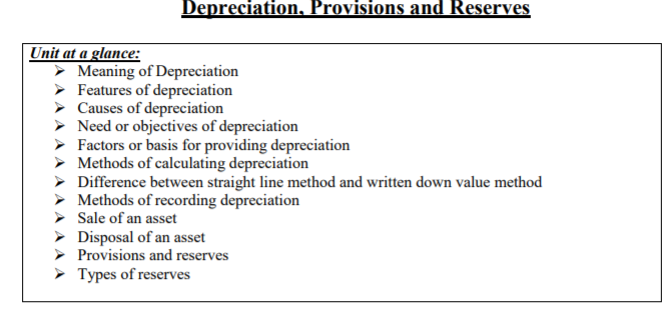
“Depreciation is gradual and permanent decrease in the value of an asset from any cause.” – Carter
Introduction: Every fixed asset loses its value due to use or other reasons. This decline in the value of asset is known as depreciation. Meaning of Depreciation: Depreciation may be described as a permanent, continuing and gradual shrinkage in the book value of fixed assets.
Features of Depreciation:
(1) It is decline in the book value of fixed assets.
(2) It is a continuing process.
(3) It includes loss of value due to efflux ion of time, usage or obsolescence.
(4) It is an expired cost and must be deducted before calculating taxable profit.
Causes of Depreciation:
(1) Wear and tear due to use or passage of time.
(2) Obsolescence.
(3) Expiration of legal rights.
(4) Abnormal factors.
Need or Objectives of Depreciation:
(1) To ascertain the true profit or loss.
(2) For consideration of tax.
(3) To ascertain the true and fair financial position.
(4) Compliance with legal provisions.
Factors or Basis for providing Depreciation:
(1) Cost of asset.
(2) Estimated net residual value.
(3) Depreciable cost.
(4) Estimated useful life.
Methods of calculating Depreciation:
(1) Straight line method (Fixed installment method):
This method is based on the assumption of equal usage of time over asset‟s entire useful life. According to this method a fixed and equal amount is charged as depreciation in every accounting period during the life time of an asset. Depreciation amount can be calculated by the following formula:
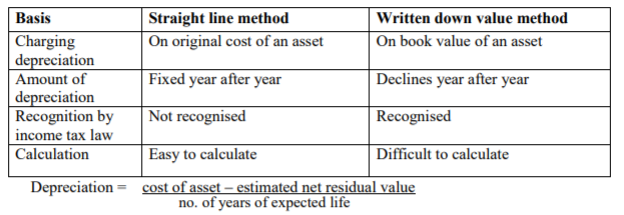
(2) Written Down value method(Diminishing balance method):
In this method depreciation is charged on the book value of tha asset. The amount of depreciation reduces year after year.
Difference between Straight line method and written down value method: Methods of recording Depreciation:
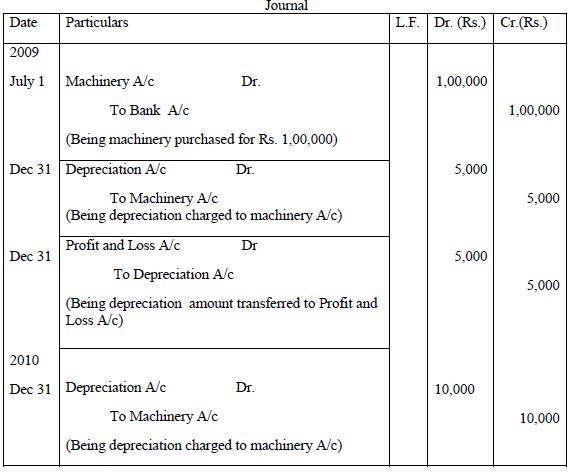
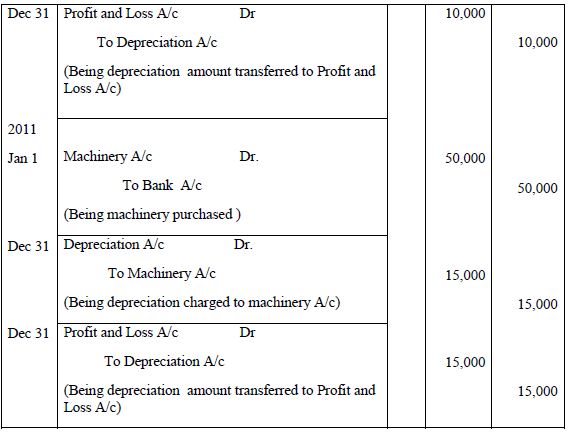
(1) When depreciation is charged to asset account:
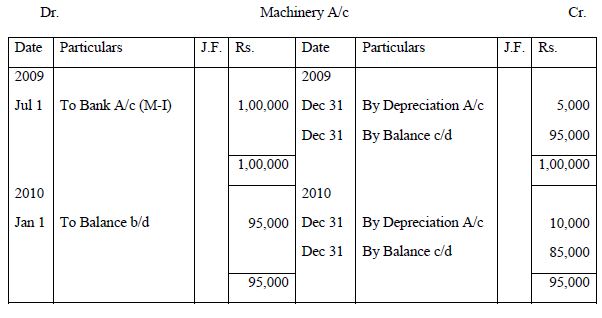
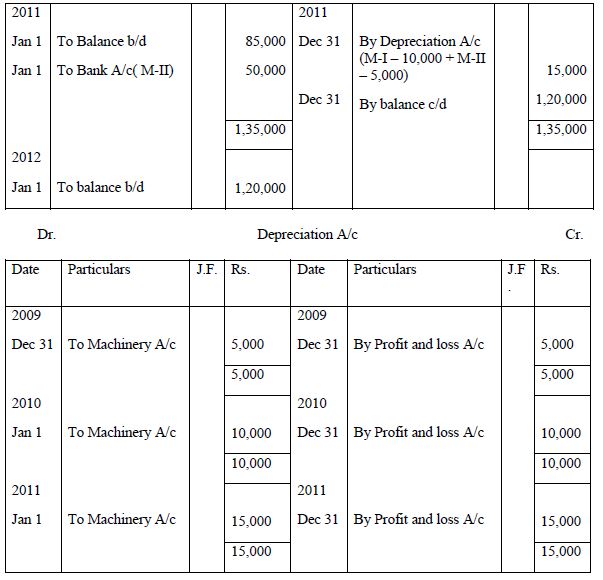
In this method depreciation is deducted from the asset value and charged (debited) to profit and loss account. Journal entries for recording under this method are as follows.
(a) For purchase of an asset
Asset A/c Dr.
To Bank/ vendor A/c
(With the cost of an asset including installation expenses, freight etc.)
(b) Following entries are recorded at the end of each year
(i) Depreciation A/c Dr.
To Asset A/c
(With an amount of depreciation)
(ii) Profit and loss A/c Dr.
To Depreciation A/c
(With an amount of depreciation)
(2) When provision for depreciation/Accumulated depreciation account is maintained: Following journal entries are recorded at the end of each year.
Please click the link below to download pdf file for CBSE Class 11 Accountancy Depreciation Provisions And Reserves Concepts And Illustrations.
Free study material for Accountancy
Study Material and Revision Notes for Class 11 Accountancy Chapter 07 Depreciation, Provisions and Reserves
Key Concepts and Summary for Class 11 Accountancy Chapter 07 Depreciation, Provisions and Reserves
Review targeted chapter notes for Class 11 Accountancy Chapter 07 Depreciation, Provisions and Reserves. Built according to official CBSE guidelines, these summaries highlight high-yield topics frequently tested in school evaluations.
NCERT-Aligned Chapter Summary and Notes
Cross-reference your comprehension with comprehensive NCERT solutions for Class 11 to ensure absolute clarity across all sub-topics in this chapter.
Next Steps in Your Exam Preparation
Explore our broader library of printable assignments, chapter notes, and mock tests designed to support continuous revision and secure higher marks in CBSE assessments.
FAQs
You can download the teacher prepared revision notes for CBSE Class 11 Accountancy Depreciation Provisions And Reserves Concepts And Illustrations from StudiesToday.com. These notes are designed as per 2026-27 academic session to help Class 11 students get the best study material for Accountancy.
Yes, our CBSE Class 11 Accountancy Depreciation Provisions And Reserves Concepts And Illustrations include 50% competency-based questions with focus on core logic, keyword definitions, and the practical application of Accountancy principles which is important for getting more marks in 2026 CBSE exams.
Yes, our CBSE Class 11 Accountancy Depreciation Provisions And Reserves Concepts And Illustrations provide a detailed, topic wise breakdown of the chapter. Fundamental definitions, complex numerical formulas and all topics of CBSE syllabus in Class 11 is covered.
These notes for Accountancy are organized into bullet points and easy-to-read charts. By using CBSE Class 11 Accountancy Depreciation Provisions And Reserves Concepts And Illustrations, Class 11 students fast revise formulas, key definitions before the exams.
No, all study resources on StudiesToday, including CBSE Class 11 Accountancy Depreciation Provisions And Reserves Concepts And Illustrations, are available for immediate free download. Class 11 Accountancy study material is available in PDF and can be downloaded on mobile.