CBSE Class 6 Science Worksheet Set I

Access the latest CBSE Class 6 Science Worksheet Set I. We have provided free printable Class 6 Science worksheets in PDF format, specifically designed for All Chapters. These practice sets are prepared by expert teachers following the 2025-26 syllabus and exam patterns issued by CBSE, NCERT, and KVS.

All Chapters Science Practice Worksheet for Class 6

Students should use these Class 6 Science chapter-wise worksheets for daily practice to improve their conceptual understanding. This detailed test papers include important questions and solutions for All Chapters, to help you prepare for school tests and final examination. Regular practice of these Class 6 Science questions will help improve your problem-solving speed and exam accuracy for the 2026 session.

Download Class 6 Science All Chapters Worksheet PDF

CLASS: VI SUBJECT: SCIENCE

SYLLABUS: 1. Getting to know plants
2. Light, Shadows and Reflection
3. Fun with Magnets
4. Air around us.

Q1. Read the following paragraphs and answer the questions.
 
A. Leaves manufacture food for the plant body. The process of manufacturing food by the leaves is called photosynthesis. Leaves require water, carbon dioxide, sunlight and chlorophyll for making food. Water is obtained from the soil and carbon dioxide from the air. Oxygen is given out during this process.
 
a) What is Photosynthesis?
 
b) Name four basic requirements for the process of Photosynthesis.
 
c) Which gas is given out during Photosynthesis?
 
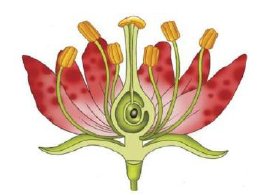
B. The central part of the flower is the female part, consisting of a flask shaped organ called the pistil. Each pistil consists of a basal swollen part called the ovary. The ovary continues into a long style and ends in a knob like part called stigma. The ovary contains small, bead like structures called ovules.
 
a) Name the female part of a flower.
 
b) What are Ovules?
 
c) What are the three different parts of pistil?
 
C. Those bodies which do not allow the light energy to pass through them are called opaque bodies. For example, bricks, stones, wood and articles made from it, wool, cotton, articles made from metals and coal are opaque bodies. We can never see through opaque bodies because they do not allow the light energy to pass through them.
 
a) What are opaque bodies?
 
b) Name four opaque bodies.
 
c) Why are we unable to see through opaque bodies?
 
D. Light is an invisible energy which causes in us the sensation of vision. When the light falls on any object, it bounces off from the surface of the object in all directions. This is called scattering of light. Light travels at a very fast speed, i.e.
3 × 10⁸ m/s. It means that the speed of light is 300,000,000 m/s or 300,000km/s. Our sun is approximately 150,000,000km from the Earth.
 
a) Define scattering of light?
 
b) What is the speed of light?
 
c) How far is Sun from the Earth?
 
E. A mixture of ferric oxide and barium oxide is strongly magnetic in nature. It is commonly called ferrite. It is used for making very powerful magnets for radios and transistors. Substances which are neither attracted by a magnet nor can be converted into artificial magnets are called non magnetic substances.
 
a) Define ferrite.
 
b) Give one use of ferrite.
 
c) What are non magnetic substances?
 
F. The organisms which are living under the soil, such as in the roots of a plant, respire by taking oxygen present in the soil. Some living organisms living under soil make deep burrows and holes in the soil through which air reaches them
for respiration. You must have seen that after rain earthworms come out of the soil. This is because the rainwater fills the burrows made by them. Thus in order to respire, they come above the surface of soil.
 
a) How do the organisms living under the soil respire?

b) Why do the earthworms come out of the soil after rain?

c) From where do the air reaches to the organisms living under soil?

G. We inhale air through our nose. The fine hair and mucus within the nasal passage prevent the dust particles from getting into our respiratory system. Your parents always scold you when you breathe through your mouth. This is because harmful dust particles can enter your respiratory system and can make you ill. The traffic police constables wear face masks. This is because our nose is not adequate to stop all dust particles. So they need face masks to stop dust particles.
a) Why do your parents scold you when you breathe through your mouth?
 
b) What is the importance of fine hair and mucus that is present in our nose?
 
c) Why do the traffic police constables wear face masks?
 
Q2. Look at the given diagrams and answer the questions.
 
A.
CBSE Class 6 Science Worksheet Set I 1
 
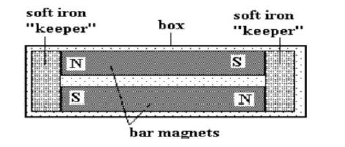
a) While storing the magnets, what should be the position of the poles of the magnet?
 
b) Why magnetic keepers are used for storing magnets?
 
c) Which shape of magnet is shown in the diagram?
 
B.
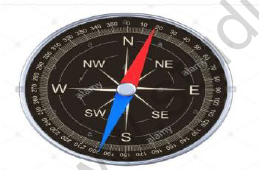
CBSE Class 6 Science Worksheet Set I 2
 
a) Name the device shown in the above diagram.
 
b) What is this device used for?
 
c) Which part of the device shows the different directions?
 
C.
CBSE Class 6 Science Worksheet Set I 3
 
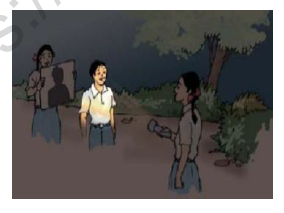
a) What is formed on the screen?
 
b) Whose shadow is formed on the screen?
 
c) Where is shadow of the object formed? (In the front or behind of the object)
 
d) If we remove light from the picture, can a shadow be visible? If not, why?
 
D.
CBSE Class 6 Science Worksheet Set I 4
a) From the above two pictures, in which figure lighted candle is visible to the boy?
 
b) Why can’t we see the light from the bend tube?
 
c) State the property of light which is depicted through the pictures.
 
E.
CBSE Class 6 Science Worksheet Set I 5
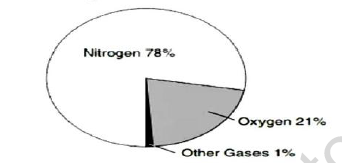
a) Which gas is present in the maximum quantity in the air?
 
b) Identify the gas which is necessary for respiration.
 
c) Which gases are present in the least quantity in air?
 
F.
CBSE Class 6 Science Worksheet Set I 6
 
a) Name the device depicted in the picture?
 
b) What makes it to move?
 
c) Give its one use.
 
d) Wind energy is one of the cheapest sources of energy. True/false
 
G.
CBSE Class 6 Science Worksheet Set I 7
 
a) Label the different parts of a flower.
 
b) What is the male part of a flower called?
 
c) What is the female part of a flower called?
 
d) Which is the most attractive part of a flower?


Please click on below link to download CBSE Class 6 Science Worksheet Set I

More Worksheets for Class 6 Science
CBSE Class 6 Science Worksheet Set N
~ Class 6 Science (Old Chapters)
CBSE Class 6 Science Air Around Us Worksheet
CBSE Class 6 Science Air Around Us Worksheet Set A
CBSE Class 6 Science Body Movements Worksheet Set A
CBSE Class 6 Science Body Movements Worksheet Set B
CBSE Class 6 Science Changes around us Worksheet Set A
CBSE Class 6 Science Changes Around Us Worksheet Set A
CBSE Class 6 Science Changes around us Worksheet Set B
CBSE Class 6 Science Components of Food Worksheet Set A
CBSE Class 6 Science Components of Food Worksheet Set B
CBSE Class 6 Science Electricity and Circuits Worksheet Set A
CBSE Class 6 Science Electricity And Circuits Worksheet Set B
CBSE Class 6 Science Electricity And Circuits Worksheet Set C
CBSE Class 6 Science Fibre to Fabric Worksheet Set A
CBSE Class 6 Science Fibre To Fabric Worksheet Set B
CBSE Class 6 Science Food Where Does it Come From Worksheet
CBSE Class 6 Science Food Where Does It Come From Worksheet Set A
CBSE Class 6 Science Fun With Magnets Worksheet Set A
CBSE Class 6 Science Fun With Magnets Worksheet Set B
CBSE Class 6 Science Garbage In Garbage Out Worksheet Set A
CBSE Class 6 Science Getting To Know Plants Worksheet Set A
CBSE Class 6 Science Getting To Know Plants Worksheet Set B
CBSE Class 6 Science Getting to Know Plants Worksheet Set C
CBSE Class 6 Science Light Shadows and Reflections Worksheet Set A
CBSE Class 6 Science Light Shadows and Reflections Worksheet Set B
CBSE Class 6 Science Light Shadows and Reflections Worksheet Set C
CBSE Class 6 Science Living Organisms And Their Worksheet
CBSE Class 6 Science Motion and Measurement of Distances Worksheet Set A
CBSE Class 6 Science Motion And Measurement of Distances Worksheet Set B
CBSE Class 6 Science Motion And Measurement of Distances Worksheet Set C
CBSE Class 6 Science Separation of Substances Worksheet Set A
CBSE Class 6 Science Separation of Substances Worksheet Set B
CBSE Class 6 Science Sorting Materials into Groups Worksheet Set A
CBSE Class 6 Science Sorting of Materials Into Groups Worksheet Set B
CBSE Class 6 Science Sorting of Materials Into Groups Worksheet Set C
CBSE Class 6 Science The Living Organisms Characteristics and Habitats Worksheet Set A
CBSE Class 6 Science The Living Organisms Characteristics and Habitats Worksheet Set B
CBSE Class 6 Science The Living Organisms and Their Surroundings Worksheet
CBSE Class 6 Science Water Worksheet Set A
CBSE Class 6 Science Water Worksheet Set B

All Chapters CBSE Class 6 Science Worksheet

Students can use the All Chapters practice sheet provided above to prepare for their upcoming school tests. This solved questions and answers follow the latest CBSE syllabus for Class 6 Science. You can easily download the PDF format and solve these questions every day to improve your marks. Our expert teachers have made these from the most important topics that are always asked in your exams to help you get more marks in exams.

NCERT Based Questions and Solutions for All Chapters

Our expert team has used the official NCERT book for Class 6 Science to create this practice material for students. After solving the questions our teachers have also suggested to study the NCERT solutions  which will help you to understand the best way to solve problems in Science. You can get all this study material for free on studiestoday.com.

Extra Practice for Science

To get the best results in Class 6, students should try the Science MCQ Test for this chapter. We have also provided printable assignments for Class 6 Science on our website. Regular practice will help you feel more confident and get higher marks in CBSE examinations.

Where can I download the latest PDF for CBSE Class 6 Science Worksheet Set I?

You can download the teacher-verified PDF for CBSE Class 6 Science Worksheet Set I from StudiesToday.com. These practice sheets for Class 6 Science are designed as per the latest CBSE academic session.

Are these Science Class 6 worksheets based on the 2026 competency-based pattern?

Yes, our CBSE Class 6 Science Worksheet Set I includes a variety of questions like Case-based studies, Assertion-Reasoning, and MCQs as per the 50% competency-based weightage in the latest curriculum for Class 6.

Do you provide solved answers for CBSE Class 6 Science Worksheet Set I?

Yes, we have provided detailed solutions for CBSE Class 6 Science Worksheet Set I to help Class 6 and follow the official CBSE marking scheme.

How does solving CBSE Class 6 Science Worksheet Set I help in exam preparation?

Daily practice with these Science worksheets helps in identifying understanding gaps. It also improves question solving speed and ensures that Class 6 students get more marks in CBSE exams.

Is there any charge for the Class 6 Science practice test papers?

All our Class 6 Science practice test papers and worksheets are available for free download in mobile-friendly PDF format. You can access CBSE Class 6 Science Worksheet Set I without any registration.