

Class 6 Science Practice Set: Chapter 06 Changes Around Us
Explore reliable practice materials for Chapter 06 Changes Around Us tailored for Class 6 learners. Utilizing these Science worksheets ensures thorough preparation and strengthens problem-solving speed for upcoming school assessments.
Download Chapter 06 Changes Around Us Worksheet PDF
Access the complete worksheet PDF for Chapter 06 Changes Around Us below. Regular practice with these targeted questions builds familiarity with standard exam patterns and helps secure higher marks in final Science evaluations.
Question. Goldsmiths often add another metal (usually copper) to pure gold while making ornaments. Which of these could be the possible reason?
(a) to reduce its electrical conductivity
(b) to increase its hardness
(c) to reduce its specific heat
(d) to increase its melting point
Answer : B
Question. Elizabeth put a weight and a beaker of water on a scale, as shown in the first picture. Then she moved the beaker and put the weight in it, as shown in the second picture. What will the scale show now?
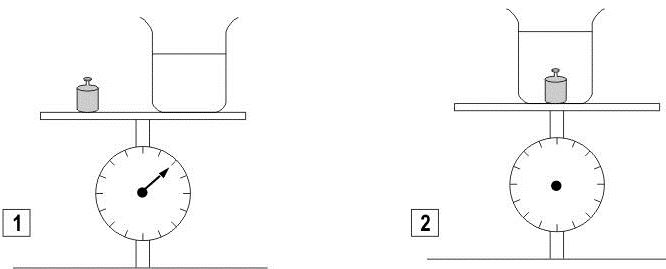
(a) less than the first reading
(b) more than the first reading
(c) same as the first reading
(d) It depends on the density of the weight.
Answer : C
Question. When we view a solid through a magnifying glass, what happens to the molecules of the solid?
(a) The molecules of the solid move apart and become large in size.
(b) The molecules of the solid remain at the same place and become large.
(c) The molecules of the solid move apart but stay the same size.
(d) The molecules of the solid do not change their size or position.
Answer : D
Question. The lowest and highest temperatures anywhere on the earth every year are around:
(a) 0°C and 100°C.
(b) -10°C and 40°C.
(c) -50°C and 50°C.
(d) -20°C and 60°C.
Answer : D
Question. In which of the test tubes shown below is rusting likely to take place fastest?
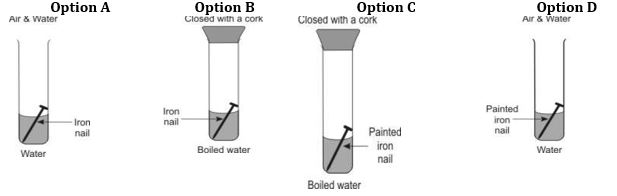
Answer : A
Question. In which of these test tubes would the seeds germinate?
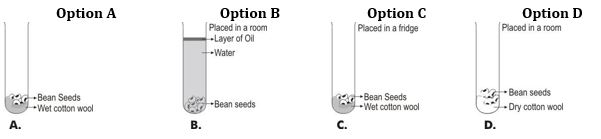
Answer : A
Question. Climbing plants use other plants or rocks or man-made structures for support. Which of these is a climber?
(a) Banana plant
(b) Sugarcane plant
(c) Grape plant
(d) Rice plant
Answer : C
Question. These trees need a lot of moisture and they normally grow up to a height of about 50 to 60 feet. The crown of deep green foliage is broad at the base but tapers to the top. Identify the habitat that these trees grow in.
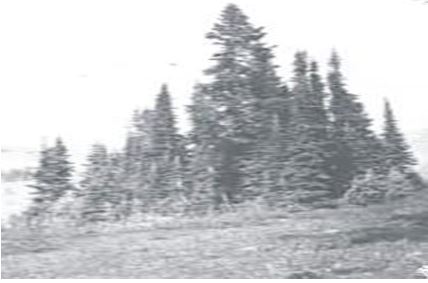
(a) Deserts
(b) Coastal areas
(c) Grasslands
(d) Mountains
Answer : D
Question. Shown in the picture is an example of a seed that gets dispersed through water. Identify the statement that is true about such seeds.
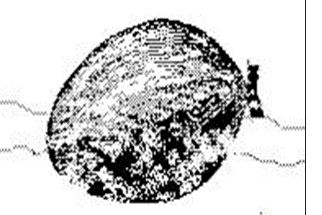
(a) They dry up so that they can explode and be carried away to far off places.
(b) They are dry and have thorns and spikes on them.
(c) They are dry, light and fluffy with either wings or hairs on them so that they can be carried away.
(d) They are light and have coverings that don't get soaked in water.
Answer : D
Question. Water plants can be of different types as shown here. Which of these is UNLIKELY to be a function of water plants?
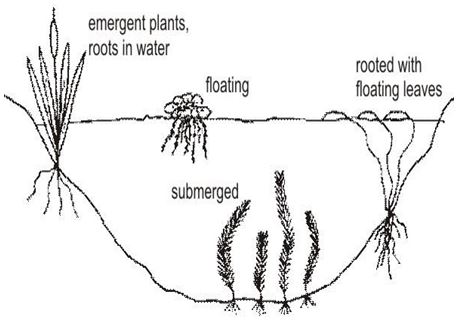
(a) They provide food to water animals
(b) They provide cover and protection to water animals
(c) They provide oxygen to water animals
(d) They provide carbon dioxide to water animals
Answer : D
Question. Rahul wants to find out whether plants need water to grow. He takes 2 pots with identical plants. What should he do for the next few days?
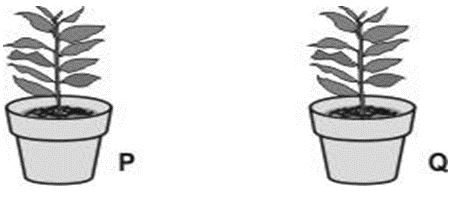
(a) Water P more and Q less.
(b) Water only P and not Q.
(c) Water both P and Q equally.
(d) Not water either P or Q.
Answer : B
Question. Many trees especially in colder climates lose their leaves during the winter. Then how do they make their food during this period?
(a) The other parts of the tree make food.
(b) The trees feed on nutrients and water from the soil.
(c) Such trees do not make food in winter and die.
(d) Such trees do not make food in winter but do not die.
Answer : B
Question. The correct equation of photosynthesis is:

Answer : A
Question. See the chart below and choose the statement that is true about ferns?
(a) Leaves of ferns are not green in colour.
(b) Ferns reproduce through seeds.
(c) Ferns are non-flowering plants and have green leaves.
(d) Ferns are flowering plants but do not have green leaves.
Answer : C
Question. Ashok took two identical potted plants and kept them in the garden. He watered one plant regularly, but did not water the second plant at all. He noted all the changes he observed in both the plants for 15 days.
Ashok conducted this activity to understand
(a) if plants need sunlight to grow.
(b) if plants need water to grow.
(c) if the second plant needed water to grow.
(d) if plants need air to grow.
Answer : B
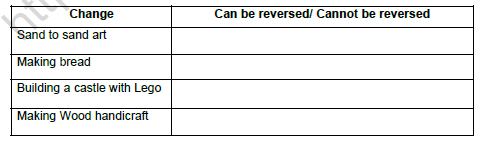
Please click on below link to download CBSE Class 6 Science Changes around us Worksheet Set B
Free study material for Science
Chapter 06 Changes Around Us Practice Sheet and Solutions for Class 6 Science
Chapter Practice Questions for Class 6 Science
Explore reliable practice questions for Chapter 06 Changes Around Us tailored for Class 6 Science learners. Use these structured worksheets to evaluate preparedness and strengthen problem-solving skills.
Expert Practice Material for Class 6 Science
Cross-reference your completed exercises with comprehensive NCERT solutions for Class 6 Science to ensure absolute clarity across all sub-topics in this chapter.
Complete Your Chapter Revision
Explore our broader library of printable assignments, chapter notes, and mock tests designed to support continuous revision and secure higher marks in CBSE assessments.
FAQs
You can download the teacher-verified PDF for CBSE Class 6 Science Changes around us Worksheet Set 02 from StudiesToday.com. These practice sheets for Class 6 Science are designed as per the latest CBSE academic session.
Yes, our CBSE Class 6 Science Changes around us Worksheet Set 02 includes a variety of questions like Case-based studies, Assertion-Reasoning, and MCQs as per the 50% competency-based weightage in the latest curriculum for Class 6.
Yes, we have provided detailed solutions for CBSE Class 6 Science Changes around us Worksheet Set 02 to help Class 6 and follow the official CBSE marking scheme.
Daily practice with these Science worksheets helps in identifying understanding gaps. It also improves question solving speed and ensures that Class 6 students get more marks in CBSE exams.
All our Class 6 Science practice test papers and worksheets are available for free download in mobile-friendly PDF format. You can access CBSE Class 6 Science Changes around us Worksheet Set 02 without any registration.