

Chapter-wise Worksheets for Class 7 Science: Chapter 10 Respiration in Organisms
Review targeted academic worksheets with the CBSE Class 7 Science Respiration In Organisms Worksheet. Built according to official educational standards for the 2026-27 term, these downloadable Class 7 Science resources support effective daily practice and detailed self-evaluation for Chapter 10 Respiration in Organisms.
Practice Class 7 Science Worksheets: Chapter 10 Respiration in Organisms
Navigate directly to the solved Science worksheets using the digital viewer below. Each practice set includes detailed step-by-step solutions, allowing students to instantly cross-check their work and identify areas requiring further revision.
ACTIVITY 1- Do you know that how long can you hold breath.
ACTIVITY 2- To count your normal rate of breathing, breath in and breath out normally.
ACTIVITY 3- Let us perform an activity to know the mechanism of breathing.
ACTIVITY 4- What do we breath out?
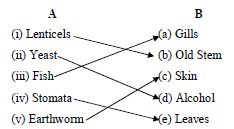
Ans.(d) Skin
Ans.(b) Energy production
Ans.(c) Spiracles
Ans.(b) Lenticels
Ans.(c) Lactic acid
5- Very Short Answer Type Questions:
More question-
Answer the following questions
Q.1 Why do we get relief from cramps after a hot bath?
_______________________________________________
_______________________________________________
_______________________________________________
_______________________________________________
Q.2 What is a diaphragm ?
_______________________________________________
_______________________________________________
_______________________________________________
_______________________________________________
Q.3 Multiple choice questions
a. Cockroach respires through
(i) lungs
(ii) spiracles
(iii) tracheae
(iv) skin
b. Breathing is a part of the process
(i) Respiration
(ii) Digestion
(iii) Exhalation
(iv) Inhalation
Q.4 Why does an athlete breathe faster and deeper than usual after finishing the race.
Q.5 What are gills ?
Q.6 Why do we respire? Explain
Q1 Name the following:-
a) Inside the cells the breaking of food into water and carbon di oxide
b) Cockroach breathe by these structures
c) In fishes these are the breathing structures.
d) The products formed as a result of glucose breakdown
e) The type of respiration taking place in our muscles.
f) A large muscular sheet that forms the floor of the chest cavity
Q2 Fill in the blanks:-
i) If the food is broken with the help of oxygen , it is called as ------------.
ii) In earthworm exchange of gases takes place through----------
iii) A cell is the smallest ------- and ----------- unit.
iv) during breathing ----------- and ------------ take place alternately.
v) Leaves have tiny pores called ----------.
Q3 Why do all organisms respire?
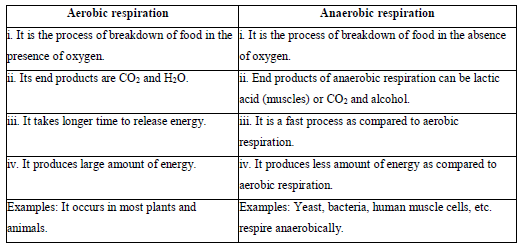
Q4 What is the difference between aerobic and anaerobic respiration .Write equations for both.
Q5 Why are yeasts used to make wine and bear?
Q6 Why do we get muscle cramps after heavy exercise?
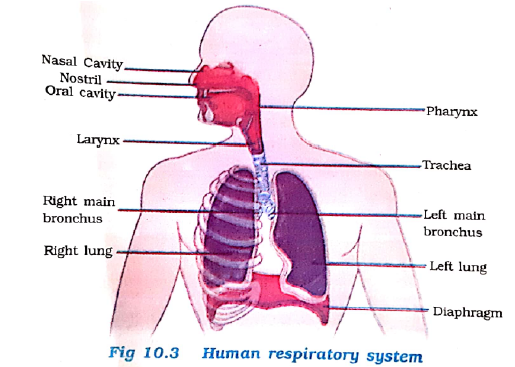
Q7 Draw and label a neat diagram of human respiratory system.
Q8 What would happen if a potted plant is over watered
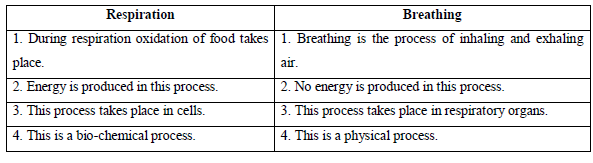
Q9.How is respiration different from breathing?
Q 10 Aman is a talkative boy and keeps on talking even while eating food . His father dislikes this habit and asked him not to do so while eating . Can you explain the reason behind such an advice. What values are inculcated in Aman by his father
I. Fill in the blanks:
1. Breathing is a part of _________________.
2. Breathing involves the movement of the ___________ and ______________.
3. The food has ____________ which is released during respiration.
4. The accumulation of ___________ causes muscle cramps.
5. Yeast can survive in absence of oxygen, they are called ___________.
6. The taking in of air rich in oxygen into the body is called ____________.
7. _____________is the food which is broken down in respiration to release energy.
II. Write true or false:
1. Cellular respiration takes place in all the cells of living organisms.
2. All living organisms respire to get energy from food.
3. Our muscle cells do anaerobic respiration only when there is temporary deficiency of oxygen.
4. Breathing involves the movement of the diaphragm and the rib cage.
5. Whales and dolphins have gills for breathing.
6. Gills are projections of the skin.
7. The percentage of carbon dioxide is higher in inhaled air in comparision to exhaled air.
8. We often feel hungry after a physical exercise.
9. Increased physical activity reduces the rate of breathing.
10. Elephants, snakes and birds have lungs for breathing
III. Define the following:
1. Breathing .
2. Cellular respiration.
IV. Name the following:
1. Tiny pores on the surface of leaves for exchange of gases.
2. An organism with tracheal system.
3. Skeletal structures surrounding the chest cavity.
4. An aerobic organism .
5. The breathing organ of earthworm .
6. The openings through which we inhale.
7. The anaerobic organism used in production of beer and wine.
V. Answer the following :
1. Why do all animals respire? -2marks.
2. Describe the mechanism of breathing in humans. -5marks.
3. Describe the process of respiration in cockroach. -5marks.
VI. Draw and label:
1. The human respiratory system.
Write define from your book-
Short Question/Answers-
Question 1: What is 'oxidation'?
Answer : Oxidation is the breakdown of food (glucose) into carbon dioxide and water to release energy in the presence of oxygen.
Question 2: Why should we not overwater potted plants?
Answer : We should not over-water potted plants because water will replace the air present in the soil and roots won't be able to breathe.
Question 3: What do you mean by the 'stomatal apparatus'?
Answer : Stomatal apparatus refers to the stomata along with its nearby guard cells and other associated cells.
Question 4: What are the main organs of the respiratory system?
Answer : The main organs of the human respiratory system are nostrils, trachea, bronchi and lungs
Free study material for Science
CBSE Class 7 Science Worksheets for Chapter 10 Respiration in Organisms
Mastering Chapter 10 Respiration in Organisms with Printable Worksheets
Explore reliable practice questions for Chapter 10 Respiration in Organisms tailored for Class 7 Science learners. Use these structured worksheets to evaluate exam preparedness and strengthen problem-solving skills throughout the 2026 academic session.
Verified Solutions and NCERT Alignment
Each worksheet draws directly from authorized standard textbooks to maintain academic accuracy. Evaluating your finished exercises against expert-verified solutions helps master the formal presentation standards expected in school evaluations.
Additional Study Resources for Class 7 Science
Follow up your worksheet practice by attempting the interactive online MCQ tests for Chapter 10 Respiration in Organisms to evaluate your execution speed. All printable assignments and revision sheets on our platform are updated for the 2026 session and available free of charge.
FAQs
You can download the latest chapter-wise printable worksheets for Class 7 Science Chapter 10 Respiration in Organisms for free from StudiesToday.com. These have been made as per the latest CBSE curriculum for this academic year.
Yes, Class 7 Science worksheets for Chapter 10 Respiration in Organisms focus on activity-based learning and also competency-style questions. This helps students to apply theoretical knowledge to practical scenarios.
Yes, we have provided solved worksheets for Class 7 Science Chapter 10 Respiration in Organisms to help students verify their answers instantly.
Yes, our Class 7 Science test sheets are mobile-friendly PDFs and can be printed by teachers for classroom.
For Chapter 10 Respiration in Organisms, regular practice with our worksheets will improve question-handling speed and help students understand all technical terms and diagrams.