

Download Class 3 English Practice Worksheets
Explore structured practice materials through the CBSE Class 3 English Pronouns Worksheet. Tailored for Class 3 learners, utilizing these English worksheets ensures thorough preparation and strengthens problem-solving accuracy before final school evaluations.
Access Pronouns Practice Papers and Solutions
Access the complete worksheet PDF for Class 3 English below. Regular practice with these targeted academic tasks builds familiarity with standard question patterns and helps secure higher marks in final school examinations.
Pronouns
Pronouns: Pronouns are words which can be used in the place of nouns and noun expressions.
Some pronouns are I, you, he, she, it, we, they, them, us etc.
Q1. Underline the pronouns in the following sentences:
a) My name is Surya. I study well. The teacher likes me.
b) Your name is Alex. You are my friend.
c) I love my mom. She is a teacher. Her students admire her.
d) My father is very tall. He is a doctor. His patients like him very much.
e) Mona has a dog. It keeps running after cat all the time.
f) Alex, Raju and I are friends. We are good boys. The teacher likes us.
g) Sam can you help me.
Q2. Fill in the blanks with pronouns given in the brackets.
a) Arif is my friend. _________ (Arif) sings well.__________(Arif’s) pet name is lucky.
b) My sister’s name is Priya. __________(Priya) is the class leader. All the students like __________.(Priya).
c) I have a cat.______________(the cat) is very naughty.
d) Kabir is a very good player.____________(Kabir) is my brother.I play with ___________.(my brother)
e) _________(Ram and me) were late, so we had to wait for them.
f) A cat and a dog live in the house. ______________(a cat and a dog) are Cathy’s pets.
g) Lisa likes cats. _____________(Lisa) feeds _____________.(the cats)
Subject Pronouns and Verb “ To Be “
A) Fill in the blanks using “HE, SHE, IT, WE, THEY”:
cat and horse………… Mary…………… Tom ……………
Jack and I ………….. books …………. sister ………….
You and Dave ……….. plane …………. sunshine ……….
cheese ……………… cactus ………… parents …………..
Pamela ……………… news ................ scissors ...................
geese ……………. flowers ………… piano …………….
school …………. daughter ………… milk ……………
children ……….. sugar ……….. feet …………..
bicycle ………… Ann and Kate ………. tennis ………….
son ……………. mice …………… sky …………….
shop ……………. buses ………….. papers …………
Mr. Green …………… brother-in-law ………….. picture ………..
friendship …………. dolphin ………… The Riggs family ………..
B) Fill in the blanks using “AM, IS, ARE, AM NOT, ISN’T, AREN’T”:
1. It ……………. an onion. (+)
11. Đzmir ………….. a city. (+)
2. Jasmine ……….. a student. (-)
12. He ……… a postman. (+)
3. We ……….friends. (+)
13. It ………. nine o’clock. (+)
4. I ………. hungry. (-) 14. Manhattan …………. an island. (-)
5. Mark ............. 20 years old. (+)
15. Mr. Richards …… a lawyer. (+)
6. A bee ……….. a big insect. (-)
16. I ………..ill. I …………. happy. (+ / -)
7. Newsweek ………… a magazine. (+)
17. London ……….. a big city. (+)
8. I …………. a professional football player. (-)
18. Dave and Adrian ………… sisters. They …….. brothers. (- / +)
9. I know you. You ……. in my class. (+)
19. New York ………. near to New Jersey. (+)
10.Cows ……… insects. They ……. mammals. (- / +)
20. Susan and I ……….. teachers. We ……….. students. (- / +)
C) Fill in the blanks using “AM, IS, ARE, AM NOT, ISN’T, AREN’T”:
1. Germany, England, and Spain ………… cities.
2. A lemon ……….. sweet. It …….. sour.
3. Copper ……….. cheap. Diamonds ………… expensive.
4. Airplanes …….. slow. They ………. fast.
5. Ice cream and candy …….. sweet.
6. Today ……… cloudy. It …….. bright.
7. My brother ……… married. He …… single.
8. I ……… from Turkey. I …….. from Canada.
9. Maths ……… hard. It ……….. easy.
10. Mariah … a beautiful girl. She ……… ugly.
D) Rewrite the sentences by using “ IS, ISN’T, AM, AM NOT”:
1. London aren’t a country. …….London isn’t a country……………..
2. The United States aren’t a city. …………………………………………….
3. An elephant am not a small animal. …………………………………………….
4. English and Turkish isn’t sister languages. …………………………………………….
5. Mercedes aren’t a bike. …………………………………………….
6. Is I a student ? …………………………………………….
7. Mrs. Stuart aren’t a poor woman. …………………………………………….
8. Cigarettes isn’t good for people. …………………………………………..
9. The North Pole am not hot. …………………………………………..
10. Simon are from United Kingdom. …………………………………………..
E) Complete this postcard by using “AM, IS, ARE, AM NOT , ISN’T,AREN’T”:
Hello!
My name ….is….. Jack, and this ….is… Sue.
She ……. my sister. Sue …….. twelve years old and I …… sixteen.
We ……. adults. We …….. students. We ……… Canadians. We ………….
Americans.
We ……….. from Chicago. Chicago ……….. in the United States.
Best regards,
Jack
F) Write short sentences:
Example:
(Chris, 9, student, short, not Chinese)
…..Chris is nine years old. He is a student. He is short. He isn’t Chinese…….. .
1. (Leonard and Mike, 25, firemen, tall, American)
2. (Patty and Brian, 12, not electrician, short, not Turkish children)
3. (Natalie and I, nurse, not tall, French)
4. (Mark, 19, accountant, short, British)
5. (Cengiz, 23, lieutenant, not blonde, Turkish)
G) Build up sentences:
1. Mike / drummer (-) …..Mike isn’t a drummer…………...................
2. Charlie and Chris / policemen(+) …………………………………………………..
3. Danny and Rick / singers (-) ………………………………………………….
4. Salem and Lucky / puppies (+) ………………………………………………….
5. Rome / London / cities (+) ………………………………………………….
H) Choose the best answer:
1. Maggie and Carol …………… good friends.
a) am
b) are
c) is
d) isn’t
2. Sue………. a science teacher.
a) are not
b) is
c) are
d) am
3. Mark Steven ………….. a student at Kennedy High School. It …….. an old school.
a) am / is
b) are / is
c) is / am
d) is / is
4. Margarita ……….. from Spain. I ………….. from Turkey.
a) is / am
b) are / is
c) am / is
d) is / are
5. You and I ……………… at the same age.
a) am isn’t
c) are
d) is
I) Change the sentences into questions:
Example: I am an engineer. ……Am I an engineer?……….
1. You are ill. …………………………………………………..
2. Linda is a pretty girl. …………………………………………………..
3. Belinda is a singer. …………………………………………………..
4. Nick is an actor. …………………………………………………..
5. We are good friends. …………………………………………………..
6. He is an officer. …………………………………………………
7. It is an eraser. …………………………………………………
8. You and Eddie are partners. …………………………………………………
9. Rosie is angry. …………………………………………………
10. Jack and I aren’t good swimmers.
K) Give long answers:
Example:
Are you a scientist? ……… Yes, I am a scientist.………………
1. Are you a student? Yes, …………………………………………….
2. Is Tom in the park? No, ……………………………………………..
3. Is it a poetry book? Yes, …………………………………………….
4. Are Mary and John friends? Yes, …………………………………………….
5. Am I an executive ? No, ……………………………………………..
6. Is Thomas fifteen years old? Yes, …………………………………………….
7. Are your earrings expensive? No, ……………………………………………..
8. Is ice cream hot ? No, ……………………………………………..
9. Are lemons yellow and sour? Yes,……………………………………………..
10. Are Andy and Jack girls? No, ……………………………………………..
L) Build up questions and give answers:
Example: engineer / William Is William an engineer? Yes, he is an engineer. (+)
1. good rider / Steve …………………….…… ? ….…………….…………(+)
2. lazy students / Mark and Lucy …………………………..? …………………..………(- )
3. soup / hot ……..………………….…? ……......…………………(+)
4. the baby / asleep ……………………………? ………………..………... (- )
5. basketball team / L.A. Lakers ……………………………? ...………………………...(+)
M) Answer these questions:
1. Are trees green or gray? ………...……………………………………
2. Are clouds brown or white?
3. Is it an English or French dictionary? (French) ……………………………………………
4. Is it a sports car or a classic car? (classic) ……………………………………….……..
5. Is Egypt in Europe or in Africa? ……………………………………….……..
6. Is it a butterfly or a bee? (butterfly) ……………………………………….……..
7. Are they skirts or pullovers? (pullovers) ……………………………………….……..
8. Is he an outlaw or a guardian? (outlaw) ……………………………………….……..
9. Is your father young or old? (old) ……………………………………………...
10. Are we army officers or police officers? (army) …………………………………………..
N) Read the passage and answer the questions:
Sophia: I am Sophia Berger. Are you Jordan Turner?
Jordan: Yes, I am. Are you English?
Sophia: Hector is. I am French. Are you from the United States?
Jordan: Yes, I am. Hector, are you from London?
Hector: Yes, I am. Are you from California?
Jordan: No, I am from New York City. Is London a big city?
Hector: Yes, it is a big city. Sophia, are you from Lyon?
Sophia: Yes, I am from Lyon.
Hector: Is Lyon near Florence?
Sophia: No, it isn’t. Florence is in Italy.
Hector: Oh, isn’t it in France? I am a real fool.
Jordan: No, Hector. Of course you are not a fool! Are you and Sophia students?
Hector: I am a student. She is an actress in France. We are tourists in the United States.
Sophia: Are you a student, Jordan?
Jordan: No, I am not a student. I’m a lawyer. I am on a holiday.
* Give long answers. If the answer is negative, then give the right answer:
Example: Is Sophia from Paris? …No, she isn’t…… She is from Lyon…………….
1. Is Jordan from California?……………………………………………………………..
2. Is Florence in Italy? ……………………………………………………………..
3. Are Sophia and Hector students?
………………………………………………………………………………………….
4. Is Hector from Manchester?
………………………………………………………………………………………….
5. Is Sophia a dancer?…….. …………………………………………………………….
Write True or False:
1. …..T… Hector is English. 6. …F Sophia is from the United States.
2. ……… Hector isn’t from Manchester. 7. … … Jordan is from New York City.
3. ……… London is not a big city. 8. …….. Florence is in Italy.
4. ……… Hector is a student. 9. …….. Jordan is a teacher.
5. ……… Sophia is an actress in London. 10. ……. Sophia and Hector are tourists.
Real Life Example
• To decide whether to use the subject or object pronoun after the words ‘than’ or ‘as’, we mentally complete the sentence.
LEARNING OBJECTIVES
This lesson will help you to:—
→ use pronouns efficiently.
→ know about and use the two kinds of pronouns by knowing the difference between them.
QUICK CONCEPT REVIEW
Generally , pronouns (pro + noun) stand for or refer to a noun, an individual or individuals or thing whose identity ismade clear earlier in the sentence.
Pronouns are the words which replace noun.
For example
Paras and Amir ride the bus together to school. They also study together.
In the above sentence, “they” is a pronoun as it is used in place of individuals (Paras and Amir). Other examples can be she, it, he, someone, who etc. Here are some more examples.
Instead of: Leena is a good athlete.
She is a good athlete. (The pronoun she replaces Leena.)
Instead of: The beans and tomatoes are fresh-picked.
They are fresh-picked. (The pronoun they replaces beans and tomatoes.)
POEM
I am hungry.
You are hungry.
He is hungry.
She is hungry.
We are hungry.
They are hungry.
Everybody is hungry.
I am thirsty.
You are thirsty.
He is thirsty.
She is thirsty.
We are thirsty.
They are thirsty.
Everybody is thirsty.
I am happy.
You are happy.
He is happy.
She is happy.
We are happy.
They are happy.
Everybody is happy.
PRONOUN
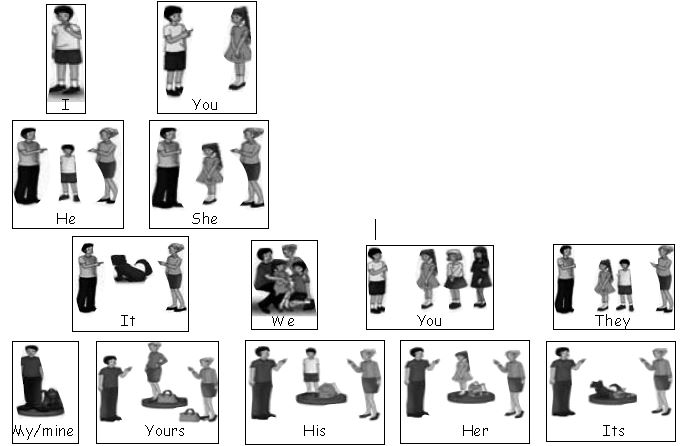
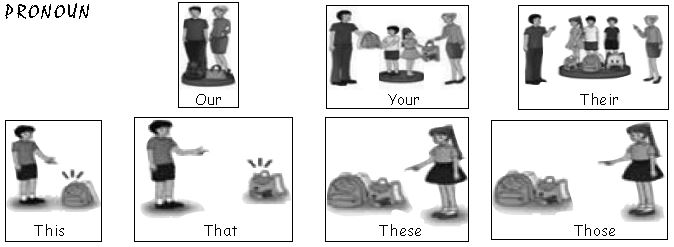
| S. No. | Name | Singular | Plural |
| 1 | First person (The person who is speaking) | I, me, mine | We, us, ours |
| 2 | second person (used for one who is spoken to) | You, yours | You, yours |
| 3 | Third person (used for one who is spoken about) | He, him (masculine) she, hers (feminine) | They, them theirs |
Remember
→ Use a pronoun instead of noun.
→ The pronoun you use must follow its noun in number and gender. Example:
Ram is going to market. He has to get mangoes.
(b) Reflexive pronouns: When we add ‘self’ or ‘selves’ to personal pronoun they become Reflexive pronouns.
‘Self’ is added to ‘my, your, her and him’ and ‘selves’ to ‘our, your and them’.
Example: You must do your homework ‘yourself’.
They went together themselves.
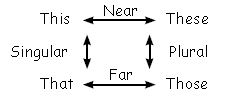
(c) Demonstrative pronouns: These point to the object they belong to.
Example: This is a book.
That is a calendar.
These are books.
Those are calendars.
(d) Interrogative pronouns: To ask questions, the words ‘who, what, which, whose, whom’ are used. All of them are Interrogative Pronouns. They are used to begin a question. ‘who, whom, whose’ are used for persons. ‘which’ is used for persons as well as things.
‘What’ is used only for things.
Examples: Who are you ?
What is your name ?
Which is your book ?
Whom does this glass belong to ?
The other way to classify pronouns is:
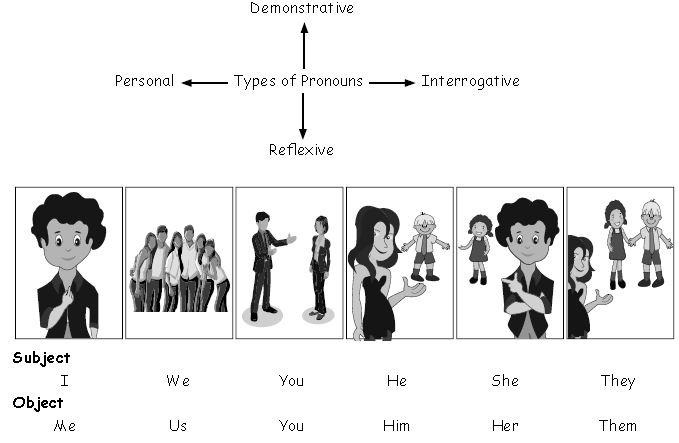
Choose the correct pronoun to fill the blank.
Question. Be sure that everyone brings ____________ own book.
(a) his or her
(b) their
(c) it
(d) them
Answer : B
Question. Jagat and ____________ have been close friends for many years.
(a) her
(b) I
(c) him
(d) rani
Answer : B
Question. Did you see Deepak and ____________ at the game?
(a) she
(b) her
(c) it
(d) them
Answer : B
Question. Will you let ____________ , watch T.V?
(a) I
(b) they
(c) we
(d) me
Answer : D
Question. Each person in the room turned ____________ head to the front when the teacher entered.
(a) their
(b) them
(c) his
(d) her
Answer : A
Question. We know that we can count on Jagan, Anna, and ____________ .
(a) her
(b) she
(c) them
(d) they
Answer : A
Question. Meena explained that ____________ and her sister had often dined at that restaurant.
(a) her
(b) she
(c) it
(d) he
Answer : B
Question. Most of the workers were wearing ____________ hats.
(a) his or her
(b) their
(c) his
(d) them
Answer : B
Question. Its always best for students to ask questions when ____________ don’t understand a problem.
(a) she
(b) they
(c) he
(d) we
Answer : B
Question. Please don’t tell about _________.
(a) her
(b) she
(c) you
(d) I
Answer : A
Choose the correct reflexive pronoun.
Question. I was present there _________ .
(a) ourself
(b) ourselves
(c) myself
(d) myselves
Answer : C
Question. We enjoyed _________ a lot.
(a) ourself
(b) ourselves
(c) myself
(d) themselves
Answer : B
Question. They __________ called him to the party.
(a) ourself
(b) himself
(c) ourselves
(d) themselves
Answer : D
Question. The headmaster _________ said so.
(a) himself
(b) itself
(c) myself
(d) ourselves
Answer : A
Question. She _________ told the truth.
(a) himself
(b) herself
(c) herselves
(d) myself
Answer : B
Choose the correct demonstrative pronoun.
Question.

(a) This
(b) That
(c) These
(d) Those
Answer : A
Question.
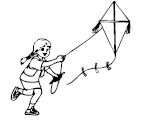
(a) This
(b) That
(c) These
(d) Those
Answer : B
Choose the correct interrogative pronoun.
Question. bakes cakes ?
(a) Who
(b) What
(c) Which
(d) Whose
Answer : A
Question. are there books ?
(a) Who
(b) What
(c) Whose
(d) Which
Answer : C
Question. is this child ?
(a) Who
(b) What
(c) Whose
(d) Which
Answer : A
Look at the pictures and fi ll in the blanks by choosing the correct option.
Question.
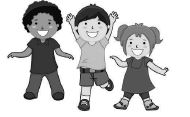
__________ are smiling.
(a) Its
(b) They
(c) Hers
(d) It
Answer : B
Question.

___________ has come.
(a) He
(b) She
(c) Her
(d) It
Answer : A
Question.

__________ is a train.
(a) It
(b) He
(c) She
(d) They
Answer : A
Question.

____________ are children.
(a) It
(b) Her
(c) Its
(d) They
Answer : D
Question.
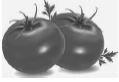
__________ are very juicy.
(a) Its
(b) You
(c) They
(d) It
Answer : C
Question. In the grid given below, how many pronouns can you find?
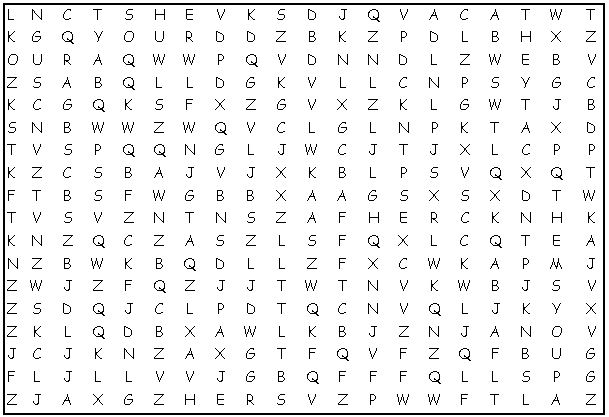
(a) 17
(b) 10
(c) 18
(d) 15
Answer : C (I, You he, she, it, we, they, me, her, him, us, them, his, hers, its, your, our and their)
Question. Match the following
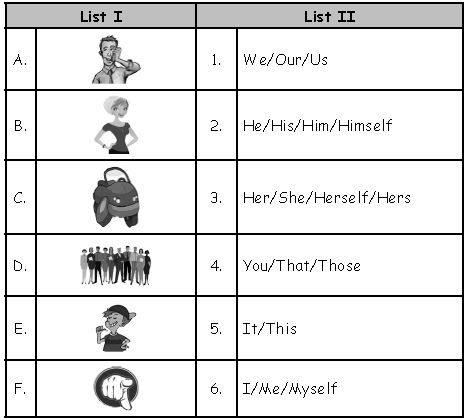
A B C D E F
(a) 3 2 5 1 4 6
(b) 2 3 5 1 6 4
(c) 2 3 1 5 6 4
(d) 2 3 1 5 4 6
Answer : B
Question. Consider the following statements and choose the correct option.
Statement A: A subjective pronoun does not act as the subject of a sentence.
Statement B: An objective pronoun acts as the object of a sentence.
(a) Statement A is true B is false.
(b) Statement B is true A is false.
(c) Both the statements are true
(d) Both the statements are false.
Answer : B
Question. Consider the following sentences and choose the correct option.
A. I thought himself was going for a movie today.
B. I think I forgot to lock the door.
C. He of them got good grades in exams.
D. He is my brother.
(a) TFTF
(b) TTFF
(c) FTFT
(d) FFTT
Answer : C
Question. Consider the following sentences and choose the correct option.
A. Are you going to the office today?
B. At the store, the cashier gave herself some change.
C. She made dinner for the whole family
D. I bounced the ball and Jack ran after it.
(a) TFTT
(b) TTFF
(c) TFTF
(d) FTFT
Answer : A
Question. Match the following:
| List I | List II |
| A. Krish and I | 1. He |
| B. Arjun | 2. She |
| C. Arya | 3. It |
| D. The big truck | 4. We |
A B C D
(a) 1 2 3 4
(b) 4 3 2 1
(c) 3 4 1 2
(d) 4 1 2 3
Answer : D
Question. Match the following while replacing the underlined word from List I.
| List I | List II |
| A. Ravi loves to sing | 1. Her |
| B. The concert will be tomorrow evening | 2. Them |
| C. Freddy will go with Joseph’s parents | 3. He |
| D. Anmol will sing a duet with Arya | 4. It |
A B C D
(a) 3 4 2 1
(b) 1 2 3 4
(c) 4 3 2 1
(d) 2 1 4 3
Answer : A
Question. From the list below find out how many pronouns are there ?
He, Ravi, Truck, We, They, Joseph, Garden, She, it
(a) 5
(b) 6
(c) 4
(d) 7
Answer : A
Read the questions given below and choose the correct option.
The traveller arrived at the door. The traveller knocked on the door, but there was no answer, so the traveller knocked again. Meanwhile, the traveller’s horse was grazing. The traveller’s horse seemed untroubled.
Question. How many nouns can you replace in the above passage?
(a) 4
(b) 5
(c) 6
(d) 2
Answer : B
Read the passage given below and choose the correct pronoun for the blank from the options given below. (2015)
(The girl) ___(35)___ listened to music after lunch. (The boys) ___(36)___ played games after dinner. (The cat) ___(37)___ climbed on the kitchen table. (The mall) ___(38)___ was filled with hundreds of people. (My mom) ___(39)___ took us to beach.
Question.
(a) he
(b) she
(c) it
(d) they
Answer : B
Question.
(a) he
(b) she
(c) it
(d) they
Answer : D
Question.
(a) he
(b) she
(c) it
(d) they
Answer : C
Question.
(a) he
(b) she
(c) it
(d) they
Answer : C
Question.
(a) he
(b) she
(c) it
(d) they
Answer : B
Question. Match the following and choose the correct option.
| List I | List II |
| A. Sam and I | 1. They |
| B. Raj and Jay | 2. It |
| C. The big truck | 3. We |
| D. Roshni | 4. She |
A B C D
(a) 3 1 2 4
(b) 1 2 3 4
(c) 4 3 2 1
(d) 2 4 1 2
Answer : A
1. Underline all the pronouns in this poem.
I think mice are rather nice ;
Their tails are long , their faces small ;
They haven’t any chins at all .
Their ears are pink , their teeth are white,
They run about the house at night;
They nibble things they shouldn’t touch,
and ,no one seems to like them much,
but , I think mice are rather nice.
2. Fill in the blanks with the correct pronouns from the brackets .
1) Please give ______________ that book .(I / me)
2) Did she see ______________? (us / we )
3 ) I took the papers from ____________. ( they / them )
4) My sister and ______ went there .(I / me )
5) What did __________ say about the movie ? ( they / them )
6) They said _______ have to wear the uniform .(us / we )
7) What do ________ want from the cupboard ?( you / us )
8) Tell ________ what happened at the picnic . (I / me )
9) The spaceship took _________ both . ( it / them )
10) Antartica is a continent . _______ is a very cold continent .( it/ his)
11) _________ hasn’t been coming to school for the last three days .(she/her )
12)The children were happy to see _________. ( she/ them )
13) If you want to become a writer __________ should read a lot .(she/you )
TOPIC- ARTICLES (A, AN, THE)
An article is a word that comes before a noun. A, AN, THE are known as articles
• We use “A” before words that begin with a consonant sound.
Eg. A pen, A car, A tree, A book etc.
• We use “An” before words that begin with a vowel.
Eg. An apple, An orange, An eraser, An egg etc.
• We use “An” before the words with a vowel sound.
Eg. An honest man, An hour, An honorable guest etc.
• We do not use “An” with some words that start with a vowel but have a consonant sound.
eg. A European, A unicorn, A uniform etc.
• We use “The” before words when we mention them the second time.
Eg. We saw a lion in the zoo. The lion was sleeping.
• We use “The” before the names of rivers, mountains, newspapers, holy books, monuments etc.
Eg. The Himalayas, The Times of India, The Ramayana, The Taj Mahal etc.
• We use “The” before the things that are special and are only one in number.
Eg. The sun, The moon, The Earth etc.
✓ We write “a” and “an” with singular words only. We write “the” with both both singular and plural words.
✓ “A” and “An” are indefinite articles but “The” is a definite article.
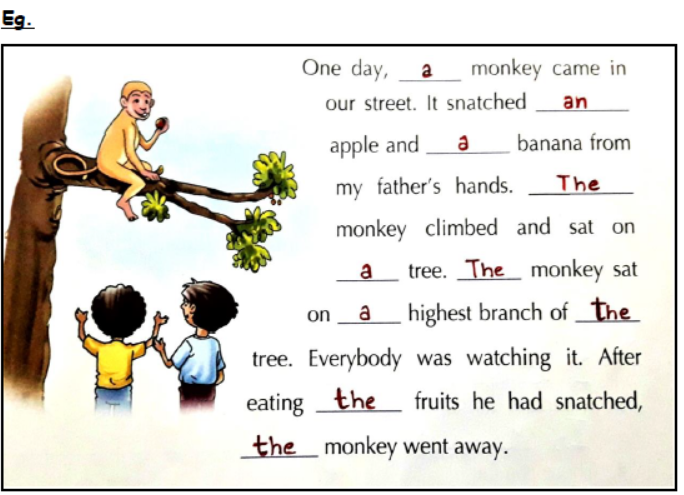
1. Satinder worked on his farm. Satinder drove the tractor.
___________________________________________________________
2. Shiela was busy. Sheila cleaned the house.
____________________________________________________________
3. Lata baked a cake . Lata and I ate the cake .
____________________________________________________________
4. Maliha bought a set of crayons . Maliha used crayons to colour the drawings.
_____________________________________________________________
5. Krishna is a plumber . Krishna repairs taps and pipes.
________________________________________________________________
1) I’m -__________________
4) It’s - _____________________
6) You’ll - ____________________
7 ) It’ll - _____________________
CBSE Class 3 English Worksheets for Pronouns
Practice Exercises for Class 3 English Pronouns
Access structured practice worksheets for Pronouns aligned with the 2026 CBSE curriculum. These downloadable exercises for Class 3 English help students build accuracy and reinforce core concepts for upcoming school tests.
Step-by-Step Solutions and Practice Guidelines
Built using official NCERT guidelines for Class 3 English, these practice sheets provide reliable academic support. Cross-reference your completed work with our detailed solutions to learn standard answer-writing formats for CBSE exams.
Enhance Speed with Online Practice
Consistent engagement with these exercises builds familiarity with recurring exam themes. If specific areas within Pronouns cause trouble, utilize our dedicated NCERT solutions for Class 3 English to clear up doubts immediately.
FAQs
You can download the latest chapter-wise printable worksheets for Class 3 English Pronouns for free from StudiesToday.com. These have been made as per the latest CBSE curriculum for this academic year.
Yes, Class 3 English worksheets for Pronouns focus on activity-based learning and also competency-style questions. This helps students to apply theoretical knowledge to practical scenarios.
Yes, we have provided solved worksheets for Class 3 English Pronouns to help students verify their answers instantly.
Yes, our Class 3 English test sheets are mobile-friendly PDFs and can be printed by teachers for classroom.
For Pronouns, regular practice with our worksheets will improve question-handling speed and help students understand all technical terms and diagrams.