

Science Concept Notes for Class 7: Chapter 06 Physical and Chemical Changes
Explore reliable concept summaries and revision materials through the CBSE Class 7 Science Physical And Chemical Changes Notes. Tailored for Class 7 learners, utilizing these notes for Science Chapter 06 Physical and Chemical Changes ensures thorough preparation and strengthens core academic definitions before final evaluations.
Download Chapter 06 Physical and Chemical Changes Revision Notes PDF
Access the complete concept summary PDF for Chapter 06 Physical and Chemical Changes below. Regular review of these targeted notes builds familiarity with complex Class 7 Science themes and helps secure higher marks in final school evaluations.
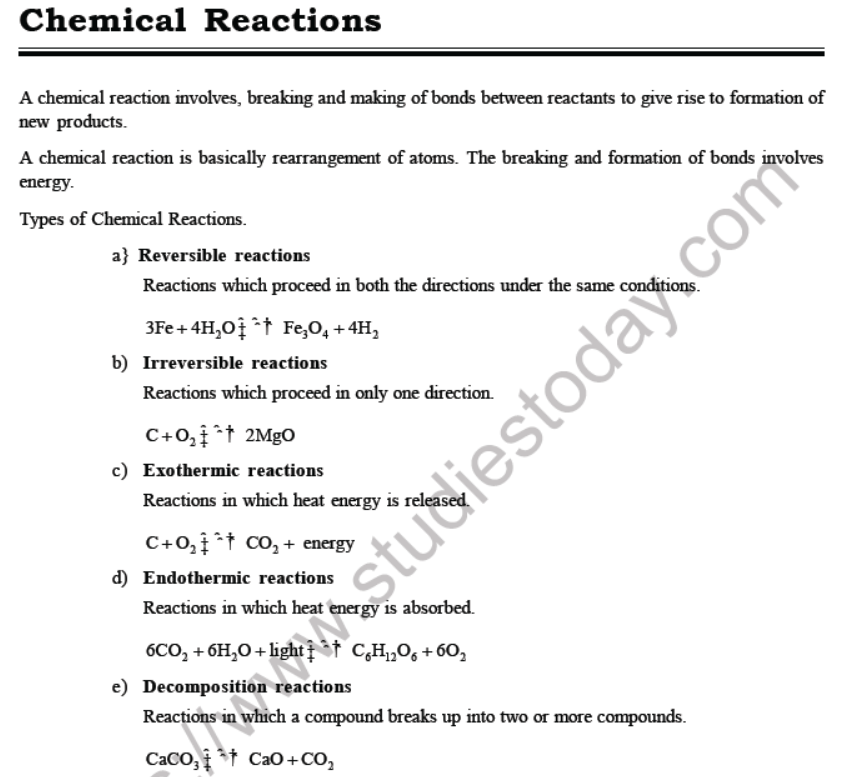

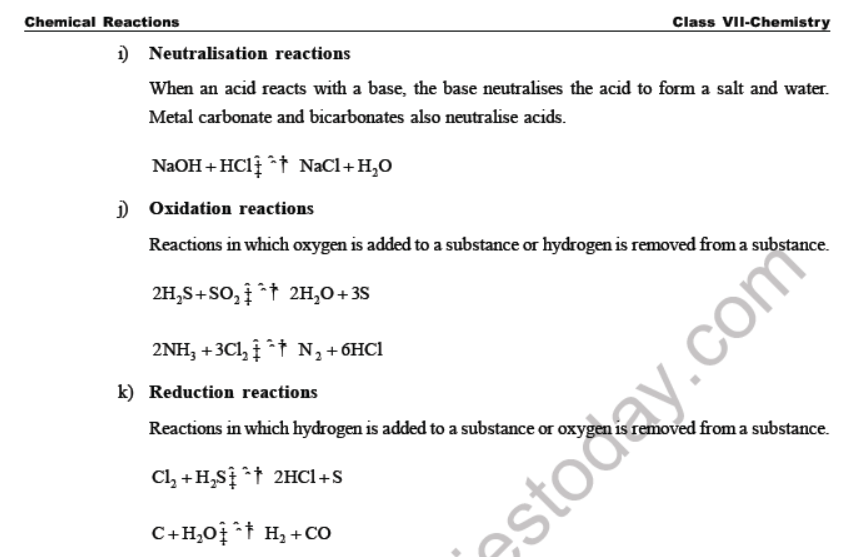
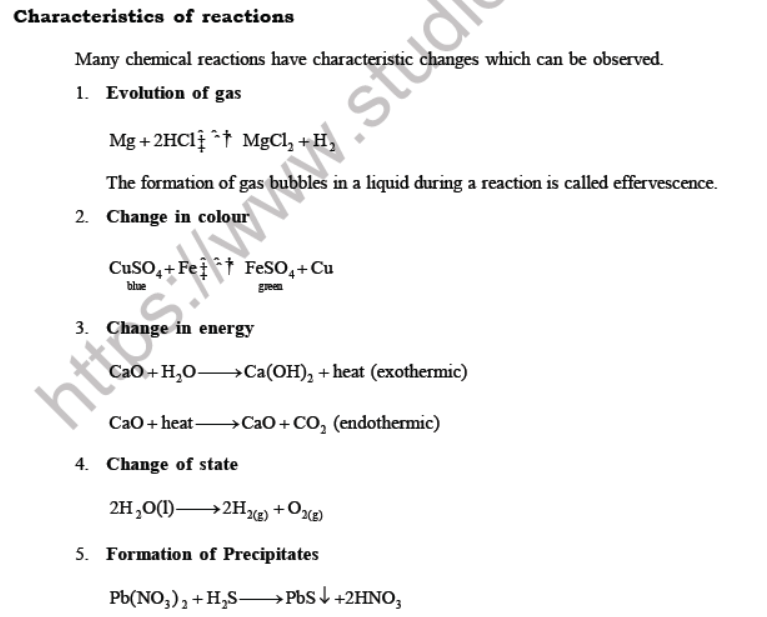
PHYSICAL AND CHEMICAL CHANGES
Q 1What are physical changes ?
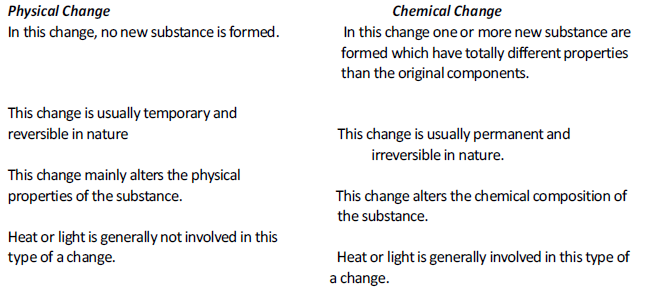
Ans.. Physical changes are those changes in which
1. No new substances are formed.
2. The change in physical state of a substance may take place but the properties of the substance remains the same as the original substance.
3. Physical changes are usually reversible.
4. Heat may or may not be evolved or absorbed during such a change
Q 2What are chemical changes?
Ans. Chemical changes are those changes in which
1. Two or more substances react and form a new product.
2. The new substances formed have properties different from the starting materials.
3. Chemical reactions are usually irreversible. The original substance cannot be obtained back easily.
4. Most chemical reactions occur with the involvement of heat or light i.e. either heat is evolved or absorbed.
Q3.What happens when Magnesium ribbon is burnt in presence of air ?
Ans. A magnesium ribbon burns with a dazzling white light and results in the formation of ash which is due to the formation of magnesium oxide.
Magnesium+ Oxygen → Magnesium Oxide
Q4 What happens when the ash obtained in the above case is dissolved in water?
Ans. Magnesium oxide when dissolved in water to form Magnesium hydroxide, another new Substance which turns red litmus solution blue.
Magnesium Oxide +Water → Magnesium hydroxide.
Q5Mention the indicators of a chemical change .
Ans. Chemical changes generally take place with one or more of the following indications:
1. Change of colour:
2. Formation of a precipitate:
3. Evolution of a gas, generation of sound:
4. Generation of characteristic smell:
5. Absorption or release of heat
Q6.Differentiate between physical and chemical changes ,
Ans.
Q7.Why does the colour of the copper sulphate solution change from blue to green when iron nail is added to it ?
Ans. The chemical reaction between copper sulphate and iron results in the displacement of copper from the compound. The change can be depicted as:
Copper sulphate (blue) + Iron → Iron sulphate (green) + Copper
Q8.Why do iron objects develop a reddish brown layer on their surface on exposure tomoist air?
Ans. This happens due to a chemical change as a new substance iron oxide is formed from metallic iron on exposure of iron tomoist air which is known as rusting.
Iron + Water (Moisture) + Oxygen → Iron oxide (Rust)
Q9. Mention two conditions required for the process of rusting to occur.
Ans. Two essential conditions required for the process of rusting to occur are :
PRESENCE OF MOISTURE
PRESENCE OF OXYGEN
Q10. What happens when Vinegar is added to Baking soda ?
Ans. On adding baking soda to vinegar a hissing sound is heard due to bubbling out of a gas
Vinegar + Baking soda → Carbon dioxide + Water + Other substances
(Acetic acid) (Sodium hydrogen carbonate)
Q11 What happens when the gas evolved in the above case is passed through lime water ?
ANS. The colourless gas, carbon dioxide which evolves during the reaction when passed through lime water turns it milky in appearance. The change can be represented as:
Calcium hydroxide (Lime water) + Carbon dioxide → Calcium carbonate (white) + Water
Q12 Define Galvanization.
Ans. Galvanization is a process in which iron objects arecoated with a layer of zinc by passing electric current which prevents rusting.
Q13 what is Crystallization?
Ans. Crystallization is a process of getting crystals of a pure substance from its solution
Q14.Why do exposed cut surfaces of fruits and vegetables turn brown?
Ans. Exposed cut surfaces of fruits and vegetables turn brown due to oxidation which is a chemical change.
Free study material for Science
Revision Notes and Key Concepts for Class 7 Science Chapter 06 Physical and Chemical Changes
Quick Revision Notes: Chapter 06 Physical and Chemical Changes (CBSE)
Review targeted chapter notes for Class 7 Science Chapter 06 Physical and Chemical Changes. Built according to official CBSE guidelines, these summaries highlight high-yield topics frequently tested in school evaluations.
Expert Study Material for Class 7 Science
Each chapter summary is structured around standard CBSE textbooks, allowing students to check their understanding and clarify complex ideas early in their revision.
Complete Your Chapter Revision
Explore our broader library of printable assignments, chapter notes, and mock tests designed to support continuous revision and secure higher marks in CBSE assessments.
FAQs
You can download the teacher prepared revision notes for CBSE Class 7 Science Physical And Chemical Changes Notes from StudiesToday.com. These notes are designed as per 2026-27 academic session to help Class 7 students get the best study material for Science.
Yes, our CBSE Class 7 Science Physical And Chemical Changes Notes include 50% competency-based questions with focus on core logic, keyword definitions, and the practical application of Science principles which is important for getting more marks in 2026 CBSE exams.
Yes, our CBSE Class 7 Science Physical And Chemical Changes Notes provide a detailed, topic wise breakdown of the chapter. Fundamental definitions, complex numerical formulas and all topics of CBSE syllabus in Class 7 is covered.
These notes for Science are organized into bullet points and easy-to-read charts. By using CBSE Class 7 Science Physical And Chemical Changes Notes, Class 7 students fast revise formulas, key definitions before the exams.
No, all study resources on StudiesToday, including CBSE Class 7 Science Physical And Chemical Changes Notes, are available for immediate free download. Class 7 Science study material is available in PDF and can be downloaded on mobile.