

Revision Notes for Class 12 Economics: Part A Microeconomics Chapter 05 Market Equilibrium
Review targeted revision notes for Class 12 Economics with the CBSE Class 12 Microeconomics Consumers Equilibrium Notes. Built according to official educational guidelines for the 2026-27 academic year, these downloadable summaries for Part A Microeconomics Chapter 05 Market Equilibrium support daily study and last-minute exam readiness.
Review Part A Microeconomics Chapter 05 Market Equilibrium for Class 12 Economics
Access the complete concept summary PDF for Part A Microeconomics Chapter 05 Market Equilibrium below. Regular review of these targeted notes builds familiarity with complex Class 12 Economics themes and helps secure higher marks in final school evaluations.
Question. The want satisfying power of a good is known as .................... .
a) Utility
b) Usefulness
c) Both (a) and (b)
d) None of (a) and (b)
Answer : A
Question. If a consumer is in equilibrium consuming one commodity, how will he respond to a fall in price of the commodity?
a) Decrease the consumption of the commodity
b) Increase the consumption of the commodity
c) Consumption will remain constant
d) None of the above
Answer : B
Question. Law of Equi-Marginal utility is a law of
a) Production of Wealth
b) Consumption of Wealth
c) Distribution of Wealth
d) Exchange of Wealth
Answer : B
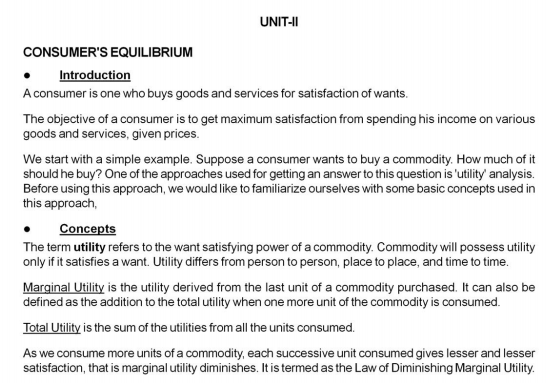
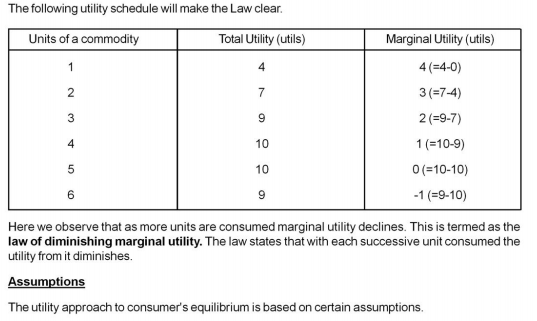
Question. When MU is zero, TU will be ................. .
a) maximum
b) maximum and constant
c) constant
d) minimum
Answer : B
Question. The unit of utility is known as ................. .
a) marginal utility
b) MUM
c) utils
d) None of these
Answer : C
Question. The law of equi-marginal utility considers price of money as
a) zero
b) less than one
c) more than one
d) one
Answer : D
Question. According to cardinal measurement of utility
a) Utility is quantitative
b) Utility is qualitative
c) Utility is both quantitative and qualitative
d) Utility is constant
Answer : A
Question. Which of the following is/are the feature(s) of utility?
a) Subjective in nature
b) Depending upon of urgency of wants
c) Both (a) and (b)
d) None of (a) and (b)
Answer : C
Question. Which of the following is an assumption of consumer equilibrium (through utility analysis)?
a) Rationality
b) The cardinal measurability of utility
c) Constancy of the MU of money
d) All of the above
Answer : D
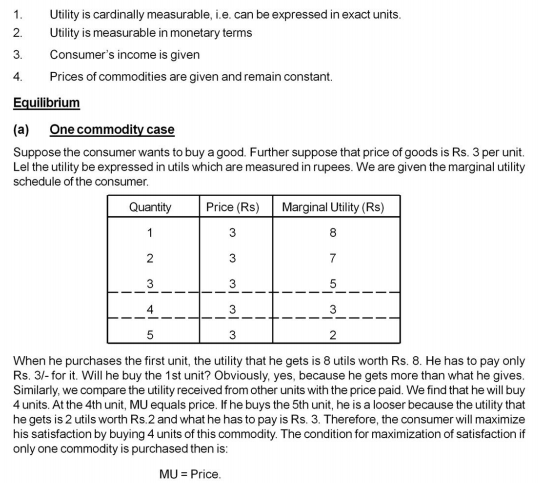
Question. In case of single commodity, the consumer will be in equilibrium when ....... .
a) MUX/MUY = MUM
b) MUX/PX = MUM
c) PX/PY = MUx
d) MUX = MUM
Answer : B
Question. Law of equi-marginal utility is called
a) Law of increasing utility
b) Law of diminishing utility
c) Law of substitution
d) None of the above
Answer : C
Question. Consumer’s equilibrium takes at a point where
a) MU = Price
b) MU < Price
c) MU > Price
d) None of these
Answer : A
Question. When total utility increases at a diminishing rate, marginal utility will be
a) increasing
b) diminishing
c) constant
d) diminishing but positive
Answer : D
Question. Total Utility derived from consumption of commodity will begin to fall ...... .
a) with every additional unit consumed
b) when Total Utility curve becomes flat
c) when Marginal Utility starts falling
d) when Marginal Utility becomes negative
Answer : D
Question. ………… curve is a downward sloping curve cutting the X-axis.
a)Marginal Utility
b) Total Utility
c) Average Utility
d) Both (a) and (c)
Answer : A
Question. Utility can be measured by
a) Money
b) Exchange of goods
c) Weight of the good
d) None of the above
Answer : A
Question. Cardinal utility approach was given by ..................... .
a) Prof. Alfred Marshall
b) Prof. Hicks
c) Prof. Samuelson
d) Prof. Gossen
Answer : A
Question. Utility approach is ...... .
a) cardinal
b) ordinal
c) both cardinal and ordinal
d) None of the above
Answer : C
Question. Exceptions to law of diminishing marginal utility include
a) reading
b) money
c) acquiring knowledge
d) All of these
Answer : D
Question. In accordance with the relationship between Total Utility and Marginal Utility, when MU is negative, then
a) TU increases
b) TU decreases
c) TU remains constant
d) TU becomes zero
Answer : B
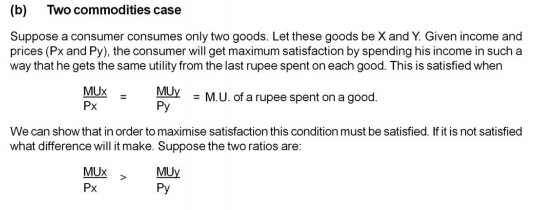
Question. A consumer is in equilibrium, how will a consume behave if MUx/Px<MUx/Px?
a) Consumer will consume more of Good X and less of Good Y
b) Consumer will consume more of Good Y and less of Good X
c) Consumer more of both Good
d) Consumer less of both Good
Answer : B
Question. A consumer buys two commodities X and Y, he would be in equilibrium when ...... .
a) MUX/PX = MUY/PY
b) MUX/MUY = MUM
c) MUX/PX = MUY/PX
d) PX/PY = MUM
Answer : A
Question. “Utility is same as Usefulness”. Which of the below options fits the given statement?
a) Always true
b) Partially true
c) False
d) Incomplete
Answer : C
Question. Which of the following is not correct about consumer equilibrium through utility analysis?
a) Law of Marginal Utility does not operate
b) MUM remains constant
c) MUX = MUM
d) Consumer is rational
Answer : A
Question. In case of single commodity, a consumer is at equilibrium point, marginal utility derived from consumption of commodities is 12, find the price of that commodity? (when MUM = 1)
a) Rs 1
b) Rs 2
c) Rs 12
d) Rs 10
Answer : C
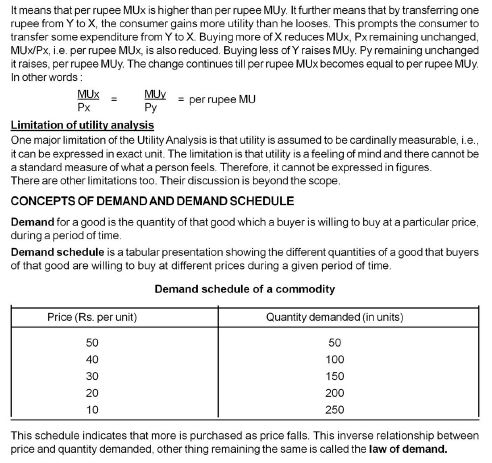
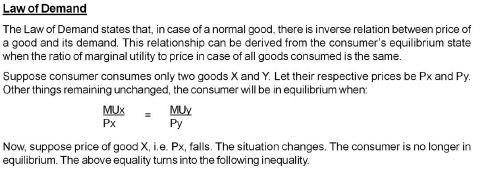
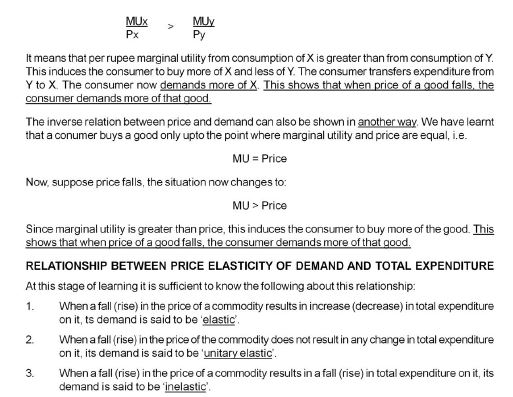
Please click the link below to download pdf file for CBSE Class 12 Microeconomics-Consumers Equilibrium (Updated March 2014).
Free study material for Economics
Part A Microeconomics Chapter 05 Market Equilibrium Concepts and Summary for Class 12 Economics
Key Concepts and Summary for Class 12 Economics Part A Microeconomics Chapter 05 Market Equilibrium
Review targeted chapter notes for Class 12 Economics Part A Microeconomics Chapter 05 Market Equilibrium. Built according to official CBSE guidelines, these summaries highlight high-yield topics frequently tested in school evaluations.
NCERT-Aligned Chapter Summary and Notes
Built using the official NCERT book for Class 12 Economics, these notes provide reliable academic guidance. Pair your summary review with our recommended NCERT solutions to master optimal problem-solving approaches.
Next Steps in Your Exam Preparation
Explore our broader library of printable assignments, chapter notes, and mock tests designed to support continuous revision and secure higher marks in CBSE assessments.
FAQs
You can download the teacher prepared revision notes for CBSE Class 12 Microeconomics Consumers Equilibrium Notes from StudiesToday.com. These notes are designed as per 2026-27 academic session to help Class 12 students get the best study material for Economics.
Yes, our CBSE Class 12 Microeconomics Consumers Equilibrium Notes include 50% competency-based questions with focus on core logic, keyword definitions, and the practical application of Economics principles which is important for getting more marks in 2026 CBSE exams.
Yes, our CBSE Class 12 Microeconomics Consumers Equilibrium Notes provide a detailed, topic wise breakdown of the chapter. Fundamental definitions, complex numerical formulas and all topics of CBSE syllabus in Class 12 is covered.
These notes for Economics are organized into bullet points and easy-to-read charts. By using CBSE Class 12 Microeconomics Consumers Equilibrium Notes, Class 12 students fast revise formulas, key definitions before the exams.
No, all study resources on StudiesToday, including CBSE Class 12 Microeconomics Consumers Equilibrium Notes, are available for immediate free download. Class 12 Economics study material is available in PDF and can be downloaded on mobile.